Week 6 - CHT Analysis on a Graphics card
CHT ANALYSIS ON A GRAPHICS CARD
INTRODUCTION
Conjugate heat transfer (CHT) represents a class of multi-physics problems where fluidflow affects the thermal behaviour of structure, which inturn affects the fluid flow. For conjugate heat transfe analyses, the solid material conduction and the fluidconvection are analysed simultaneously. The conductiveheat transfer in a solid region is coupled to the convective heat transfer in a neighbouring fluid flow.
The conjugate heat transfer become a more powerful tool for modeling and investigating nature phenomena and engineering system in different areas ranging from aerospace and nuclear reactors to thermal goods treatment and food processing from te complex procedure in medicines to oceans thermal interactin in metrology.
The graphics card is an expansion card that generates a feed of output images to a display device .Most videocards are not limited to a 6 inch simple outpit.Their integrated graphics processor can perform additional processing ,removing this task from the central processor of the computer.
OBJECTIVES
- To perform the steady cnjugate heat transfer analysis on graphic card
- To find the effect of different velocities on the temperature .
- Simulate CHT analysis on a model of a graphics card and use appropriat materials of your choice for the simulation.
- Simulation by varying th evelocity from 1m/s to 5m/s for at least e3 velocities .
Solving and modeling
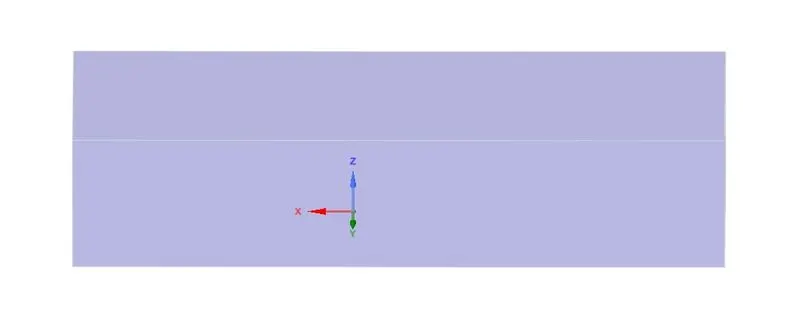
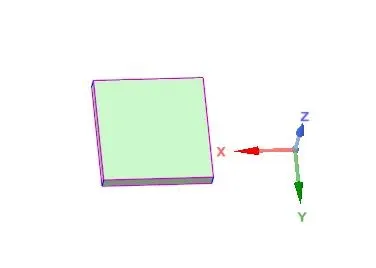
Spaceclaim Geometry(Graphic card)
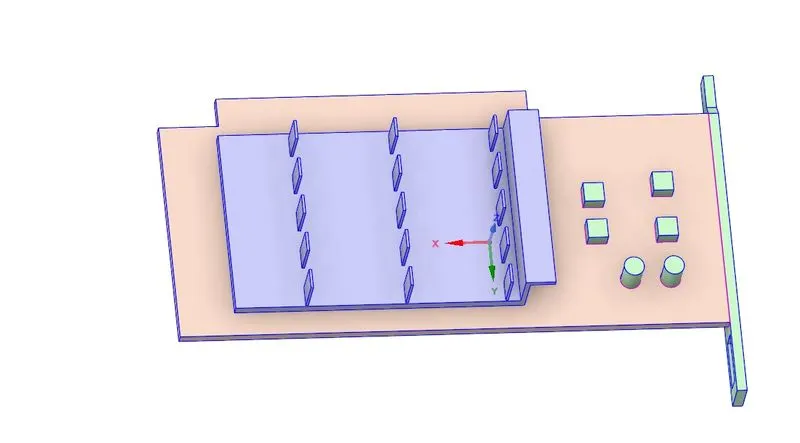
Encloser
The processor
Meshing
meshing parameters for case_1
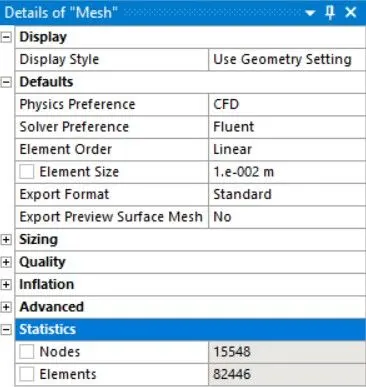
The Mesh
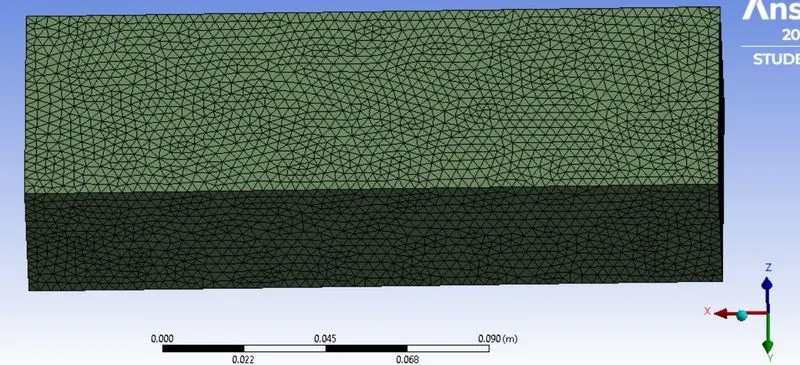
Graphic card
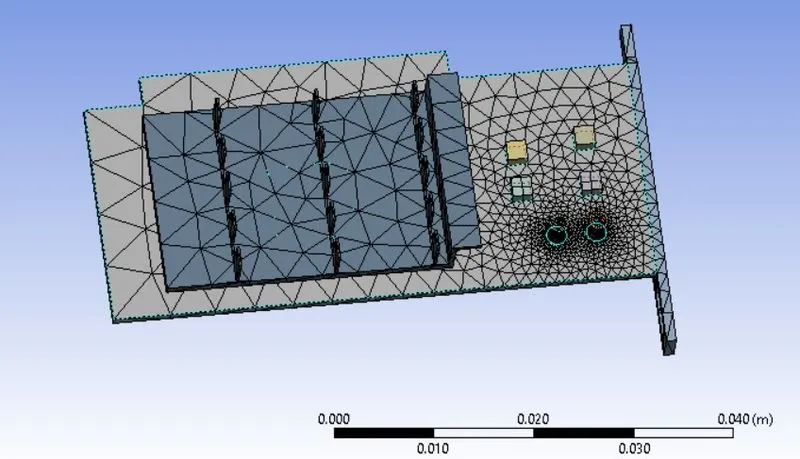
Closer view
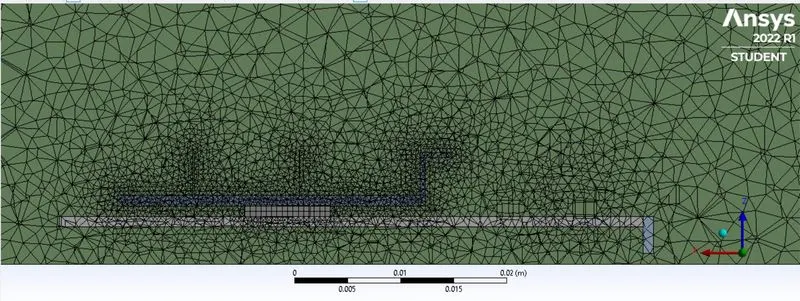
Case_2 (Refined mesh)
- Element size-0.003
- Body size(Fin)-0.0005
- Body size(processor)-0.0005
- Body size(Base)-0.003
- Number of nodes- 87662
- Number of element-495692
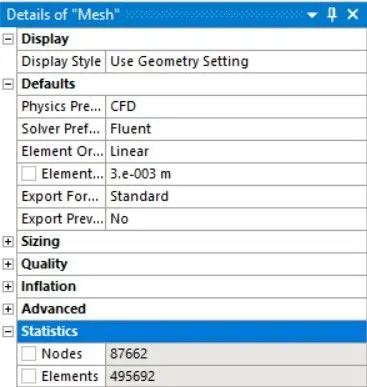
The mesh
Graphic card
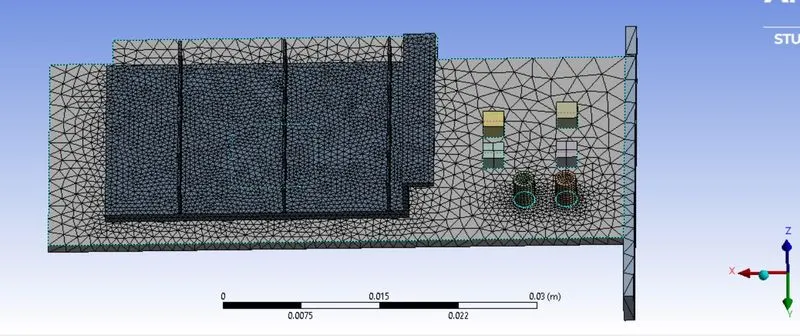
A closer view
Solver setup
-General setting
- Solver-Steady-state
- Type - pressure based
-Turbulance model
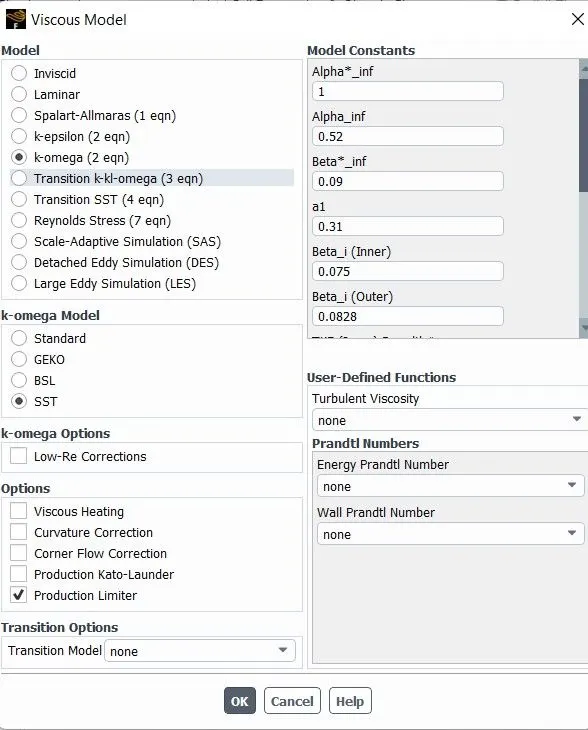
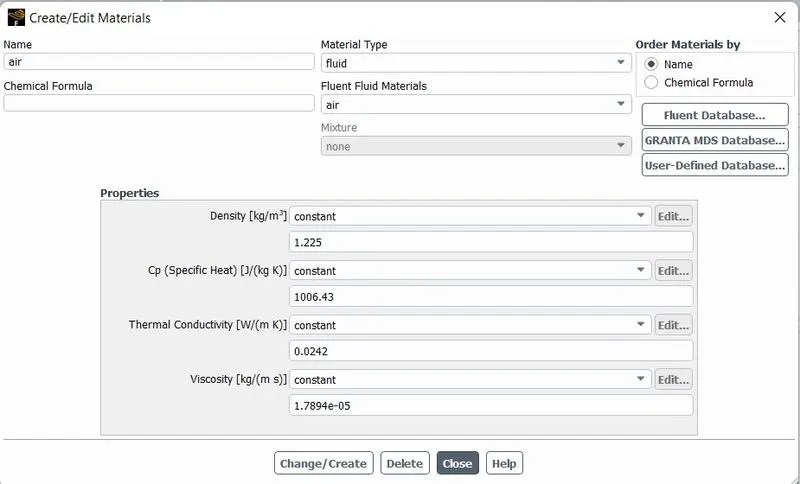
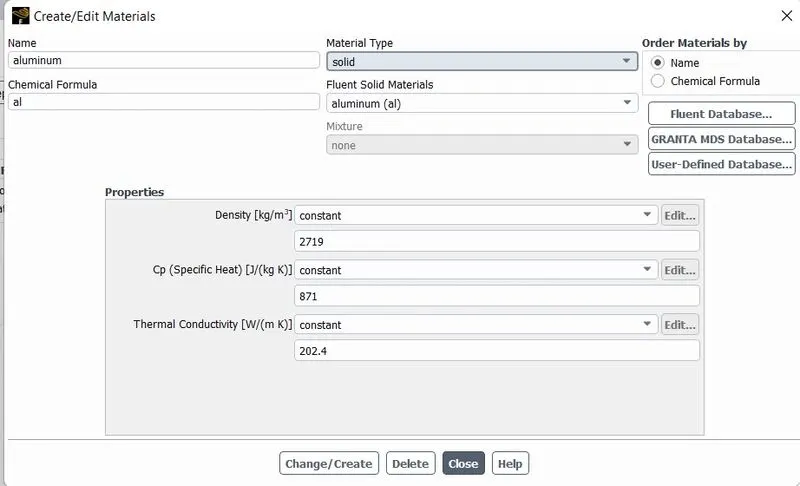
Material(Different material are used )
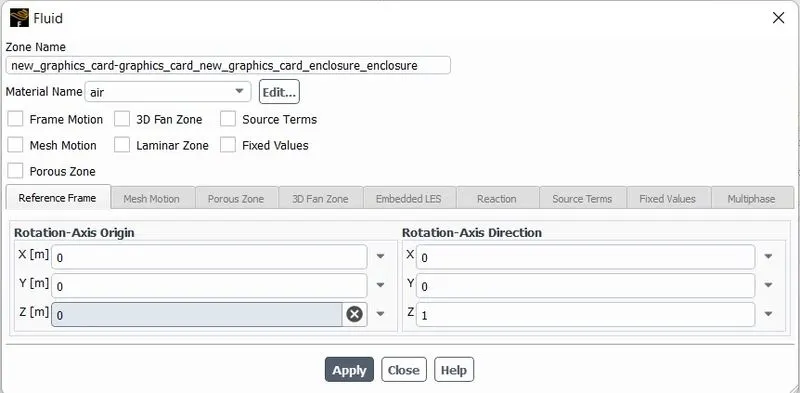
1.For encloser(inlet)
Air
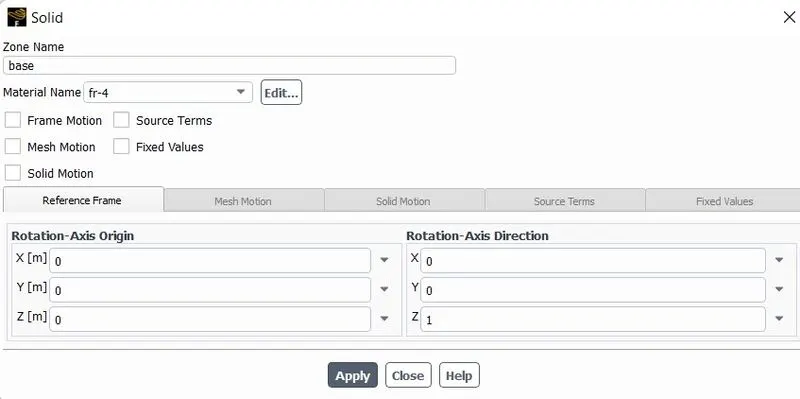
For base(Fr-4)
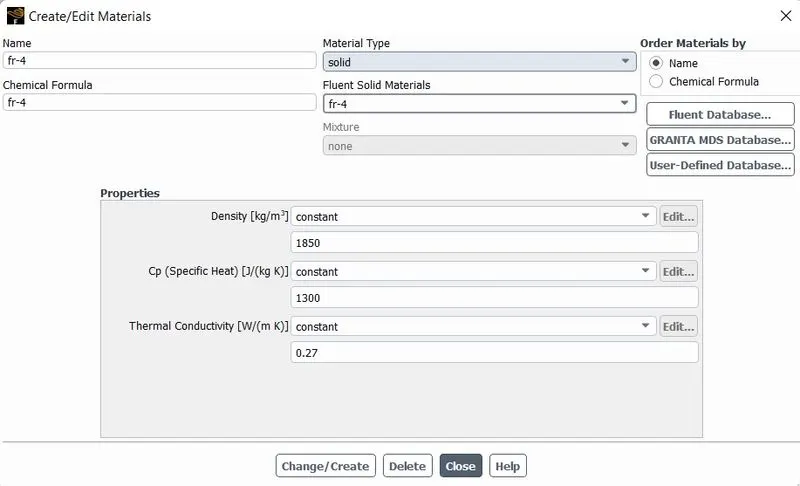
For fins
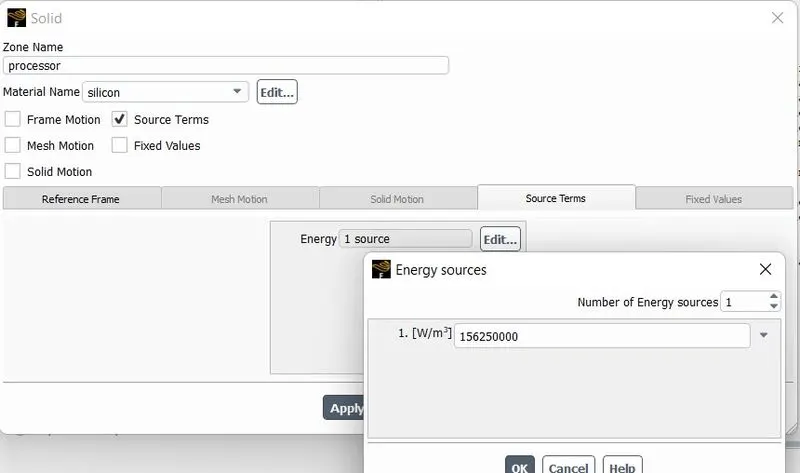
Processor(Silicon)
Cellzone condition
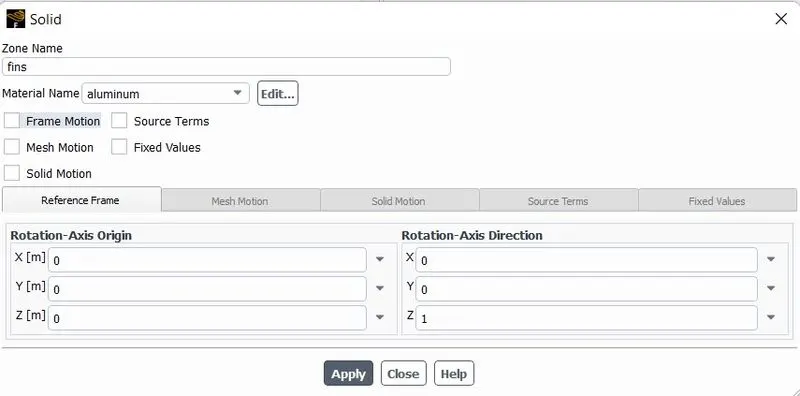
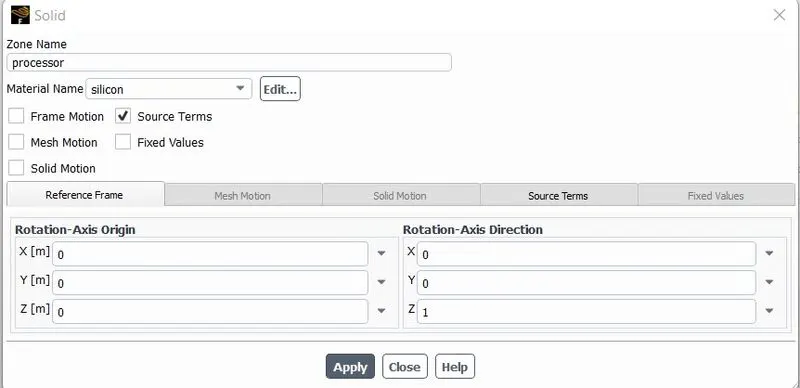
Boundary conditions
Inlet
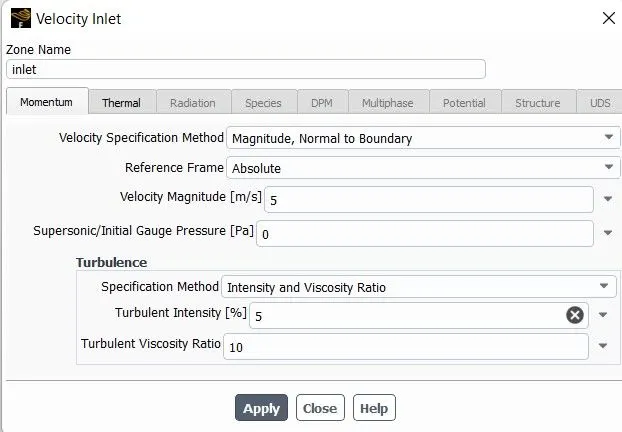
The proccesor is assumed as the only source of heat and we calulated below
Graphic card power-10w
Volume of the card - 8*8*1
heat generated = P/v= `10/(64e-8`=1.5625`e^8`
SOLUTION
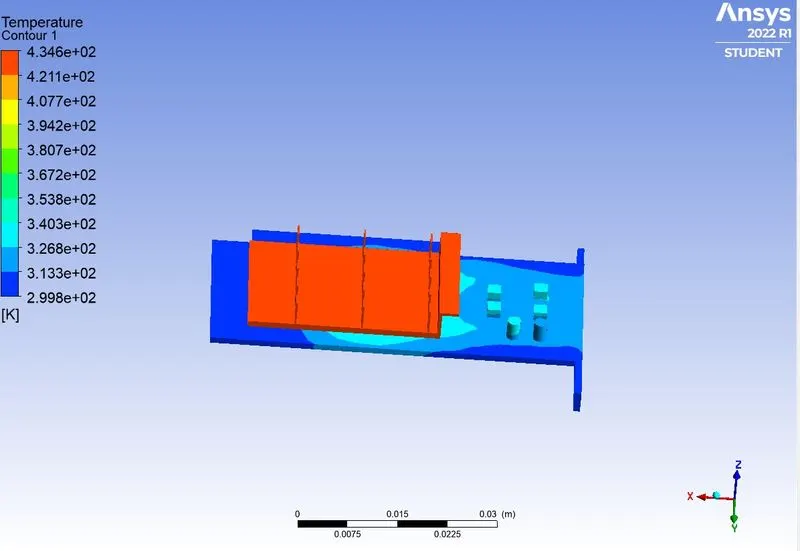
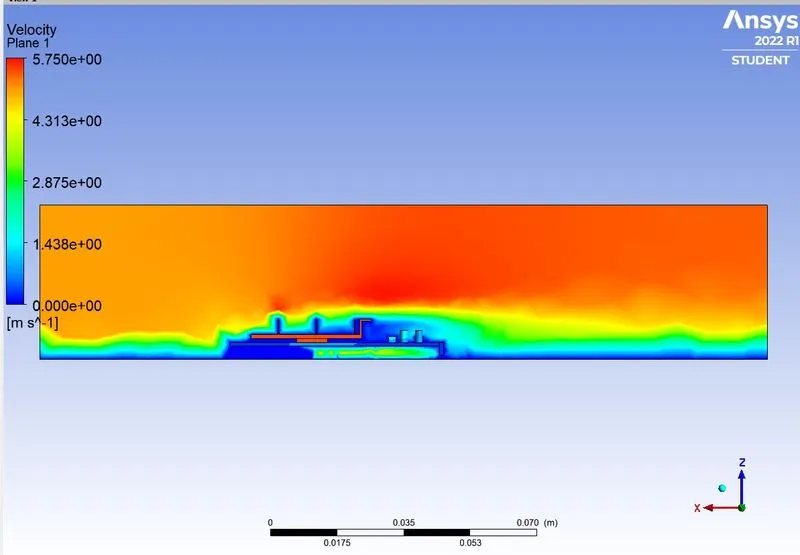
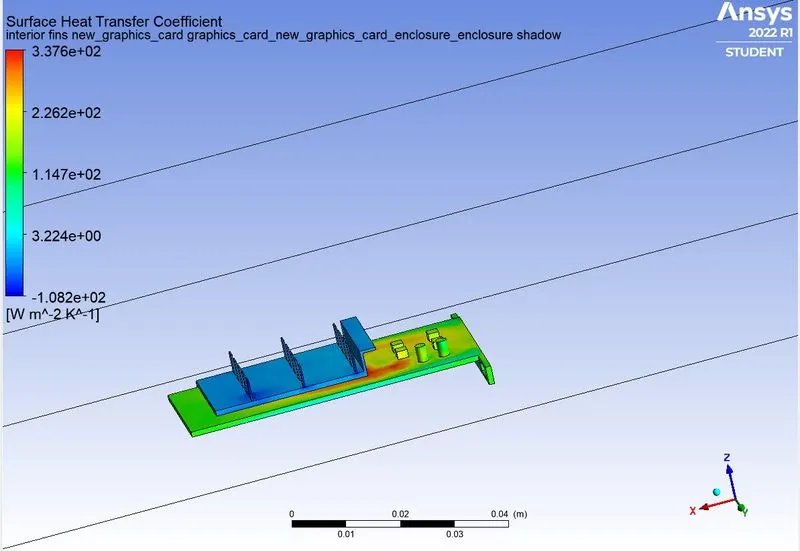
Case-1(velocity-5m/s)
Residuals
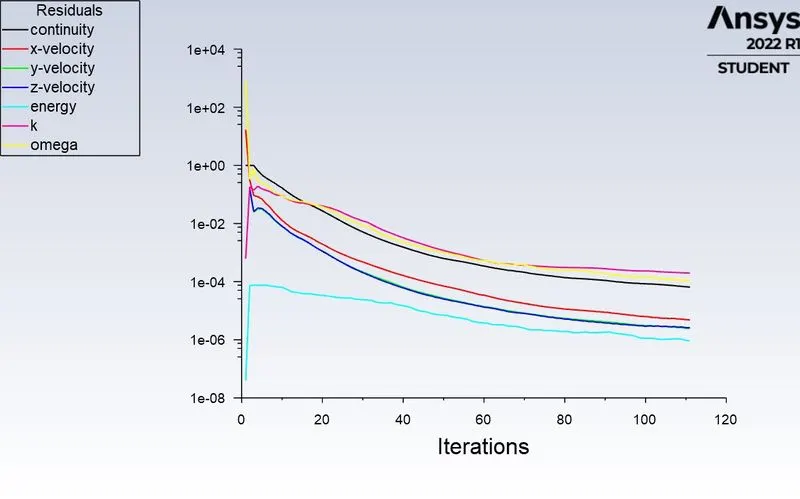
Temperature contour
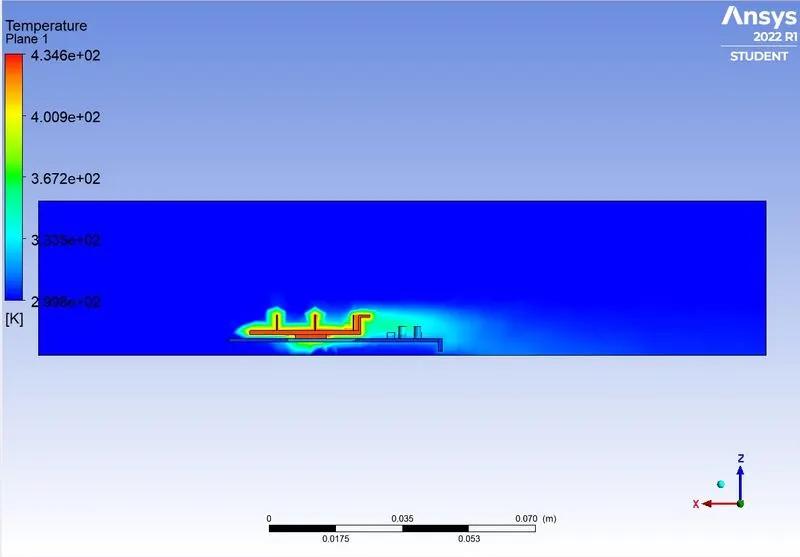
Temperatur hotspots
Velocity contour
surface heaat transfer coefficient
Case-2a(velocity-1m/s)
Residuals
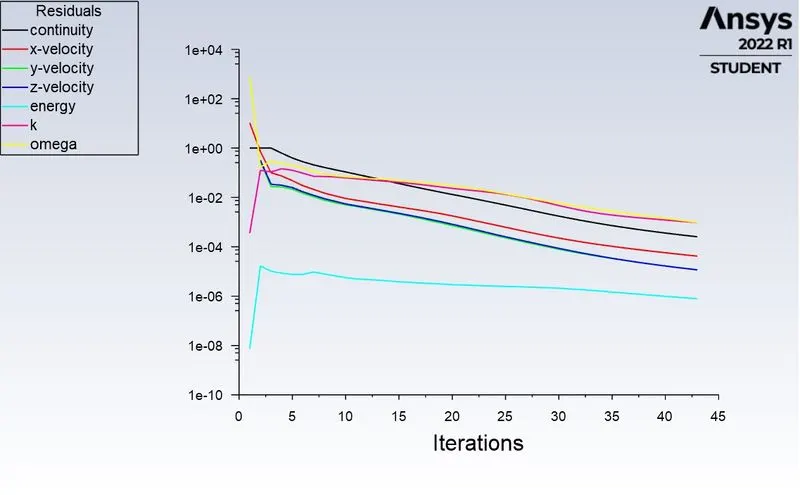
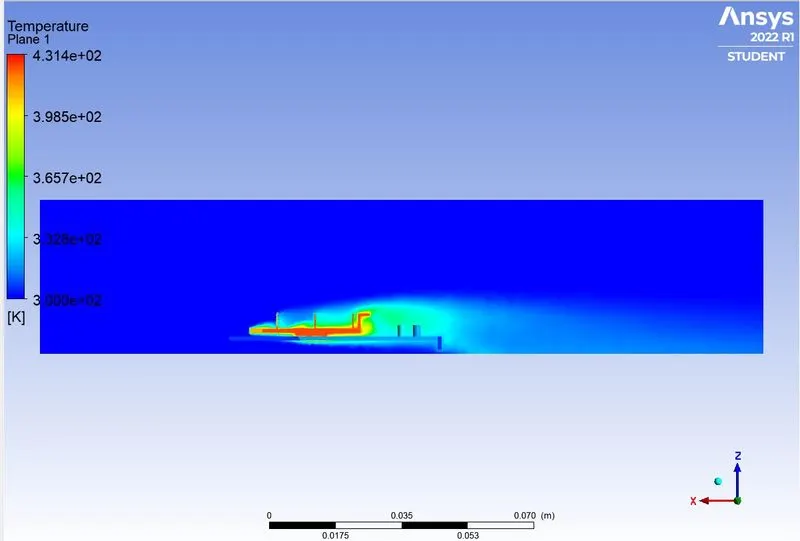
Temperature contour
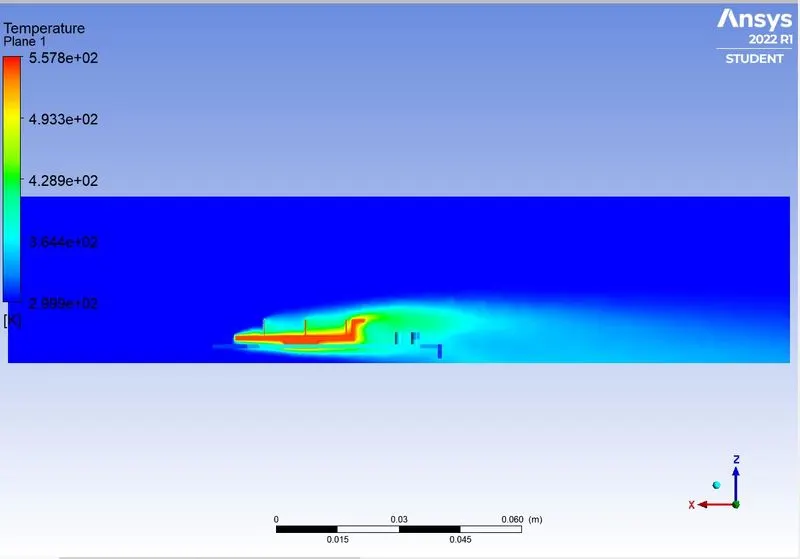
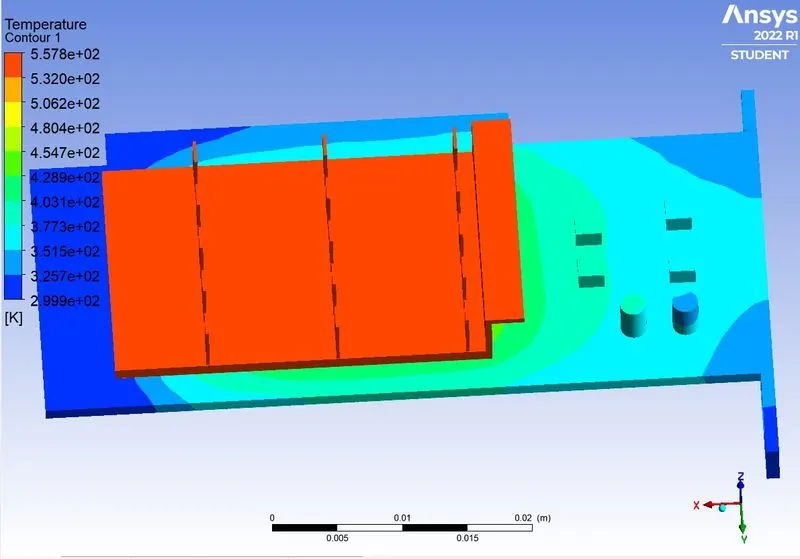
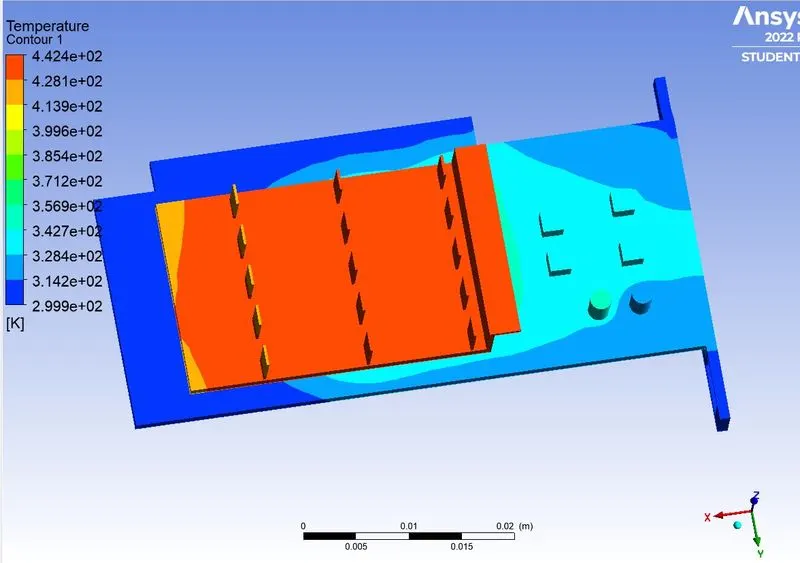
Temperature Hotspot
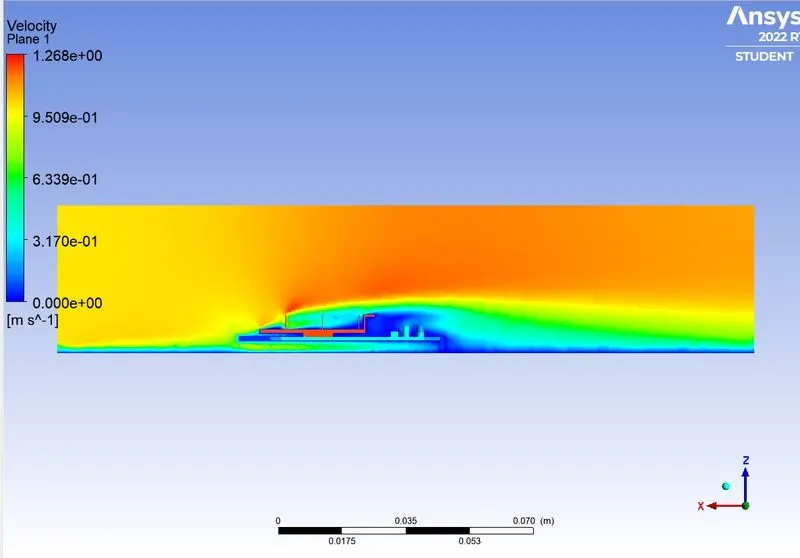
Velocity contour
Surface heat transfer coefficient
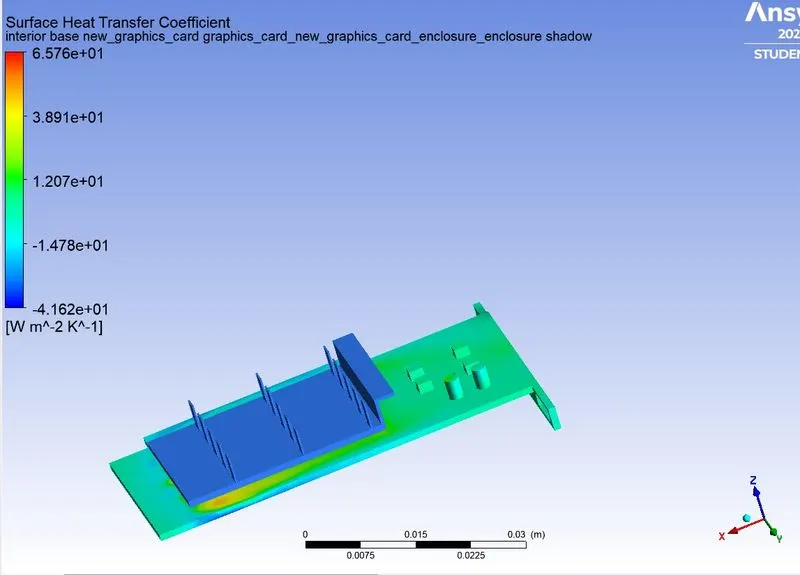
Case-2b(velocity-3m/s)
Residuals
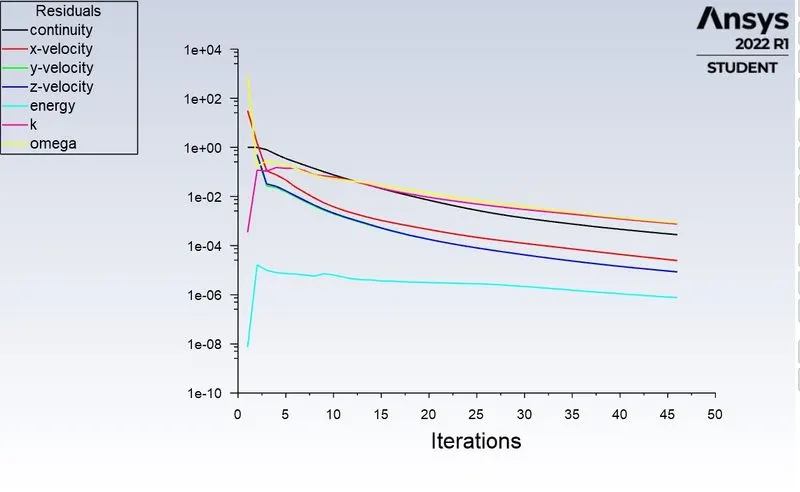
Temperature contour
Temperatur hotspots
Velocity contour
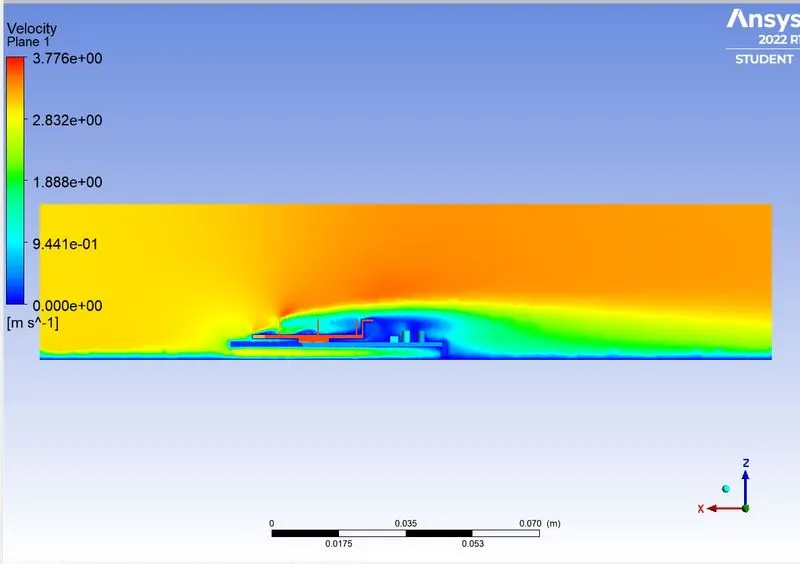
Surface heat coefficient-
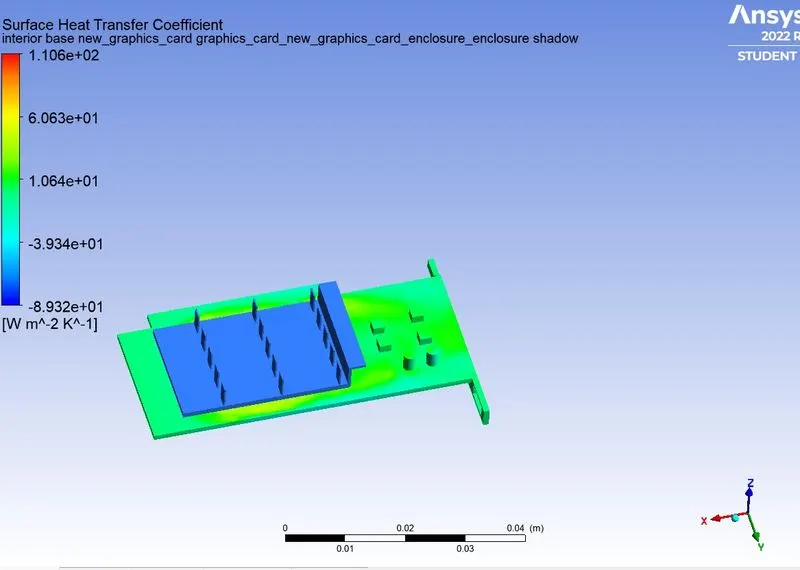
CONCLUSION
From the above solution we conclude that as per mesh element increase the accurate results of temperature distribution is obtained,the net temperature of componets of graphic cards decreses with an increse in inlet velocity.Hence it can be inferred that a a higher inlet velocity results in better colling and lower the average temperature thus leeping the componets safe.