Week-6 Challenge: EV Drivetrain
1. Which types of power converter circuits are employed in electric and hybrid electric vehicle?
Types of power converters are used in elctric or hybrid electric vehicles are the followig.
AC To DC Converter (Rectifire).This type of power conveter used in Electric vehicle
This type power converter is used For battery Charging system Which is also konwn as Rectifire.
The supply Voltage is AC and battery needs to a DC supply. so this converter is Converts the AC supply into the DC supply and Fed to the Battery.
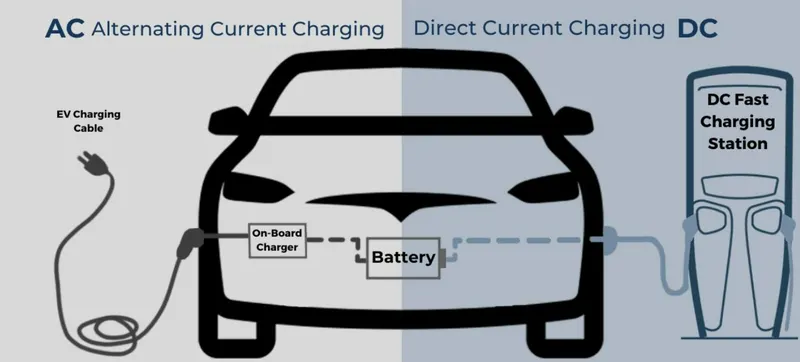
In his two types of the charging as Following:-
AC alternating current charging:- In this type of the charging system AC to DC converter is mouted on the Car so ac alternating supply fed to the car And this conveter convert the AC To DC and Fed to the Battery.
DC Direct current Charging:- In thiws type of the charging System The converter is is mounted on the DC charging station and this DC supply Directly Fed to the Battery.
DC To AC Converter (Inverter).
This type power converter is used For Induction Motor system Which is also konwn as Inverter.
The Battery Voltage is DC and Motor works on AC supply so is DC. so this converter is Converts the DC supply into the AC supply and Fed to the Motor.
DC To DC Converter (Chopper).
This type power converter is used For converting the 100v supply to auxillary 12v supply.
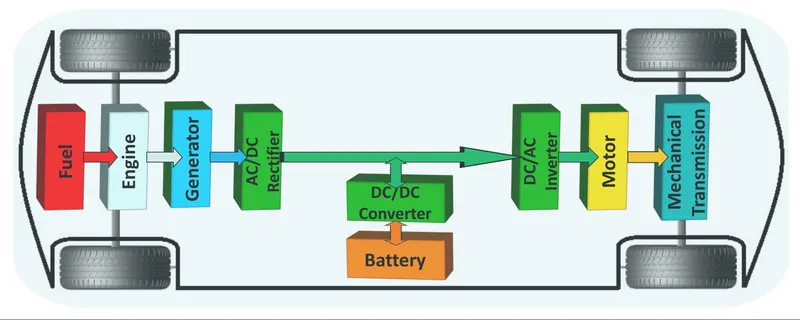
2. An Electric Vehicle's powertrain with 72V battery pack in shown in the diagram below. The duty ratio for acceleration operation is 'd1' and for the braking operation the duty ratio is 'd2'.
Given
Motor and Controller Parameters.
Rated Armature voltage= 72 V
Rated armature current= 400 A
Ra= 0.5Ω, KΦ= 0.7 Volt second
Chopper Switching frequency= 400 Hz.
Solution
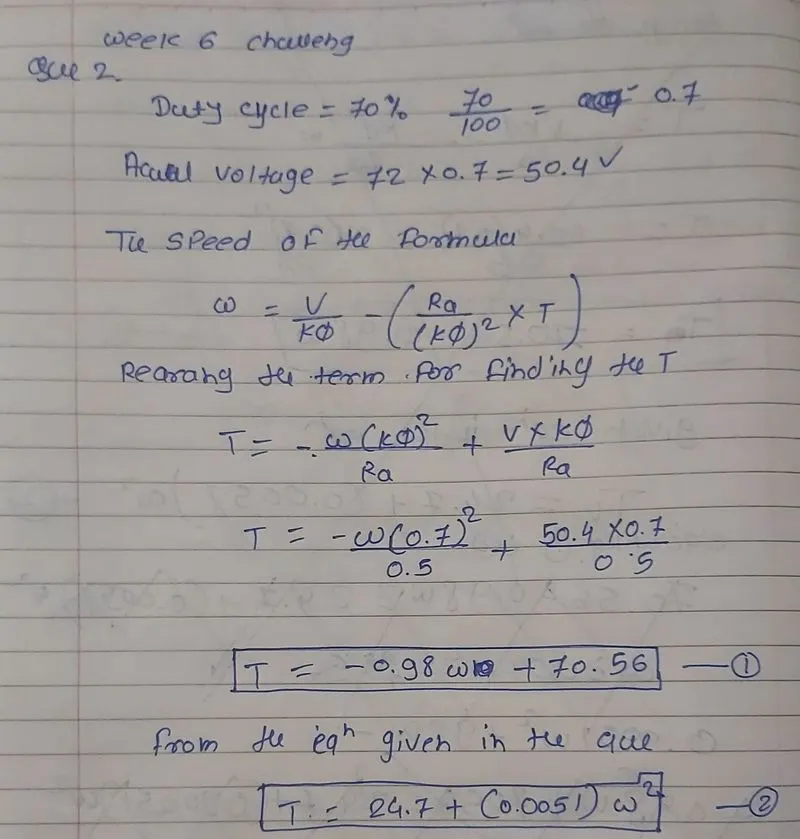
Duty cycle=70%=70/100=0.7
Actual Voltage =72*0.7=50.4v
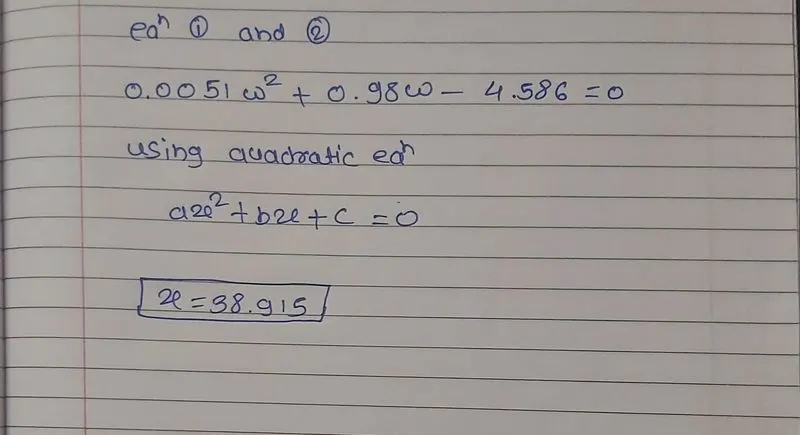
3. Develop a mathematical model of a DC Motor for the below equation using Simulink.
ω">ωω= V/Kϕ">ϕϕ -Ra/Kϕ">ϕϕ^2 .T
Simulink
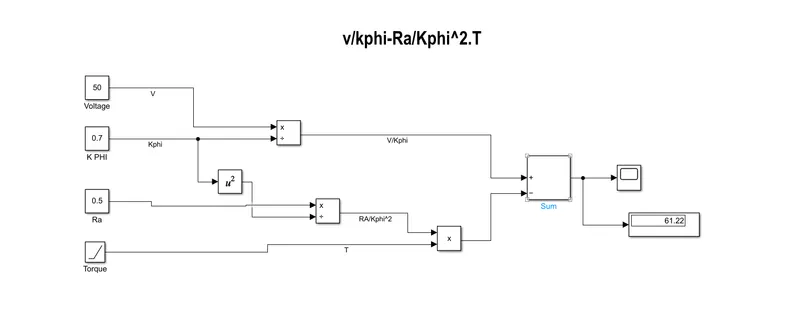
Supply Voltage is 50v
Motor Constant is 0.7.
Armature Resistance is 0.5
Torque constnt is 1
Scope Output.
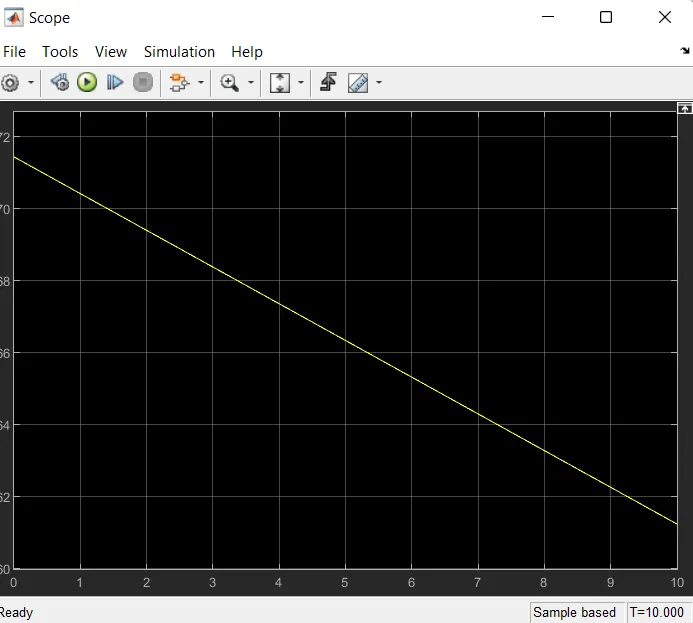
Constant Block is used for the Define the constant value.
Derivative block is used for the Divide and multiply the value.
Sum block is used for the Addition and substraction the value.
Scope Block is used for then show the output.
Display Block is used for the Shows the Final output value.
3. Refer to the blog on below topic:
Induction Versus DC brushless motors by Wally Rippel, Tesla
Explain in brief about author’s perspective.
The Author Nmae is Wally Ripple. He was Awarded many times After Some time he joined Tesala motors. Before he was Enginneer at AeroViroment where is helped develop the EV1 for General Motors and was featured in the documentary movie, Who Killed the Electric Car?Wally has also worked for the Jet Propulsion Laboratory on electric vehicle battery research, among other projects. In 1968, as a Caltech undergraduate student, he built an electric car
One Size Does Not Fit All
he said in the blog All engine are not same In that odious world of gas powered vehicles, and Mamny types of engins avlaible . One would have thought that, years ago, someone would have figured out which was best. That would have ended all the choices and thereafter only the one best engine type would be in production. Not so. There is no one best engine type, rather there are different types of engines to suit personal requirements, such as price and performance. This is also true for electric vehicle drives.
He said many time ago there were lead acid batteries, DC brush motors, and contactor controllers Work. Today, none of these work remain. Lead has been replaced by lithium and DC by either DC brushless or induction. Contactors, meanwhile, have given way to modulating inverters. So, will each of these elements also become obsolete in the near future or is it possible that some “stability” may be at hand?
He predict however, is that we will see both induction and brushless machines “duke it out” for many years to come. Each will have its loyal proponents and religious detractors.
A Closer Look
He Explained Brushlees DC motor and induction motor and its working.
In the brushless DC motor the rotor includes two or more permanent magnets that generate a DC magnetic field . In turn, this magnetic field enters the stator core. and interacts with currents flowing within the windings to produce a torque interaction between the rotor and stator. As the rotor rotates, it is necessary that the magnitude and polarity of the stator currents be continuously varied and such that the torque remains constant and the conversion of electrical to mechanical energy is optimally efficient. The device that provides this current control is called an inverter. Without it, brushless motors are useless motors.
the 3 phase induction motor was invented by NIKOLA TESALA sometime before 1889. Curiously, the stators for the 3-phase induction motor and the DC brushless motor are virtually identical. Both have three sets of “distributed windings” that are inserted within the stator core. The essential difference between the two machines is with the rotor.
DIFFRANCE BETWEEN THE BRUSHLESS DC MOTOTR AND INDUCTION MOTOR
| S.NO. | DC BRUSHLESS MOTOR | INDUCTION MOTOR |
| 1 | DC Supply | AC Supply |
| 2 | Require position sensor | Require speed sensor |
| 3 | The torque generated due to interaction of rotor and stator magnetic field | Stators rotating magnetic field induces a current in rotor laminations, which interact with the stator magnetic field and produce torque |
| 4 | The rotor includes two or more permanent magnets to generate a magnetic field | The rotor includes stacked steel laminations with shorted peripheral conductors for induced magnetic field |
| 5 | Less Rotor heat generated, easier rotor cooling, and higher peak point efficiency. Power factor up to 100% can be reached | Rotor cooling is difficult. Maximum power factor that can be achieved in 85% |
| 6 | Permanent magnets are costly and ferromagnets cannot be brought near the motor | Difficult to control, complex control laws for inverters |
| 7 | As for size increases, losses increase, and part-load efficiency decreases | As for size increases, losses remain approximately the same |
| 8 | The magnetic field strength cannot be adjusted thus only single torque output can be obtained | The magnetic field strength can be varied as a function of voltage supply and frequency for optimized torque output. |
| 9 | Preferred for HEV | Preferred for pure EV for high performance |