Week-6 Challenge: EV Drivetrain
1)
TYPES OF CONVERTER
The main components of an Electric Vehicle are DC-AC inverter, DC-DC converter, battery, and electric motor.
There are two major power electronic units in the general configuration
- DC-DC converter
- DC-AC inverter
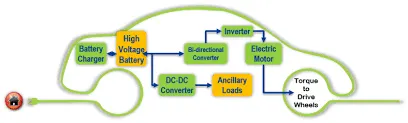
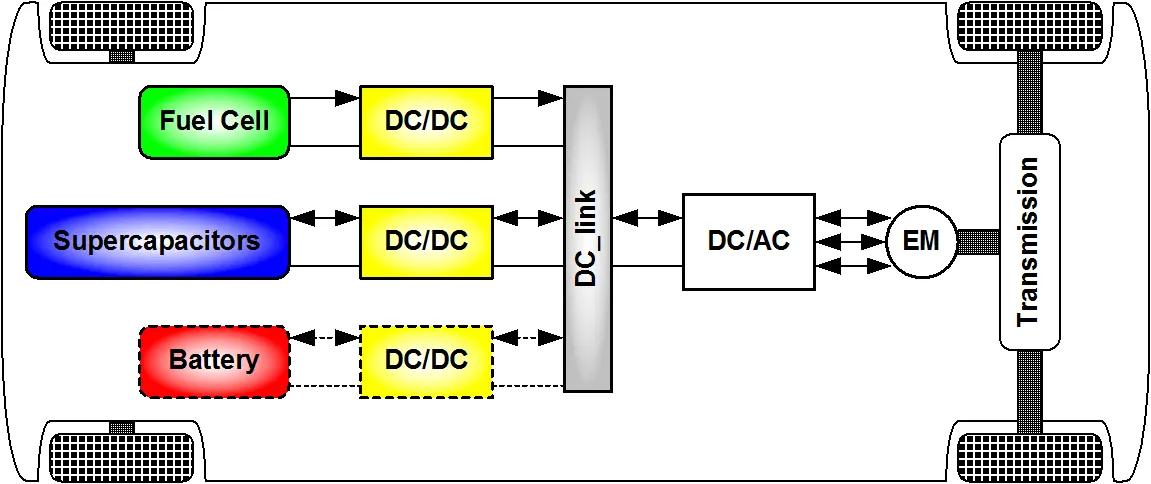
DC-DC converter.....
Unidirectional DC-DC converters cater to various onboard loads such as sensors, controls, entertainment, utility, and safety equipments.
Bidirectional DC-DC converters find applications in places where battery charging, regenerative braking, and backup power are required
NON-ISOLATED CONVERTER
.The non-isolated converters type is generally used where the voltage needs to be stepped up or down by a relatively small ratio.
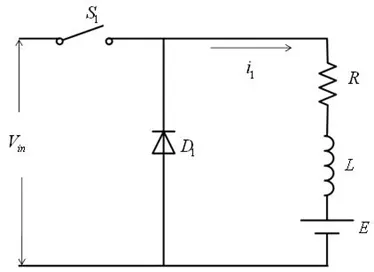
The buck converter is used for voltage step-down,
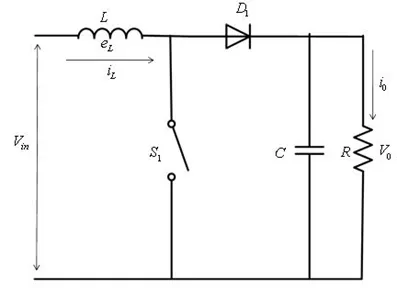
The boost converter is used for voltage step-up.
The buck-boost and Cuk converters can be used for either step-down or step-up.
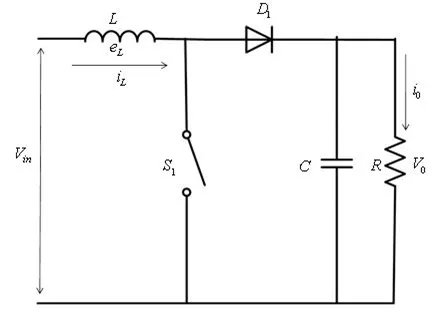
The charge-pump converter is used for either voltage step-up or voltage inversion, but only in relatively low power applications.
ISOLATED CONVERTER
the input, an isolated converter is necessary Usually, in this type of converters a high frequency transformer is used. In the applications where the output needs to be completely isolated from. There are many types of converters in this group such as
- Half-Bridge,
- Full-Bridge,
- Fly-back,
- Forward and Push-Pull DC/DC converters
DC-AC inverter.....
An inverter is a device that converts DC power from the battery to AC power used in an electric vehicle motor. The inverter can change the speed at which the motor rotates by adjusting the frequency of the alternating current.
- The use of Inverters can increase or decrease the power or torque of the motor by adjusting the amplitude of the signal.
- It plays a significant role in capturing energy from regenerative braking and feeding it back to the battery.
2)
given data:
rated armatur voltage=72V
rated armature current=400A
armature resistance=0.5 ohm
Chopper Switching frequency= 400 Hz
Kphi=0.7 V-s
V=70%*72
=0.7*72
=50.4v
to find:
EV steady state speed if duty cycle is 70%? (value of omega)
solution:
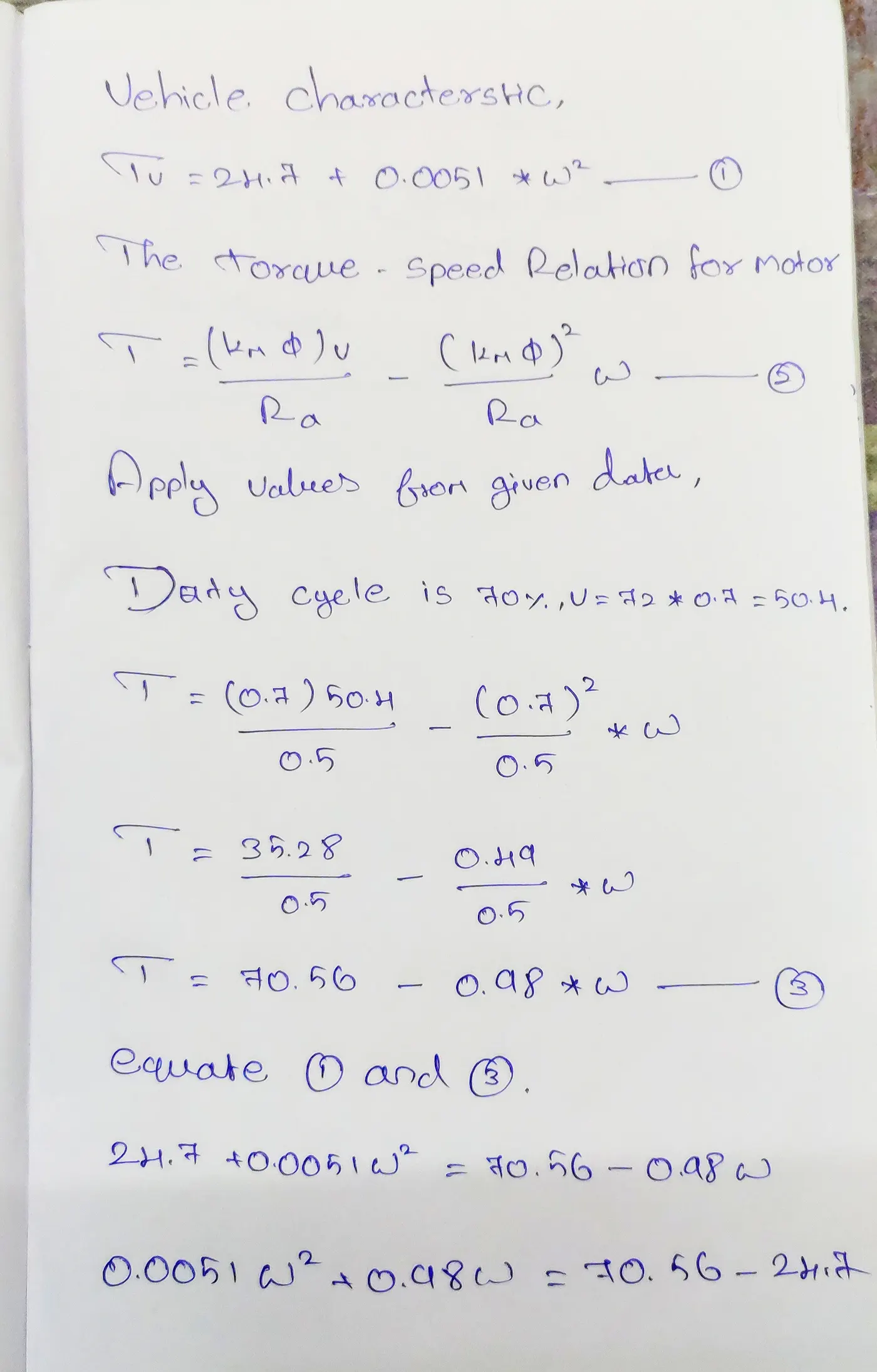
0.0051 w^2 + 0.98 w^2 = 70.56-24.7
0.0051 w^2 + 0.98 w^2 = 45.86
Result:
w = 39 rad/sec
3)
|
no |
DC brushless drive |
AC induction drive |
|
|
1 |
Can operate in DC |
Can operate in AC |
|
|
2 |
the peak point energy efficiency for a DC brushless drive will typically be a few percentage points higher than for an induction drive. |
the best power factor for the induction drive is about 85 percent. |
|
|
3 |
DC brushless drives will likely continue to dominate in the hybrid and coming plug-in hybrid markets |
induction drives will likely maintain dominance for the high-performance pure electrics. |
|
|
4 |
DC brushless, as machine size grows, the magnetic losses increase proportionately and part load efficiency drops |
induction, as machine size grows, losses do not necessarily grow. |
|
|
5 |
DC brushless drives require an absolute position sensor |
induction drives require only a speed sensor |
|
|
6 |
The rotor is a permanent magnet |
Rotor is not permenent magnet |
|
|
|
7 |
Defficult to handle |
Easir to handle |