Week-6 Challenge: EV Drivetrain
1. Mainly four types of power converter systems are there
- AC to DC(rectifier)
- DC to AC (inverter)
- DC to DC
- AC to DC
AC to DC rectifier converts alternating current to direct current with the use of diodes. Diodes will allow current to flow in one direction only. There is halfwave rectifier and full wave rectifier. Half wave utilize only one half of the alternating current it requires only one diode. Full wave uses the entire alternating wave, usually it uses a bridge type rectifier.

Half wave rectifier

Full wave rectifier
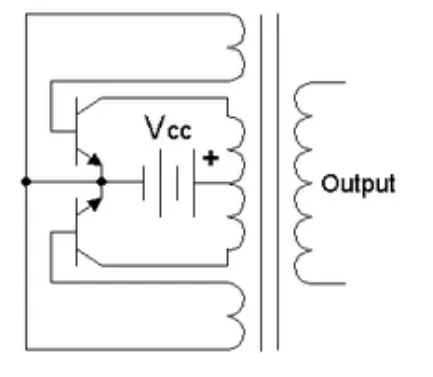
DC to AC converter(inverter), Its operation is just opposite to the rectifier operation. It changes the direction of Direct current freequently. With different design techniques we can vary the Power handling, input output voltages and frequency of operation. sine wave and square wave inverters are there. The name represent the output wave form . Square wave inverters are easy to make but some situations sine wave is requires for perfect operation, like induction motor.
DC to DC Converter
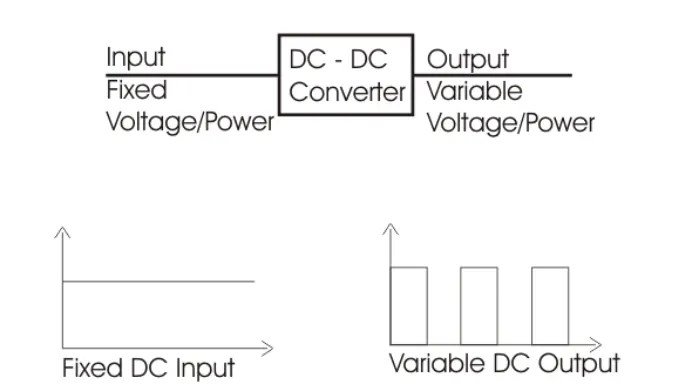
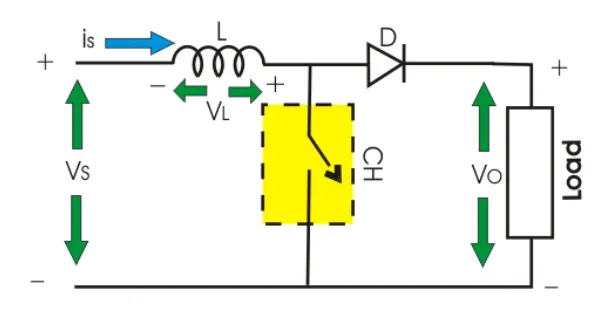
Its mainly of two types Buck (step down ) converter and Boost(step up converter). both will used to convert fixed dc voltage/power to variable DC voltage /power. Buck converter works as a high speed switch which connects and disconnects the load from source at very high rate to get a variable chopped voltage at the output.
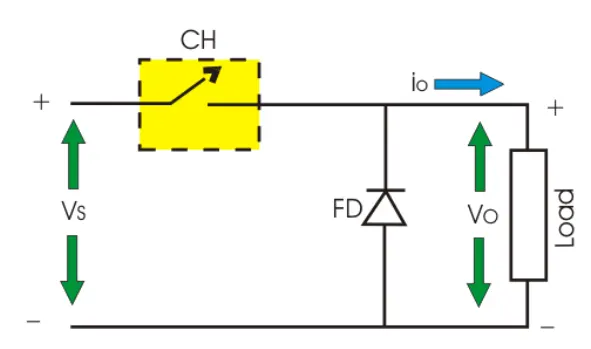
buck converter
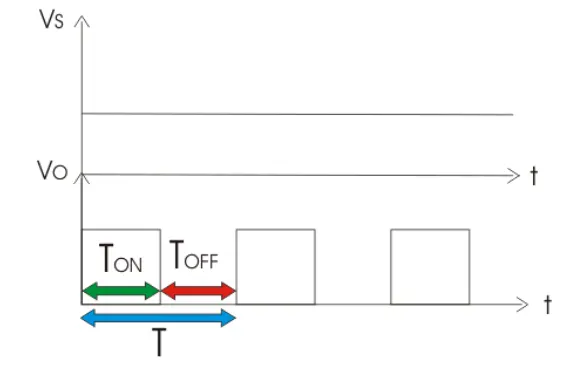
Timeperiod
Step up DC to DC converter or Boost converter
AC to AC converter,
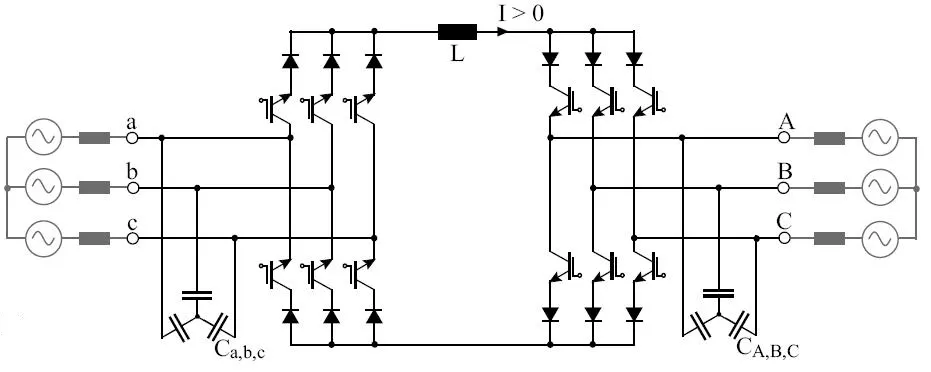
Except AC to AC converter all others are used in HEV and EV
2.
Rated armature voltage=72V
Rated armature current =400A
Ra=0.5ohm,
ΚΦ=0.7Volt second
Chopper switching freequency =400Hz
Rolling resistance Frr=Urr.m.g
Drag force, Fad=1/2. .A.v2.Cd
Tractional force Fte= Frr+Fad
let
Urr=0.009
Cd=0.2
m=1000kg
=1.1614kg/m3
A=2 m2
r=0.28m
Frr=0.009*1000*9.81=88.29N
Fad=1/2*1.1614*2*v2*0.2
Fad=0.01821*ω2
Fte=88.29+0.01821*ω2
we know
Fte=G.T/r , where G=1
T/0.28=88.29+0.01821*ω2
Tv=24.7+0.0051*ω2
this is the torque speed characteristics of vehicle
now the angular velovity ω of DC motor is given by
ω=(V/ΚΦ)-(T.R)/ΚΦ2
So T=(V.ΚΦ)/R-(ω.ΚΦ2)/R
since duty cycle is 70% V=72*.7=50.4V
T=(50.4*0.7)/0.5 -(ω*(0.7)2)/0.5
Tm=70.56-0.98ω
At steady state Tv =Tm
on equating both side
ω=38.9rad/s
3.
mathematical model for equation 
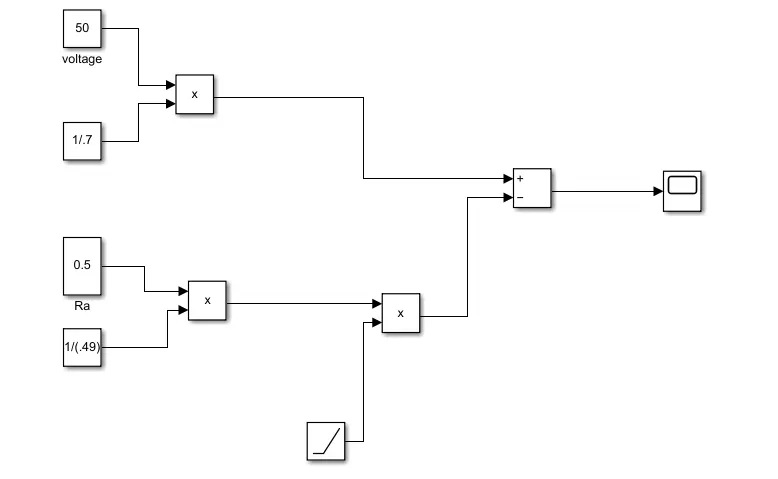
Result
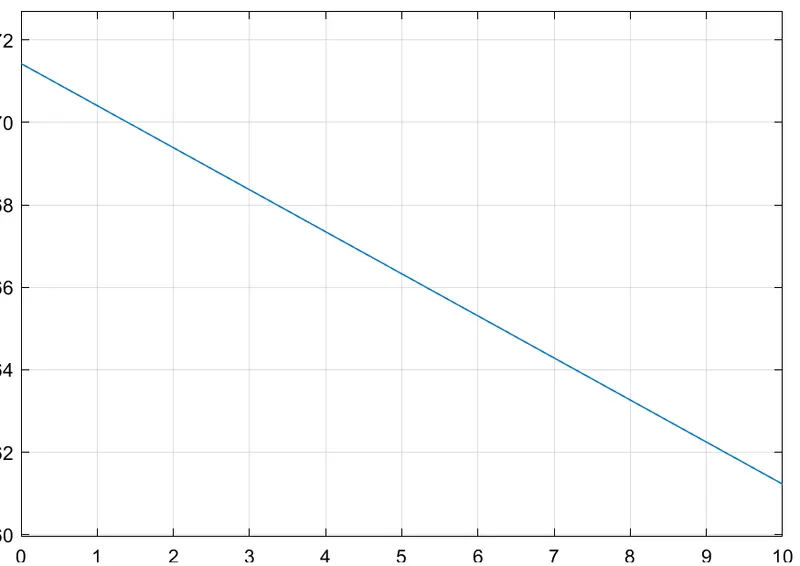
Torque vs speed curve
4.Author Wally Rippel explained the working principle of both induction motor and Dc Brushless motor. He explained the significance of induction motor in pure ev and explained Dc brushless motor significance in Hybrid and Plug in HEV. Also author suggest that both induction motor and brushless Dc motors are used side by side as per the requirement
Working principle of Dc motor
- The stator is made of thin and stacked laminationsThe current flowing in the stator windings torque interaction between stator and rotor
- Rotor has two or more permanent magnets. that generate magnetic field. magniture and polarity of stator current continuously varied so that torque remains constant and also achieving the efficiency.
- For the functioning of Dc brushless motor it is mandatory to have an inverter.
Working principle of induction motor
- Stator is same as the induction motor
- the only difference is that rotor is different. does not have permanent magnets.
- It does not mandatorly requires inverters. but with inverter efficiency can be increased.,
- The rotor has stacked steel laminations with buried peripheral conductors that form a shorted structure . current flowing in the stator winding produce rotating magnetic fields that enter the rotor
Pros and Cons of DC brushless motor
- less heat generated, cooling is easy,efficient
- inverter is mandatory for brushless DC motor
- Magnetic Field strength can not be easily adjusted
- as size increases magnetic loss also increases
Pros and cons of induction motor
- Inverter not needed
- Controlling magnetic field is easy hence magnetic losses are minimized
- Peak efficiency less than Brushless motor but average efficiency is higher
- Less expensive compared to Brushless DC motor
- AC source is needed
- Torque performance is low