Week-6 Challenge: EV Drivetrain
1. Which types of power converter circuits are employed in electric and hybrid electric vehicle?
We know generally there are three types of Electrical vehicles.
-
Battery Electric Vehicle (BEV)
Components of an all-electric vehicle | credits: afdc.energy.gov These are the ones which you call a fully electric vehicle. This electric vehicle type does not contain any other source of actuation other than motors and batteries. There is zero-emission in these vehicles. The battery is charged through an external source of power such as DC fast charger or AC chargers.
On average, the BEVs take around 8 hours to get fully charged using an AC charger. This time can be reduced to 1 hour using a DC fast charger.
These electric vehicles have a range from 250kms to 500kms depending upon the battery capacity and the motor. Some of the 4-wheeler BEVs in India are Tata Nexon EV, Hyundai Kona Electric, Mahindra eKUV100, MG ZS EV and more. 2-wheeler BEVs in India include Ather 450, TVS iQube, Bajaj Chetak Electric and many other startups are planning to launch by the end of this year.
Have a look: Tata Nexon EV vs MG ZS EV vs Hyundai Kona Electric: Detailed Comparison -
Hybrid Electric Vehicle (HEV)
Hybrid Electric Vehicle | Types of electric vehicles | credits: afdc.energy.gov These type of electric vehicles are powered by both, fuel as well as electricity. The electricity is generated by the vehicle’s own braking system. The heat produced by the brakes is converted into electrical energy. This process of conversion is called Regenerative Braking.
The electric motor is used to start off the HEVs. Then the propulsion is taken care of by the IC engine. This ensures better fuel economy. The operation of the engine as well as the motor is controlled by the ECU. Some HEVs in India are Toyota Prius Hybrid, Honda Civic Hybrid and Toyota Camry Hybrid. Maruti Suzuki recently introduced its hybrid system in few models too. -
Plug-in Hybrid Electric Vehicle (PHEV)
PHEVs | types of electric vehicles These are types of hybrid electric vehicles which can recharge the batteries through regenerative braking or through the external source of power. The HEVs travel about 3-4kms before the engine is switched on, PHEVs can go up to 65kms before the engine provides the required assistance for the propulsion of the vehicle. PHEV options available in India are Mahindra e-Verito, BMW i8 and the Volvo XC90 T8.
2. An Electric Vehicle's powertrain with 72V battery pack in shown in the diagram below. The duty ratio for acceleration operation is 'd1' and for the braking operation the duty ratio is 'd2'.
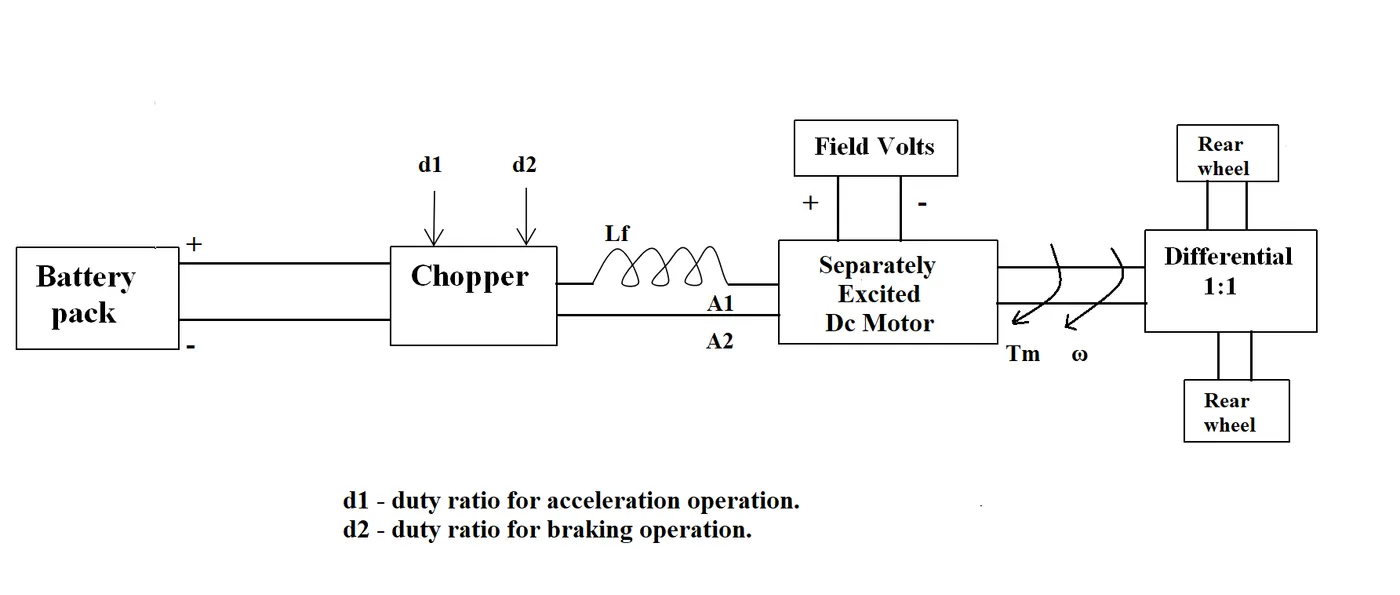
The other parameters of the electric vehicle is given below,
Motor and Controller Parameters:
Rated Armature voltage= 72 V
Rated armature current= 400 A
Ra= 0.5Ω, KΦ= 0.7 Volt second
Chopper Switching frequency= 400 Hz
The vehicle speed-torque characteristics are given by the below equation

What is EV steady state speed if duty cycle is 70%?
Torque, T = KΦ/R *[ V - KΦ*ω]
By Substituting the given values,
Torque,
T = 1.4 × (50.4 – 0.7 ω)
T= 70.56 – 0.98 ω
T = 70.56 – 0.98 ω
Tv = 24.7 + 0.0051 ω
At T = Tv ;
70.56 – 0.98 ω = 24.7 + 0.0051 ω
0.0051 ω + 0.98 ω +24.7 -70.56 = 0
ω = 38.915
Since Speed cannot be negative, we will consider that the EV steady-state speed, if the duty cycle is at 70%, is
ω = 38.915 rad.
So, Steady state speed of EV will be 38.9150 rad/sec.
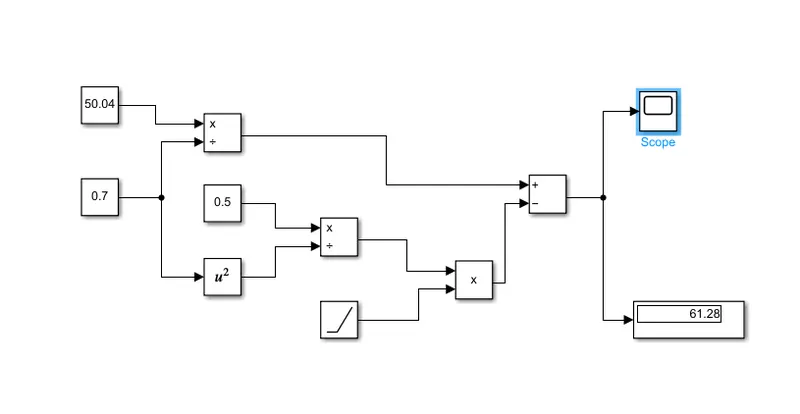
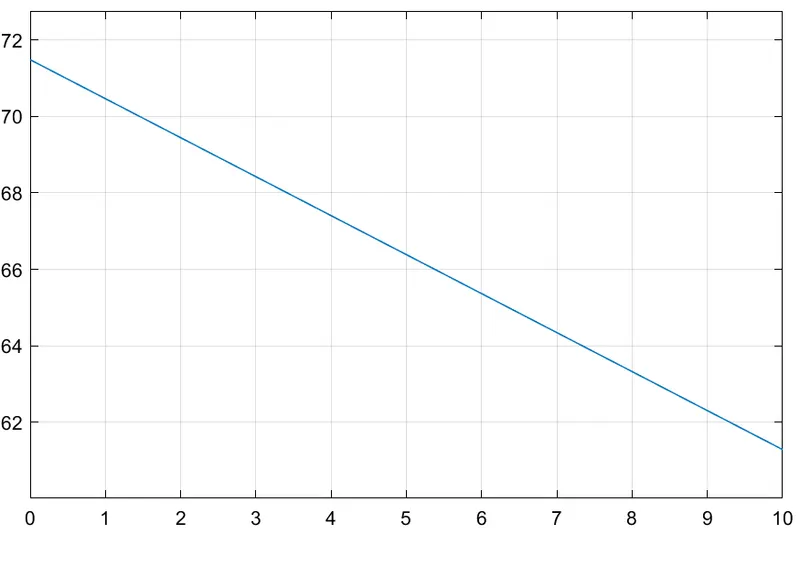
3. Develop a mathematical model of a DC Motor for the below equation using Simulink.
ωω= V/Kϕϕ -Ra/Kϕϕ^2 .T
4. Refer to the blog on below topic:
Induction Versus DC brushless motors by Wally Rippel, Tesla
Explain in brief about author’s perspective.
Objective: To brief about the blog written by an author from Tesla.
Main Points:
1. There is no such thing called the best engine. According to the personal requirements, we need to adapt the engine type.
2. In the course of time, Lead-acid batteries are replaced by Lithium-ion batteries.
3. In the course of time, DC brush motors are replaced by DC Brushless or Induction Motors.
4. In the course of time, Contactor Controllers are replaced by Modulating Inverters.
5. There is a bigger concern regarding the stable use of these elements mentioned above over the next few decades.
6. The author discusses the two technologies such as: 1. DC Brushless Drives and 2. Induction Motor with it's feature of operation.
7. He says brushless motors are useless motors without the inverter.
8. He also mentioned that the 3-phase induction motor has great utility but with several limitations.
9. The major limitation being, the Induction Motor can not operate from DC, and AC is a must.
10. Further, he compares the future trends which may occur in DC Brushless as well as in Induction motor