Week-6 Challenge: EV Drivetrain
QUESTION 1 : Which type of Power Convertor Circuits are employed in Electric Vehicle and hybrid Electric vehicle ?
SOLUTION :
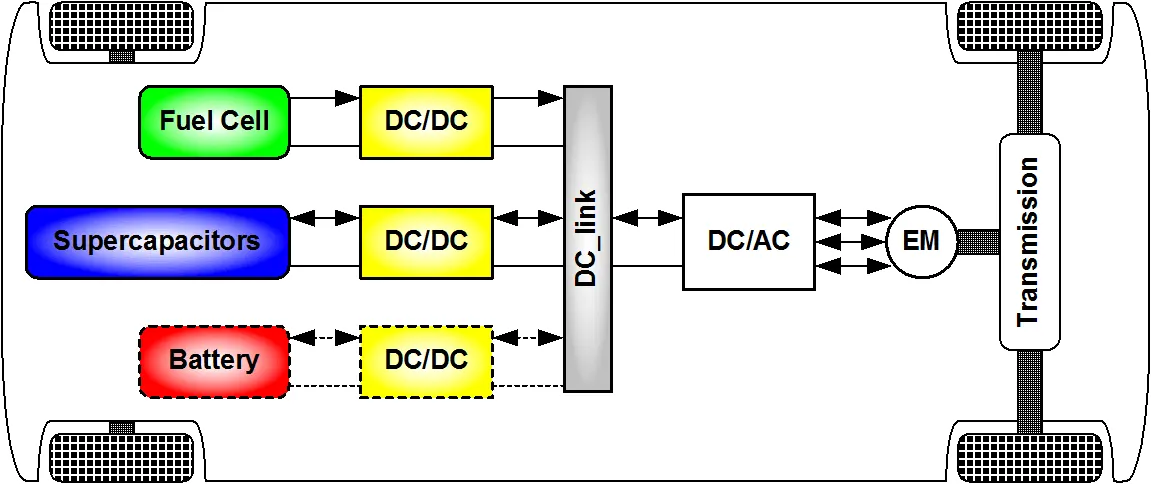
- A Motor drive consists of a power convertor and the controller. The Power convertor handles the flows of bulk power from the source to the motor input terminals. The controller process, the command input, and the feedback information to generate the switching signal for power convertor semiconductor switches.
- A DC/DC Convertor converts the unregulated DC to the regulated DC. IT has very high conversion efficiency. They are operated at very high frequency. The ON/OFF Position of the switches is done by PULSE WIDTH MODULATION.
- The power convertor can be a DC drive supplying DC motor or an AC drive supplying an AC motor.
- The power convertor are made uop of HIgh power fast acting semiconductors devices. such as a bipolar junction transistor. There are other Transistor such as MOSFET, IGBT, SCR, GTO, MCT.
- These devices are used as ON OFF electronics switch to convert the fixed supply voltage into a variable voltage and variable frquency supply.
- All these devices have a control input Gate or Base signal through which the devices are turned ON OFF as per the requirement.
- These are two types of convertors. when a low voltage input converted into a high voltage output it is a STEP UP Convertor.
- When a high voltage input is converted into a low voltage output is called as STEP DOWN Convertor.
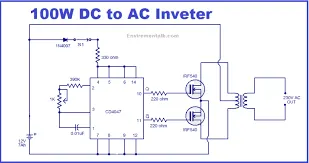
DC - AC Convertor :
Is nothing but an Invertor. An Invertor is a device that converts DC power From the battery to AC Power used in an electric vehicle motor. The invertor can change the speed at which the motor rotates by adjusting the frequency of the alternating current.
DC - DC Convertor :
- A DC DC Convertor is a poer electronics device that accepts the DC input voltage and also provides DC output voltage.
- The output voltage of DC to DC convertor v=can be greater than the input voltage. The output voltage of the Convertor must be match the power required at the load side.
- The connection and disconnection of the power supply to the load can be controlled usinng DC to DC convertor circuit.
- DC To DC convertor circuit consists of a transistor or diode switch, Energy storage devices like inductores or capacitors. and these convertor are generally used as linear voltage regulators or switched mode voltage regulators.
- DC to DC convertor are used to provide Dc regulated power supply, constant DC power supply to the Electrical and Electronics project Circuits.
- The Low Input DC voltage are converted into high output DC voltage using DC to DC Boost Convertor.
- AS the Input voltage step up compaired to output voltage. Hence it is also called as a STEP UP Convertor.
- Generally, DC to DC Convertor can be designed using power semiconductor switching devices and descrete electrical and electronics component.

AC to AC Convertor :
AC To AC Convertor are used for converting AC Waveform with perticular frequency and magnitude to another frequency and magnitude.
THis conversion is mainly required in case of speed controller of machines, for low frequency and variable magnitude application as well.
That their are various types of loads that works on different types of power supply such as single phase, 3phase supply.
We require a specific voltage and frequency for operating some specail machines. for Speed Controll of Inductioon Motor AC to AC Convertor are mainly Used.
In Shirt AC tO AC Convertor is nothing but an CYLCOCONVERTOR.
AC to AC Convertor are Required for to obatined required AC power from the actual Power thats why we need an AC to AC convertor.
AC TO DC CONVERTOR :
- AC to DC Convertor are One of the most important Element in Power Electronics. This is because there are lots of real life application that are based on this conversion.
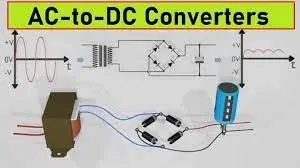
- The Electrical circuit that are transform alternating current (AC) input into direct current (DC) output are know as AC - DC convertors.
- They are used in power electronic aplication where the power input a 50Hz or 60Hz ac voltage that requires power conversion for DC output.
- The process of conversion AC current I=into DC current is know as '' RECTIFICATION ".
- ITs nothing but an Rectifier that convert AC power into DC power at the load end connection.
QUETION 2.
An Electric vehicle Power Train with 72v battery pack in shown in the diagram below. The duty ratio for acceleration operation is d1 and for the braking operation the duty ration is 'd2'.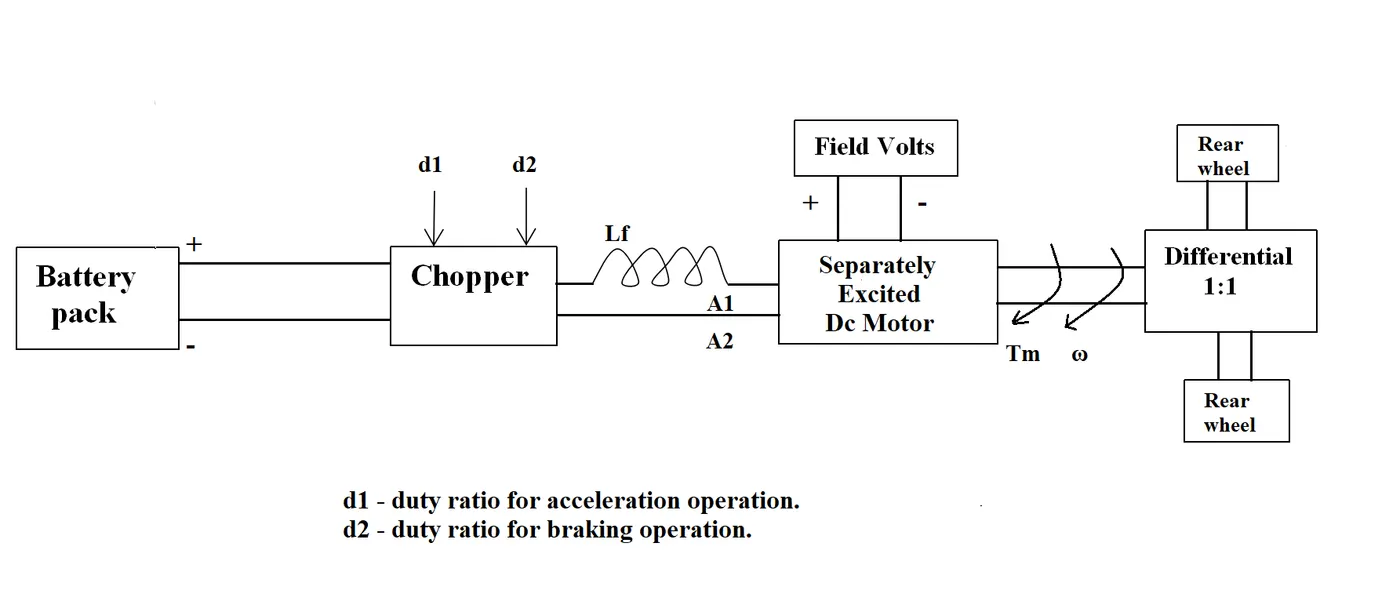
GIVEN DATA :
The other parameters of the electric vehicle is given below,
Motor and Controller Parameters:
Rated Armature voltage= 72 V
Rated armature current= 400 A
Ra= 0.5Ω, KΦ= 0.7 Volt second
Chopper Switching frequency= 400 Hz
The vehicle speed-torque characteristics are given by the below equation

What is EV steady state speed if duty cycle is 70%?
Solution:
Torque equation of motor (T) = (V*KQ)/Ra - (w/Ra)*(KQ)^2 .....................(1).
V = supply voltage, i.e. 50.4v (given)
Ra = Armature resistance , 0.50ohm (given)
w = speed of motor in RAd /SEC
KQ = motor speed constant
put in equation 1.
T = (50.4*.0.7)/0.5 - (0.7)^2*(w/0.5)
T = 70.56 - 0.98w ...............................(2)
T = 24.7+0.0051w^2 ............................(3)
Equating 2 nd 3,
70.56 -0.98w = 24.7+0.0051w^2
By Rearranging
0.0051w^2+0.98w -45.86 = 0 .............................(4)
From Eqn 4 we get the value of motor speed,
so, w = 38.91 - 231.07
Hence the drive is in motoring mode
we can take speed as positive i.e. w = 38.91rad/s.
so the EV Steady state speed = 38.91rad/s.
Question 3.
Develop a mathematical model of a DC Motor for the below equation using Simulink.
ω">ωω= V/Kϕ">ϕϕ -Ra/Kϕ">ϕϕ^2 .T
Solution : The fig shows that block diagram for DC motor Equation.
w = V/KQ -Ra/KQ^2.T
V =50v
Ra =0.7ohm.
KQ = 0.5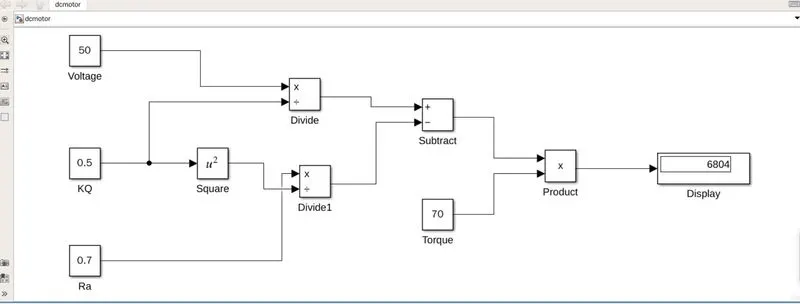 v
v
T =70
Hence w = 6804
QUESTION 4 :
Refer to the blog on below topic:
Induction Versus DC brushless motors by Wally Rippel, Tesla
Explain in brief about author’s perspective.
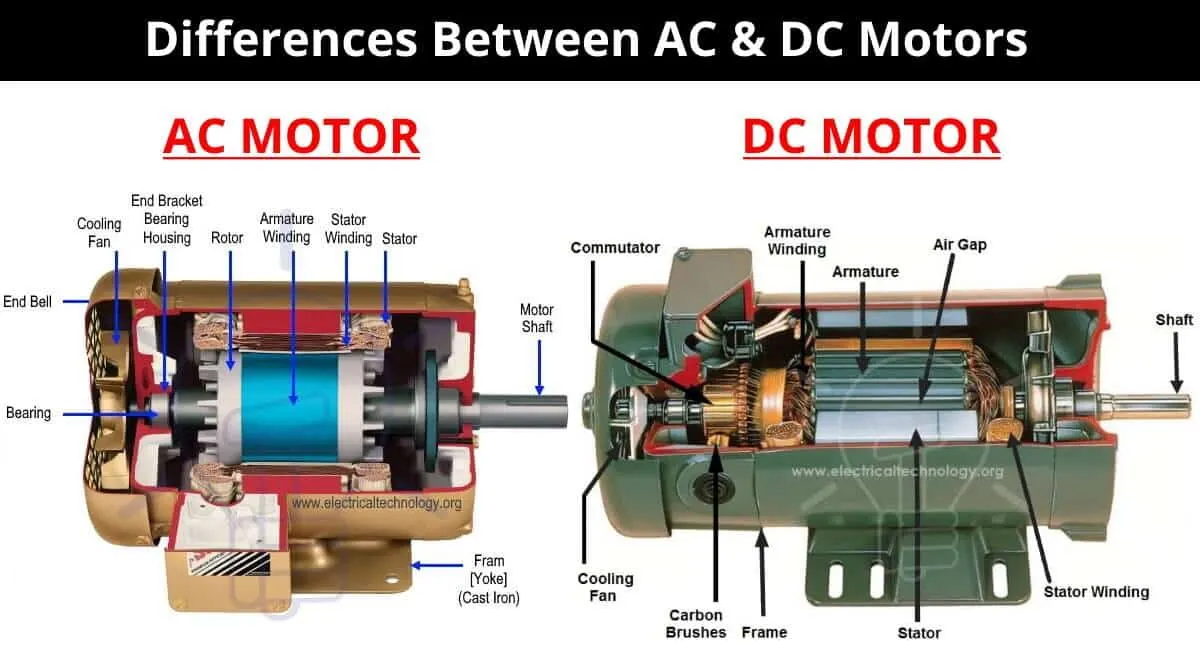
- ANSWER : In the blog of Induction Motor and DC Brushless Motor , The Author has mentiones anout the positives and negatives side of both the Induction and DC motor. In this blog the basic construction of both the induction and DC Brushless motor is explained.
- IN case of DC brushless motor , permanent magnets are used which produces a rotating a magnetic field. This magnetic field when induces a current in the conductor. THis current reasults in force generation in the rotor and this reasult in rotation of rotor.
- whereas in case of Induction Motor the Current is supplied through the stator which reasult in generation of EMF, when this emf comes in contact with the rotor which is generally a squirrel cage type , this reasult in current induce in the rotor .
- Unlike the DC motor , the rotor consits of conductors plates and placed in a cage -like construction.This also consits of bars around them in which current is induced in them and rotor starts rotating.
- One of the main difference is that less rotor heat is generated in case of DC brushless motor and hence rotor cooling is easier. Author is mentioned that the DC brushless motor has the Unity power factor, whareas the best power factor for induction motor is about 85%.
- In case of DC brushless motor , the strength of the magnetic field is adjustable. at low speed maximum torque is required.
- In Induction motor, losses remains constant as amchine size increses. where as, In DC machine, efficiency decreses and losses increses as machine size increses.
The construction of DC motor is costly as compaired to the Induction motor due to the use of permanent magnet.
CONCLUSION :
The Authors point about the inductioon motor and DC motor are listed above. He also say that both induction and brushless dc motor has developed side by side for EV application.
Both machine have their advantages and disadvantages.