Project-1: Powertrain for aircraft in runways
QUESTION 1 : . Search and list out the total weight of various types of aircrafts.
ANSWER : AIRCRAFT
An aircraft is a vehicle that is able t flyby haining suppport from the air. It counters the force of gravity by using either static lift or by using the dynamic lift of an airfoil, or in a few cases the downloadthrust from jet engines.
Common examples of aircraft include airplanes, helicopters, airships, gliders, paramotors and hot air balloons.
The human activity that surrounds aircraft is called aviation. The science of Aviation, including designing and building aircraft, is called "AERONAUTICS". Crewed aircraft are flown by an onboard pilot, but unmanned aeiral vehicles may be remotely controlled or self controlled by onboard computers.
Aircrafts may be classified asby different criteria, such as lift type, aircraft propulsion, usage and others.
Types of aircraft :
Aircraft are classified based on various parameters.
1. According to the basic design.
2. According to the propulsion through the Air.
3. According to the design of the Wings.
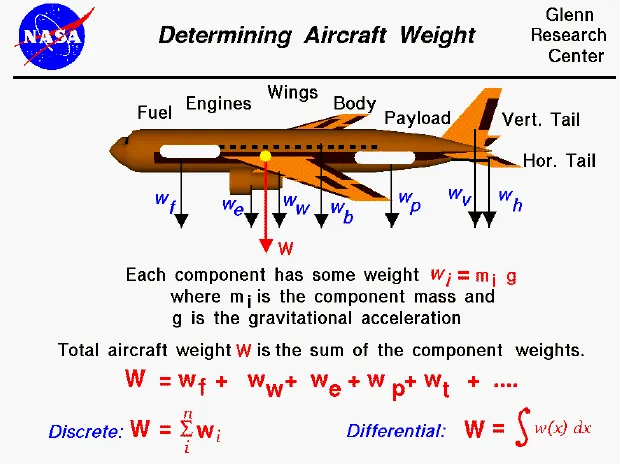
Commonly Used Aircraft and their weights.
|
AIRCRAFTS |
LENGTH(M) |
WEIGHT (EMPTY) KG |
WEIGHT (MAX) KG |
|
Cessna 172 |
8.2 | 660 | 1110 |
|
Citation jet m2 |
13 | 3170 | 4855 |
|
Boeing767 -300 |
56 | 119975 | 181436 |
|
Boeing787- 800 |
56 | 160571 | 227930 |
|
Boeing777- 300 |
74 | 184612 | 299370 |
|
Boeing747- 400 |
70 | 37194 | 412769 |
|
Airbus A320 |
38 | 37194 | 77110 |
QUESTION 2 : Is there any difference between ground speed and air speed?
ANSWER : YES, there is differnce between Airspeed and ground speed.
Generally, there are two different types of speed when talking about airplanes - ground speed and airspeed.
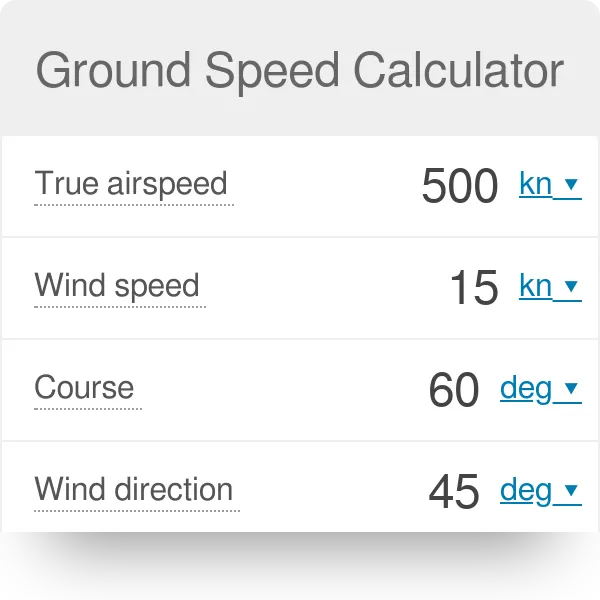
While, ground speed is the airplanes speed relative to the surface of the earth, airspeed- at least true airspeed - is its speed relative to the air it is flying in.
As mentioned above, true airspeed is simply the speed at which an aircraft is moving relative to the air it is flying in. As such, its also the spped at which the air is flowing around the aircrafts wings.
GROUND SPEED on the hand, is the aircrafts speed relative to the ground. One thing that should be noted here is that its horizontal rather than vertical speed.
An aircraft climbing completely vertically would have a ground speed of zero.
QUESTION 3 :
Why is it not recommended to use aircraft engine power to move it on the ground at Airport?
ANSWER : Aircraft
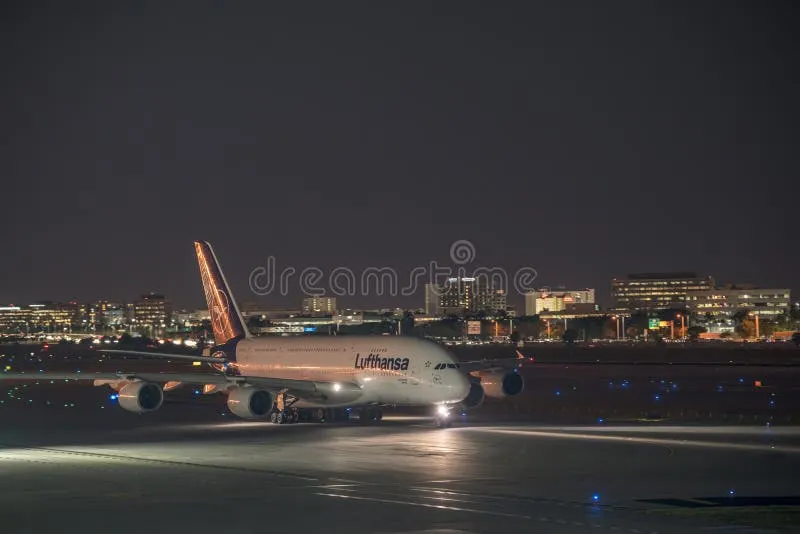
Taxiing is the movement of an aircraft on the ground, under its own power, in contrast to towing or pushback where the aircraft is moved by a tug.
The aircraft usually moves on wheels, but the term also includes aircraft with floats (for water- based travel).
An airplane uses taxiways to taxi from one place on an airport to another. For example when moving from a hangar to the runway. The term ''taxing" is not used for the accelerating run along a runway prior to takeoff or the decelerating run immediately after landing.
which are called the takeoff roll and landing rollout,resppectively.
HOW AIRCRAFT MOVE : Most aircraft cant reverse
- When you arrive at the gate for your flight ,more often than not you will get a great veiw of the nose of the aircraft through the terminal window.
- If you look closely, you will be able to see us pilots preparing the aircrafts for departure.
- however , the obvious problem with parking facing the terminal is that in order to get to the runway. we need to move backward off the stand first.
- If this was on your drive at home,you would just pop your car into reverse, back out onto the street and off you go.
- Unfortunately, aircraft are unable to do this as they dont have a reverse gear.
- In order to get round this problem, we use the assistance of a pushback tug.
the only time aircraft used external assistance is to pushback from the gate. Large turbofan aircraft need help to reverse via a pushback tractor. The engines are turned on after the pushback is complete and the aircraft can move forward under its own power.
If, AIRCFRAT ENGINE POWER IS USED TO MOVE ON AIRPORT : then it leads to blasting jet reversers blows debris in the croeded gate area creating foreign object damage hazard for adjacent aircraft, gate equipment or terminal waiting area glass windows.
QUESTION 4 : . How an aircraft is pushed to runway when its ready to take off?
ANSWER : A pushback truck lifts the front wheel of the aircraft, their role in most airports is to move the aircraft away from the parking spot on to the taxiways. Here the truck is removed and when all platform staff is out of the way the engines are started one by one. from here on the aircraft moves on its own power to the runway. in the aircraft you will hear the engine spinning up when power is demanded for acceleration.
An airplane uses taxiways to taxi from one place on an airport to another.
for example when moving from a hanger to the runway . The term taxing is not used for the accelerating run along a runway prior to takeoff or the decelerating run immediately after landing which are called the takeoff roll and the landing rollout.
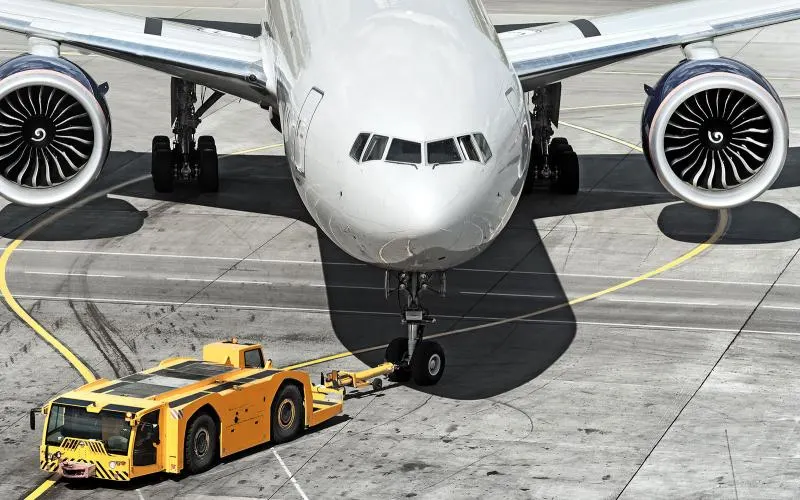
Pushback at busy aerodromes are usually subject to ground control clearance to facilitate ground movement on taxiways. once clearance is obtained the pilot will communicate with the tractor driver to star the pushback.to communicate a headset may be connected near the nose gear.
Once the pushback is completed the towbar is disconnected and any bypass pin removed. the ground handler will show the bypass pin to the pilots to make it clear that it has been removed. The pushback is completed and the aircraft taxies forward under its own power.
QUESTION 5 : Learn about take off power, tyre design, rolling resistance, tyre pressure, brake forces when landing.
ANSWER: TAKE UP POWER : The amount of power taht an engine is allowed to produce for a limited period of time for takeoff. The use of takeoff power is usually limited to 5 min for reciprocating engines and up to 3 min for gas turbine engines. This may not always be the case. Specifically ,with respect to reciprocating engines, it is brake horsepower developed under standard, sea level conditions and under the maximum conditions of the crankshaft rotational speed and the engine manifold pressure approved for the normal take off.
It is limited in continous use to the period of time shown in the approved engine specification. with respect to gas turbine engines, it is thrust developed under static conditions at a specified altitude and atmospheric conditions of the rotor shaft rotational speed and gas temperature approved for the normal takeoff.
Itis limited in continous use to the period of time.
TYRE DESIGN :
the tyers help to absorb the shock of landing and provide cushioning. It also provides the necessary traction for braking and stopping of aircraft.
An aircraft tyre is designed to withstand extremly heavy loads while landing, take off, taxing, and parking. The number of required wheels for aircraft increases with the weight of the aircraft as the weight of the aeroplane needs to be distributed more evenly.
DESIGN : car cass plies are used to form the tire. They are sometimes called ' Casing Plies" . An aircraft tyre is constructed for the purpose of
- They support the weight of an aircraft while it is on the ground.
- It also provides the necessary traction for braking and stopping of an aeroplane.
- Tyre also helps to absorb the shock of landing and provide cushioning the roughness of take off, roll out, and taxi operation.
ROLLING RESISTANCE :
Rolling resistance sometimes called rolling friction is the force resisting the motion when a body rolls on a surface. it is mainly caused by non elastic effects. that is not all the enrgy needed for deformation of the wheel is recovered when the pressure is removed.

Two forms of this are hysteresis losses. note that slippage between the wheel and the surface also reasult in energy dissipation. Although some researches have include this term resistance.
Some suggest that this dissipation term should be treated separtely from rolling resistance because it is due to the applied torque to the wheel and the resultant slip between the wheel and the ground. which is called slip loss or slip resistance.
TYRE PRESSURE :
Aircraft tires generally operate at high pressure up to 200psi(14bar,1400kpa)for airliners and even higher for business jets.
the main landing gear on the concorde was typically inflated to 232psi, whilst its tail bumper gear tires as high as 294psi.
BRAKE SYSTEM :
In the landing gear it is used to brake the wheels while touching the ground. Those brakes are operated hydraulically.
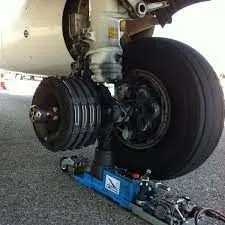
In most modern aircaft they are activated by the top sectioon of the rudder pedals.
In some older aircrafts the bottom sectioo is used instead. levers are used in a few aircraft.most aircraft are capable of differential braking.
Part B:
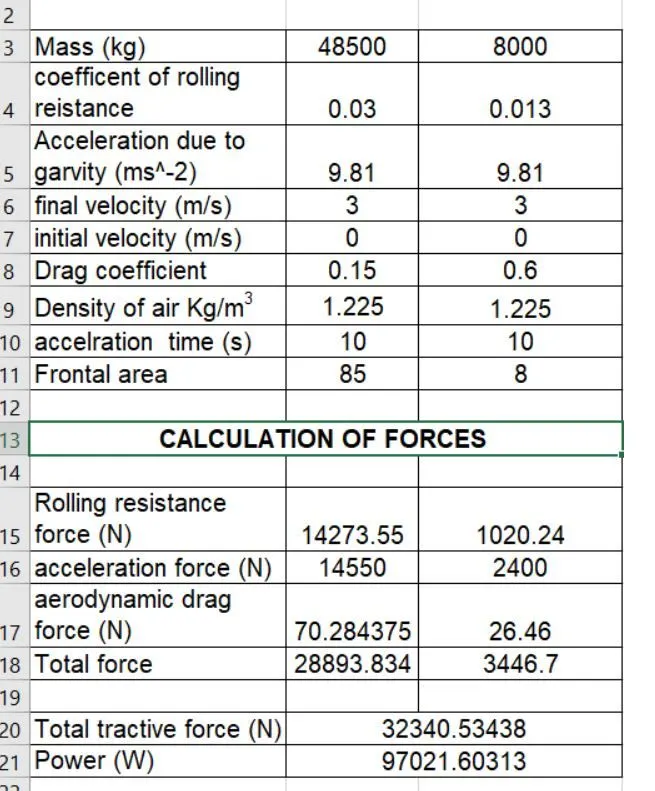
6. A. With necessary assumptions, calculate the force and power required to push / pull an aircraft by a towing vehicle.
B. Develop the model for the calculated force and power using Simulink.
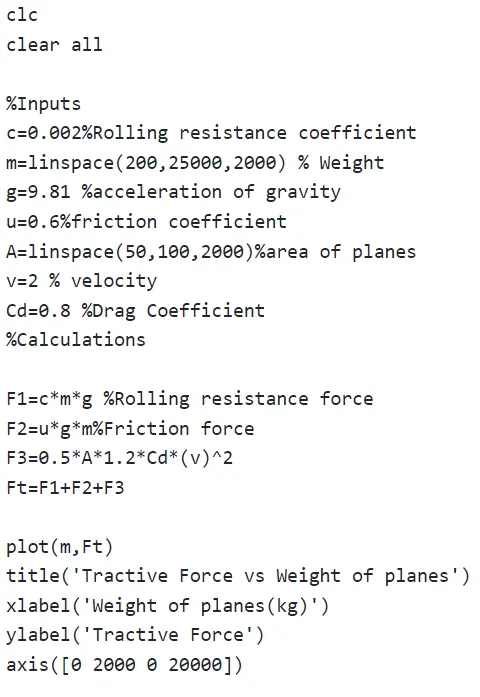
Reasults :
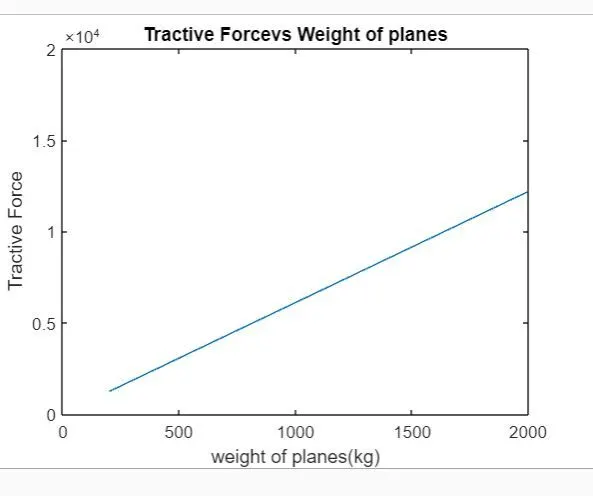
QUESTION 7
Design an electric powertrain with type of motor, it’s power rating, and energy requirement to fulfill aircraft towing application in Simulink. Estimate the duty cycle range to control the aircraft speed from zero to highest. Make all required assumptions. Prepare a table of assumed parameters. Draw a block diagram of powertrain.
(Hint :DC7 Block)
B. Also, Design the parameters in excel sheet.
ANSWER : from the block diagram, it can be seen that the basic flow is given.
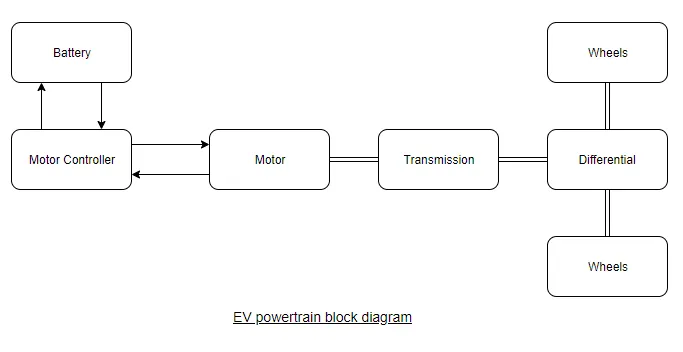
Here a feedback path is given where the output is compaired withreference value in order to match the reference value proper steos have been taken.
All the necessary blocks like motor controller converter and pwm are already inbuild in a DC7 drive block.
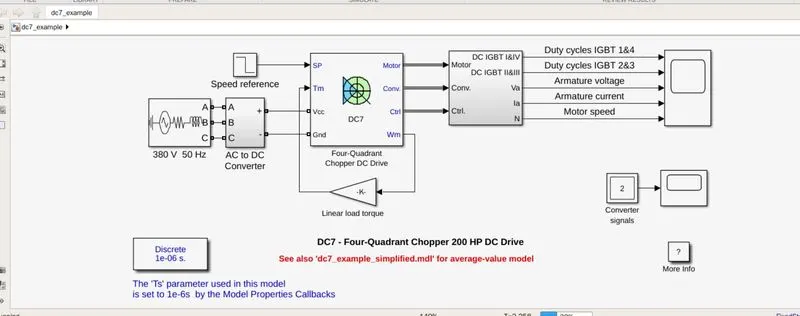
excel sheet calculation.