Week-6 Challenge: EV Drivetrain
1) Which types of power converter circuits are employed in electric and hybrid electric vehicle?
Types of converter used in electric/hybrid vehicles are-
- AC-to-DC= Rectifier: It converts AC to unipolar (DC) current.
- DC-to-AC= Inverter: It converts DC to AC of desired frequency and voltage.
- DC-to-DC= Chopper: It converts constant to variable DC or variable DC to constant DC.
Rectifier-
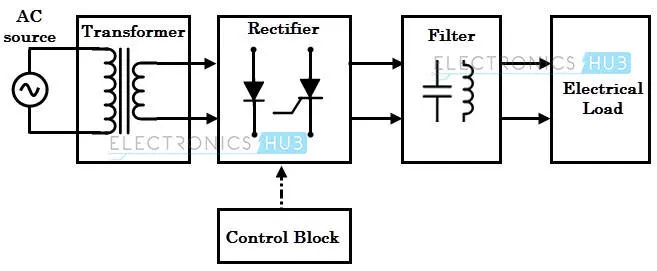
Rectifier are used to convert to alternating current to direct current and depending upon how much cycle is to be passed it can be classified as full wave rectifier and half wave rectifier.
Inverter-
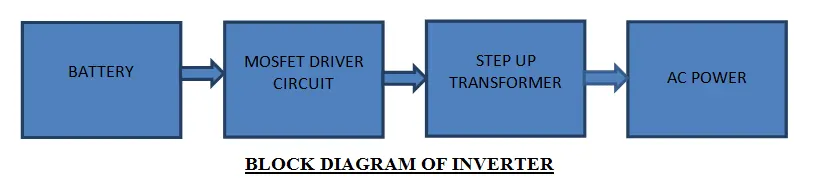
An inverter is a device which converts dc current to ac current with the help of igbts.
DC/DC CONVERTER-
A DC-to-DC converter is an electronic circuit or electromechanical device that converts a source of direct current (DC) from one voltage level to another. this are also calssified in bidirectional and uni directional.
birectional converter are used for regenerative braking mode.
types of dc converter- buck, boost, buck-boost converters
buck converter-
This is used to convert lower voltage than input voltage, polarities are same as the input voltage.
Boost converter - the output voltage is greater than input voltage.
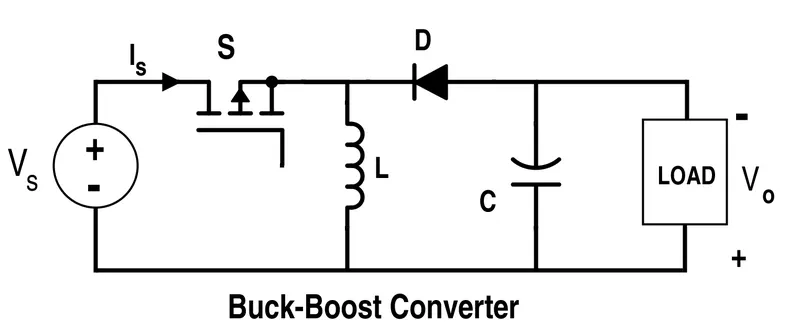
Buck-boost converter-
The ouput voltage can be either higher or lower than input voltage.
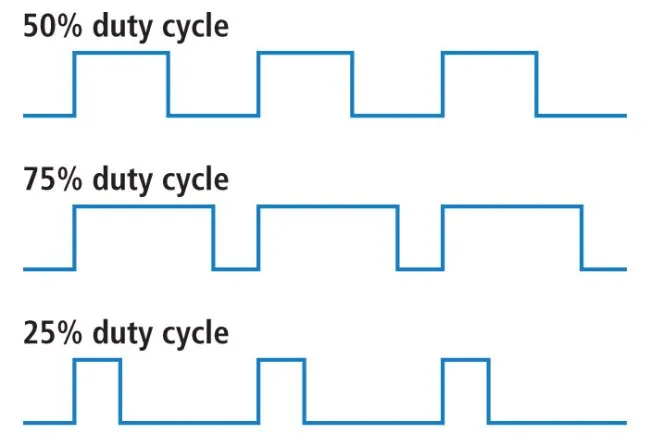
Depending on the duty cycle the output voltage can be controlled depending upon the requirment of the vehicle.
2) Electric Vehicle's powertrain with 72V battery pack in shown in the diagram below. The duty ratio for acceleration operation is 'd1' and for the braking operation the duty ratio is 'd2'.
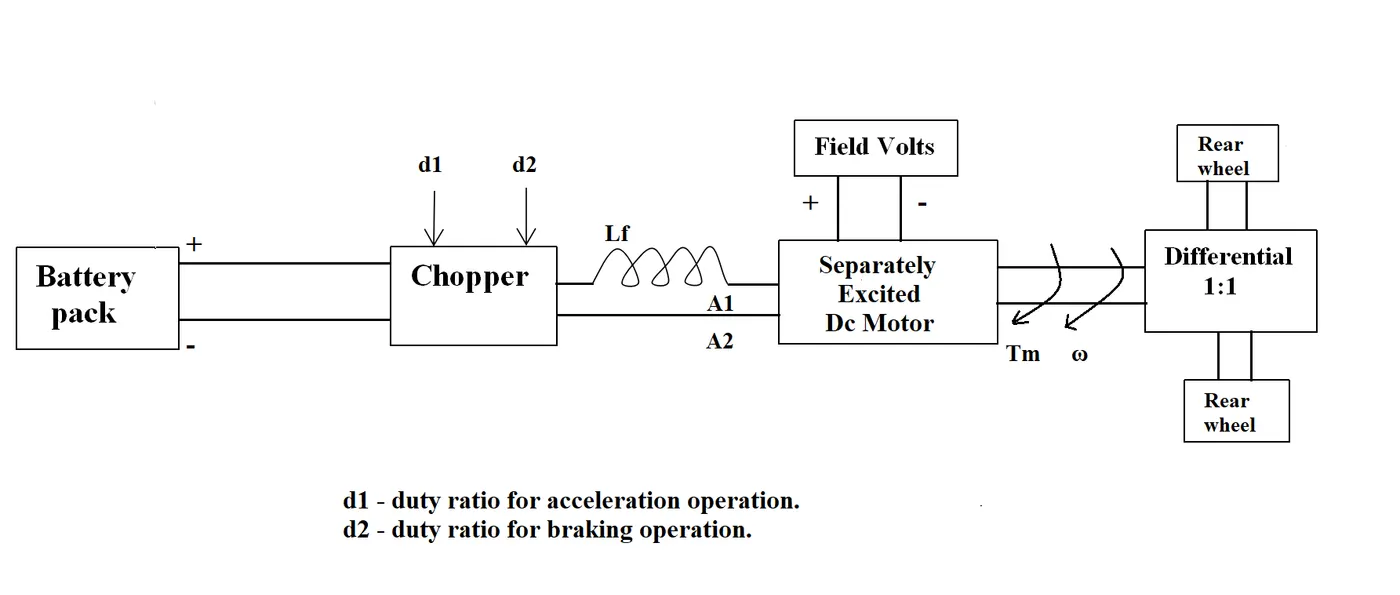
Motor and Controller Parameters:
Rated Armature voltage= 72 V
Rated armature current= 400 A
Ra= 0.5Ω, KΦ= 0.7 Volt second
Chopper Switching frequency= 400 Hz
The vehicle speed-torque characteristics are given by the below equation:
Tv=24.7+(0.0051)ω2">Tv=24.7+(0.0051)ω2Tv=24.7+(0.0051)ω2
solution:
Duty cycle=70%=0.7,
Actual voltage=0.7*72=50.4V
We have torque equation for motor,
T=VkϕRa-((kϕ)2Ra)⋅ω">T=VkϕRa−((kϕ)2Ra)⋅ωT=VkϕRa-((kϕ)2Ra)⋅ω
T=50.4⋅0.70.5-((0.7)20.5)⋅ω">T=50.4⋅0.70.5−((0.7)20.5)⋅ωT=50.4⋅0.70.5-((0.7)20.5)⋅ω
T=70.56-0.98⋅ω">T=70.56−0.98⋅ω
Equating both the equation of vehicle speed torque equation and torque equation to get the the required
Steady state speed-
70.56-0.98.ω.T= 24.57+(0.0051)ω^2
after solving the above quadratic equation we get omega values as-
38.915rad/sec and -231.107rad/sec
ω cannot be negative so the corrrect omega value for steady state speed = 38.915rad/sec
4) Develop a mathematical model of a DC Motor for the below equation using Simulink.
ω= V/Kϕ -Ra/Kϕ^2.T
Matlab code-
clc
% array of rortor speed
speed = linspace(0,300,100)

N_s = input('speed constant for motor= ');
V= input('input voltage supply= ');
R_a = input('armature resistance= ');
%Emf is directly speed of the motor

emf=1 %as in the video is given back emf is one unit for required voltage of dc motor
k_phi = emf*60/(N_s*2*3.14);

T = V*(k_phi/R_a)-speed.*(k_phi^2/R_a);

%total current
Tc = (V-emf)/R_a
Tmax = k_phi*Tc

speed = speed.*60/(2*3.14)

plot(speed,T,'color','r')
Simulink model-https://drive.google.com/file/d/1PBCXEgJfS-o4RhWSIRpmCgVAf2OvC1US/view?usp=sharing
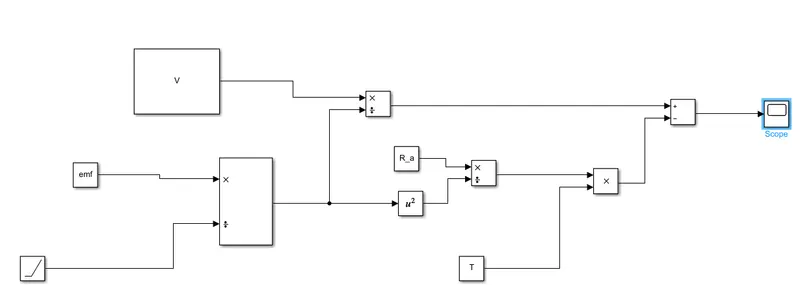
We calculate the speed using simulink model.
for different torque at different value of speed, how's the speed getting generated, for a dc motor.
kphi is calculated emf/speed
4) Refer to the blog on below topic:
Induction Versus DC brushless motors by Wally Rippel, Tesla
Explain in brief about author’s perspective.
As per the requirment todays world and new technologies getting implemented the requirment of battery is getting chnaged there has been significant change in battery from lead acid battery to lithium ion battery.
lithium ion battery- out put from here could be taken with the help dc brushless motor and ac induction motor.
Dc brushless motor-
Bldc motor has been significant use in electric vehicle as the previous dc motor were brush motor and they created spark and this can lead to problem in long term and with the help of dc brushless motor the magnets are stuck to rotor and the stator has three phase winding which helps the motor move around with the help of eectromagnetic force and this runs the motor, As when current is passed in one of the winding this creates a magnetic field and this helps the rotor move, and the current is keeped passed to alternative winding this makes sure that rotor keeps running and dosen't stop. ther eare sensors used in it which help to identify where's the magnet at the starting of the motor.
The advantage of DC Brushless motor is that there is low heat generation in the rotor, its cooling capacity is better as compared to induction motor drive; Also Peak Power efficiency is high. Another difference is that DC Brushless drive can also operate at unity power factor, whereas the best induction drives is about 85%, this means that the peak point energy efficiency for a DC Brushless drive will typically be a Few % points higher than for an Induction drive.
Induction motor-
This dosen't have permanent magnets as in this case magnetic field is created which keeps varying with the electricity passed through it and their is squirrel type cage as because of magnetic field the current is generated in it and which produces force in it and which helps the squirrel cage to roatate.
The induction motor does not have any magnets and in this the B field is adjustable. In an induction motor B field is proportionate to V/f (Voltage to frequency). This technology is used to reduce the magnetic losses and conduction losses, due to which efficiency will maintain at maximum peak. This all lead to increase the performance, induction motor is very useful and efficient for high performance. In an induction motor, the peak efficiency is less but it works smoothly better. The controlling of induction motor or mechanism is more complex. Also the Torque generated is low and the motor temperature increases when it works at high speed.
As the weight increases there are more losses in dc brushless motor compare to induction motor.And permanent magnet is expensive in comparison to dc brushless motor.
Both of them have there advantage and in future it'll be seen that both will be workimg in hybrid or electric vehicles in comparison to there usage.