Week 6- Challenge
Aim: Perform geometry cleanup and generate mid-surface then mesh the component (Hood) with the given quality criteria and assign the thickness.
Introduction:
In this report, the Hood of the car is used to create the FEA model. This model consist of four components. The thickness of the component is less and uniform throughout the body so mid-surface is extracted to generate FE model.
Mid-surface extraction:
The mid-surface is extracted using SKIN OFFSET method. This is automatic method of extracting mid-surface. The extracted mid-surface matches exactly with the parent components. The component and their corresponding mid-surface is shown below:
- Latch:
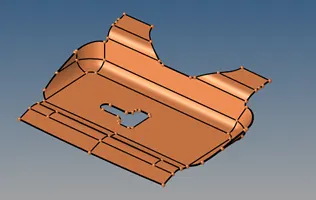
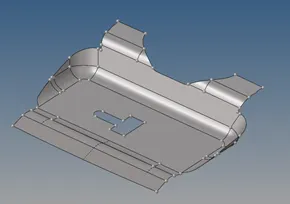
Fig. 1: (Left) Parent body & (Right) mid-surface-auto cleaned
- Hinge:
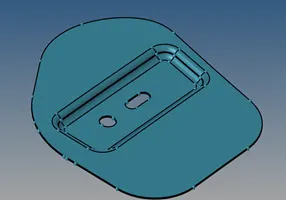
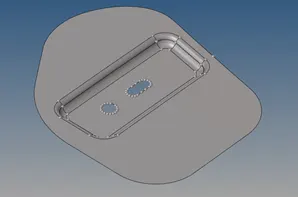
Fig. 2: (Left) Parent surface & (Right) Mid-surface
- Outer body:
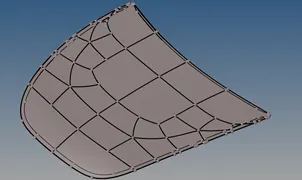
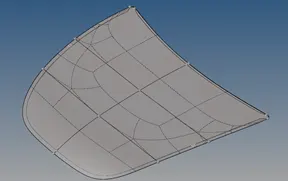
Fig. 3: (Left) Parent surface & (Right) Mid-surface
- Inner body:
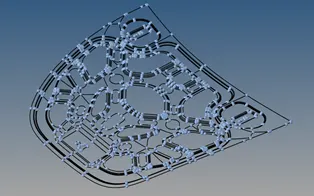
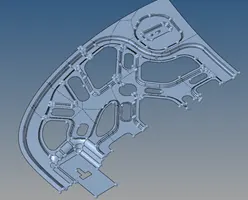
Fig. 4: (Left) Parent surface & (Right) Mid-surface
Finding Symmetricity:
In this model, we can see that most of the component is symmetrical so we split the part. That symmetrical half portion will be meshed and then reflected.
The symmetrical component is shown below:
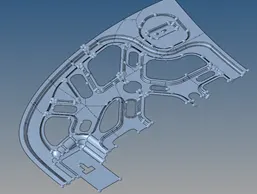
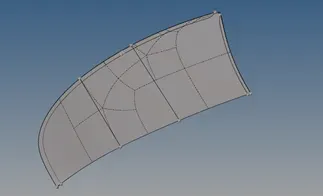
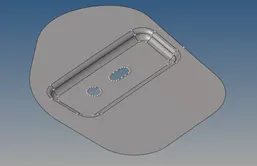
Fig. 5: Symmetrical Component (A half portion is masked)
Meshing:
A mixed type of mesh is used as the surface is intricate with lots of bends, converging sections, and feature. The flow pattern in the mesh is taken care of along with the opposite trias. Rotating quads is eliminated at the maximum place.
- Latch:
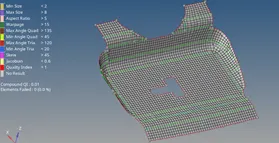
The Mesh of this latch surface has a very good mesh flow pattern. The surface capturing is also quite good. Indeed, you can see the feature line is visible and consistent with mesh flow.
- Hinge:
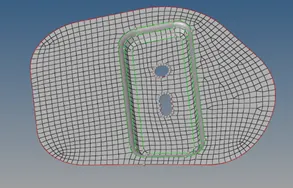
The mesh flow pattern is controlled and directed in one direction manually. The rotating quad is reduced. At the corner, one trias is maintained otherwise lots of trias and quad will be formed at that region. The trias perpendicular to each other is not merged because it results in rotating quads.
- Outer part:
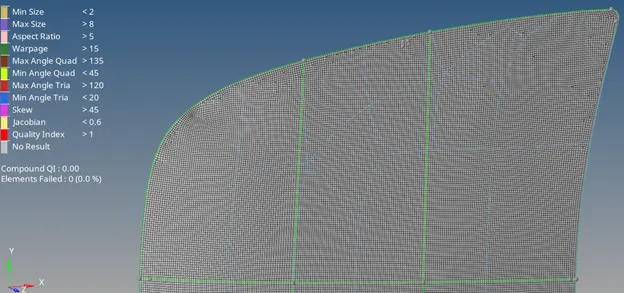
This component is very large in size. The complexity of this part is very low and plain surface all along. From the above picture, you can see that most of the surface is quad (almost 99%) and the remaining is trias. There is no rotating quads formed on this surface.
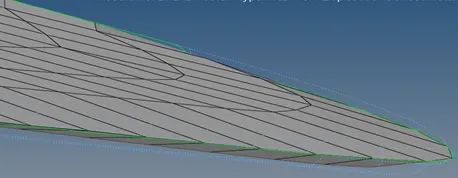
The edge of the outer body is disfeatured which form sharp edge. The element length is bigger than the fillet length. Middle line is taken into consideration to join upper part with lower one.
- Inner Part:
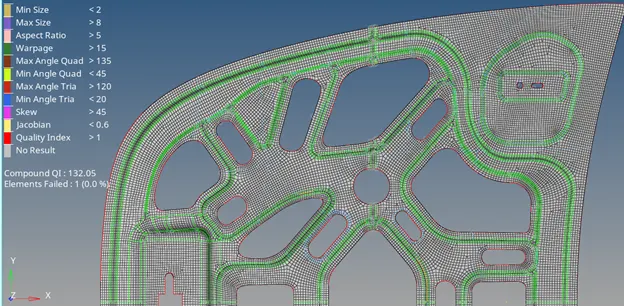
This part of the component have more number of feature and bend and turning. It is very daunting to manage the flow pattern without trias and rotating quad in such region. The opposite trias is removed. But some of the rotating quads are there as you can see in the above picture. Some of the region seems too dense that because of the convergence of number of mesh line.
Troubleshooting:
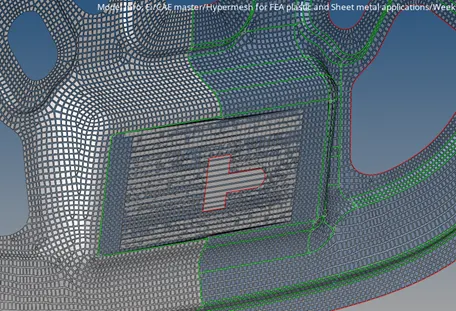
Fig. 6: Elongation and straining of the parent mesh during reflection
While reflecting the symmetric mesh some of the elements is elongated. Those elements were deleted carefully selecting each manually.
Checks:
Normality checks are performed and duplicate mesh are also checked.
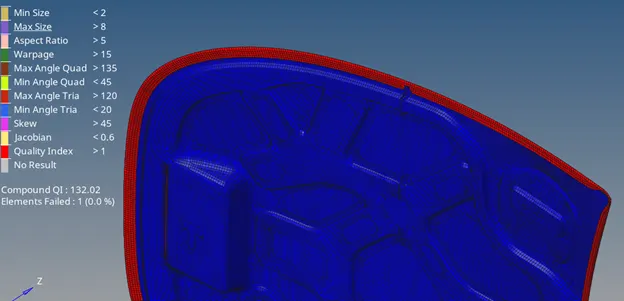
Fig.7: Normality check (same color represents the mesh is oriented in one direction)
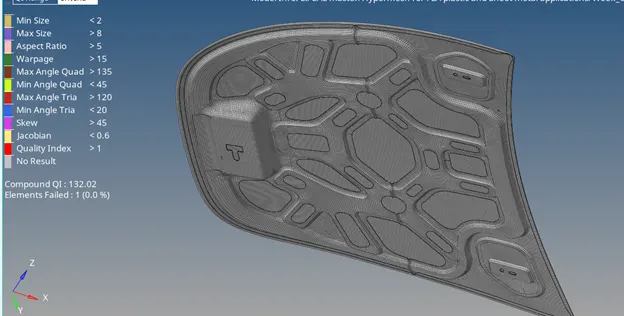
Final Model:
Learning Outcomes:
- The accepted flow pattern of mesh
- Method of meshing the complex feature to get better mesh flow and elements
- Troubleshooting the duplicate faces and precaution during reflection
Conclusion:
The way of meshing the feature is most crucial thing to get more controlled and smooth flow of mesh and during re-mesh one need to keep in mind what portion of mesh should I choose to get good flow of mesh minimizing unwanted mesh pattern.