Week 5 Sphere pressing on a plate
Sphere pressing on a flat plate
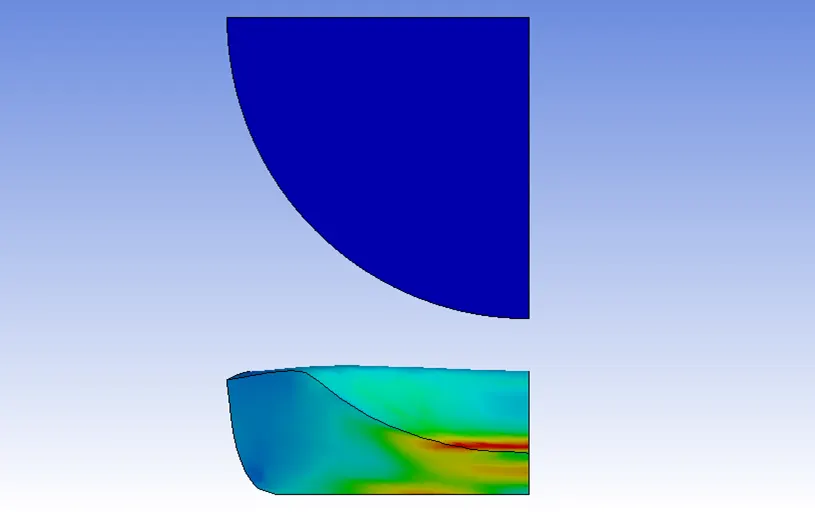
Introduction:
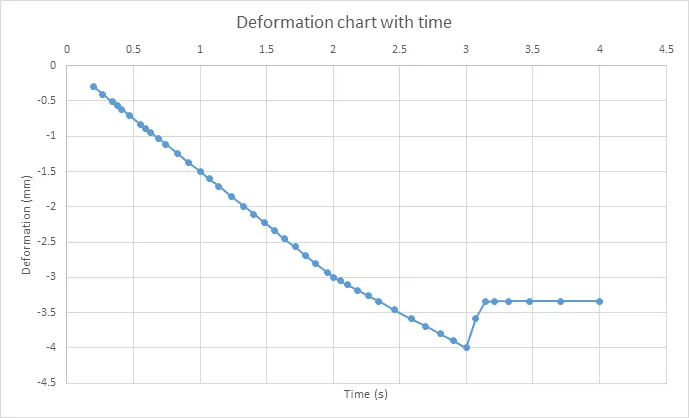
In this small project, we will show the effect of the non-linear behavior of materials. As we know any materials which go under yielding will experience permanent deformations. Hence, this kind of behavior is only captured by the non-linear algorithm. The model taken is simple, one-quarter sphere and plate, symmetric about the axis. From the analysis, we found that the plate undergoes deformation under the load. After removal of the load, the plate expands by 0.6584 mm.
Model Preparation:
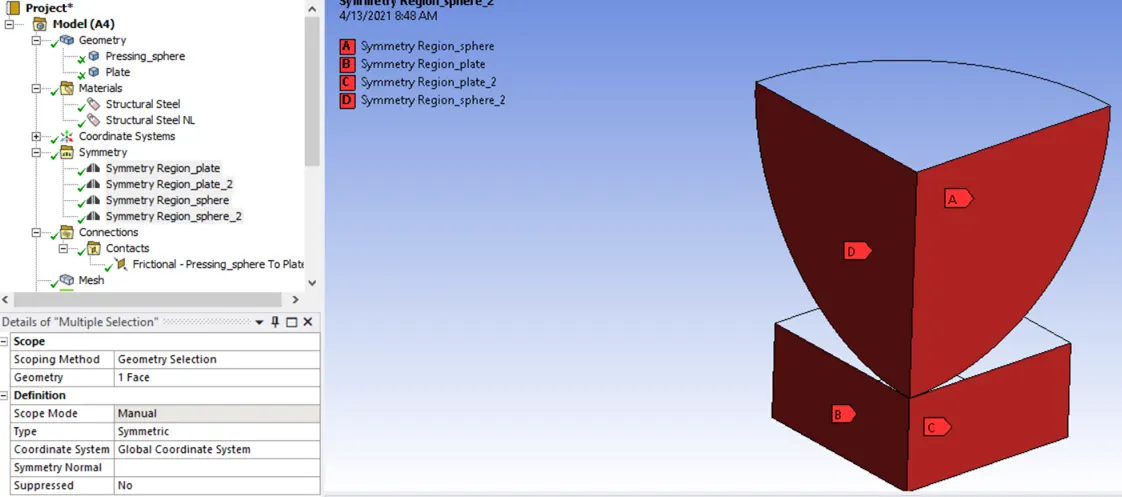
The model is symmetric so only a quarter part of the model is used for the simulation to save time and ensure the best practice. The materials used are structural steel (linear) and non-linear structural steel. The contact is created between the sphere and the plate with a co-efficient of friction of 0.57 (sliding friction from roymech chart).
Boundary Conditions:
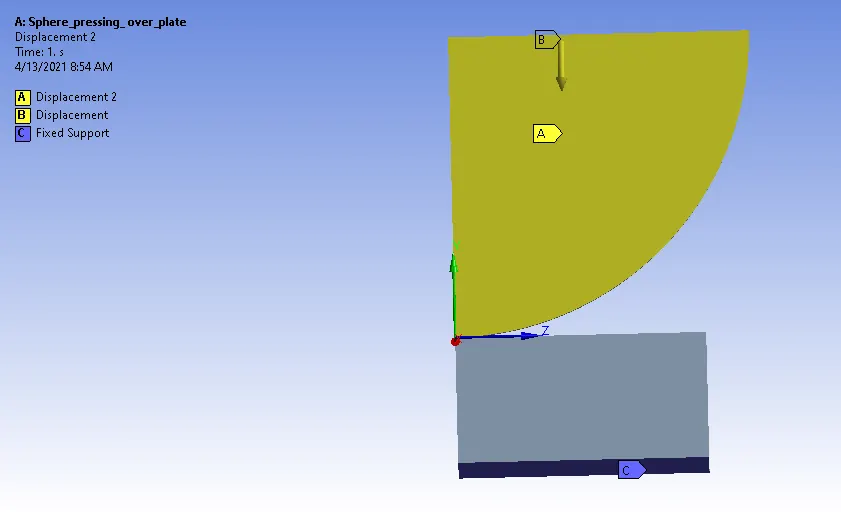
The lower part of the plate is fixed to the ground. The sphere two sides (A) is made immobile in z and x directions (Displacement 2). The upper part of the sphere is made to move by 4 mm (Displacement, B) in negative y-directions.
Analysis settings:
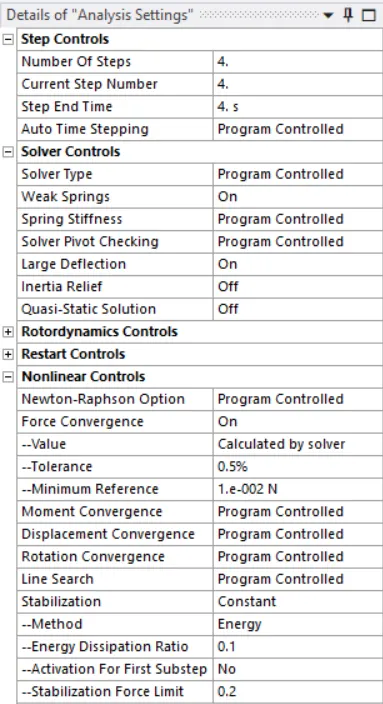
The problems are divided into the 4 load step. The time for each step is assigned to 1 second and hence problem ends in 4 seconds. The time-stepping parameter is kept automatic and thus controlled by the algorithm by itself with the best possible time-step. The weak springs are activated to provide better control over the problems in case of large deformation and convergence issues. The large deflection is switched "on" to get accurate results from the simulation in case of large deformation.
For non-linear analysis settings, the Newton Raphson method is selected by the algorithm based on the nature of problems. The force convergence is turned "on" to get an accurate force value and to get converge value of force. The energy dissipation ratio is kept at 0.1.
Analysis results:
Directional deformations:
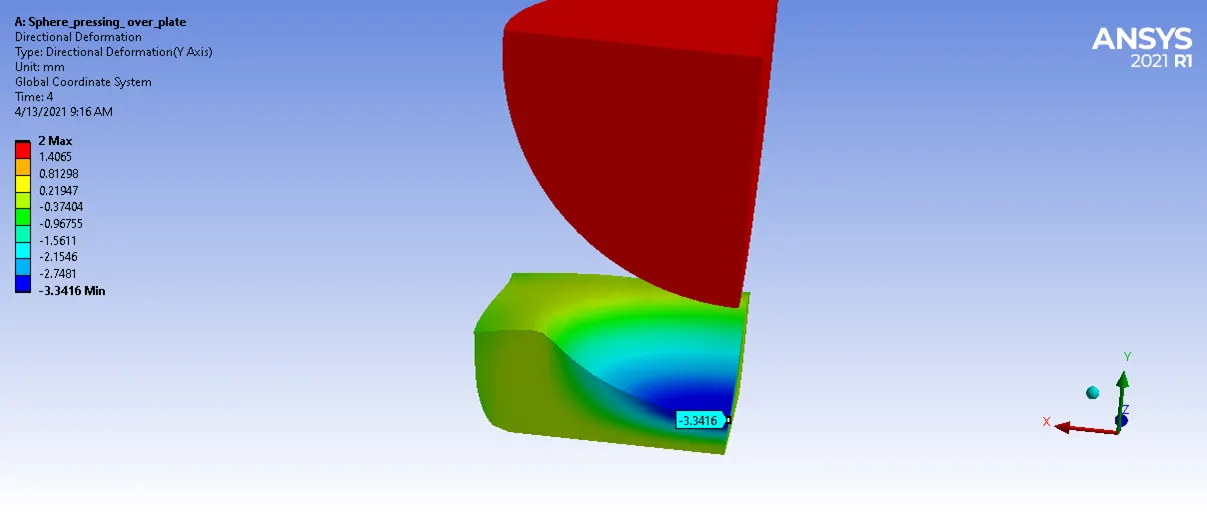
The plate is compressed by the sphere by 4mm in the negative y-direction. After relieving the load the plate expands through the 0.6584 mm which is the linear deformation part. The non-linear deformation which is a permanent deformation is not relieved after unloading. From the below graph, we can clearly imply this behavior:
Equivalent elastic strain:
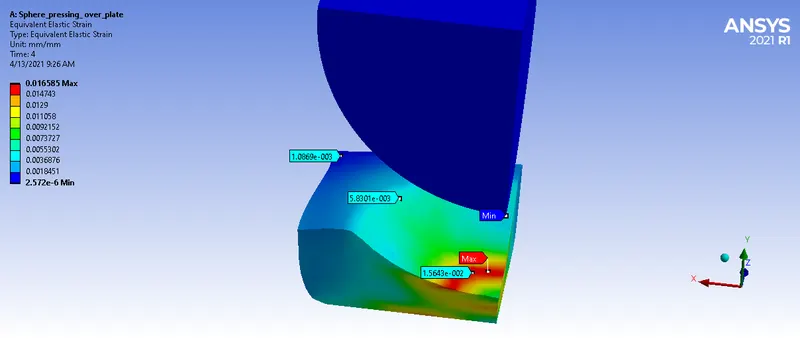
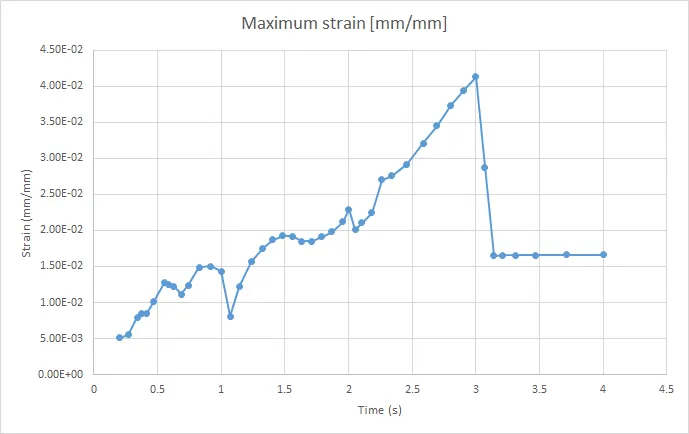
The equivalent elastic strain is shown in the above picture. It shows that the elastic strain is maximum around the center of the depression. The strain of the plate is also increased with time when loaded but strain decreased while unloading. This statement is shown by the graph below:
Equivalent Stress:
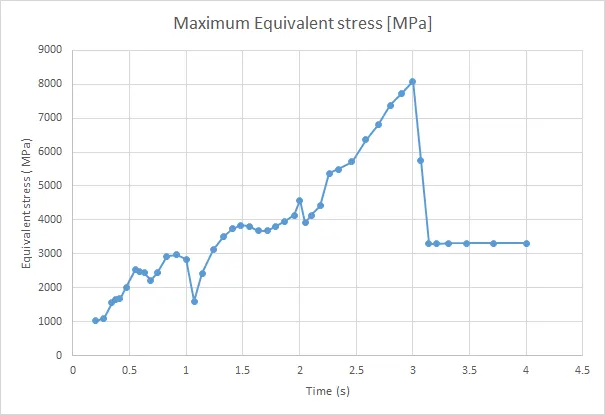
The compressive yield strength of the structural steel is 250 MPa but the stress acting on the sphere is beyond that up to 8000 MPa. The stress is released after unloading the plate. The stress contour of the sphere is shown below.
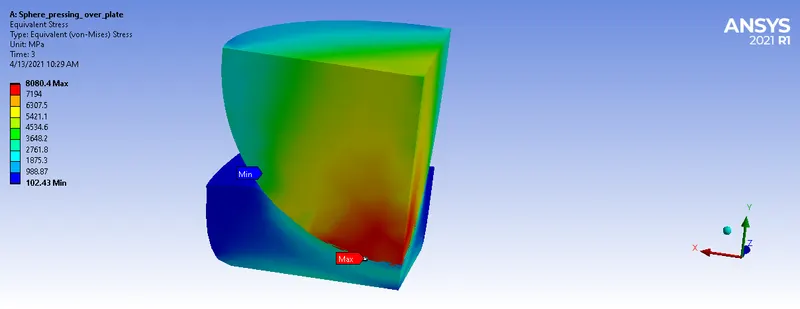
Despite the higher stress acting on the sphere, it is able to regain its original state after relieving the load because the metal used is elastic in nature and follow the hooks law irrespective of load applied as shown below:
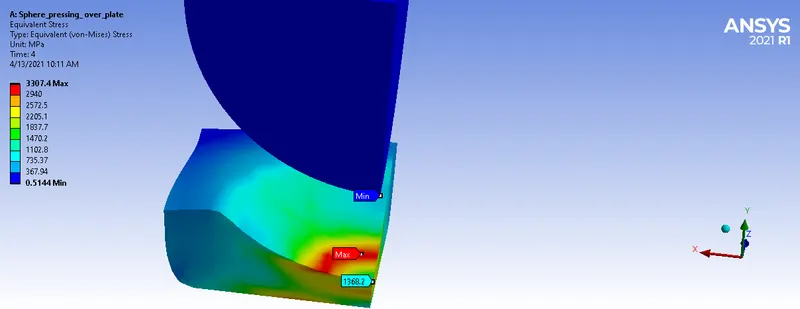
But the plate which is assigned with non-linear structural steel is still under a deformed state as the non-linearity of the metal is captured very well.
Contact Pressure:
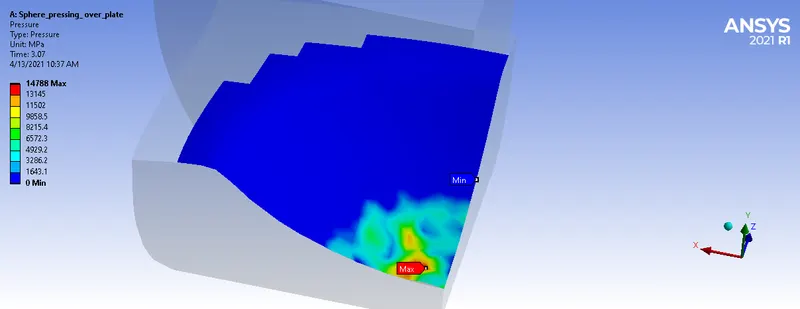
The contact pressure of the sphere on the plate is shown below. The highest value of the contact pressure is 14788 MPa.
Learning outcomes:
- The difference between elastic and non-linear material
- The advantage of symmetricity
Conclusions:
It is recommended to use non-linearity in the material property if the deformation is high and if stress is beyond the yield strength.