Week 5 Sphere pressing on a plate
Sphere pressing on a plate
OBJECTIVE
To simulate a sphere pressing on a plate using structural steel and structural steel nonlinear materials for the material of sphere and plate respectively and with sphere pressing up to 4mm onto the plate and retracting the sphere to its original location. The objective is to analyze and study the plastic deformation of the plate.
METHODOLOGY
The geometry with sphere and plate was imported and checked in Spaceclaim. The bodies were rechecked for any abnormalities in spaceclaim and verified that the geometry was free of abnormalities. Structural steel NL from ‘General nonlinear materials’ in Engineering data sources was assigned for the plate material whereas structural steel was used assigned to the sphere. The material properties of structural steel NL are provided in Fig. 1. The material properties of Structural steel are given in Fig. 2. One-quarter of the entire body is only analyzed. Therefore, symmetry has been assigned to the two vertical faces of the sphere and plate along the X and Z axis. Frictional contacts were provided between the sphere and plate by selecting the curved surface of the sphere as contact bodies and the corresponding contacting surface on the top surface of the plate as target bodies. Figure 3 shows the defined contact conditions for the analysis. In the contact settings, frictional contact with a coefficient of friction as 0.74 was selected for both contacts. The two bodies are meshed with mesh size of 1.5 mm. Figure 4 shows the meshed model. The analysis comprises of 6 steps. The solver type was changed to ‘Direct’. Large deflection was turned on. The bottom face of the plate was fixed to constrain the motion in all degrees of freedom. Displacement was provided on the top surface of the quarter sphere as provided in Table 1. Finally, von mises equivalent stress of plate, equivalent plastic strain of plate, directional deformation in Y direction of all bodies, equivalent elastic strain of sphere and directional deformation along Y direction at the centre of the sphere are evaluated.
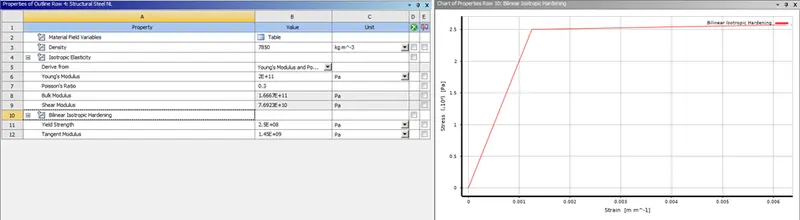
Fig. 1 Material properties of Structural steel NL
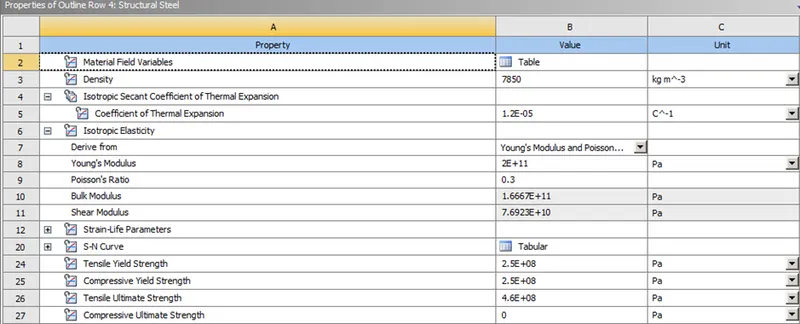
Fig. 2 Material properties of Structural steel
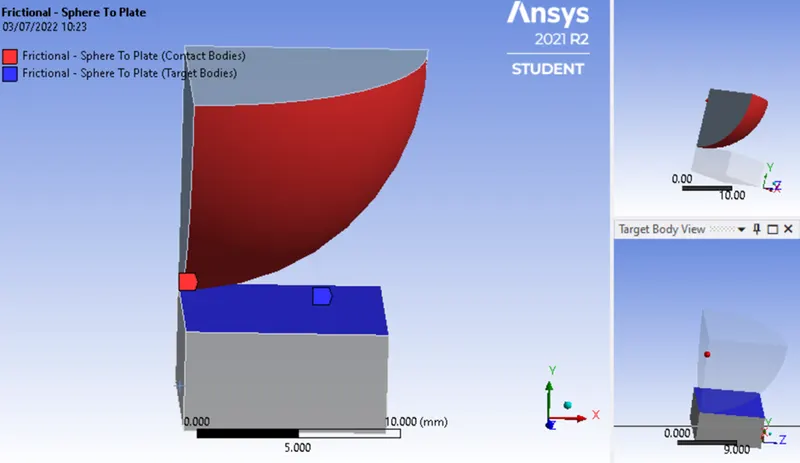
Fig. 3 Frictional contact between sphere and plate
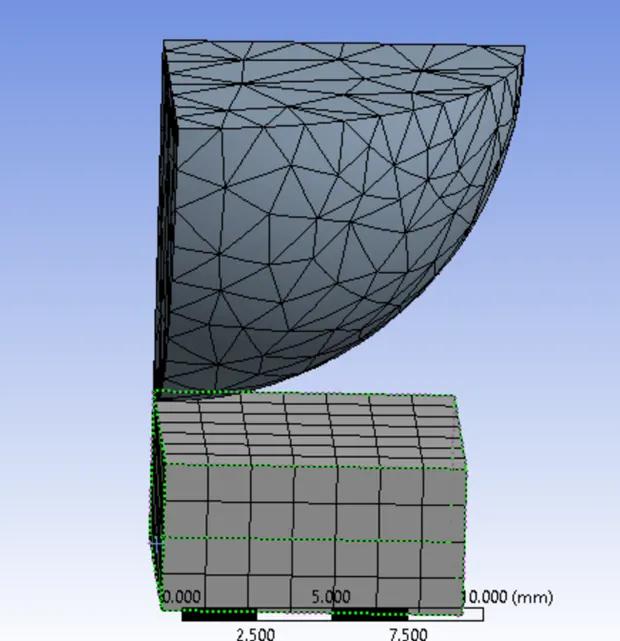
Fig. 4 Meshed model
|
Table 2 Displacement of sphere along Y direction |
|
|
Steps |
(mm) |
|
0 1 2 3 4 5 6 |
0. -1 -2 -3 -4 0 0 |
RESULTS AND DISCUSSION
The sphere, moving down onto the plate for 4mm, has caused elastic and plastic deformation of the plate significantly. The plate made of structural steel NL has undergone plastic deformation since the plasticity was also defined in the structural steel non-linear material. A quarter of the entire model was only used for analysis since there was symmetry along with two faces. The centre of the entire plate model (in this case, the edge of the plate since symmetry was defined) has deformed along Y axis by 3.362 mm (Figure 5) after the retraction of the sphere. Furthermore, the directional deformation of all bodies is shown in figure 6. From figure 6, the deformed plate has retained the final shape which is a clear indication of plasticity. The equivalent plastic strain of the plate is 1.6398 after retraction as indicated in figure 7.
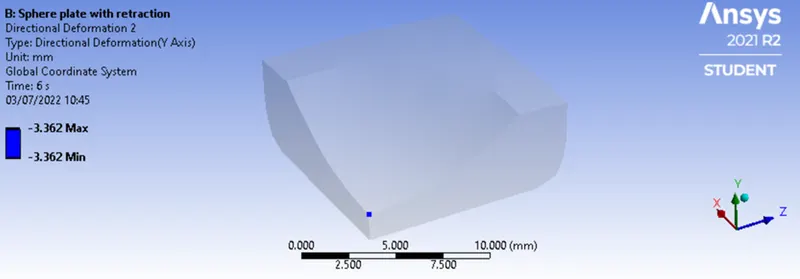
Fig. 5 Directional deformation of the centre of the plate after retraction of the sphere
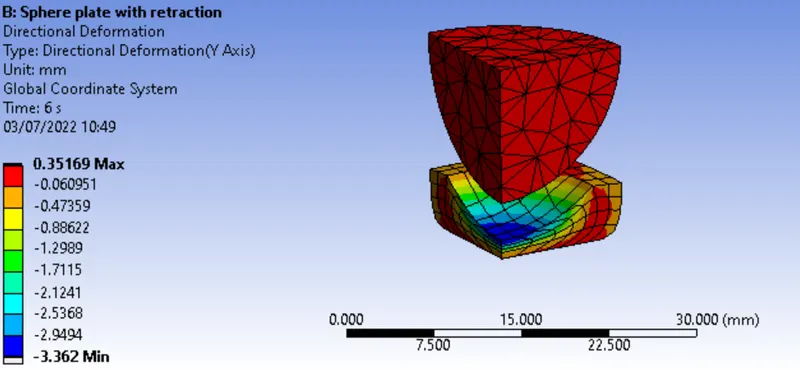
Fig. 6 Directional deformation of all bodies after the retraction of the sphere
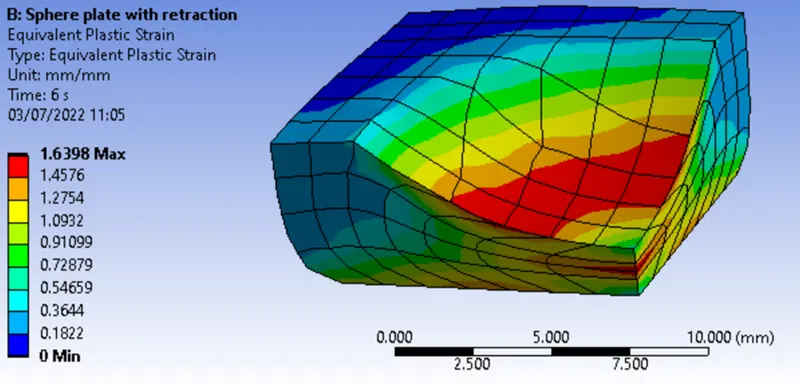
Fig. 7 Equivalent plastic deformation of the plate
Figure 8 shows the equivalent stress of the plate body subjected to plastic deformation. The maximum von-mises stress is 3088.5 MPa at the end of the analysis, i.e, after the retraction of the sphere. At the maximum displacement of the sphere (4 mm) and while the sphere was in contact with the plate, the von mises stress was 3109.2 MPa. The reduction in 20.7 MPa once the sphere is retracted is due to the Bauschinger effect.
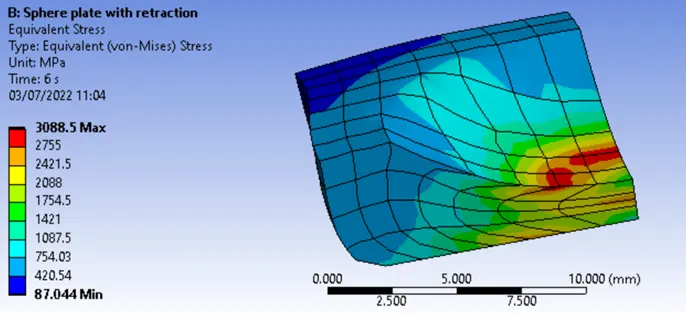
Fig. 8 Von-mises stress of plate after the retraction of the sphere
The sphere has undergone only slight elastic deformation with maximum elastic deformation of 5.5695 e-6. The maximum elastic strain with 4.9726 e-2 was also observed when the sphere moved up to 4 mm trying to pressurize the plate. The elastic deformation of the sphere, once it is retracted, is shown in figure 9.
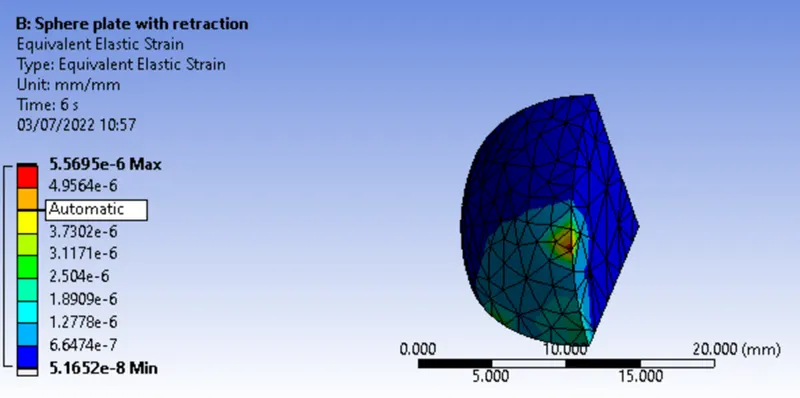
Fig. 9 Elastic deformation of the sphere after retraction
Overall, the discussed analyzed results are tabulated in Table 2.
|
Table 2 Results such as Equivalent stress, equivalent plastic strain and directional deformation |
|
|
Material |
Results |
|
Von Mises stress (MPa)- End time of plate |
3088.5 MPa |
|
Maximum Von Mises stress (MPa) of plate |
3109.2 MPa |
|
Equivalent plastic strain- End time of plate |
1.6398 |
|
Maximum equivalent plastic strain of plate |
1.6398 |
|
Directional deformation (Y direction)(mm) - End time of centre plate |
3.362 mm |
|
Maximum directional deformation (Y direction)(mm) of centre plate |
3.4612 mm |
|
Directional deformation (Y direction)(mm) - End time of of all bodies |
3.362 mm |
|
Equivalent elastic strain- End time of sphere |
5.5695 e-6 |
|
Maximum Equivalent elastic strain- End time of sphere |
4.9726e-2 |
CONCLUSION
Numerical analysis was conducted for investigating the von mises stress, equivalent plastic strain and directional deformation along the Y direction. The plate has undergone severe plastic deformation. As a result, high stress of 3088.5 MPa has been developed in the plate after the retraction of the sphere. The centre of the plate was deformed up to 3.362 mm and the final shape was retained. The plastic deformation of the plate was evident. The equivalent plastic deformation of the plate was 1.6398 after the retraction of the sphere. The sphere has undergone only slight elastic deformation with 5.5695 e-6. The sphere has not undergone plastic deformation since non-linear property was not assigned to the structural steel material of sphere. Fine meshing was not carried out since the analysis was performed in Ansys student version.