Week- 5 - Solid meshing
Objective:-
- to do geometry clean up
- to create a 2d tria mesh over the given modal
- to eliminate all the failing elements for maximum and minimum length
- to define a volume
- to create a 3d mesh (tetra mesh)
Introduction:-
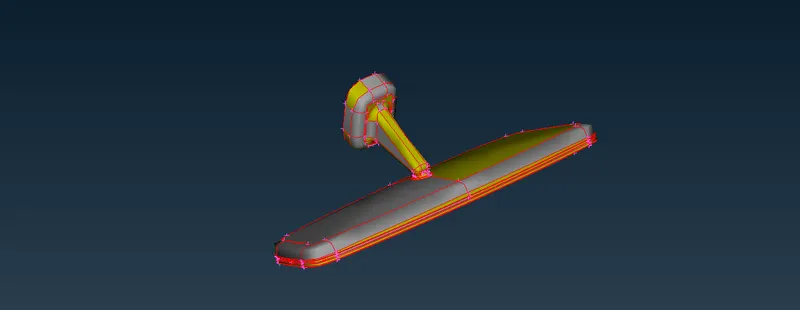
- we received a cad modal of the rearview mirror of a car
- which is used to see objects behind the car through this mirror
- almost every car has this rearview mirror
- it is very essential for driving a car
- the modal that we received has some geometrical errors which we fixed using checks
- then we have to create a 2d mesh over the surfaces using tria elements and ortho tria elements only
- with an average length of 1 unit
- and a maximum length of 2 unit and a minimum length of 0.5 units
- which we inserted into the criteria file settings and mesh settings
- then we used to define volume options to create the 3d tetra elements all around the volume of the modal
- then we used tet collapse value 0.2 as in criteria file settings
- after which we have to fix all the failing tetra elements for tet collapse
Modal that we received
Theory:-
- after getting the modal we looked for irregularities, there was a lot of single cons which should be attached to each other
- so to fix that we used the "toppo" tool and almost all the single cons that are supposed to be attached got attached
- then there were few unnecessary triple cons that we had to fix
- we fixed them using auto fix in the geometry check tool
- by doing this all the geometrical errors got resolved.
all the triple cons that we found in the geometry check after fixing all the single cons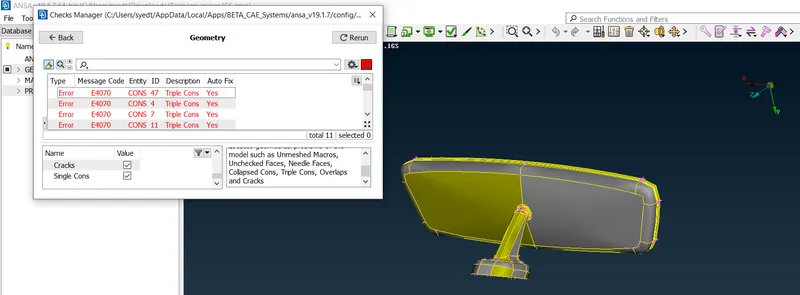
- then we used the "orient" tool to fix the orientation of the given modal and get a better orientation of the modal
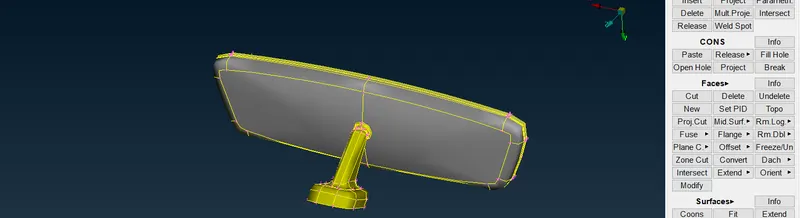
- then we moved towards meshing the component which we did component by component by using the property IDs
- we used tria and ortho tria elements for meshing the modal
- mostly for the fillet regions, we used the ortho tria elements
- because the ortho tria elements are precise and have better dimensions
- and ortho trias have better surface capturing than tria
- ortho tria reduces the possibilities of having a king because of its better surface capturing attribute
- that's why we use ortho trias for the curved and fillet regions to avoid any kind and failure of elements
- whereas we used tria elements for meshing the flat surface
- this is because ortho tria elements require more programming time while analyzing than tria elements
- so we have to try to reduce the usage of ortho tria elements
- in this way, we meshed each component
- and after that, we fixed all the failing elements failing for maximum and minimum lengths.
zero failing tria elements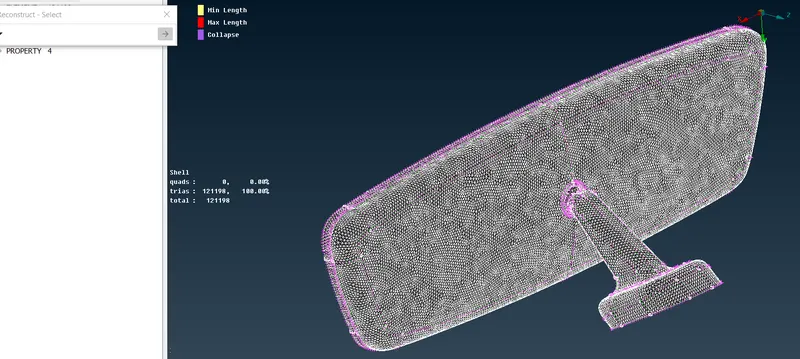
- we used tools such as reconstruct, swap, split, etc to fix all the failing elements.
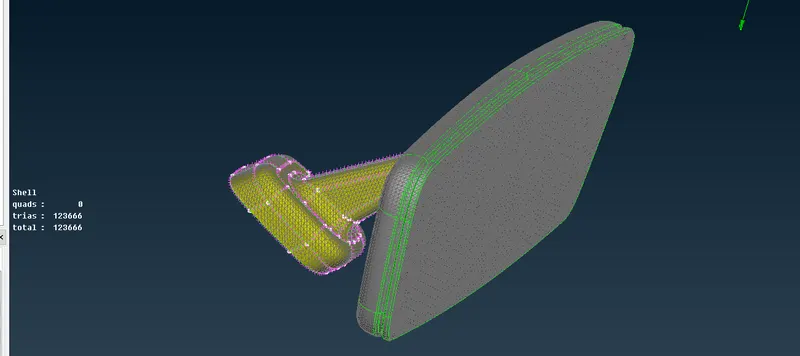
- then we moved towards creating the volume or 3d elements
- for that, we used the Define tool to define volumes for each component
- then by using the list tool
- we remeshed it and that's how we got all the 3d elements
- but after getting tetra elements we looked for all the failing elements for tet collapse which was supposed to be lower than 0.2
- so there weren't any failing elements so we did not have to fix any tetra elements failing for tet collapse
defining volume component by component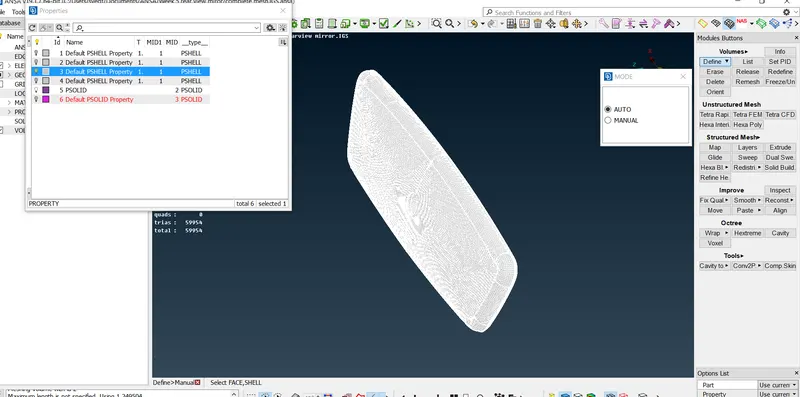
remeshing using list tool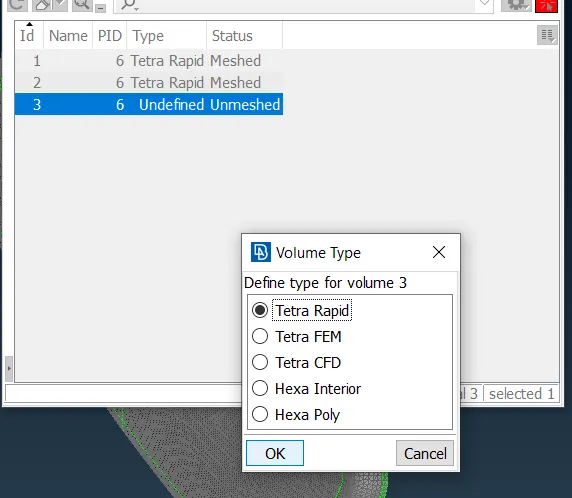
complete tetra mesh with zero failing elements for tet collapse=0.2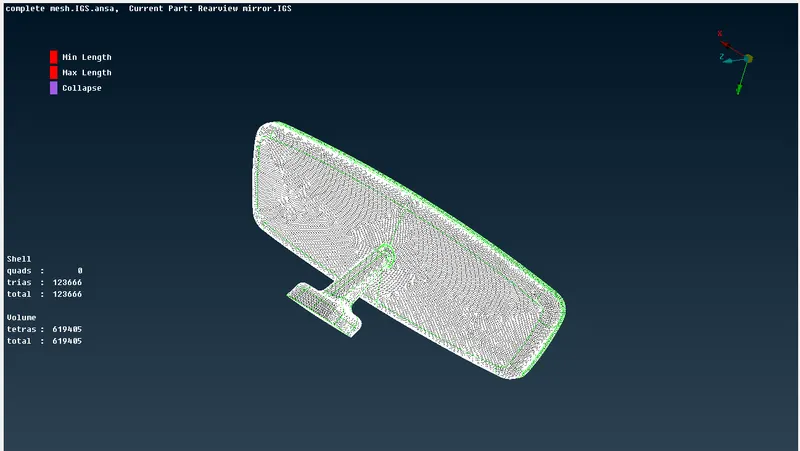
Conclusions:-
- in this project, we learned how to create 3d elements
- we learned, how to eliminate all the failing elements
- we learned, to use tools such as "define", "list".