Week 5 - Rayleigh Taylor Instability
Aim: To Perform the Rayleigh Taylor instability simulation for 2 different mesh sizes with the base mesh being 0.5 mm and also perform a simulation with a user defined fluid of density 400kg/m# and viscocity 0.001kg/m-s.
To find the Atwood number for both the cases and to compare the results.
Some practical CFD models that have been based on the mathematical analysis of Rayleigh Taylor waves:
Richtmyer–Meshkov instability:
The Richtmyer–Meshkov instability (RMI) occurs when two fluids of different density are impulsively accelerated. Normally this is by the passage of a shock wave.
Kelvin-Helmholtz Instability:
The Kelvin–Helmholtz instability typically occurs when there is velocity shear in a single continues fluid, or additionally where there is a velocity difference across the interface between two fluids.
Simulation:
Geometry:
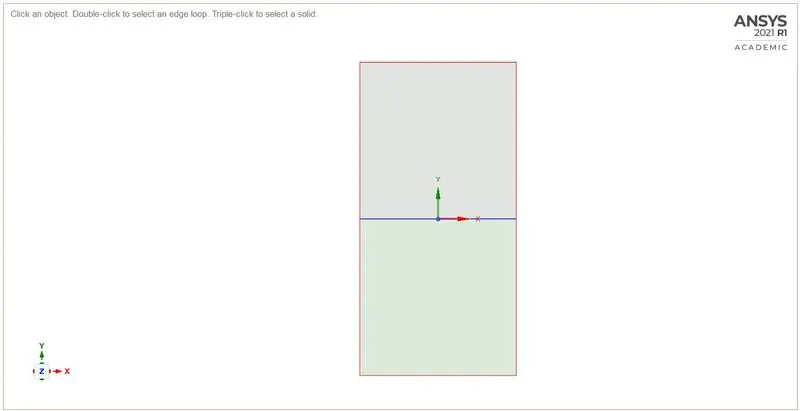
- The geometry was drawn in Space clim having dimensions of 20mm*20mm for both top and bottom liquid surface
- Then using pull option the geometry was converted to a 2-D surface
- Now, share topology was enabled between the interface edges,
Meshing:
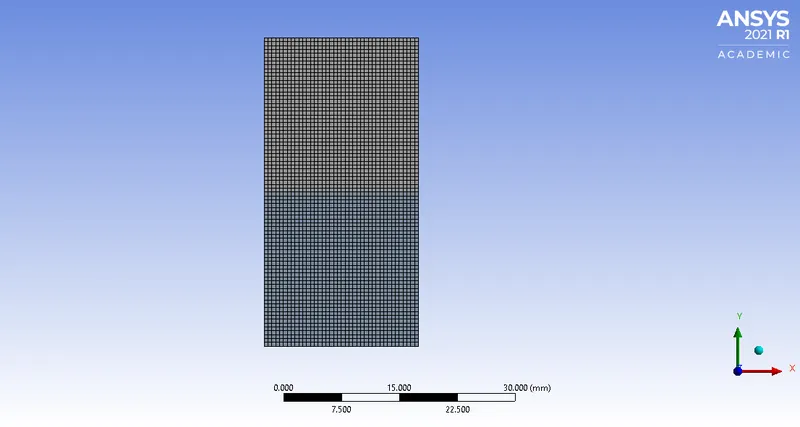
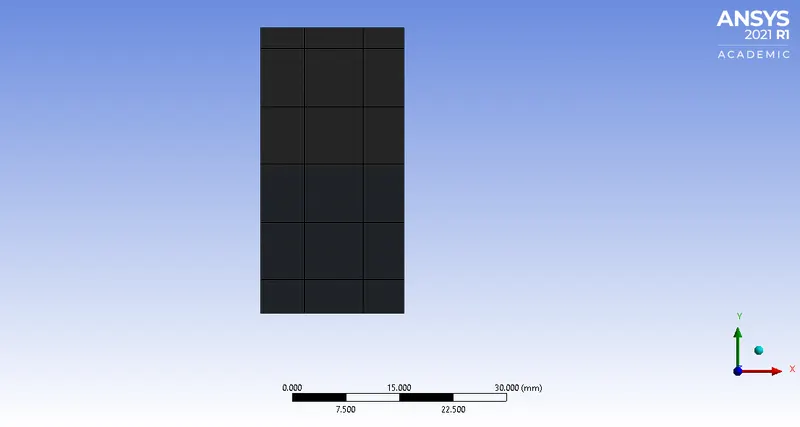
- Being the geometry a square Quad mesh was enabled for smooth meshing.
- Mesh sizes were taken as 0.5mm and 0.2mm.
Mesh Size: 0.5mm
Mesh Size: 0.2mm
Fluent Setup:
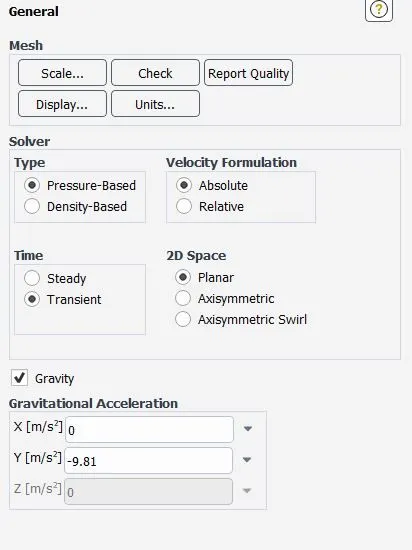
General setting:
Viscous Model:
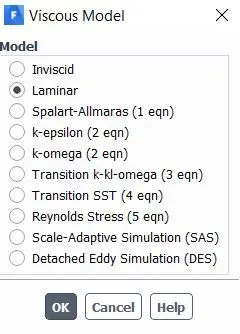
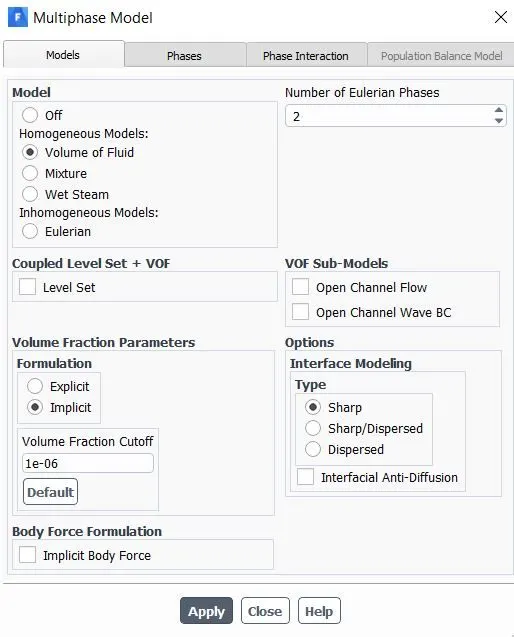
Multiphase Setup:
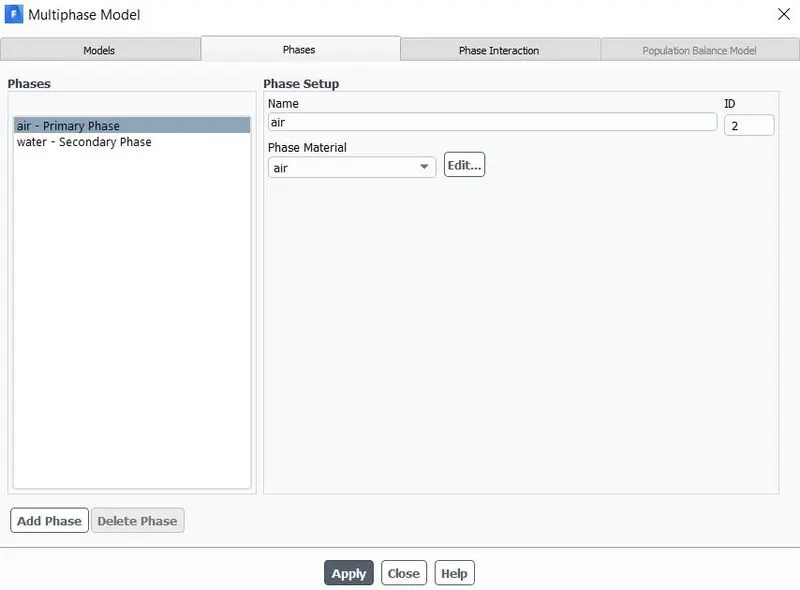
Phase Setup:
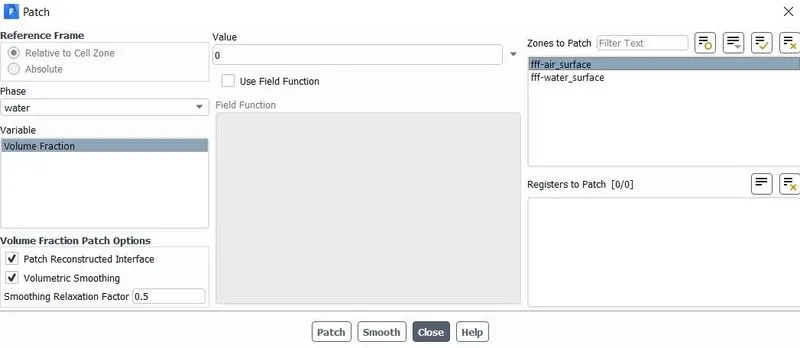
Patching:
Results:
Results –
Case 1:
Mesh size = 0.5mm
Primary phase – air
Secondary phase – water
Time step size = 0.005s
No of time steps = 1000
Link of animation: https://drive.google.com/file/d/1P7EyTnP1gTRFnlVIT9Q0Ddkg9KzAsdYn/view?usp=sharing
Case 2:
Mesh size = 0.2mm
Primary phase – air
Secondary phase – water
Time step size = 0.005s
No of time steps = 1000
Link of animation: https://drive.google.com/file/d/1NM2Y8nleHfev4x4UN7z9FmLDudTbdO4x/view?usp=sharing
Case 3:
Mesh size = 0.2mm
Primary phase – air
Secondary phase – User defined fluid
Time step size = 0.005s
No of time steps = 1000
Link of animation: https://drive.google.com/file/d/126_pfiOzbufTaum7YYSMV0KOVtZCVwVh/view?usp=sharing
Atwood number Calculation:
It is a dimensionless number that is used to study hydrodynamic instabilities in density stratified flows.
`At = (rho_1-rho_2)/(rho_1+rho_2)`
`rho_1` = Density of heavier fluid.
`rho_2` = Density of lighter fluid.
Case1:
`rho_1` = 1000`(kg)/m^3`
`rho_2` = 1.225`(kg)/m^3`
`At = (1000-1.225)/(1000+1.225)`
`At` = 0.997
Case3:
`rho_1` = 1000`(kg)/m^3`
`rho_2` = 400`(kg)/m^3`
`At = (1000-400)/(1000+400)`
`At` = 0.428
Conclusion:
- Atwood number signifies the instabilities formed due to density differences.
- Higher At represent higher difference between two mixing fluids, Thus higher rate of mixing.
- Low At number signifies lesser difference between the densities of mixing fluid, thus lower is the mixing rate
- This is evident from the video shown.