Week 5 - Rayleigh Taylor Instability
Aim: To perform Rayleigh Taylor Instability using ANSYS FLUENT.
Theory: In Rayleigh Taylor, the acceleration is constant and the fluid configuration is unstable as the density gradient is in opposite direction.
Practical models: behavior of water suspended above oil, volcanic eruptions
Procedure:
Step 1: Open spaceclaim and create a 20*20 mm square surface and share the surfaces.
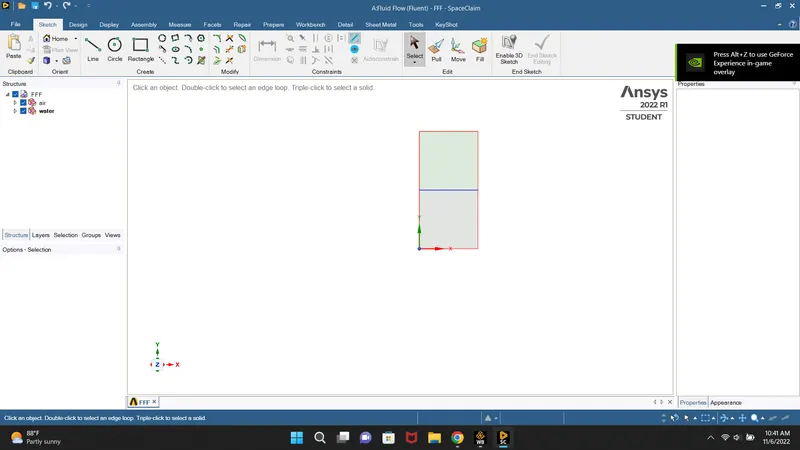
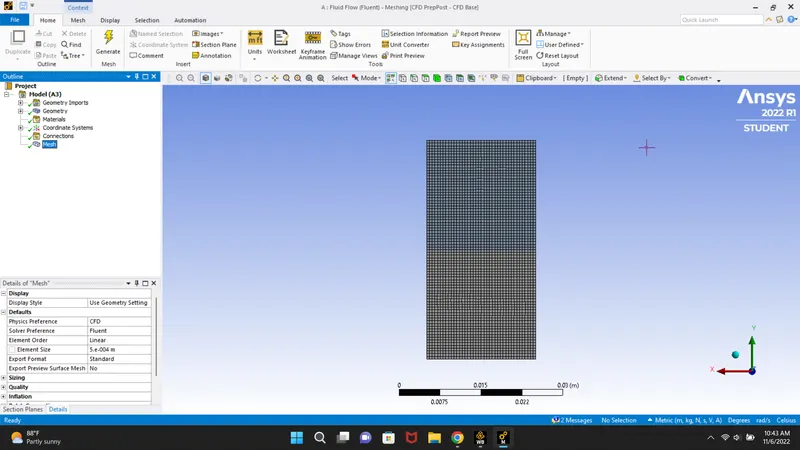
step 2: Mesh the surface for element size of 0.0005 and 0.005.
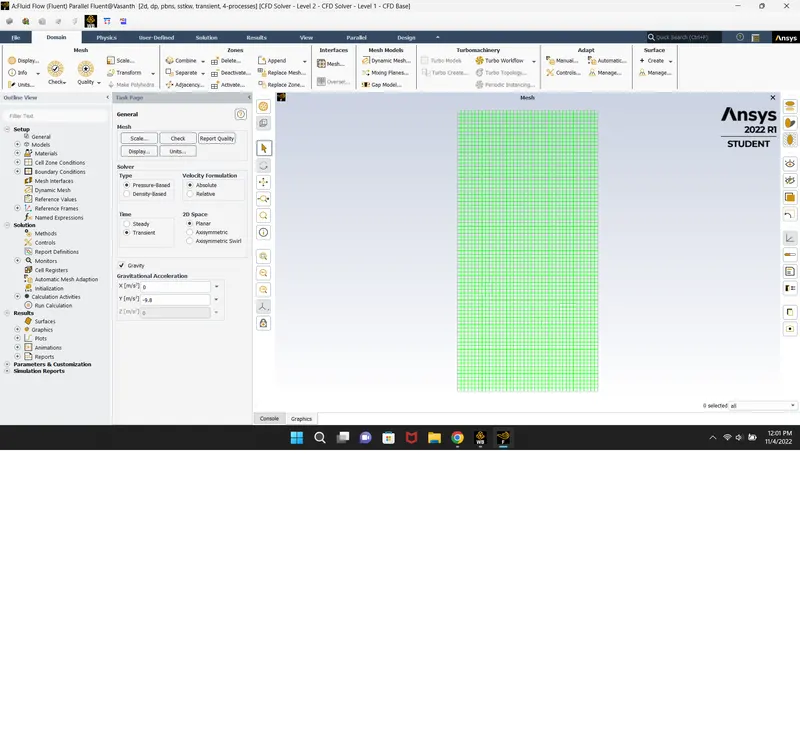
Step 3: Transient flow simulatuion and assign gravity to 9.81 along -Y axis.
Step 4: assign the material for both the phases.
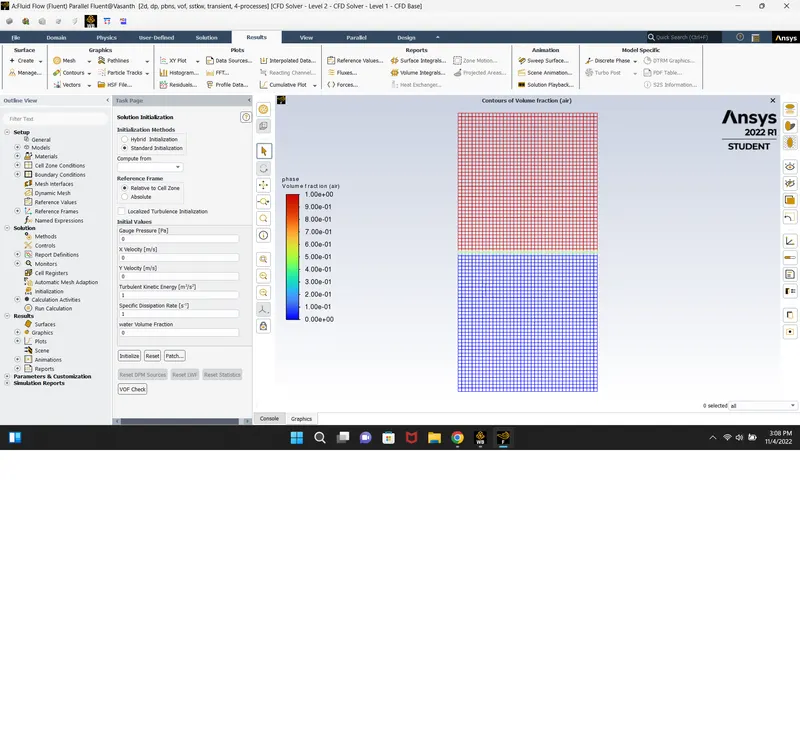
Step 5:Create the animations and contours.
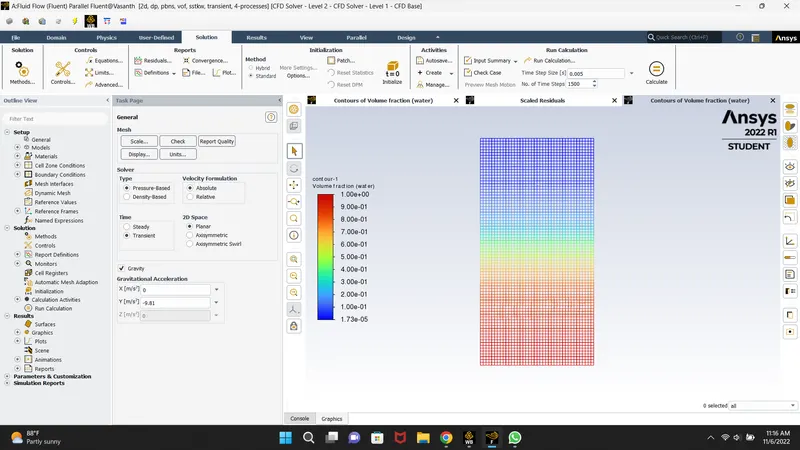
mesh size- 0.0005
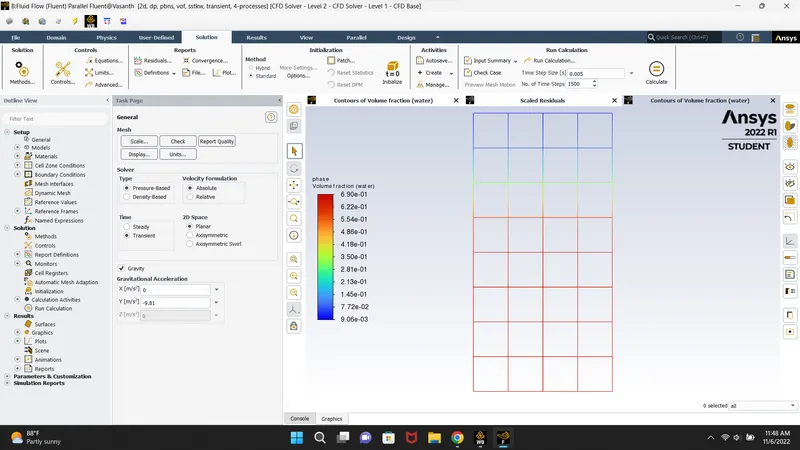
mesh size- 0.005
user material
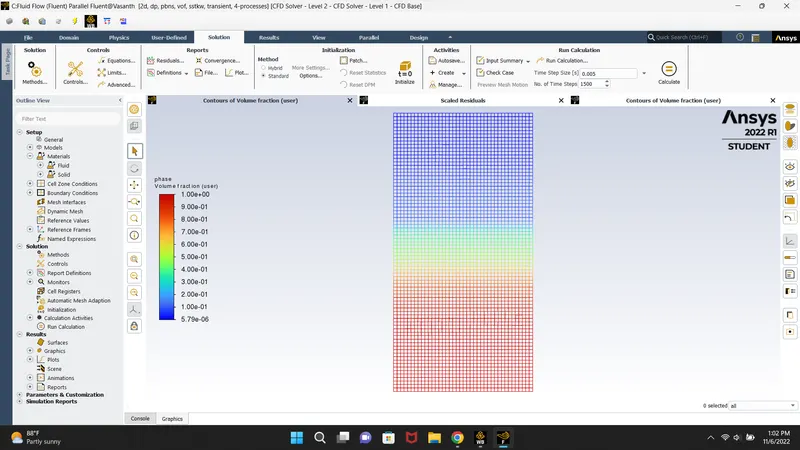
Result:As the mesh size becomes finer the instability is more accurate and visible.
water and air interchange places as the solution reaches a stable state. flow is transient.
rho= density of the liquid
case 1:
Atwood Number=(rho_1-rho_2)/(rho_1+rho_2)`
Atwood Number=(998.2-1.225)/(998.2+1.225)=0.9975`
case 2:
Atwood Number=(rho_1-rho_2)/(rho_1+rho_2)`
Atwood Number=(998.2-400)/(998.2+400)=0.421