Week 5 - Rayleigh Taylor Instability
RAYLEIGH TAYLOR INSTABILITY
INTRODUCTION
Rayleig Taylor instability is an instability of an interface between two fluids of different densities which occurs when the lighter fluid is pushing the heavier fluid,it may be modeled by two completely plane-parallel layers of immiscible fluid, the denser fluid on top of the less dense one and both subject to the Earth's gravity.The equilibrium here is unstable to any perturbations or disturbances of the interface ,if a parcel of heavier fluid is displaced downward with an equal volume of lighter fluid displaced upwards, the potential energy of the configuration is lower than the initial state. Thus the disturbance will grow and lead to a further release of potential energy, as the denser material moves down under the effective gravitational field, and the less dense material is further displaced upwards.
As the RT instability develops, the initial perturbations progress from a linear growth phase into a non-linear growth phase, eventually developing "plumes" flowing upwards (in the gravitational buoyancy sense) and "spikes" falling downwards. In the linear phase, the fluid movement can be closely approximated by linear equations, and the amplitude of perturbations is growing exponentially with time. In the non-linear phase, perturbation amplitude is too large for a linear approximation, and non-linear equations are required to describe fluid motions. In general, the density disparity between the fluids determines the structure of the subsequent non-linear RT instability flow.
GOVERNING EQUATIONS
The governing equations for The RTI problem are the Navier–Stokes equations, the continuity and the Cahn-Hilliard
equations which are the non-dimensional form.
`(delu)/(delt)+u(delu)/(dx)+v(du)/(dely) = -1/(rho(c))(delp)/(delx)+1/(Re.rho(c))((del^2u)/(delx^2)+(del^2u)/(dely^2))`
`(delv)/(delt)+u(delv)/(dx)+v(dv)/(dely) = -1/(rho(c))(delp)/(dely)+1/(Re.rho(c))((del^2v)/(delx^2)+(del^2u)/(dely^2))+g/(Fr)`
`(delu)/(delt)+(delv)/(dely)=0`
`(delC)/(delt)+u(delC)/(delx)+v(delC)/(dely)=1/(Pe)((del^2mu)/(delx^2)+(del^2mu)/(dely^2))`
`mu = C^3-Ch^2((del^2C)/(delx^2)+(del^2C)/(dely^2))`
The above equations can be reduced into non-dimensionalized form as follows
`X' = x/(Lundersetc`,`u'= u/(Uundersetc`,`t'= (tUc)/(Lundersetc`,`rho'=rho/(rhoundersetc`,`p'=p/(rhocU^2c`,`g' = g/(gundersetc`,`mu'=mu/(muundersetc`
where represents non-dimensional values. The Reynolds number ( Re ), Peclet number ( Pe ), Cahn number ( Ch )
and Froude number ( Fr ) are defined as
`Re = (rhocUcLc)/(etaundersetc`
`Pundersete = (UcLc)/(Mmu)`
`Ch=sqrt((epsi)/(alphaL^2c`
`Fr = (Uc)/sqrt(gLc`
Following this the pressure velocity is coupled to solve the momentum equation. Here the intermediate values does not satisfy the mass continuity equation for which the intermediate velocities are corrected by pressure terms. After finishing with the calculation of u, v and p, concentration, c and chemical potential μ and Cahn-Hilliard equations are solved by semi implicit scheme which is followed by spatial discretization of momentum equation by second order upwind and pressure by PRESTO.
OBJECTIVE
- What are some practical CFD models that have been based on the mathematical analysis of Rayleigh Taylor waves? In your own words, explain how these mathematical models have been adapted for CFD calculations.
- Perform the Rayleigh Taylor instability simulation for 2 different mesh sizes with the base mesh being 0.5 mm. Compare the results by showing the animations. Observe the differences in the animation and explain the effect of mesh size on simulation. Also, explain why a steady-state approach might not be suitable for these types of simulation.
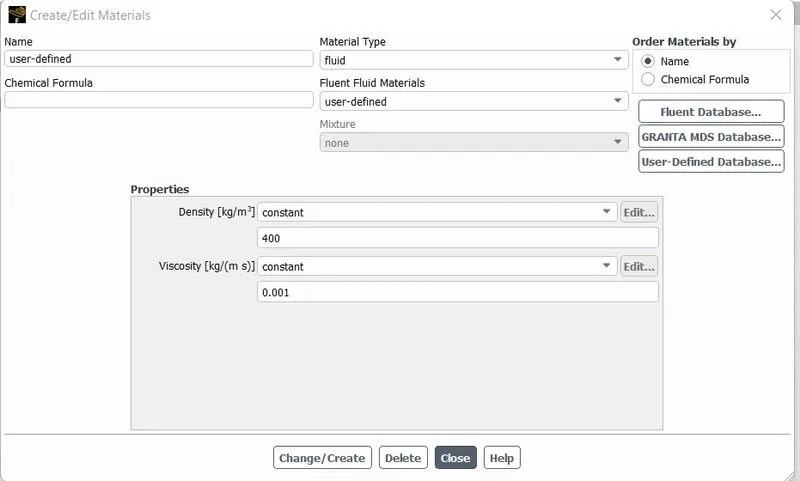
- Run one more simulation with water and user-defined material(density = 400 kg/m3, viscosity = 0.001 kg/m-s) for refined mesh.
- Define the Atwood Number. Find out the Atwood number for both the cases and explain how the variation in Atwood number in the above two cases affects the behavior of the instability.
PREPROCESSING AND MESH
At first, geometry is created as square boxes and converted to surface using Pull tool and share topology is turned on.The geometry was created in spaceclaim and it involves no other importing of CAD models. The surface model was further processed for meshing and the results were taken for three different meshing schemes. This preprocessing phase of the workflow is extremely important because it determines the simulation potential and limits the CFD results.
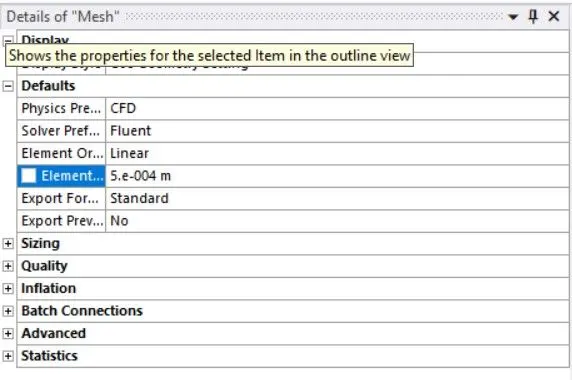
We have 3 cases of mesh to stimulate as per table below
| Cases | Number of element | Number of nodes | Atwood no.(For water and air | Atwood no.(For water and user defiend material) |
| 1 | 3200 | 3321 | 0.9975 | N/A |
| 2 | 12800 | 13041 | 0.9975 | N/A |
| 3 | 12800 | 13041 | N/A | 0.4278 |
Geometry
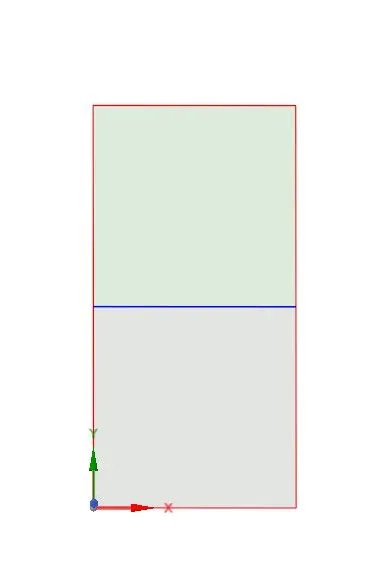
The (20*20) rectangle is made the uper one is represents water and the lower one is represent the air.
MESH
For case-1
Parameters
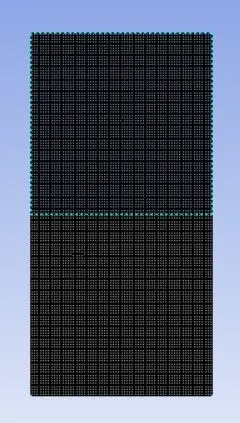
The mesh
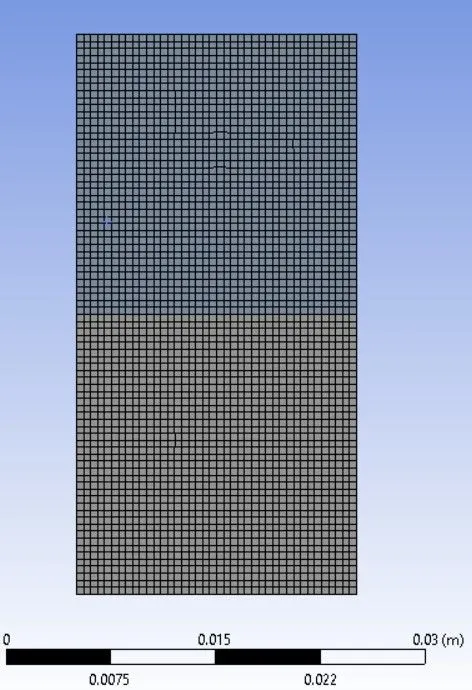
Case 2/3 both are solve in same mesh
Parameters for mesh-2
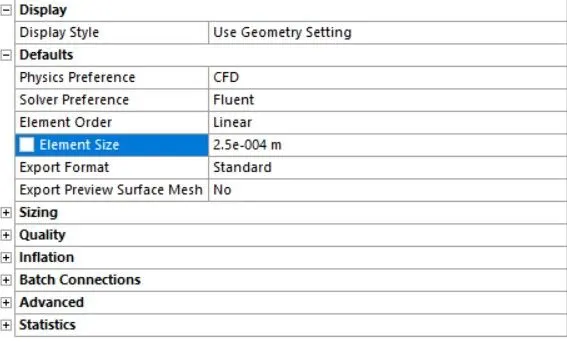
The mesh for case2 and 3
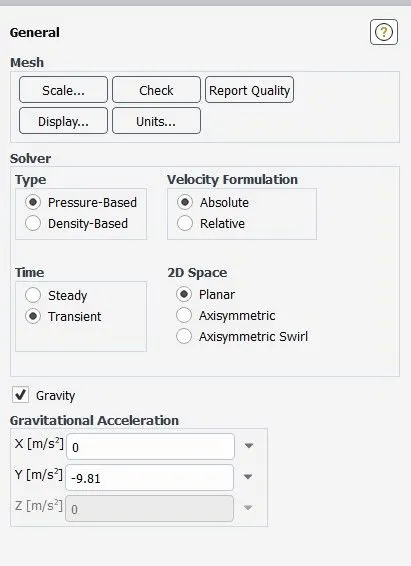
Solver Case setup
General setting
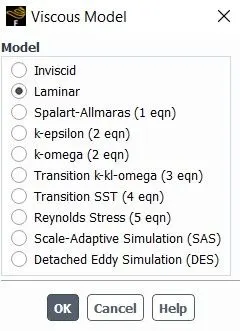
Viscous model
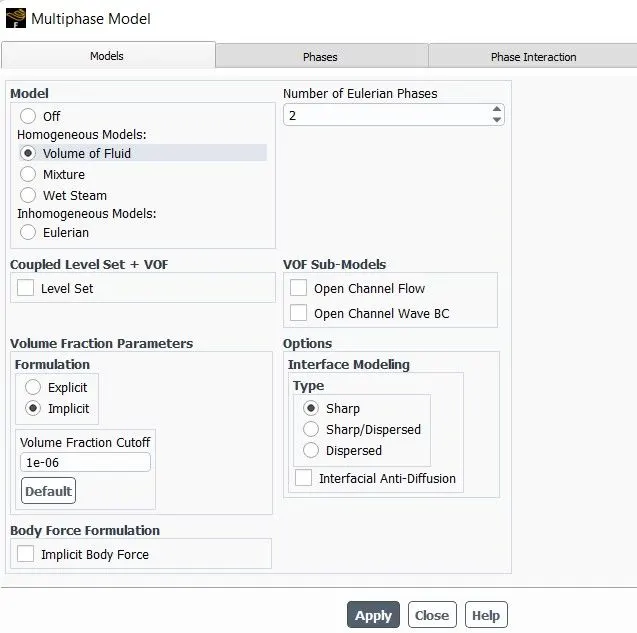
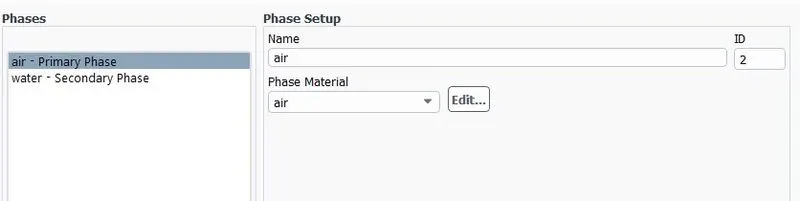
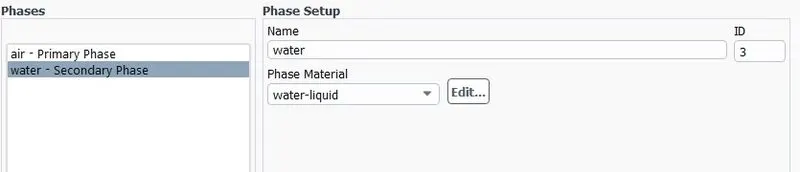
Multiphase model setting
Phases
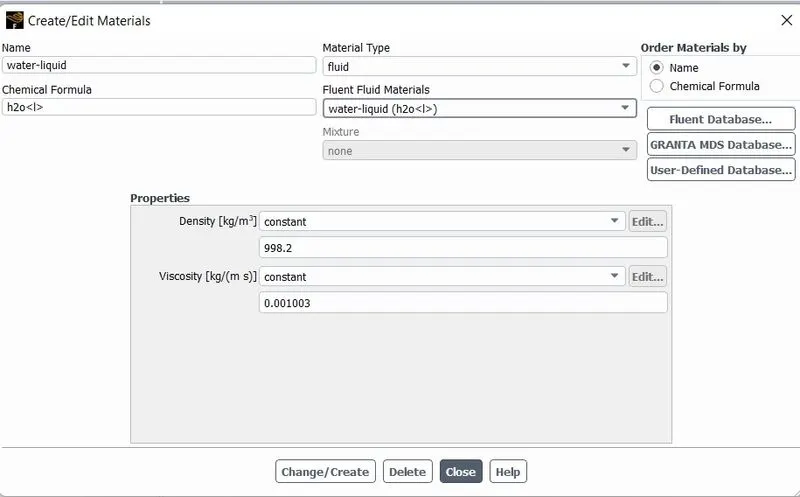
Materials
water
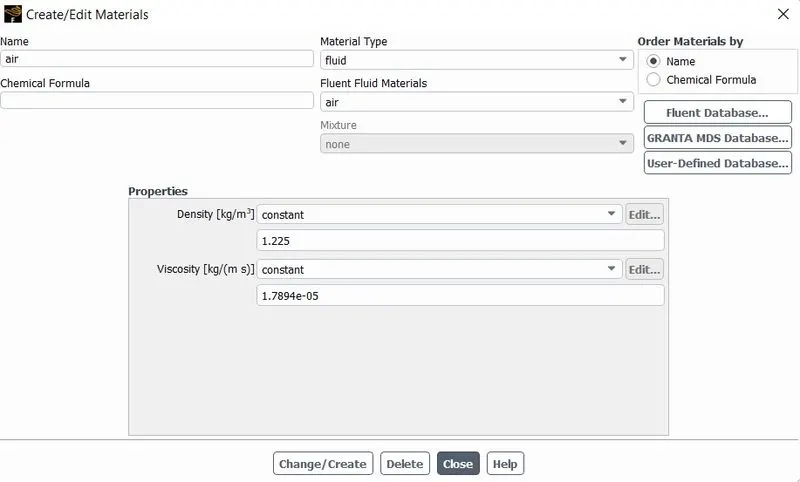
Air
user defind
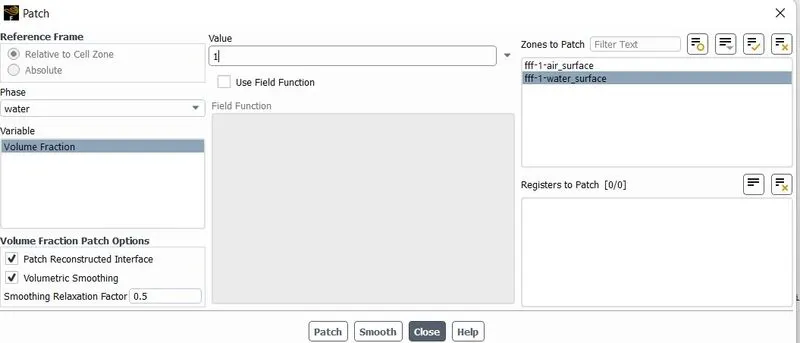
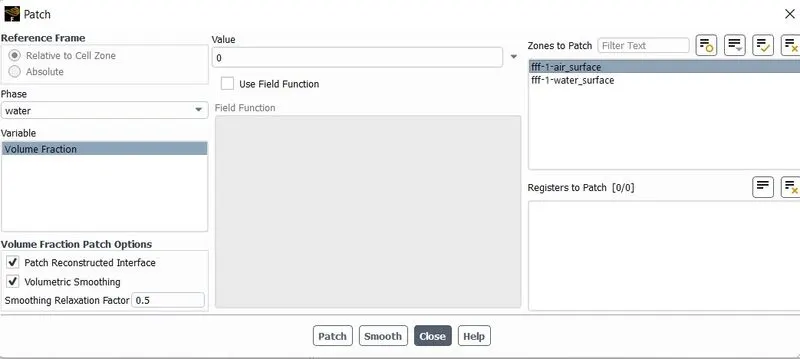
Patch
RESULTS
CASE -1
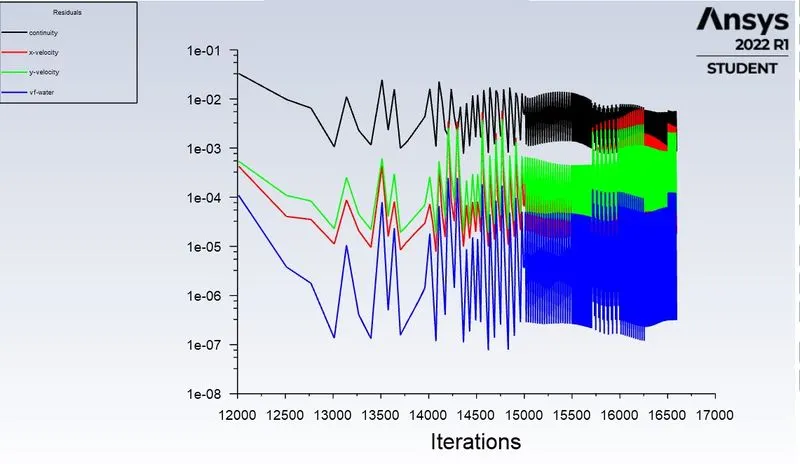
Residuals
Volume fraction animation
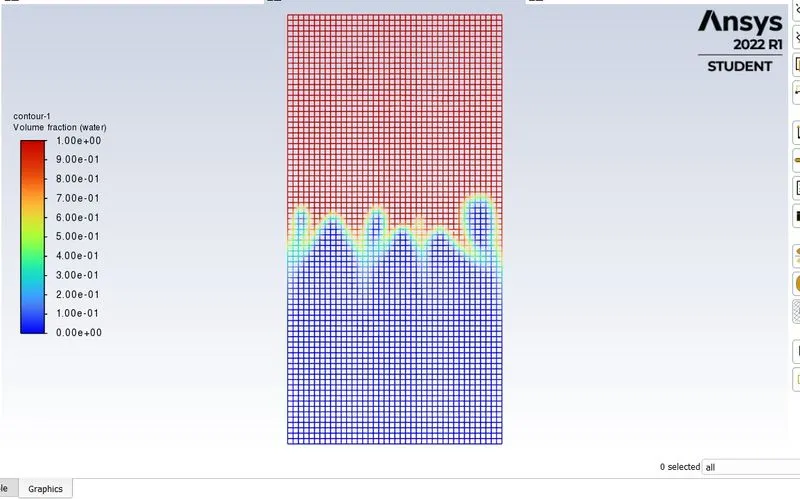
youtube animation video
CASE-2
Residuals
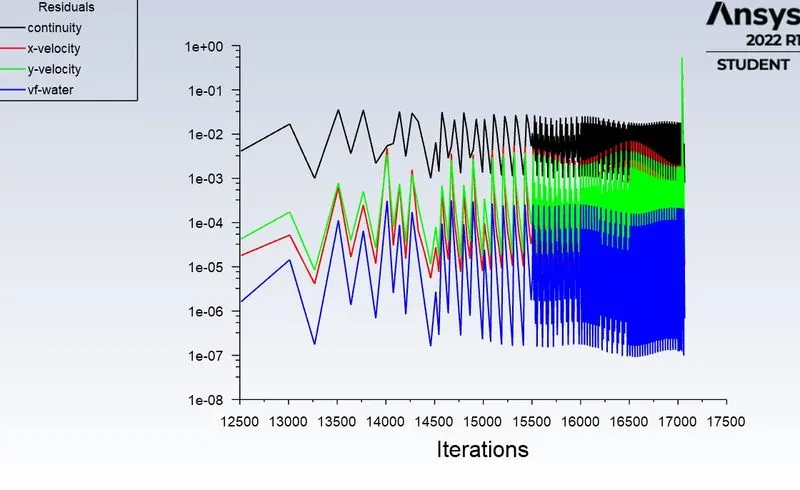
Volume fraction animation
youtube animation video
CASE-3
Residuals
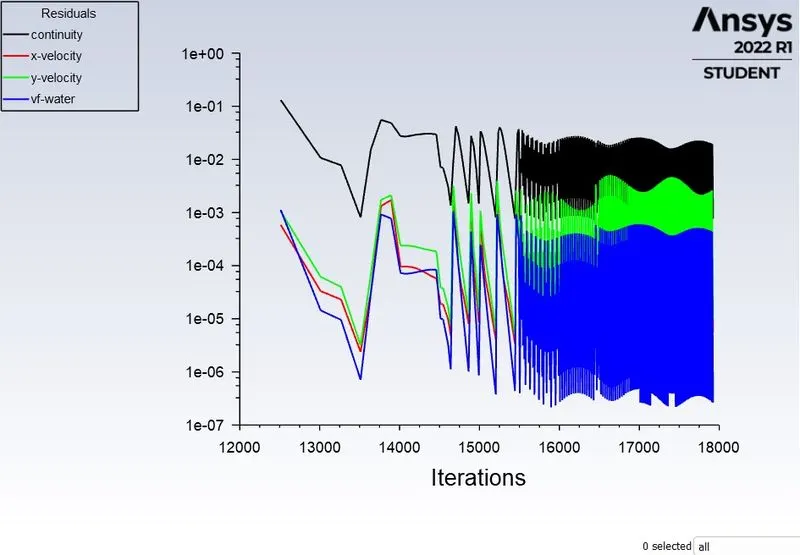
Volume fraction animation
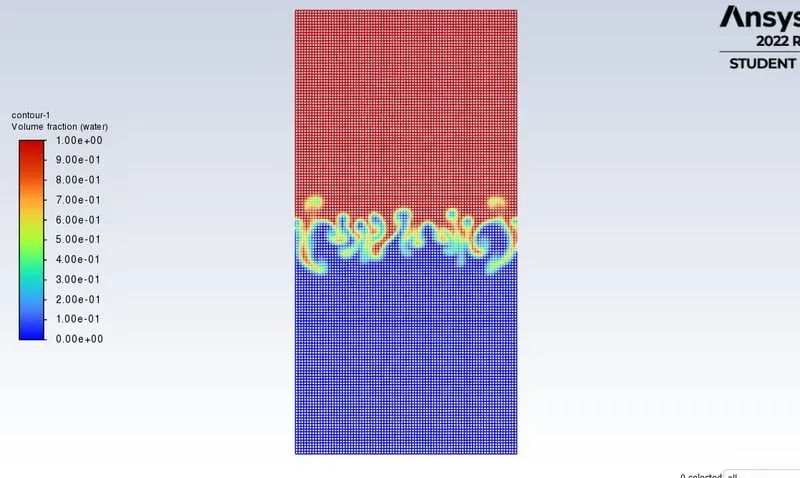
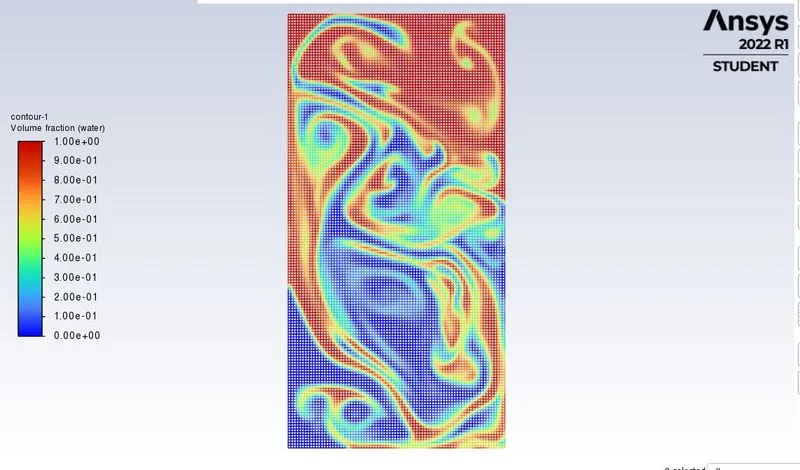
youtube animation video
EFFECT OF ATWOOD NUMBER -
It is a dimesionless number in fluid dynamics used in the study in the study of hydrodynamic instabilites in sensity statified flows.It is a dimensionless density ratio defiend as
`A = (rho1-rho2)/(rho1+rho2`
where
`rho1 =`density of hevier fluid `
`rho2 =`density of lighter fluid
It is used in Rt instabiltiy analysis ,The penetration distance of heavier fluid is a function of acceleration time scale Agt^2 wher g is the gravitational accelaration and't' is the time .
CONCLUSION
After conclude above all the solution we get the atwood number has a mesure role in instability,In lower Atwood numbers, spikes and globules were still present at the end of the simulation .we also observed that the interface thickness reduces with the refined mesh and when run with smaller time steps and we knew that the aqurace can be improve by reduduce the time steps.