Rayleigh Taylor Instability
Aim:
To Conduct Rayleigh Taylor Instability simulation.
Rayleigh Taylor Instability:
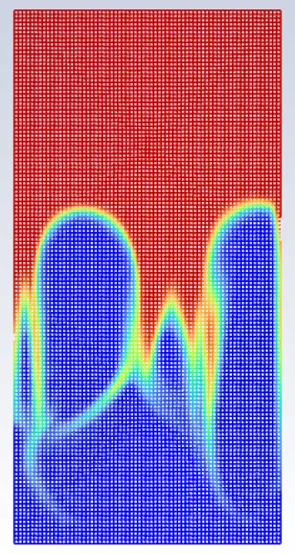
It is the instability of an interface between two fluids of different densities which occurs when the lighter density fluid is pushed by heavier density fluid.
- The behavior of water suspended above the oil in the gravity of the earth.
Saffman-Taylor Instability:
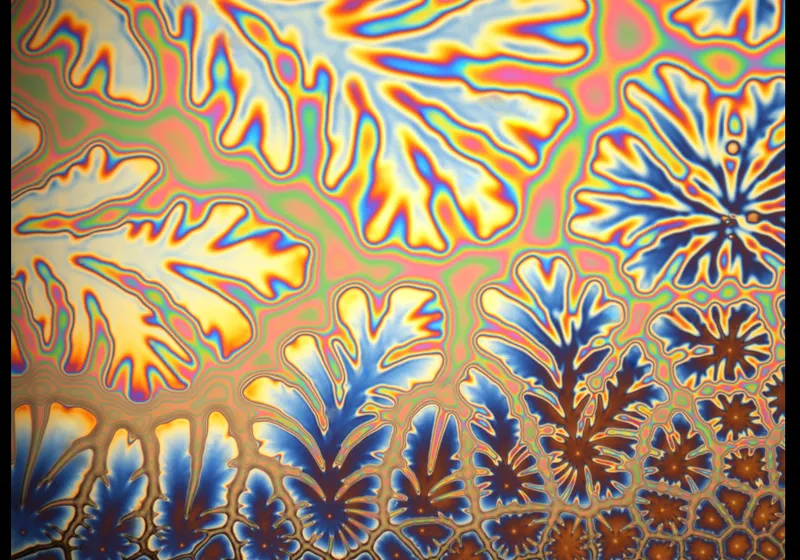
Is also known as Viscous fingering is the formation of patterns in a morphologically unstable between two fluids in a porous medium.
- During Drainage processes through soils, less viscous fluid is injected displacing a more viscous fluid.
Kelvin - Helmholtz:
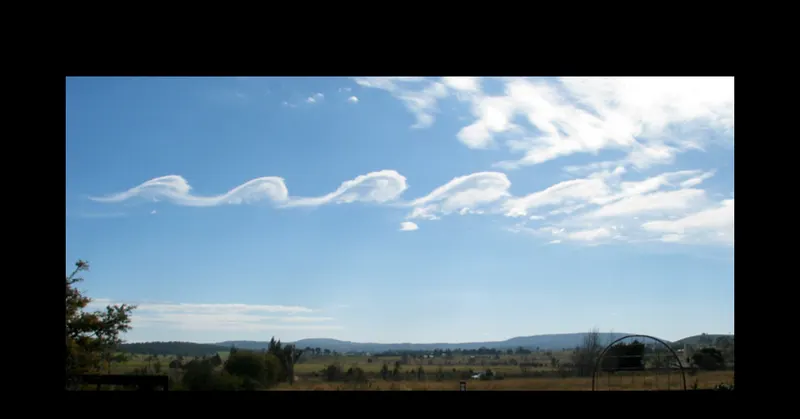
It occurs when there is a velocity in a single continuous fluid or velocity difference across the interface between two fluids. It is visible in the atmosphere of planets and moons, such as cloud formation on Earth or the Red spot on Jupiter.
Richtmyer-Meshkov Instability:
When two fluids of different densities are impulsively accelerated. The development of the instability begins with small amplitude perturbation like a shock wave which initially grows linearly with time. This is followed by a nonlinear regime with bubbles appearing in the case of a light fluid penetrating a heavy fluid, and with spikes appearing in the case of a heavy fluid penetrating a light fluid. A chaotic regime eventually is reached and the two fluids mix.
Plateau - Rayleigh Instability:
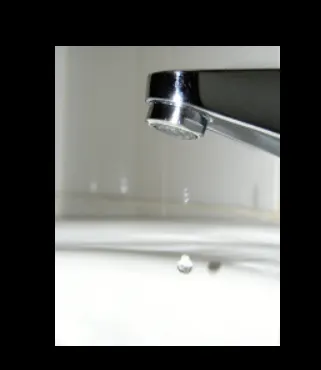
It is often just called the Rayleigh instability, which explains why and how a falling stream of fluid breaks up into smaller packets with the same volume but less surface area. It is related to the Plateau-Rayleigh Instability and is part of a greater branch of fluid dynamics concerned with fluid thread break up. This fluid instability is exploited in the design of a particular type of inkjet technology whereby a jet of liquid is perturbed into a steady stream of droplets.
Geometry creation:
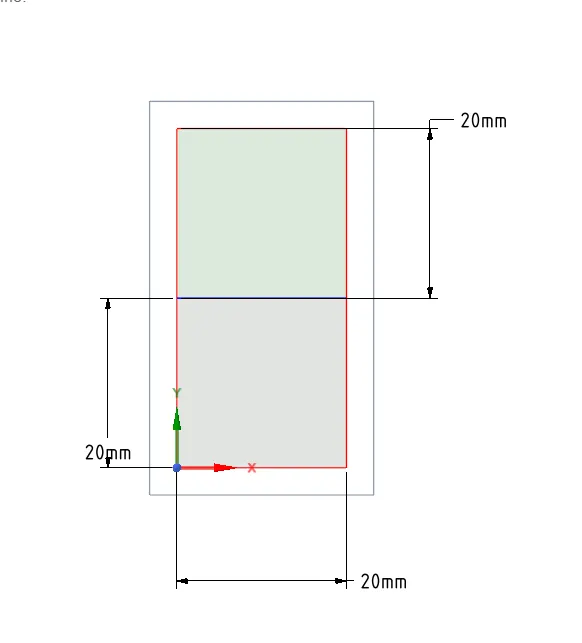
- Open SpaceClaim ⇒ Use a two-point rectangle option to create a square of length 20 mm and name it as Water.
- To make it as a surface use the pull tool option.
- Go to Workbench ⇒ Share prep ⇒ select both squares and click share. (Orange line indicates the surfaces are shared)
Naming and Mesh generation:
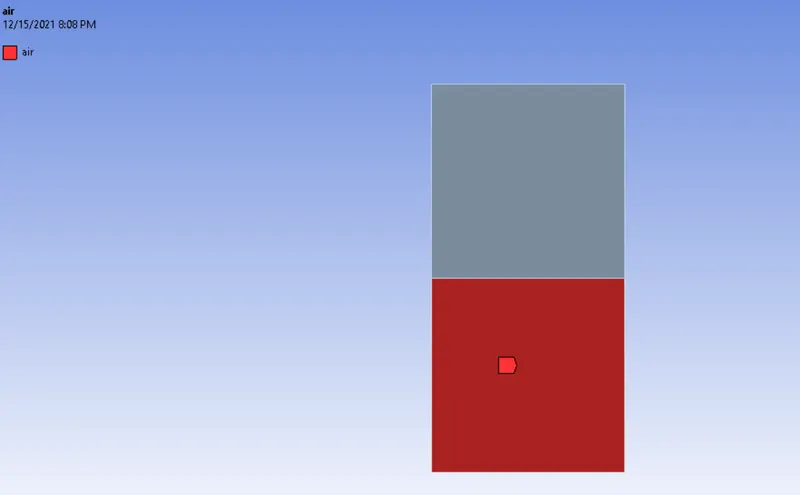
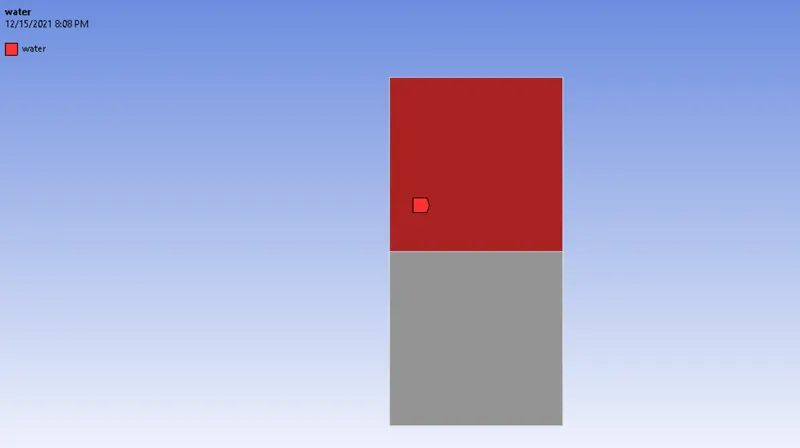
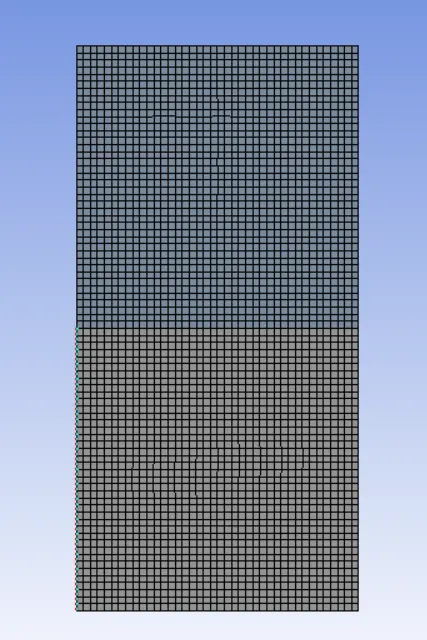
Setting up physics:
State - Transient State
2D space - Planar
Type - Pressure based
Gravity enabled in Negative Y direction -9.81
Viscous Model - Laminar
Multiphase:
Model - Volume of Fluid
Formulation - Implicit
Number of Eulerian phrases - 2 (Air, Water)
Adding Material:
- Open Create / Edit ⇒Air is the default material.
- To add Water as fluid, Open Fluent database ⇒ Add Water (H20 as liquid) ⇒ copy ⇒ close.
Phases:
- Air - Primary Phase
- Water - Secondary Phase
Initialization Method - Standard
Patch:
- Open Patch ⇒ Select Phrase as Water
- Enter Water value as 1 ⇒ Patch
- Enter Air value as 0 ⇒ Patch
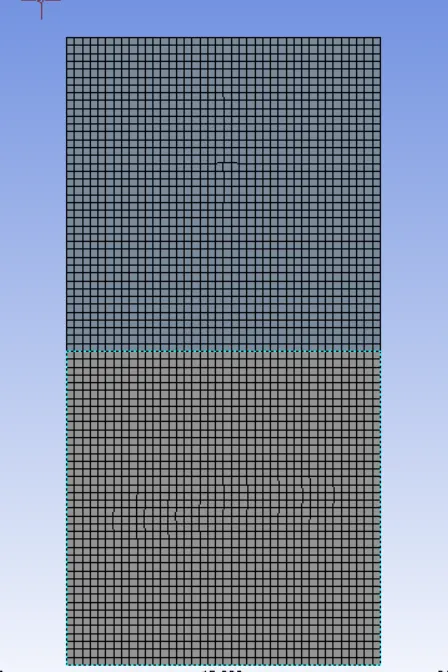
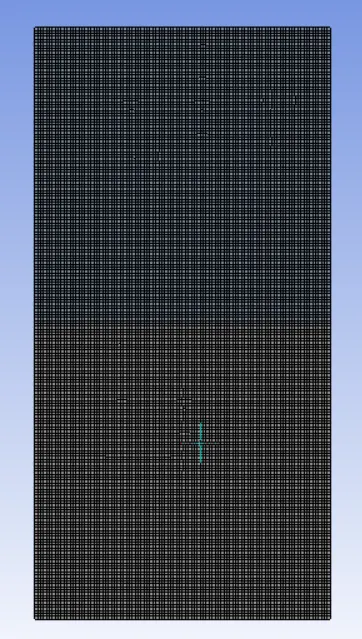
Base Mesh:
1) Mesh Size - 0.5 mm
No. of Element - 3200
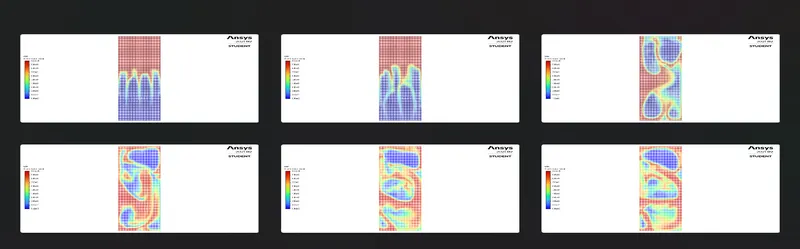
Video Link:
https://drive.google.com/file/d/1EQyDBvmYrZs7xXkNFVtLXQpUDJb3aDok/view?usp=sharing
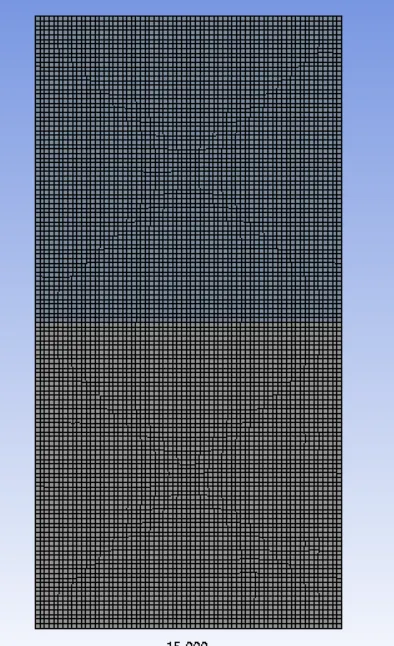
Refined Mesh:
2) Mesh Size - 0.3 mm
No. of element - 9180
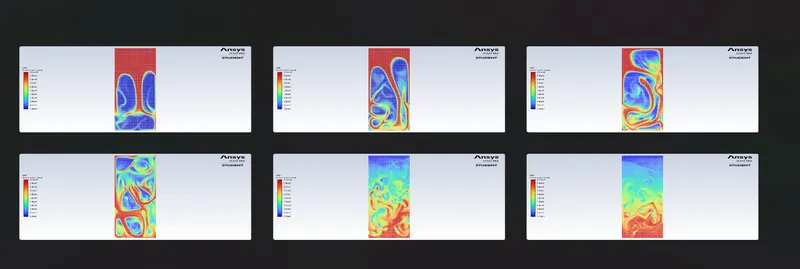
Video Link:
https://drive.google.com/file/d/19Tq6moYgJ6LvkXZJa2zXCxsILSd0I68Z/view?usp=sharing
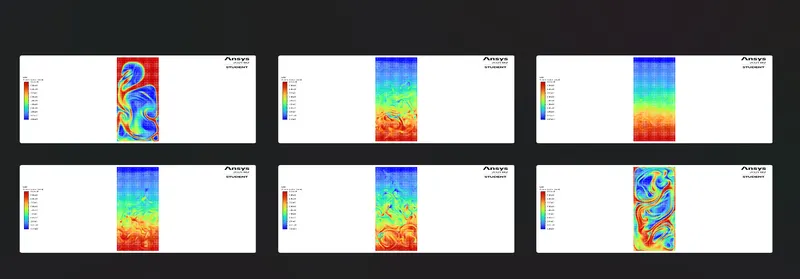
3) Mesh Size - 0.2
Number of elements -20000
Video Link:
https://drive.google.com/file/d/1VK-rxz7uARQUNMfuigtqH_G3HHqKirkX/view?usp=sharing
Need for Transient Stimulation:
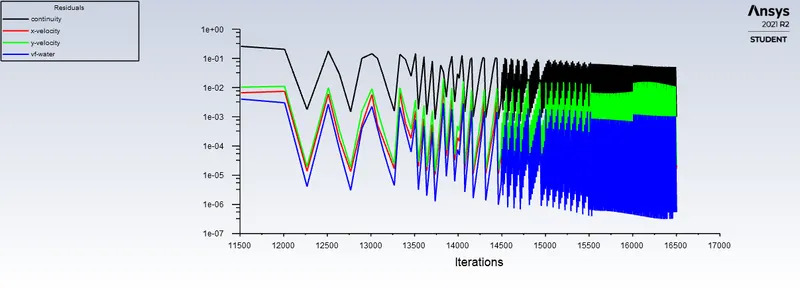
Lower information requirements and quick calculation are the central aspects of why steady stimulations of Multiphase flow are widely used in industries but it doesn't provide correct information. So transient stimulations are vital when evaluating fundamentally and dynamically. Transient multiphase flow simulations may become relevant as the conditions change over time.
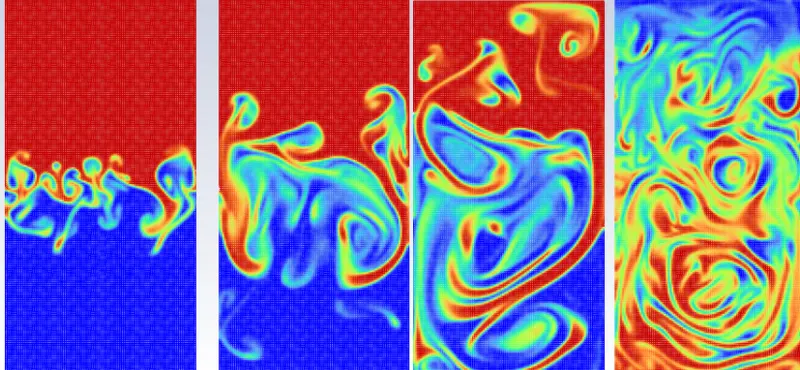
4) Water and User-defined material:
Density = 400 kg/m3
Viscosity = 0.001 kg/m-s
https://drive.google.com/file/d/1leCXwh0-8hpHm9XPlGOav6CD1qp-g5UL/view?usp=sharing
Atwood Number (A):
It is a dimensionless number in fluid dynamics used to study the hydrodynamic instability in density stratified flows. It is defined as the ratio of

Where
 = density of a heavier fluid
 = density of a lighter fluid
Atwood Number for Air and Water = 0.998
Atwood Number for Water and user Defined material = 0.4
Conclusion:
- As the mesh gets finer and finer the results are more clear.
- For Atwood Number close to 0, RT instability flows take the form of symmetric figures of fluid.
- As the Atwood number is increased above 0.5, the consequence of the mixing asymmetry becomes more obvious: the two edges of the mixing layer develop into “spikes” on the light fluid side and “bubbles” on the heavy fluid side.