Week 5: Prandtl Meyer Shock problem
OBJECTIVE:
1. To understand the Prandtl Mayer shock problem.
2. To understand shock waves and their physical importance.
3. To understand SGS and its effect on setup & results.
4. To understand what are the boundary conditions employed for such problems.
THEORY:
Before understanding the evolution of shocks, we must understand two basic things, discontinuities rarely exist in nature, there is always a tendency to prevent any form of singularities. Keeping the fact in mind, when a body is immersed in a flow or there is a flow around a body, the presence of the body acts as an obstacle to fluid flow, by observation we see that the flow goes around the body. In order for the flow to make such an adjustment, it is very important that there is a signaling mechanism, which alerts the flow about the body's presence.
Nature does employ a signaling mechanism, which is longitudinal pressure waves, they are also called acoustic waves or sound waves. These pressure waves signal the presence of the body and the fluid particles make the vertical displacement adjust to the body, also the fluid properties change gradually along the streamline.
The acoustic waves propagate as spherical wavefronts, with a finite velocity. The acoustic wave speed depends on various thermodynamic parameters, hence is not a fixed value for all cases. The signaling mechanism works perfectly till the projectile velocity is below the acoustic wave speed, the scenario changes when the speed of the projectile is equal to or more than the acoustic wave speed since the signaling mechanism becomes impaired in the direction of flow, and the presence of the body cant be detected.
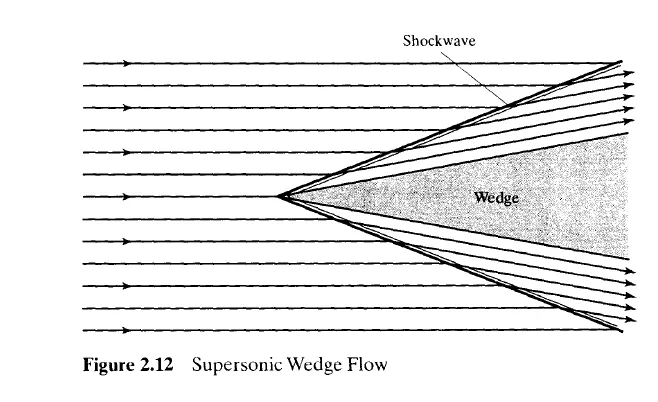
There is a separate coping mechanism that the flow uses to encounter the sudden change in flow area, these are called shock waves.
On drawing tangents to these wavefronts, we see a cone is formed, the region within the cone is called the zone of action, and outside the region is called the zone of silence. Basically in the zone of silence, the information of the body cannot be transmitted by pressure waves. In cases where the projectile or flow speed is greater than the speed of sound (based on coordinate system placement), the flow is incoming from the zone of silence, hence it cannot adjust to the presence of the body, hence this non-linear addition results in the formation of shock waves.
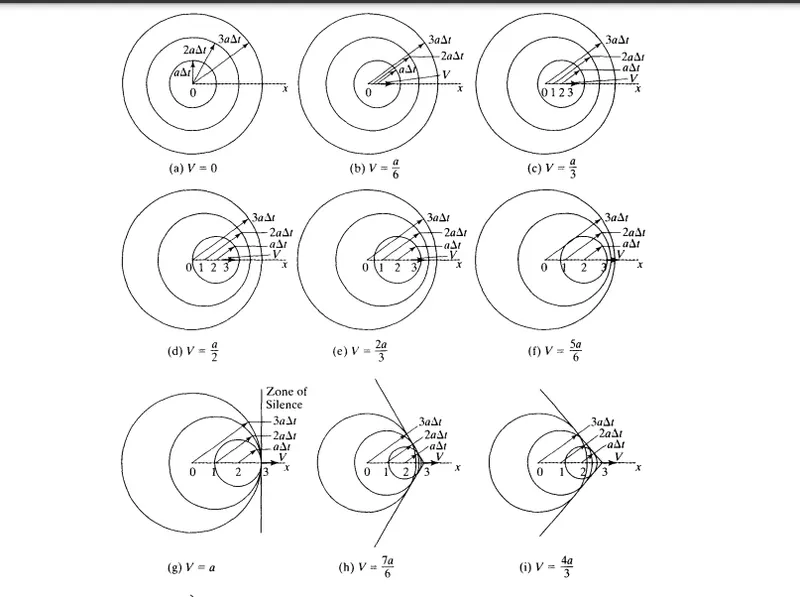
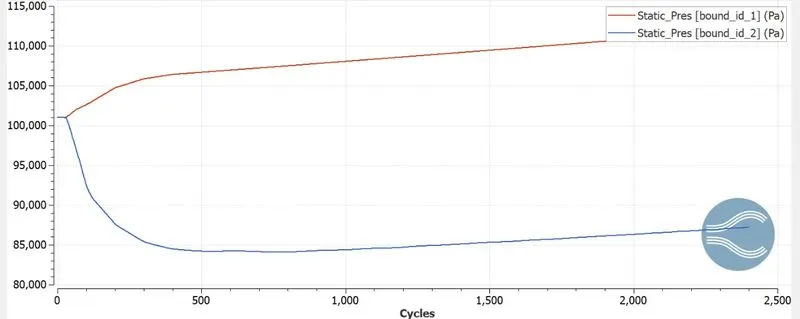
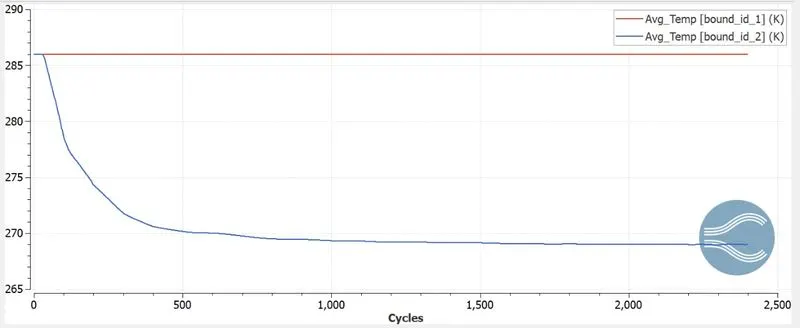
The change of properties across shock waves is not gradual and happens across a region of infinitesimal thickness. Supersonic flow the flow everywhere is M>1, across the shock the static pressure, temperature, and gas density increase instantly. The entropy overall increases, since there is no work done by the shock wave, the total enthalpy is constant. The total pressure decreases across a shock wave since the enthalpy is constant. We notice that the shock wave makes an angle with the projectile, this angle decreases as the projectile velocity increases. The relation of the Mach angle with Mach number is given as sin (mu) =1/M.
There are various boundary conditions that are used in mathematics, like Dirichlet, Neumann, Robin, Cauchy.
1. Dirichlet boundary condition
In the Dirichlet boundary condition, the value of the function is specified at the boundary
y = f
2. Neumann boundary condition
In the Neumann boundary condition, the value of the normal derivative of a function is specified.
∂y/∂n=f
3. Robin boundary condition:
It is the combination of both the above boundary conditions, specified at both ends
c0⋅y+c1⋅(∂y/∂n)=f
4. Mixed boundary conditions
On one end there is a Dirichlet boundary condition and on the other end, there is a Robin boundary condition.
In our case, we are using a Neumann boundary condition at the outlet, there are few variables whose information we have, the rest are extrapolated from the inlet conditions. So the normal derivative of the variables is specified as 0. Hence we keep the boundary condition as Neumann and do not prefer Dirichlet, as it incurs instability.
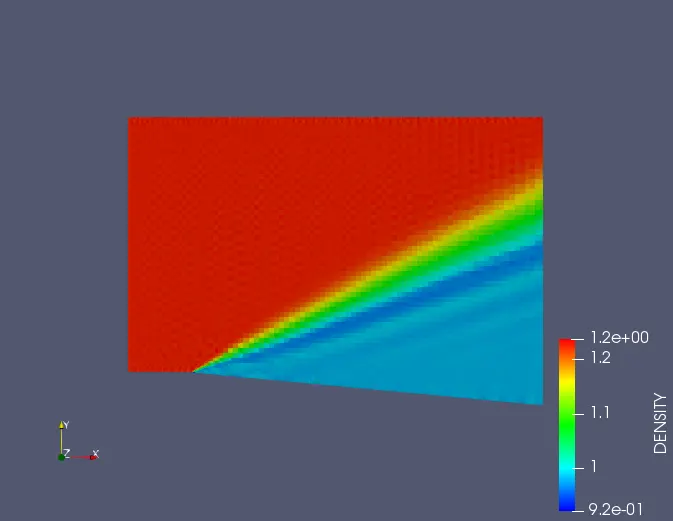
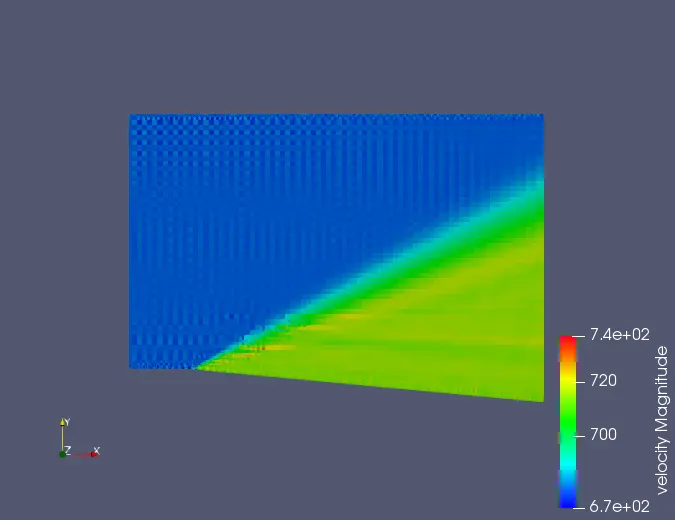
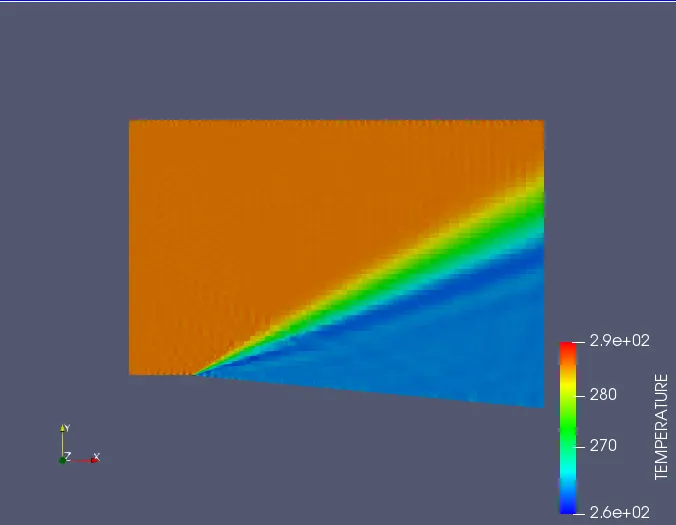
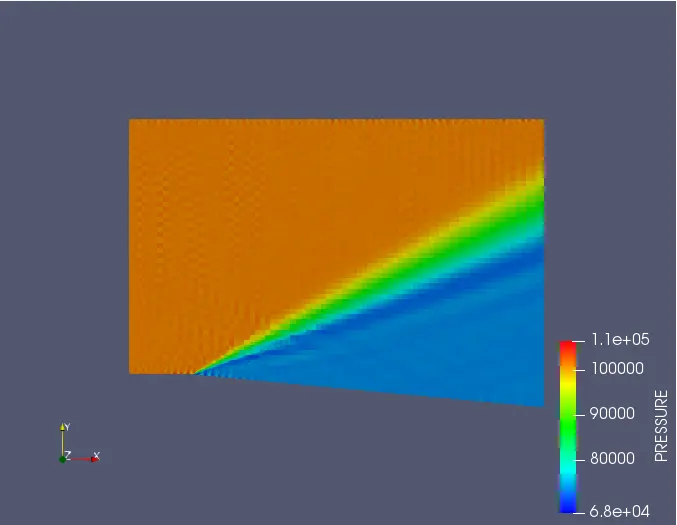
The type of shock we would be simulating would be Expansion Fan, which generally occurs when there is an abrupt increase in flow area, it generally comprises Mach lines attached to the sharp corner, where each line turns the flow and changes the flow properties.
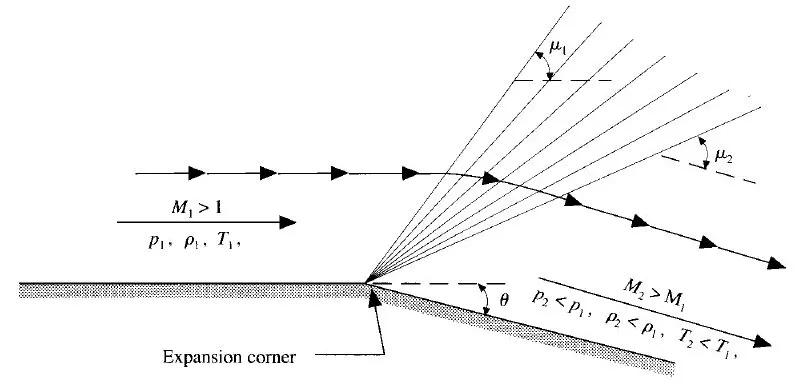
The diagram showing before and after flow properties due to the expansion fan.
CASE SETUP
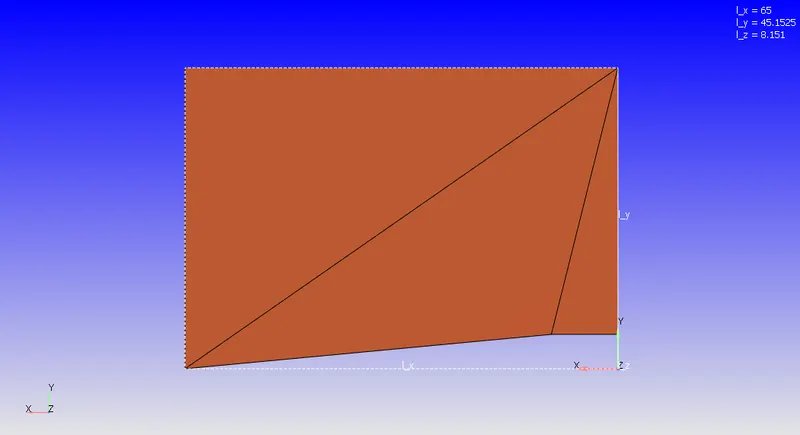
This is the model of the geometry provided, we would be running three cases
Case 1: Velocity = 680 m/s (Supersonic flow) and SGS parameter = 0.05
Case 2: Velocity = 680 m/s (Supersonic flow) and SGS parameter = 0.01
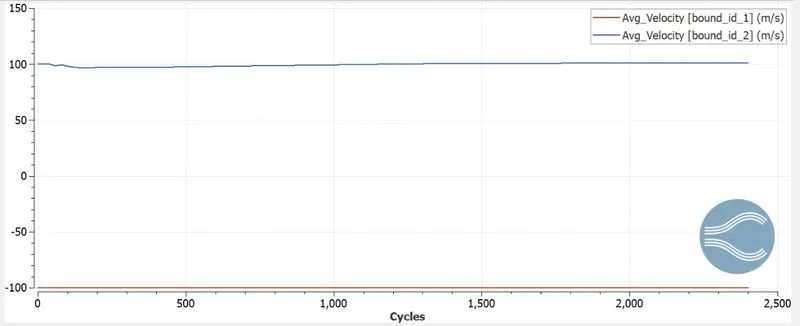
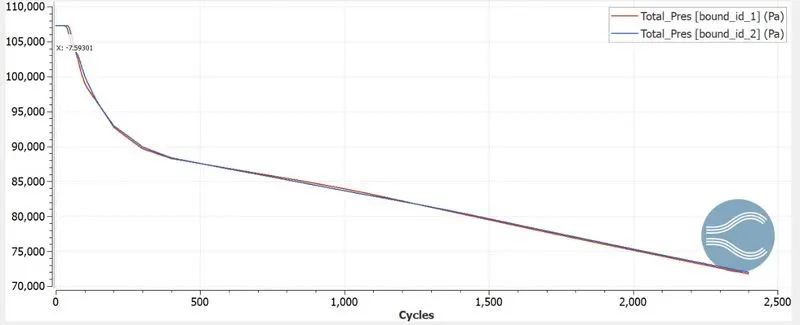
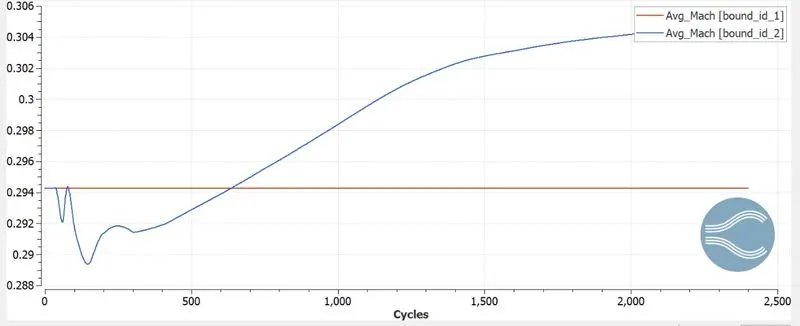
Case 3: Velocity = 100 m/s (Subsonic flow) and SGS parameter = 0.05
Then export all the files in an appropriate folder, and run in CYGWIN prompt command.
RESULTS:
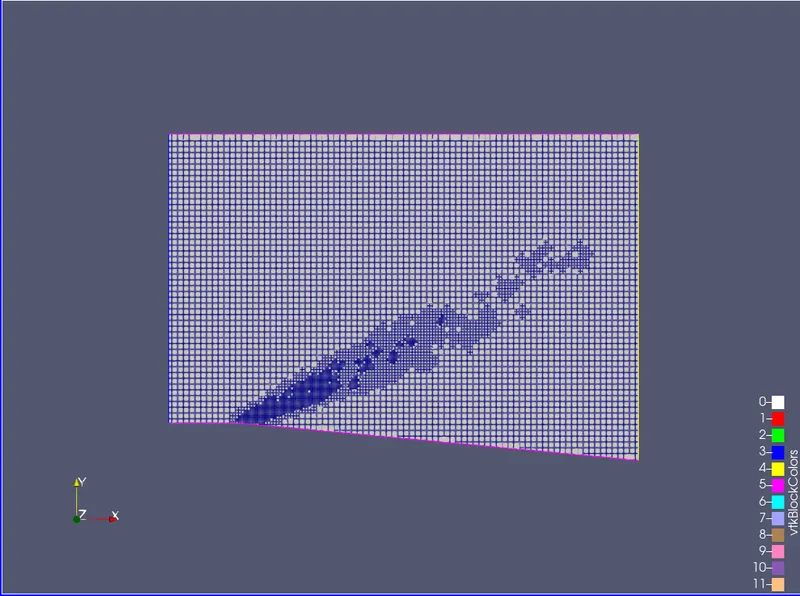
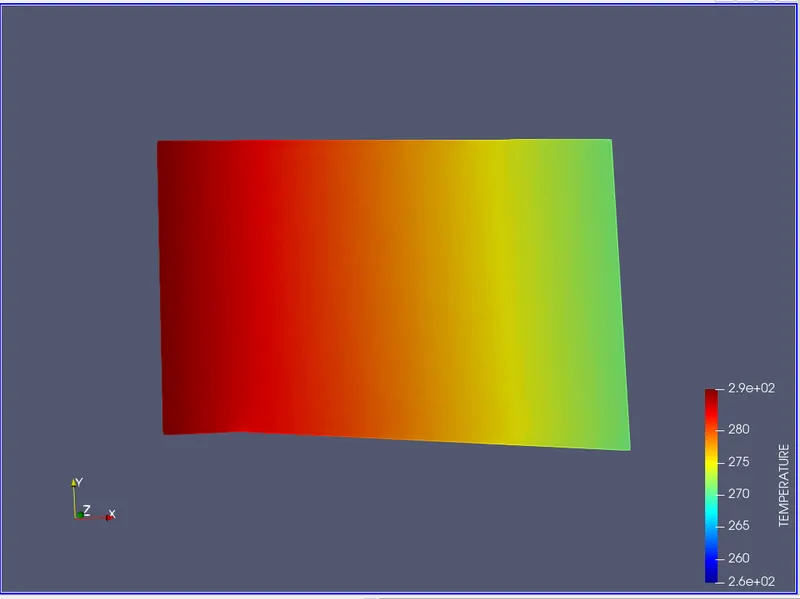
The mesh was utilized for simulation.
CASE-1
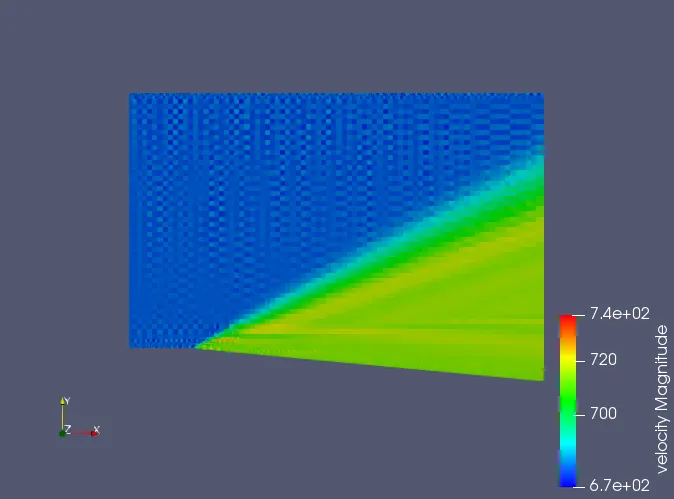
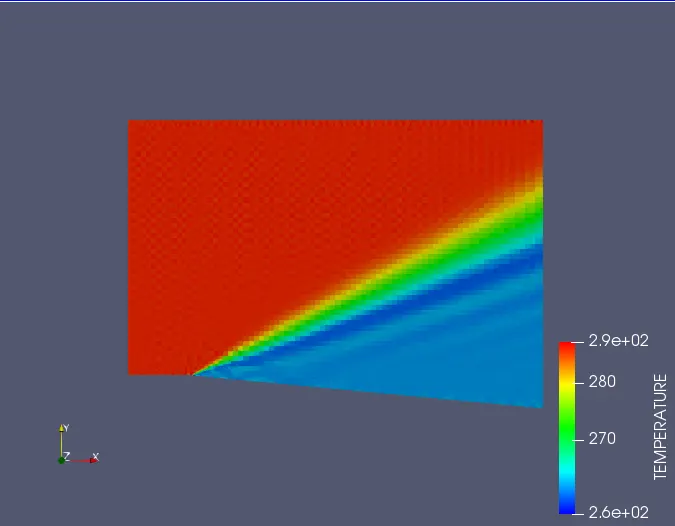
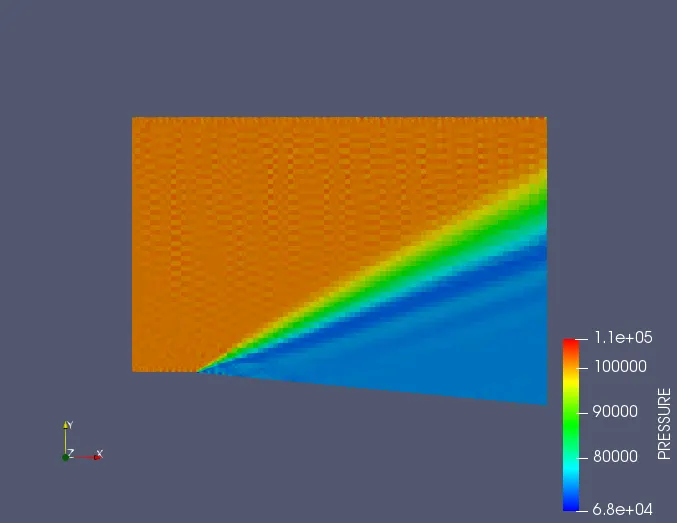
CASE-2
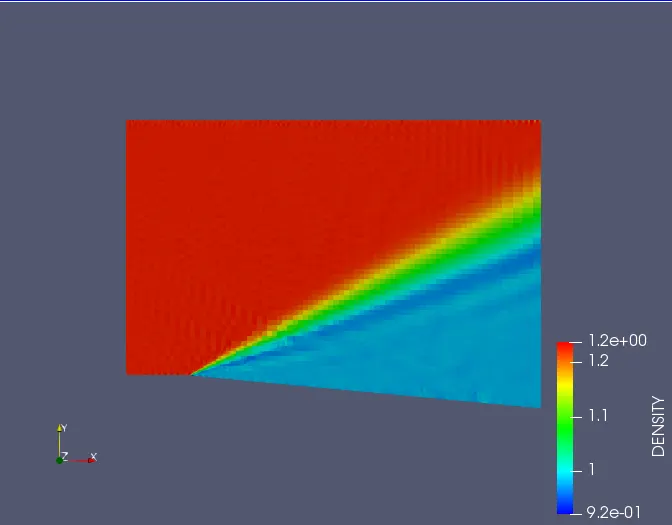
CASE-3
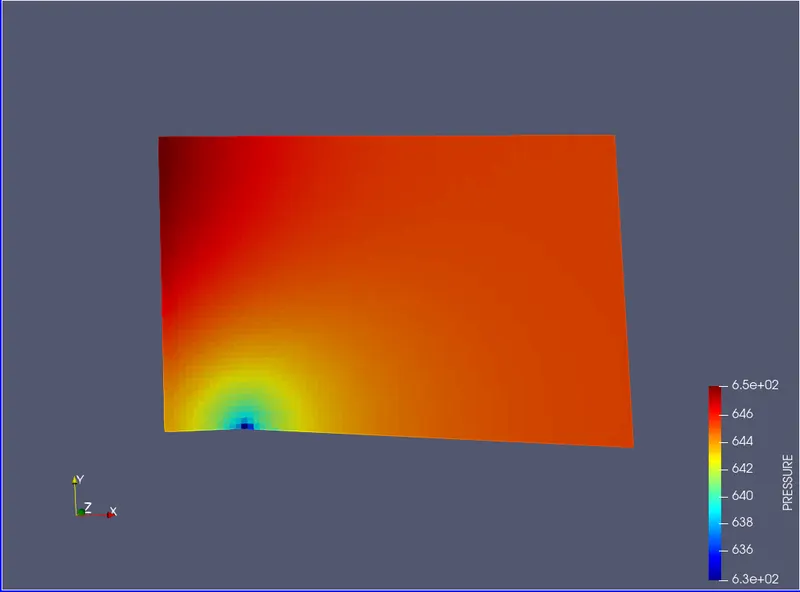
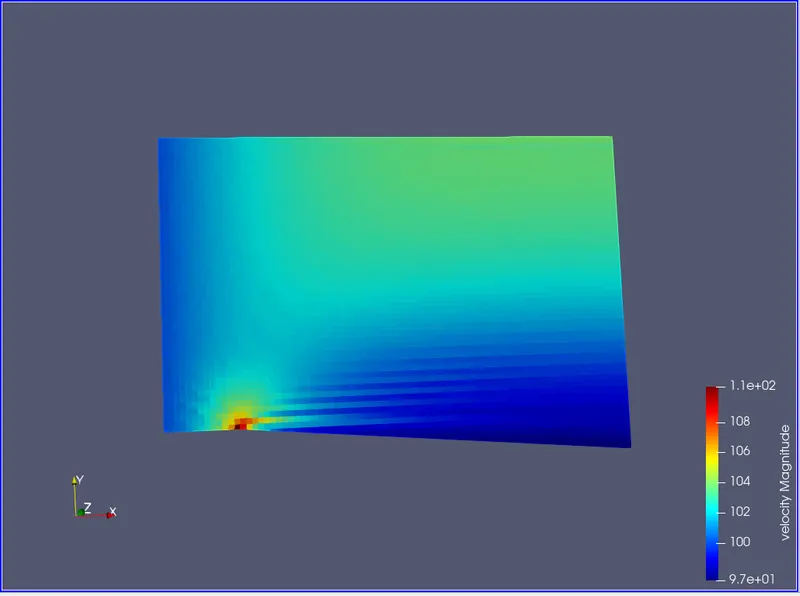
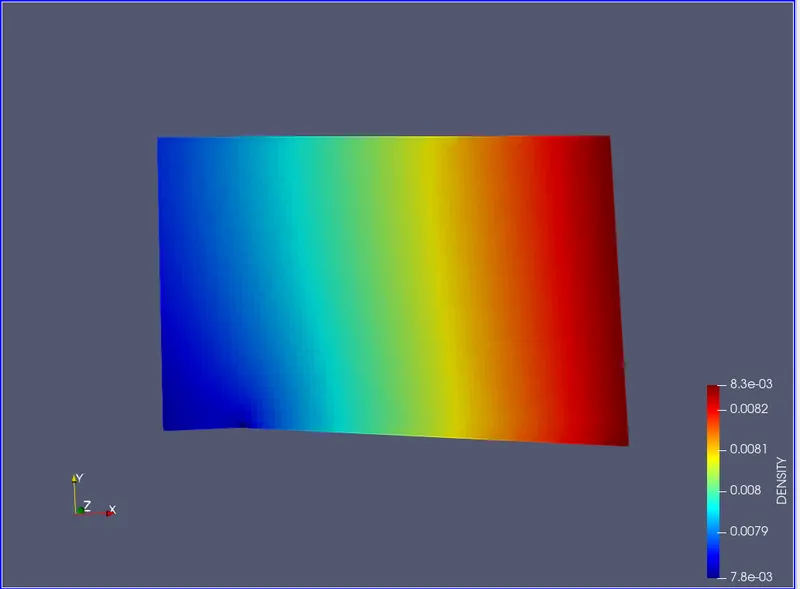
PLOTS
CASE-1
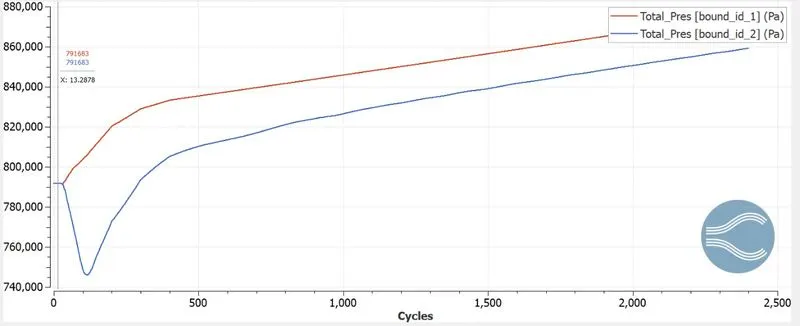
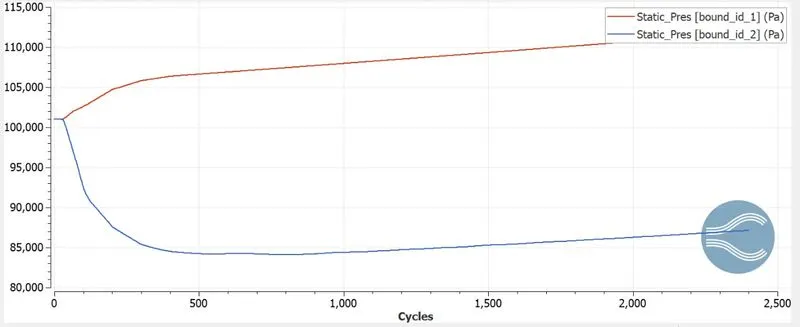
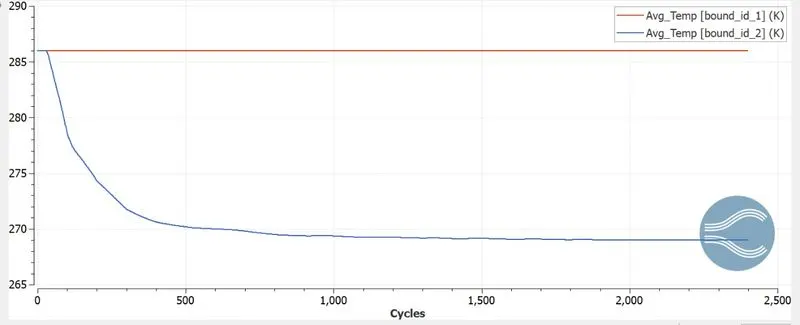
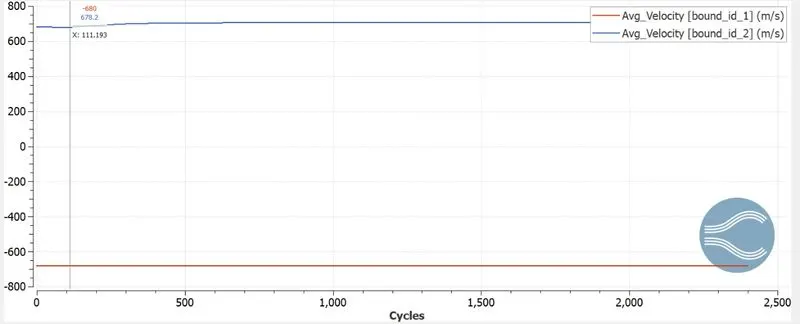
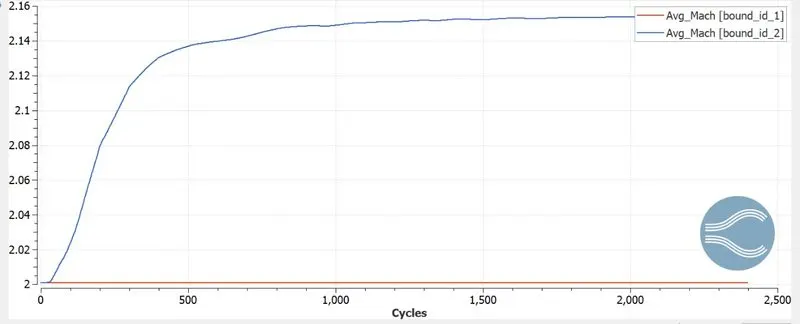
CASE-2
CASE-3
CONCLUSIONS
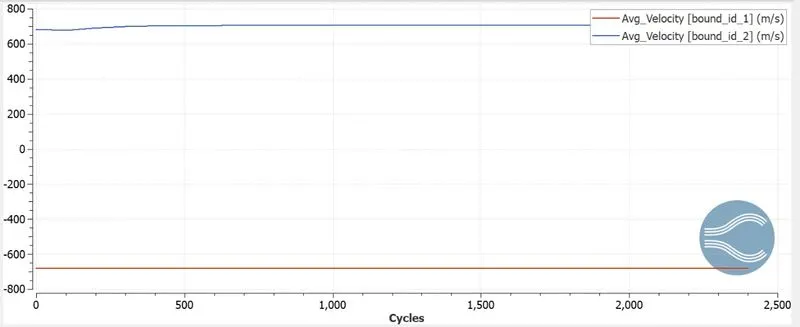
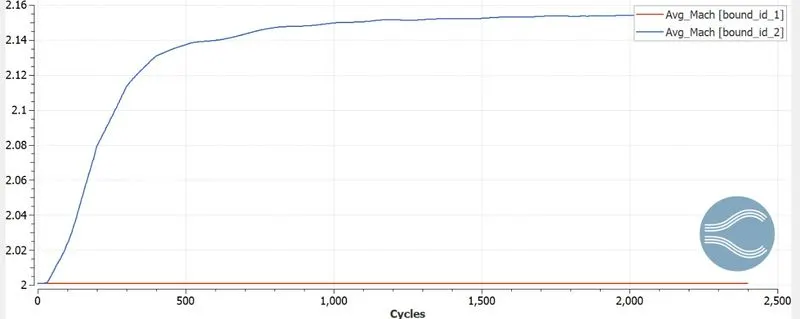
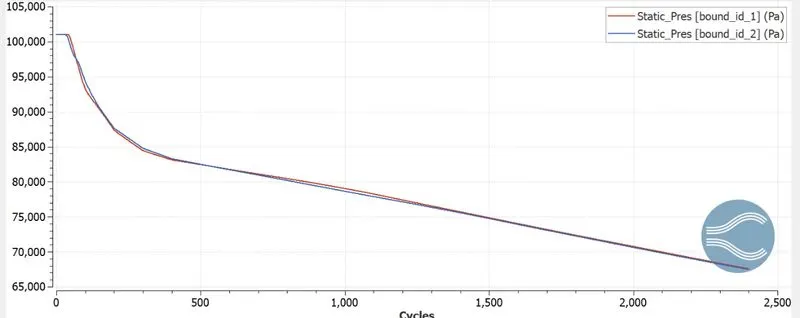
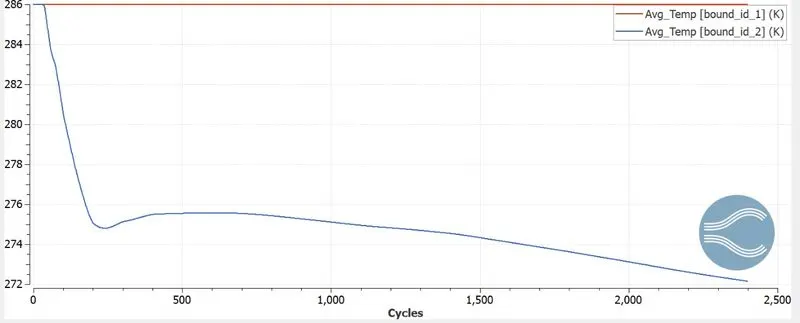
1. For subsonic flow the changes in flow parameters are gradual, hence we cant see shock waves, but in the case of supersonic flows we see a distinct expansion fan. The average Mach number increases from inlet to outlet for supersonic but decreases for subsonic.
2. SGS or sub-grid-scale is a mesh refinement method through which we can change the mesh size of a particular region of interest so that the flow physics is captured properly.
3. As SGS decreases we can see that the shock becomes sharper, with high values of SGS the shock is blurry and not defined with resolution.