Week 5: Prandtl Meyer Shock problem
Aim:
To Set up a case study of shock flow using Converge studio and Paraview.
Objective:
1. Shock flow boundary conditions
Do a literature search on what BC's are typically used for shock flow problems
2. What is a shock wave?
In your own words, describe the physics behind shock waves
3. Effect of SGS parameter on shock location
In the Prandtl Meyer shock problem, look at the effect of SGS temperature value on cell count and the shock location.
Theory:
Introduction:
A supersonic enlargement fan, technically referred to as Prandtl–Meyer enlargement fan, a two-dimensional easy wave, may be a targeted enlargement method that happens once a supersonic flow turns around a bulging corner. The fan consists of AN infinite range of physicist waves, branching from a pointy corner. once a flow turns around a swish and circular corner, these waves are often extended backwards to fulfill at some extent.
Each wave within the enlargement fan turns the flow bit by bit (in little steps). it's physically not possible for the flow to show through one "shock" wave as a result of this is able to violate the second law of natural philosophy.
Across the enlargement fan, the flow accelerates (velocity will increase) and therefore the Mach number increases, whereas the static pressure,temperature and density decrease. Since the method is physical property, the stagnation properties (e.g. the whole pressure and total temperature) stay constant across the fan.
To this purpose, the sole flow phenomena that are mentioned ar shock waves, that slow the flow and increase its entropy. it's doable to accelerate supersonic flow in what has been termed a Prandtl-Meyer growth fan, when Ludwig Prandtl and Theodore Meyer. The mechanism for the growth is shown within the figure below.
As opposition the flow encountering associate degree inclined obstruction associate degreed forming an oblique shock, the flow expands around a gibbose corner associate degreed forms an growth fan through a series of physical property physicist waves. The growth "fan" consists of {mach|Mach|Ernst {mach|Mach|Ernst physicist|physicist|philosopher}|physicist|philosopher} waves that span from the initial Mach angle to the ultimate Mach angle. Flow will expand around either a pointy or rounded corner equally, because the increase in Mach number is proportional to solely the gibbose angle of the passage (δ). The growth corner that produces the Prandtl-Meyer fan are often sharp (as illustrated within the figure) or rounded. If the full turning angle is that the same, then the P-M flow resolution is additionally identical.
The Prandtl-Meyer growth are often seen because the physical rationalization of the operation of the Laval nozzle. The contour of the nozzle creates a sleek and continuous series of Prandtl-Meyer growth waves.
A Prandtl-Meyer compression is that the opposite development to a Prandtl-Meyer growth. If the flow is step by step turned through AN angle of δ, a compression fan may be fashioned. This fan may be a series of Ernst Mach waves that eventually coalesce into AN oblique shock. as a result of the flow is outlined by AN physical property region (flow that travels through the fan) ANd an anisentropic region (flow that travels through the oblique shock), a blunder line results between the 2 flow regions. Boundary Conditions: In CFD, Boundary Conditions (BC) area unit equally necessary than the governing equations, although most textbooks deal preponderantly with the governing equations solely.From mathematical purpose of read, BC’s area unit inherently connected with PDE’s. A PDE should have BC’s to get a singular answer.In CFD, the assorted solutions to an equivalent governing equations area unit distinguished by the BC’s. In alternative words, the flow over a automobile differs from the flow over an area Shuttle specifically due to the various BC’s applied. Specifying of wrong boundary conditions within the CFD imposing {the answer|the answer} to blown up or given a wrong Convergence solution. Dirichlet boundary Conditions: In arithmetic, a Dirichlet drawback is that the drawback of finding a perform that solves a nominal partial equation (PDE) within the interior of a given region that takes prescribed values on the boundary of the region. The value of the variable is nominal on the boundary. y=f For example, if one finish of AN iron rod is command at temperature, then the worth of the matter would be best-known at that time in house
Neumann boundary conditions:
A condition that specifies the worth of the conventional by-product of the perform may be a Neumann condition, or second-type condition. The normal by-product of the variable is nominal on the boundary. dy/dx = f For example, if there's a heater at one finish of AN iron rod, then energy would be further at a continuing rate however the particular temperature wouldn't be best-known.
Robin boundary conditions:
Robin boundary conditions area unit a weighted combination of Dirichlet boundary conditions and Neumann boundary conditions. This contrasts to mixed boundary conditions, that area unit boundary conditions totally different|of various} varieties nominal on different subsets of the boundary. Robin boundary conditions also are known as electrical phenomenon boundary conditions, from their application in magnetic attraction issues, or convective boundary conditions, from their application in heat transfer issues It is obligatory on a standard or a partial equation, it's a specification of a linear combination of the values of a perform and also the values of its by-product on the boundary of the domain.
Cauchy Boundary Condition:
The Cauchy Boundary Conditions augments a standard equation or a partial equation with conditions that thereforelution|the answer} should satisfy on the boundary; ideally so to make sure that a singular answer exists. A Cauchy condition specifies each the perform worth and traditional by-product on the boundary of the domain. This corresponds to imposing each a Dirichlet condition and a Neumann condition. Cauchy boundary conditions area unit straightforward and customary in second-order normal differential equations. What is meant by blast wave once the speed of the moving object or supply in a very medium is exceeds the speed of the sound, then the wave fronts lag behind the thing forming a cone formed region with the supply at the Vertex behind the thing. the sting of the cone forms supersonic wave front with an oversized amplitude that is termed blast wave. The blast wave carries the energy.Across a blast wave, the ratio decreases, the static pressure will increase, and there's a loss of total pressure as a result of the method is irreversible. Through AN growth fan, the ratio will increase, the static pressure decreases and also the total pressure remains constant. growth fans area unit physical property. Shock waves don't seem to be standard sound waves; a blast wave takes the shape of a really sharp modification within the gas properties. Shock waves in air area unit detected as a loud "crack" or "snap" noise.
Model in converge studio:
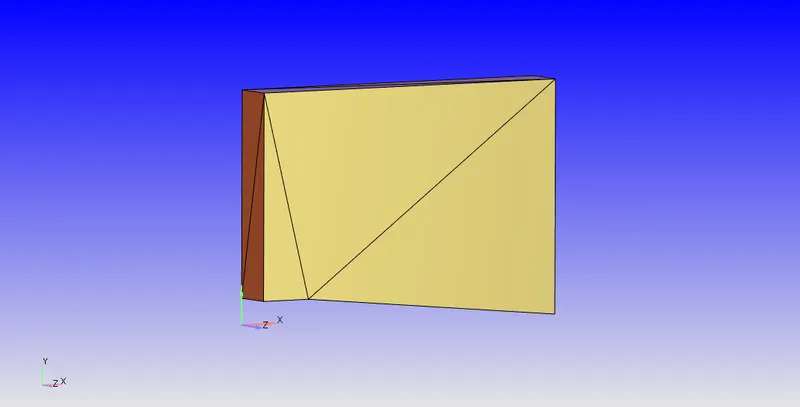
Case setup for Simulation:
Application kind – Time based mostly
The flow is general flow that contains the air as a fabric.
Air contains a Species mixture of O2 and N2 which can flow through the desired pure mathematics.
Global Transport Parameters the Prandtl range is zero.9 and therefore the Schmidt range is zero.78.
Simulation Parameters:
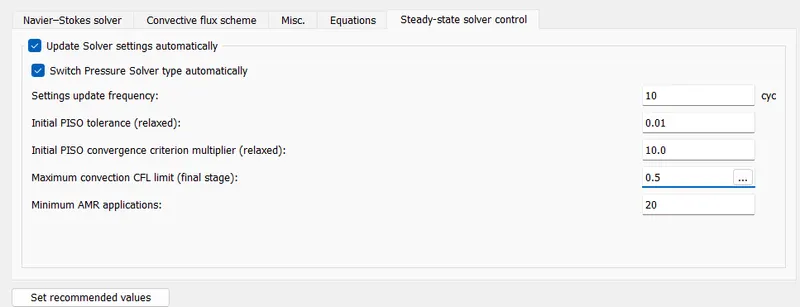
In the Run Parameter: thinker we tend to used is Steady state and therefore the simulation mode = Full fluid mechanics within the mic state we tend to change the thinker Momentum, Solve Species.
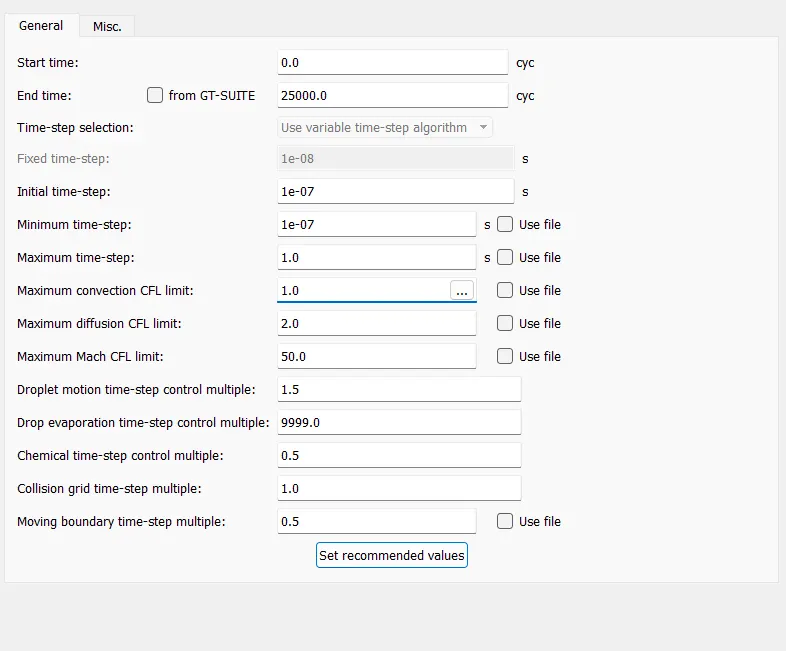
In Simulation time Parameters we tend to set the values for begin time as zero cycles and finish time 25000 cycles and therefore the initial and Minimum time setup for 1e-9 and remaining values area unit place to default.
In the thinker Parameters, the Navier stock equation ought to be Density based mostly thinker and remaining ought to be default.
Initialization and Boundary Conditions:
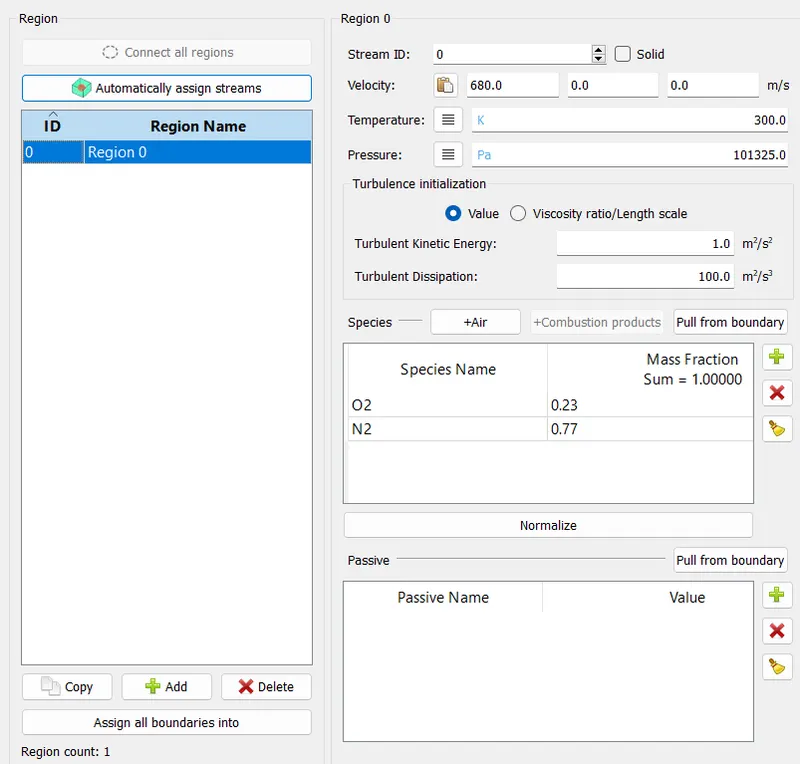
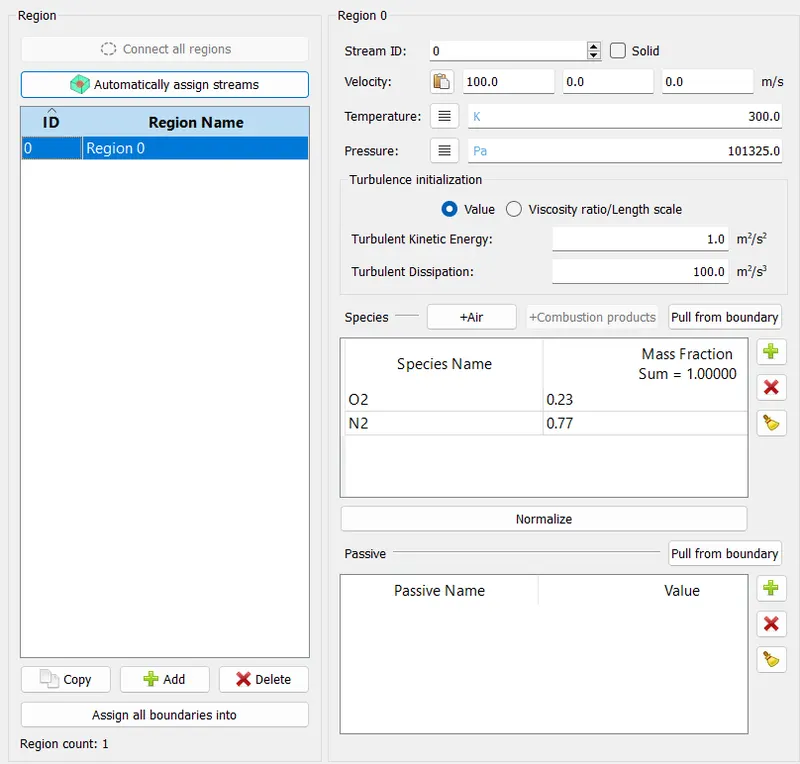
In the data formatting region modification the name of the Region as a volumetrical and therefore the values assigned for the rate as 680 m/sec temperature and pressure is 300k and 50000 Pascal and add the species O2 and N2 with the mole fraction of zero.23 and 0.77.
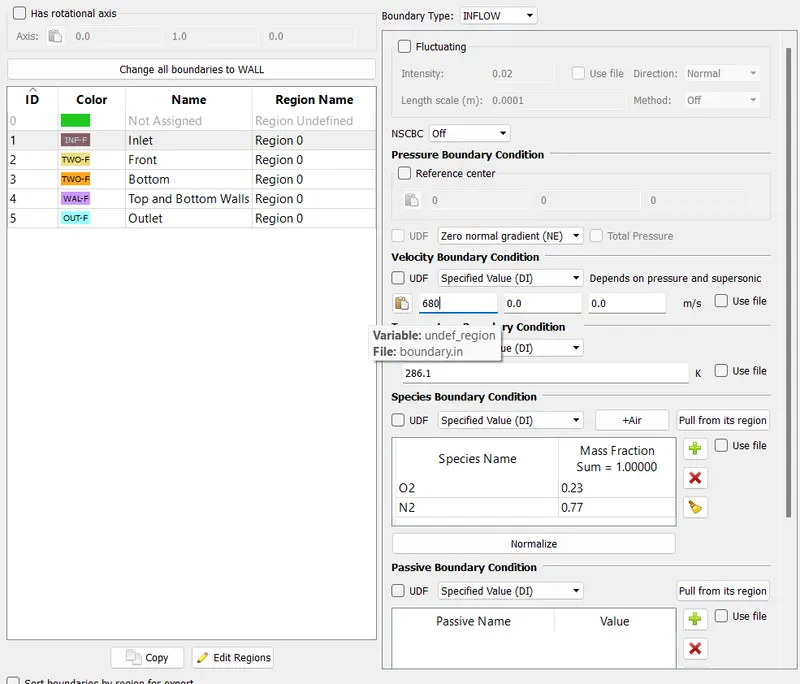
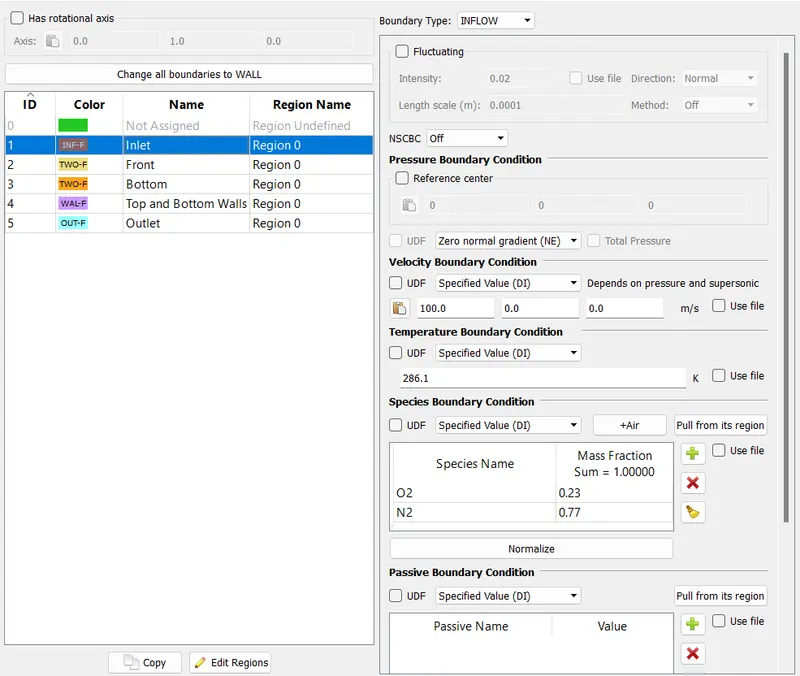
Inlet Boundary Conditions:
The boundary kind is flow
Pressure Boundary Conditions- Zero traditional Gradient (Neumann Boundary)
Velocity Boundary Conditions-680 m /sec and therefore the speed of sound is 340 m/sec
Mach number =Velocity of the item / speed of the sound =680 / 340 = two
The temperature ought to be 286.1k and
Add species 02=0.23 N2=0.77
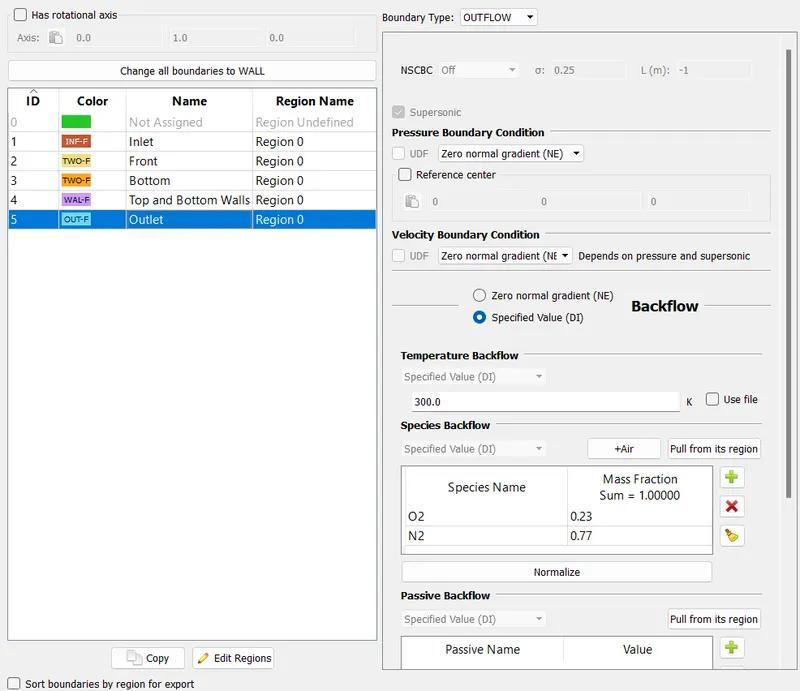
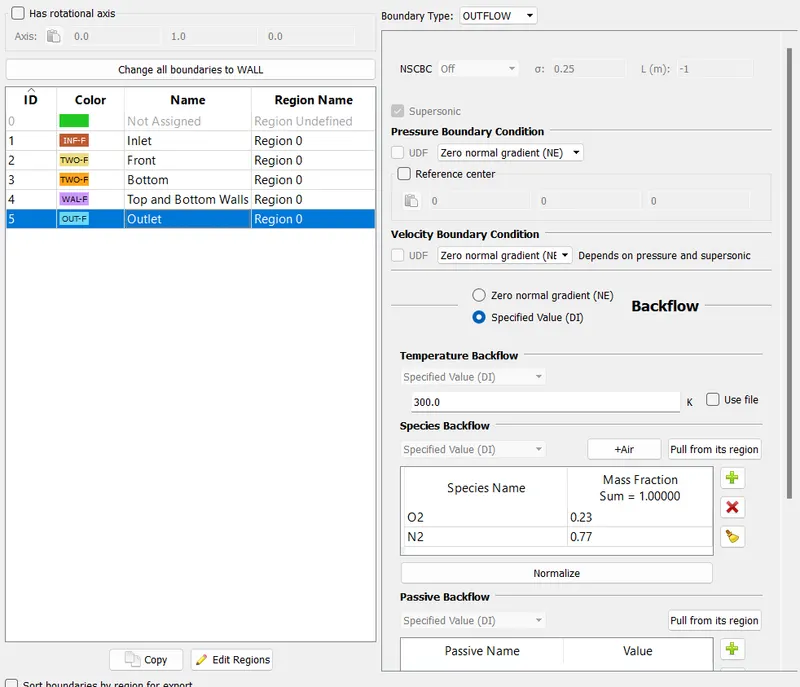
Outlet Boundary Conditions:
The boundary kind is OUTFLOW
Pressure Boundary Conditions- Zero traditional Gradient (Neumann Boundary)
Velocity Boundary Conditions- Zero traditional Gradient (Neumann Boundary)
The temperature ought to be three hundred k and
Add species 02=0.23 N2=0.77
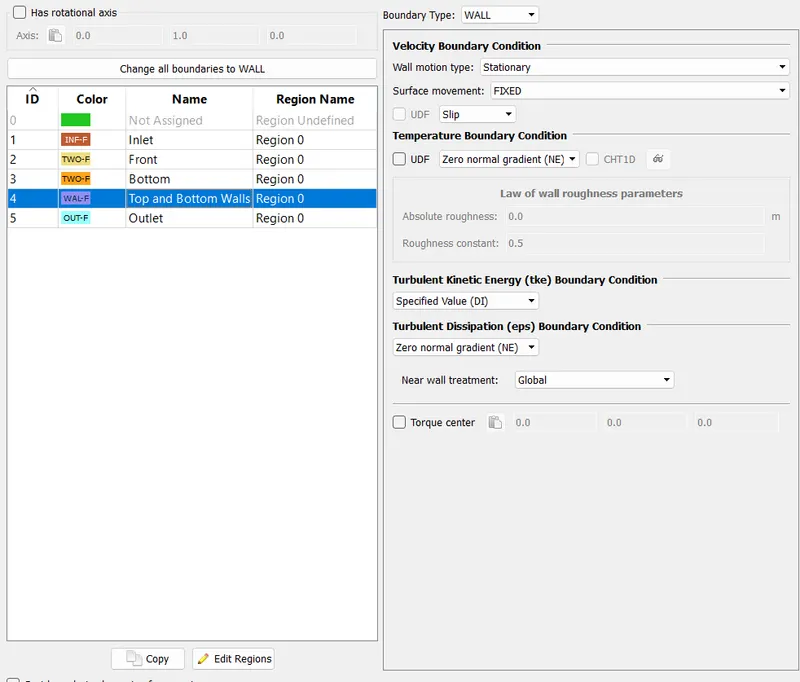
Front, Back, high and Bottom Boundary Conditions:
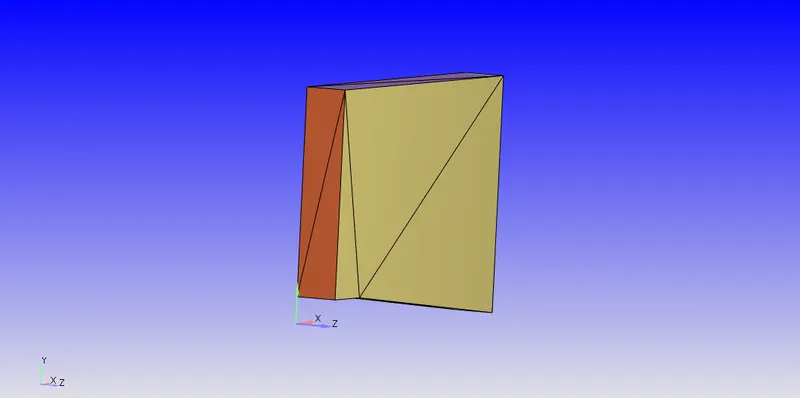
For the Front wall boundary ought to be the second wall kind.
For the rear wall Boundary kind ought to be the second wall kind.
For the highest and Bottom wall the boundary kind is WALL kind with the slip condition as a precondition and temperature ought to be 300k.
Physical Models:
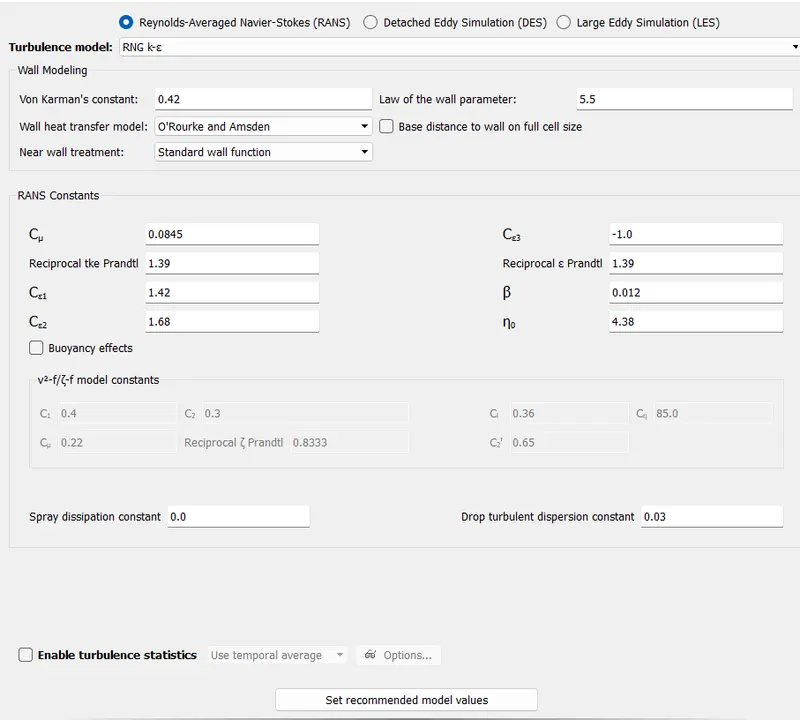
In the physical models change the Turbulence Modelling and therefore the thinker ought to be designated as RNG K-e and place the remaining values as a default.
Grid Control:
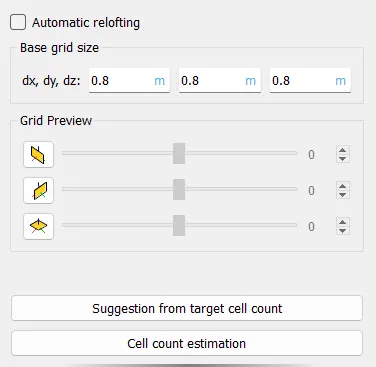
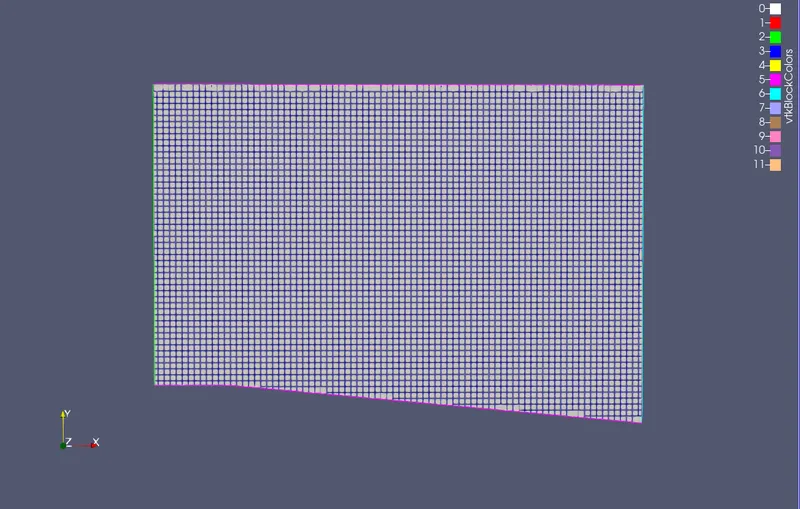
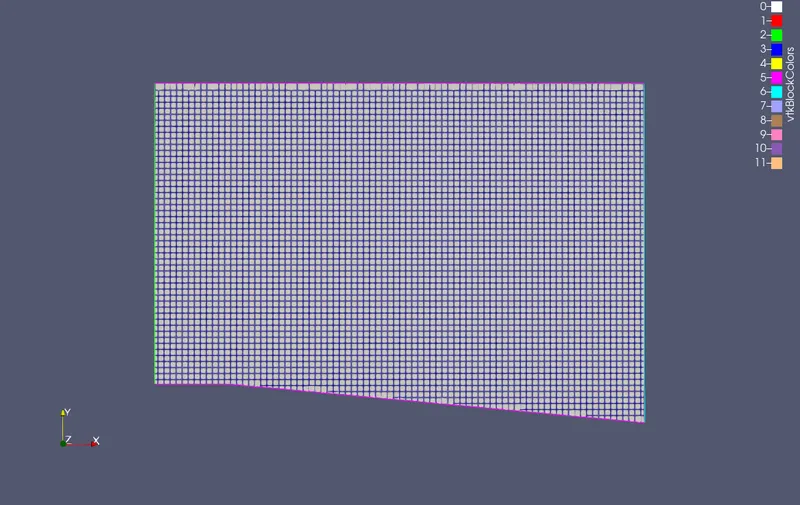
Element size dx=dy=dz=0.8 m
Adaptive Mesh Refinement:
In numerical analysis, reconciling mesh refinement (AMR) could be a methodology of adapting the accuracy of an answer inside bound sensitive or turbulent regions of simulation, dynamically and through the time the answer is being calculated. once solutions area unit calculated numerically, they're typically restricted to pre-determined quantified grids as within the plane that represent the procedure grid, or mesh. several issues in numerical analysis, however, don't need a standardized exactness within the numerical grids used for graph plotting or procedure simulation, and would be higher suited if specific areas of graphs that required exactness might be refined in quantification solely within the regions requiring the additional exactness. reconciling mesh refinement provides such a dynamic programming setting for adapting the exactness of the numerical computation supported the wants of a computation drawback in specific areas of multi-dimensional graphs which require exactness whereas going away the opposite regions of the multi-dimensional graphs at lower levels of exactness and determination.
In our case we want additional refinement of mesh at the shock were occur in this region we want additional refinement of mesh in this space and therefore the remaining ought to be the traditional grid size mesh.
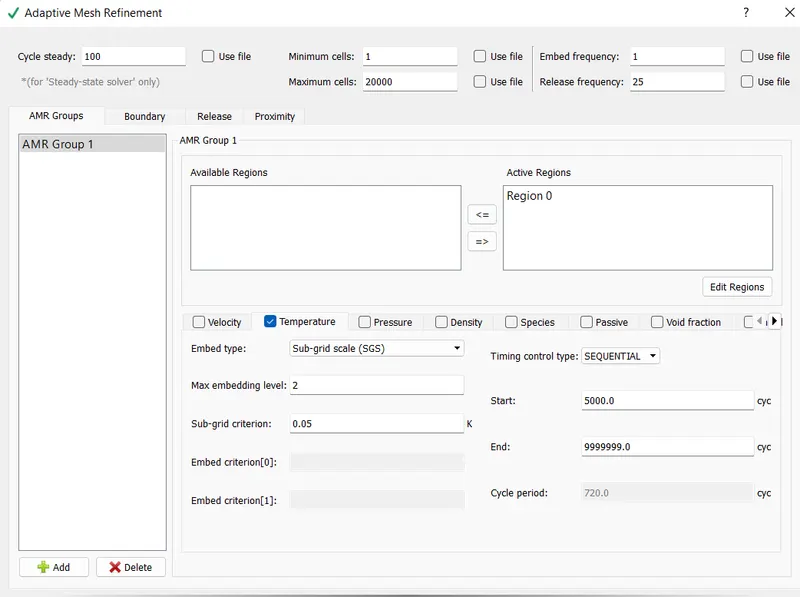
In converge we've the various ways that area unit used for the reconciling Mesh Refinement straight away we tend to area unit mistreatment the Temperature based mostly Sub-Grid-Criterion methodology with the two embedded layers. therefore the converge helps the curvature of temperature property provided in AMR and starts the purification of the mesh for the temperature curvature by checking the values provided within the SGS wherever the valve is larger than the provided valve in SGS.This property helps North American country within the value of procedure domain and saves the time by not doing the unnnecessary meshing for the whole domain.
In the Grid management change the reconciling Mesh Refinement
In Adapative Mesh Refinement the volumetrical region is modified from the on the market region to the Active Region.
Then visit Temperature
Enter the amount of Embedded level=2
Sub_Grid_Criterion=0.001 k (Use completely different valves of SGS to review the changes within the problem)(the values area unit zero.01 and 0.1)
Case 2:
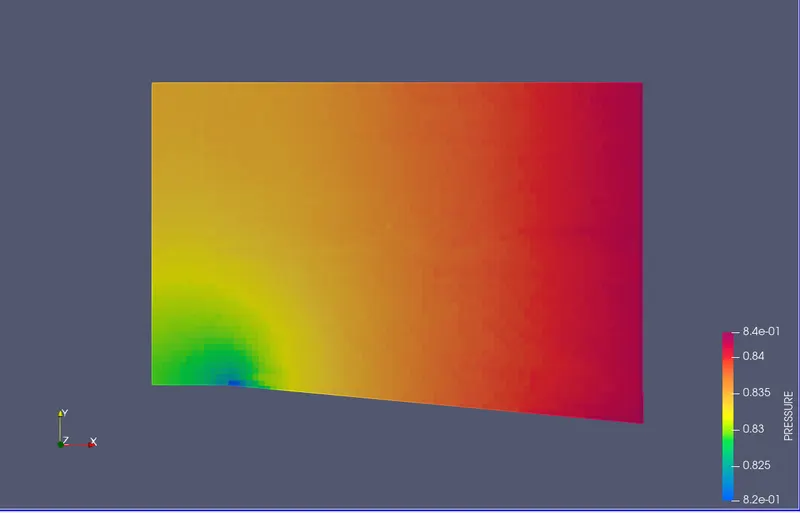
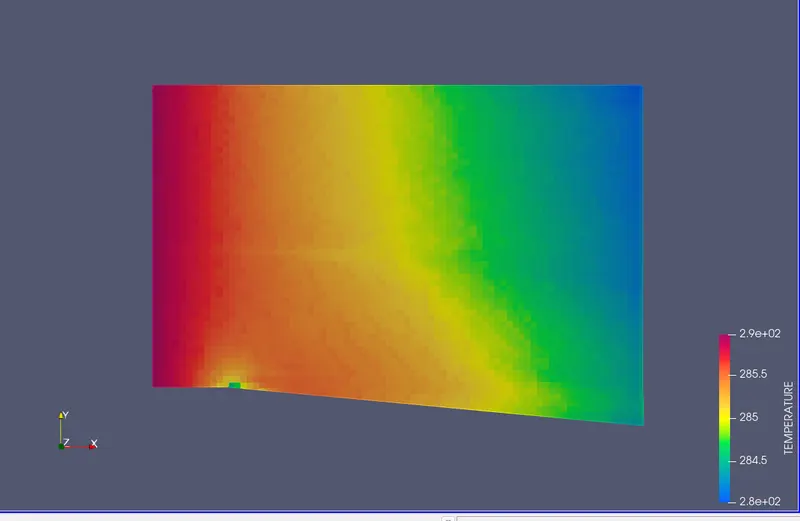
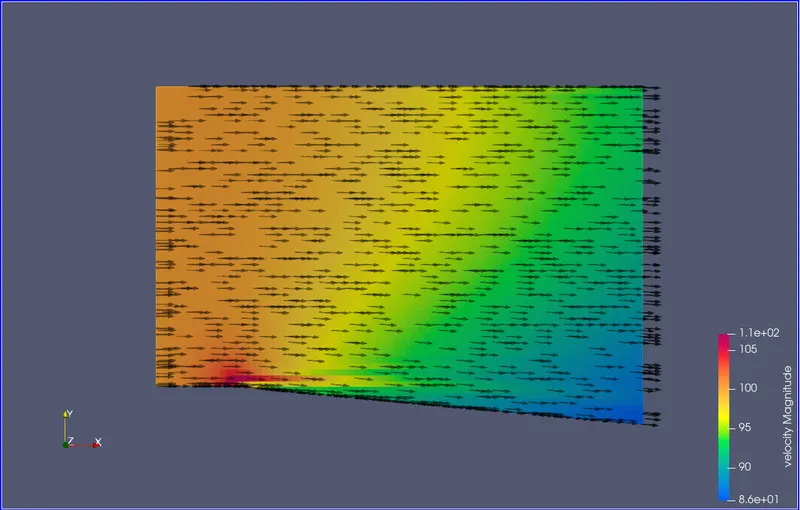
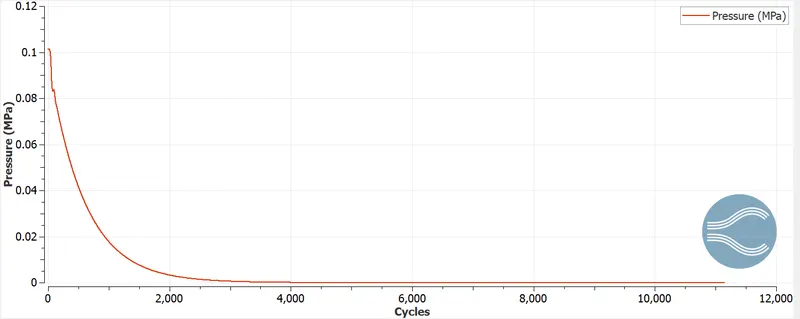
Conclusion:
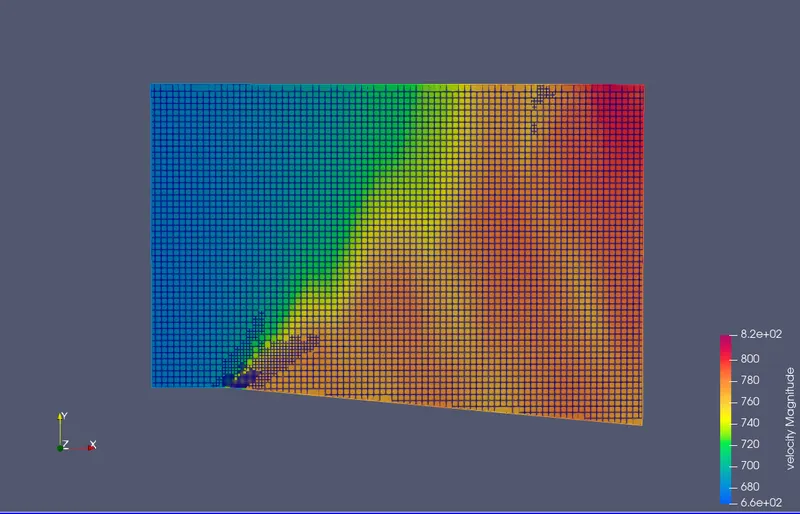
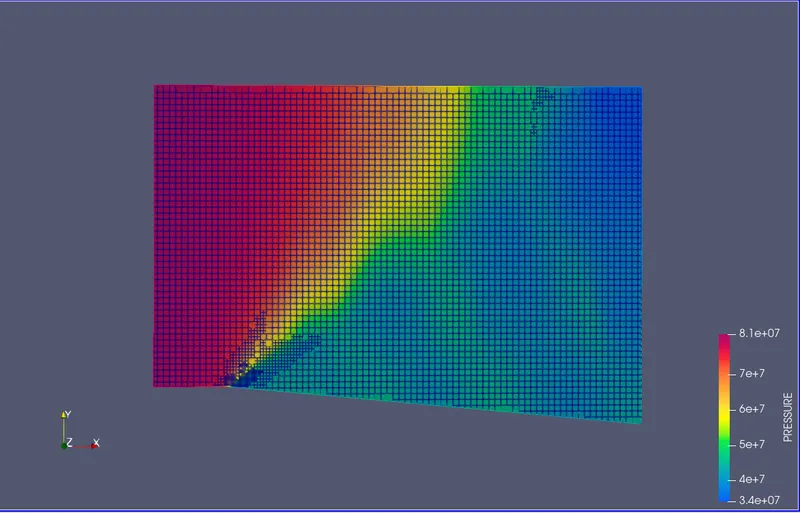
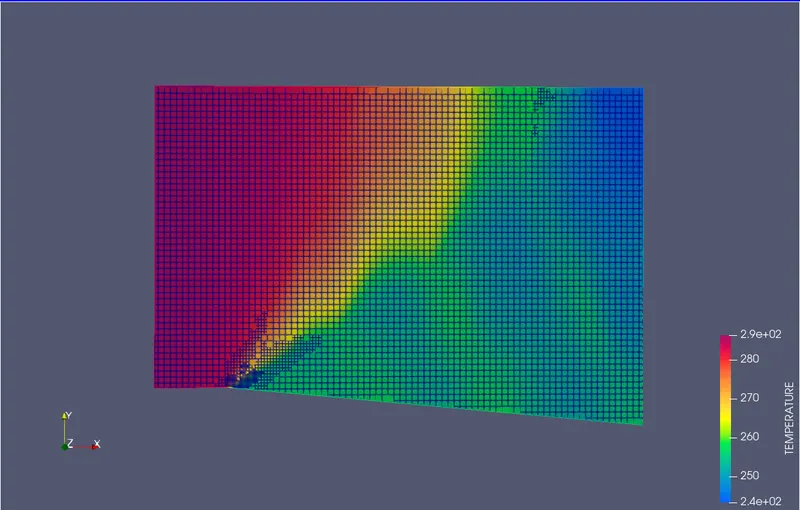
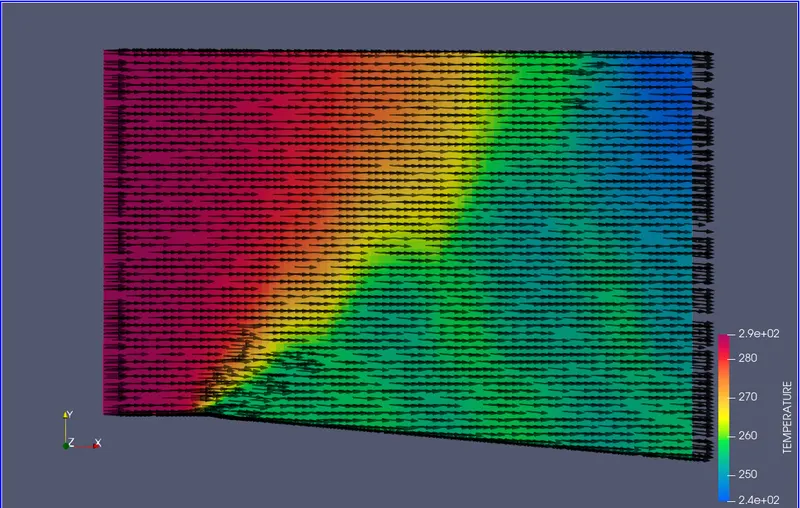
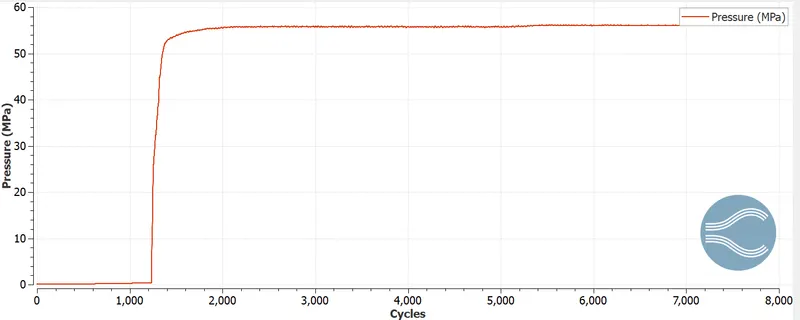
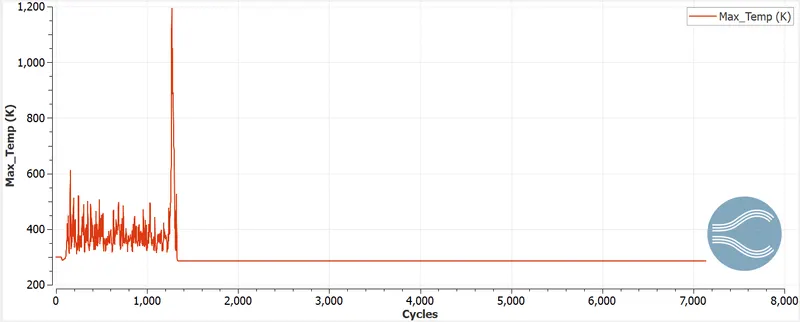
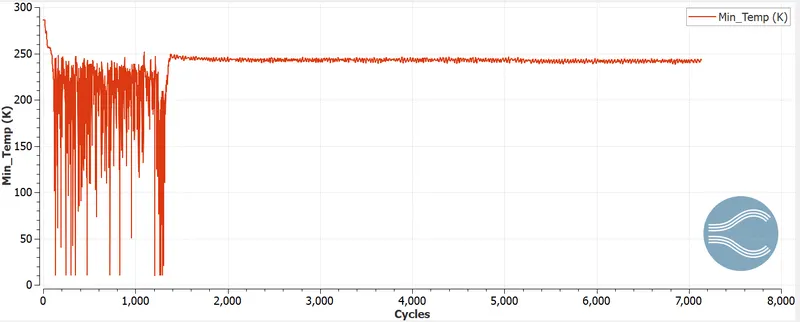
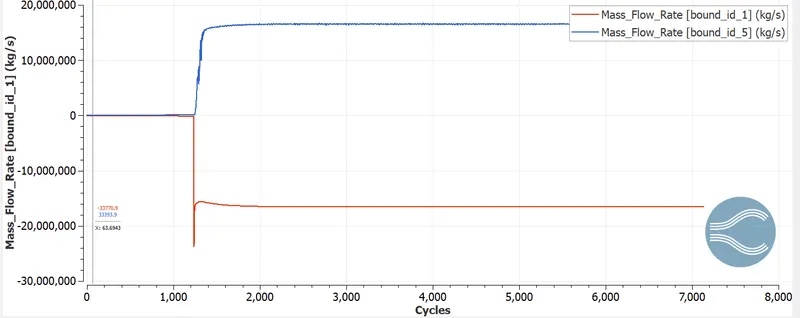
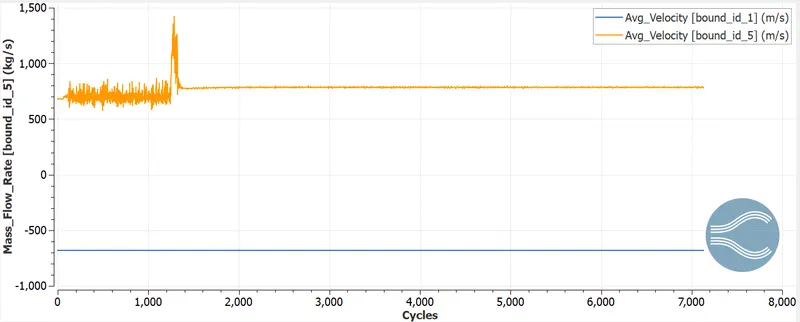
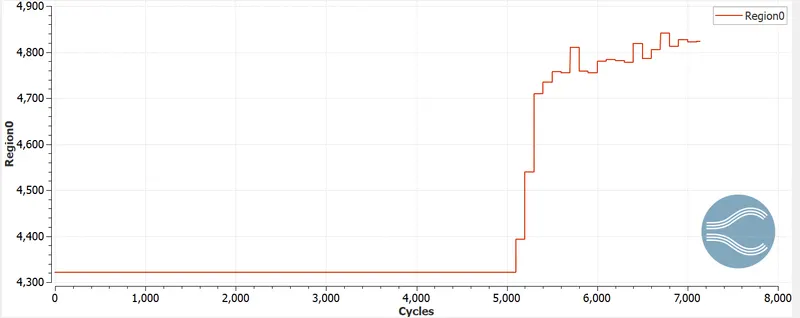
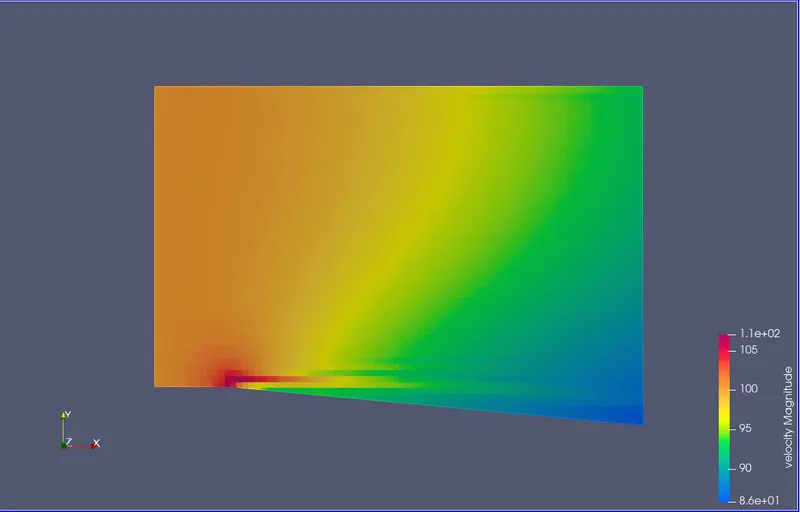
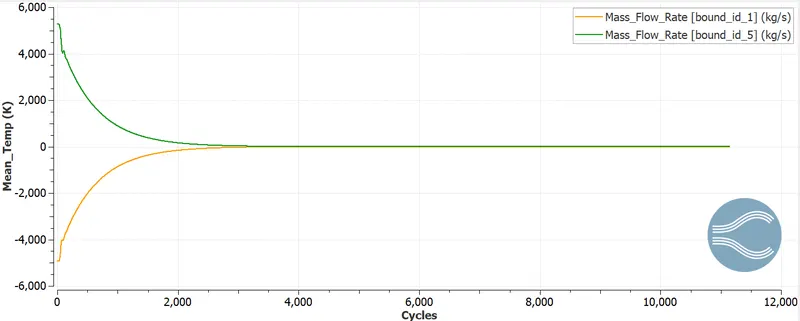
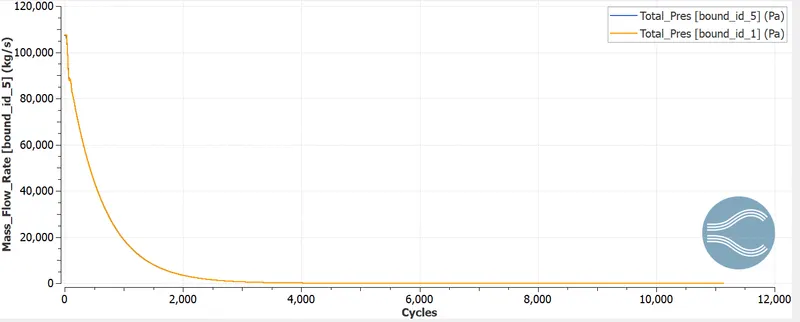
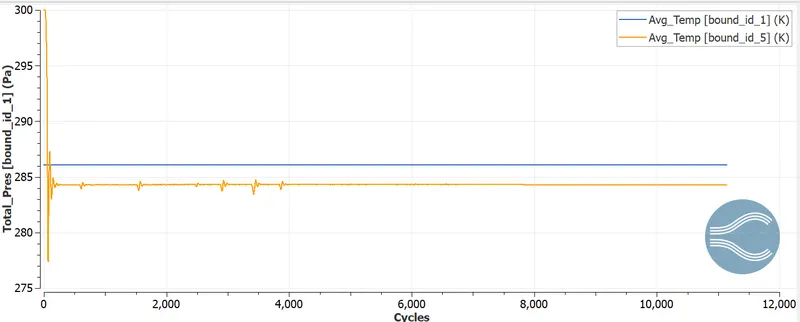
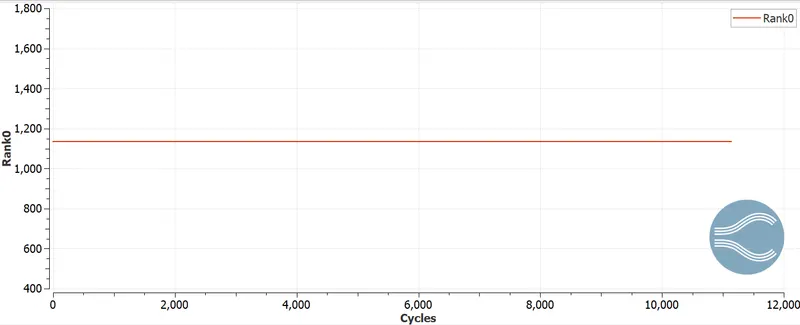
From the in particular 3 plots we will clearly discovered that the because the SGS valve decreases then the a lot of refinement of cells takes places therefore it indicates the will increase within the cell count.
For the low SGS valve range|the amount|the quantity} of cells is a lot of because of higher refinement higher refinement suggests that higher number of cells.
Different values of SGS ar performed and observe the results of SGS valve on completely different parameters.
With the Fine mesh i.e low Valve of SGS, we will clearly discovered the enlargement fan with a touch dimension.
Simulation of Prandtl Meyer variety is completed
As we tend to discovered within the in particular plots Across the enlargement fan, the flow accelerates (velocity will increase) and therefore the ratio increases, whereas the static pressure,temperature decrease.