PRANDTL MEYER SHOCK (Converge Studio)
OBJECTIVES:
1. To understand the theory behing the shock waves particularly expansion fan means prandtl meyer shock.
2. To understand the usage of Boundary conditions.
3. To understand the effect of Sub-Grid scale parameter.
4. To understand supersonic and subsonic flows.
SHOCKWAVE:
A Shockwave is a type of propagating disturbance.
when a wave moves faster than the local spedd of sound in a fluid, it is shock wave.
A shockwave is the high pressure wave produces by an object that travels faster than the speed of sound according to the same medium.
The extremely thin region in which the transition from supersonic to subsonic velocity decelerate to subssonic flow. this process is adiabatic and non-isentropic.
Types of Shockwaves:
NORMAL SHOCKWAVE:
The waves, which is perpendicular to the flow is called noraml shock waves. It occurs when the fluid flow is supersonic in upstream and subsonic in downstream.
OBLIQUE SHOCKWAVE:
The wave, which is inclined with respect to upstram flow direction which occur when supersonic flow encounters a corner that effectively turns the flow into itself and compresses.
BOW SHOCKWAVE:(Detached Shockwave)
A bow shock, also called detached shock or normal shock,is a curved, stationary shock wave that is found in supersonic flow past a finite body, they are often seen forming aroud blunt objects. Bow shocks occurs when local angle of the leading edege of the body exceed the critical angle below which oblique shock occurs. The flow accross the bow shock is non-isentropic.
EXPANSION SHOCKWAVE:
Expansion shockwaves, are two dimensional shock waves occuring in supersonic flow is "turned away itself"
The expansion wave takes place through a continuous succession of mach waves such that there is no change in entropy for each mach wave.
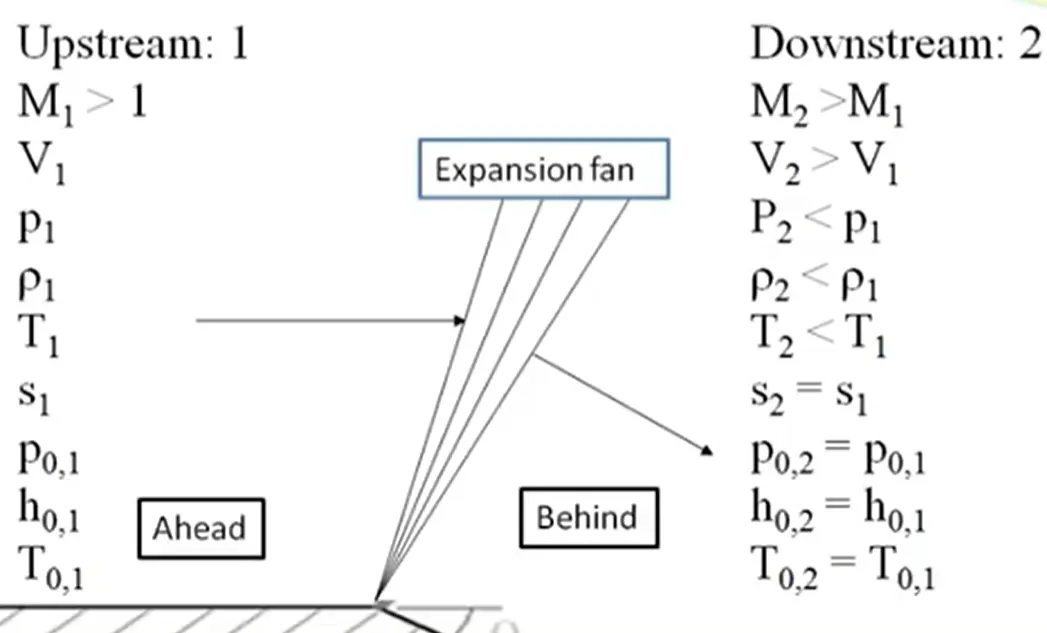
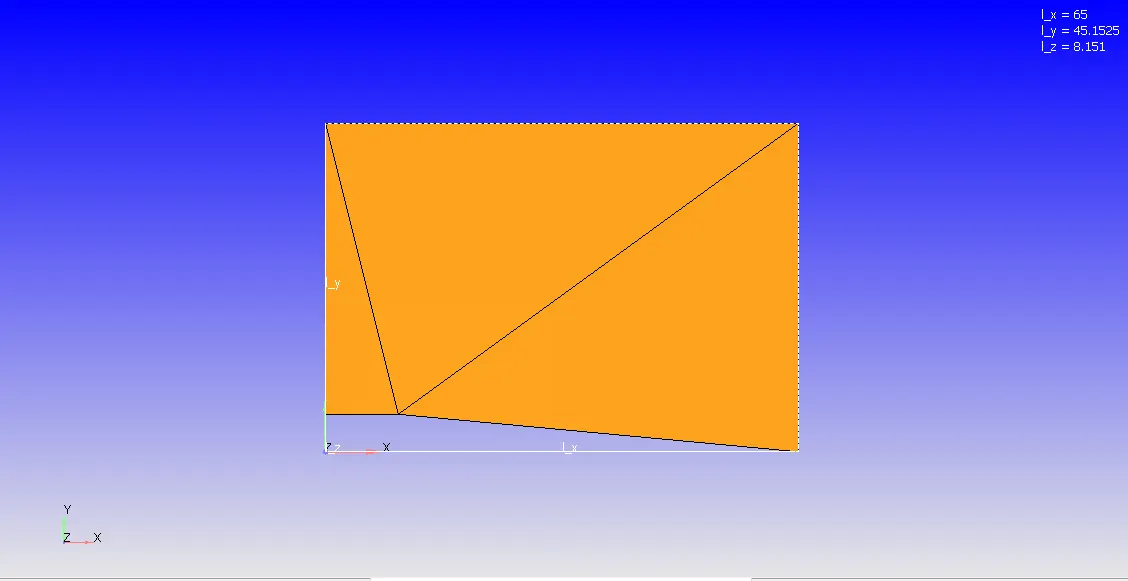
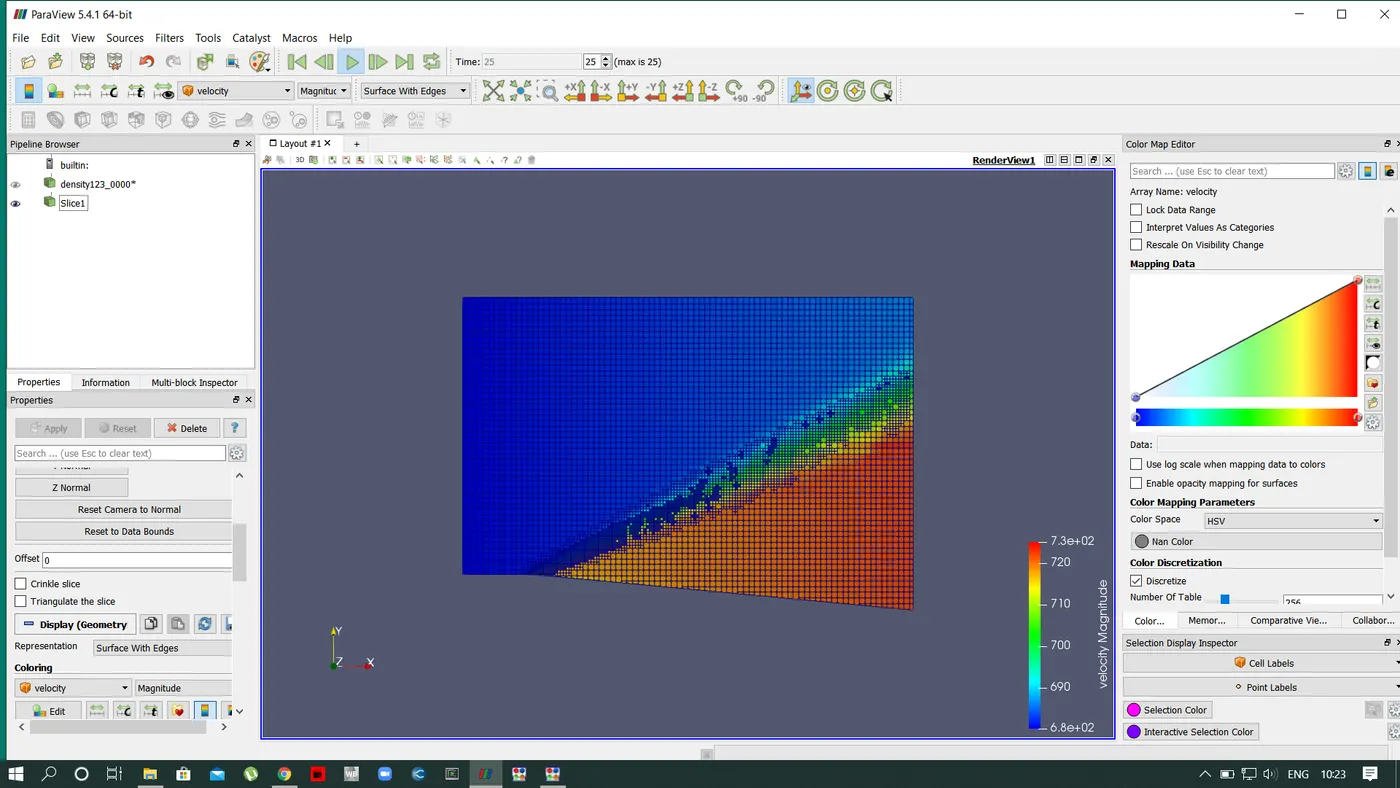
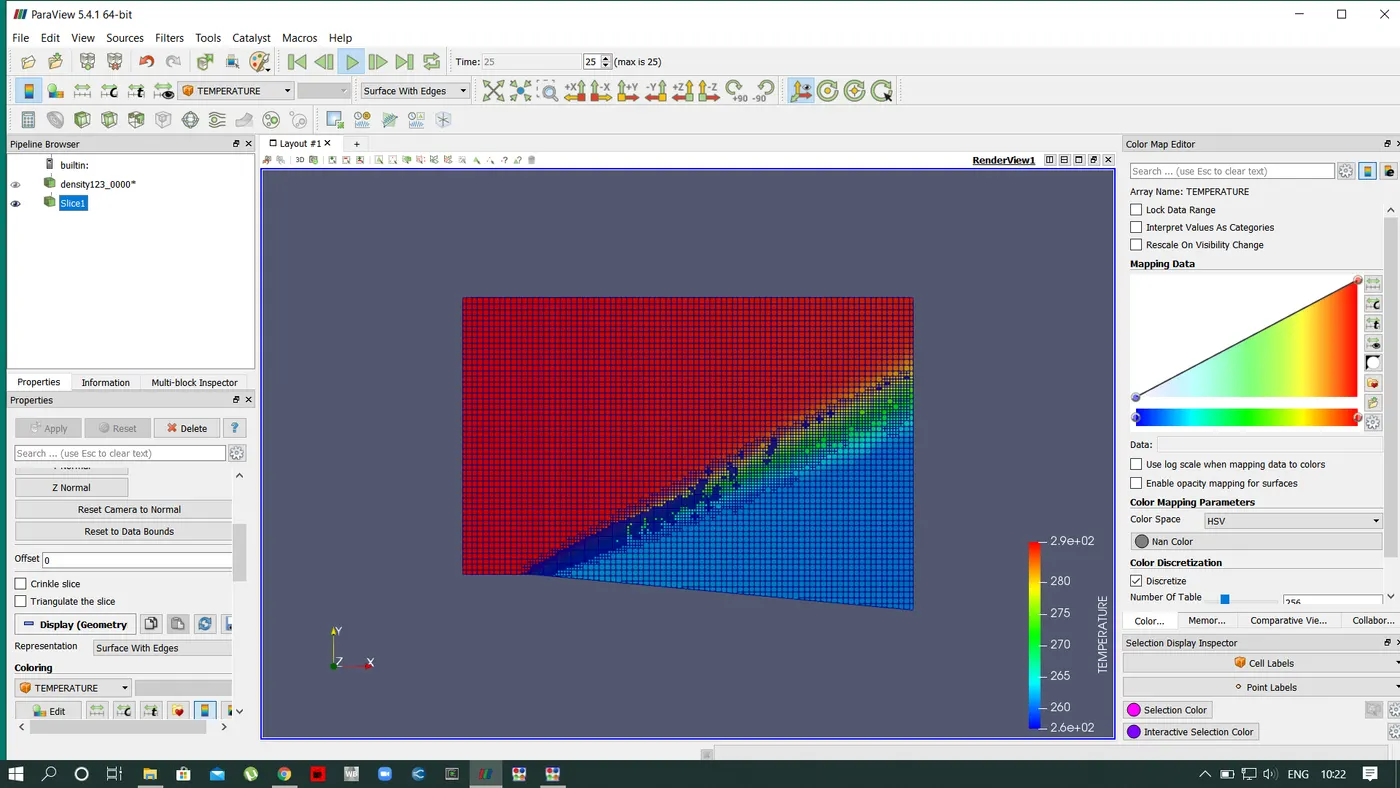
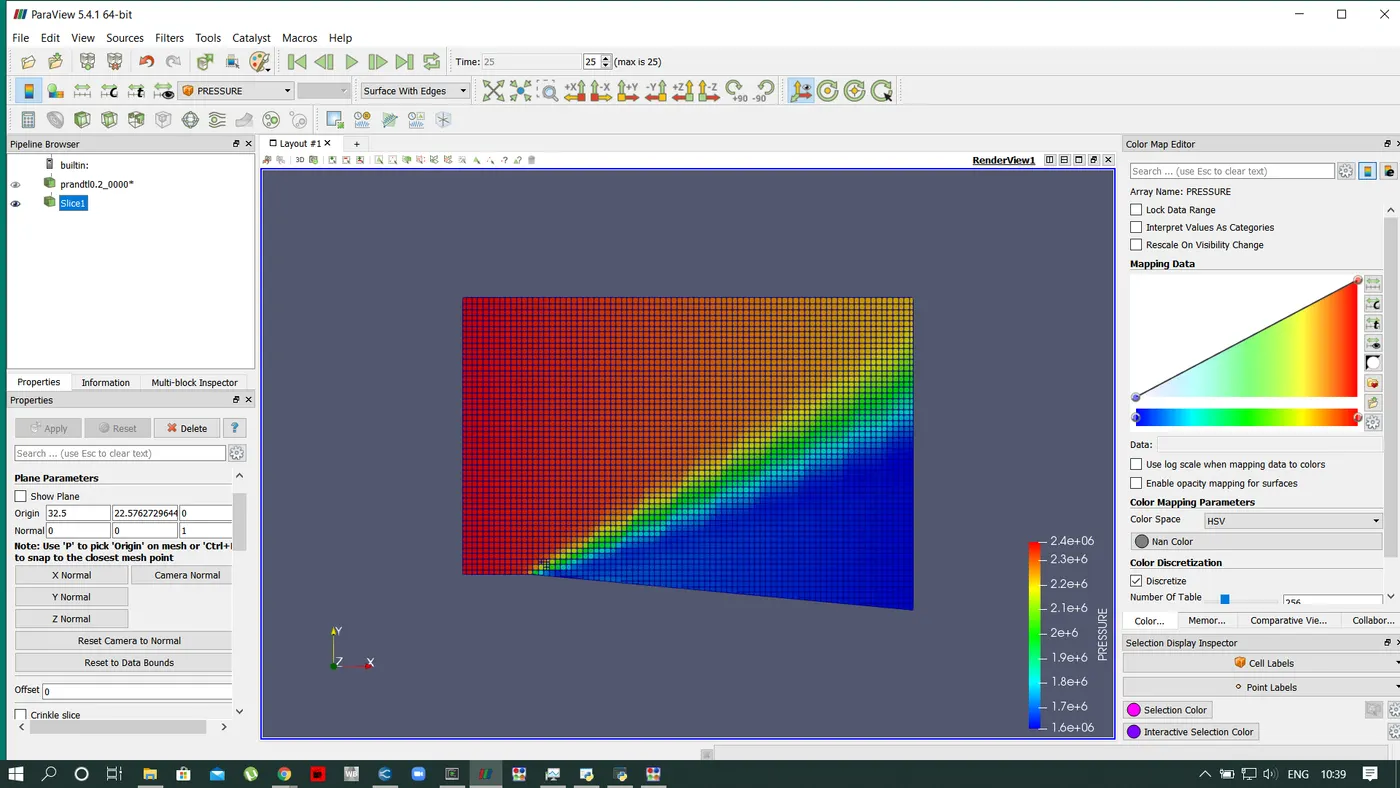
When supersonic flow is flowing over a convex surface with sharp edge corner when it hits the sharp corner expansion waves are formed known as Prandtl Meyer expansion fan. The expansion is isentropic As the flow passes through the suface Mach number,velocity increases and Pressure,Temperature,density decreases.
Types of boundary conditions:
Dirchelet: This specifies the value of dependent variable.
Neumann: This specifies the value of gradient of dependent variable.
Mixed:This specifies the value of dependent variable is expressed as the function of other gradient.
Shock flow boundary conditions:
Neumann boundary conditions are used typically in shock flow problems the bounday conditions applied gradient to the surface. As, the information cannot carries inside the domain the properties in the fuid cannot match the flow with required BC. So, neumann BC depends on the initial conditions of the domain.
GEOMETRY:
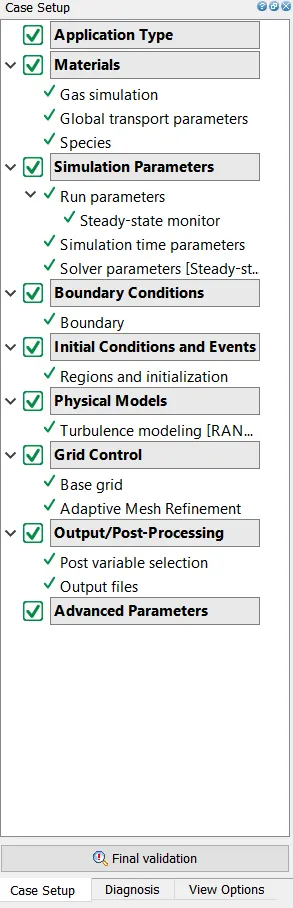
CASE SETUP:
BOUNDARY CONDITIONS:
INLET:
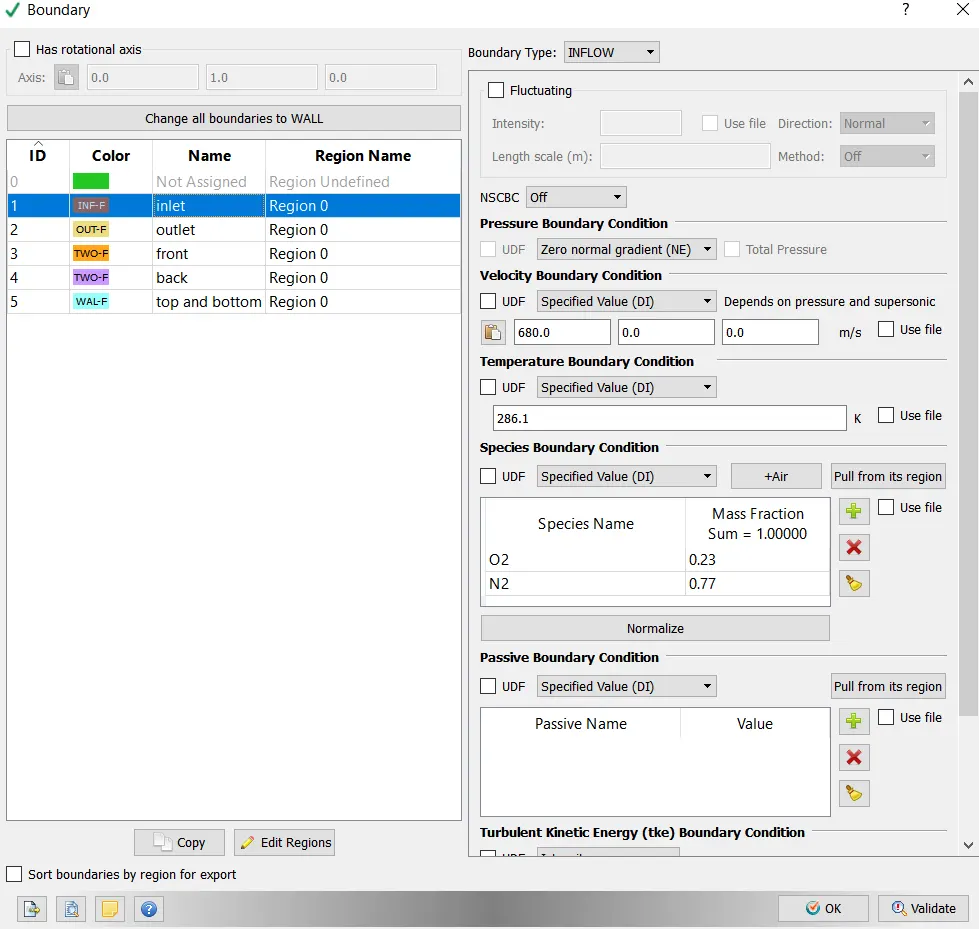
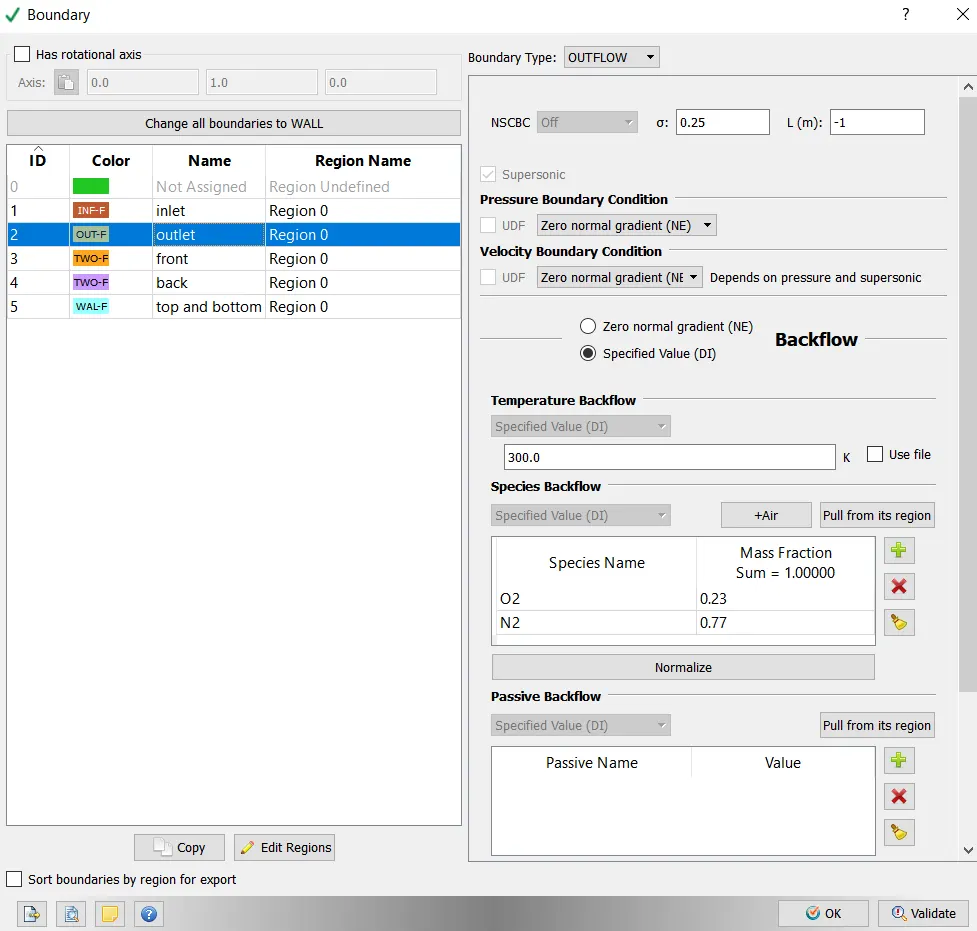
Inflow boundary conditions are specified as velocity is 680m/s which means mach number is 2,for subsonic flow with velocity 100m/s the mach number is 0.29.
Mach number = velocity/speed of sound
speed of sound= 340m/s
OUTLET:
Outlet is Neumann boundary because it depends on initial conditions.
WALL:
INITIAL CONDITIONS:
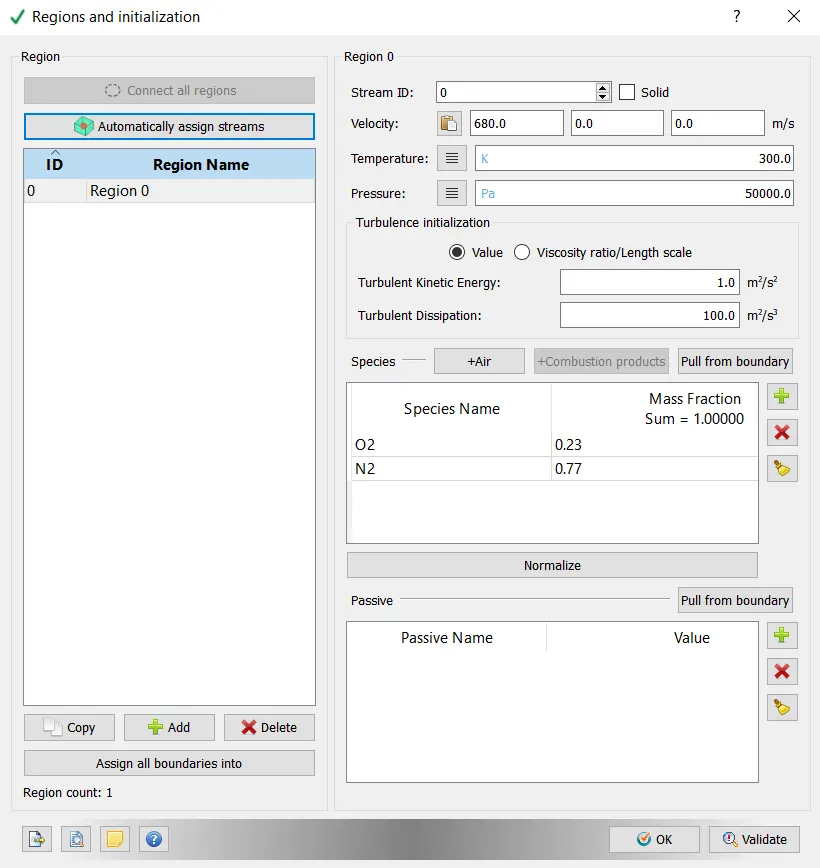
Velocity is 680m/s represents supersonic sonic if the velocity is changed to 100 it is subsonic flow.and the temperature is 300 pressure is 0.5bar
ADAPTIVE MESH REFINEMENT:
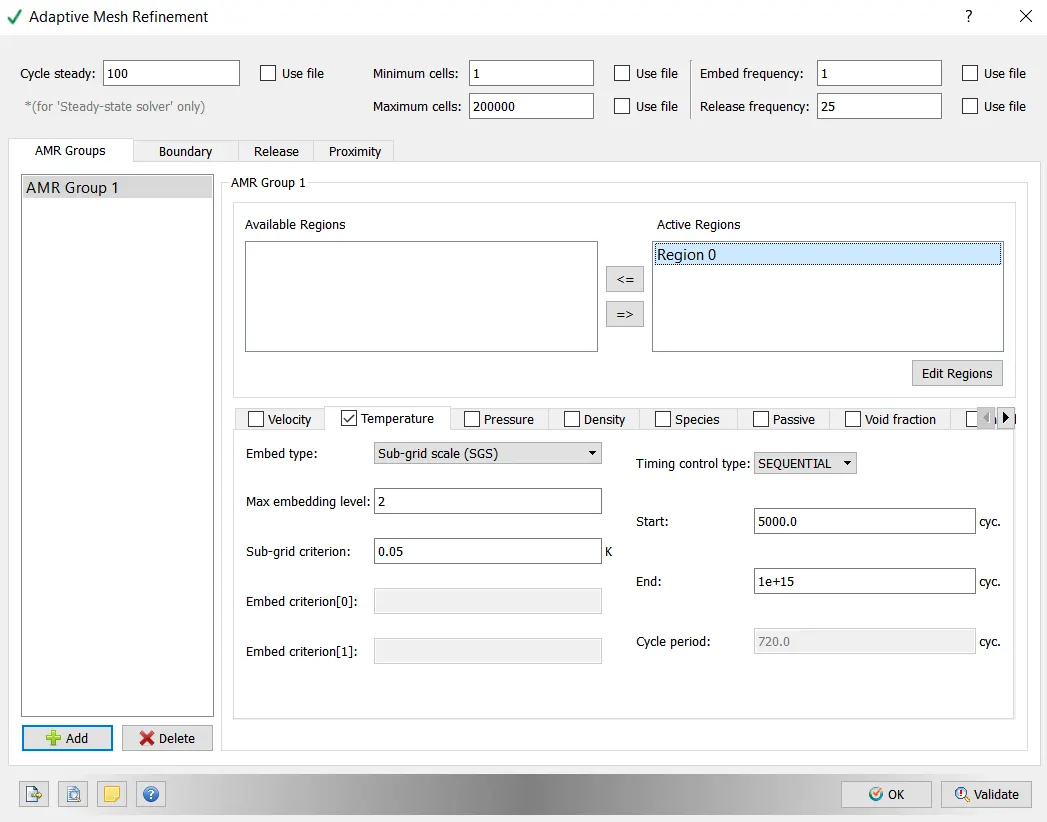
Subgrid scale is a parameter which is used for refining the mesh. Converge studio monitors the curvature of the fluid property provided in AMR and refines the mesh with the variation between consecutive grid than the SGS value.
POST PROCESSING:
SUFACE WITH EDGES:
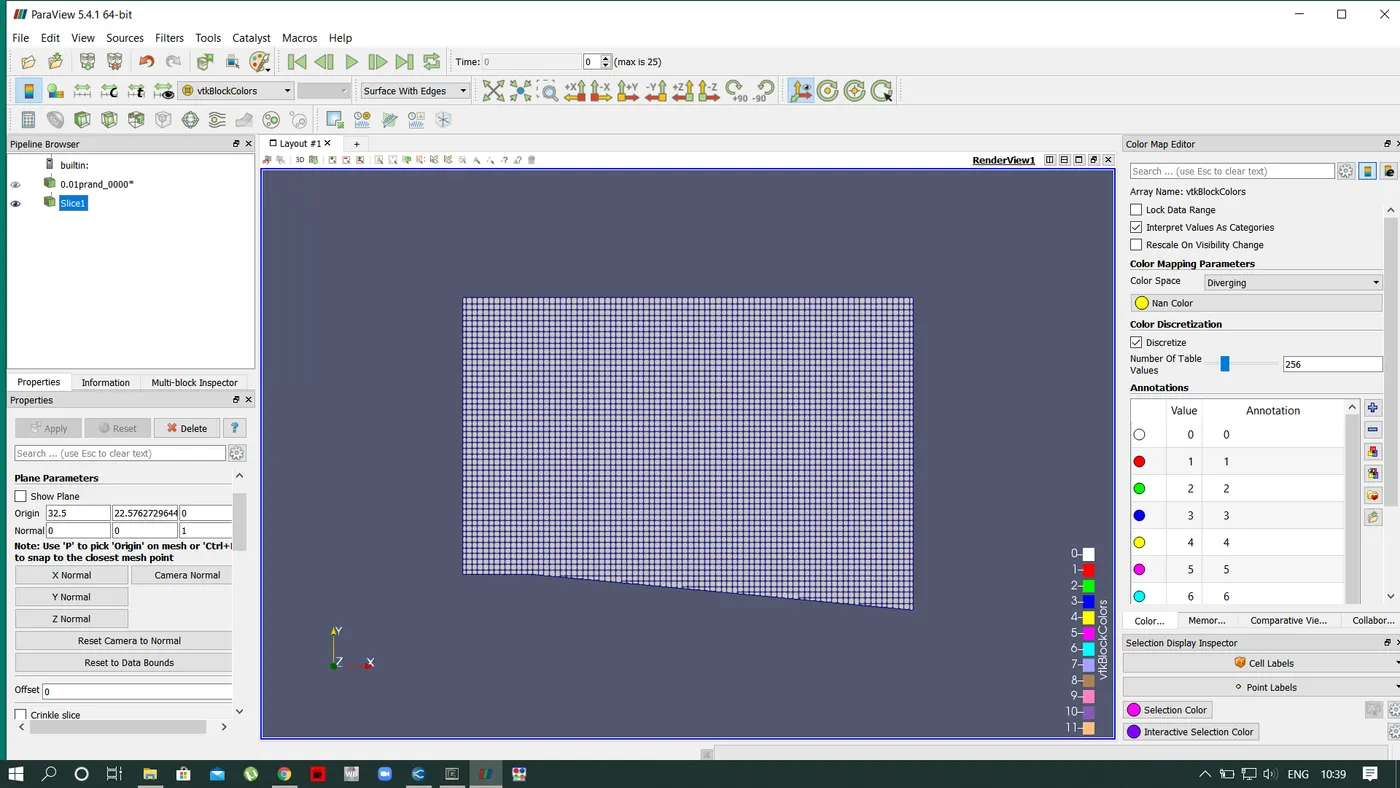
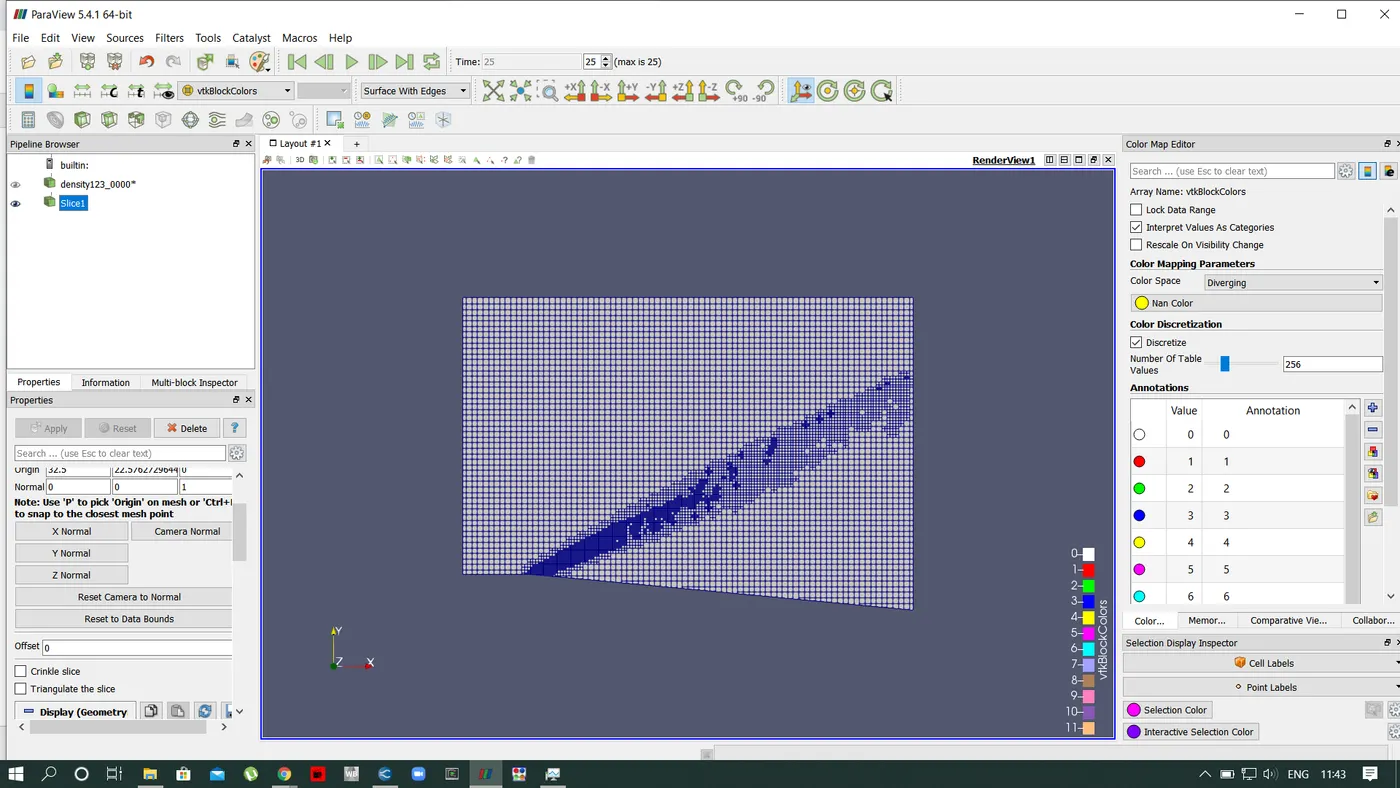
SGS 0.05 680m/s:
SURFACE WITH EDGES LAST TIME STEP:
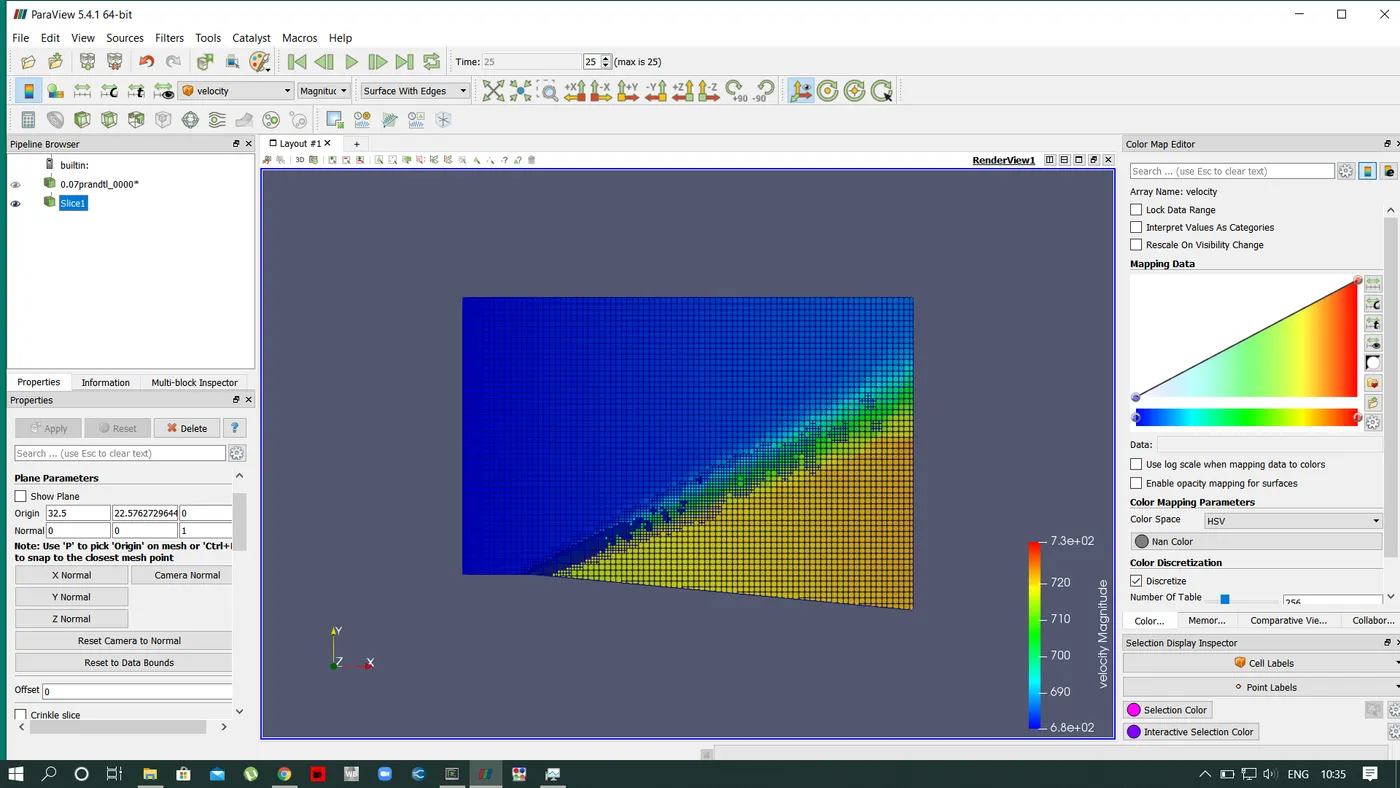
VELOCITY CONTOUR:
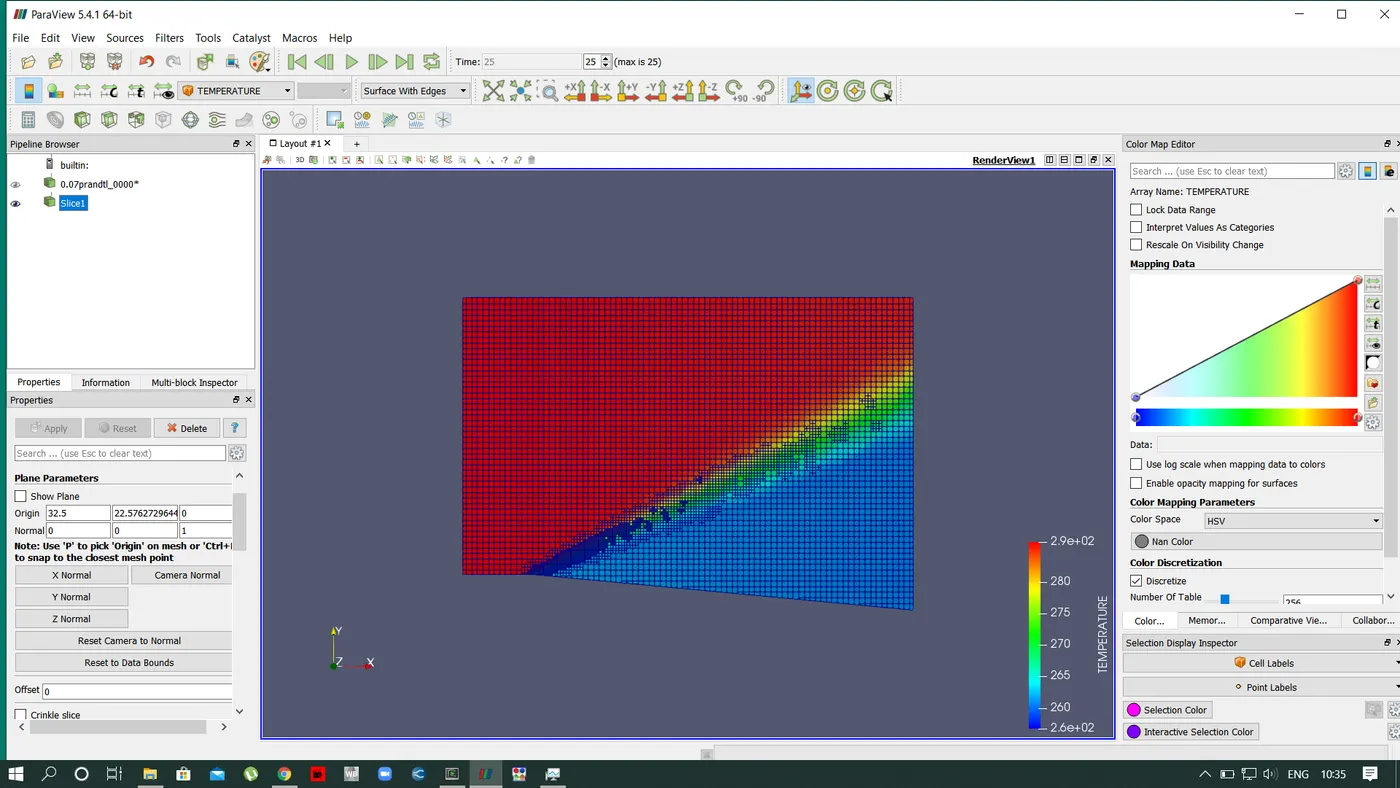
TEMPERATURE CONTOUR:
PRESSURE CONTOUR:
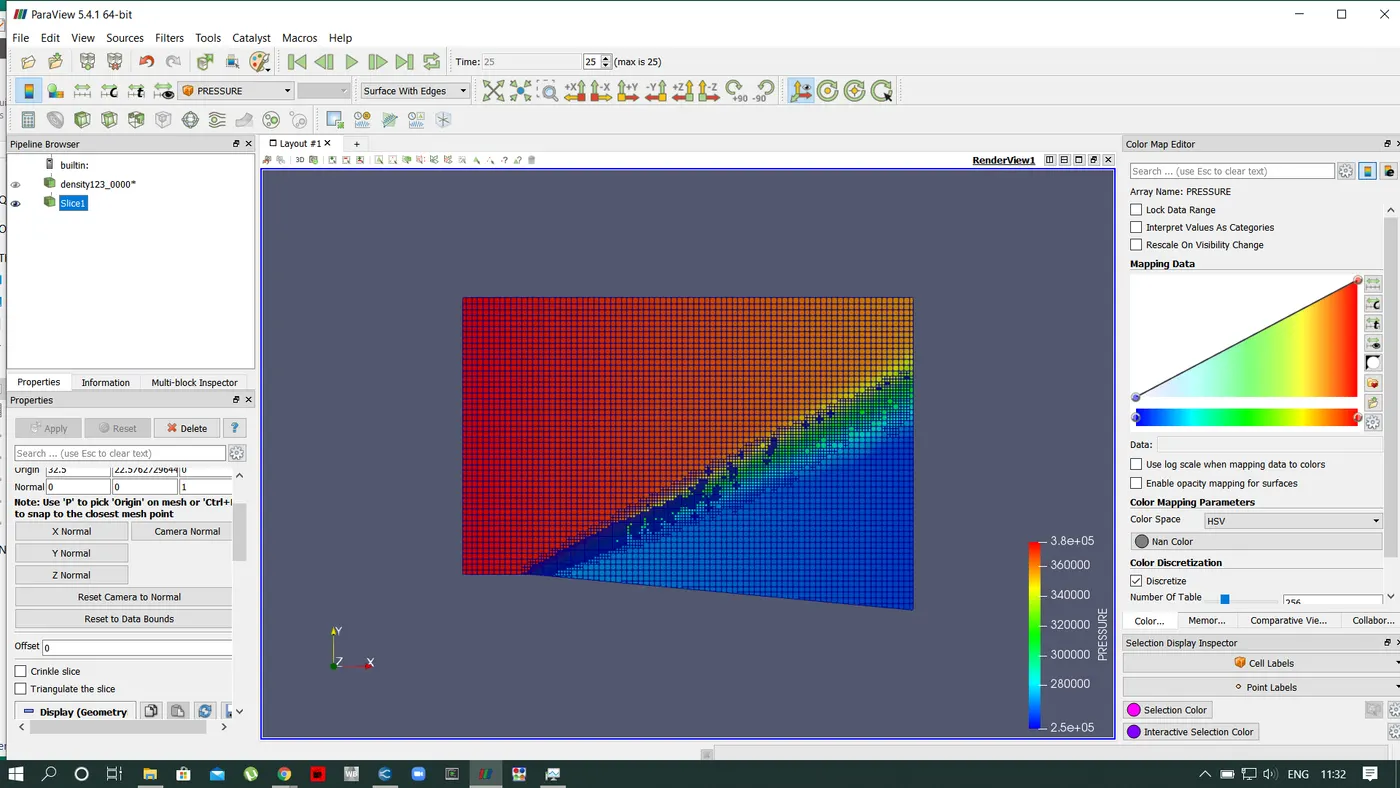
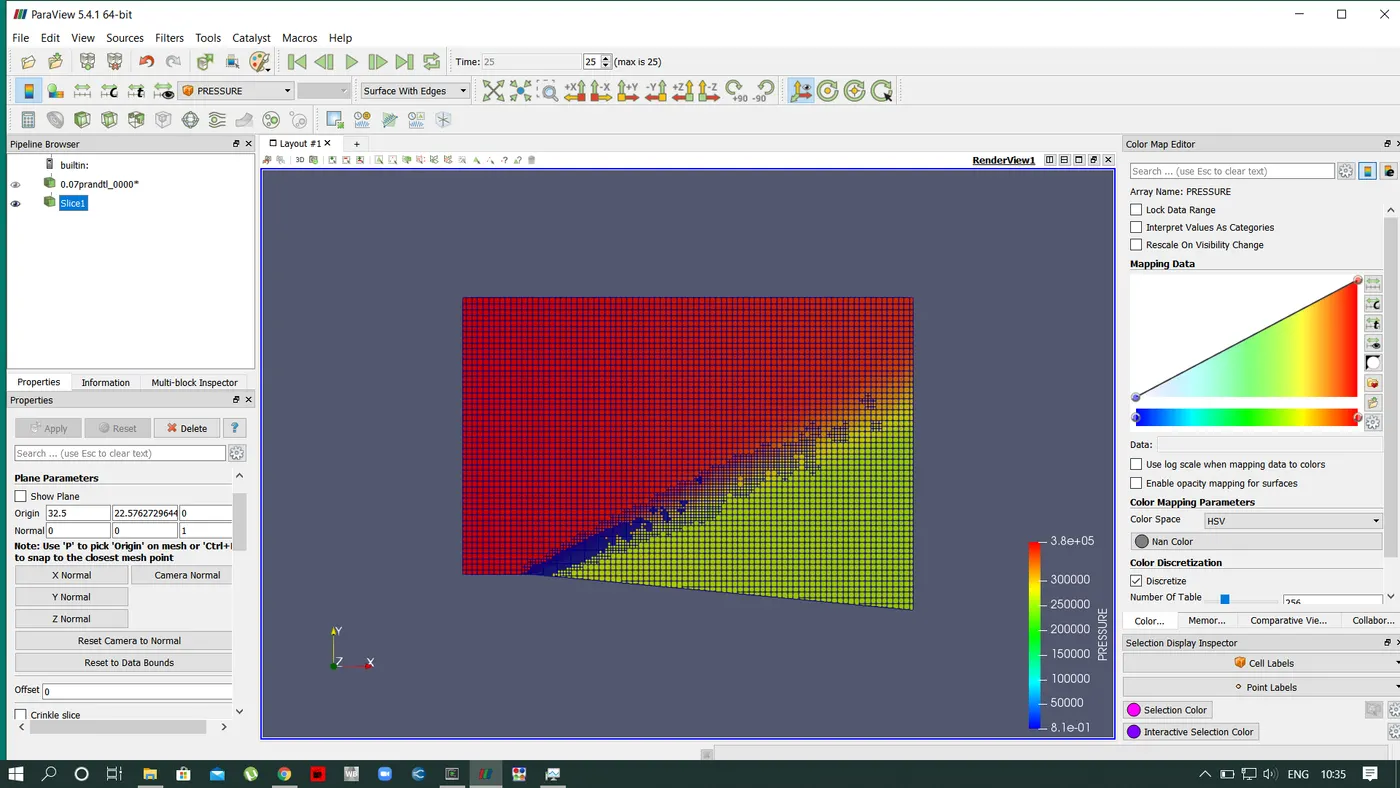
SGS 0.07 680m/s:
SURFACE WITH EDGES LAST TIME STEP:
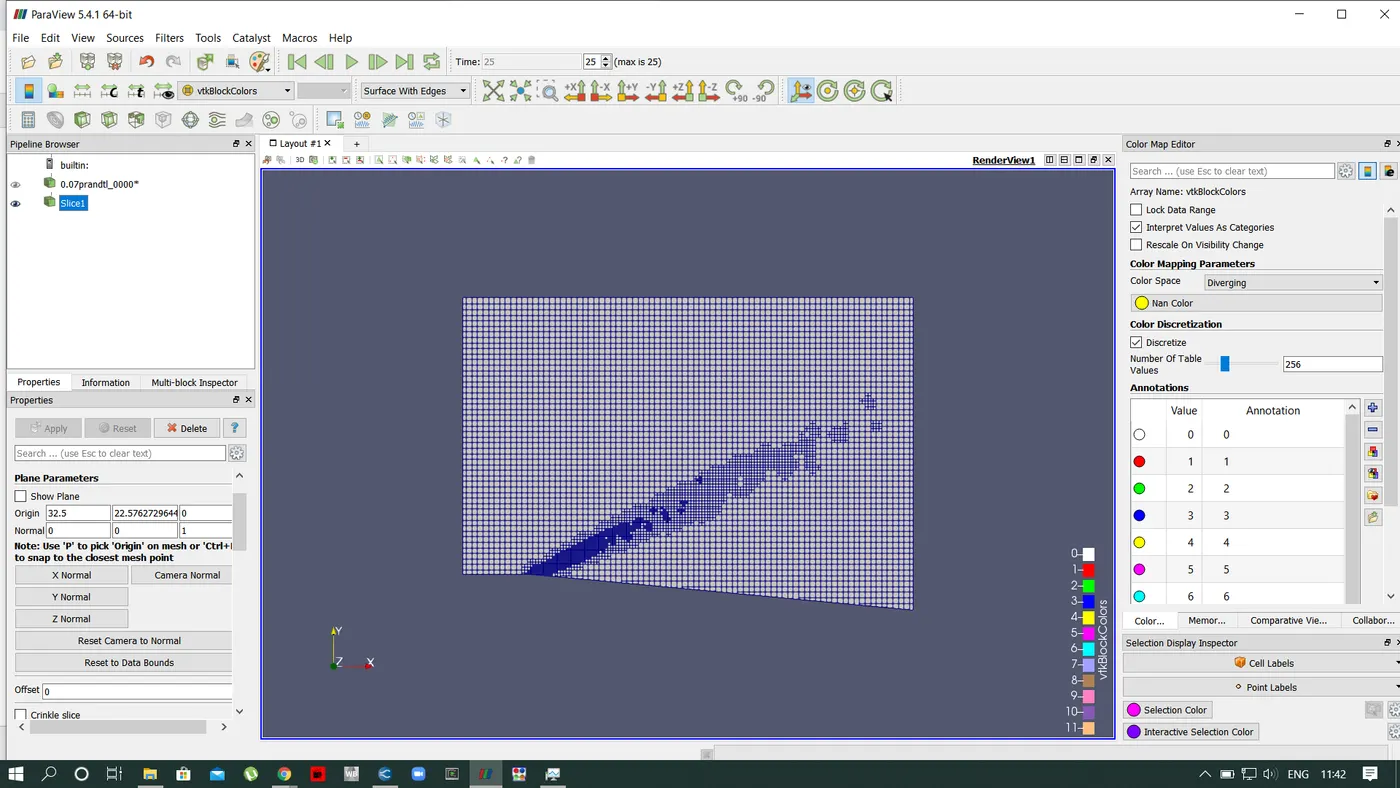
TEMPERATURE CONTOUR:
VELOCITY CONTOUR:
PRESSURE CONTOUR:
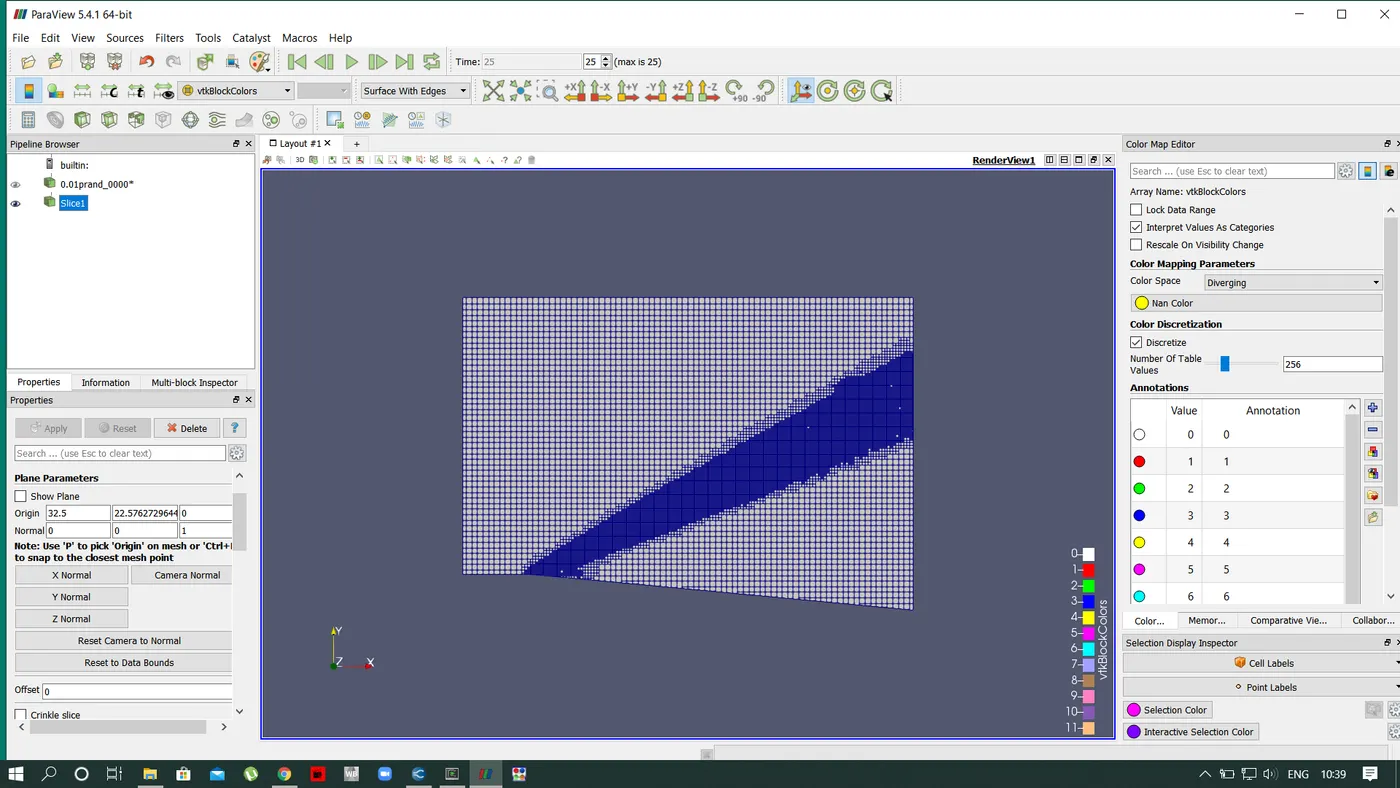
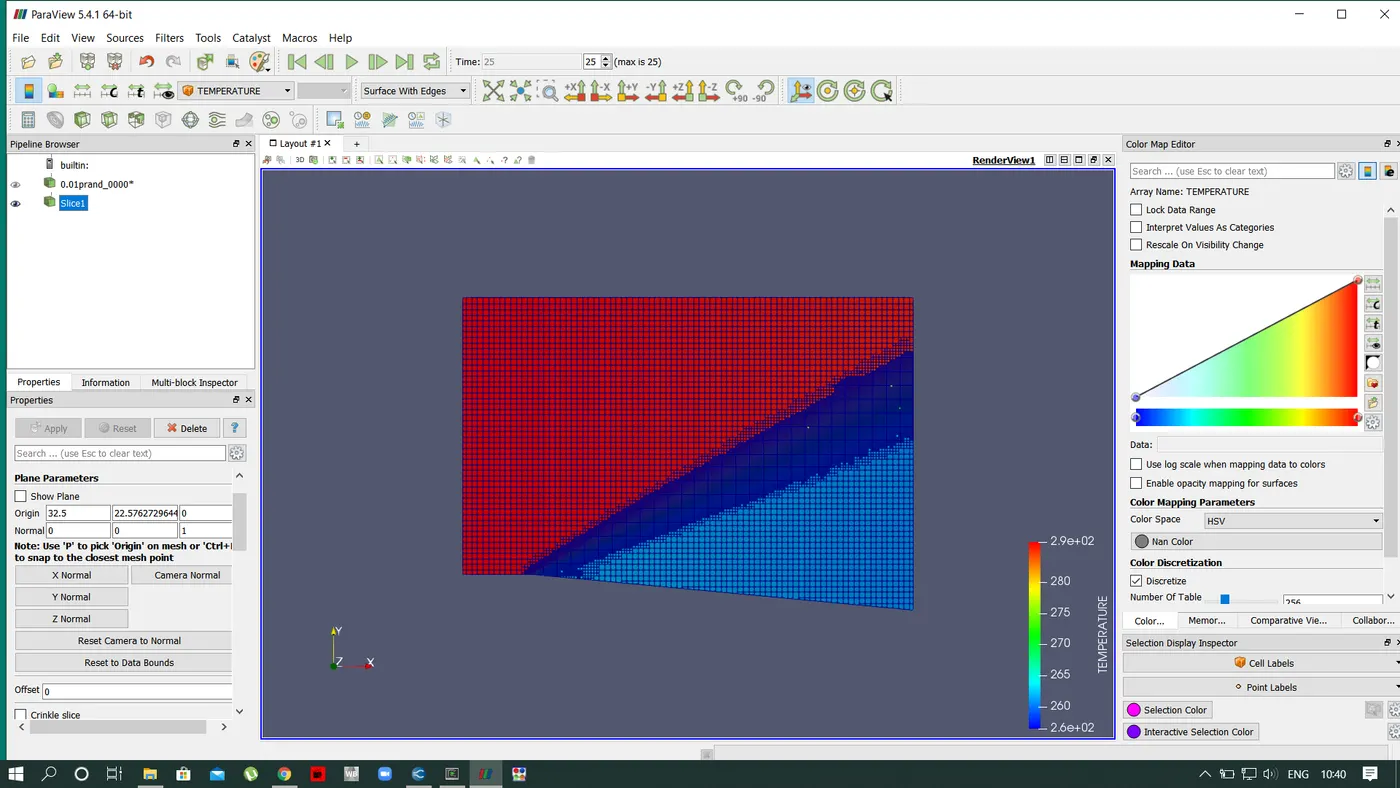
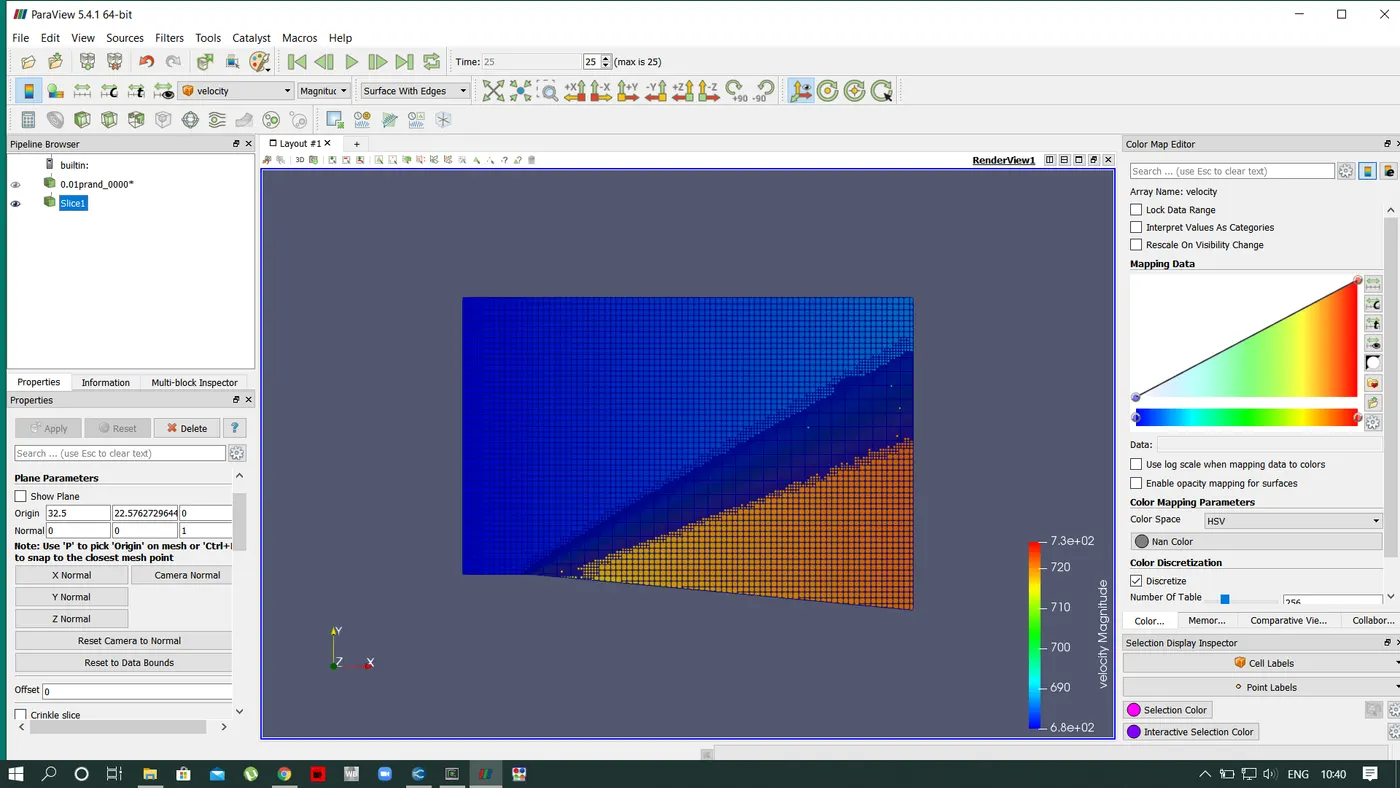
SGS 0.01 680m/s:
SURFACE WITH EDGES LAST TIME STEP:
TEMPERATURE CONTOUR:
VELOCITY CONTOUR:
PRESSURE CONTOUR:
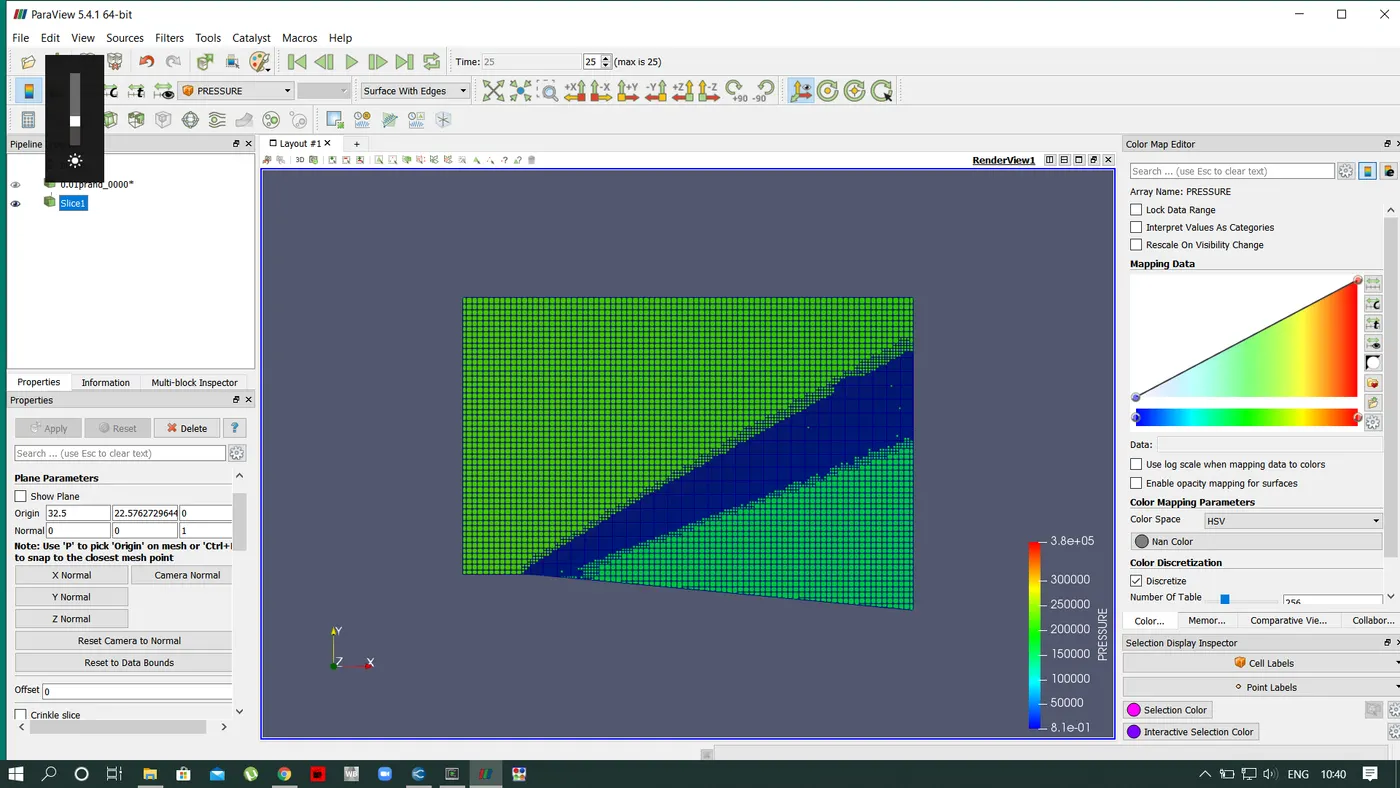
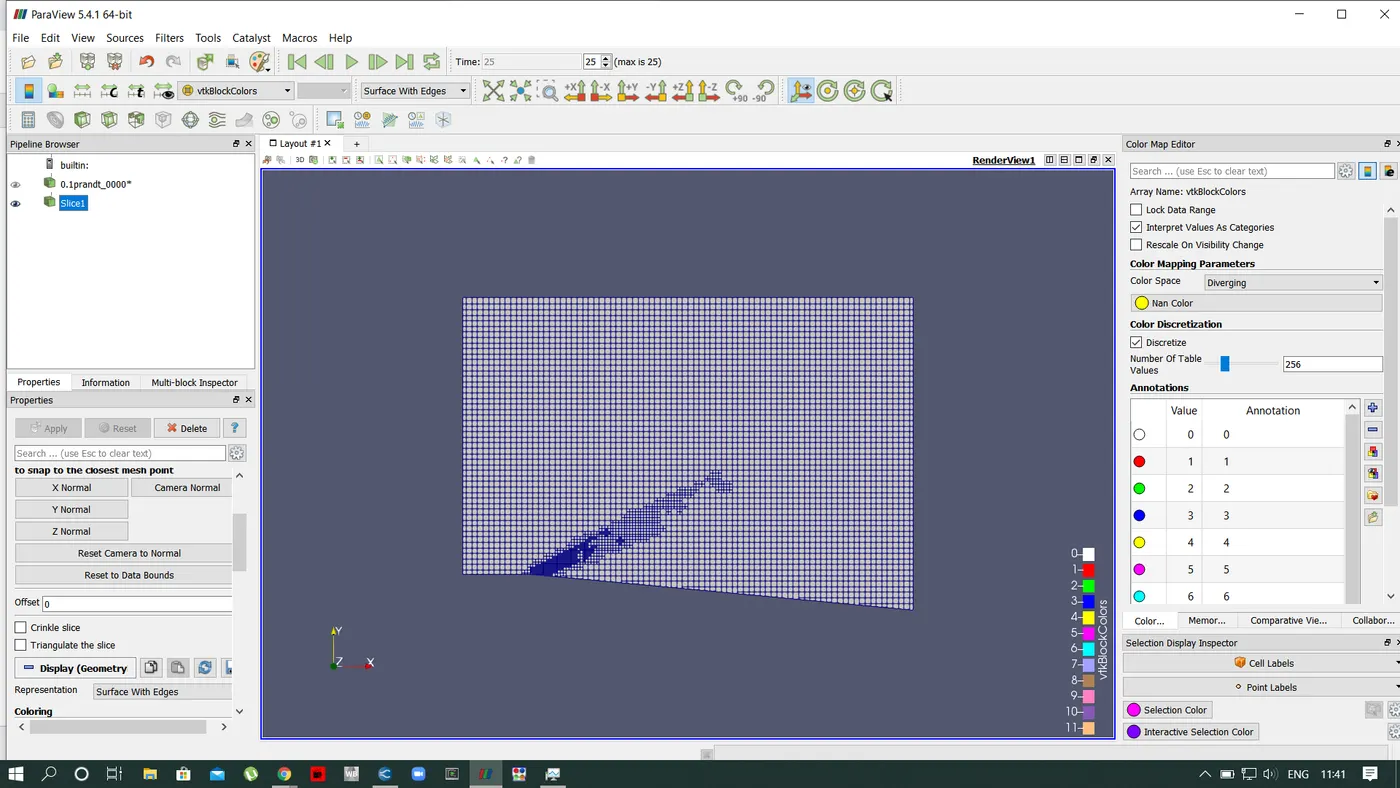
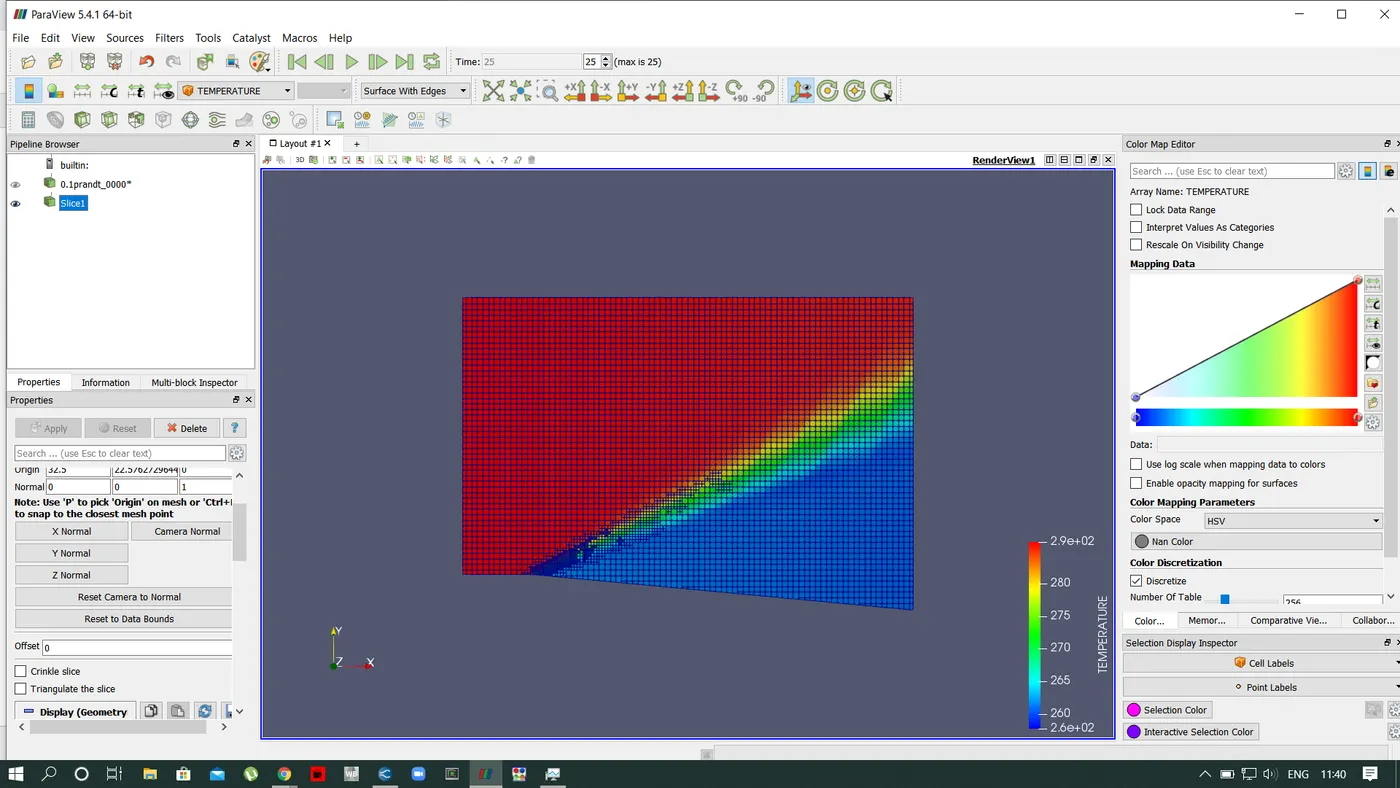
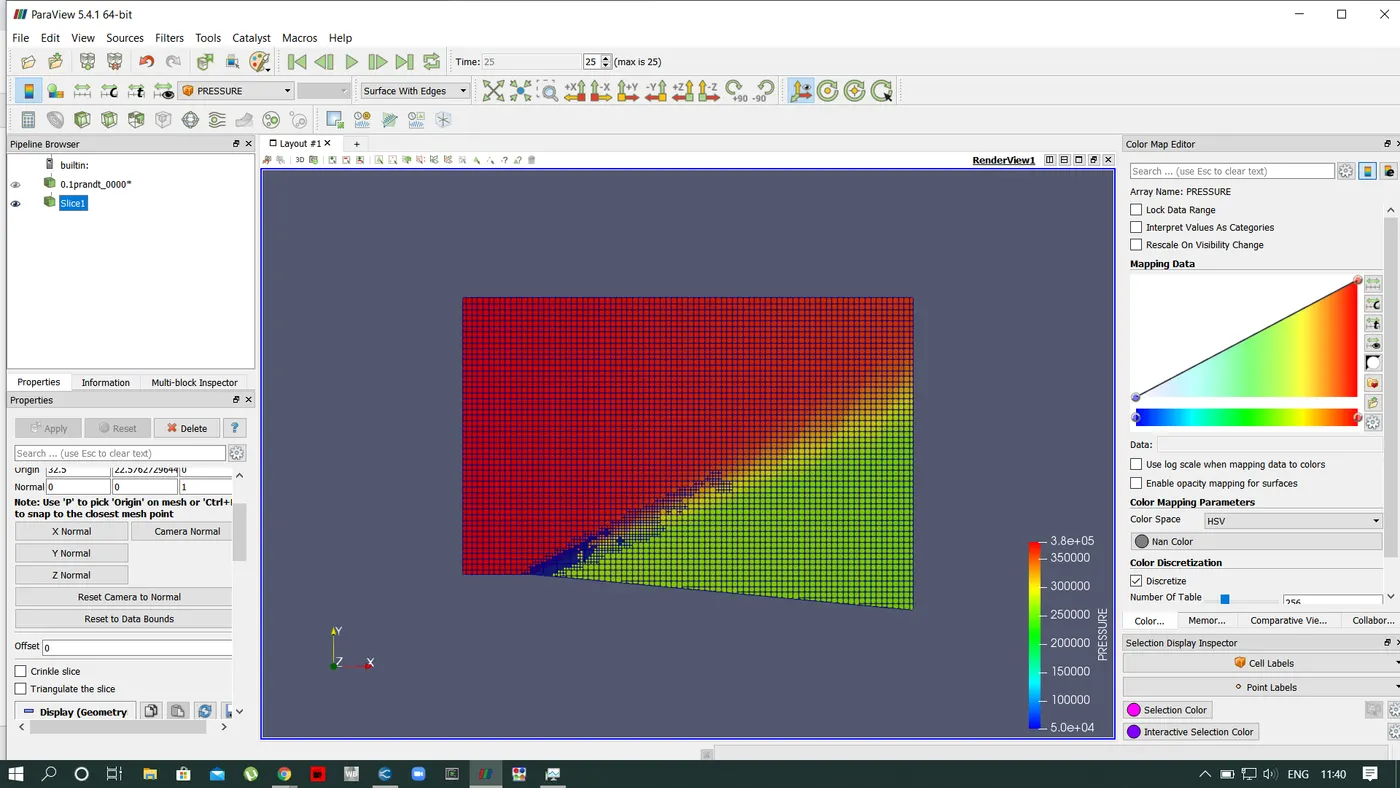
SGS 0.1 680m/s:
SURFACE WITH EDGES LAST TIME STEP:
TEMPERATURE CONTOUR:
PRESSURE CONTOUR:
VELOCITY CONTOUR:
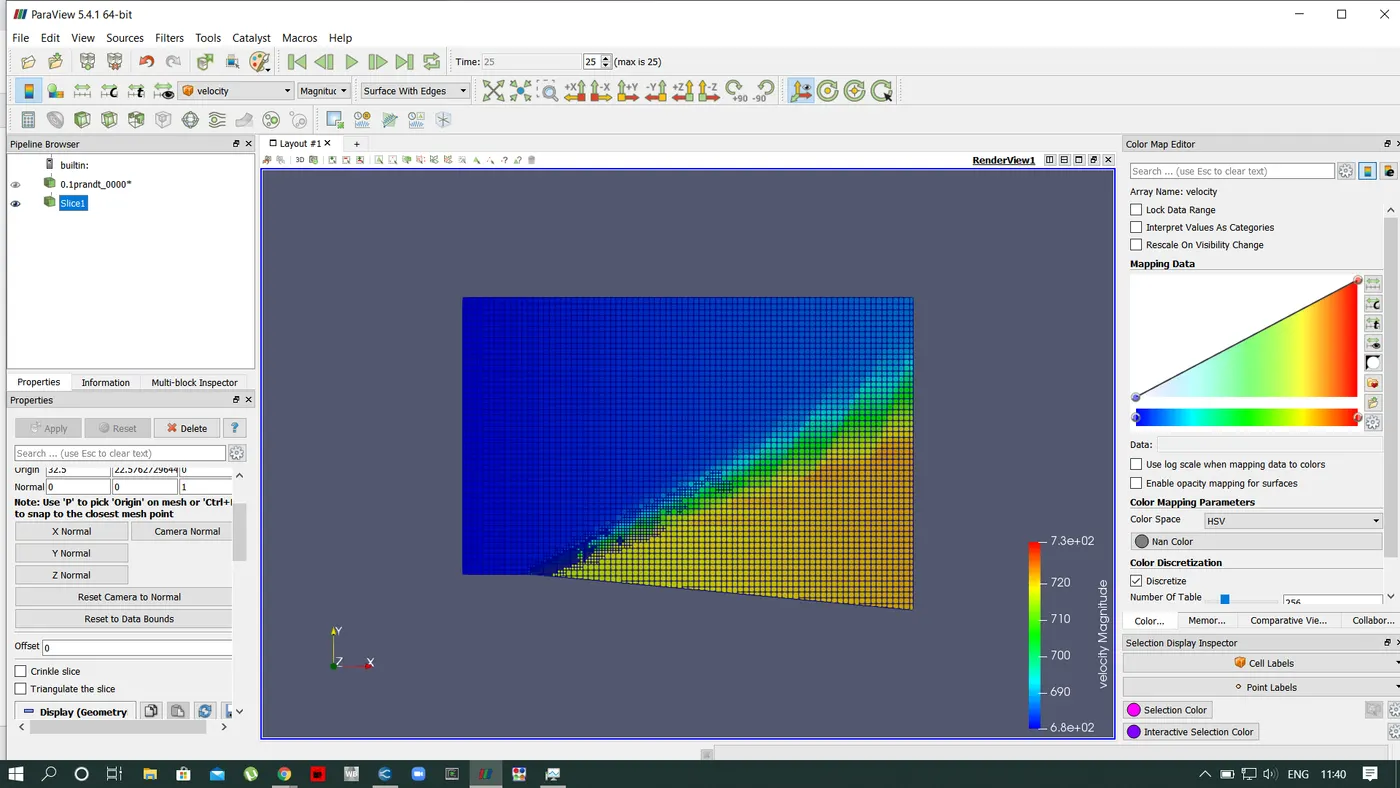
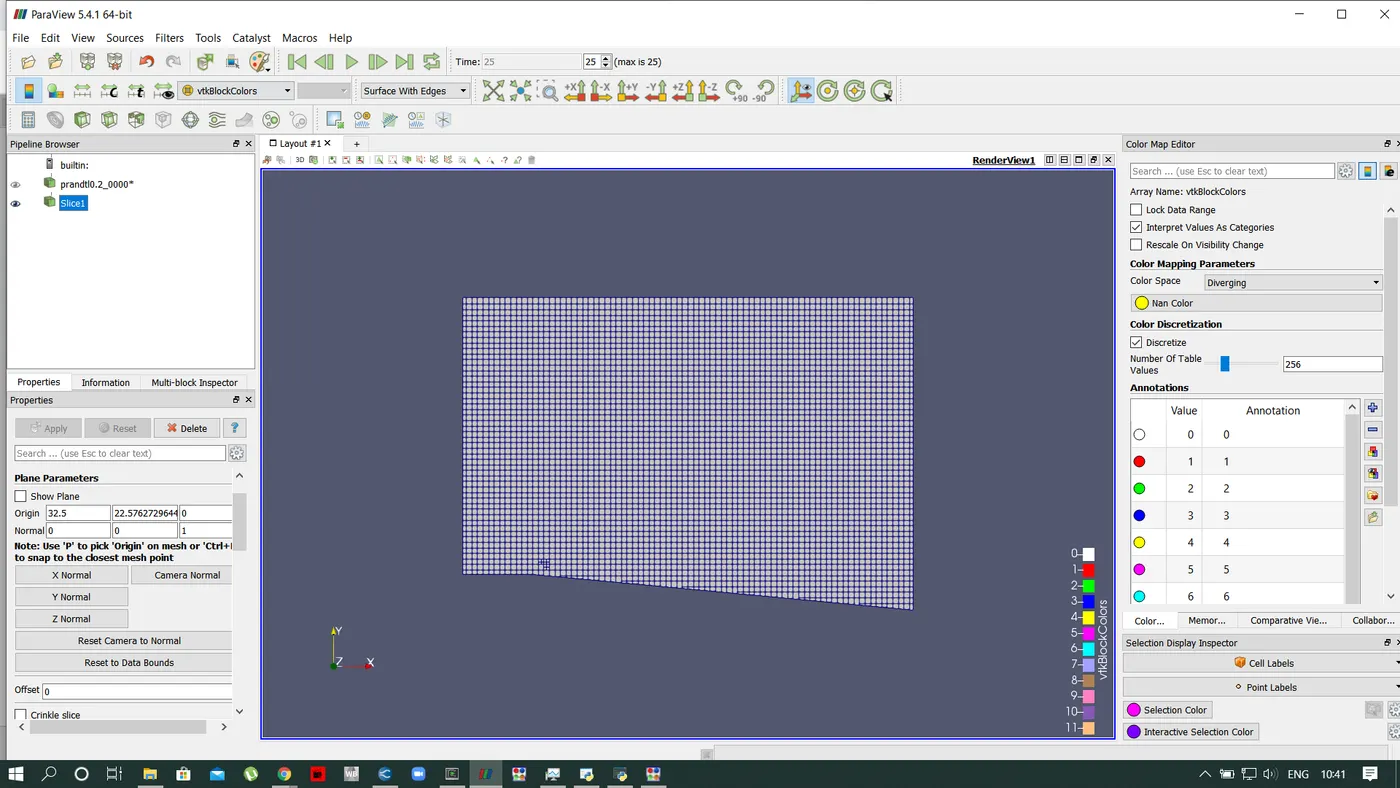
SGS 0.2 680m/s:
SURFACE WITH EDGES LAST TIME STEP:
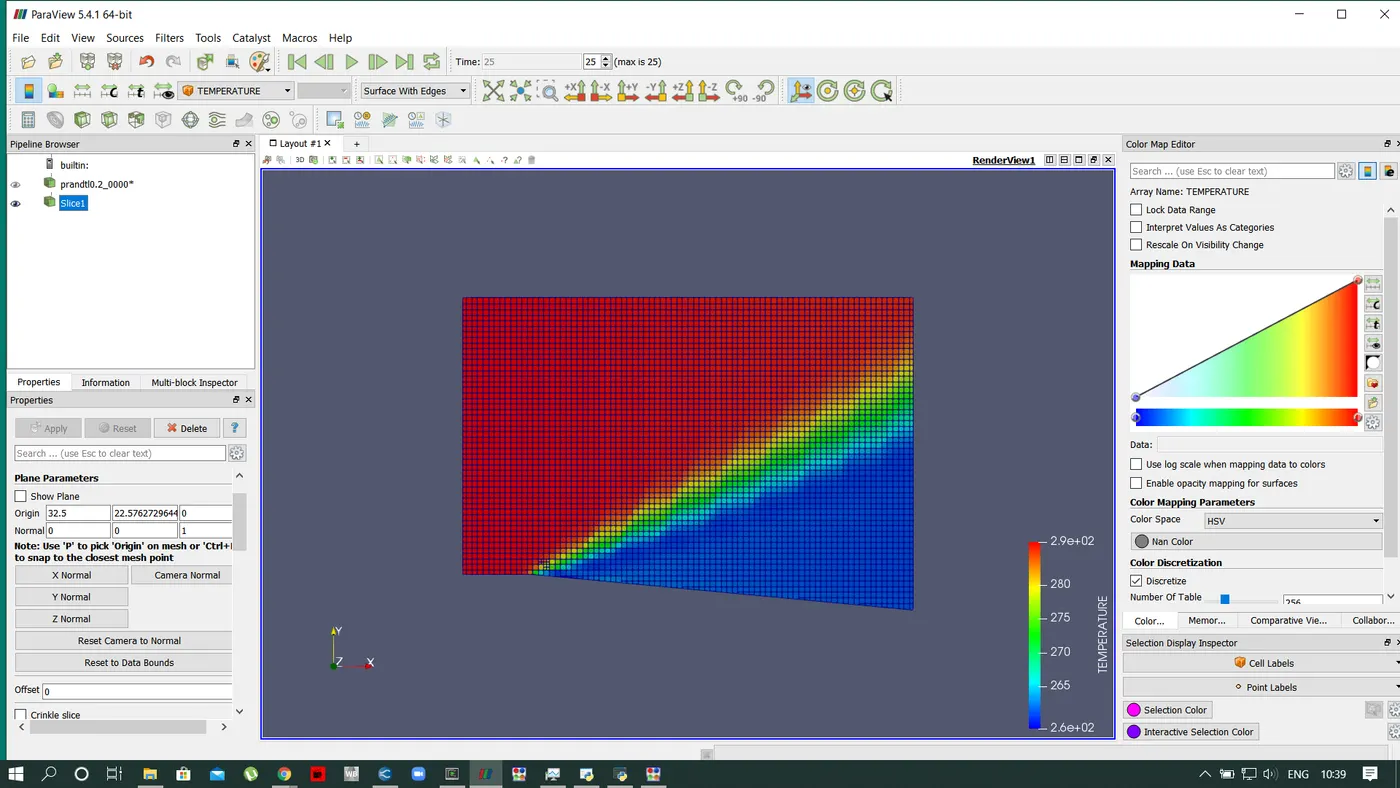
TEMPERATURE CONTOUR:
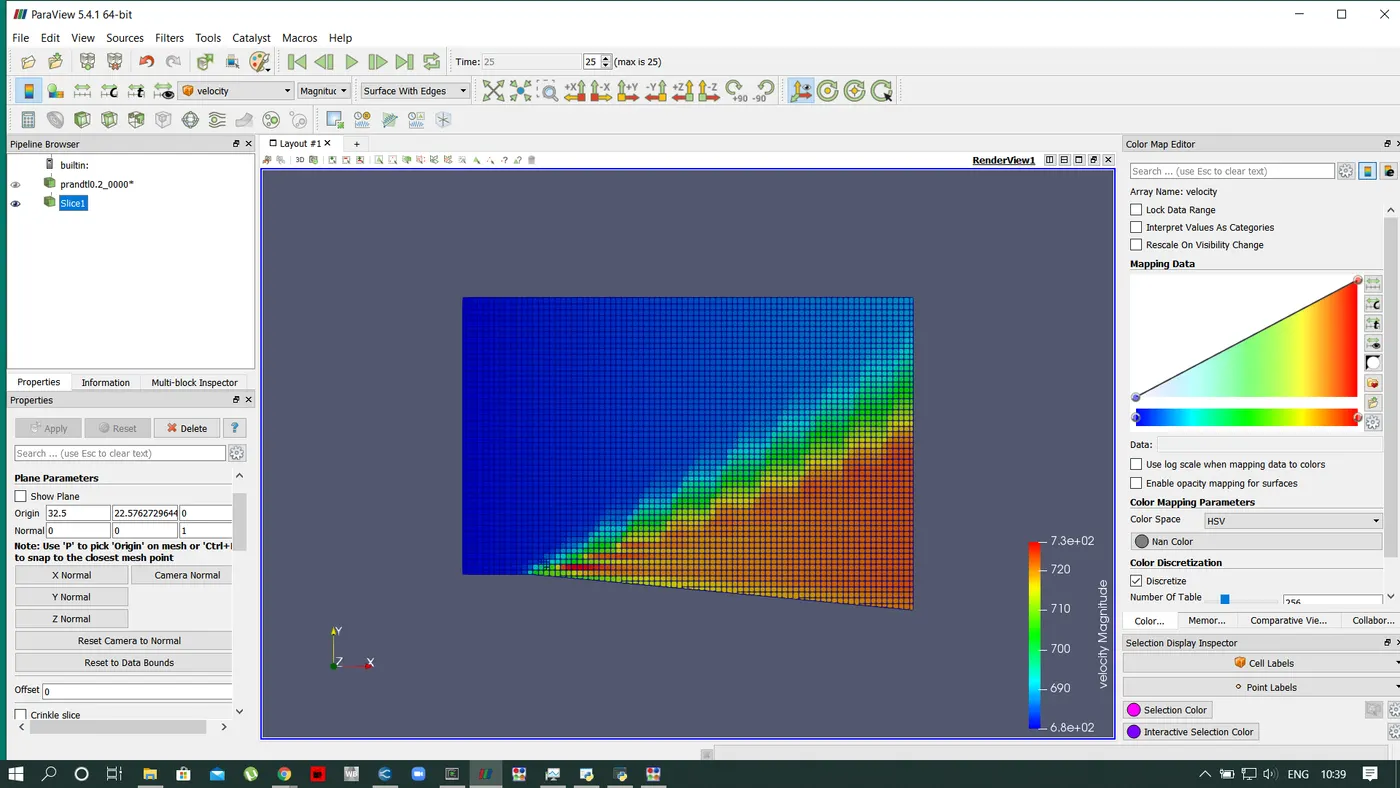
VELOCITY CONTOUR:
PRESSURE CONTOUR:
SGS 0.05 Velocity (100m/s):
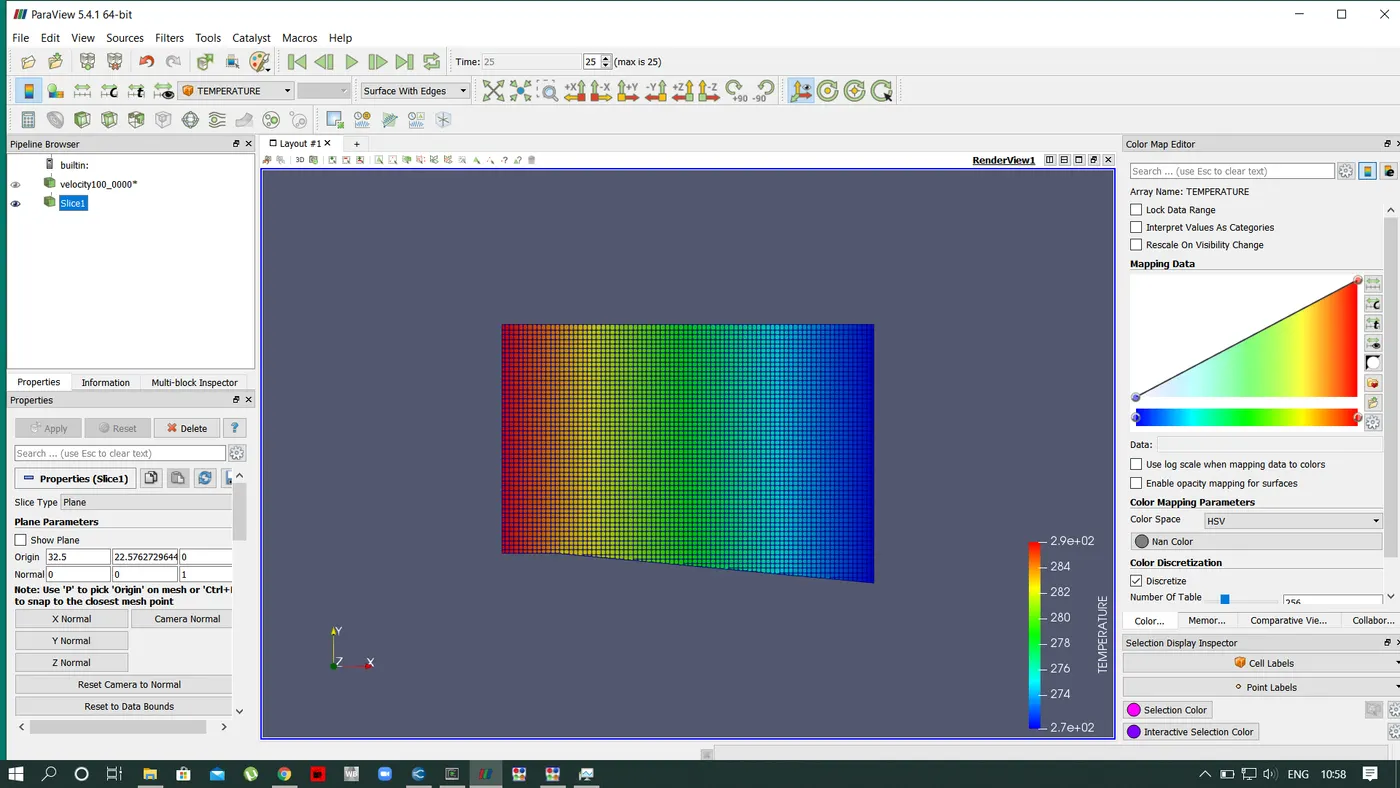
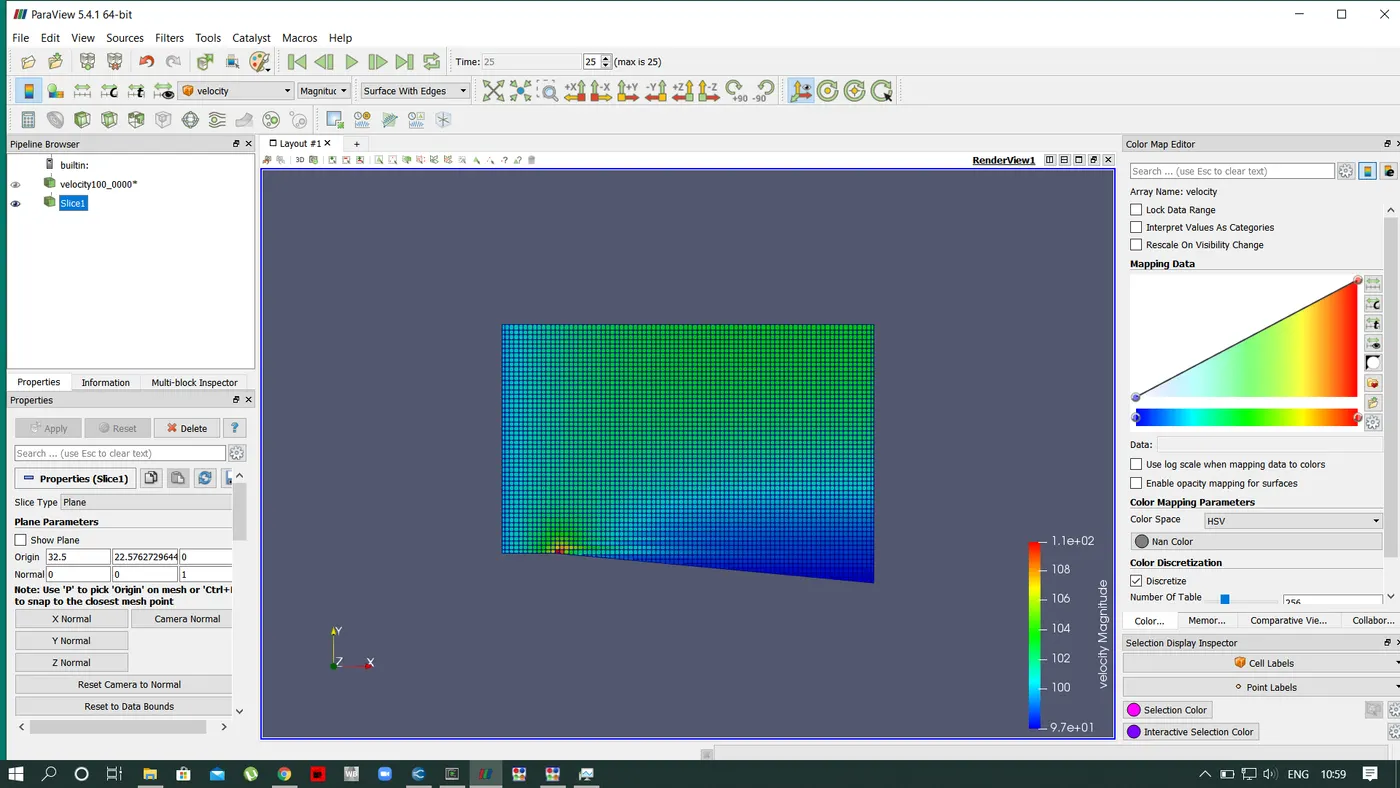
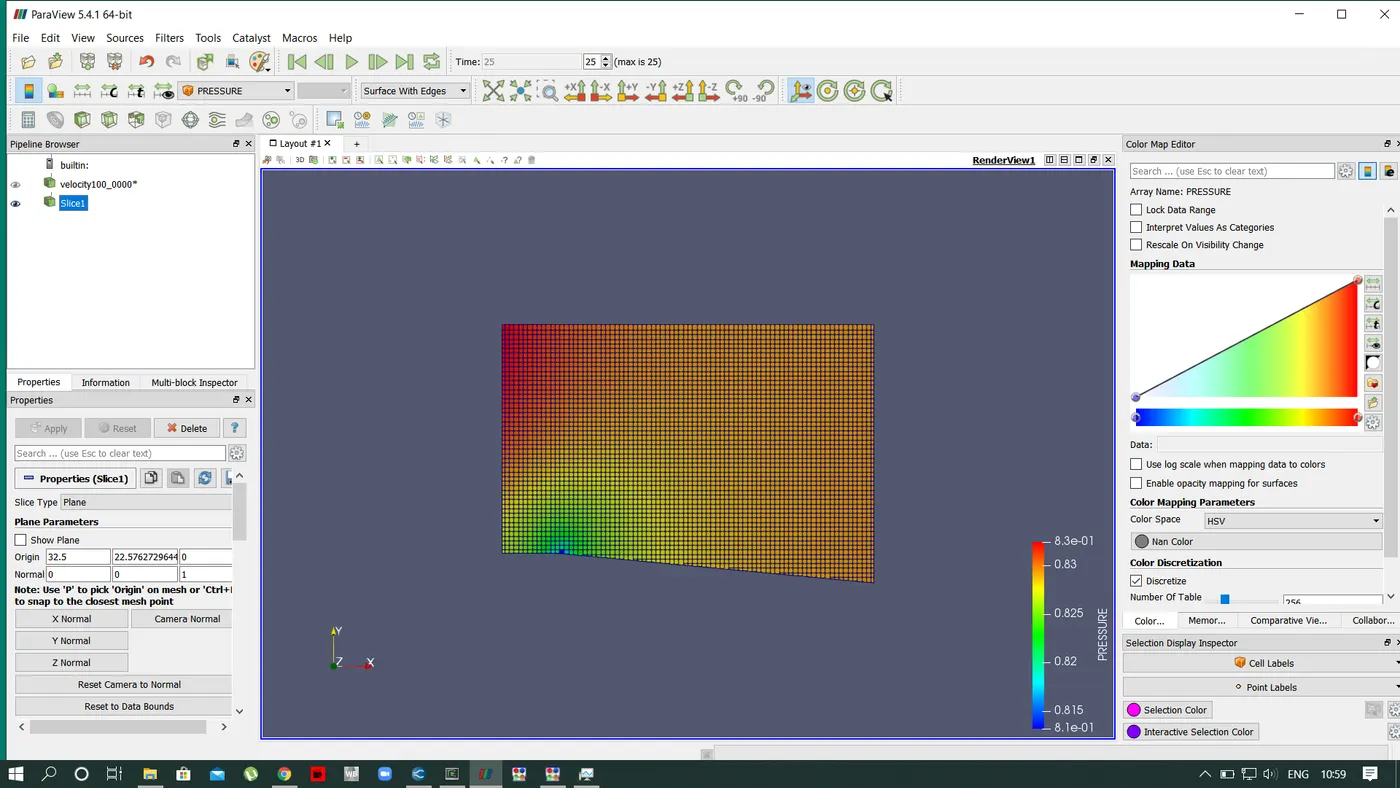
Subsonic flow doesnot encounters shock as the velocity is less than speed of sound. Visualization of subsonic flow shown below.
SURFACE WITH EDGES LAST TIME STEP:
TEMPERATURE CONTOUR:
VELOCITY CONTOUR:
PRESSURE CONTOUR:
SGS 0.05 680m/s:
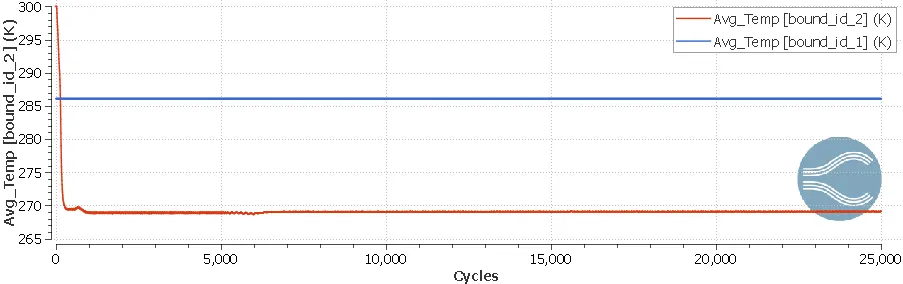
AVERAGE TEMPERATURE:
Temperature deceases at outlet and reached to steady state
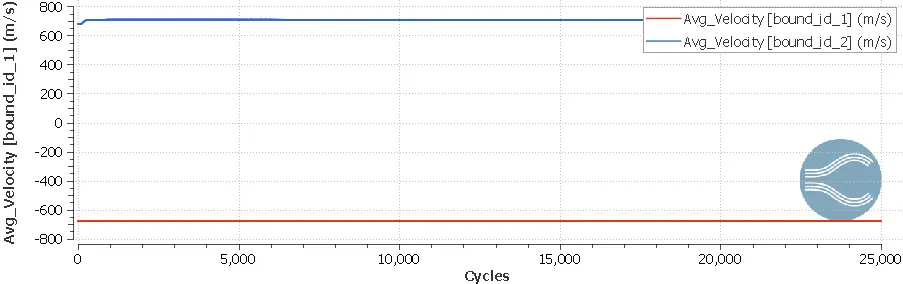
AVERAGE VELOCITY:
Both inlet and outlet reached steady state.
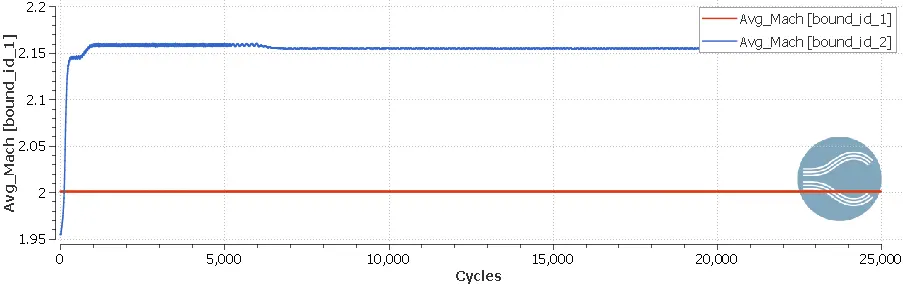
AVERAGE MACH NUMBER:
From the theory the machnumber increases at outlet than inlet as the shock encounters when the flow happens through a convex surface the mach number increases and reached steady stete
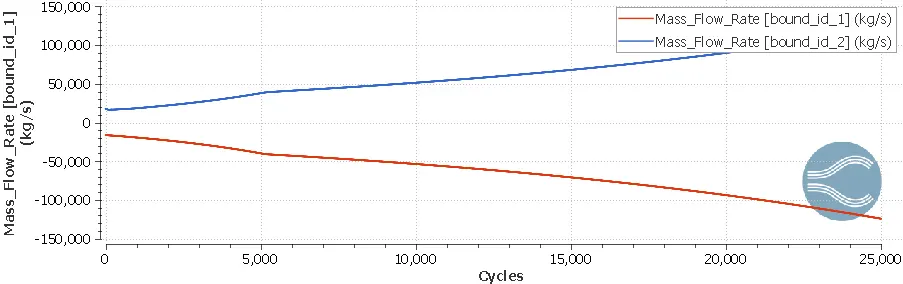
MASS FLOW RATE:
massflow rate reaches steady state.
TOTAL CELLS: (SGS)
As the SGS increases mesh size decreases. This is because lower SGS means higher refinement means high number of cells, increase in SGS value there is no refinement.
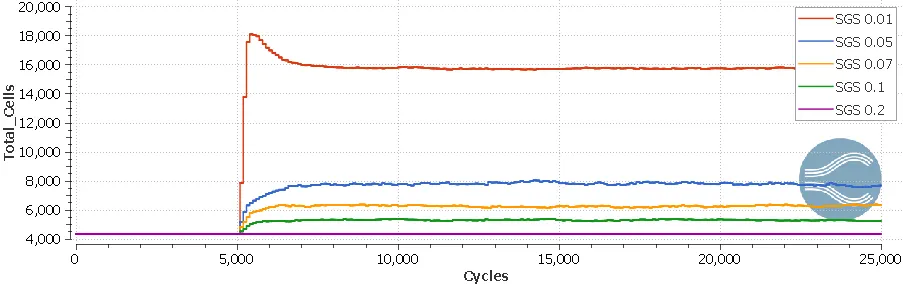
EFFECT OF SGS:
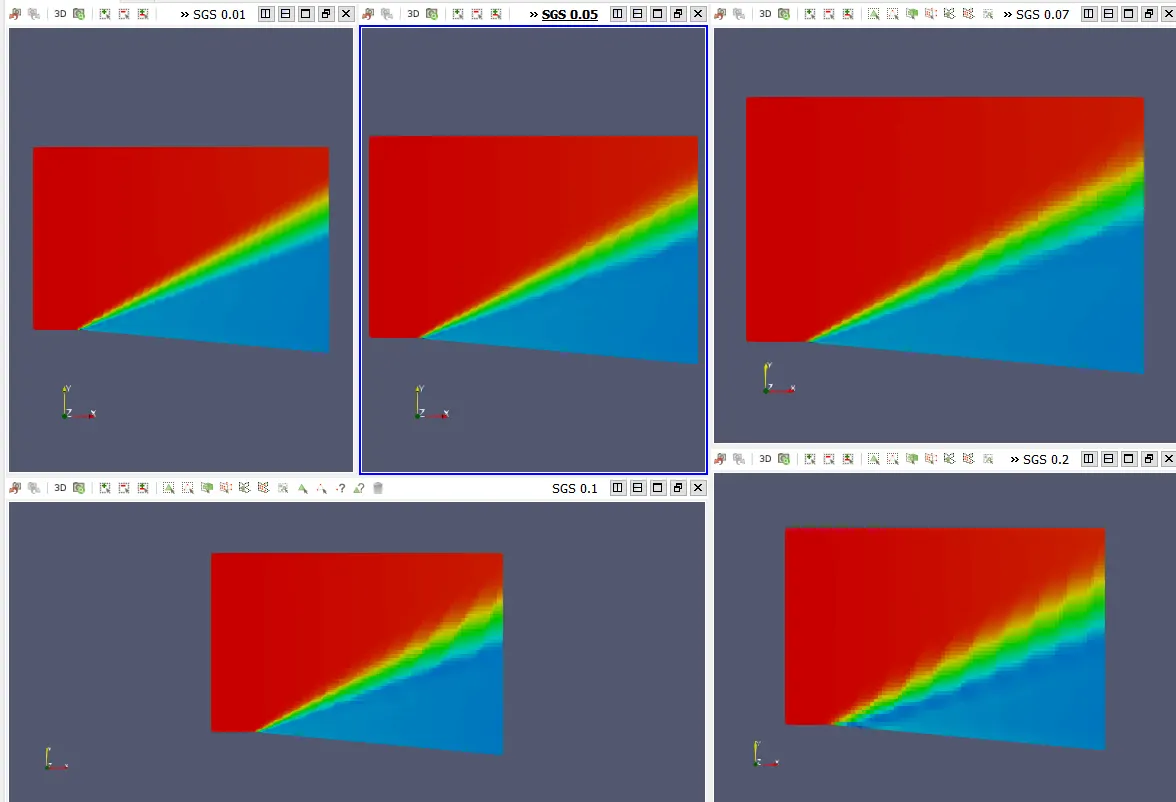
From the post processing, it can be observed the expansion fan tends to become less narrow and didtinct as the SGS parameter increase. Higher the SGS the mesh refinement required to capture the waves leading to blur and not well-defined.
ANIMATION:
Velocity 680m/s
Velocity100m/s:
CONCLUSION:
1. Subgrid scale plays an important in in applying parameters for this simulation. This SGS is done using Adaptive mesh refinment of temperature In this case study nearly 5 different SGS values are used. AS, the SGS value is lower, the mesh refinement is dense that means the shock waves are well defines if the SGS is high then the mesh refinement becomes course and the shock waves result in blur and not well defined.
2. Comparing Both Supersonic and Subsonic flows the shocks occur in Supersonic flows because of high mach number and if when velocity of flow is speeder than sound then mach number increases. If mach number increases the shocks occurs.
3. In supersonic flow when it flows through a convex sharp surface the mach number, velocity increases and pressure,temperature decreases.