CONJUGATE HEAT TRANSFER ANALYSIS IN CYLINDER PIPE (Converge Studio)
AIM:
To simulate the Conjugate Heat Transfer analysis in cylinder pipe.
OBJECTIVES:
Grid dependency test
Effect of supercyling
Y+
INTRODUCTION:
Conjugate heat transfer:
Conjugate heat transfer is used to describe the processes which involves variations of temperature within the solids and fluids, due to thermal interaction between the solids and fluids.
The CHT analysis is generally used in places where there is heat transfer taking place for example when a fluid flows through a pipe and the heat of the fluid is transfered to the pipe by convection. CHT analysis is very much useful in analysing the areas where there are two bodies in which heat transfer takes place. when this analysis is used it is easy to calculate the heat transfer coefficient temperature and velocity of a fluid flowing through a certain body.
This type of heat transfer corresponds to the combination of the heat transfer in solids and heat transfer in fluids. heat transfer in solid called as conduction and heat transfer in fluid called convection.
conduction occurs due to the direct molecular collison. the faster kinetic energy collides with the low speed kinetic energy and the heat tranfer occur.
convection process is not happed alone. it is combined with the conduction or radiation. it occurs mostly in the cooling process like Heat sink, Battery cooling, Airflow over the solid object for cooling.
THEORY:
SUPERCYCLING:
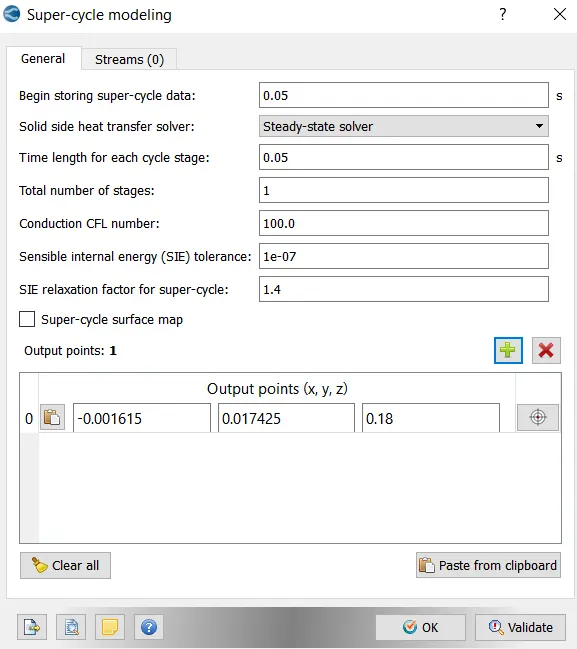
Super-cyling is a methond used in converge studio for CHT problems with multiphase regions(solids and liquids). The solvers for different fluids cannot run at same speed for solving fluid it is much faster as compared to solids. If, this is done the solution doesnot reaches convergence. so, supercycling csn be used to resolve this issue. This helps solver of fluid domain is paused until the solver for solid converges.
Y+:
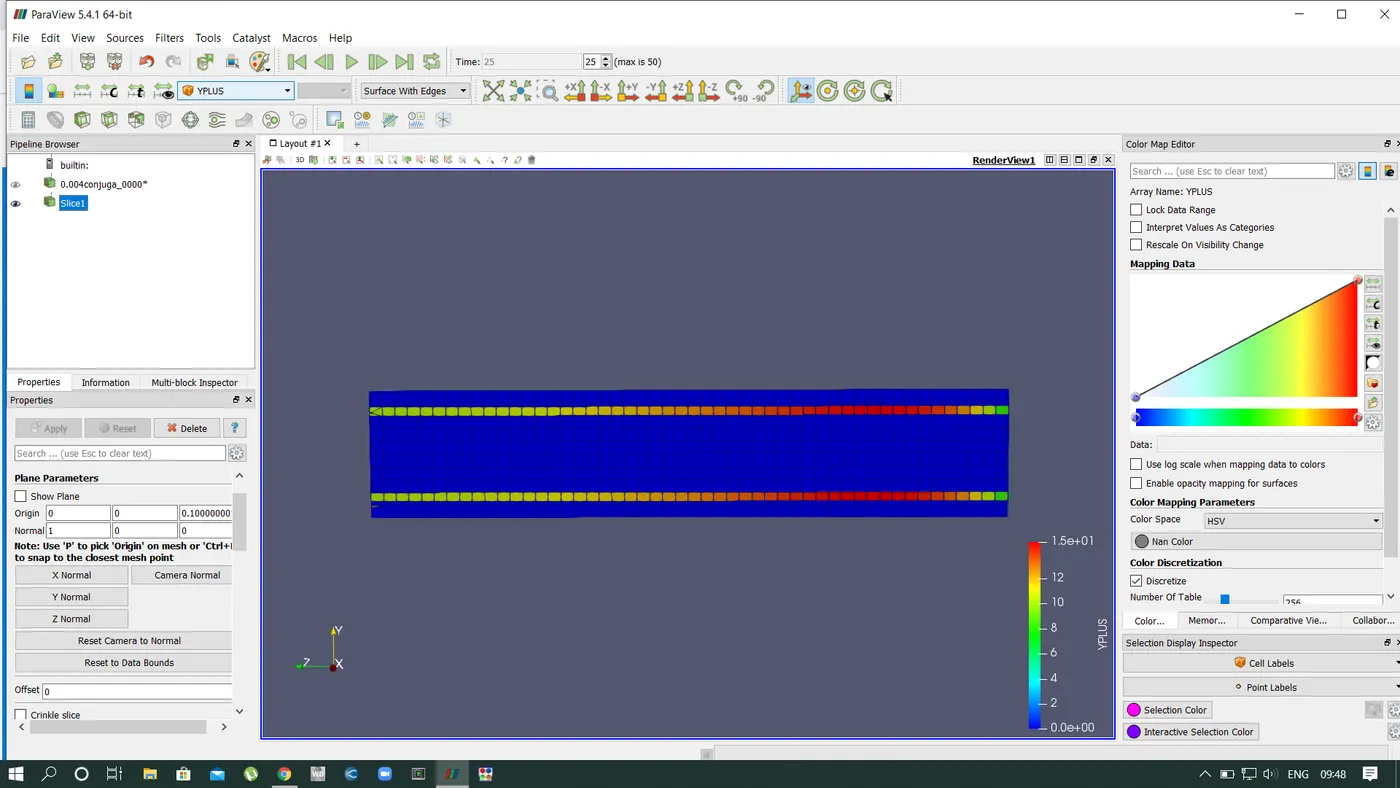
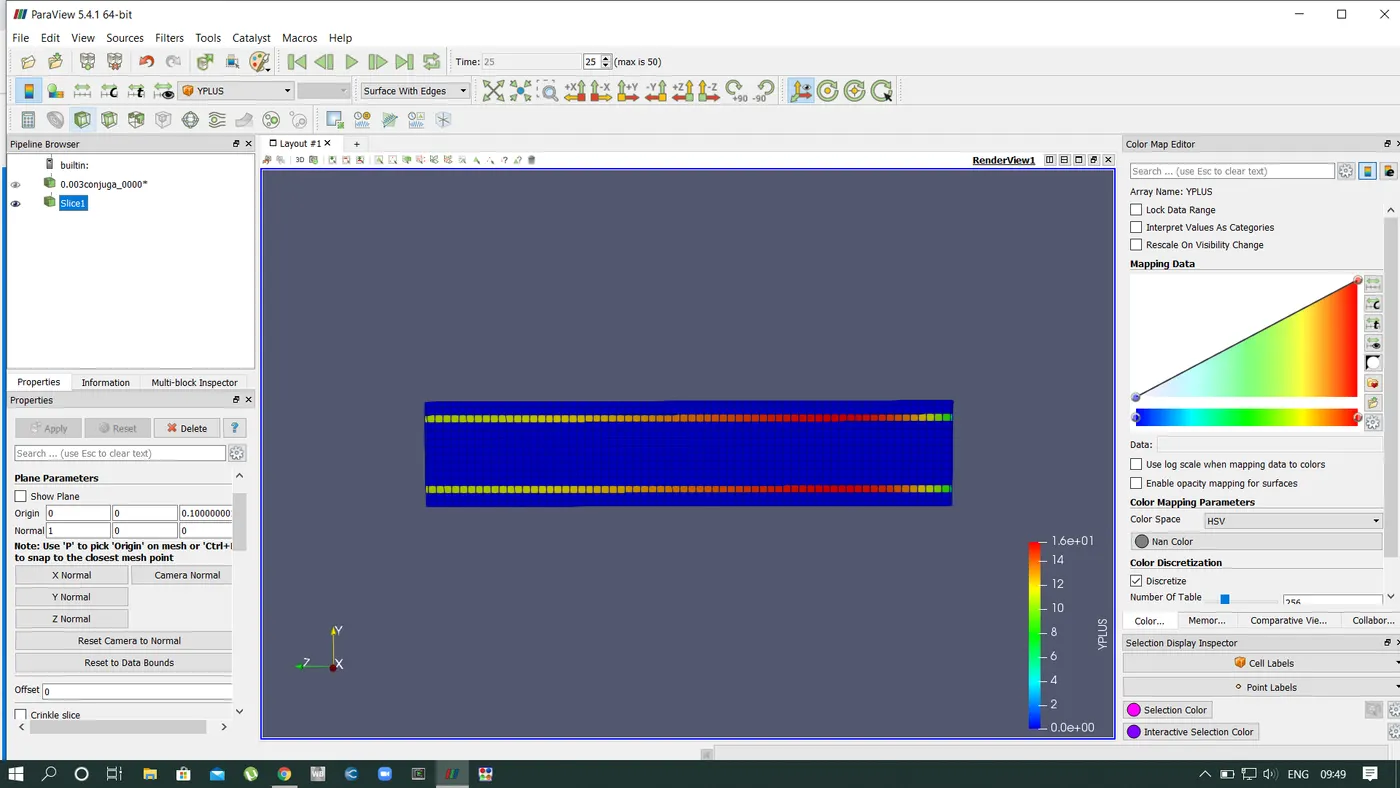
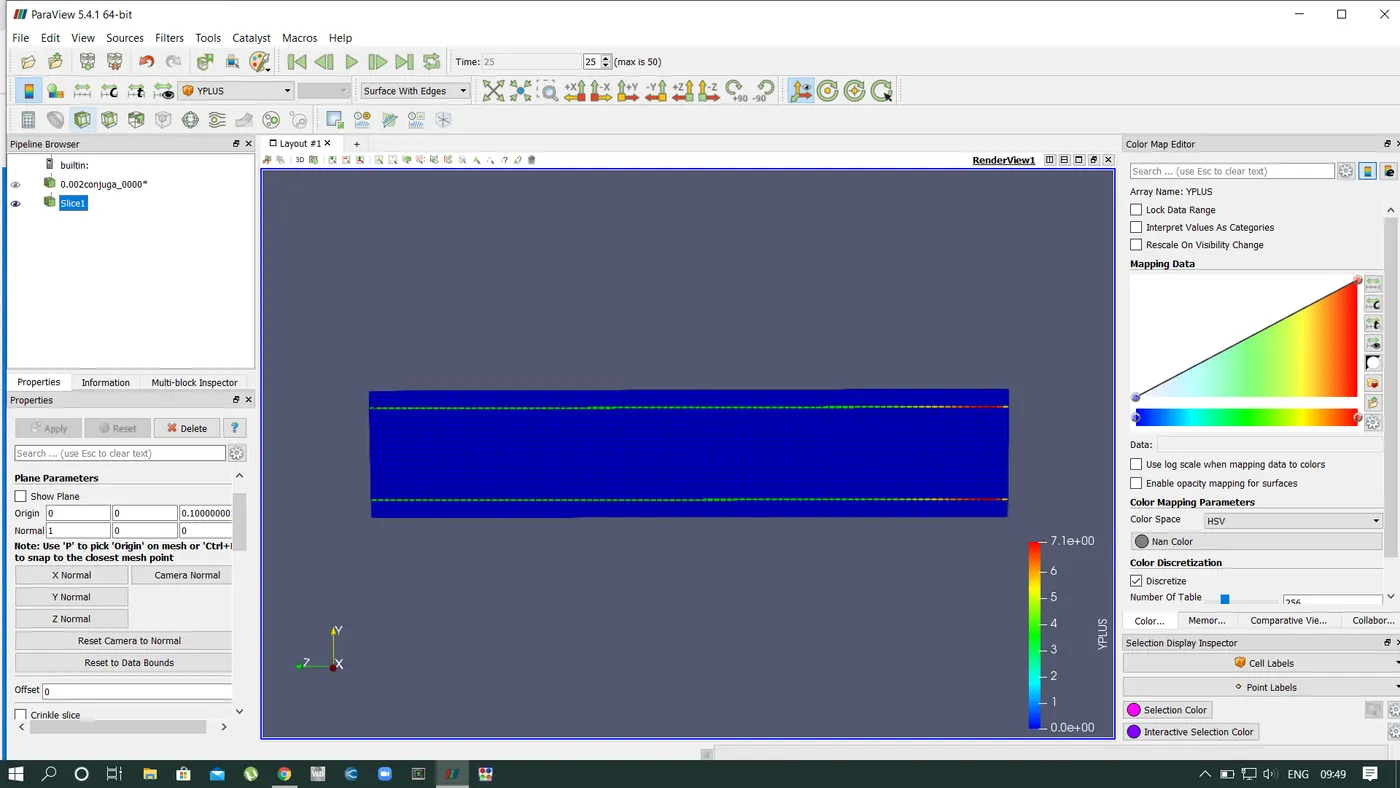
Wall functions are useful in telling solver how to approach the solution near the wall. this helps in predict the turbulence models for course grid. no-slip condition is used if the flow is completely laminar that doesnot depends on grid size. For turbulent flows laminar region is very small to get the accurate results we need very small grid size near the boundaries. This is where Y+ value helps. Y+ is a non-dimensional term that can be used to understand the grid is finer or course. This can be used to determine if wall functions is used or not. In viscous sub-layer Y+ is less than 10 and in tublent region Y+ is greater than 30.
GEOMETRY:
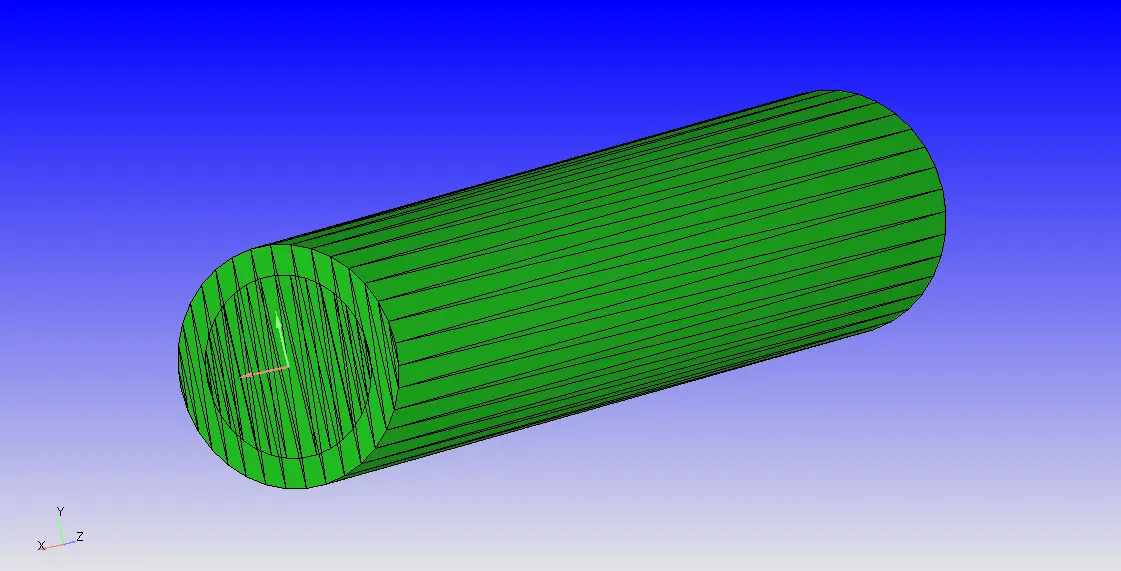
Boundary Flagging:
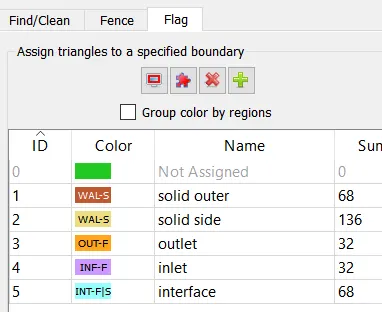
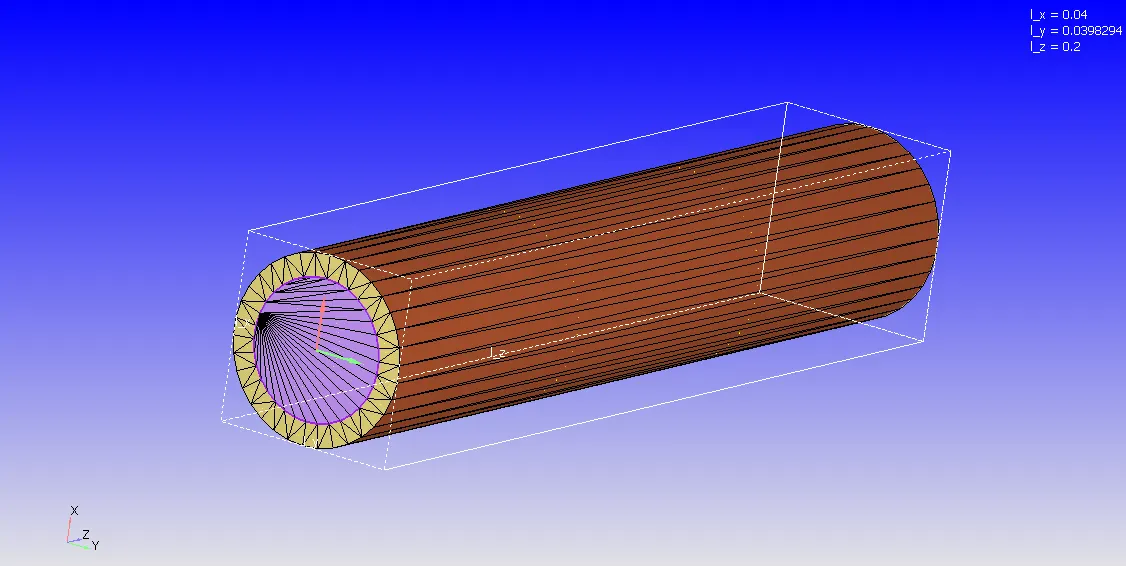
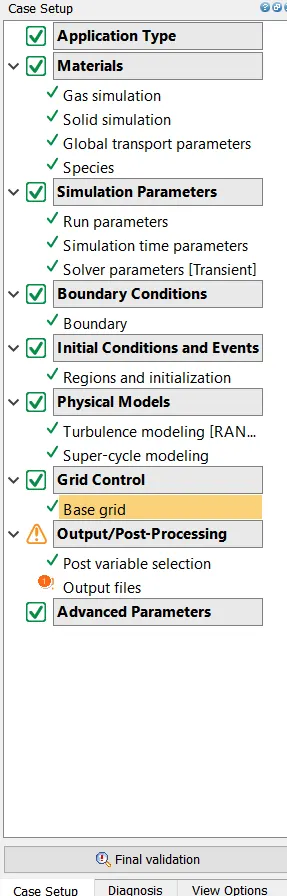
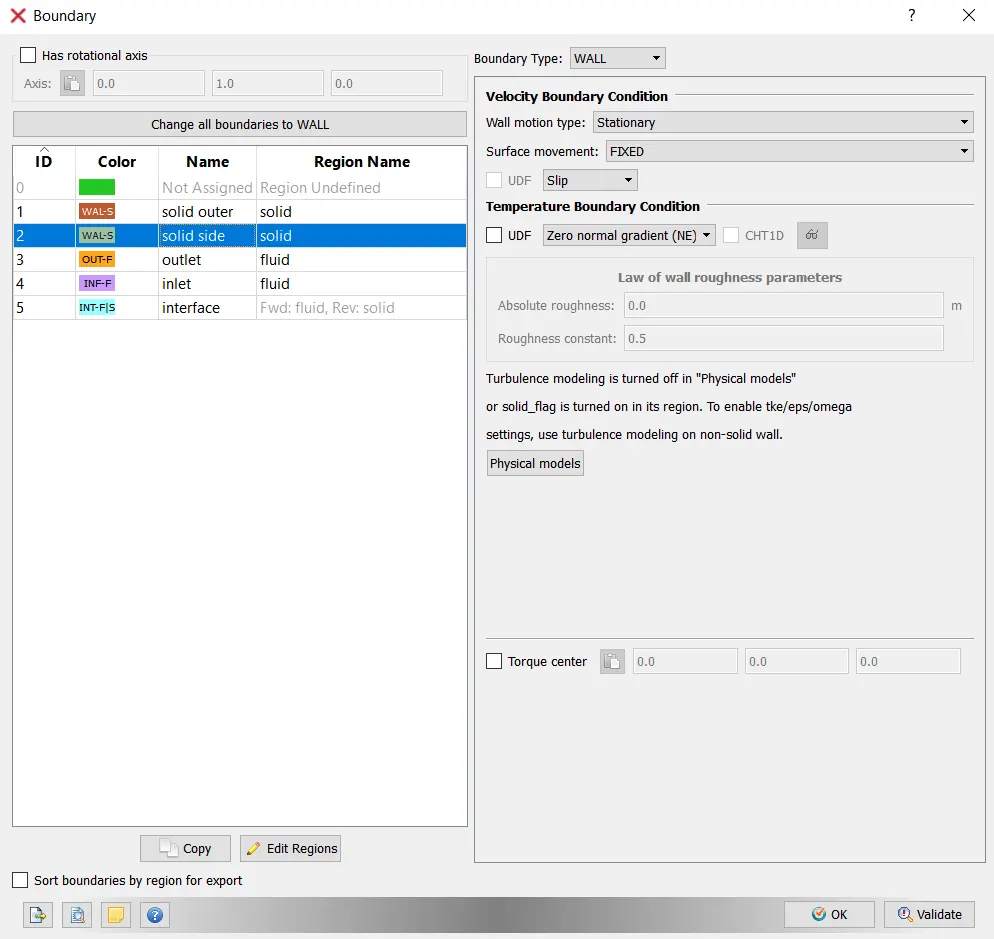
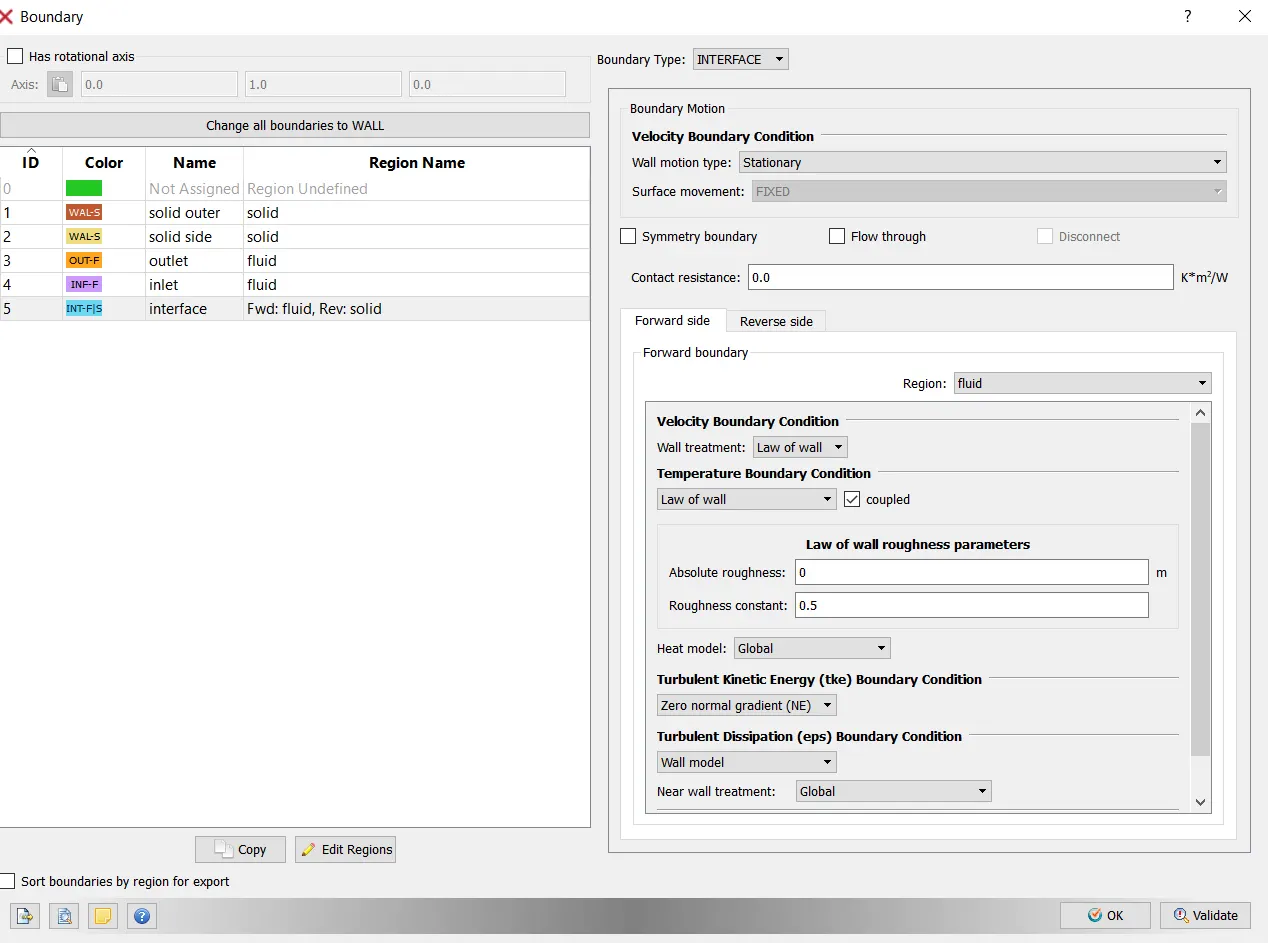
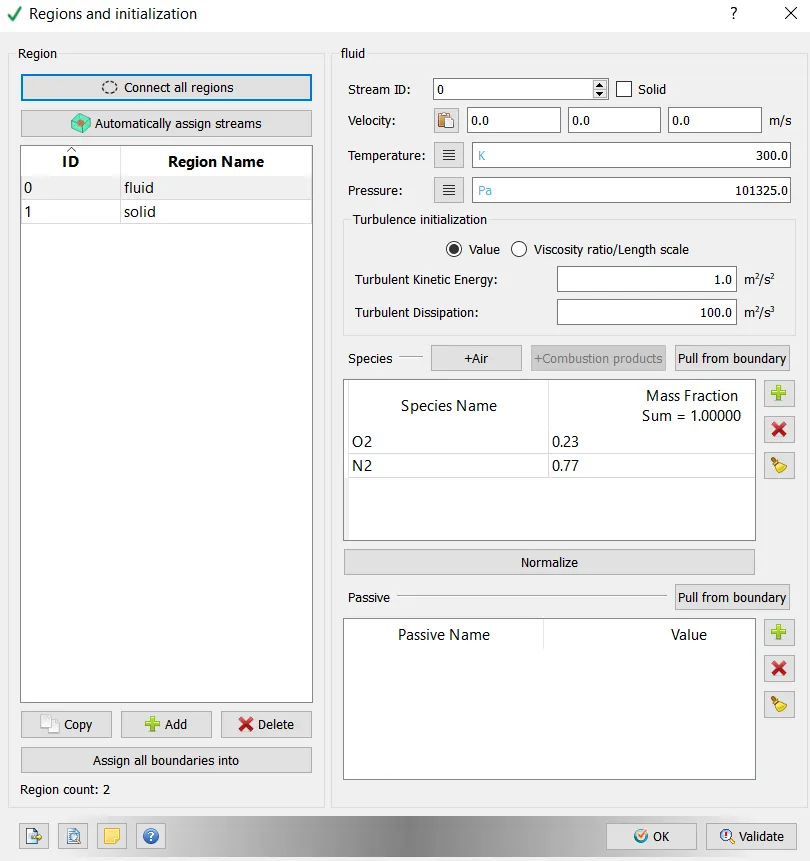
Case setup:
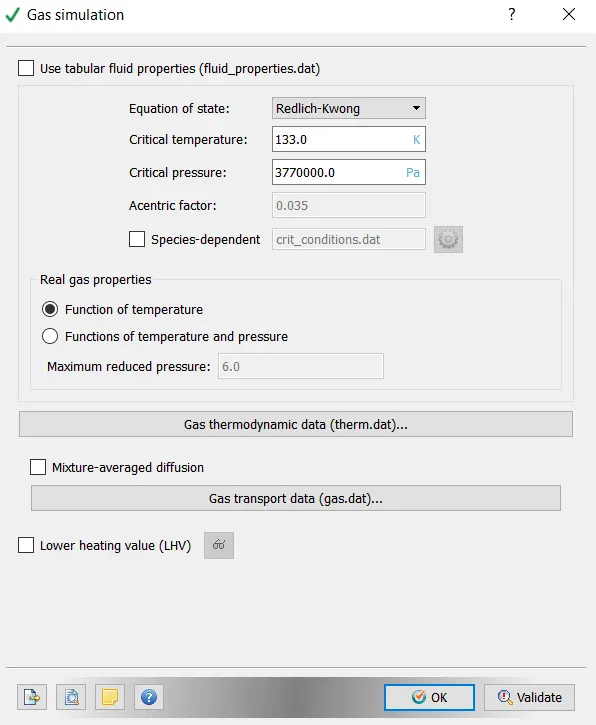
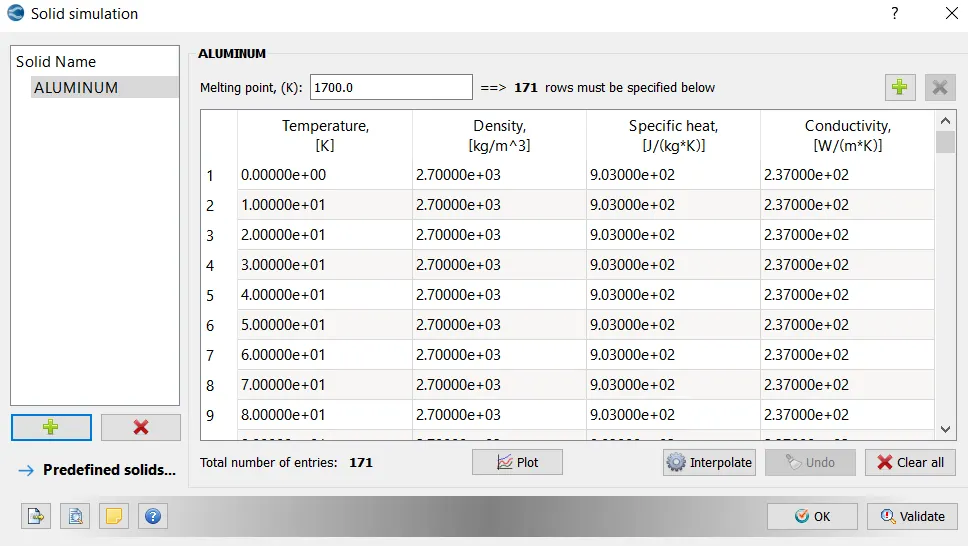
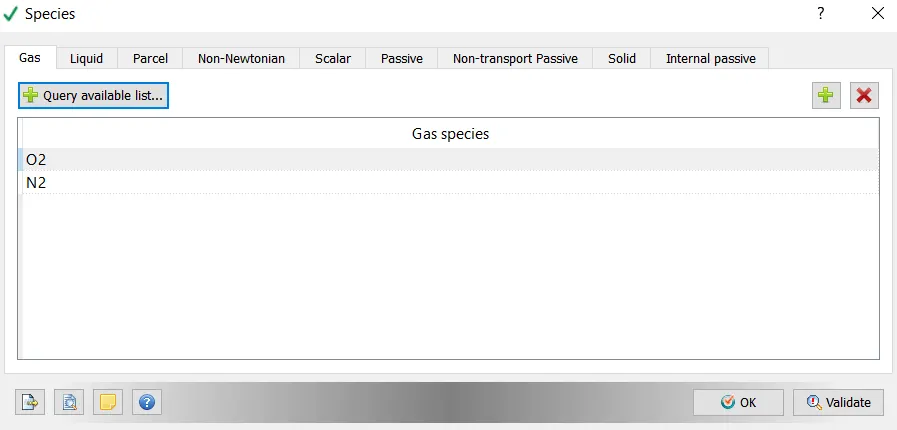
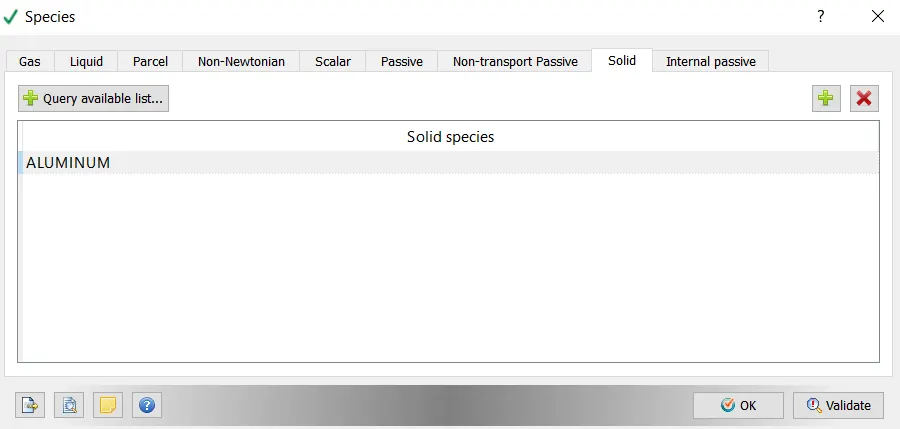
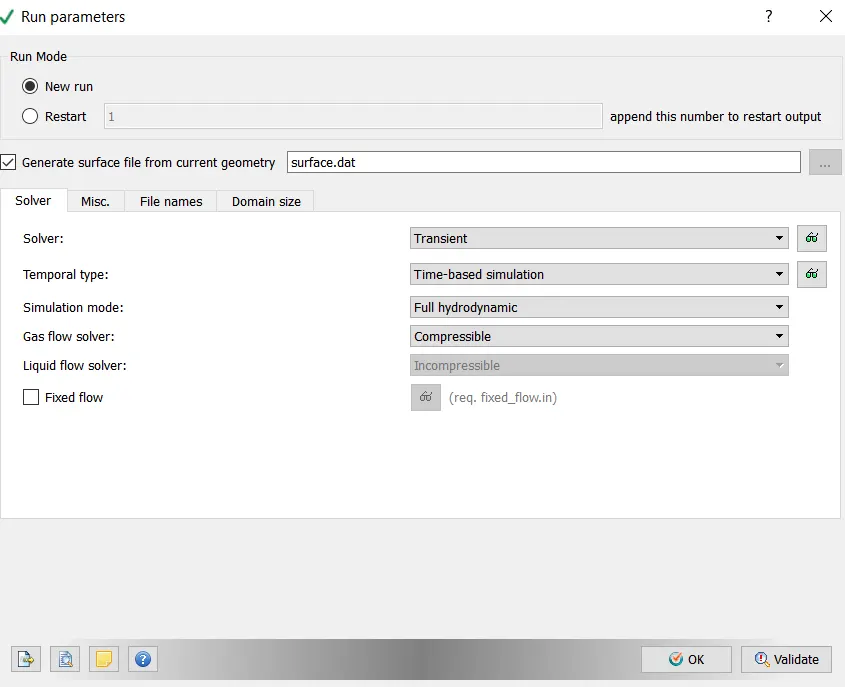
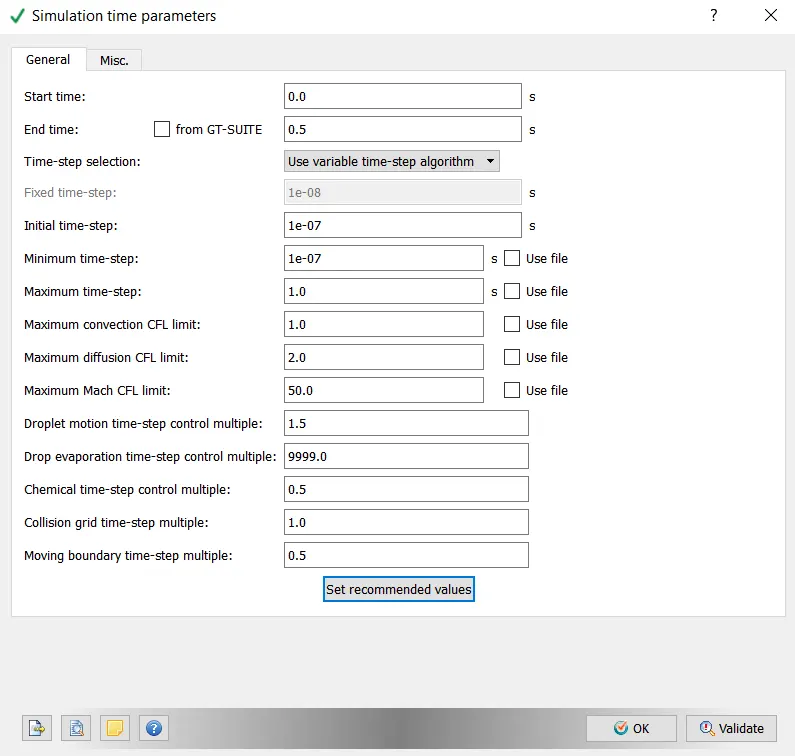
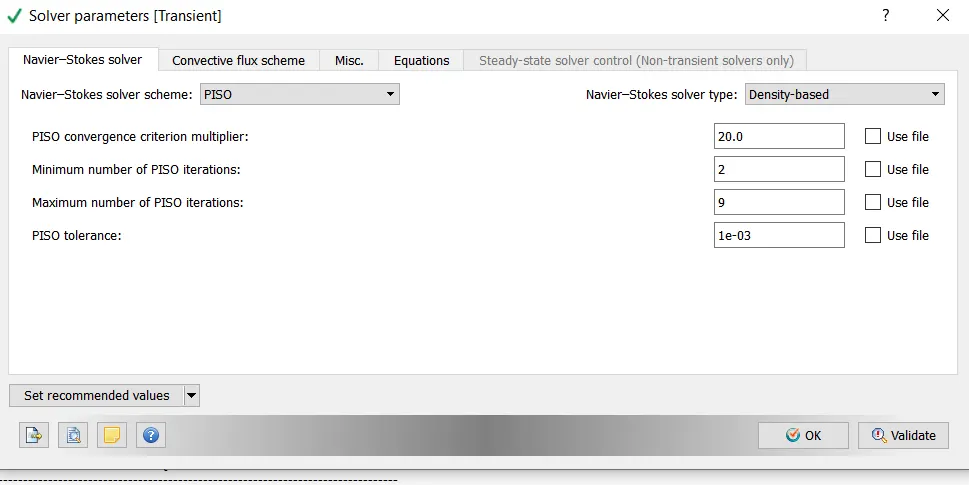
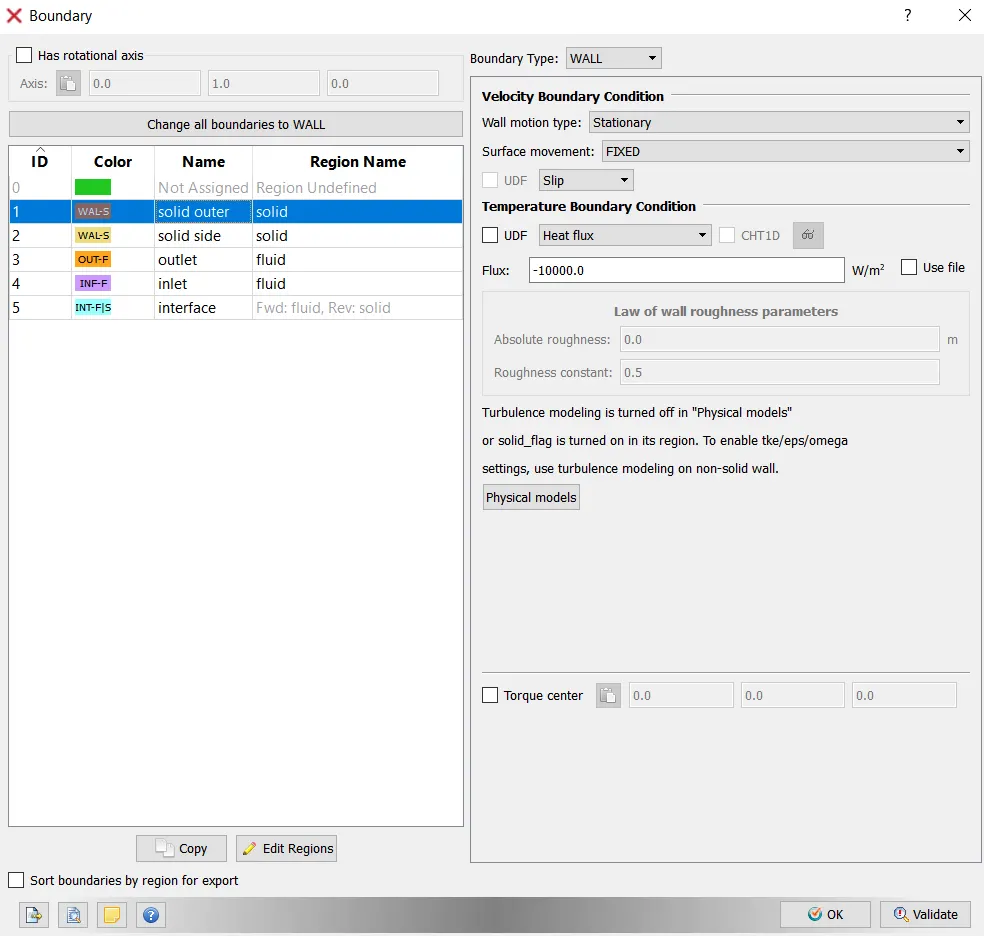
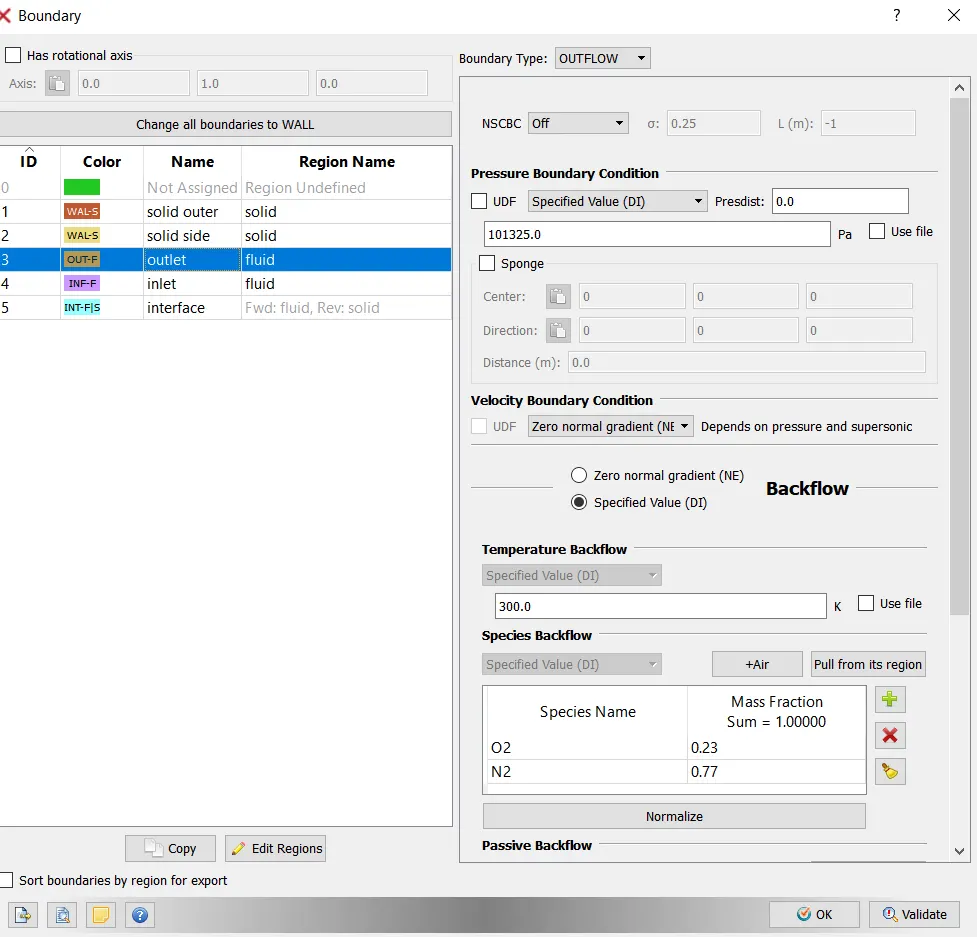
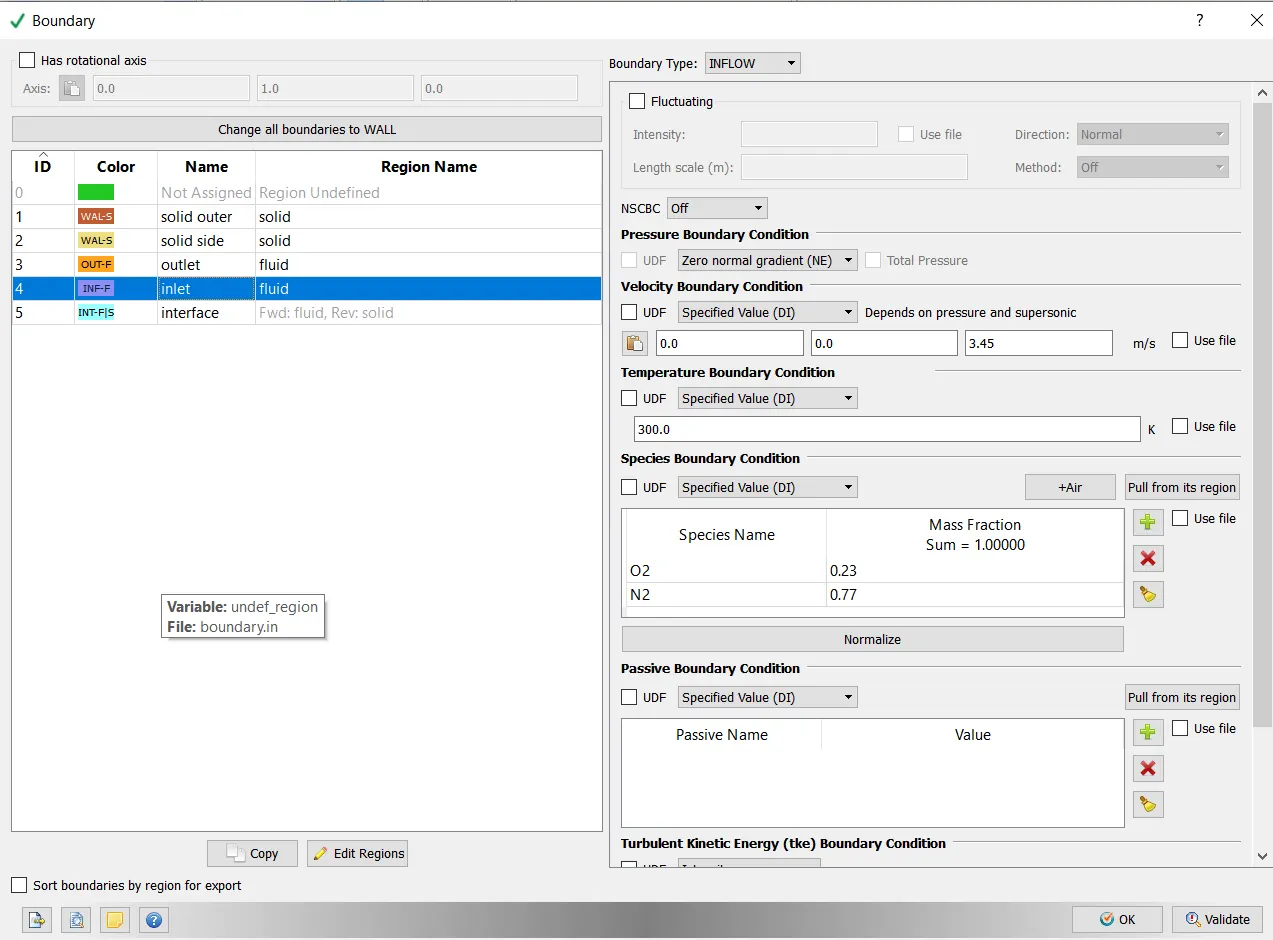
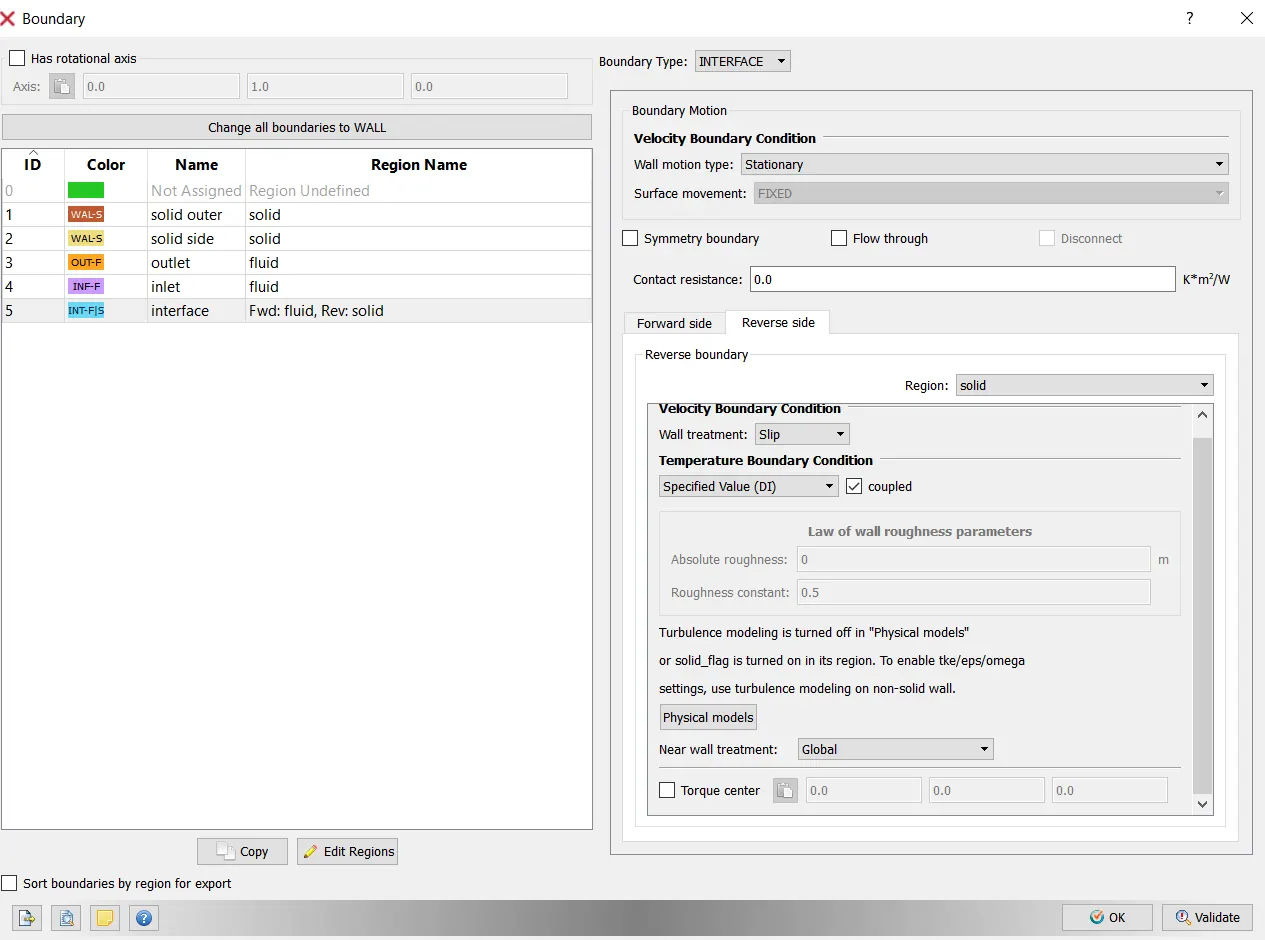
Inlet:
Neumann boundary condition for pressure
Dirchelet boundary condition for velocity. This is calculated usind reynols number=7000
Re = `(rho.V.D)/(mu)`
Re = 7000
Density of air = 1.225 kg/m^3
Viscosity = 1.81e-5 kg.m/s
Hence, Velocity = 3.45m/s
Case 1:
Grid size of 0.04
POST PROCESSING:
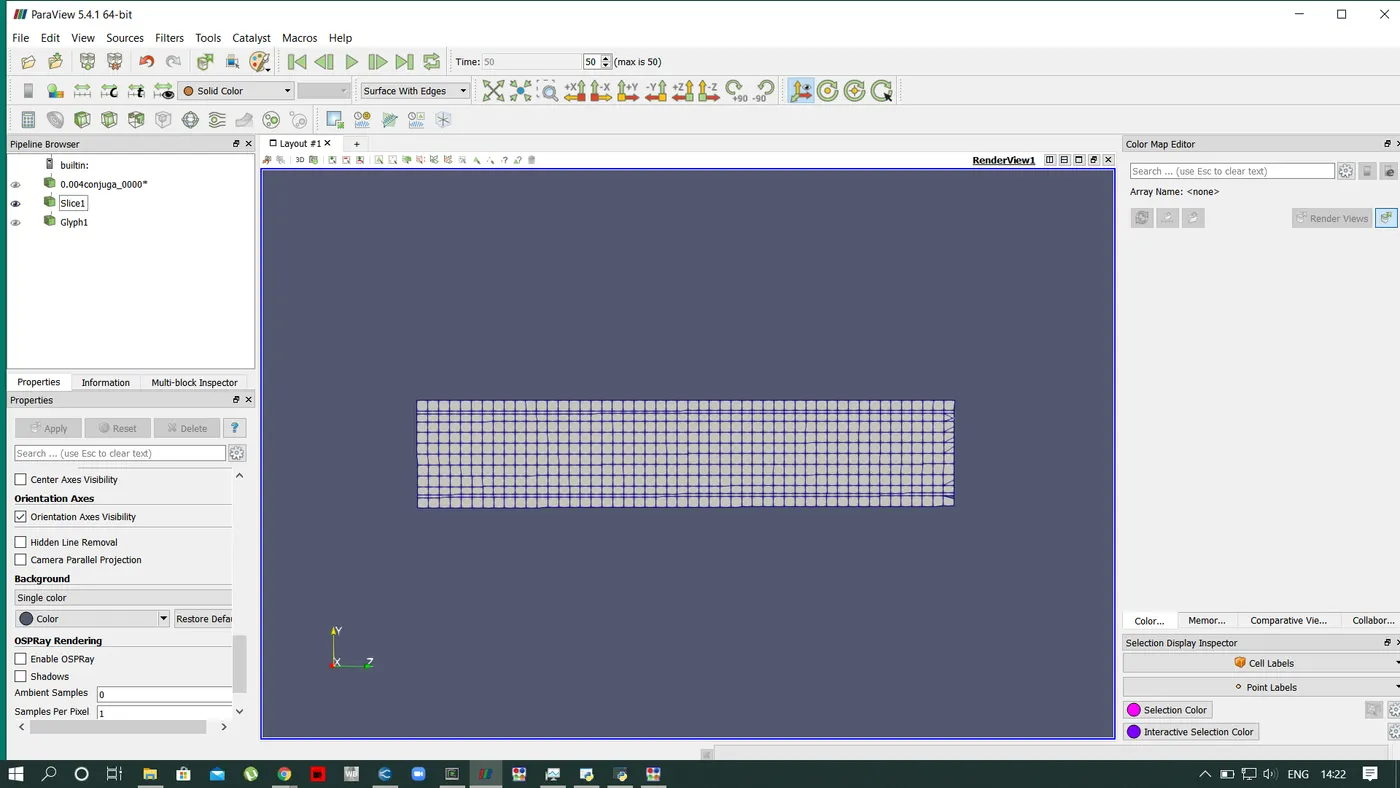
Surface with grid:
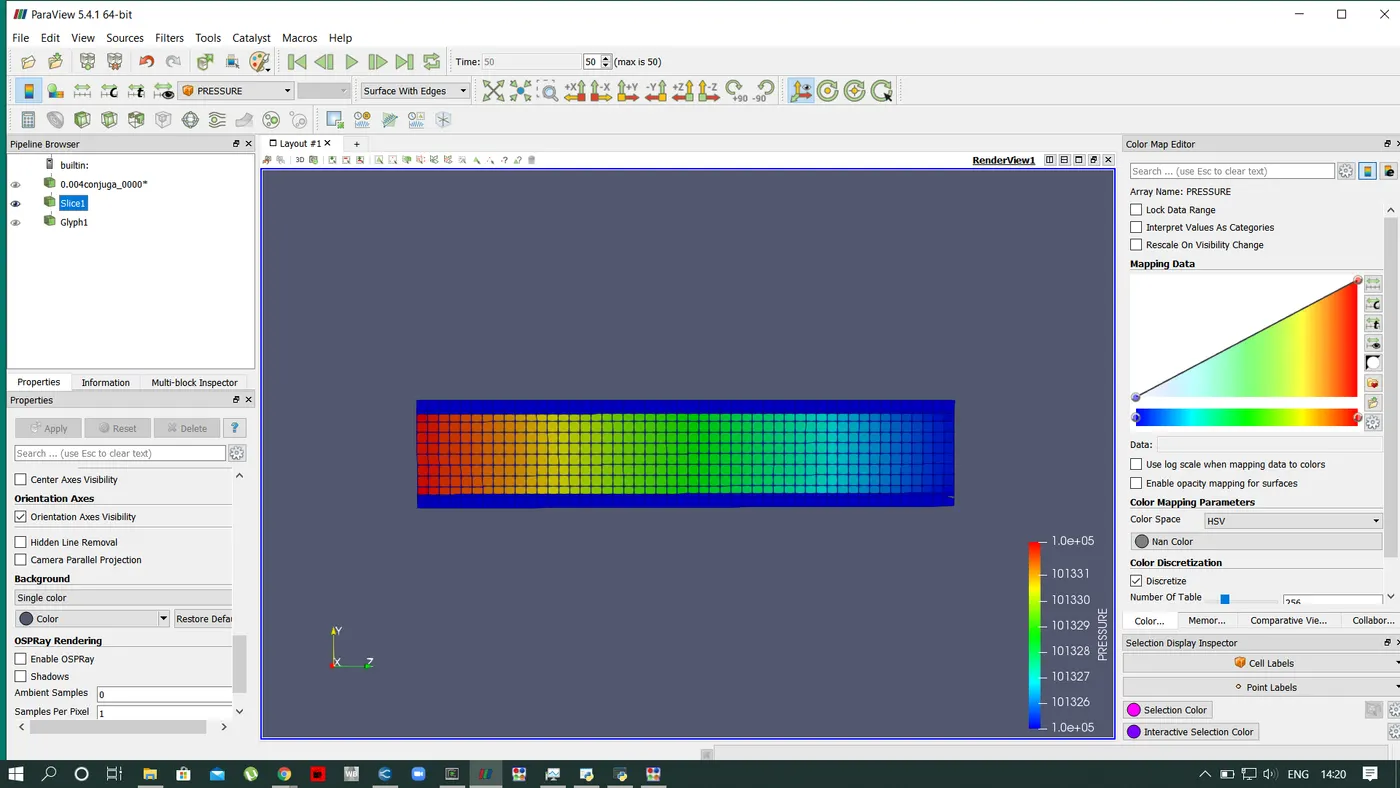
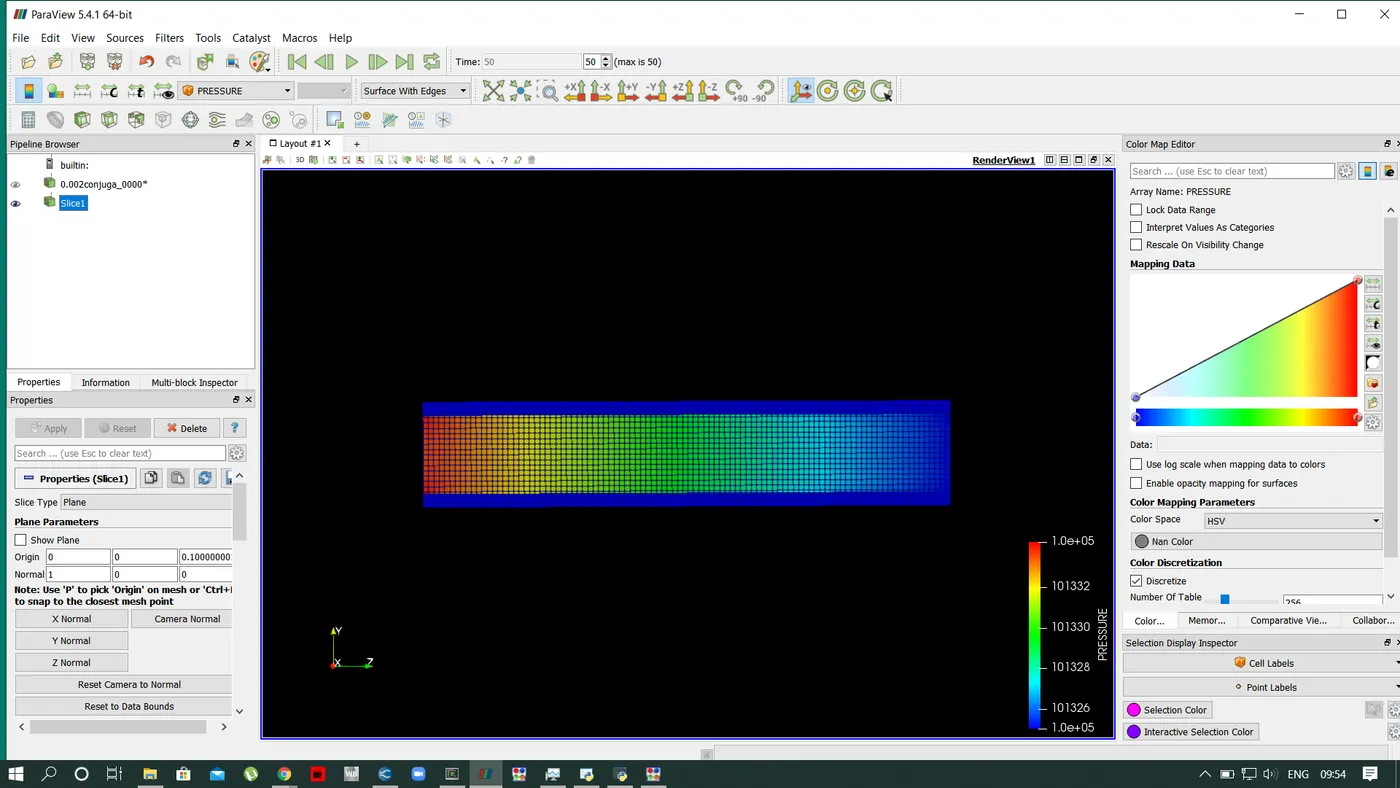
Pressure Contour:
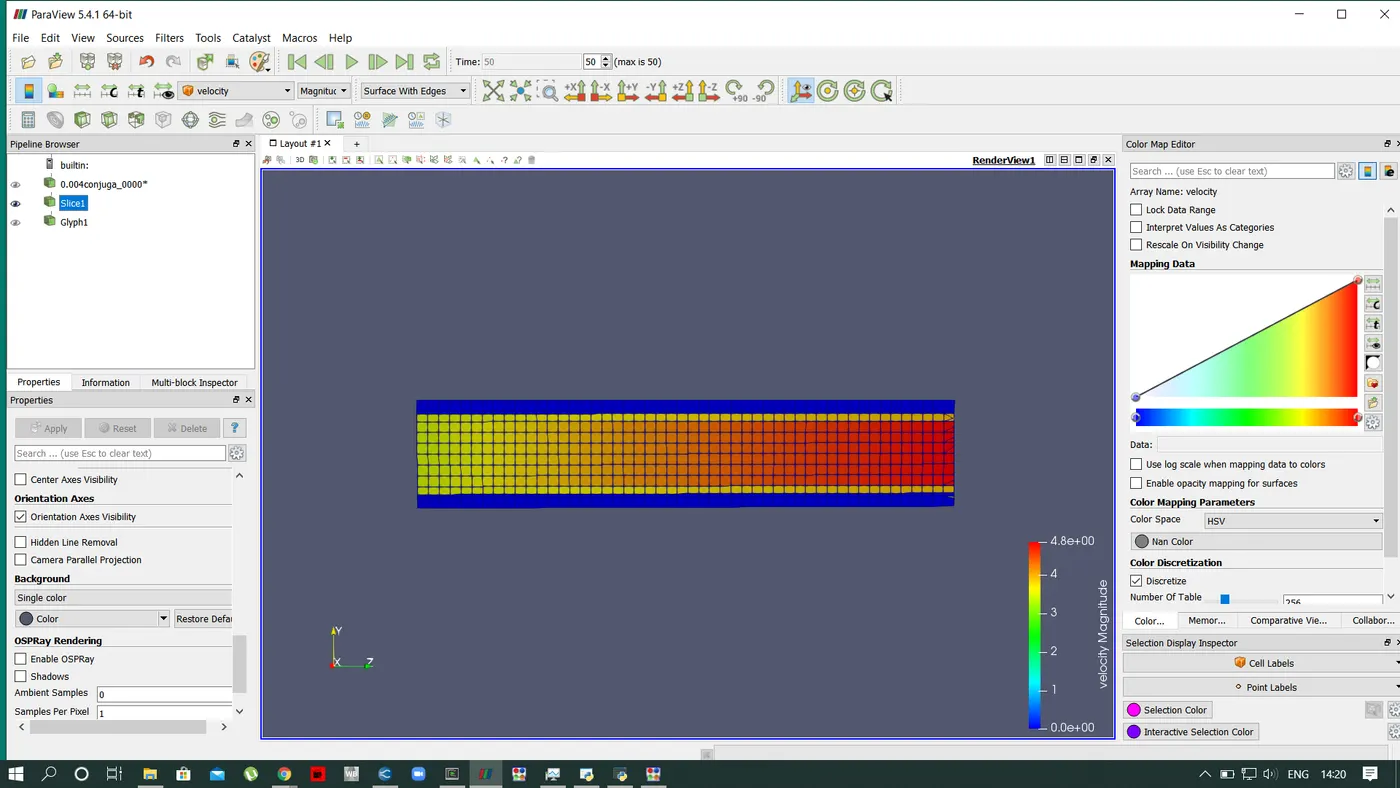
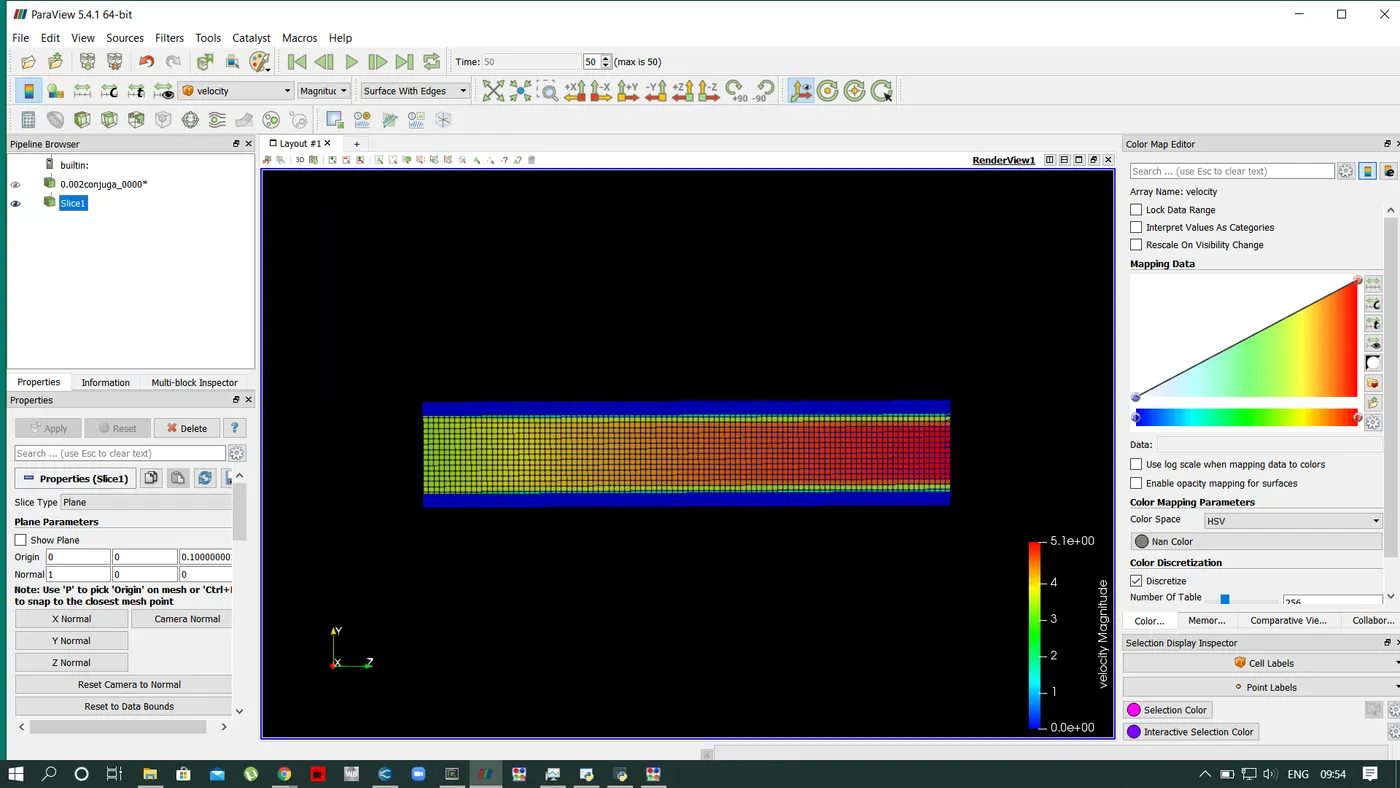
Velocity Contour:
Y+:
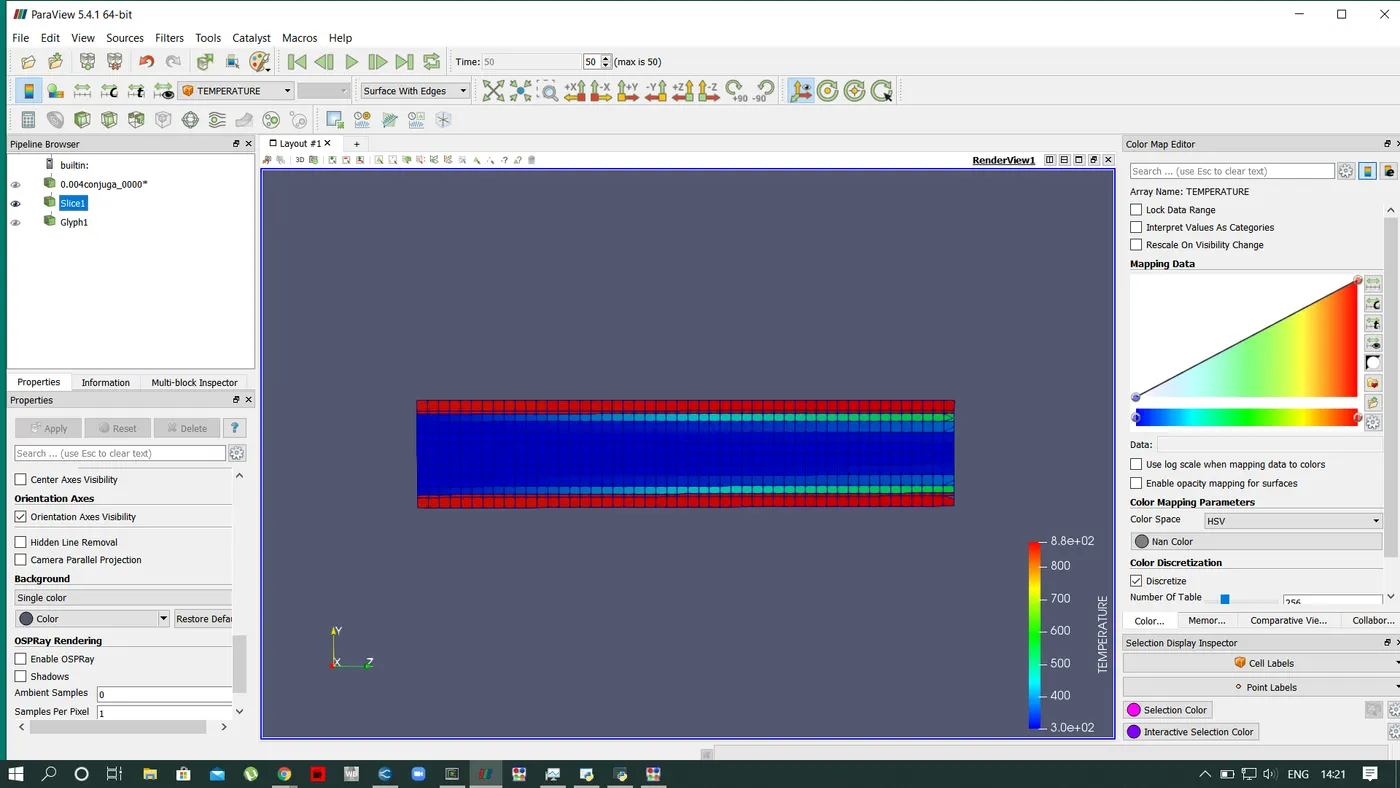
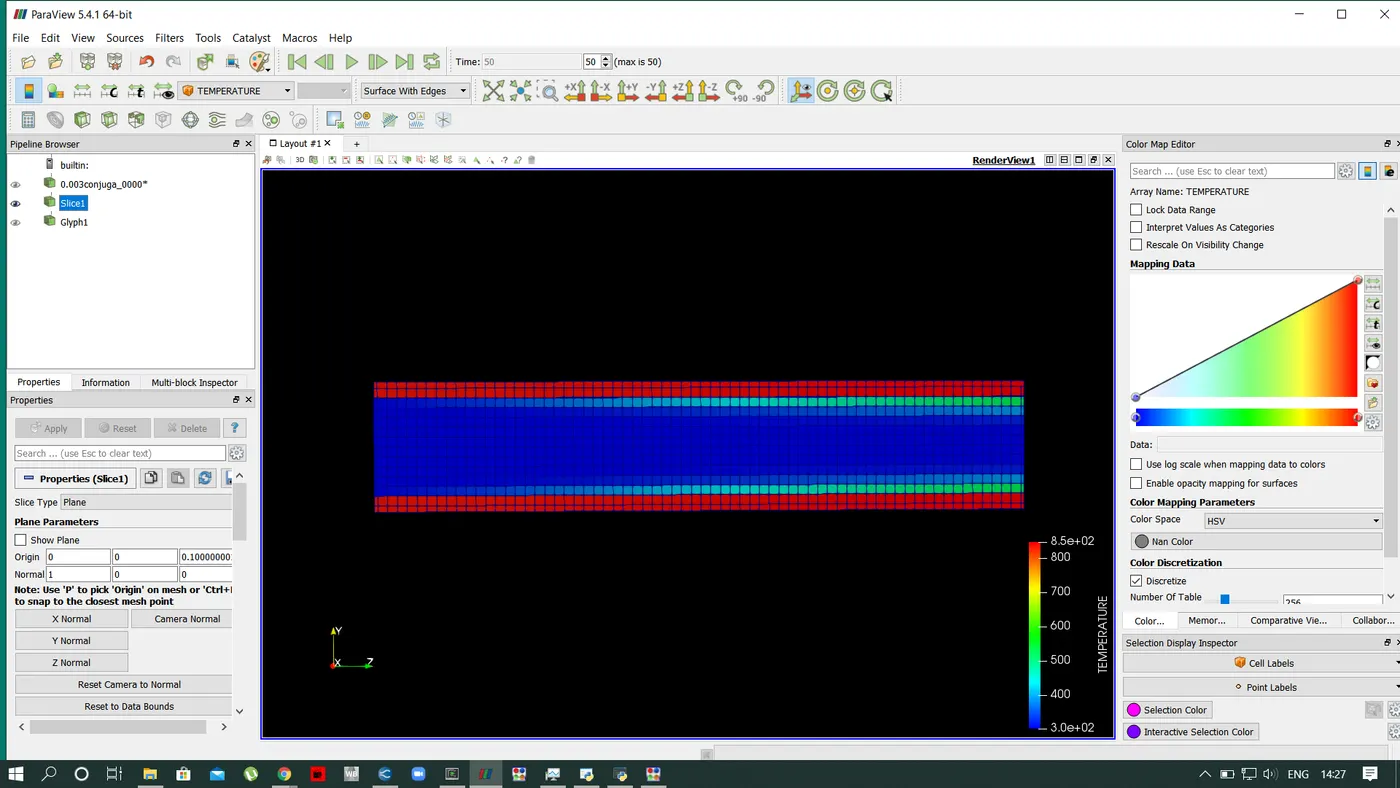
Temperature Contour:
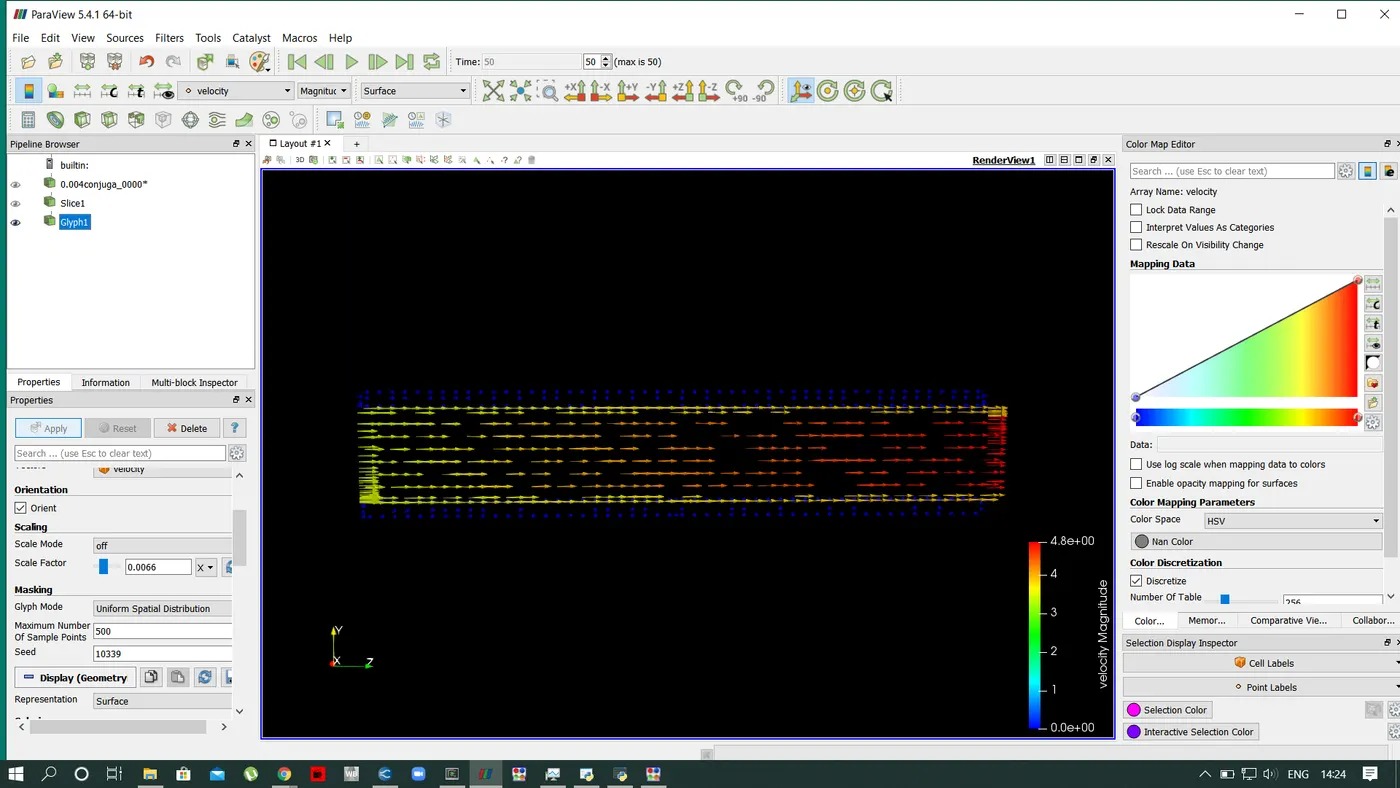
Velocity with vector representation:
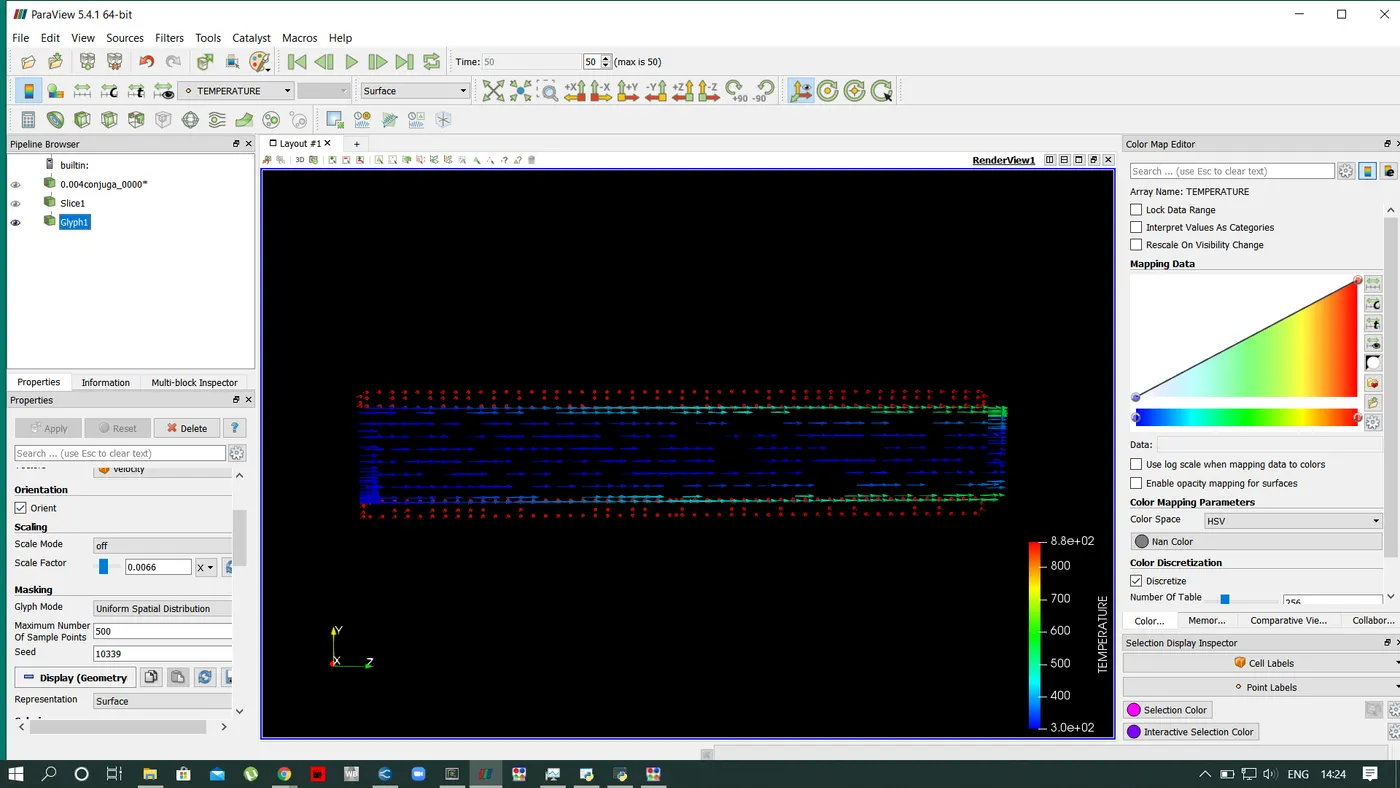
Temperature with vector representation:
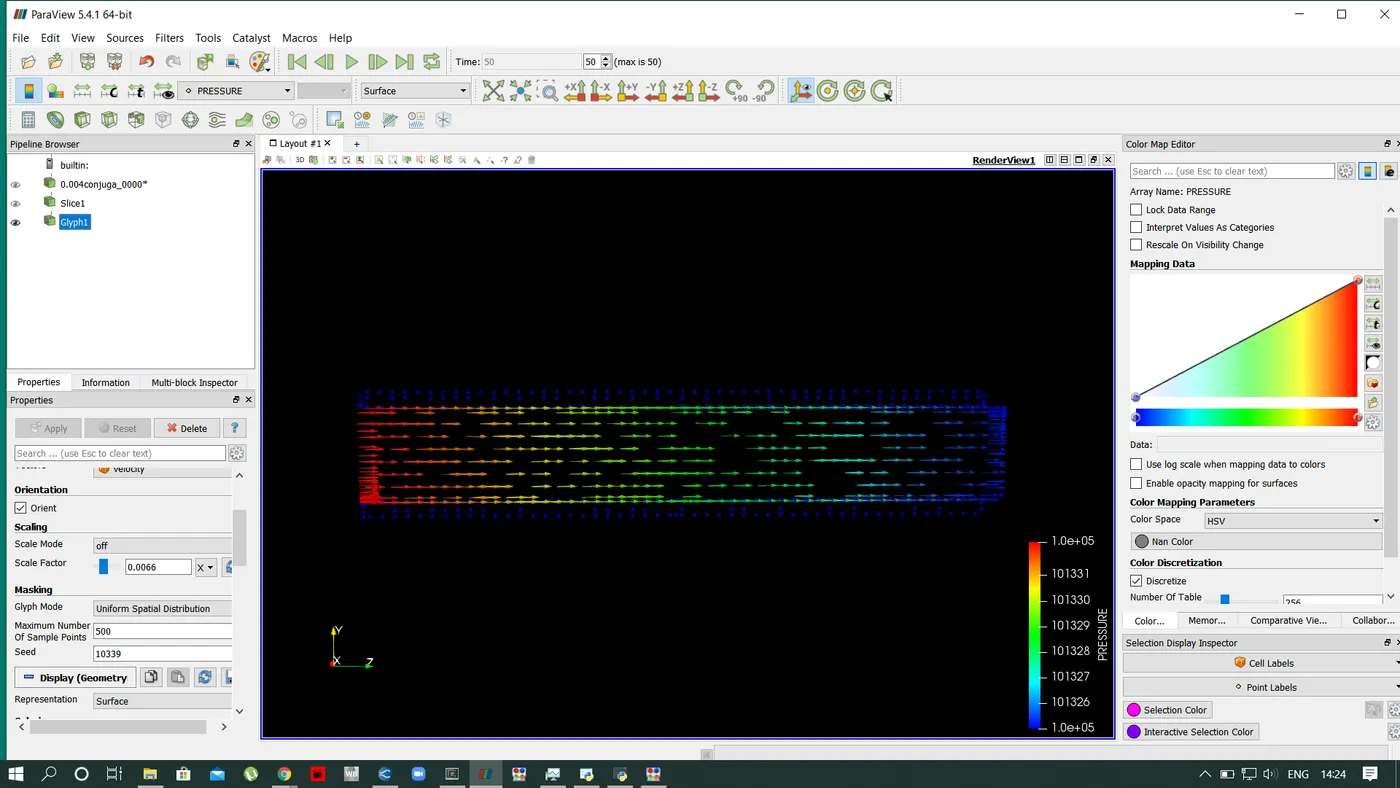
Pressure with vector representation:
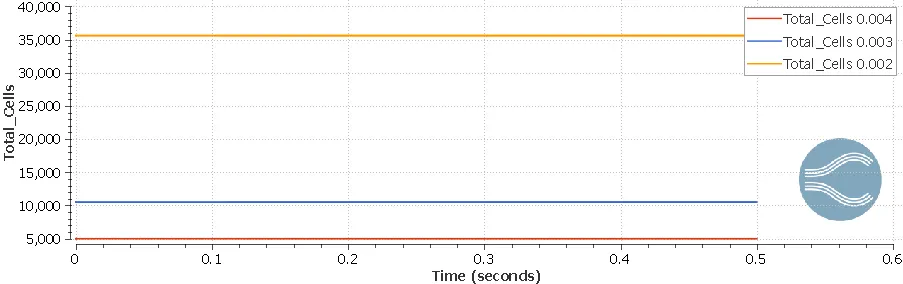
Total cells:
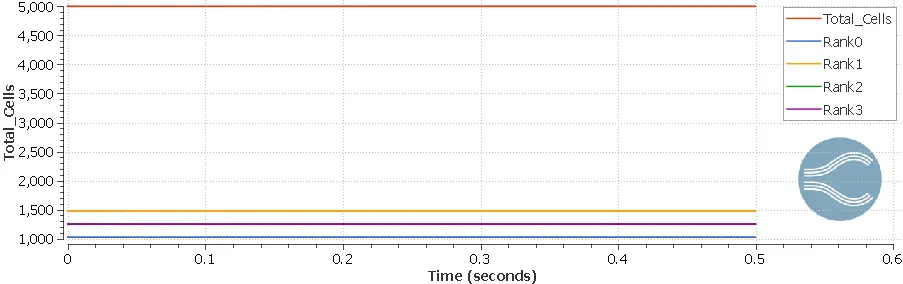
Case2:
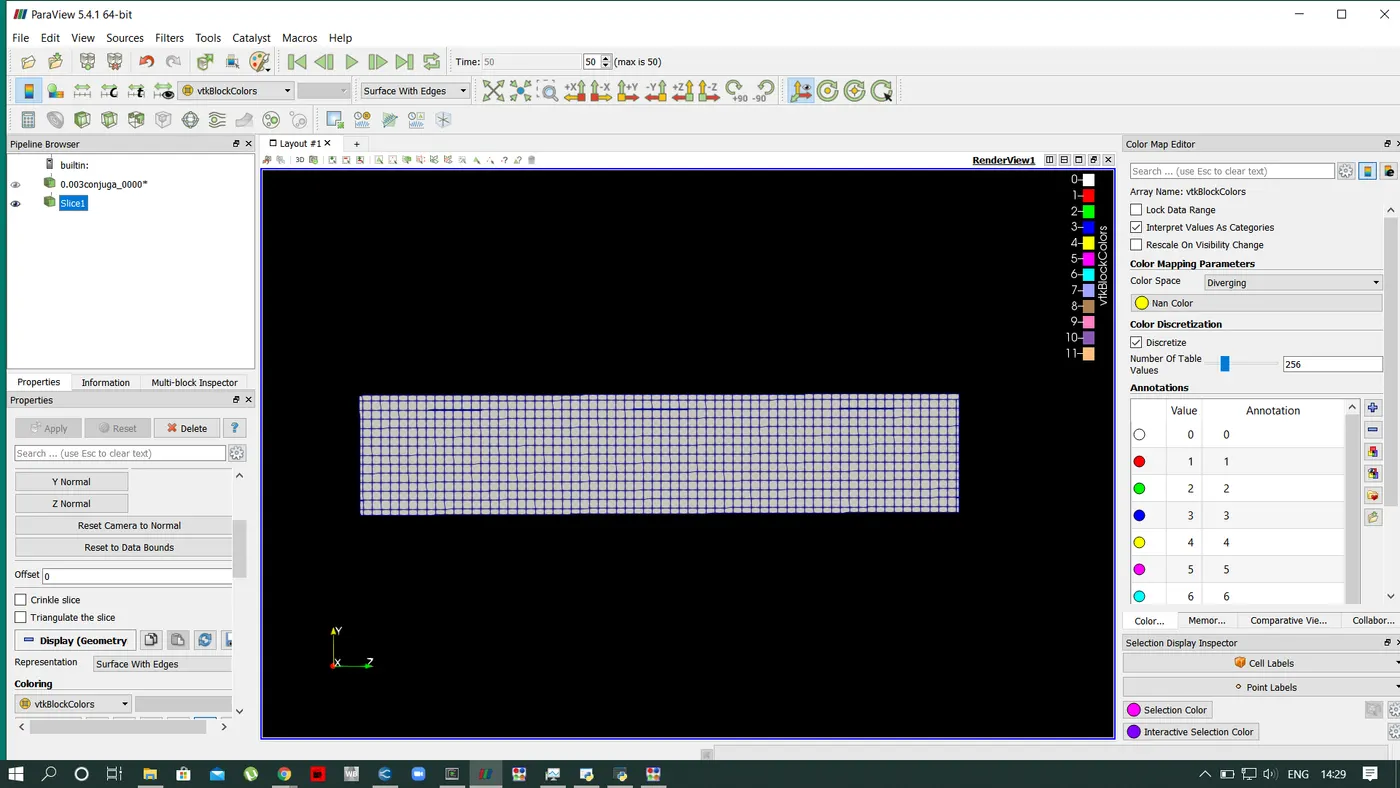
Grid size 0.03
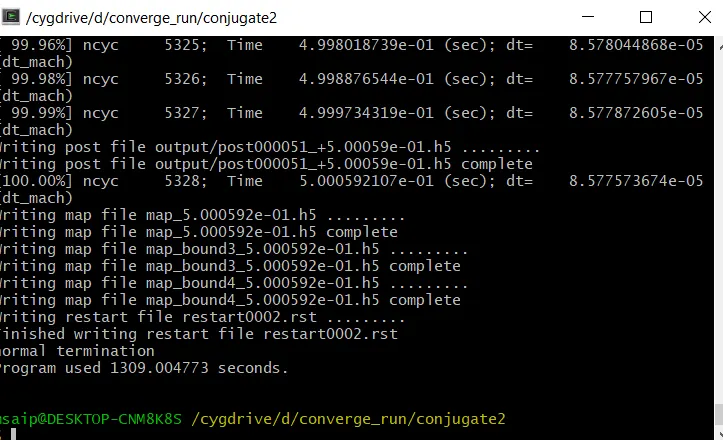
POST PROCESSING:
Surface with grid:
Temperature Contour:
Velocity Contour:
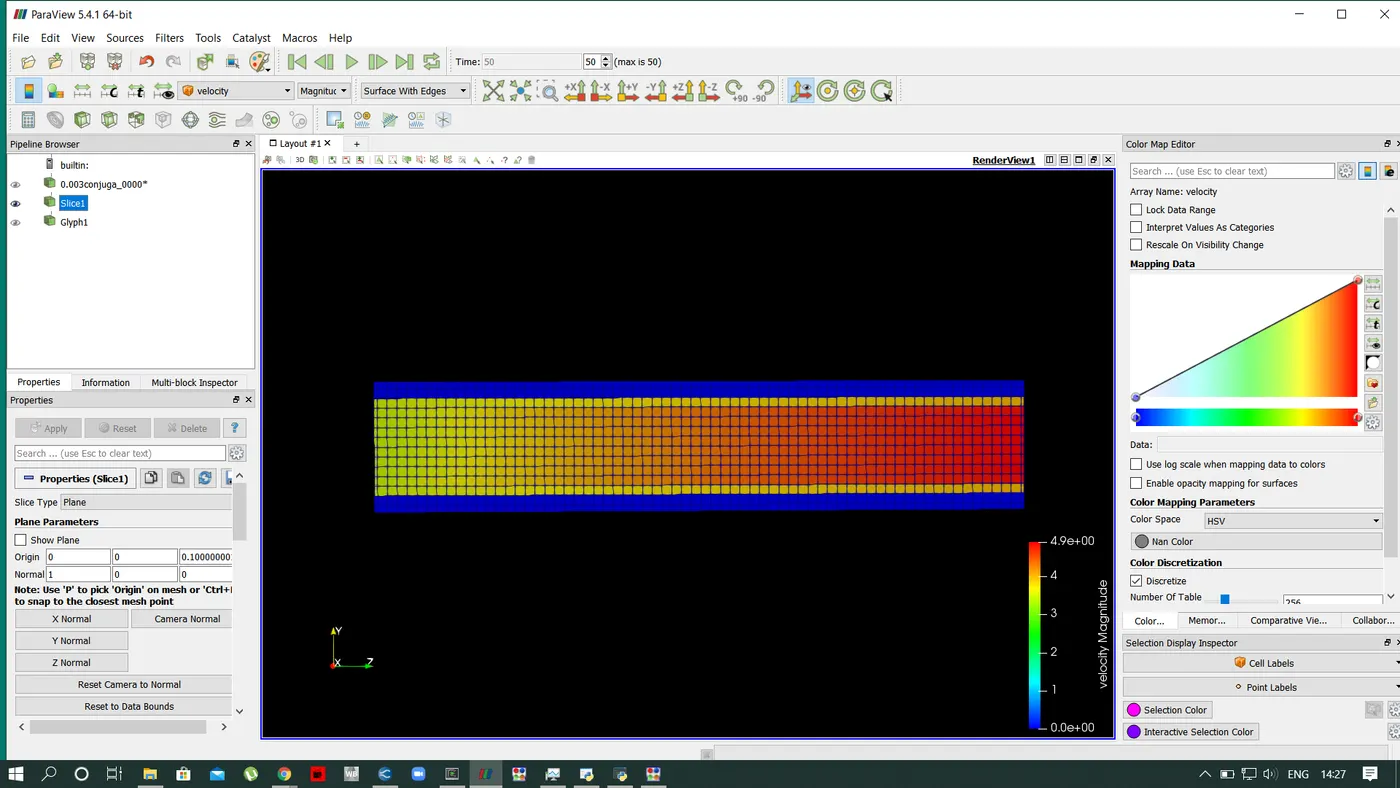
Pressure Contour:
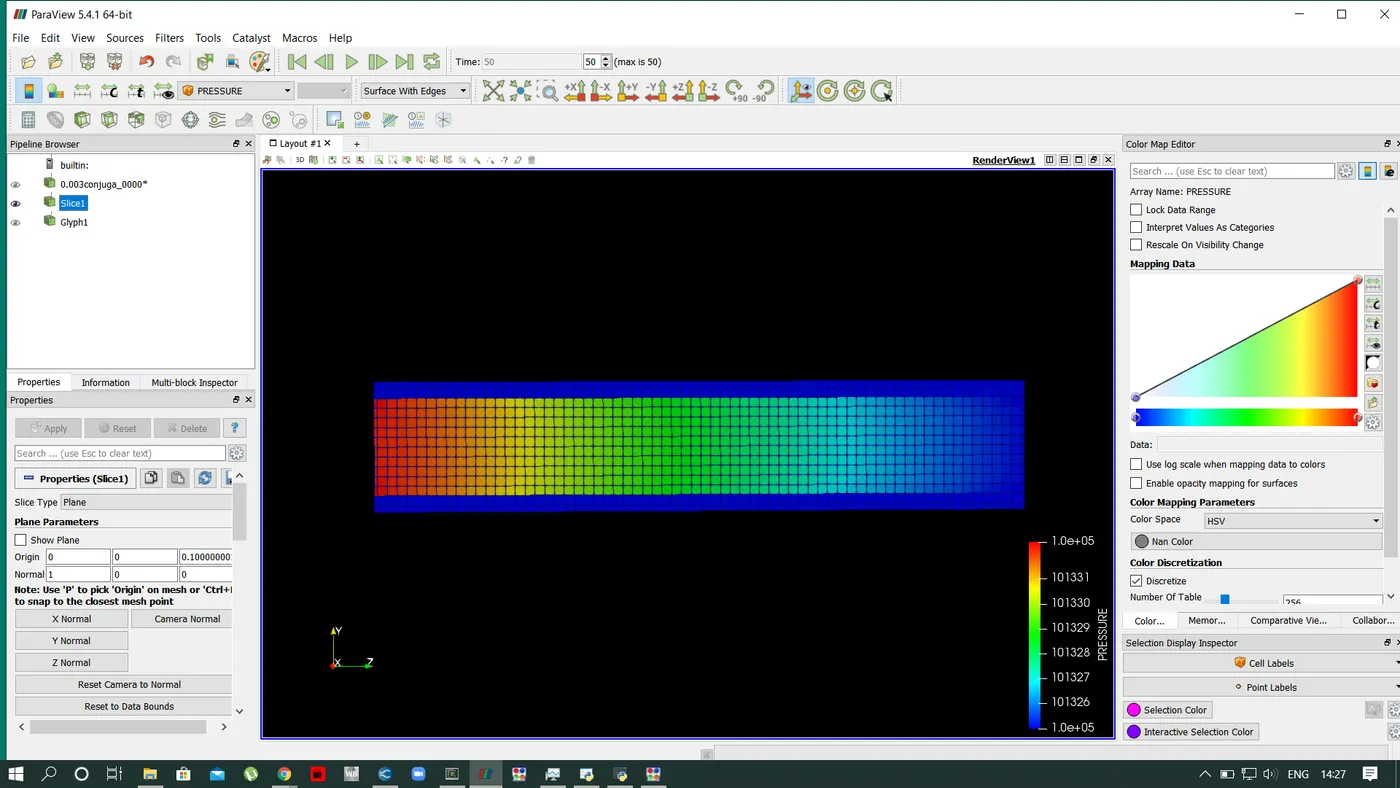
Y+:
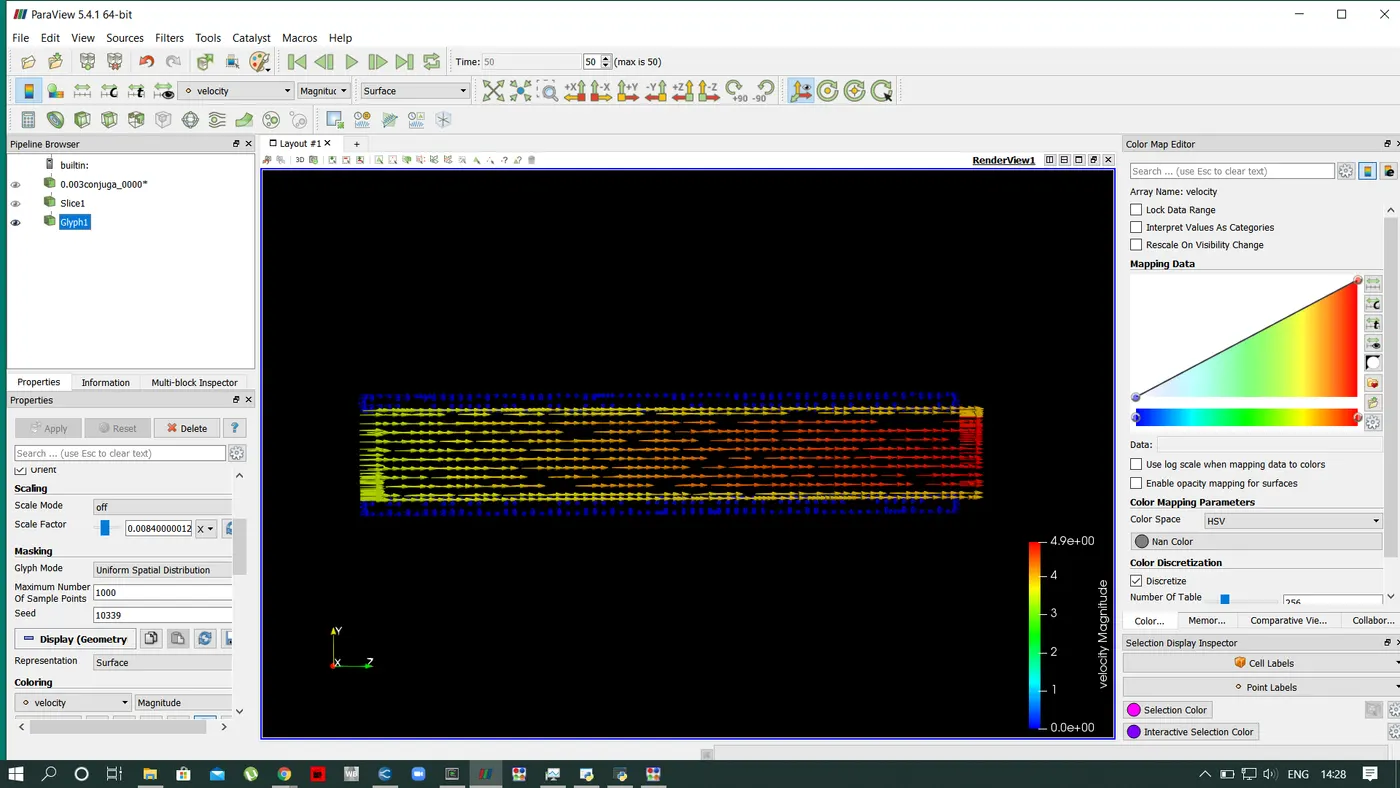
Velocity with vector representation:
Pressure with vector representation:
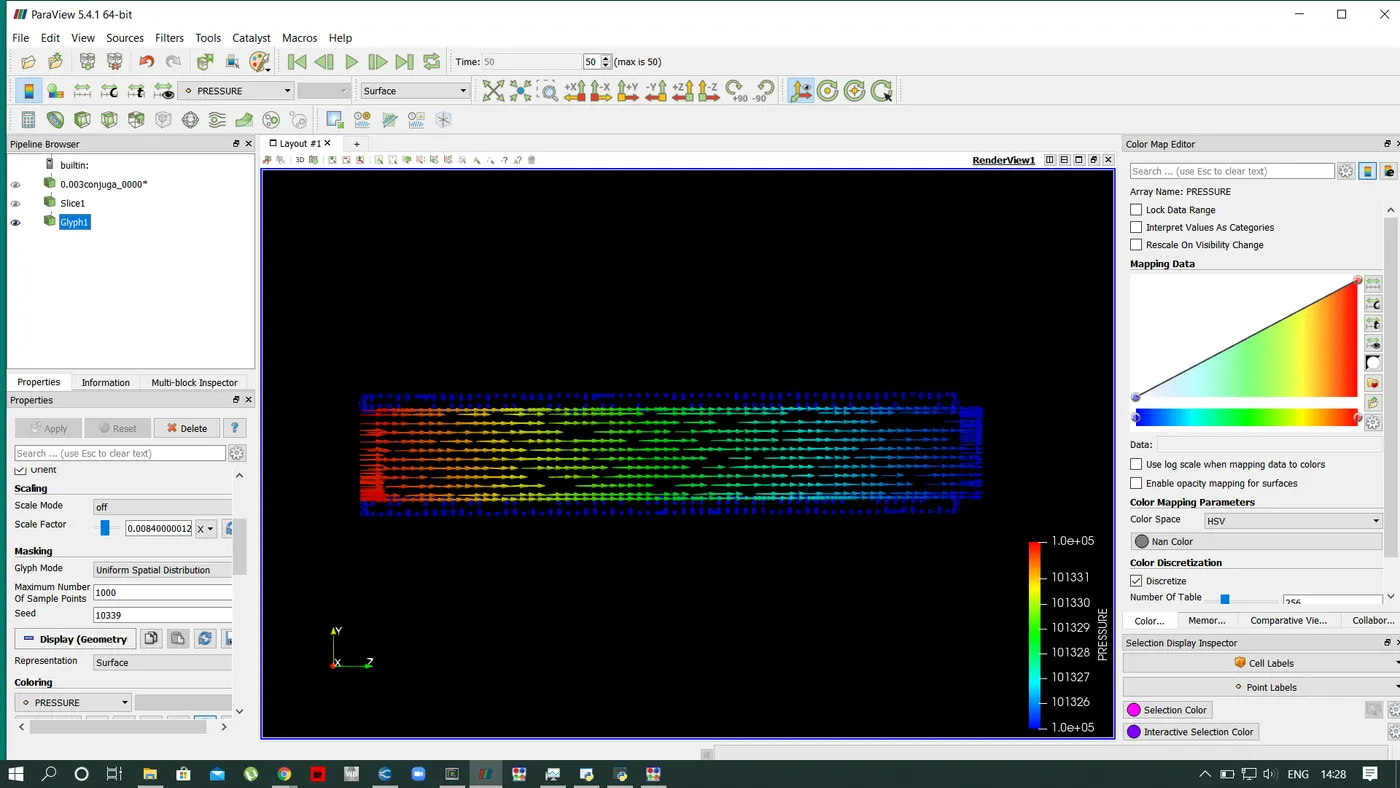
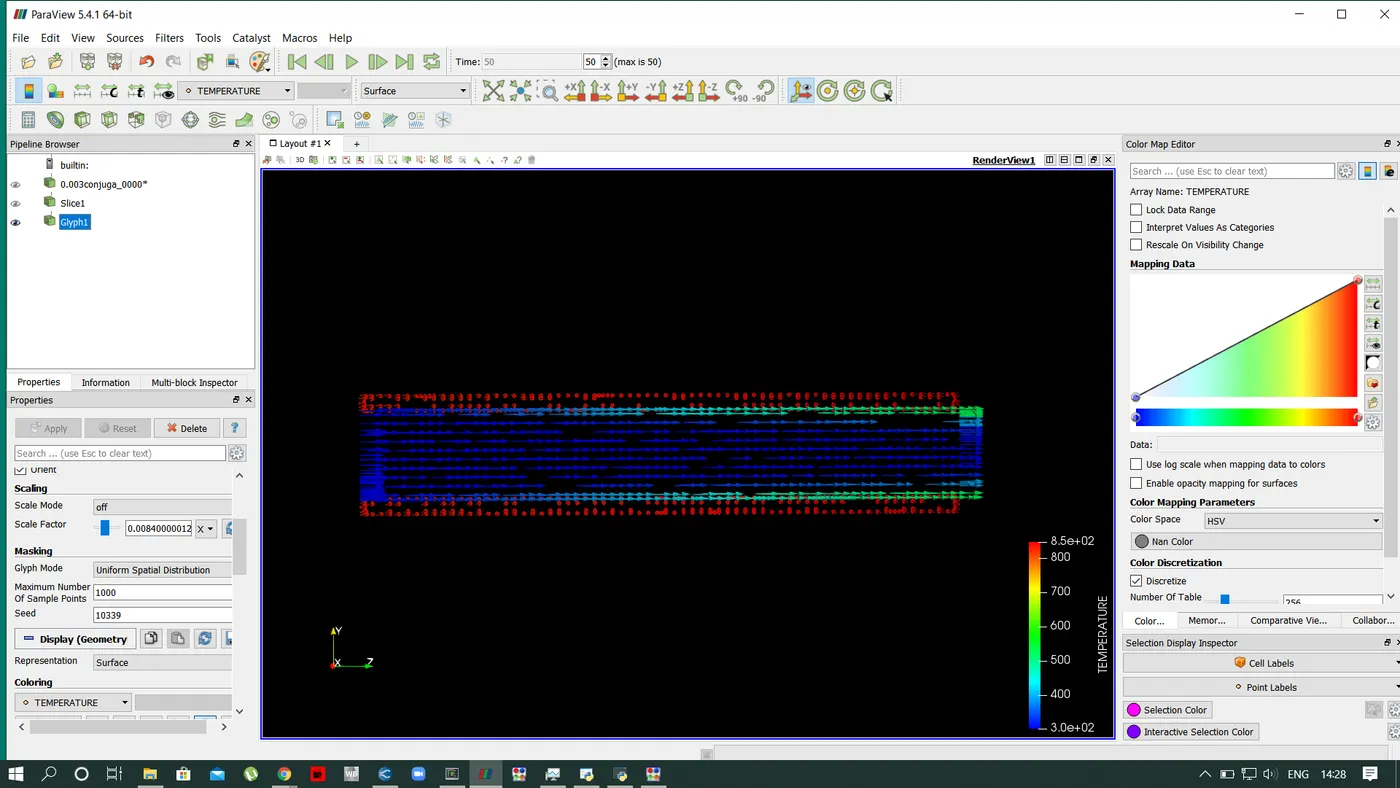
Temperature with vector representation:
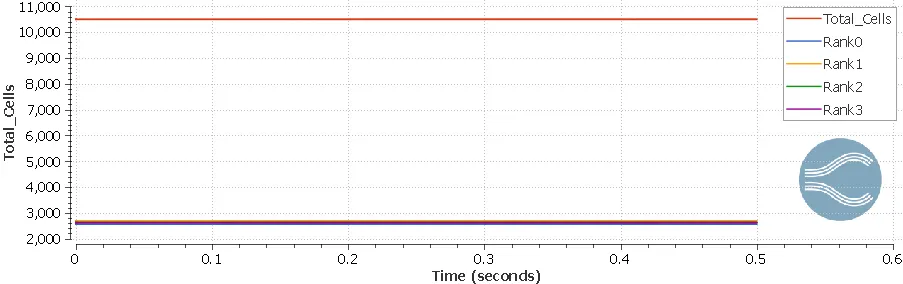
Total cells:
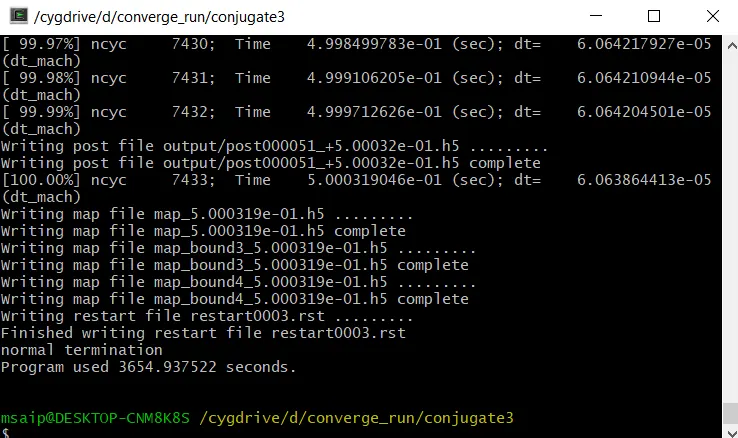
case 3:
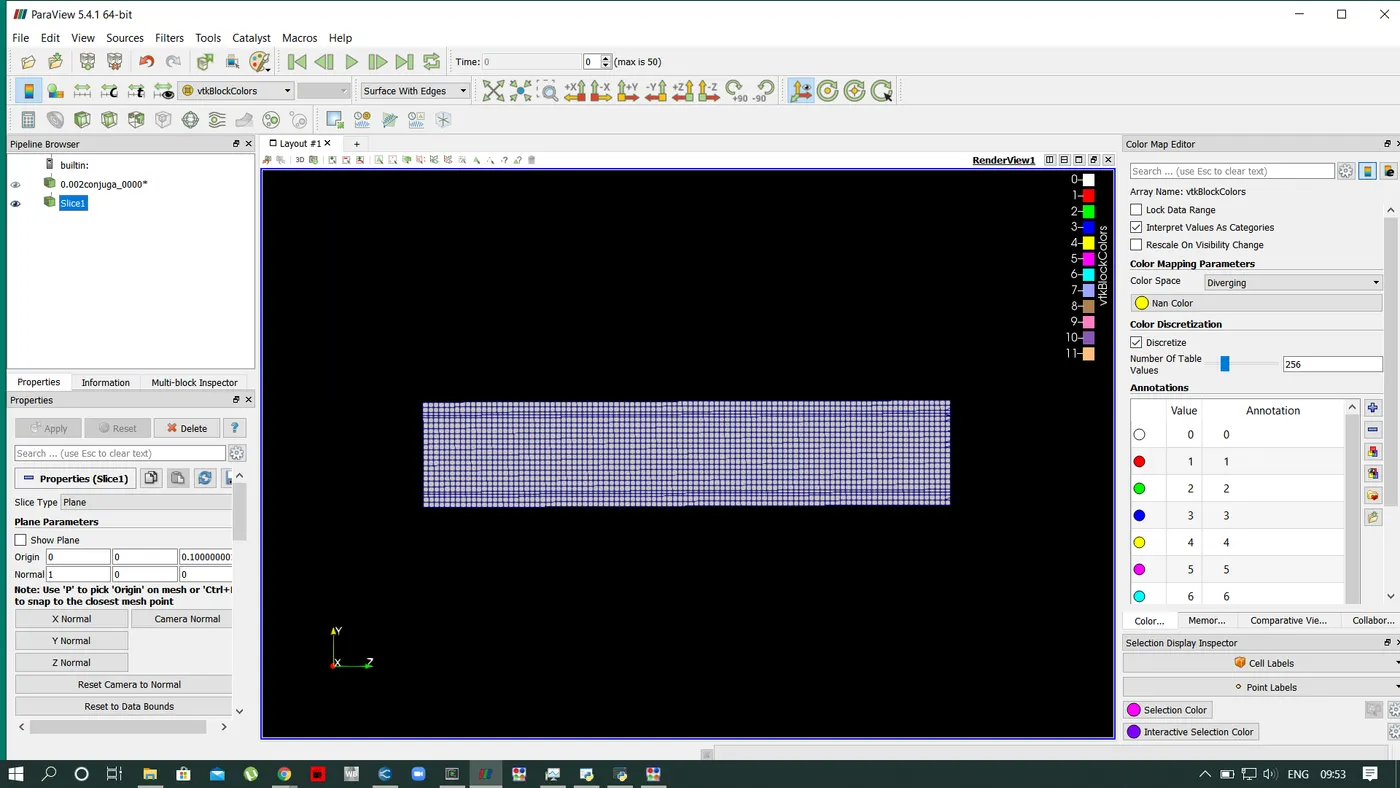
Grid size 0.002
POST PROCESSING:
Surface with grid:
Y+:
Pressure Contour:
Velocity Contour:
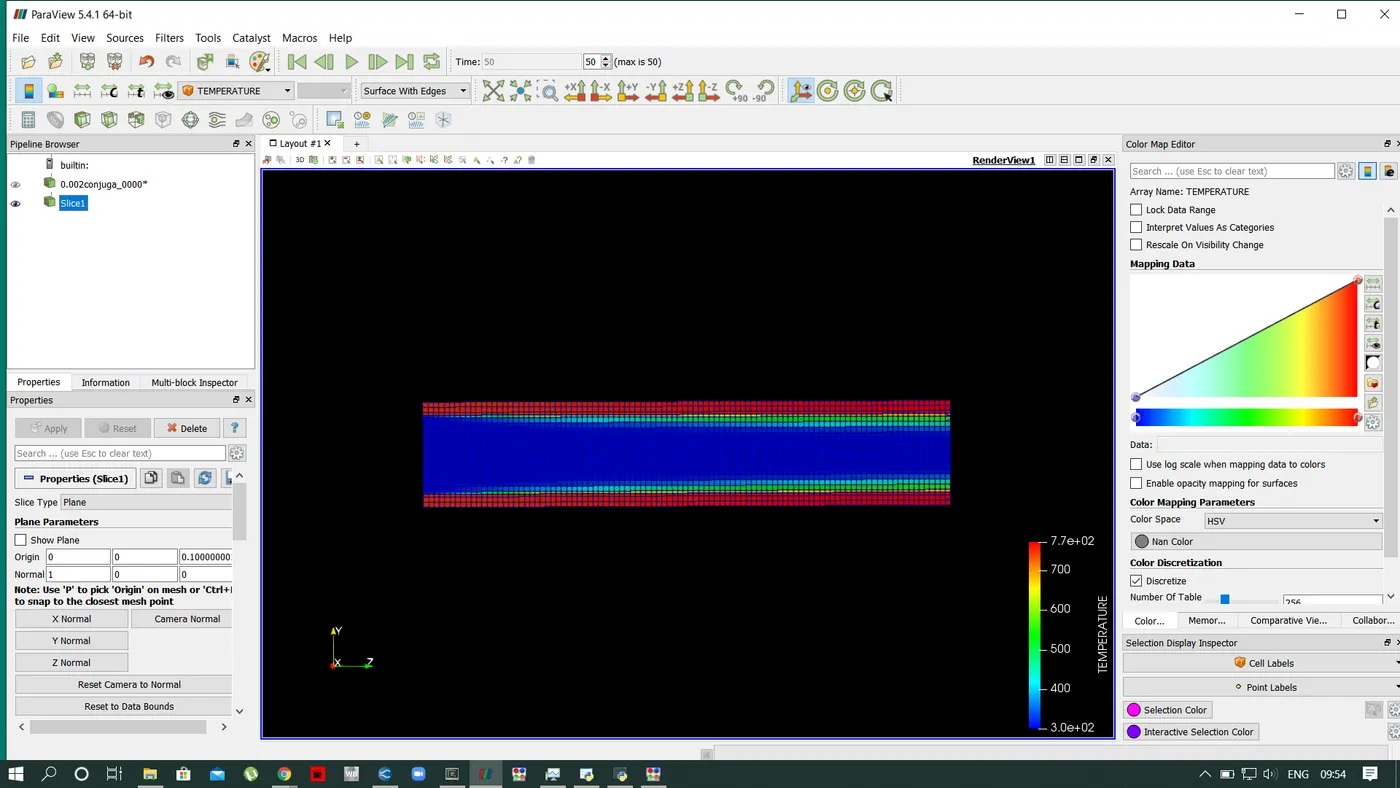
Temperature Contour:
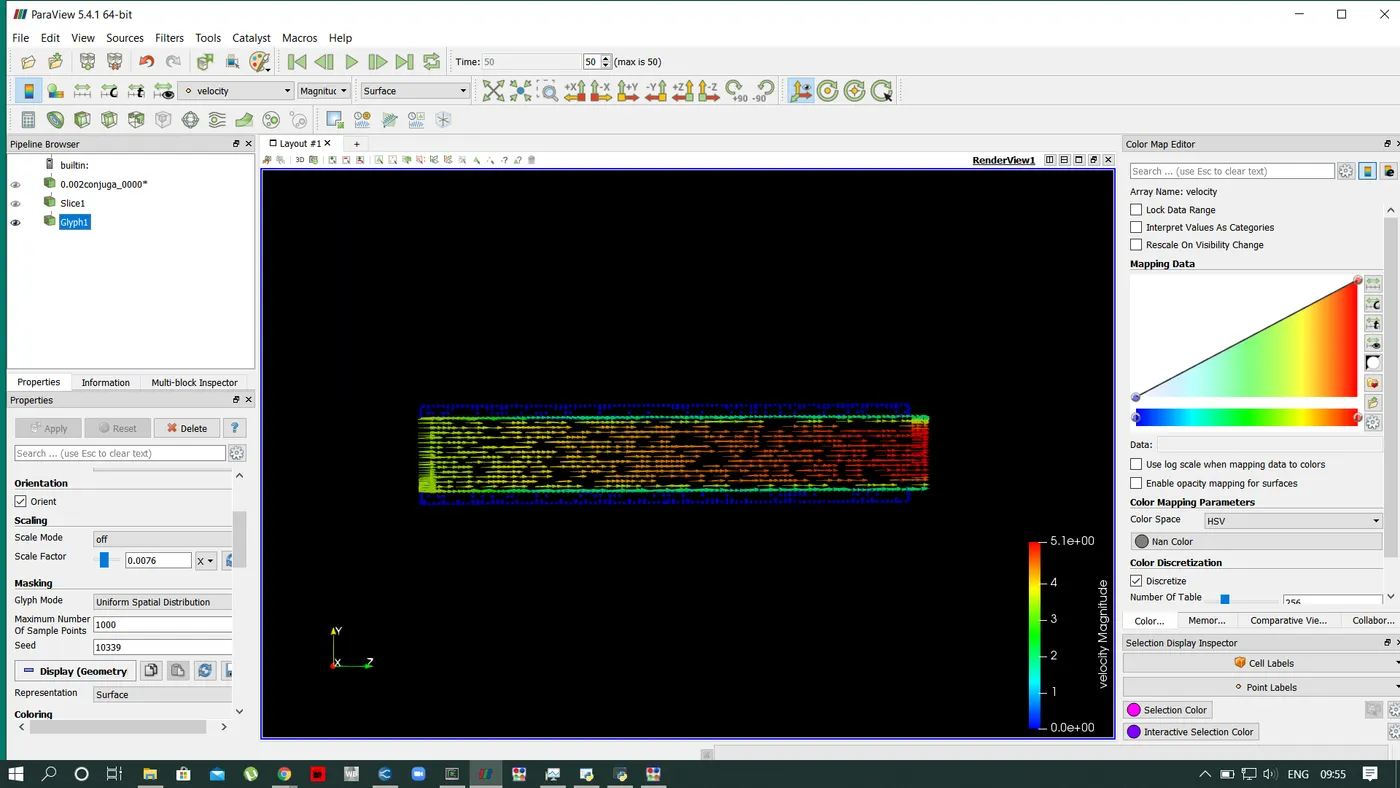
Velocity with vector representation:
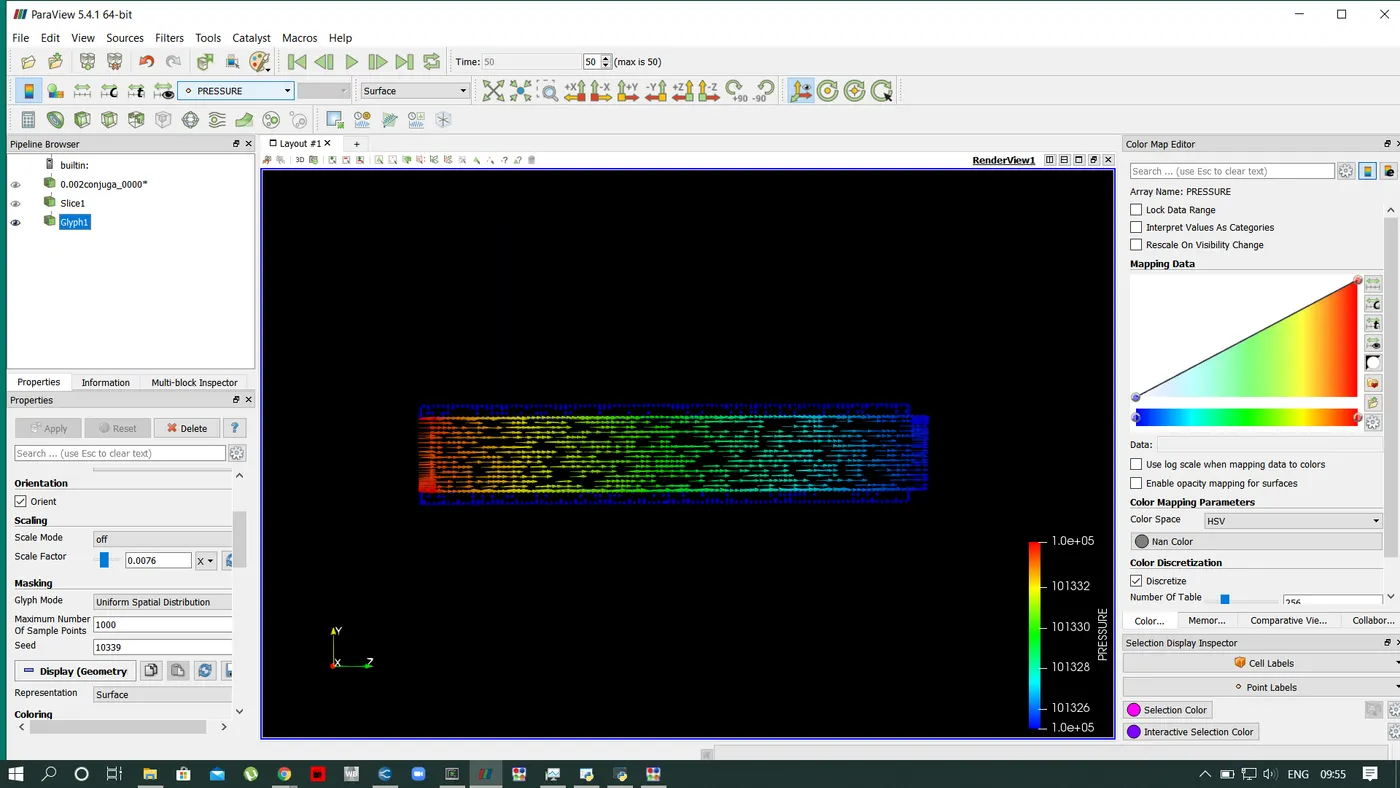
Pressure with vector representation:
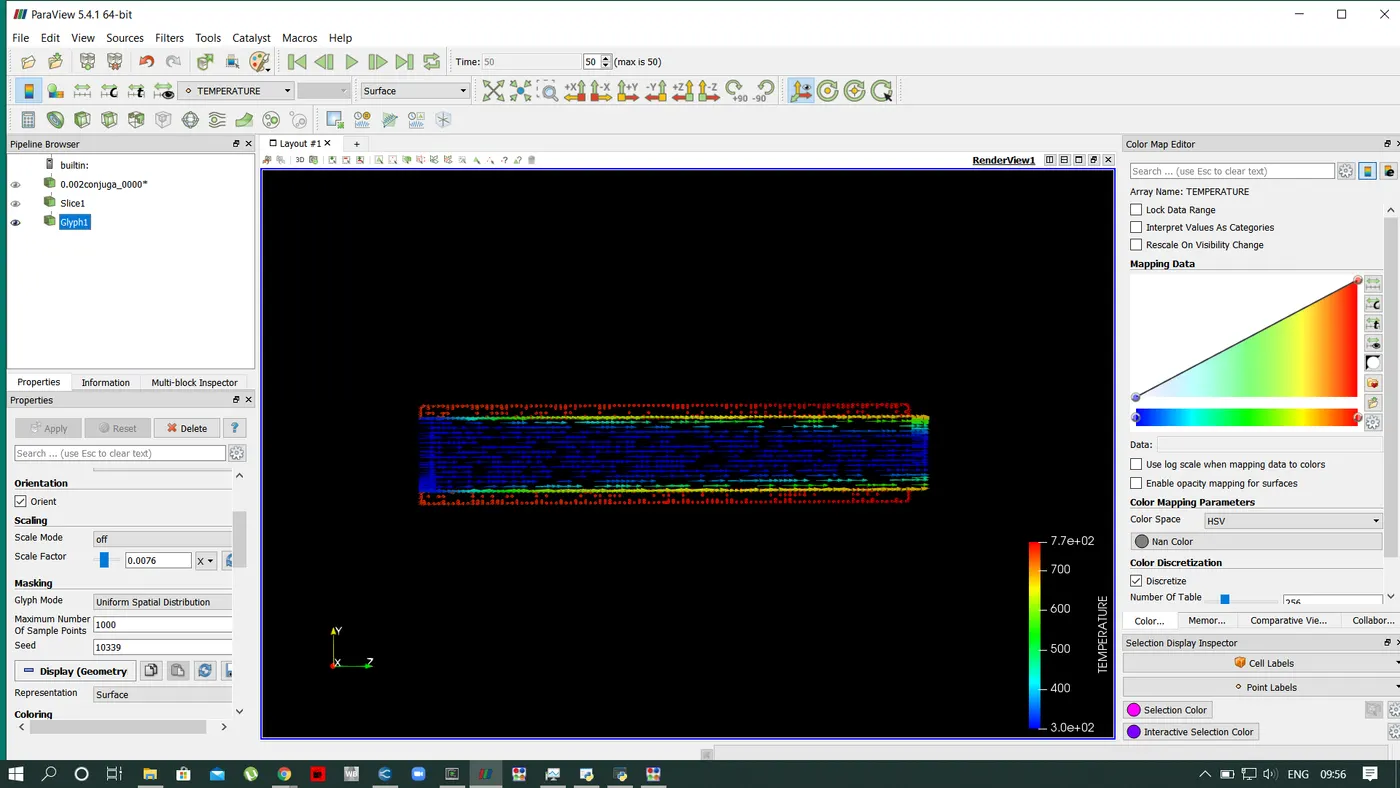
Temperature with vector representation:
Total cells:0.05
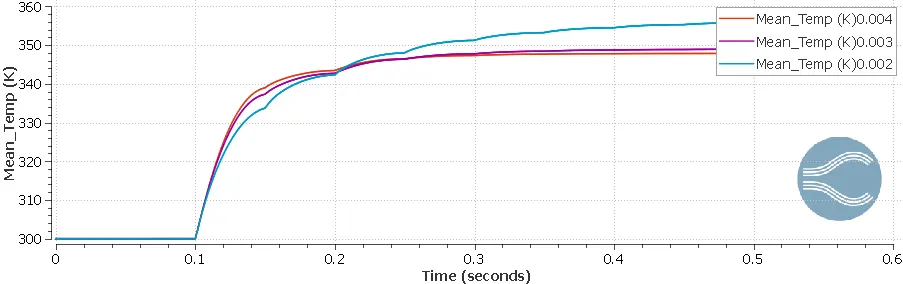
Fluid mean Temperature
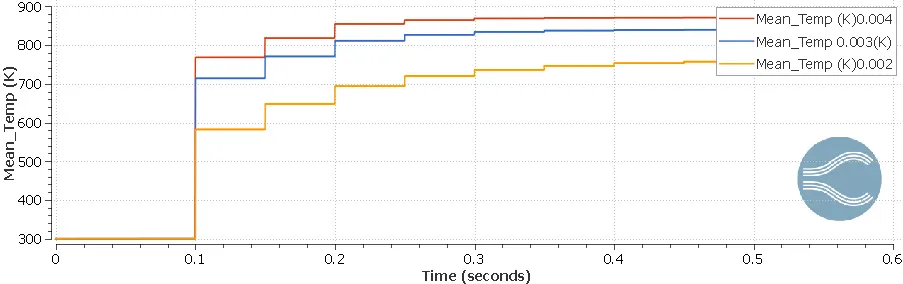
Solid mean temperature
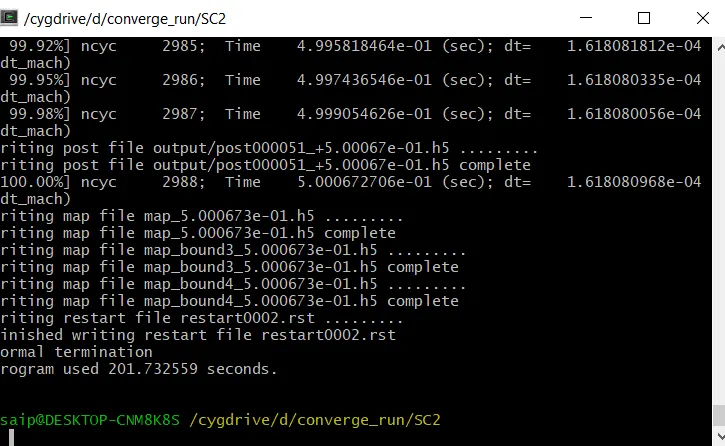
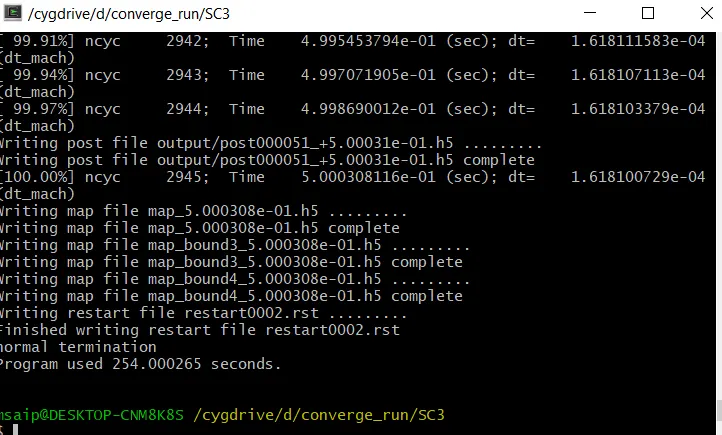
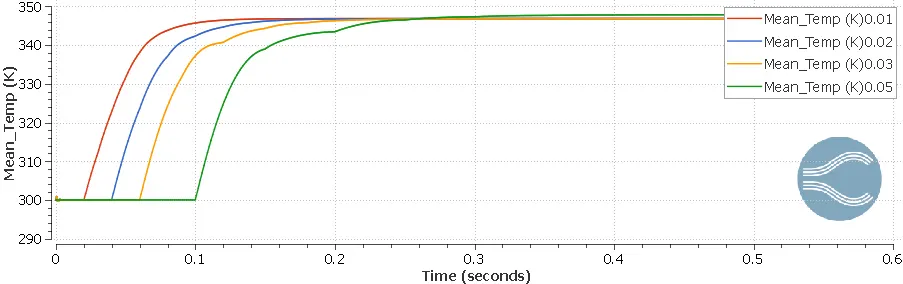
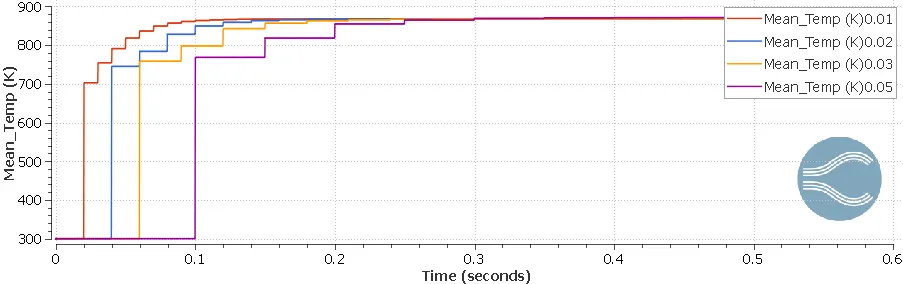
SUPERCYCLING:
Case 1:
Supercycling 0.01
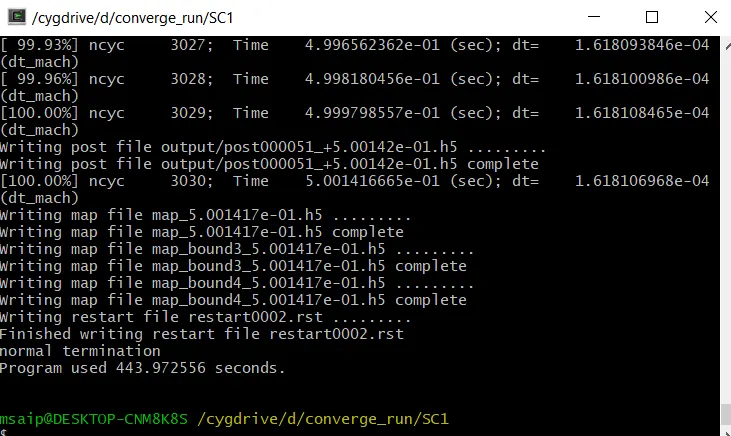
Case 2:
Supercycling 0.02
Case 3:
Supercycling 0.03
Case 4:
Supercycling 0.05
Fluid mean Temperature SC
Solid mean Temperature For SC
CONCLUSION:
1. Form the grid dependence test it is concluded that the finer mesh gives accurate result.
2. Set supercyle stage interval to 0.01,0.02 and 0.03.
For these three values, the total simulation time compare against the baseline configuration increases and iterations also increases with decrease in interval
3. Y+ value that is obtained for different grid sizes. Y+ value changes from 15 whan grid size is 4mm, to around 7 with mesh 2mm.
4. Finally, the optimum supercycle interval for minimum simulation time.