Week 5 - Genetic Algorithm
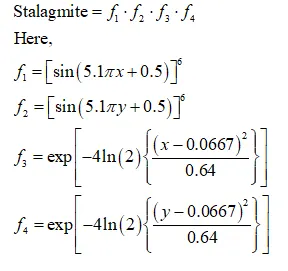
AIM :- Write a code in MATLAB to optimise stalagmite function and find the global maxima of the function
OBJECTIVE:- study about genetic algorithim and syntax also plot the graph
THEORY:- Genetic Algorithm is optimization method based on the mechanics of natural genetics and natural selection. Genetic Algorithm mimics the principle of natural genetics and natural selection to constitute search and optimization procedures.GA is used for scheduling to find the near to optimum solution in short time.
The genetic algorithm works on the evolutionary generational cycle to generate high-quality solutions. These algorithms use different operations that either enhance or replace the population to give an improved fit solution.
It basically involves five phases to solve the complex optimization problems, which are given as below:
- Initialization
- Fitness Assignment
- Selection
- Reproduction
- Termination
1. Initialization
The process of a genetic algorithm starts by generating the set of individuals, which is called population. Here each individual is the solution for the given problem. An individual contains or is characterized by a set of parameters called Genes. Genes are combined into a string and generate chromosomes, which is the solution to the problem. One of the most popular techniques for initialization is the use of random binary strings.
2. Fitness Assignment
Fitness function is used to determine how fit an individual is? It means the ability of an individual to compete with other individuals. In every iteration, individuals are evaluated based on their fitness function. The fitness function provides a fitness score to each individual. This score further determines the probability of being selected for reproduction. The high the fitness score, the more chances of getting selected for reproduction.
3. Selection
The selection phase involves the selection of individuals for the reproduction of offspring. All the selected individuals are then arranged in a pair of two to increase reproduction. Then these individuals transfer their genes to the next generation.
There are three types of Selection methods available, which are:
- Roulette wheel selection
- Tournament selection
- Rank-based selection
4. Reproduction
After the selection process, the creation of a child occurs in the reproduction step. In this step, the genetic algorithm uses two variation operators that are applied to the parent population. The two operators involved in the reproduction phase are given below:
- Crossover: The crossover plays a most significant role in the reproduction phase of the genetic algorithm. In this process, a crossover point is selected at random within the genes. Then the crossover operator swaps genetic information of two parents from the current generation to produce a new individual representing the offspring.
The genes of parents are exchanged among themselves until the crossover point is met. These newly generated offspring are added to the population. This process is also called or crossover. Types of crossover styles available:- One point crossover
- Two-point crossover
- Livery crossover
- Inheritable Algorithms crossover
- Mutation
The mutation operator inserts random genes in the offspring (new child) to maintain the diversity in the population. It can be done by flipping some bits in the chromosomes.
Mutation helps in solving the issue of premature convergence and enhances diversification. The below image shows the mutation process:
Types of mutation styles available,- Flip bit mutation
- Gaussian mutation
- Exchange/Swap mutation
5. Termination
After the reproduction phase, a stopping criterion is applied as a base for termination. The algorithm terminates after the threshold fitness solution is reached. It will identify the final solution as the best solution in the population.
GENETIC ALGORITHM SYNTAX
x = ga(fun,nvars,A,b,Aeq,beq,lb,ub,nonlcon,intcon,options)
fun= objective function
nvars= number of variables
A,b = linear inequality constraints
Aeq,beq= linear equality constraints
Lb,ub= lower bounds, upper bounds
nonlcon= non linear constraints
intcon = vector of positive integers that contains the x components
options= optimization options
General Workflow of a Simple Genetic Algorithm
STALAGMITE FUNCTION SCRIPT
MATLAB CODE
STALAGMITE FUNCTION
function [f] = stalagmite(input_vector)
 x = input_vector(1);
 y = input_vector(2);
 f1=(sin(5.1*pi*x + 0.5)).^6;
 f2=(sin(5.1*pi*y + 0.5)).^6;
 f3= exp((-4*log(2)*(x-0.0667).^2)/(0.64));
 f4= exp((-4*log(2)*(y-0.0667).^2)/(0.64));
 f = -(f1*f2*f3*f4);
MAIN PROGRAM
clear all
close all
clc
x = linspace(0,0.6,150);
y = linspace(0,0.6,150);
[xx,yy] = meshgrid(x,y);
% Evaluating the stalagmite function
for i = 1:length(xx)
    for j = 1:length(yy)
        input_vector(1)=xx(i,j);
        input_vector(2)=yy(i,j);
        f(i,j) = stalagmite(input_vector);
    end
end
surfc(xx,yy,-f)
shading interp

% study 1 : unbounded behaviour
num_cases=50;
tic
for i = 1:num_cases
[inputs, fopt(i)] = ga(@stalagmite,2);
xopt(i) = inputs(1);
yopt(i) = inputs(2);
end
study1_time = toc

figure(1)
subplot(2,1,1)
hold on
surfc(xx, yy, -f)
shading interp
plot3(xopt,yopt,fopt,'marker','o','markersize',5,'markerfacecolor','r')
title('Unbounded inputs')
xlabel('X values')
ylabel('Y values')
subplot(2,1,2)
plot(-fopt)
xlabel('Iterations')
ylabel('Function Maximum')

% study_2 upper and lower bounds
tic
for i= 1:num_cases
    [inputs,fopt(i)] = ga(@stalagmite,2,[],[],[],[],[0;0],[1;1]);
    xopt(i)= inputs(1);
    yopt(i)= inputs(2);
end
study2_time= toc
figure(2)
subplot(2,1,1)
hold on
surfc(xx, yy, -f)
shading interp
plot3(xopt,yopt,-fopt,'marker','o','markersize',5,'markerfacecolor','r')
title('bounded inputs')
xlabel('X values')
ylabel('Y values')
subplot(2,1,2)
plot(-fopt)
xlabel('Iterations')
ylabel('Function Maximum')

% study_3 by increasing the population size
 options= optimoptions('ga')
 options= optimoptions(options,'PopulationSize',500)
tic
for i= 1:num_cases
    [inputs,fopt(i)] = ga(@stalagmite,2,[],[],[],[],[0;0],[1;1],[],[],options);
    xopt(i)= inputs(1);
    yopt(i)= inputs(2);
end
study3_time= toc
figure(3)
subplot(2,1,1)
hold on
surfc(xx, yy, -f)
shading interp
plot3(xopt,yopt,-fopt,'marker','o','markersize',5,'markerfacecolor','r')
title('increasing the population sze')
xlabel('X values')
ylabel('Y values')
subplot(2,1,2)
plot(-fopt)
xlabel('Iterations')
ylabel('Function Maximum')
CODE EXPLANATION
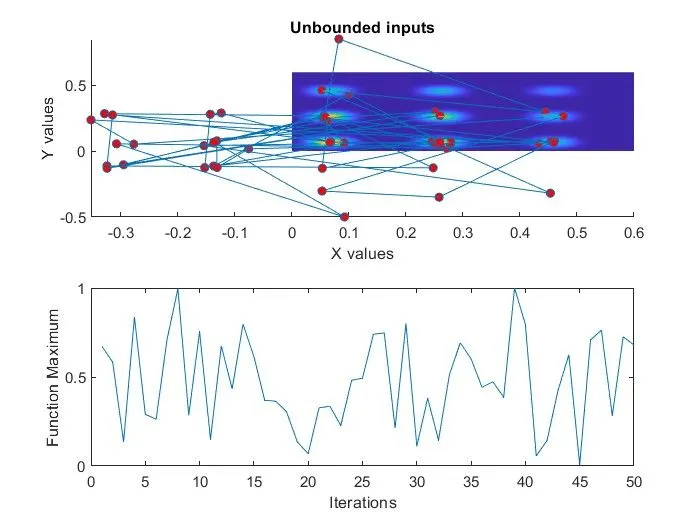
1. in first step we use x and y one diamension array there values are in between 0 to 0.6 equally spacing 100 values by using linspace command then we convert it into two diamesonal array of x and y values using meshgrid command
2. then we run this 2d array in for loop, we run stalagmite function by which we get function maxima, but in this step every time we run the code we get different values of stalagmite function, so theis problem is solved by running stalagmite function into ga(genetic algorithim ) three different studies are used to calculate the global maxima
3. in the study_1 we difine the seach space for ga,say the loop runs 50 times it says that ga runs 50 times and it calculates the value the out put of x and y values stored in xopt(i) and yopt(i), subplot command is used to plot mulitple graps and 3d plots in same figure window. we use saperat plot commond for function output plot(fopt) to undastand the deviation of function
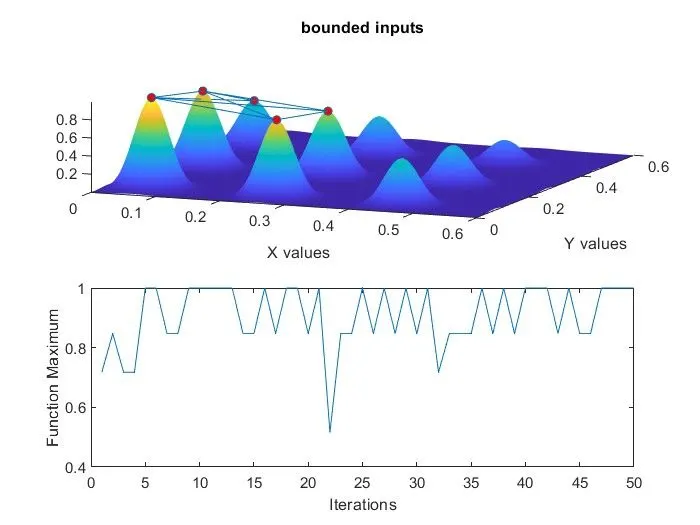
4. in study_2 the problem we face that the search space of ga is not within the limit of our search space so we set the upper and lower limit for the ga function so that it shows the search space what we have set it before, the the ga performs within the limits after that we plot the graph same as in study_1 using sublpot command
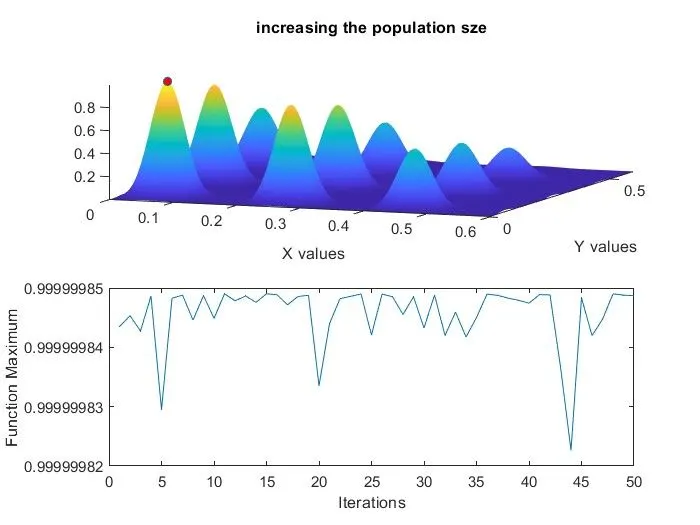
5. study_3 shows that we increase the population size upto 500, this population will perfom within our boundery limits more the population more will be iteration and more the options we get to optimise the solution
we use tic and toc commomd to show how much time is requared to prefrom the oprations in every study
OUTPUT
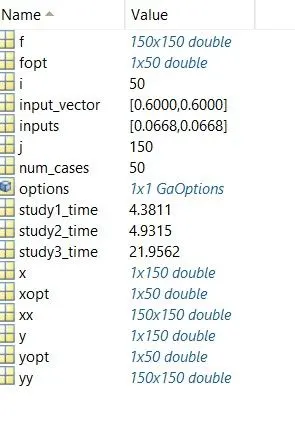
CONCLUSION
in this project we undastand how ga function works and by implimanting different studies we improve the optimization process
ERROR OCCURED

in slagmite function there in need to add multiplication sign(*) after exp by removing (*) sign after exp the above error get solved
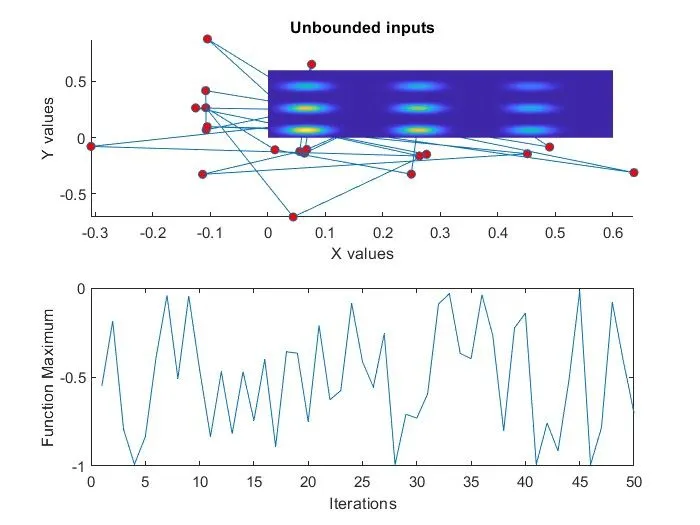
in matlab genetic algorithm calculates global minima , so we add(-) sign in function for calculating global maxima, in the process of ploting the graph indicates the value of f and fopt in the range of -0.5 to 0.5 and -1 to 0 respectivly which showes the graph negative value which is incorrect
STEPS TO OVERCOME THE ERROR
the stalagmite function runs under the command of surfc, by adding (-) sign in surfc command

to overcome this error negative sign is added in front of f so it shows the range output in positive diraction of y axis
REFERENCES