Week 5 Challenge
Challenge - 5 Heat Exchanger Process Design
1. Determine the cooling water required to completely condense 1500kg/hr of vapor at 3barg pressure and saturated condition with the following composition. Cooling water inlet temperature shall be considered as 35°C and can be allowed to heat upto 45°C
a. Propane – 0.2 mol %
b. N-butane – 0.4 mol%
c. N-pentane – 0.4 mol %
2. Determine the saturated steam pressure required to vaporize the saturated liquid stream with following composition and operating pressure of 4 barg
a. N-butane – 0.5 mol %
b. N-pentane – 0.5 mol%
3. Determine the steam flow rate (saturated steam @ 4barg pressure) required to completely vaporize the stream with following conditions
a. Composition
i. Propane – 0.3 mass %
ii. N-butane – 0.4 mass %
iii. N-pentane – 0.3 mass %
b. Operating pressure – 3 barg
c. Operating temperature – 90°F
1. Determine the cooling water required to completely condense 1500kg/hr of vapor at 3barg pressure and saturated condition with the following composition. Cooling water inlet temperature shall be considered as 35°C and can be allowed to heat upto 45°C
a. Propane – 0.2 mol %
b. N-butane – 0.4 mol%
c. N-pentane – 0.4 mol %
Solution
Given specific conditions are noted in the below table including assumptions. A heat exchanger with Cold water utility in the tube side is used to cool down shell side process vapor stream completly into liquid and an assumption of differential pressure is taken as 10 kPa.
| Process Vapor streams | Cooling Water Utility |
|
|
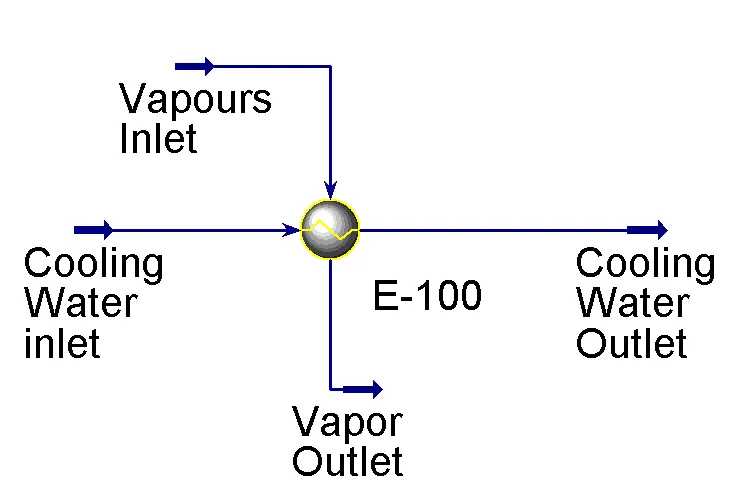
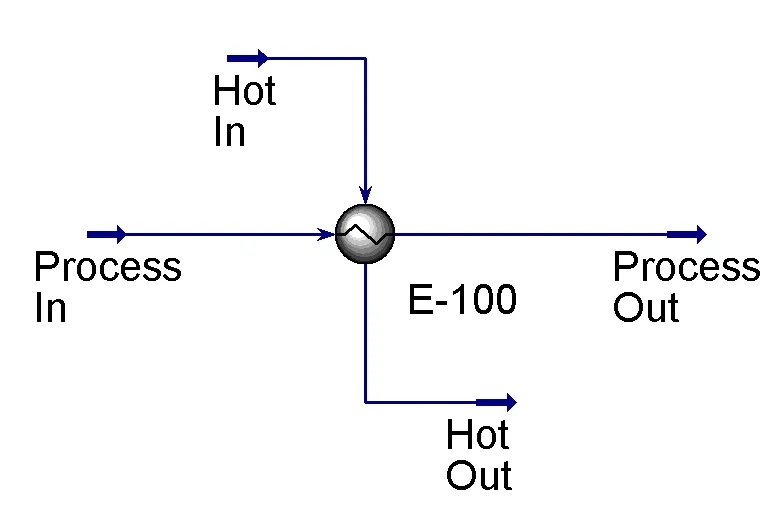
Below image represents the simulation connections with the design of above specificed heat exchanger and its streams.
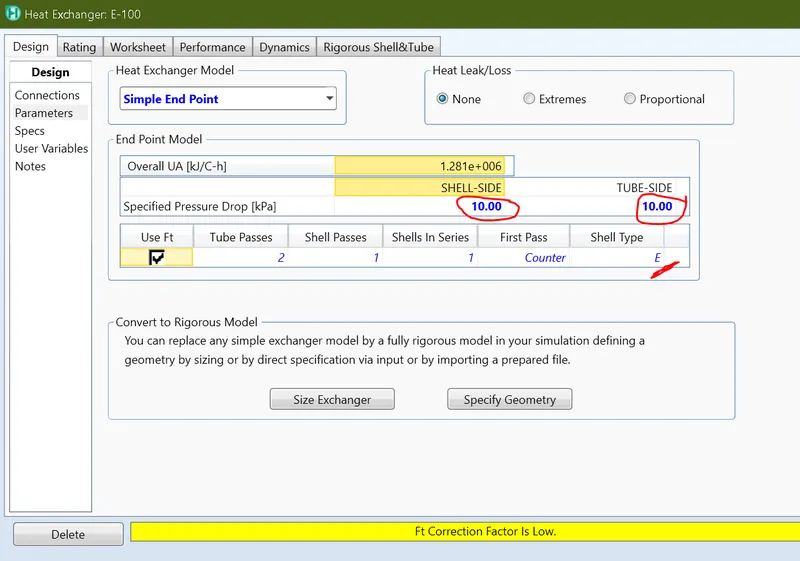
Once the connections are made, the worksheet Below is the worksheet with assumed pressure drop.
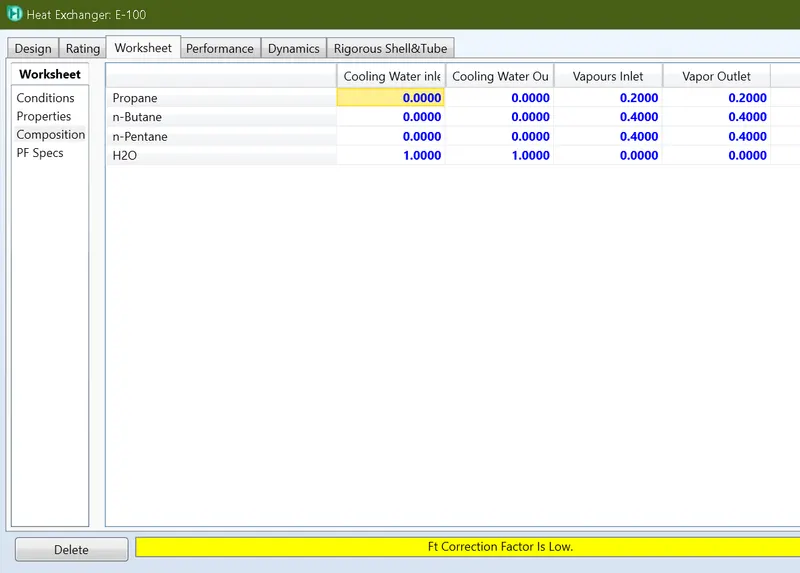
Below Image is the given composition of the streams
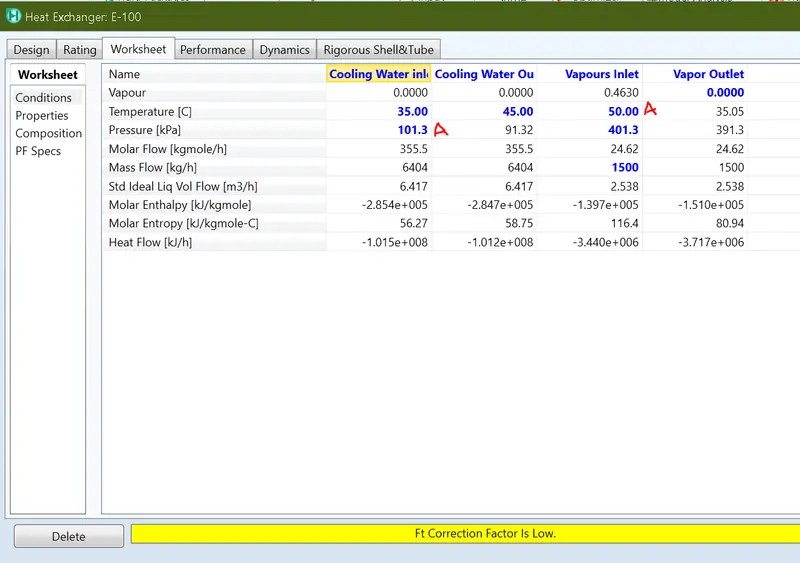
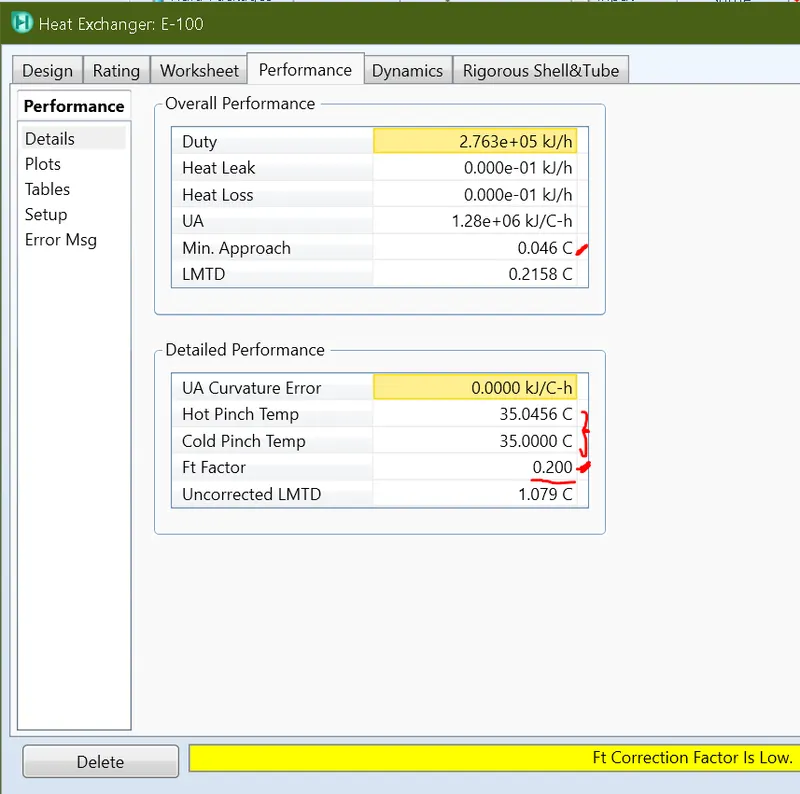
After entering all the input and after converging, the heat exchanger shows that the Ft correction factor is low which means that the temperatures profiles of shell side (Vap Out Temperature = 35.1°C) and tube side (Cold In Temperature = 35°C) also known as terminal temperatures are in the close range and Ft correction factor also depends on the number of shells in the heat exchanger. A heat exchanger designed to be feasible only if the Ft correction factor is greater than 0.75 and for the given conditions, the Ft factor is 0.2 as shown in the above image.
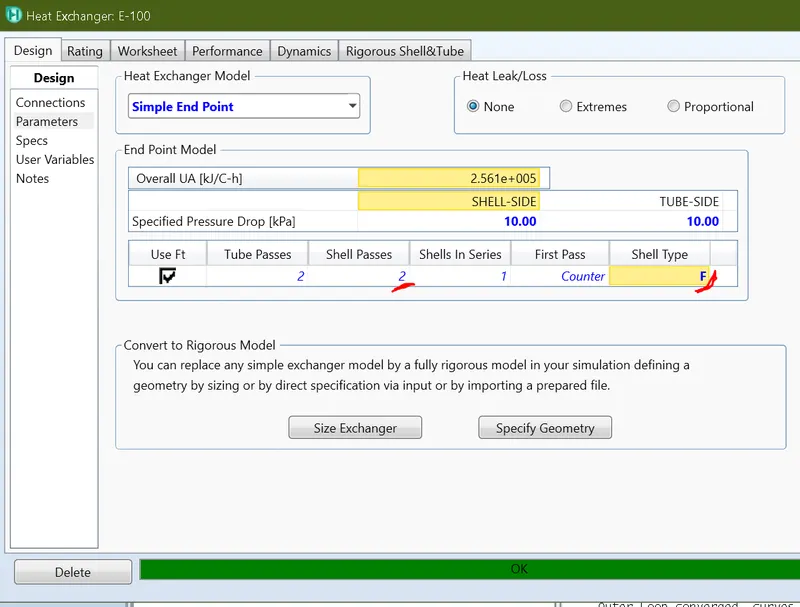
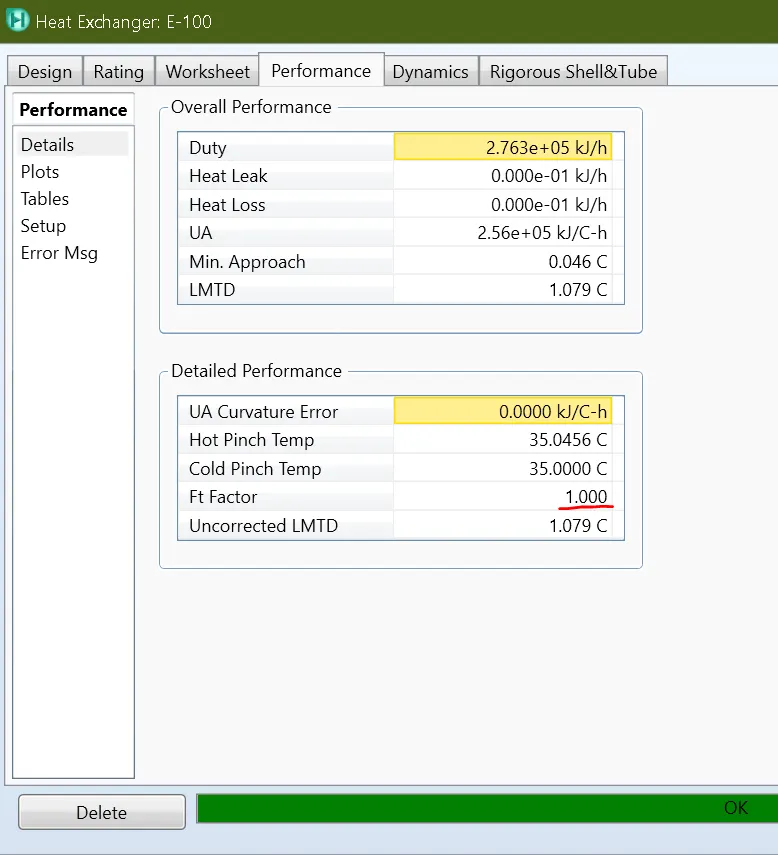
One of solutions to avoid this warning is changing shell type from E to F configuration which means that the number of shell passes increases from 1 to 2. This is because the F-type shell has partition in the centre which creates two passes of the shell side fluid and hence increases the Ft factor from 0.2 to 1, therefore, the heat exchanger converges to provide the cold water flowrate requirement without any process design warnings.
| Process Vapor streams | Cooling Water Utility |
|
|
The cold water flowrate required is calculated, which is 6404 Kg/h to condense down the process vapors completely into liquid state.
Question 2. Determine the saturated steam pressure required to vaporize the saturated liquid stream with following composition and operating pressure of 4 barg
a. N-butane – 0.5 mol %
b. N-pentane – 0.5 mol%
Solution
Given specific conditions are noted in the below table including assumptions. A heat exchanger with saturated steam hot utility in the shell side is used to vaporise tube side process stream completly into vapor with an assumption of differential pressure is taken as 10 kPa and also the flowrate is taken as 1500 Kg/h.
The assumption for hot utility in the shell side is that the saturated steam is in vapor at inlet condition with temperature of 85°C and using this vapor latent heat which becomes saturated liquid at outlet condition with calculated temperature of 80.25 °C to vapourise the process stream in the tube side.
|
Saturated Liquid/Process Stream |
Saturated Steam/Hot Utility |
|
|
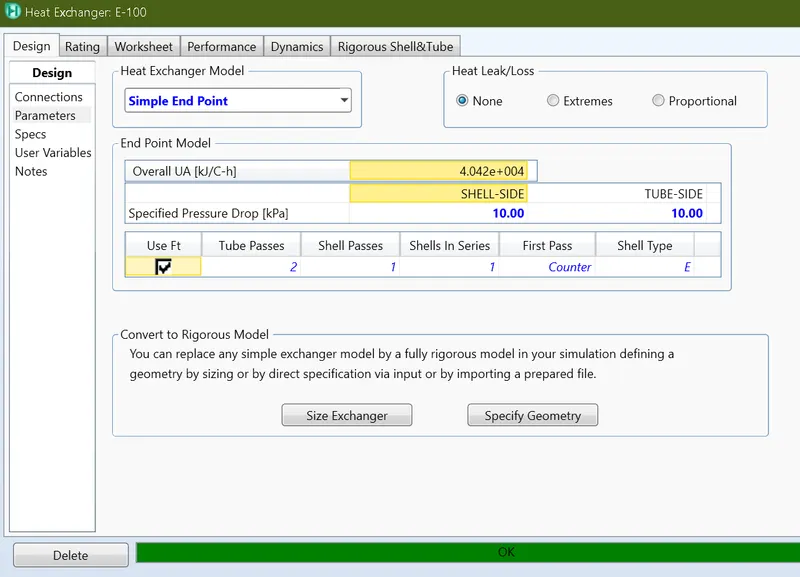
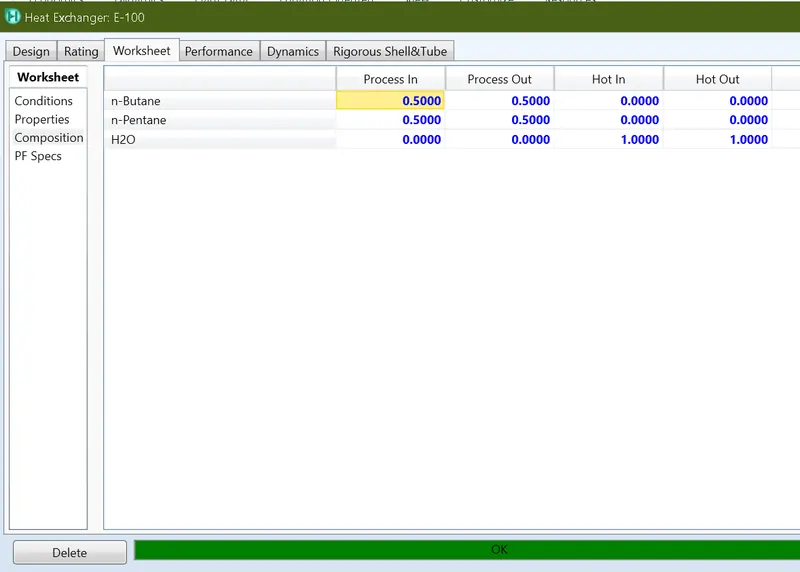
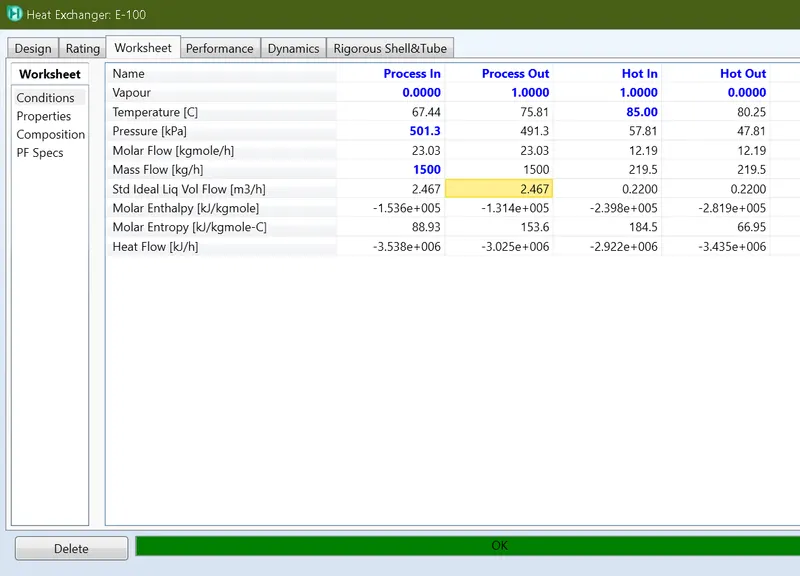
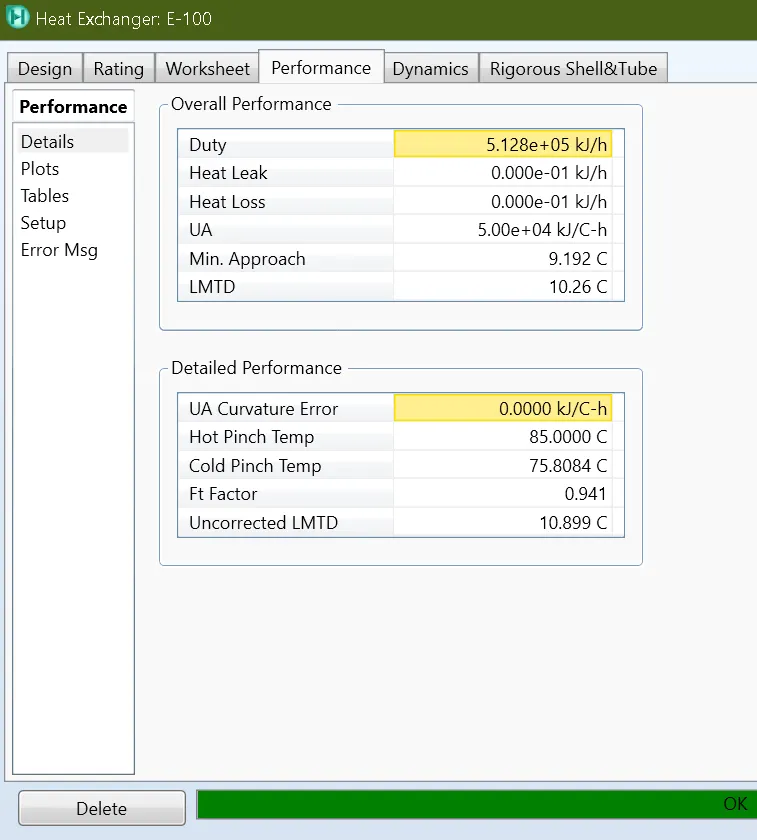
|
Saturated Liquid/Process Stream |
Saturated Steam/Hot Utility |
|
|
After inputting the given specification with the above-mentioned assuptions, the heat exchanger converges and provided the solution. The saturated steam pressure of hot utility at inlet = 270 KPa and at outlet = 47.33 KPa.
3. Determine the steam flow rate (saturated steam @ 4barg pressure) required to completely vaporize the stream with following conditions
a. Composition
i. Propane – 0.3 mass %
ii. N-butane – 0.4 mass %
iii. N-pentane – 0.3 mass %
b. Operating pressure – 3 barg
c. Operating temperature – 90°F
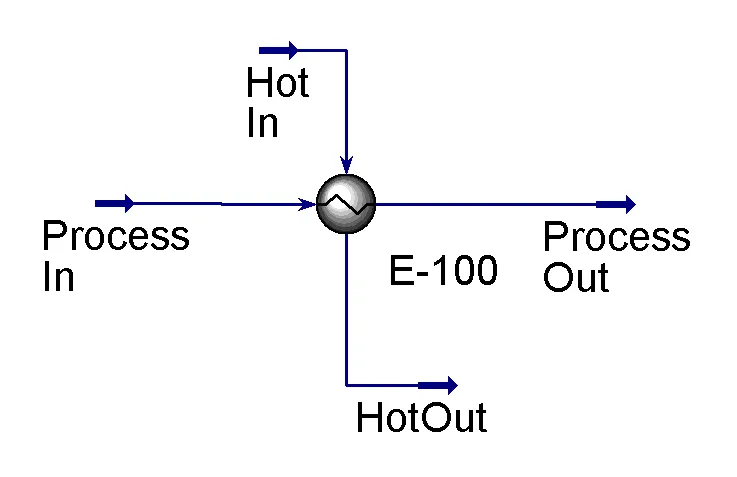
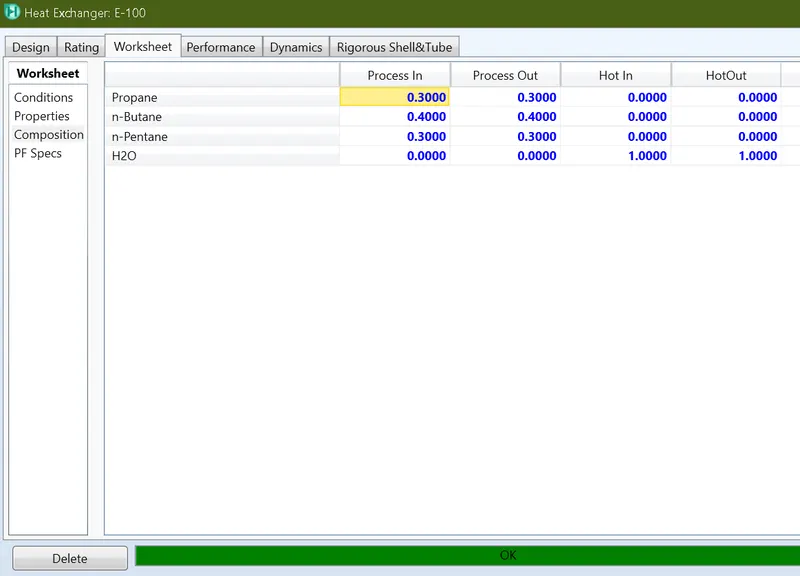
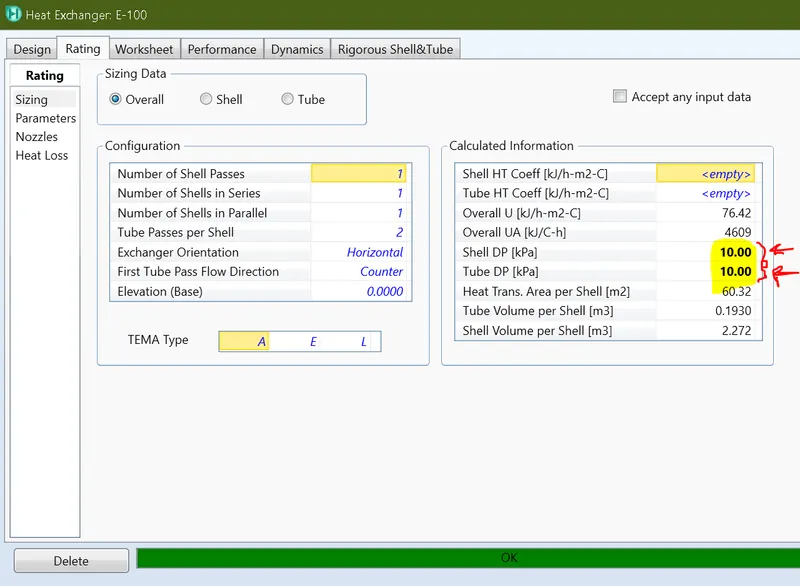
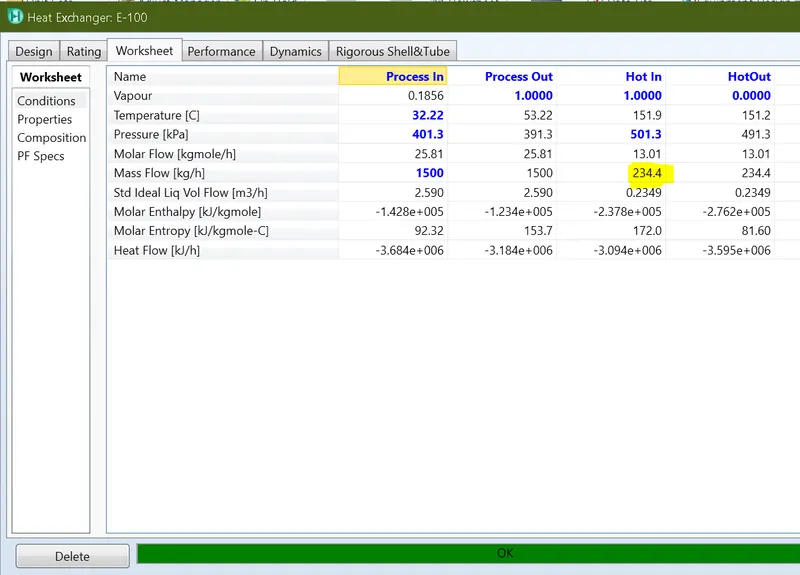
Saturated steam is a steam that consists of pure steam (dry) in a saturated state therefore the vapor fraction is taken as 1 at the inlet and assuming that the outlet comes as a liquid after utilising all the latent heat in the steam. The shell and tube heat exchanger differential pressure is assumed as 10 kPa and the process stream flowrate is assumed 1500 kg/h.
|
Process Stream |
Saturated Steam/Hot Utility |
|
|
|
Process Stream |
Saturated Steam/Hot Utility |
|
|
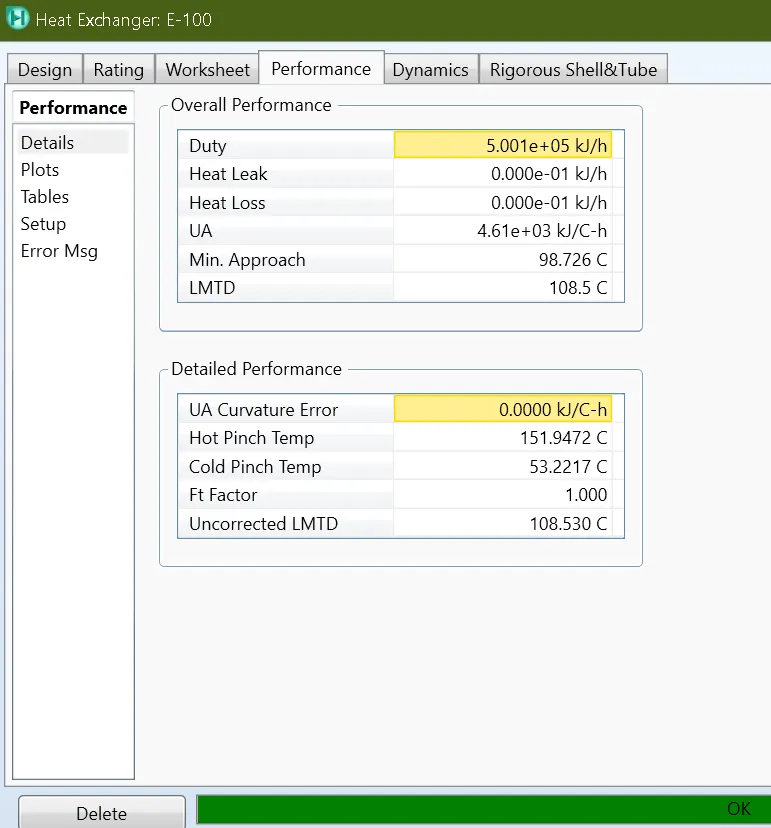
Therefore, the required saturated steam flowrate to completely vapourise the process stream at given conditions is 234.4 kg/h.