Week 5 Challenge
Aim :
- To calculate loads manually acting on pier foundation and design as per IRC 6,78 and 112.
- To explain difference between free and fix pier and how it impacts the foundation size to add the calculation of loading in both the cases.
- To show detaling of the foundation reinforcement.
- To list all RCC design checks to be done in the ultimate state and serviceability state for a cracked section as per IRC codes and mention clauses.
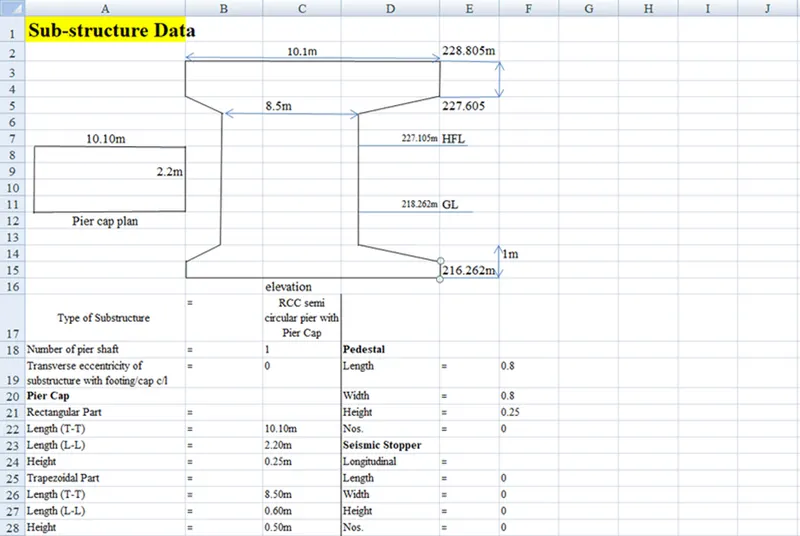
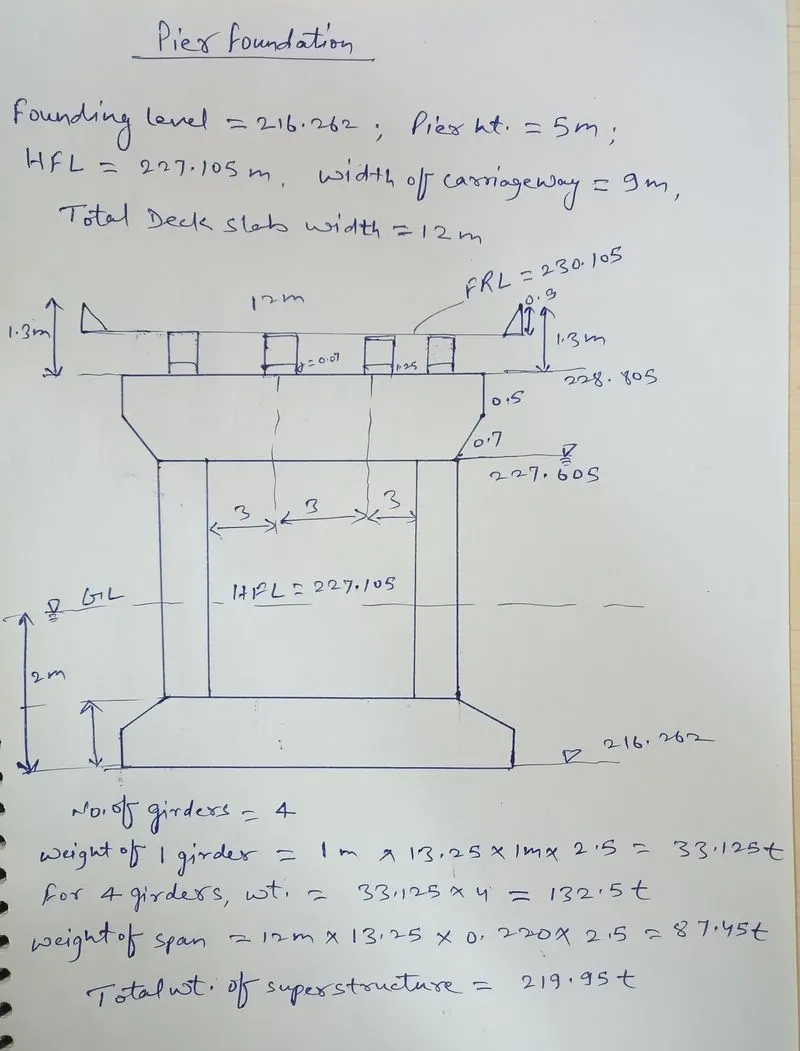
Introduction : For the given RCC girder deck slab bridge with semicircular end piers, height of pier is assumed as 5m as given above and dia of semicircular end is 0.35m. Trapezoidal shallow foundation is designed with height of rectangular portion 0.3m and trapezoidal portion 0.7m. Length and width of footing are 9.4m & 6.5m respectively. Superstructure length is of 13.3 c/c expansion joint and 12.3 c/c bearing joint, deck width is of 12m and carriage way width is 9m having footpath 1.5m. Live load is considered on the bridge for full proposed width of 12m considering future expansion. Rest all data are assumed shown in the calculations below.
Procedure :
Load calculation and design with detailing of foundation reinforcement is as follows:
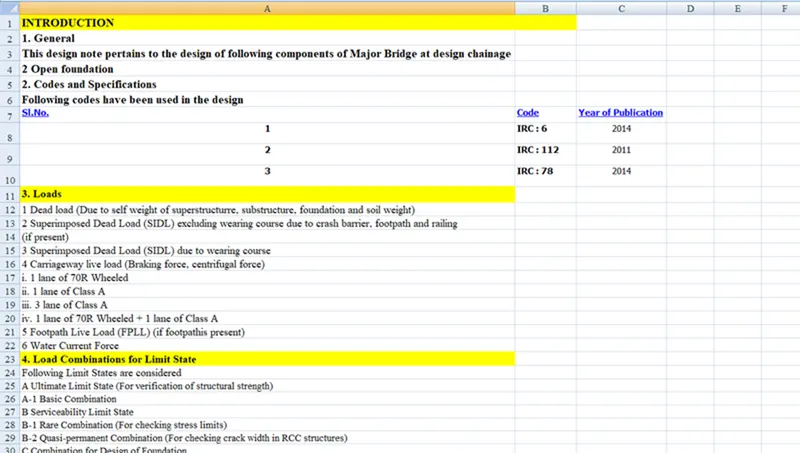
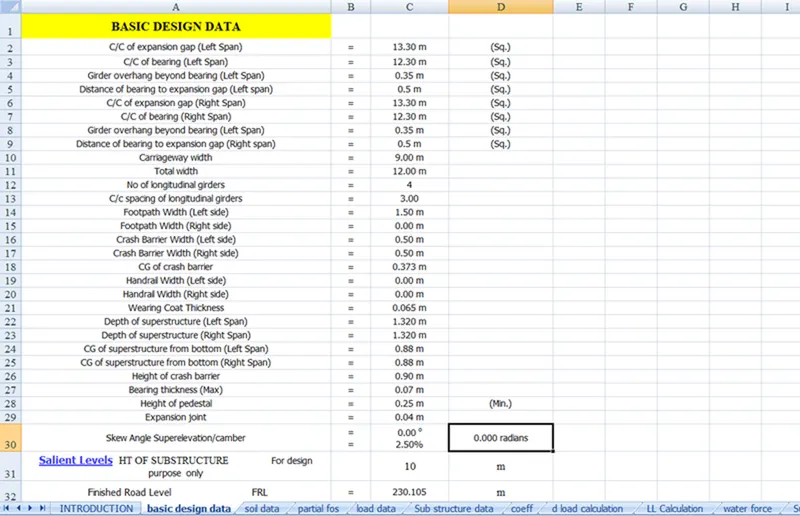
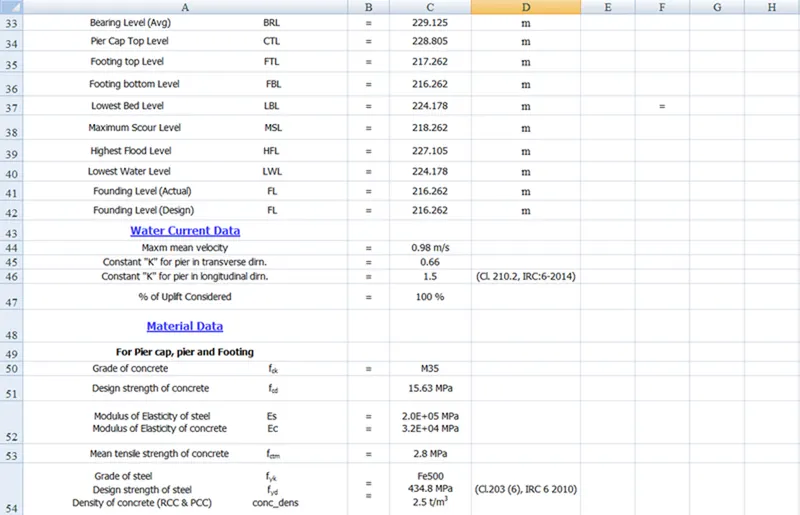

SOIL DATA
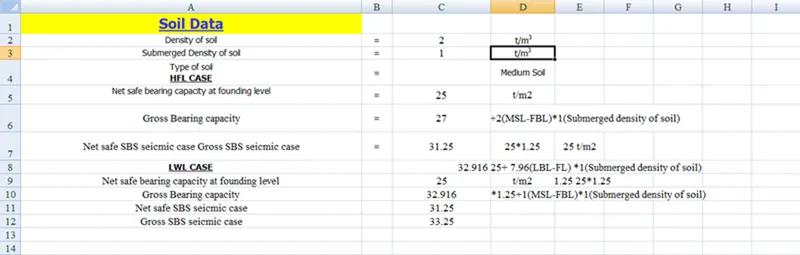
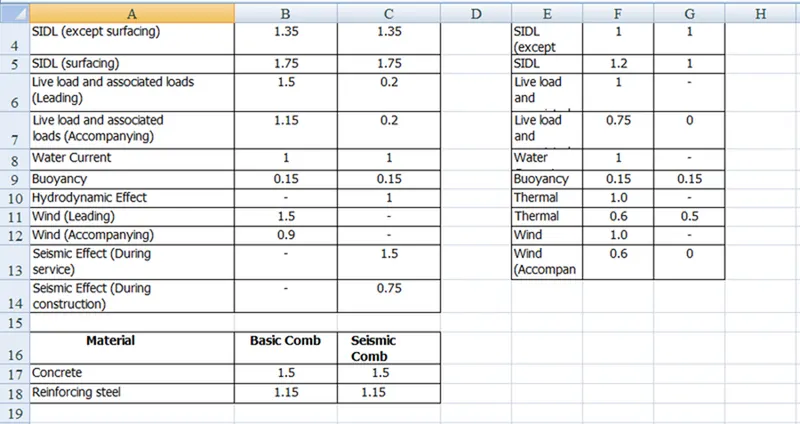
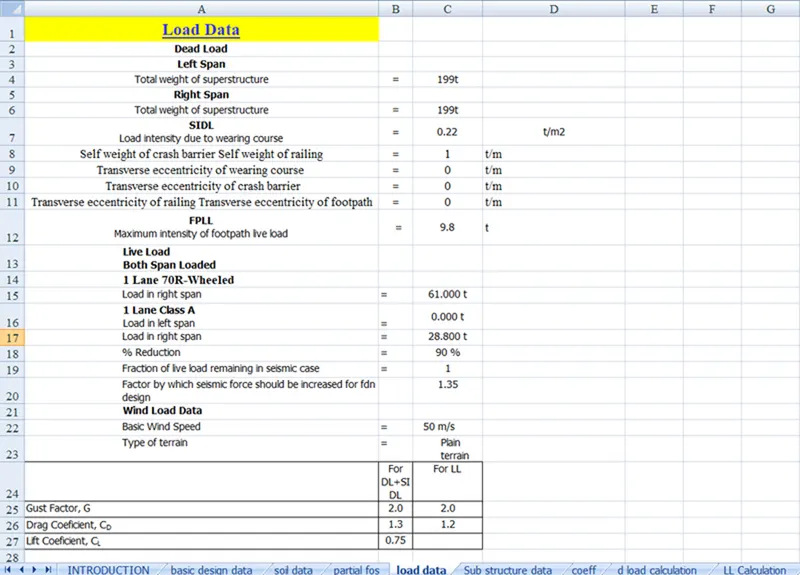
LOAD DATA
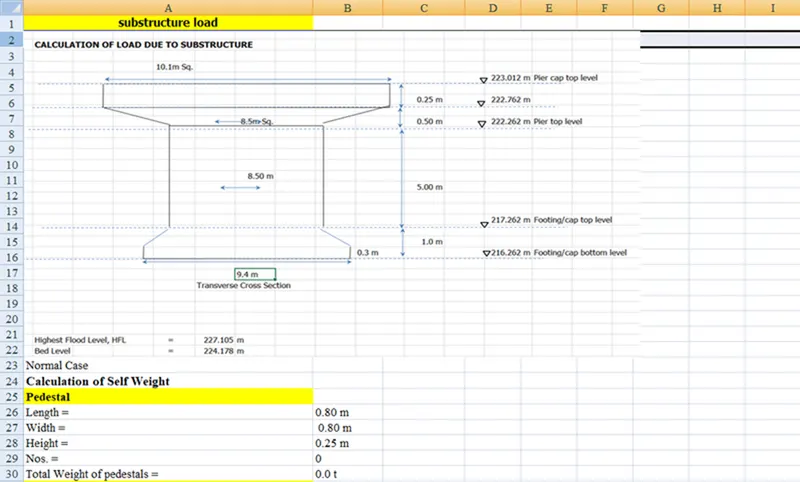
SUB-STRUCTURE
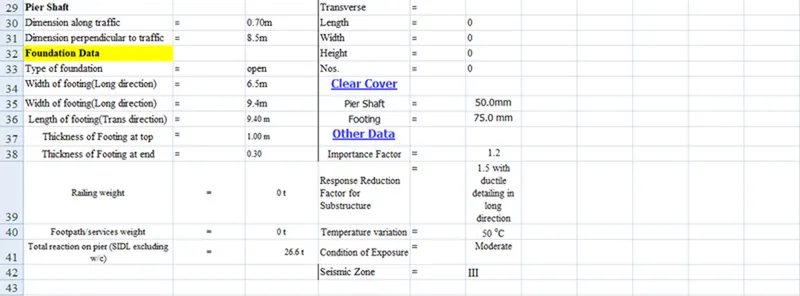
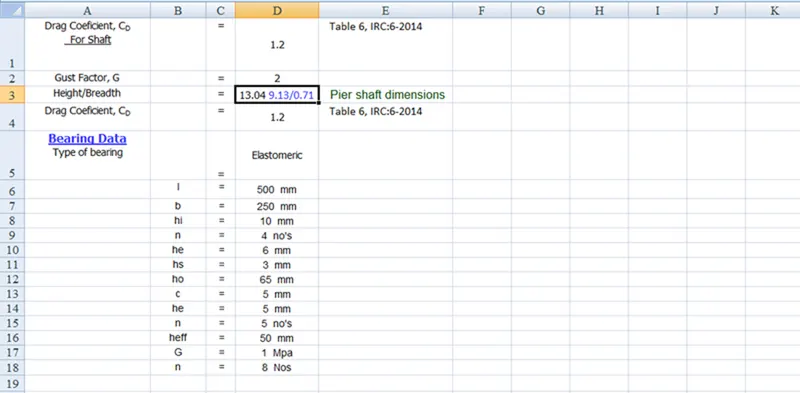
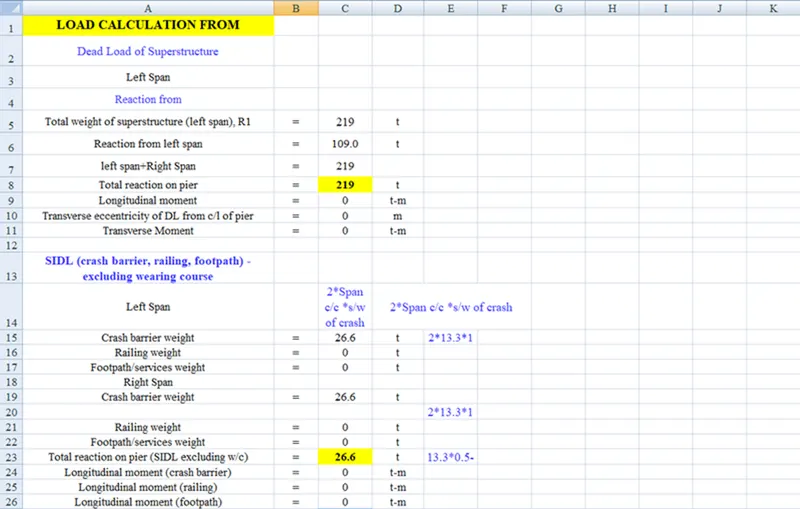
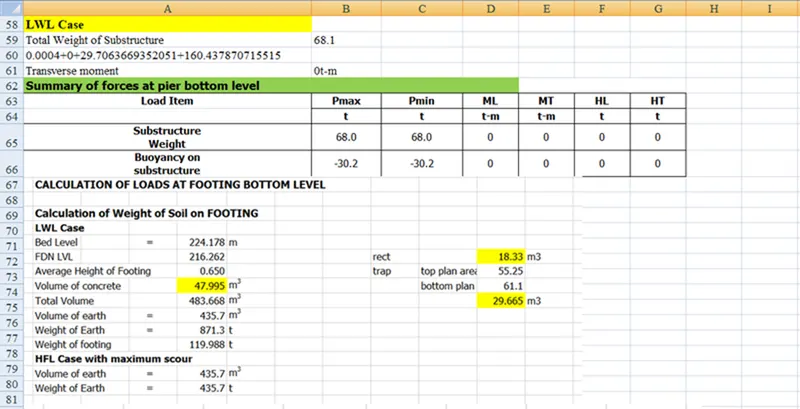
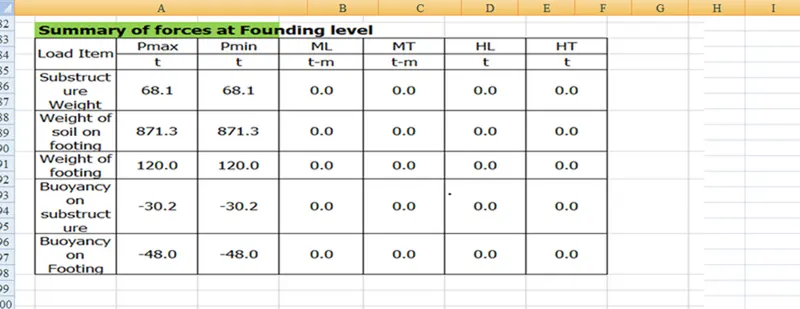
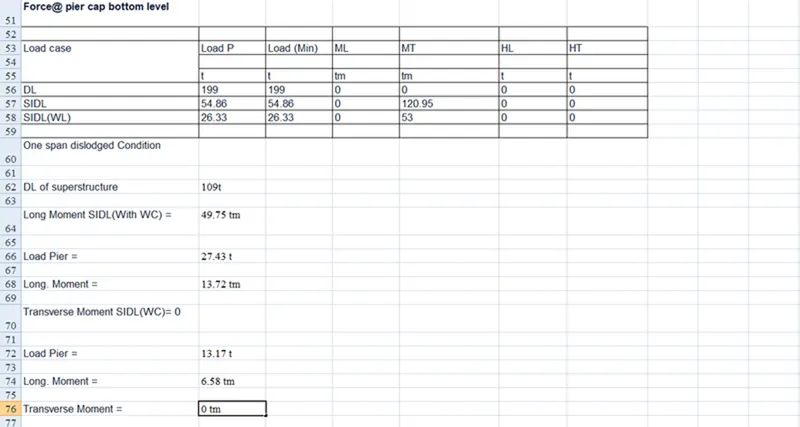
LOAD CALCULATION
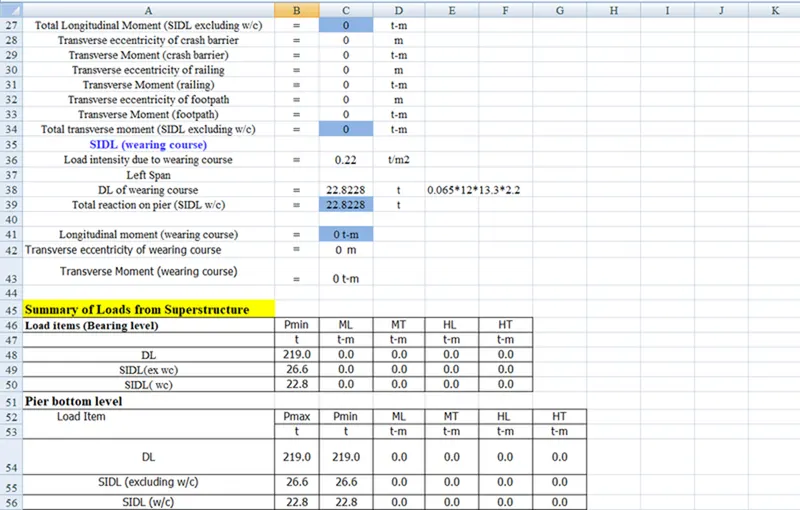
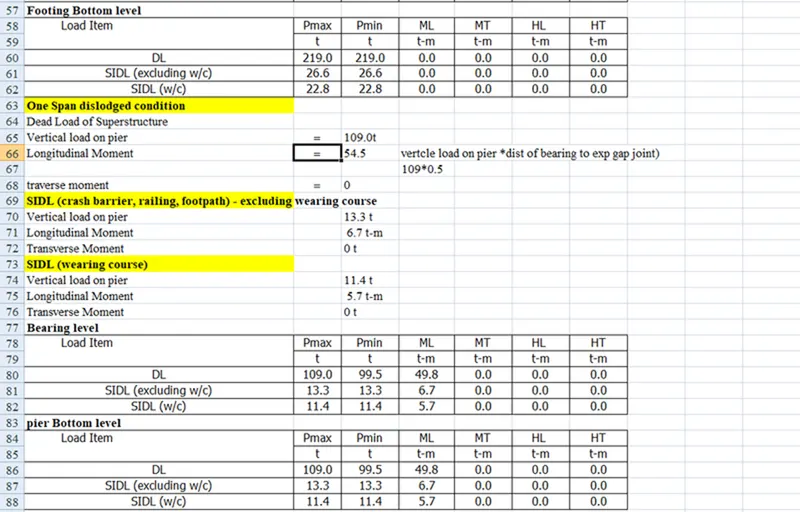
LIVE LOAD CALCULATION
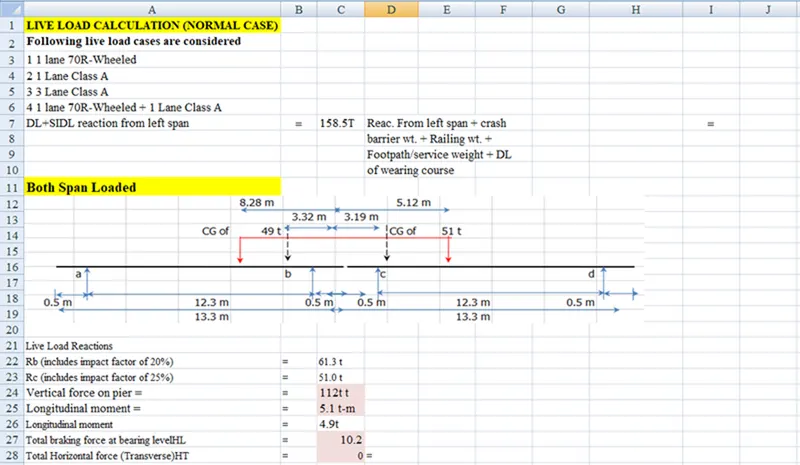
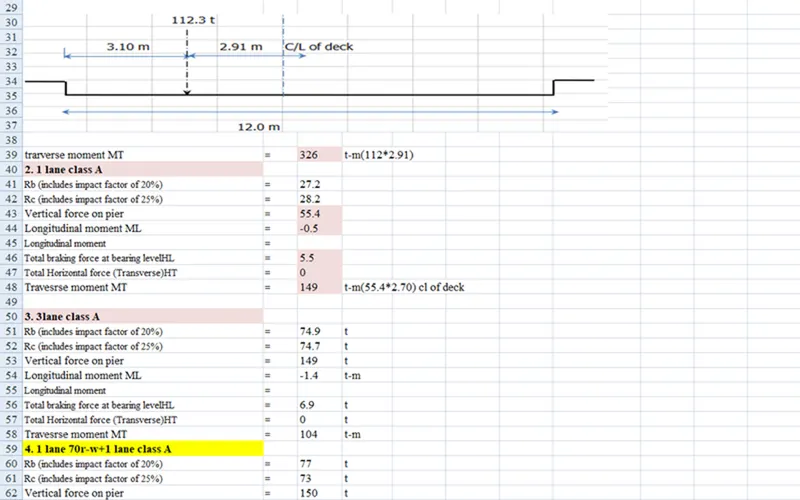
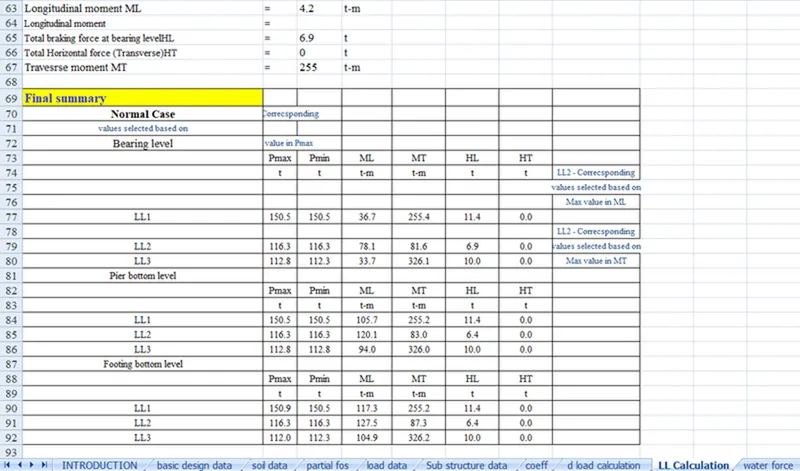
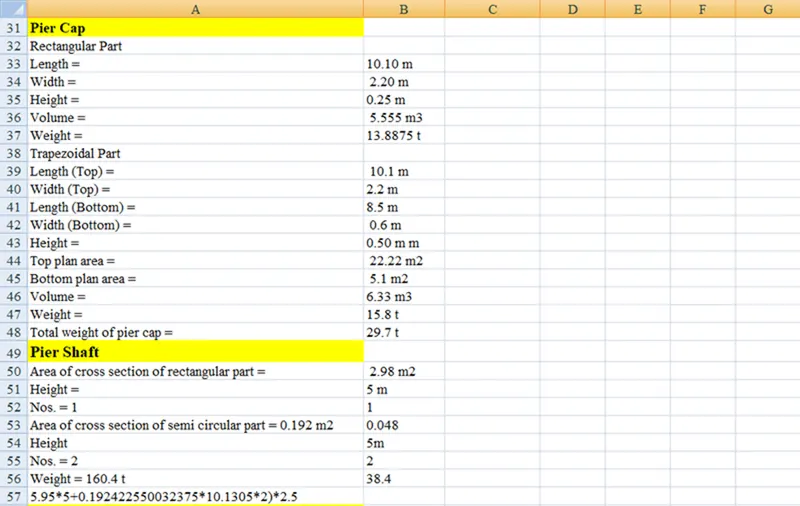
SUBSTRUCTURE WEIGHT
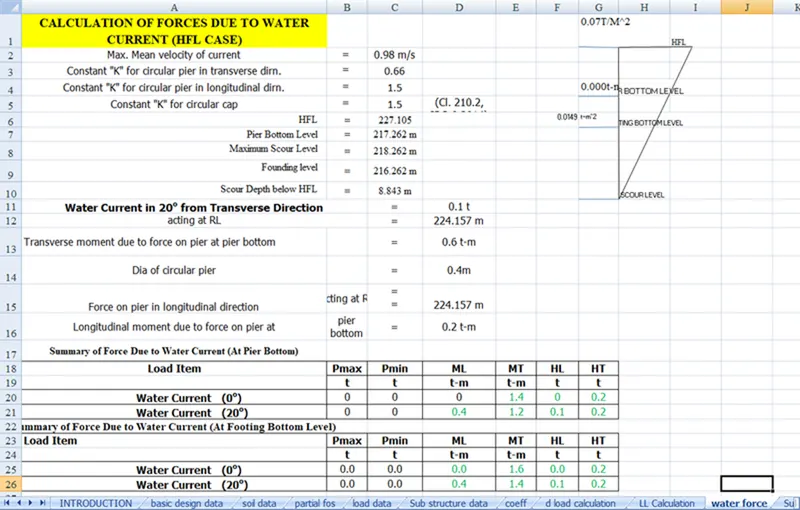
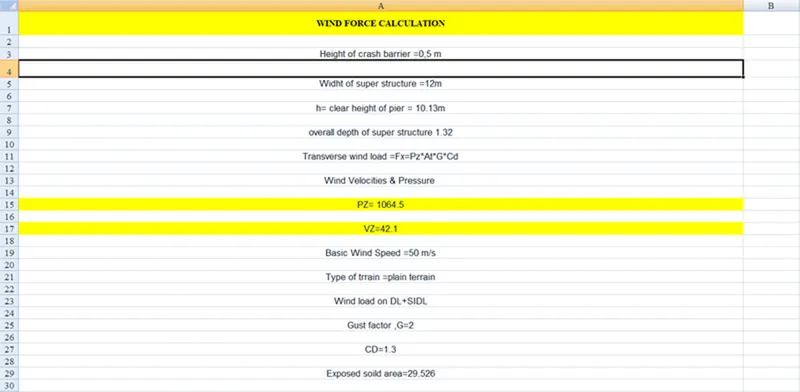
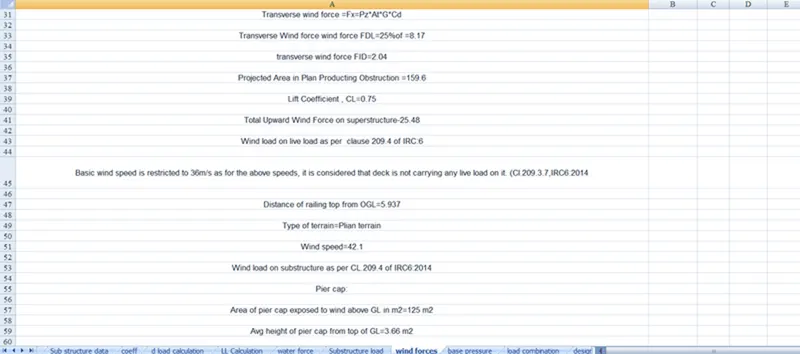
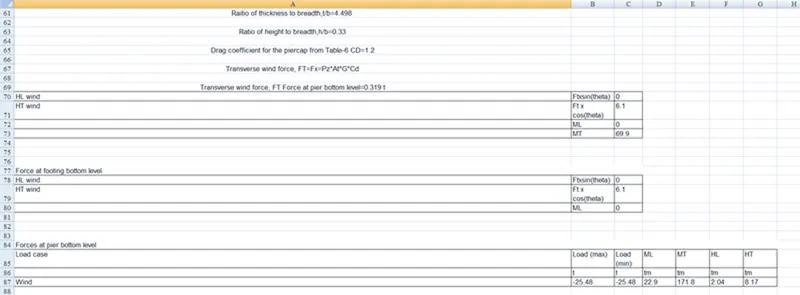
WIND FORCE CALCULATION
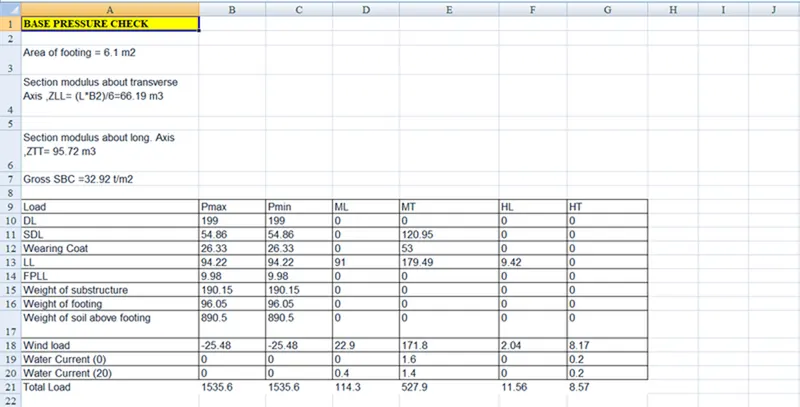
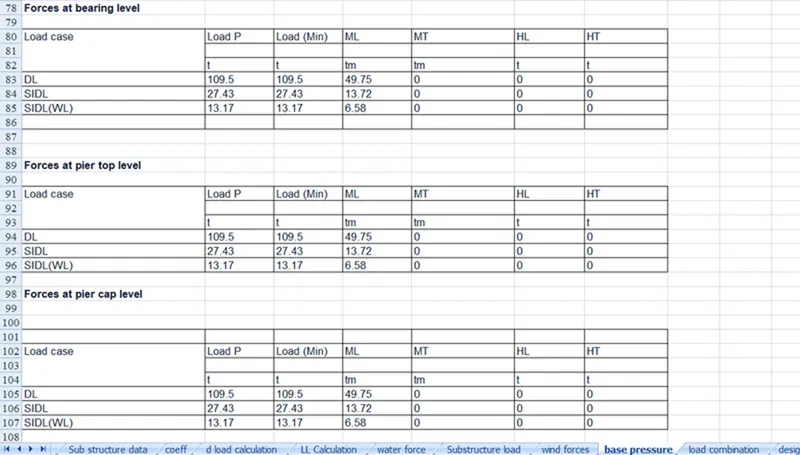
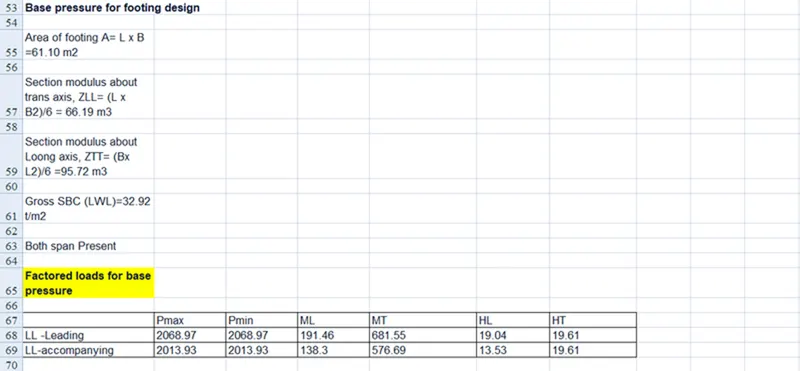
BASE PRESSURE CHECK
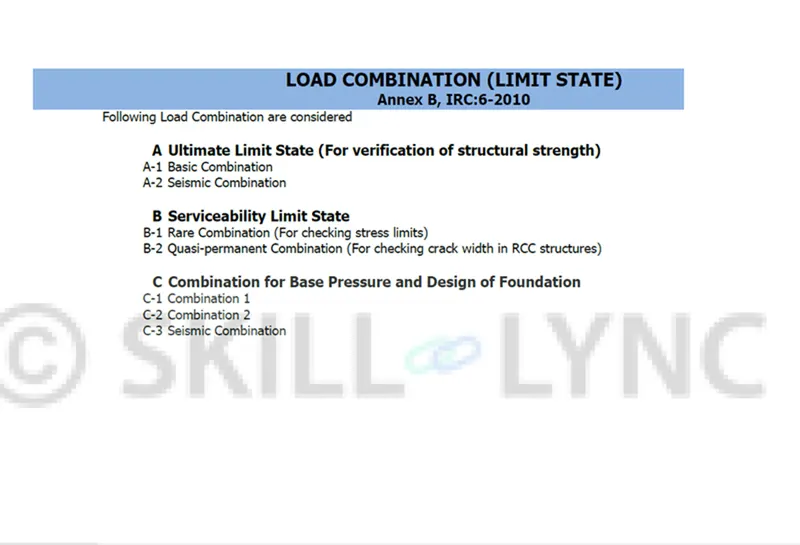
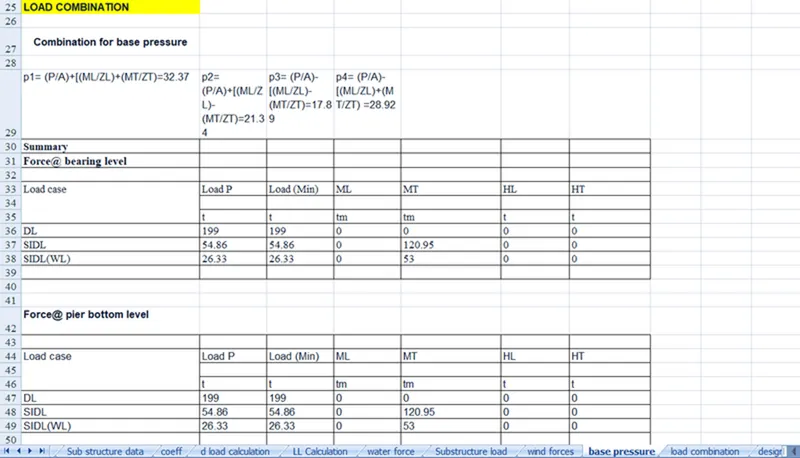
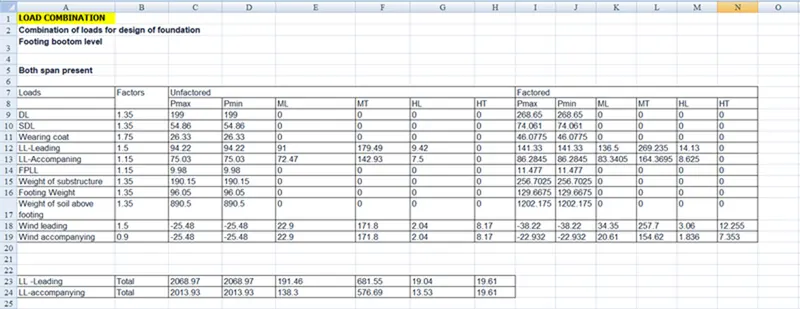
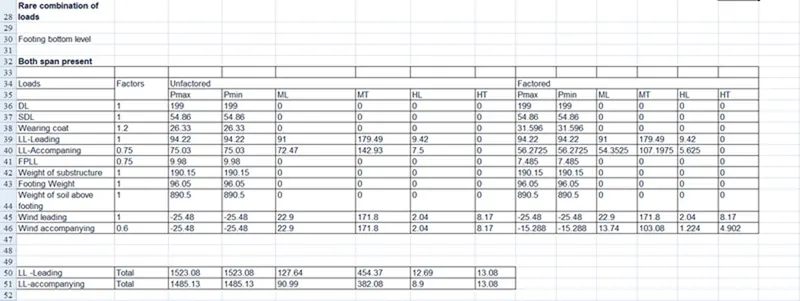
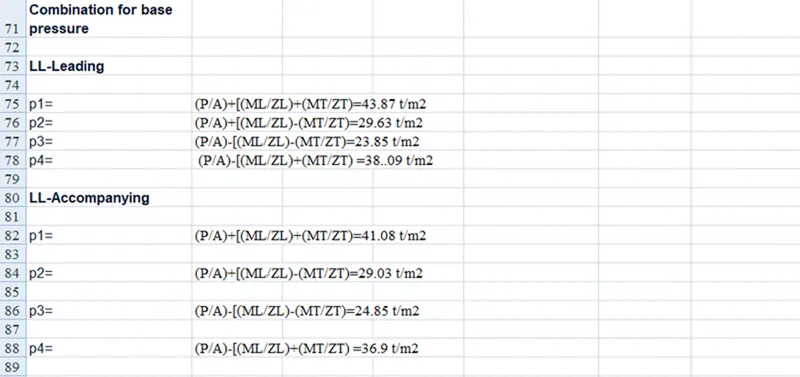
LOAD COMBINATION
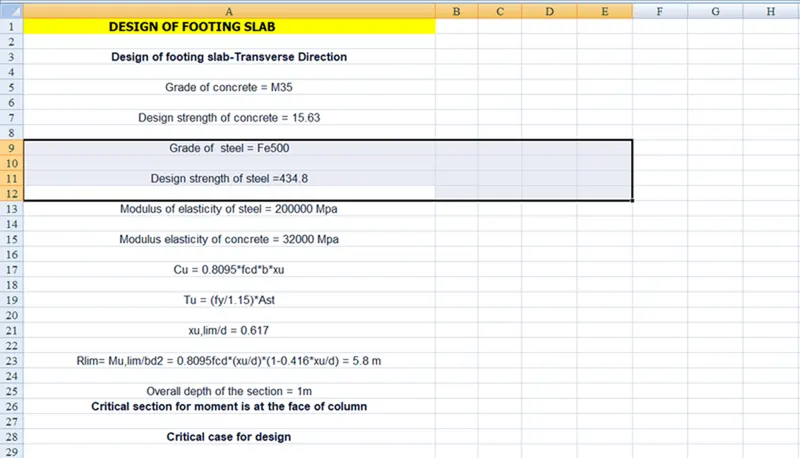
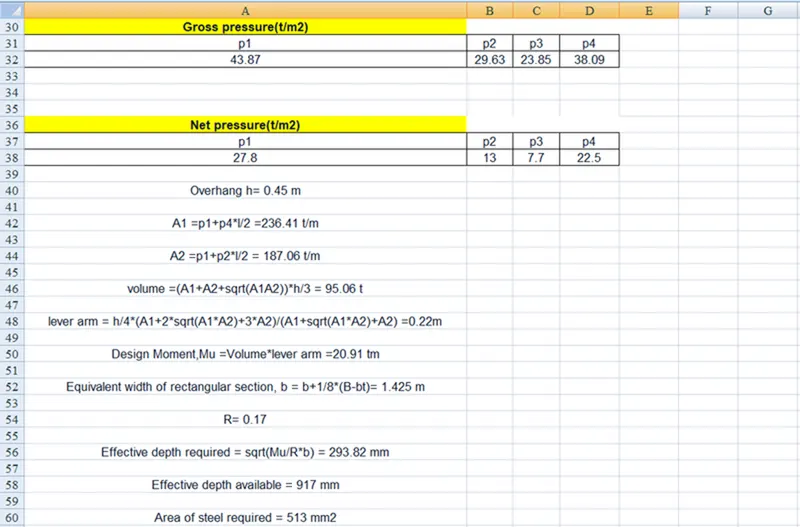
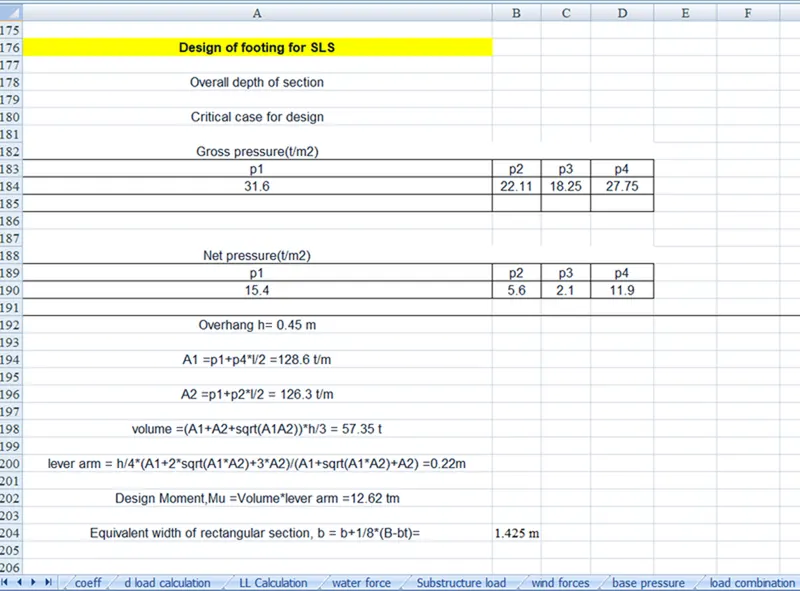
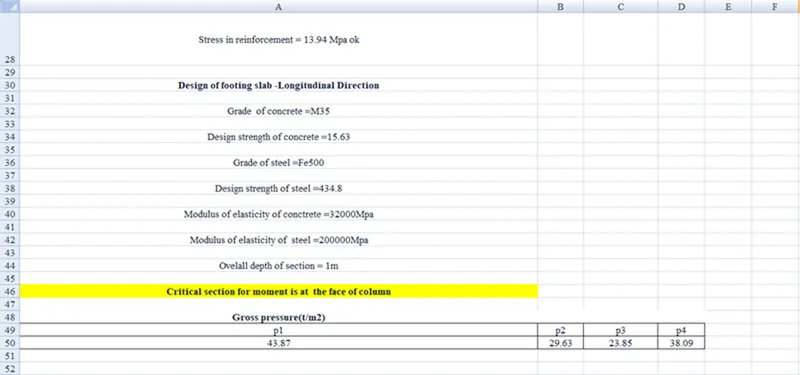
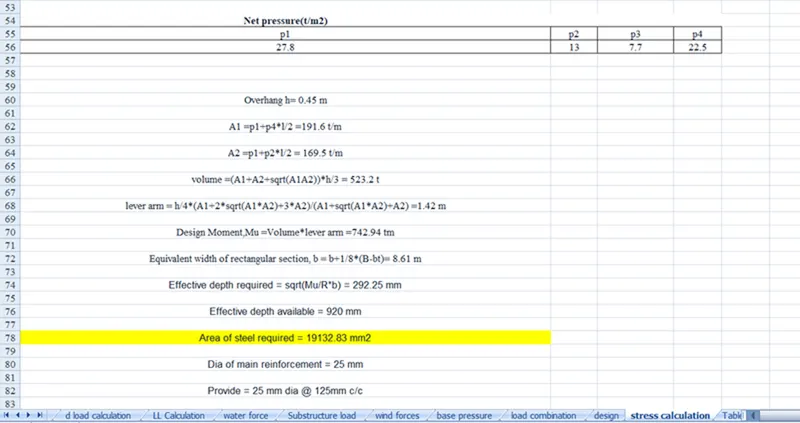
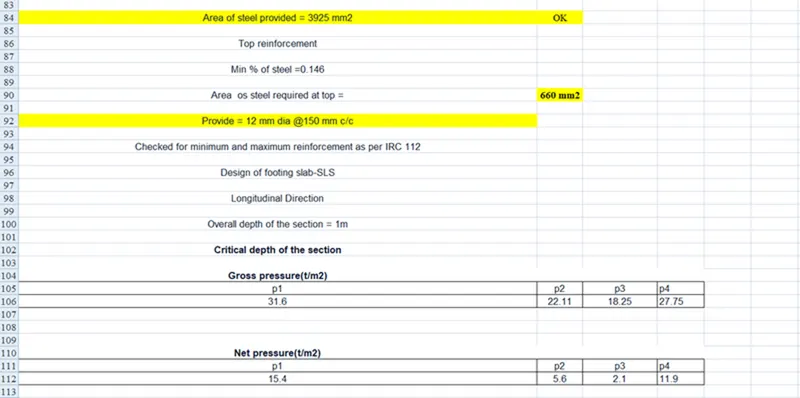
DESIGN OF FOUNDATION
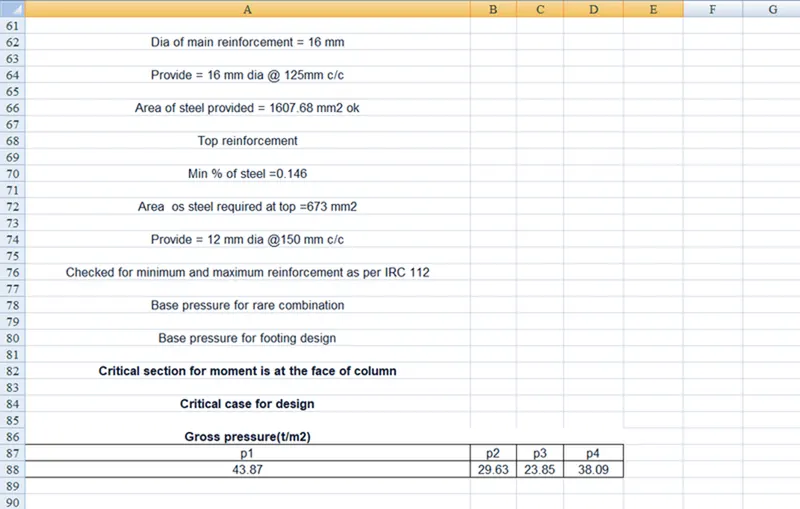
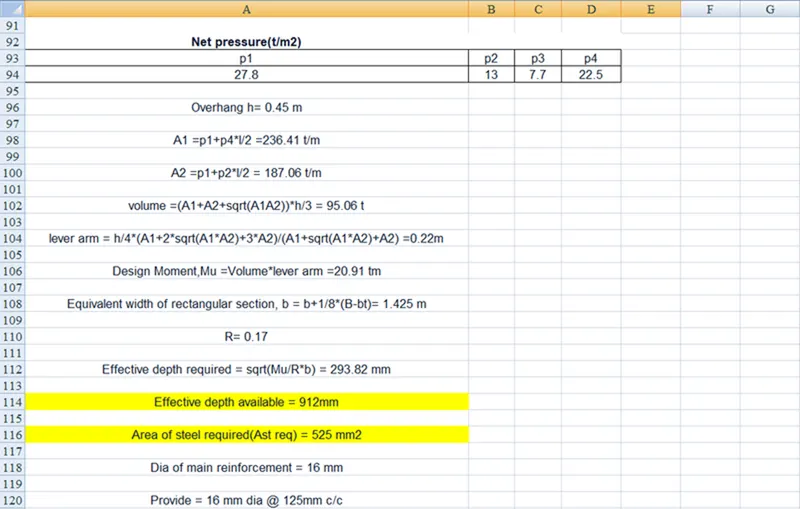
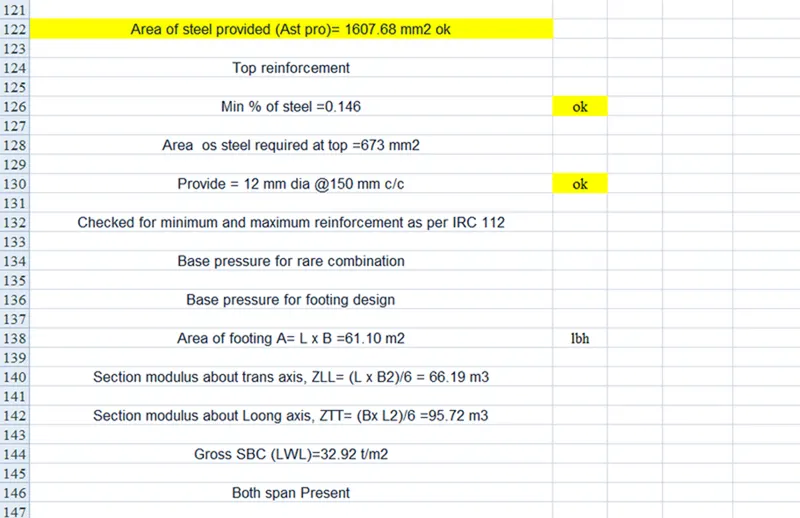
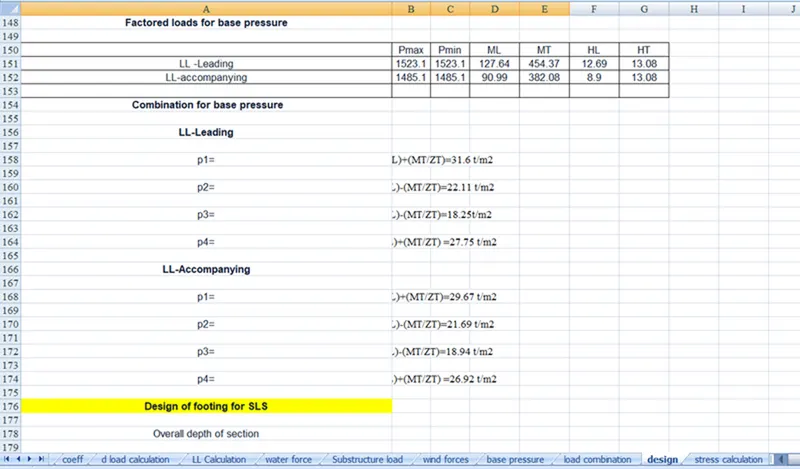
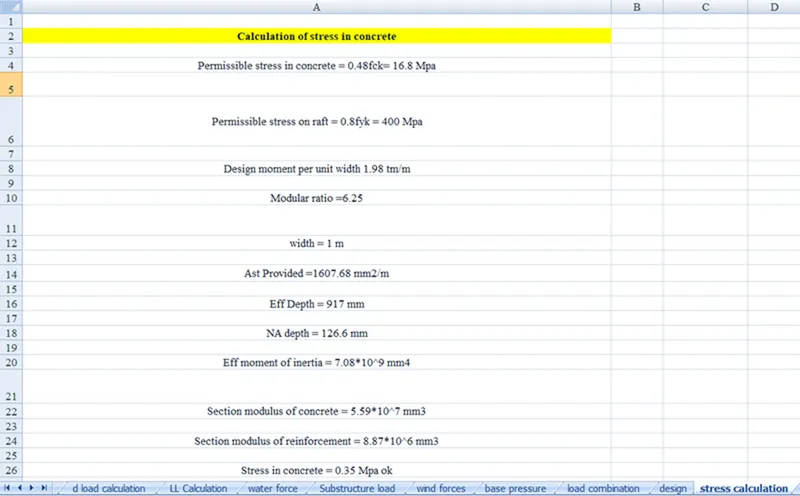
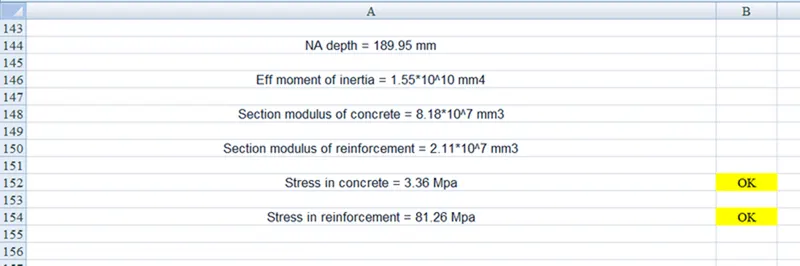
STRESS CALCULATION IN CONCRETE
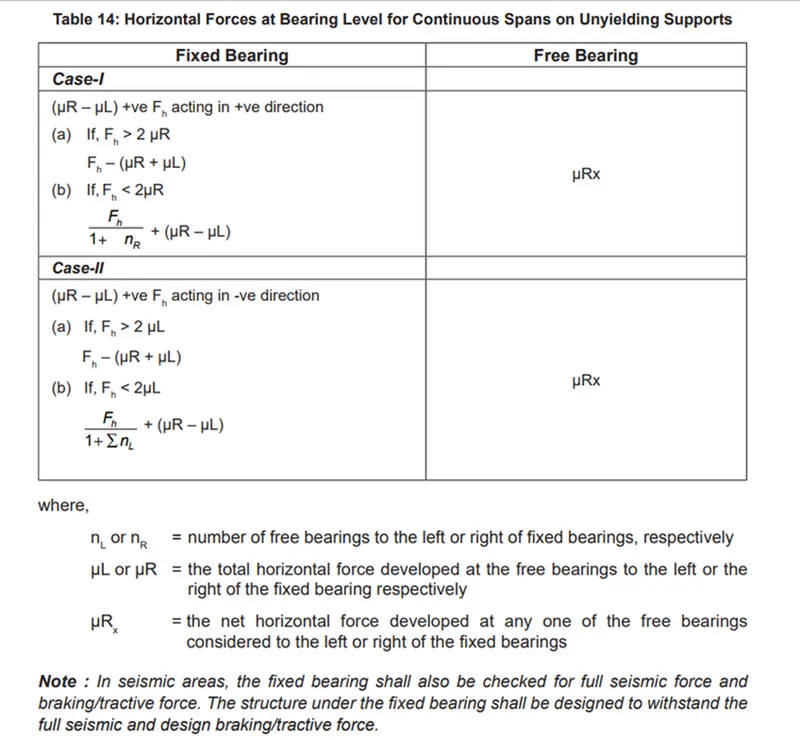
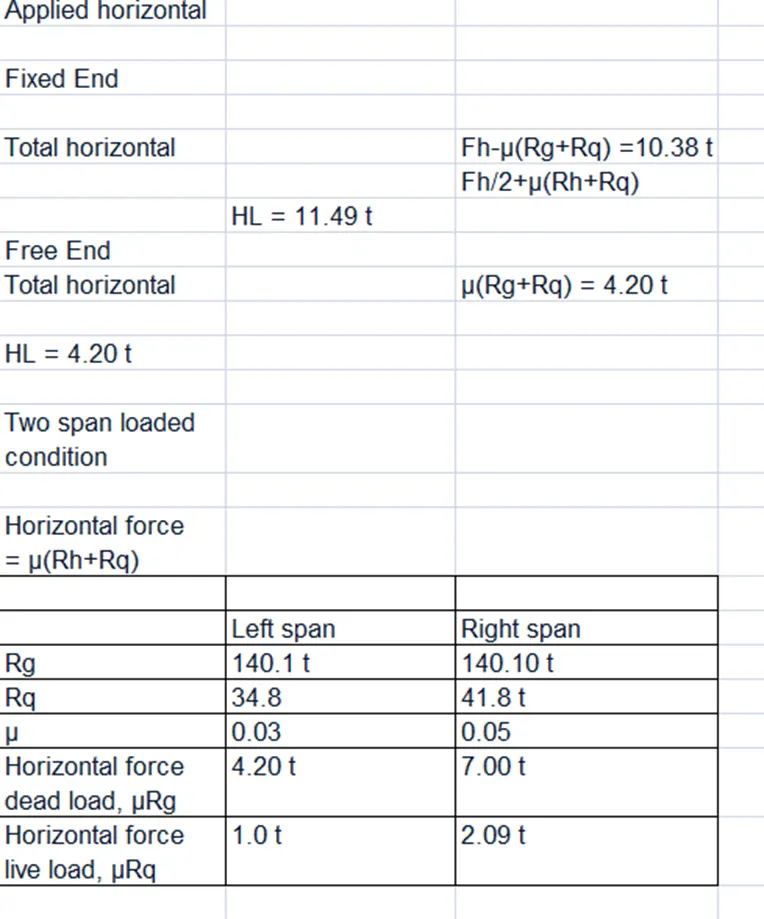
- what is difference between free and fix pier and how it impacts the foundation size.Also add the calculation of loading in both the cases.
ANS-:Bridge Pier support the spans of the bridge and transfer the loads from superstructure to the foundation. Piers should be strong enough to take the both vertical and horizontal load. Its main function is to transfer the load from the bridge superstructure foundation below it. They are subjected to huge axial loads and biaxial moments and shear forces in transverse and longitudinal direction. Said that, pier are
usually compression elements of a bridge.
|
free pier |
fix pier |
|
free piers transfer only axial forces from the bearing to the foundations. |
Fixed piers are subject to transverse and longitudinal forces. |
|
In case of free pier transfer of axial forces only happens and movement in longitudinal direction is allowed and hence there is no longitudinal reactions. |
In fixed pier, rotation and lateral movements are resisted and hence large amount of transverse and longitudinal moments occur. |
|
Because of less horizontal force, the size of the foundation is considerably less to the fixed pier. |
The size of the foundation of the fixed pier is large comparatively to accommodate the heavy forces. |
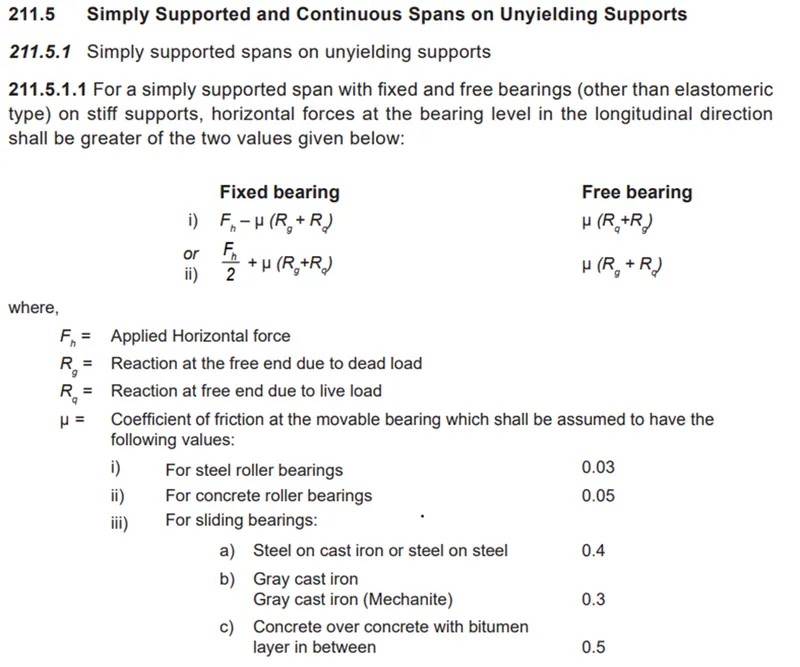
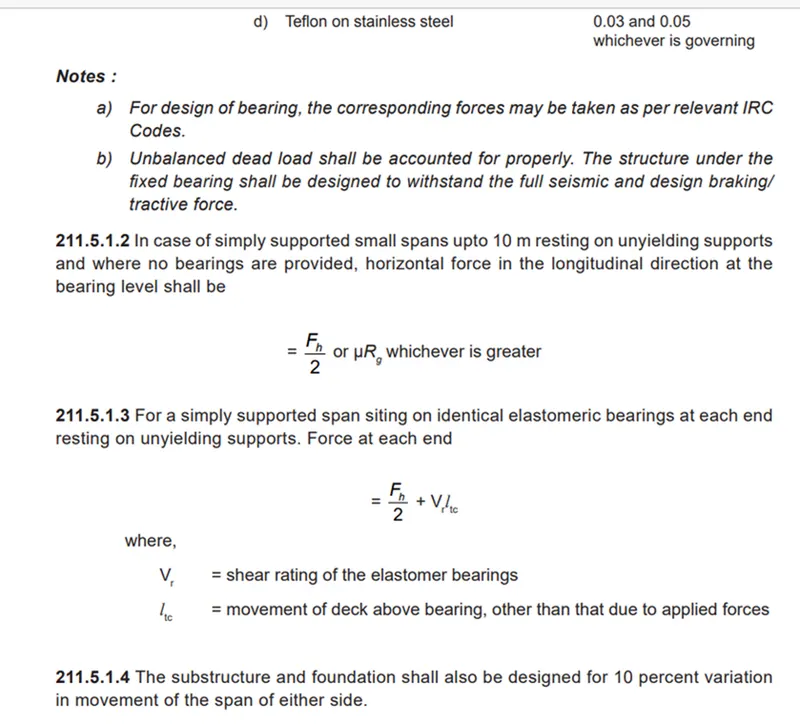
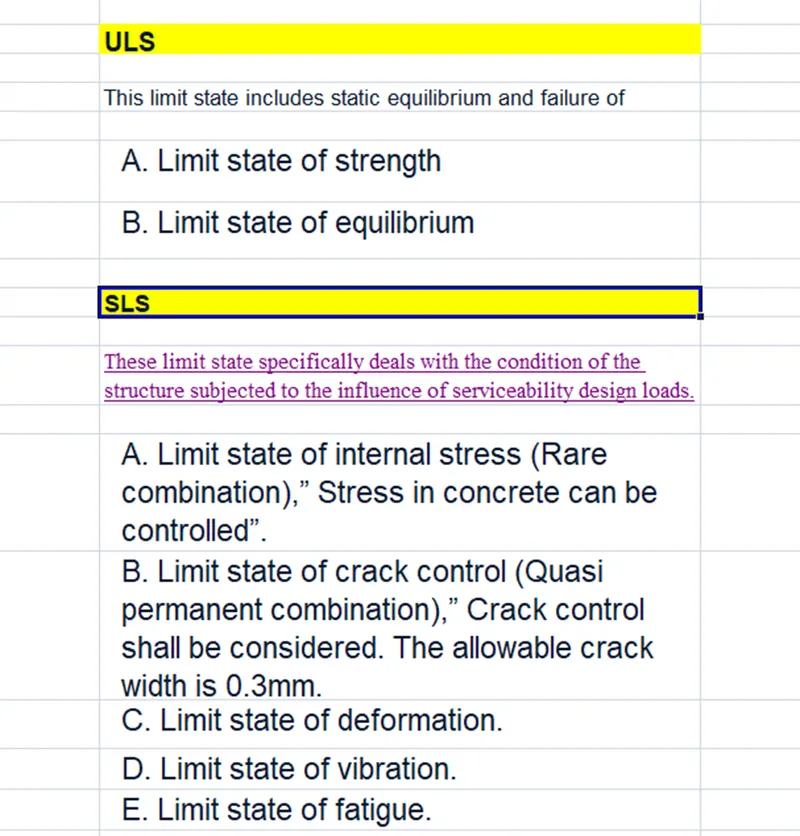
- List all RCC design checks to be done in the ultimate state and serviceability state for a cracked section as per IRC codes and mention clauses
Ans: