Week 4 -Wire Bending Challenge
Aim
a) To perform an analysis to simulate the bending of a wire in ANSYS Workbench.
b) To obtain the results in the three different cases.
c) To compare the results in the given three cases.
Procedure
1. Imparting the model
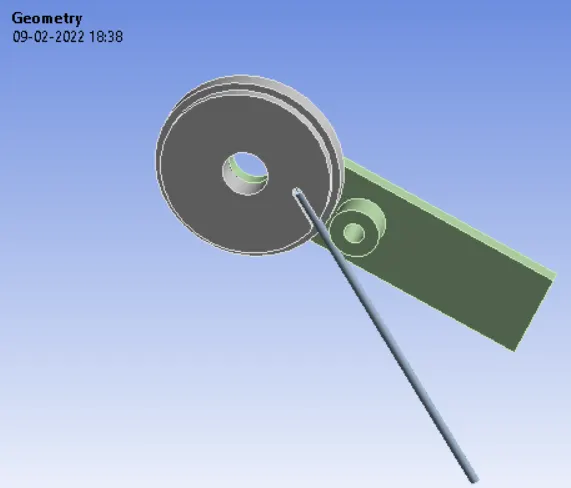
In this simulation, first ANSYS workbench was opened and then engineering material data was updated. After updating the data, geometry was imparted and then the analysis was performed. The geometry is given as per given below figure:
2. Material Data
As per the requirement, the material list is as shown below:
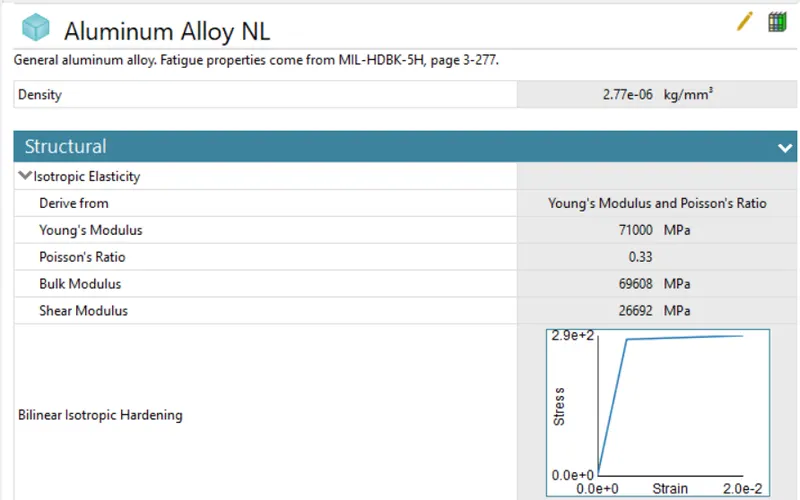
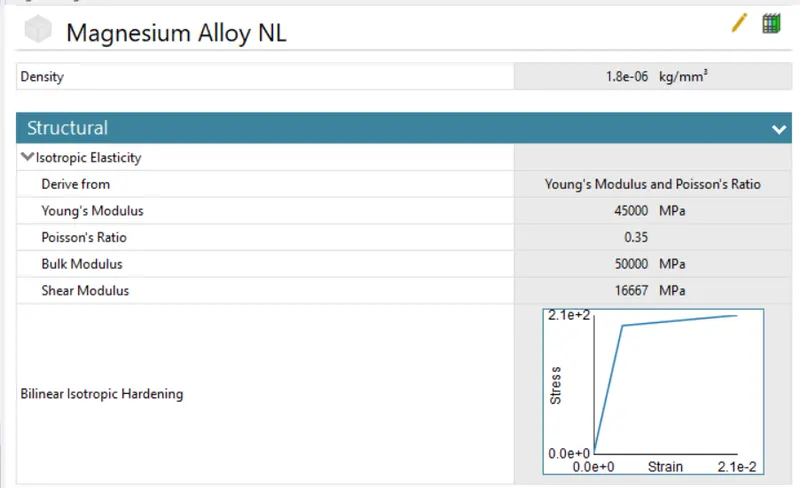
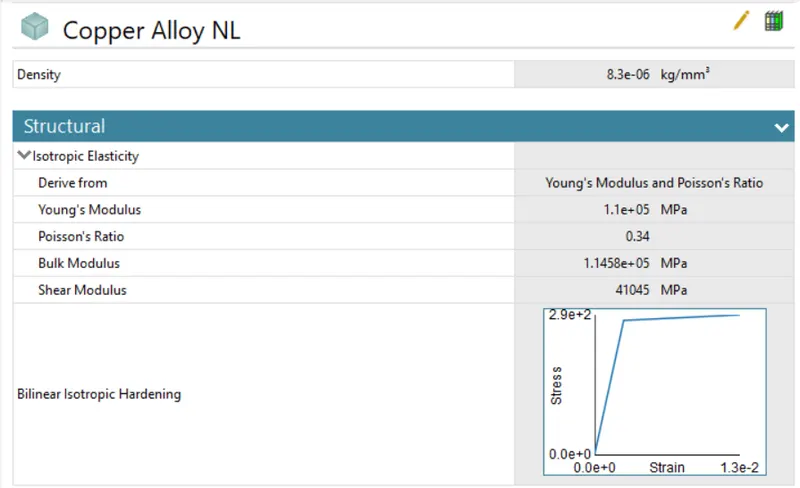
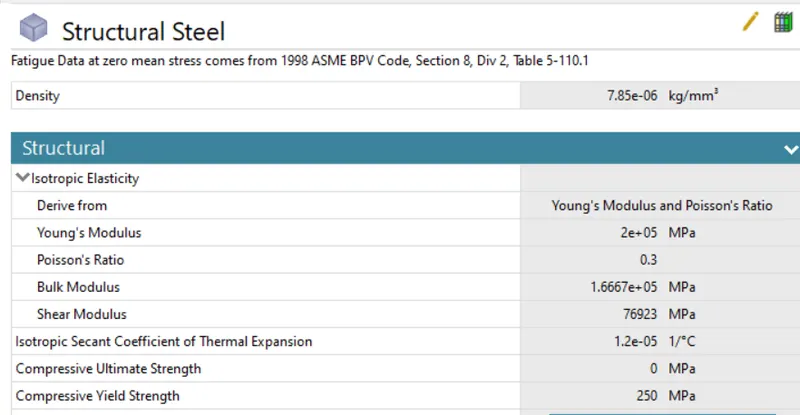
As given in the question, only the meterial of wire has to be changed. The remaining parts have the material as structural steel.
3. Connections
3.1 Contacts
3.1.1 Wheel to wire frictional contact
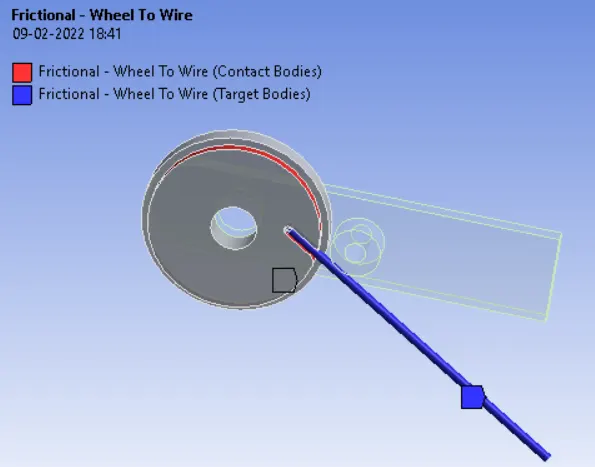
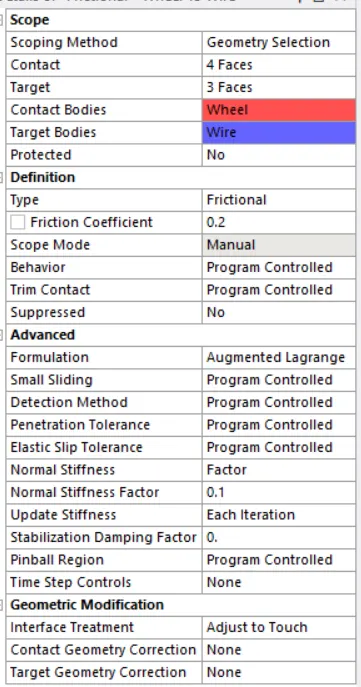
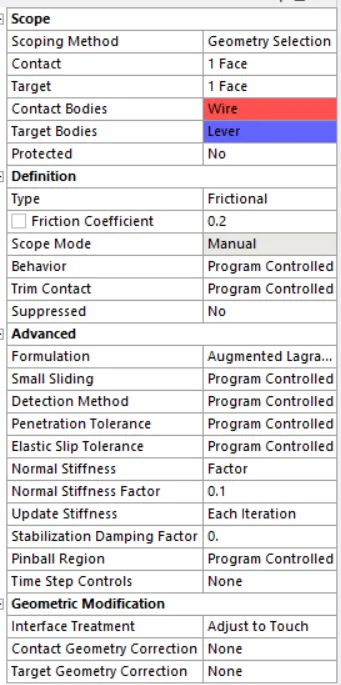
As seen in the above figure. the frictional contact has been established between the wire and wheel. The coefficient of friction has the value of 0.2 and the normal stiffness factor was 0.1 with interface treatment as adjust to touch.
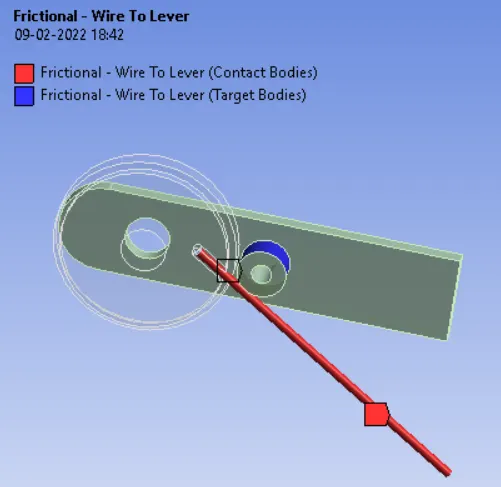
3.1.2 Wire to lever frictional Contact
3.2 Revolute Joint
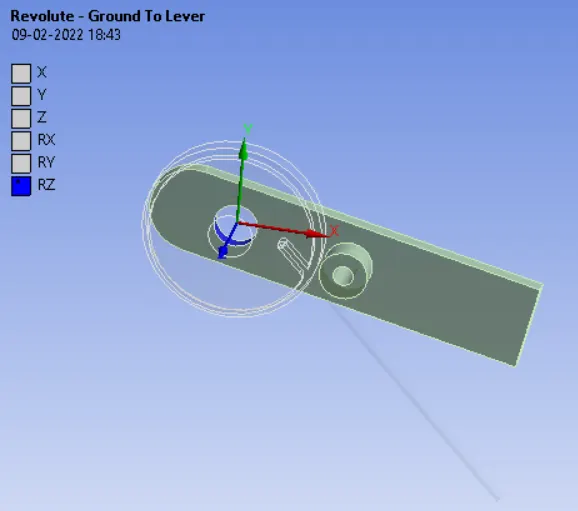
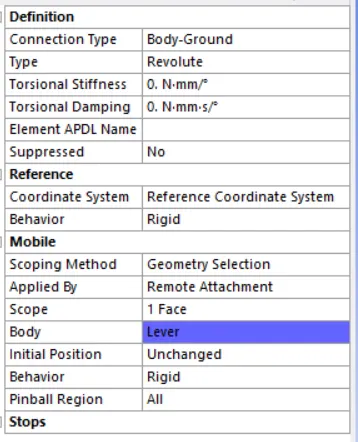
4. Mesh Details
4.1 Face sizing
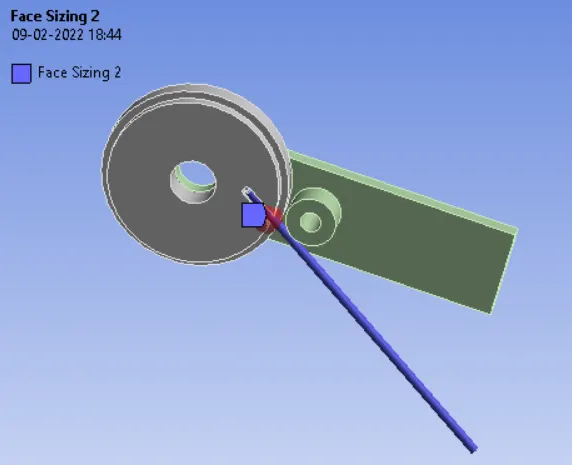
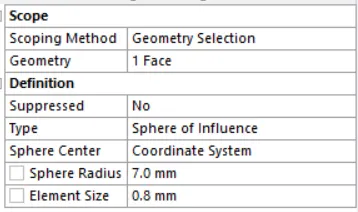
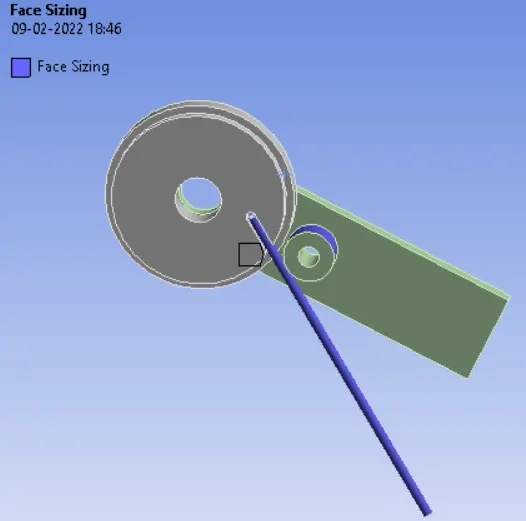
As shown above, the face sizing with sphere of radius 7.0 mm has been defined and he coordinate system has also been defined for the same.
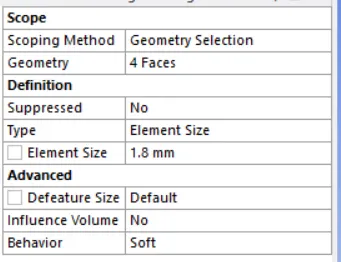
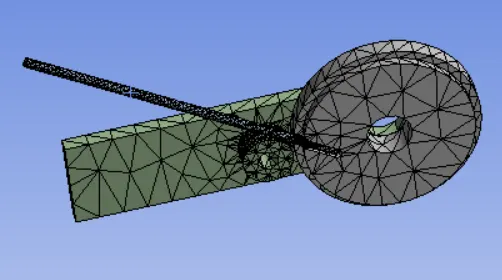
Like above, the wire and the contact to wire surface has been assigned a fine mesh with a size of 1.8 mm.
4.2 Final Mesh
5. Analysis Settings
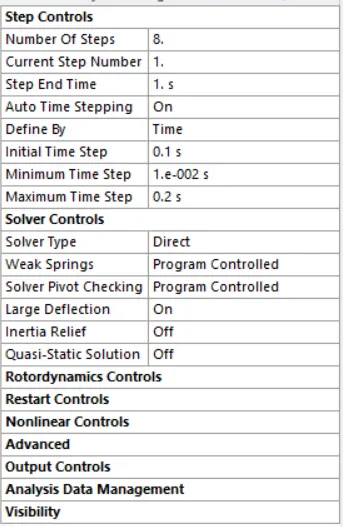
Since the simulation was done using 8 steps, the settings of first step is given as:
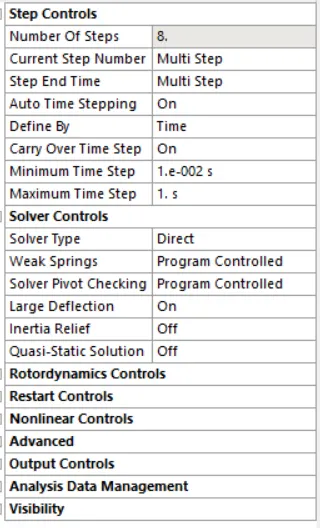
The remaining steps have the settings as given below:
6. Load Details
6.1 Fixed Sopports
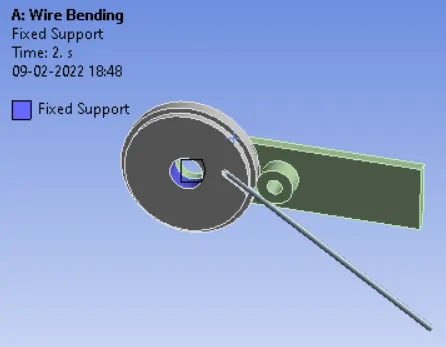
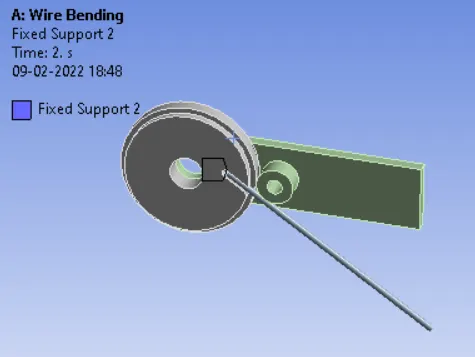
As shown above, ,the wheel internal face and one end of the wire has been assigned a fixed support.
6.2 Joint Rotation
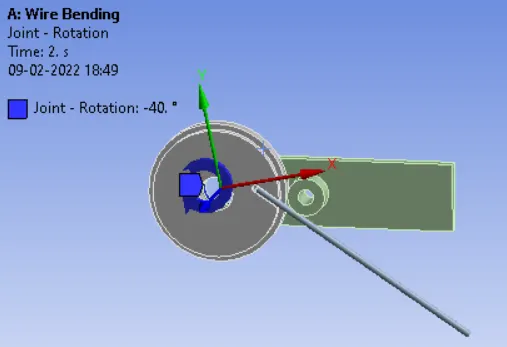

As shown in the above figure, the details of rotation were defined with the interval of 20 degrees. The rotation was about Z axis.
7. Results
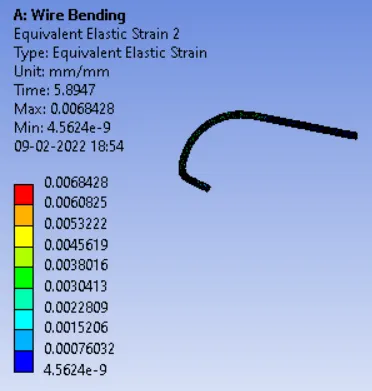
7.1 Case 1 - Aluminum Alloy NL
7.1.1 Equivalent Stress
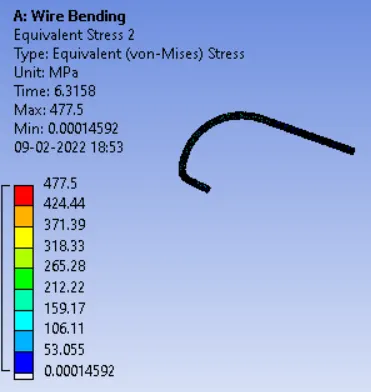
7.1.2 Equivalent Strain
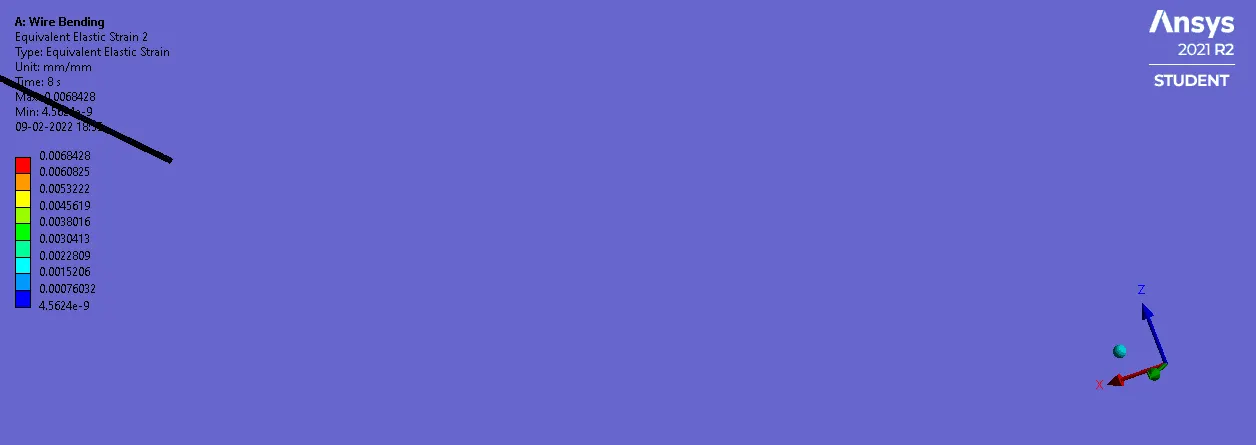
7.2 Case 2 - Copper Alloy NL
7.2.1 Equivalent Stress
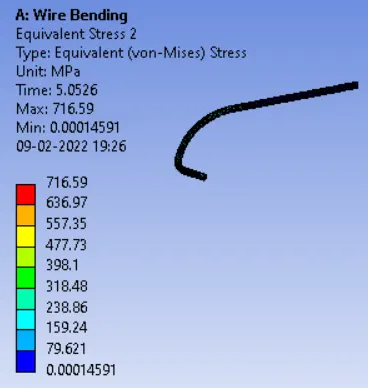
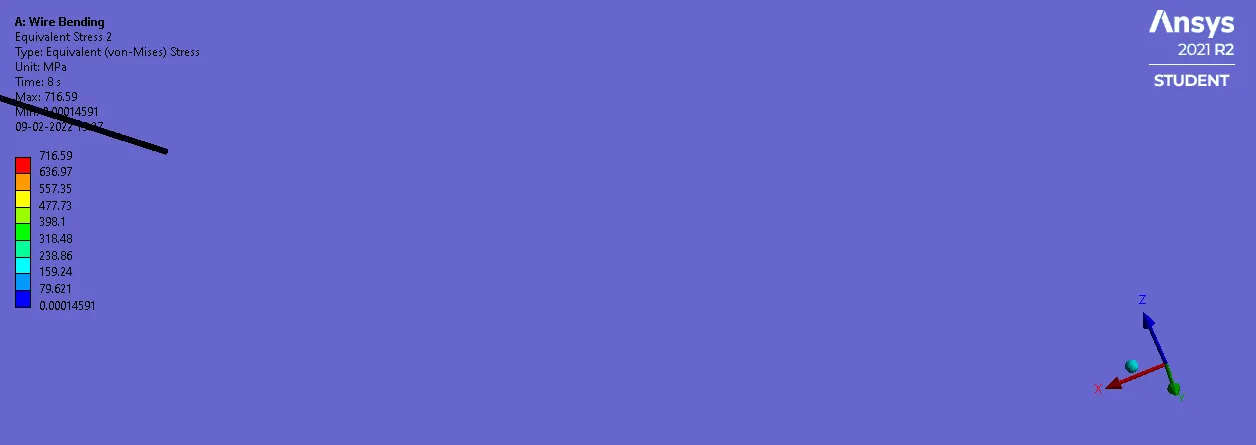
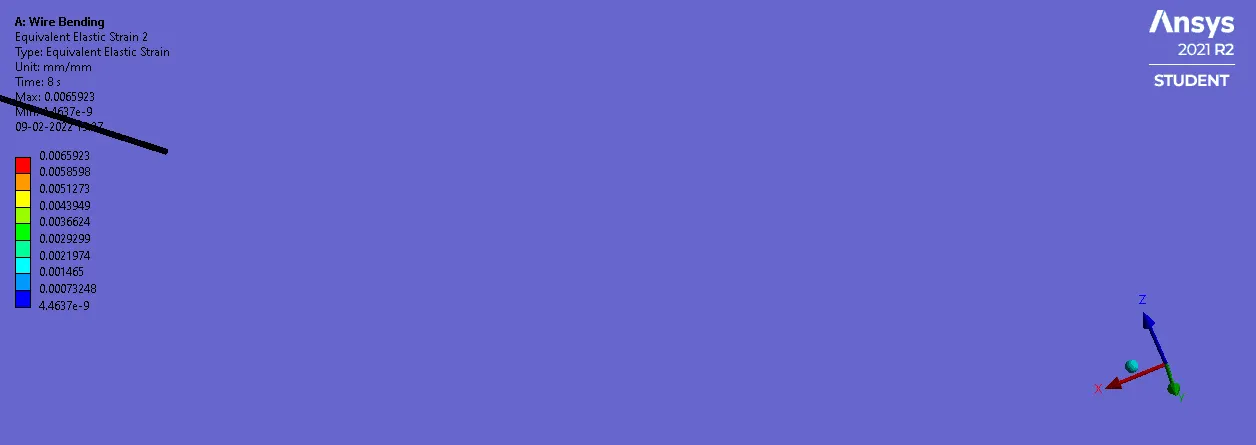
7.2.2 Equivalent Elastic Strain
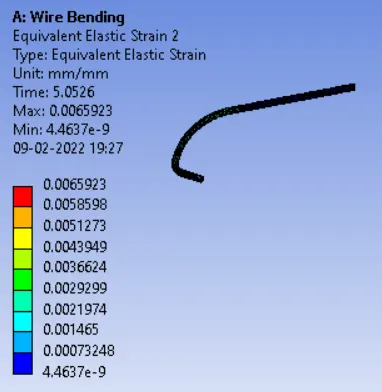
7.3 Case 3 - Magnesium Alloy NL
7.3.1 Equivalent Stress
7.3.2 Equivalent Strain
Conclusions
a) The simulation was successfully completed in the given three cases.
b) As seen from the results, stress is maximum for both copper alloy NL and magnesium alloy NL.
c) Equivalent strain is maximum for Aluminum and approximately equal for copper and magnesium.