Week 4 -Wire Bending Challenge
Wire Bending Analysis Using ANSYS
Objective:
To perform an analysis to simulate the bending of a wire in ANSYS using following material for wire:
- Copper Alloy (Non Linear)
- Aluminium Alloy (Non-Linear)
- Magnesium Alloy (Non-Linear)
Aim is to find out the Equivalent stress and Equivalent strain on the wire alone and compare the results.
Geometry:
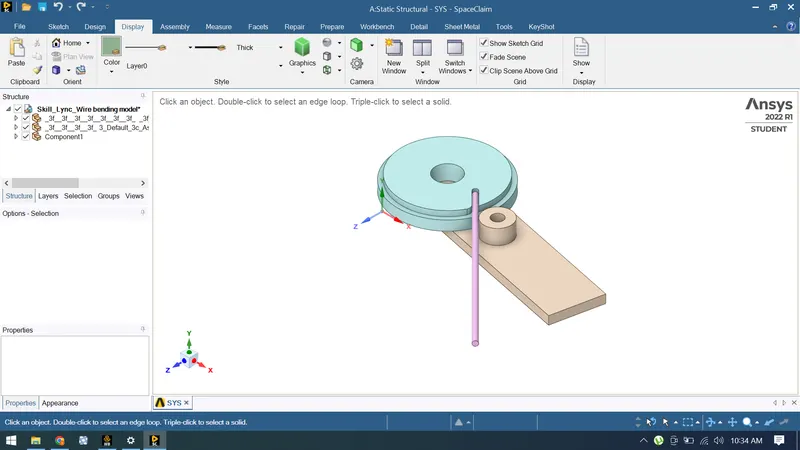
Material:
Case 1:Copper Alloy (Non Linear)
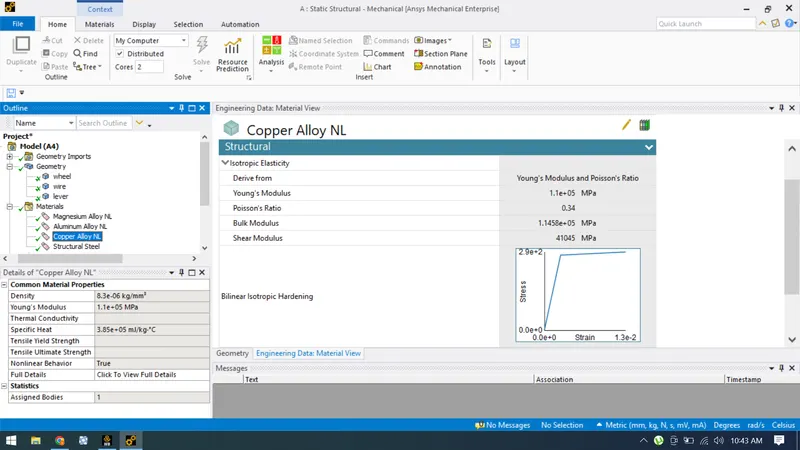
Case 2:Aluminium Alloy (Non-Linear)
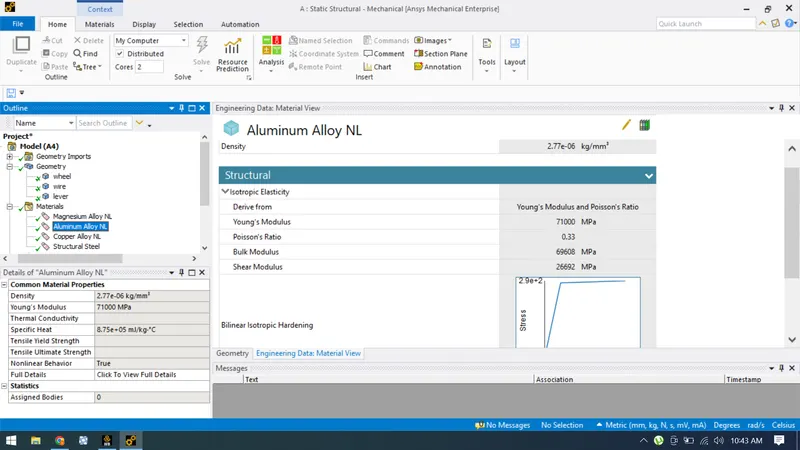
Case 3:Magnesium Alloy (Non-Linear)
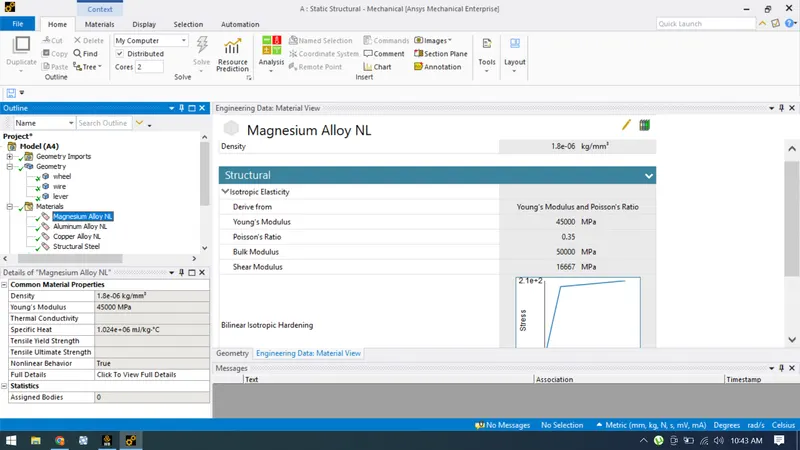
Contact Details:
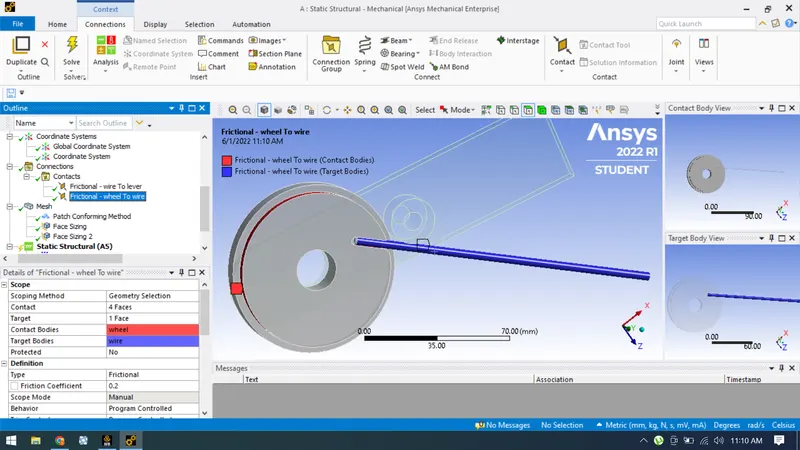
A frictional contact is provided betweel wheel and wire connection with a frictional coefficient as 0.2 where wheel as contact body and wire as target body with formulation as augmented lagrange , normal stiffness factor as 0.1 where stiffness is updated for every iteration .
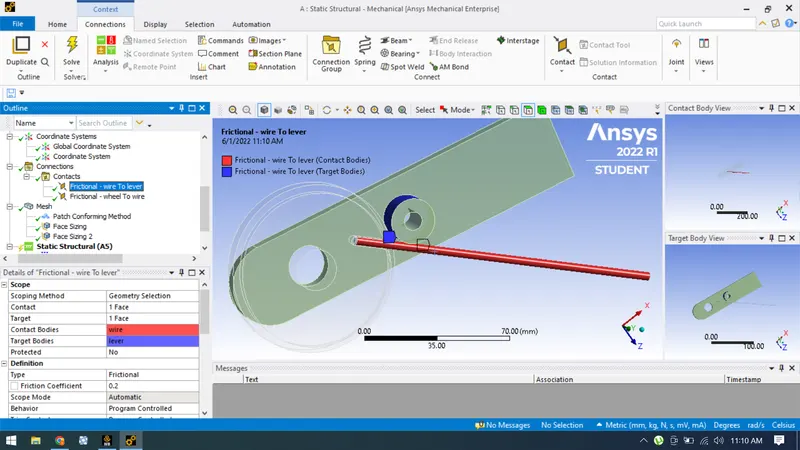
A frictional contact is provided betweel wire and lever connection with a frictional coefficient as 0.2 where wire as contact body and lever as target body with formulation as augmented lagrange , normal stiffness factor as 0.1 where stiffness is updated for every iteration .
Meshing:
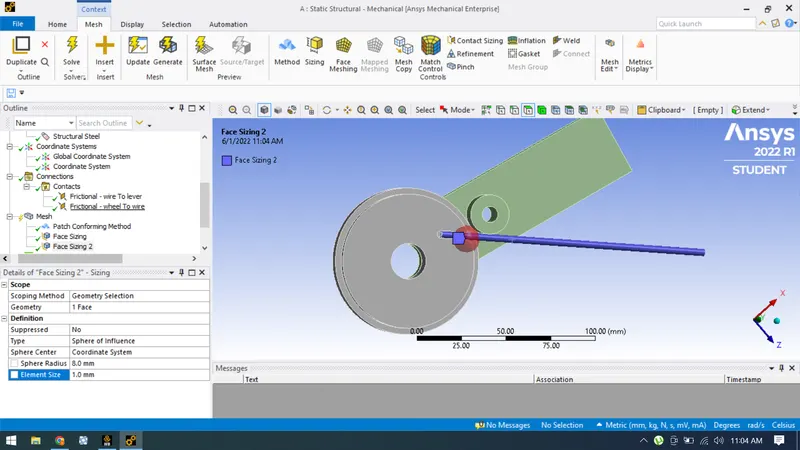
A coordinate system is generated at wire and wheel intersection and a sphere of radius of 8mm and element size of 1 mm is assigned for the region inside sphere with element type as tetrahedrons.
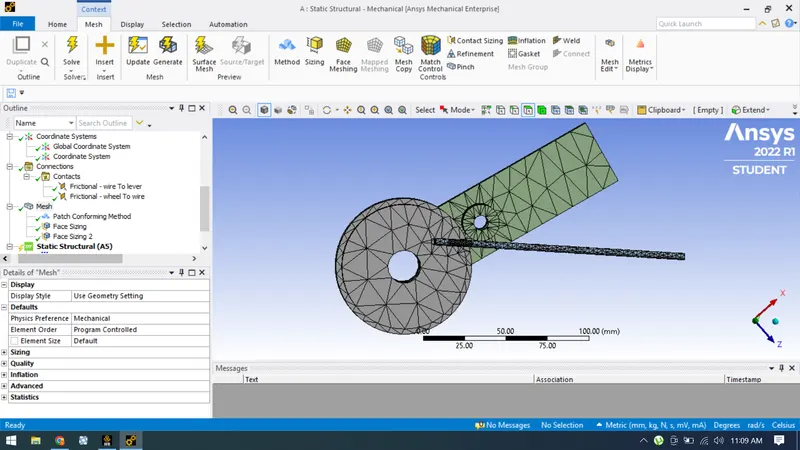
Number of nodes :6958
Number of elements:3455
Analysis Settings:
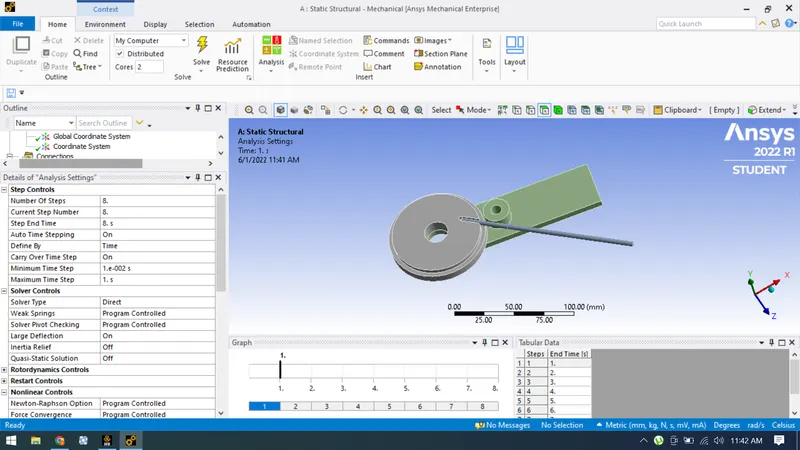
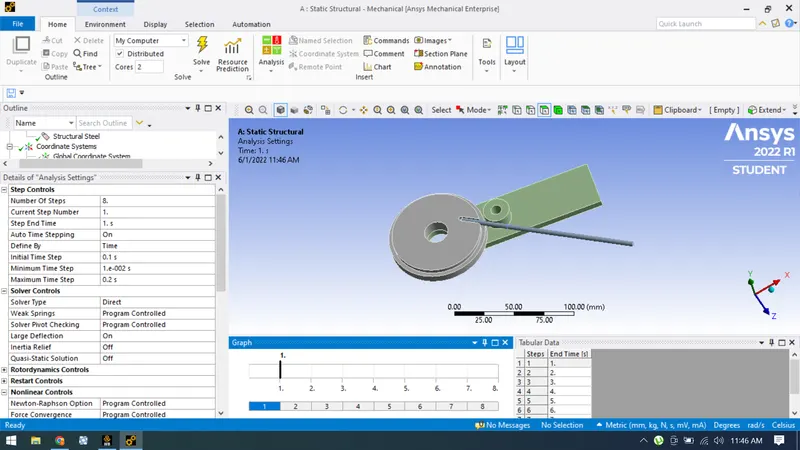
The number of steps for analysis are chosen to be 8 with initial time step for first step as 0.1 s minimum time step as 1.e-002 s and maximum time step as 0.2 sec with auto time stepping on. For step 2 to 8 minimum time step as 1.e-002 s and maximum time step as 1 s with carry over time step on
Boundry Condition:
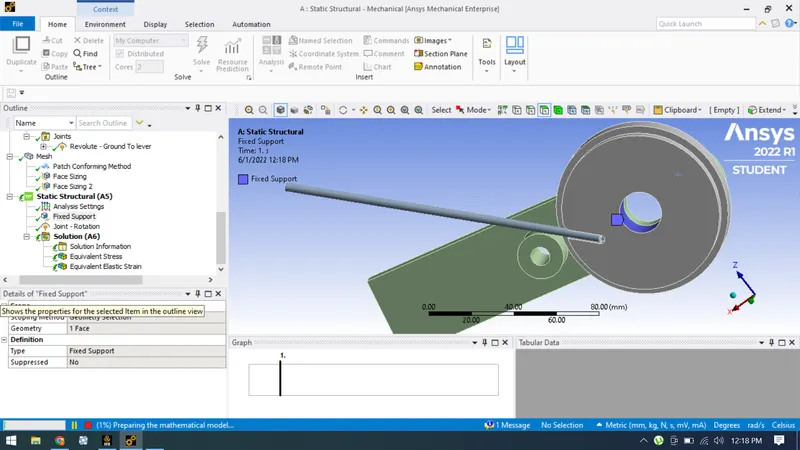
Fixed support:
Joint-Rotation:
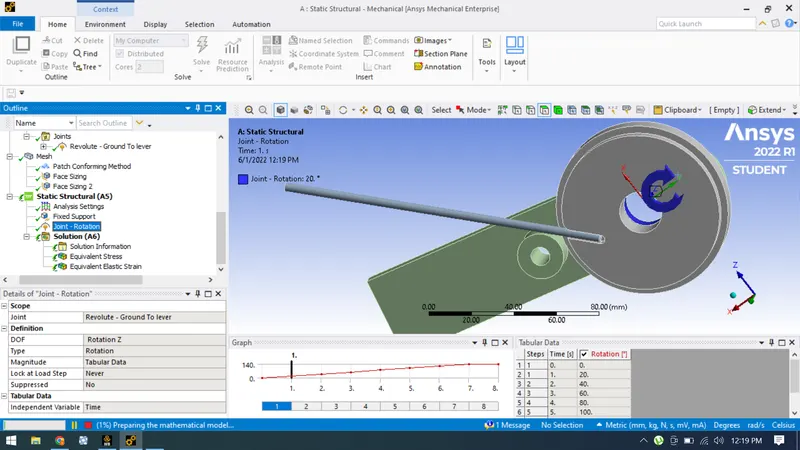
Here, Lever is rotated at 140 degree with increment of 20 degree and last two steps are kept constants as 140 degree
Results:
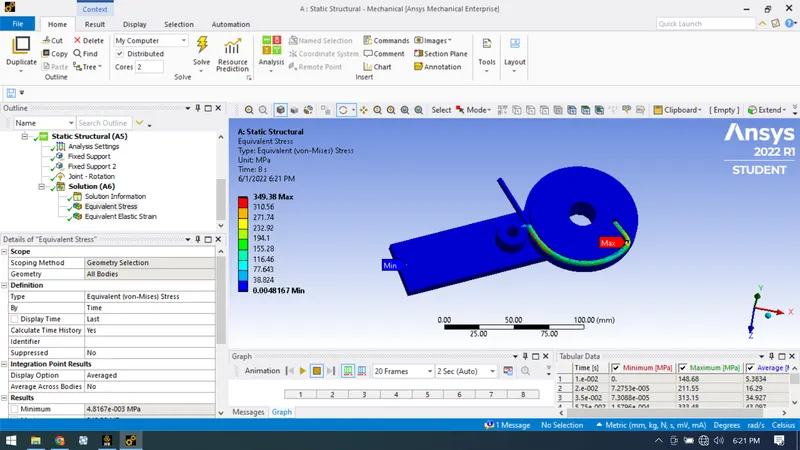
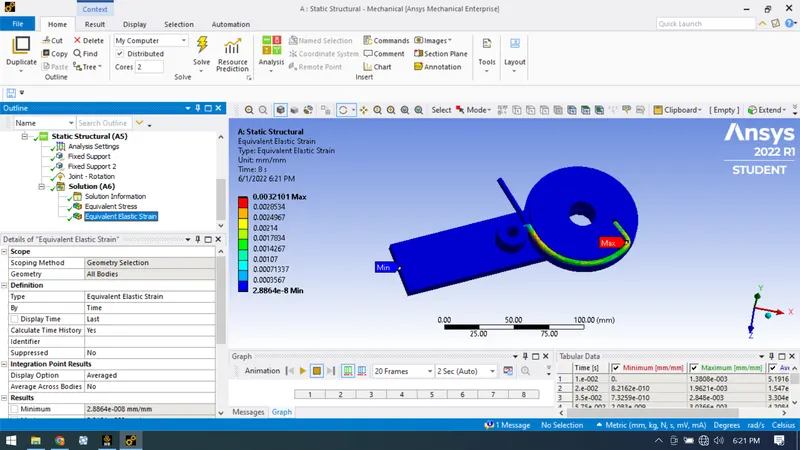
Case 1:Copper Alloy (Non Linear);
Equivalent stress:
Equivalent strain:
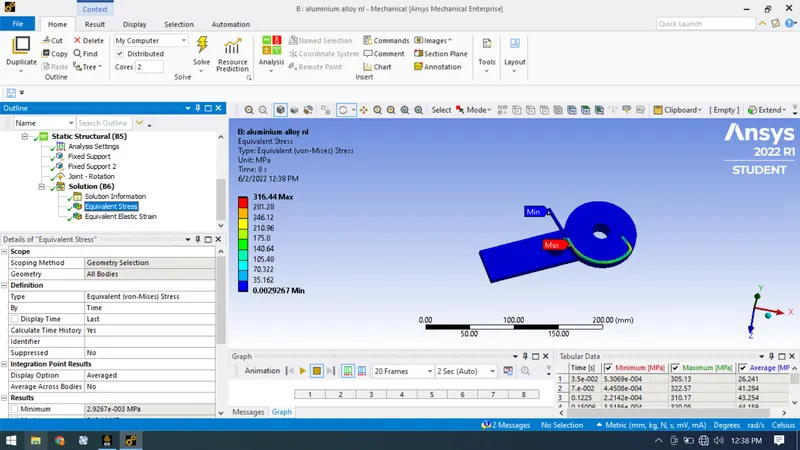
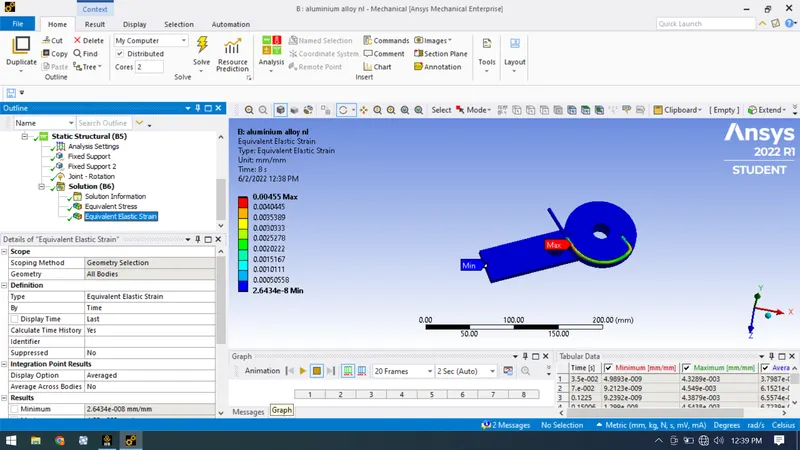
Case 2:Aluminium Alloy (Non-Linear);
Equivalent stress:
Equivalent strain:
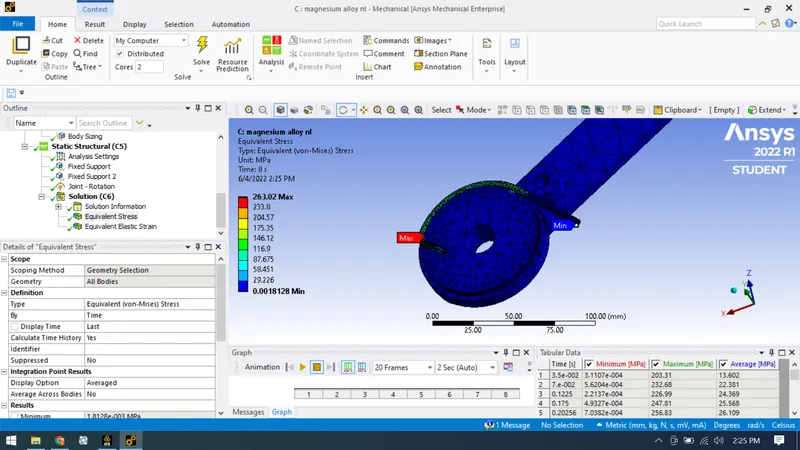
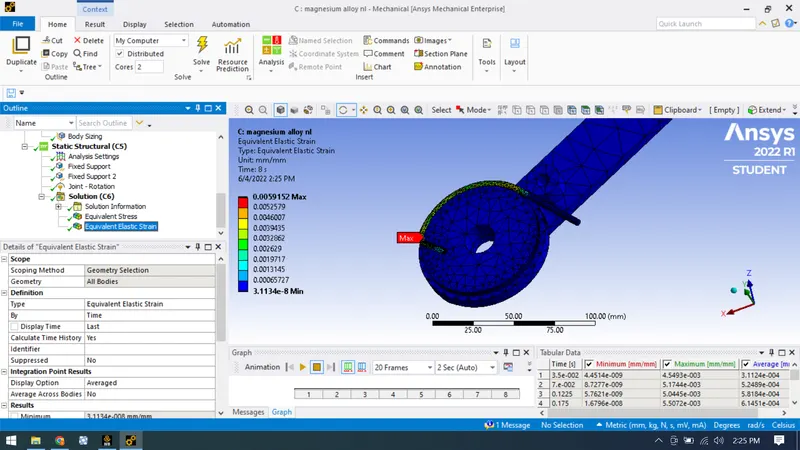
Case 3:Magnesium Alloy (Non-Linear);
Equivalent stress:
Equivalent strain:
Following is the tabular comparison for all the three cases;
| Analysis | Case 1:Copper Alloy (Non Linear) | Case 2:Aluminium Alloy (Non-Linear) | Case 3:Magnesium Alloy (Non-Linear) |
| Equivalent stress | 349.38 MPa | 316.44 MPa | 261.02 MPa |
| Equivalent strain | 0.0032101 | 0.00455 | 0.0059152 |
Conclusion:
From the evaluated results and above tabular comparison it is seen that magnesium alloy having the less maximum stress compared to other materials
as shown above and strain is less for magnesium alloy due to lesser young modules so as per the comparison magnesium is the preferable material as it allows less strain and can be considered as safe material for the present scenario.