Week 4:- Pin Unit Design Challenge
Week 4: Pin Design Unit Challenge
Objective:
- Design 2 Different types of Fixed Pin Unit with Different Pins, Riser, Blade, and Block.
- Design 2 Different types of Retractable Pin Unit with Different Pins, Riser, Blade, Cylinder, and Block.
Pin Unit:
Pins are mounted in Body-in-White (BIW) fixtures for several reasons, all of which contribute to the accurate and repeatable assembly of the BIW components.
Purposes of mounting pins in BIW fixtures:
Locating and Alignment: Pins serve as reference points for precise positioning and alignment of BIW components. They are strategically placed to establish the desired spatial relationships and geometric features between the parts being assembled. By inserting the components onto the pins, the fixtures ensure that they are correctly located and aligned in accordance with the design intent.
Fixture Stability: Pins help enhance the overall stability and rigidity of the BIW fixture. By securely mounting the pins to the fixture structure, they provide additional support and resistance against movement or vibration during the assembly process. This stability is crucial to maintain the accuracy and consistency of the assembly operations.
Clamping and Holding: In addition to locating and alignment, pins can also function as clamping or holding devices. They may have features such as flanges, shoulders, or clamps that secure the BIW components in position. This prevents unintended movement or displacement during welding or other assembly operations, ensuring the integrity and quality of the final product.
Repeatable Assembly: The use of mounted pins in BIW fixtures enables repeatable assembly processes. Once the fixture is set up and the pins are positioned correctly, subsequent BIW components can be consistently and accurately located and aligned using the same fixture. This repeatability is crucial for efficient production and maintaining dimensional accuracy across multiple units.
Accessibility and Ergonomics: Pins can also aid in facilitating the accessibility of the assembly process. By providing specific mounting points for the BIW components, they allow for easier and more ergonomic handling and maneuvering during assembly operations. This can improve efficiency and operator comfort while minimizing the risk of errors or damage to the components.
Fix Pin Unit:
A fixed pin unit in a Body-in-White (BIW) fixture refers to a component that is designed to provide rigid and fixed positioning of specific parts or components during the assembly or welding process.
Retractable Pin Unit:
A retractable pin unit is a mechanical device designed to provide controlled and adjustable pin retraction and extension. It is commonly used in various applications where precise positioning, alignment, or holding of components is required. The retractable pin unit typically consists of a housing or body that houses a retractable pin mechanism.
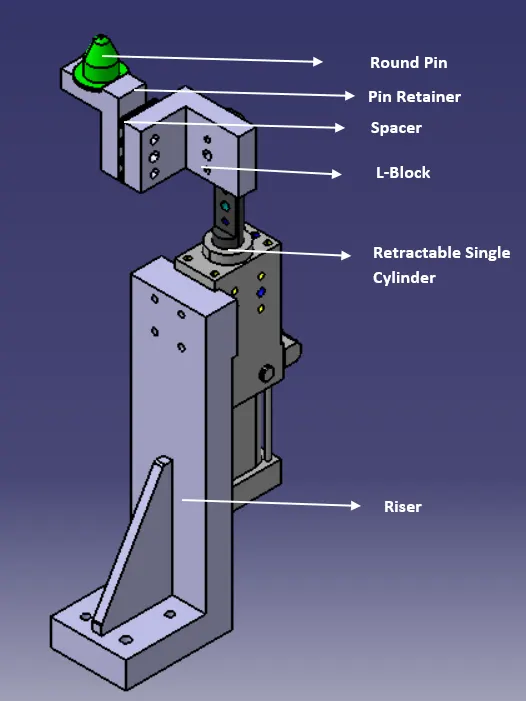
Components of Pin Unit:
- Round Pin/Diamond Pin
- Pin Retainer
- Spacer
- L-Block
- Riser
Fundamentals of pin unit design:
It is necessary to locate car panel with two pins. One pin to restrict 4 way motion (4 translational) and one pin to restrict 2 way motion (2 rotational).
- Pin should engage 3-5 mm from car panel entry surface.
- All pins should be accommodated with 2 way adjustable shims irrespective of direction of arresting.
- Round pin should be used in arresting 4 way in car panel if the hole is round.
- Round pin should be used in arresting 2 way in car panel if the hole is slot.
- Diamond pin should be used in arresting 4 way in car panel if the hole is slot.
- Diamond pin should be used in arresting 2 way in car panel if the hole is round.
- The axis of the car panel hole and the axis of the pin should be same (in general).
The pin tolerance for geo pin will be -0.15 mm and for re-spot pin will be -0.28 mm.
Design Methodology:
- Top down approach has been followed while designing the model
- The pin is designed according to the size of the hole in which it will fit.
- The retainer is designed and then blades, L- Blocks and the riser.
- All parts have holes in which standard bolt will fit to assemble the pin unit
- The Riser has hole on its base to fix it to the shop floor not the threaded hole, (threaded hole will be there on the base).
- Holes for dowel pins are having press fit.
Pin:
The pin should have grinding surface on the shaft on which the pin retainer will be fitted.
The mounting surface of the pin should be a fine machined surface.
The pin should have a step machine surface or D-Profile to lock the rotation, which matches with the pin retainer.
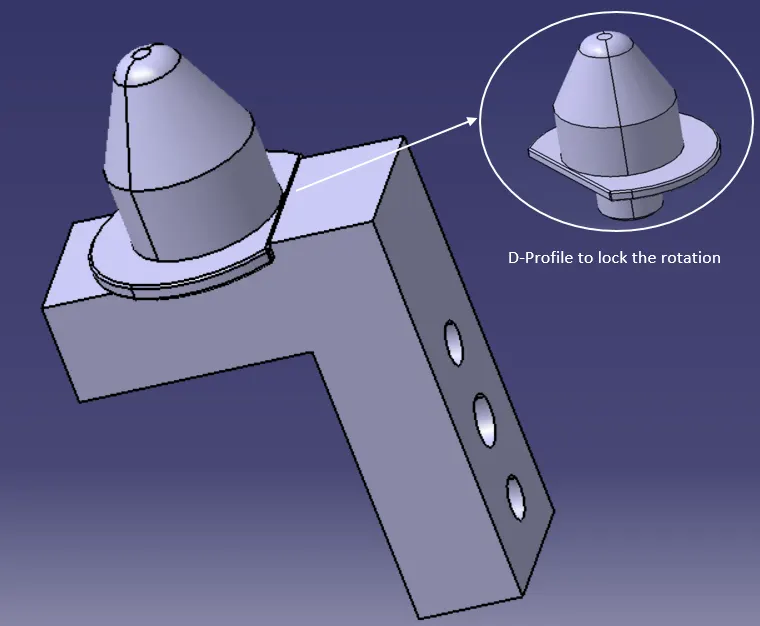
The mounting surface of the pin retainer should be a machined surface.
All machined planes should be perpendicular to the axis of the pin shaft.
Pin must be hardened and black oxide finished in general. (The hardness factor should be 55 – 60 HRC)
Material: C45, 16MNCR5, 20MNCR5, EN31 etc.
Pin Retainer:
Pin retainer is the part which holds the pin in the position, it can be make part or standard part.
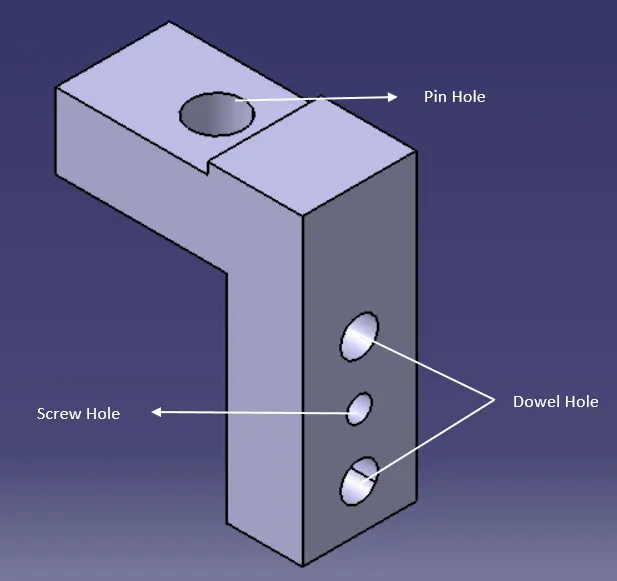
L-Block:
These parts are mainly used to accommodate the shimming direction as per fundamentals in general.
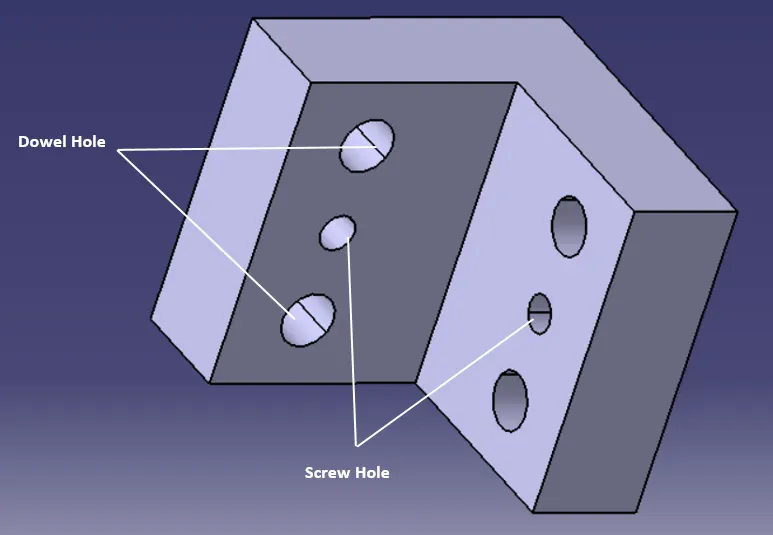
Spacer:
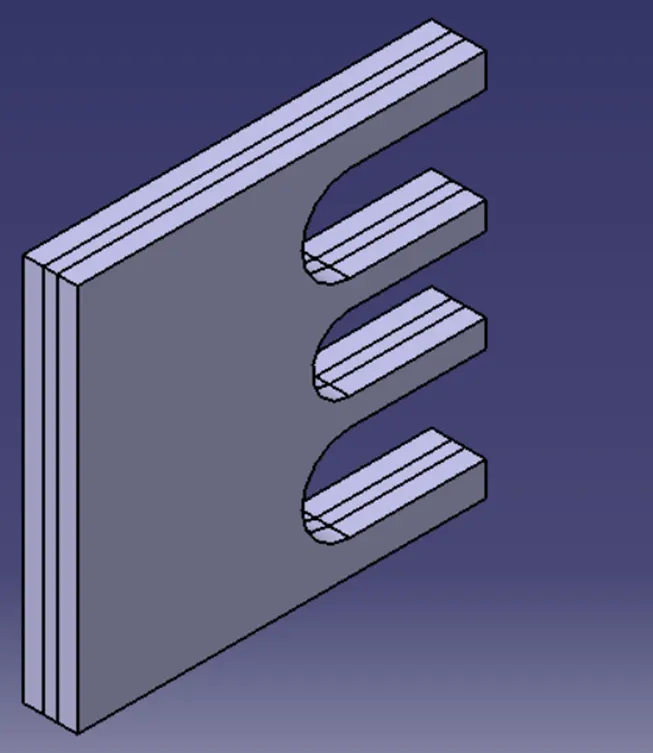
These are made up of several plated of different thickness, depending on the need the spacers of appropriate size and numbers are added.
Riser:
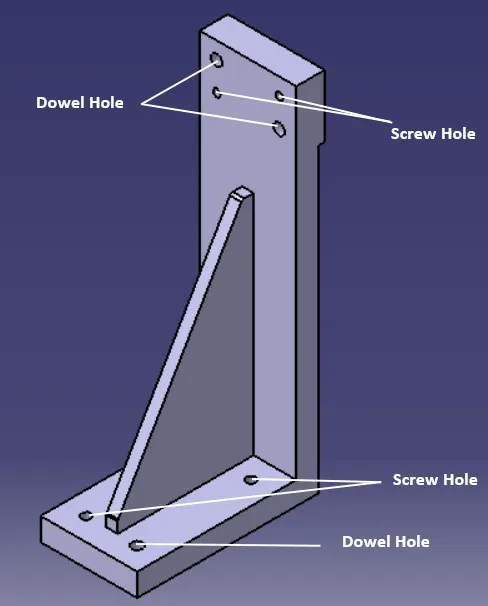
The part on which every other part is mounted. This part is mounted on the base plate of the tool. This is L-type riser.
Fixed Pin Unit:
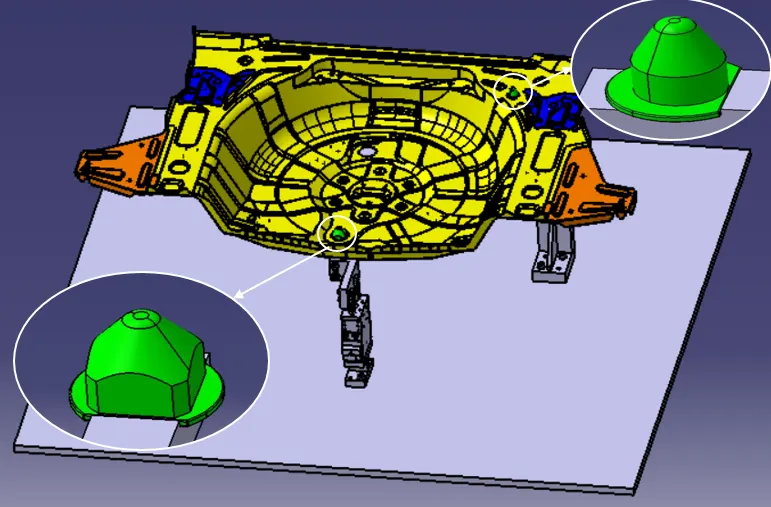
Round Pin
Diamond Pin
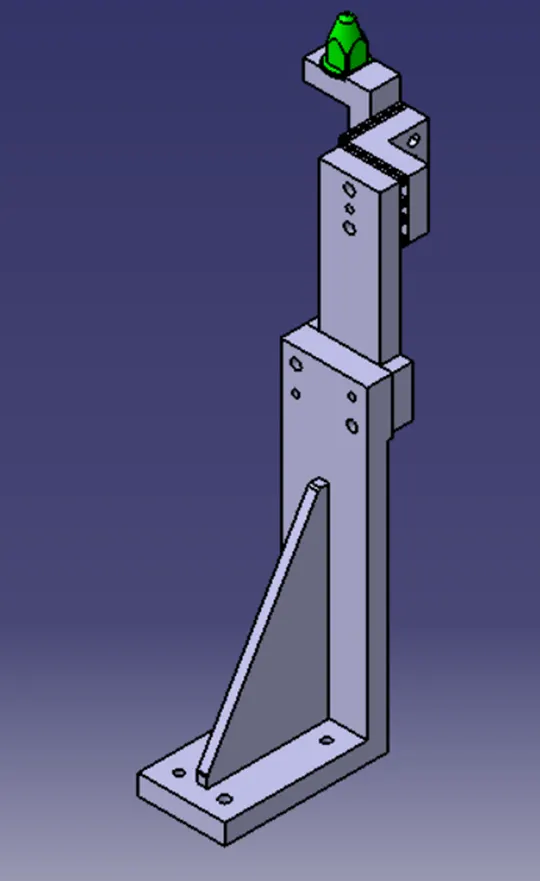
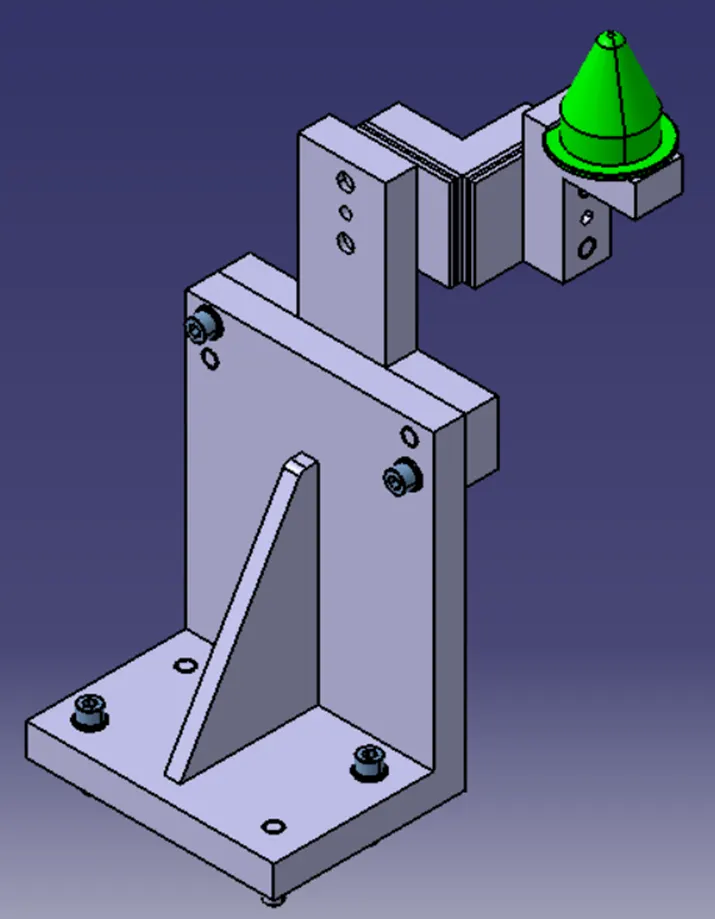
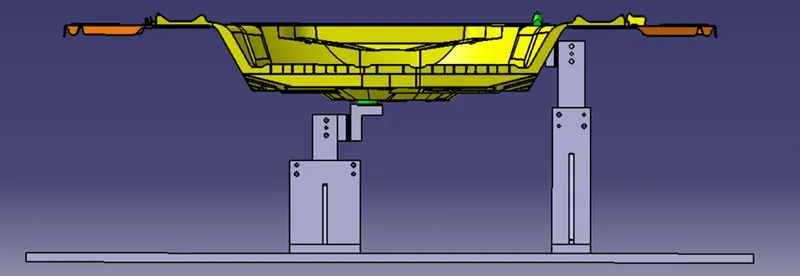
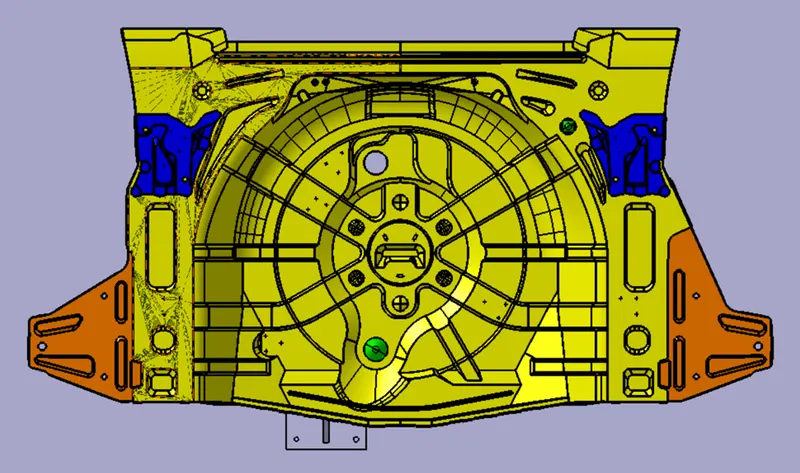
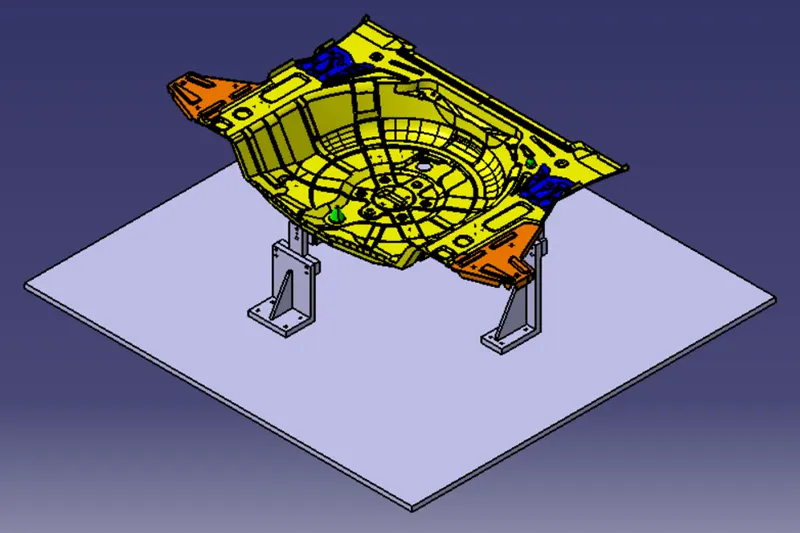
Fixed pin units are locating the surface body of the work piece
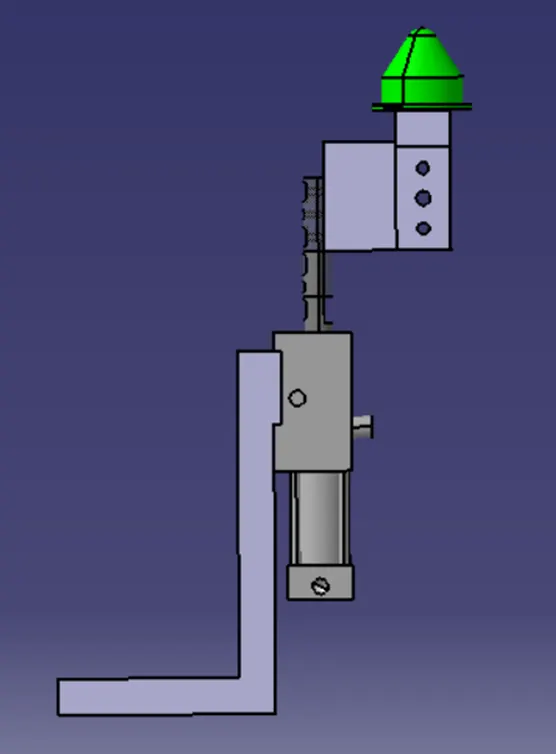
Round Retractable Pin
Sub Components
- Round Pin
- Pin Retainer
- L-Block
- Spacer
- Retractable Device (SZKD_40_BR4_A13_T12_TUENKERS)
- Raiser
Brought out Part
SZKD_40_BR4_A13_T12_TUENKERS
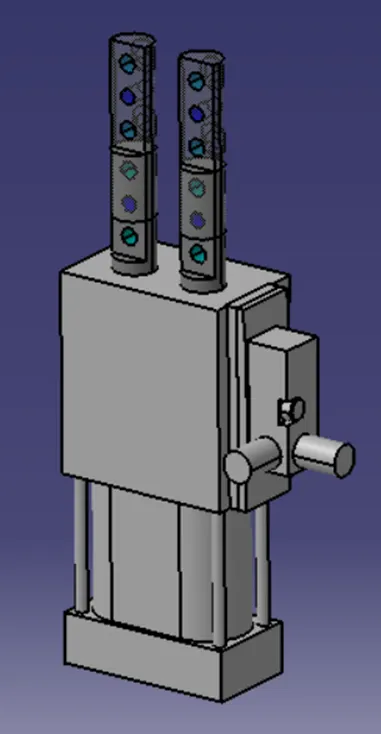
Round Pin during Open Situation
Sub Components
- Round Pin
- Pin Retainer
- L-Block
- Spacer
- Retractable Device (SZVD_32_A13_T12_TUENKERS)
- Raiser
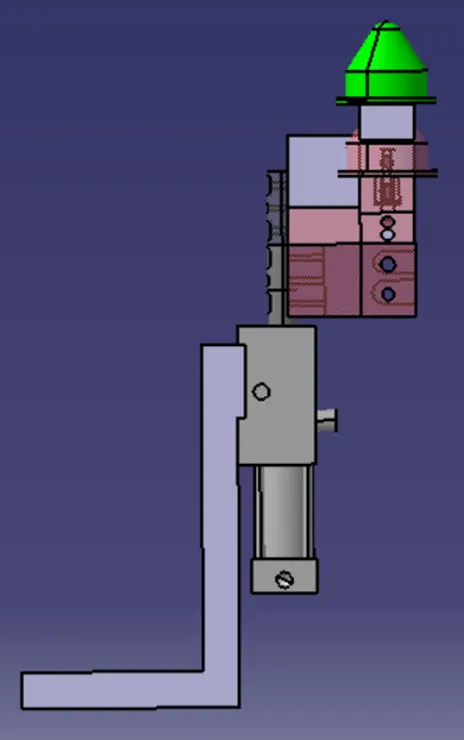
Diamond Retractable Pin
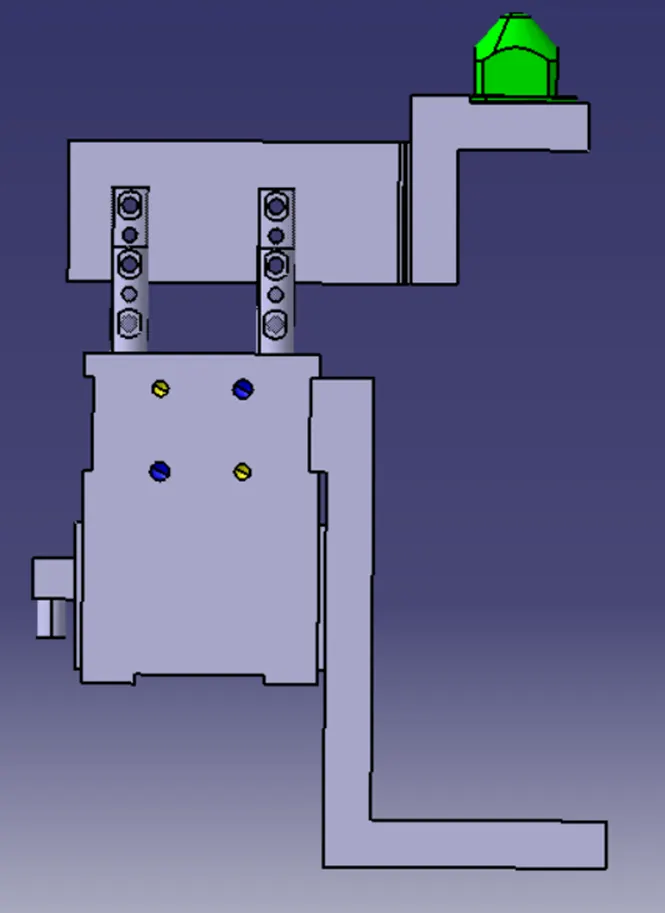
Brought out Part
SZVD_32_A13_T12_TUENKERS
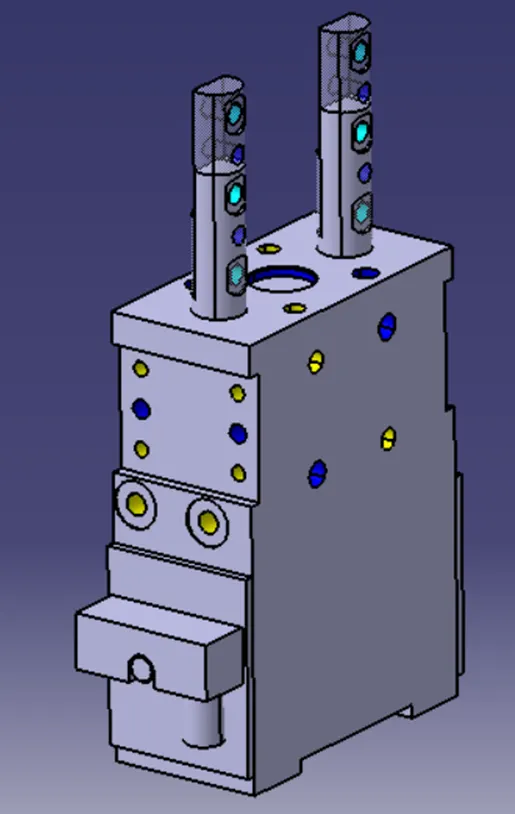
Diamond Pin during Open Situation
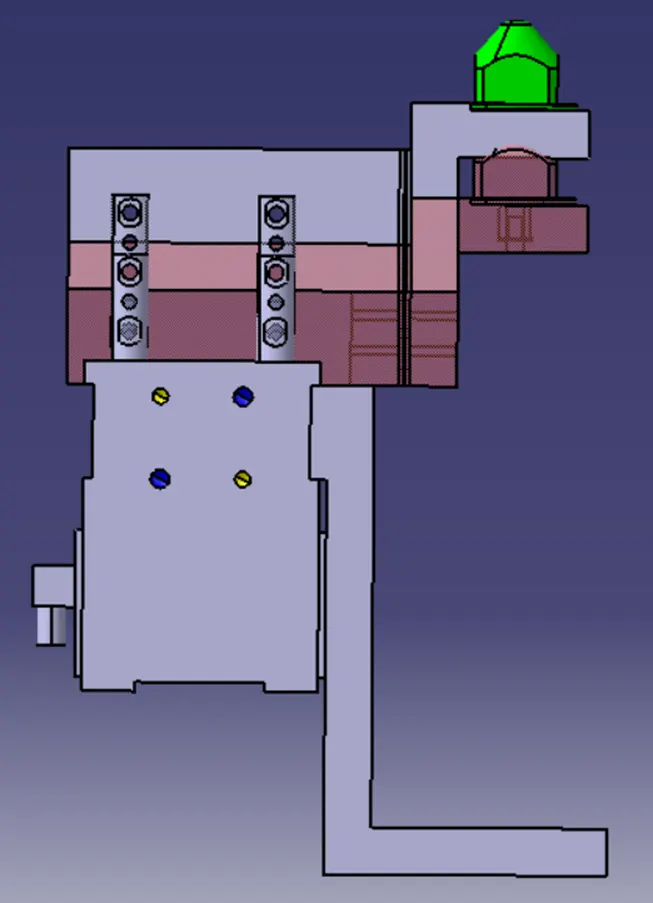
Final Assembly
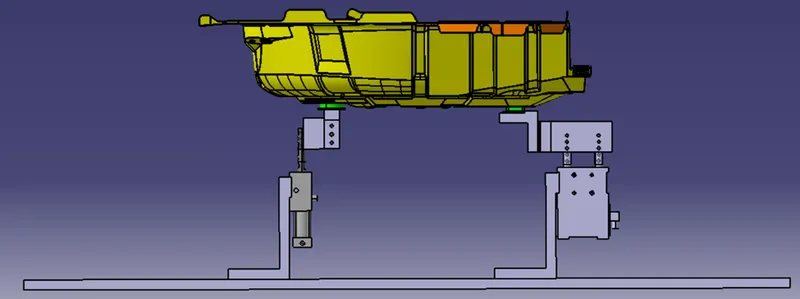
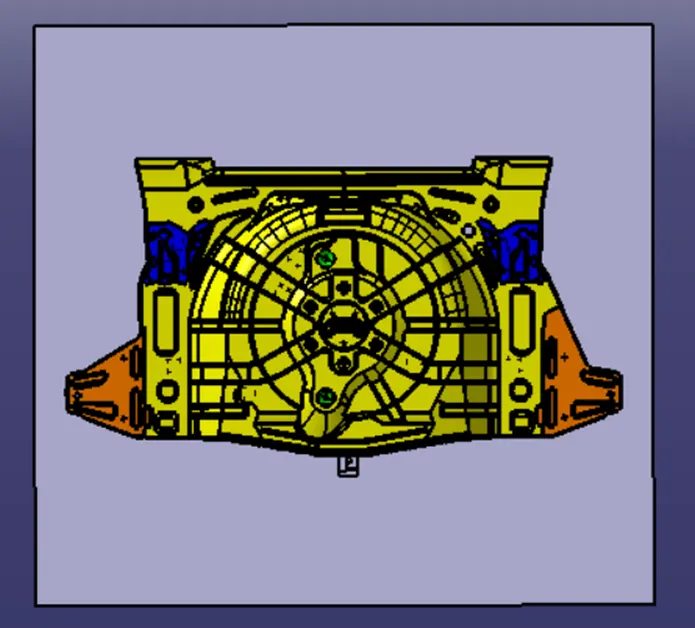
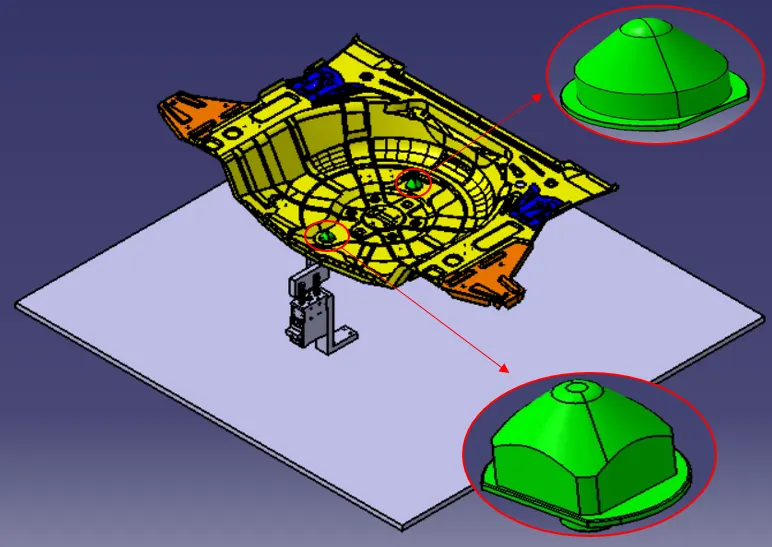
Conclusion:
In this challenge, we have designed two types of pin fixed pin units and retractable pin units that will locate the work piece properly.