Week - 4 - Crash Box Simulation
Report week 4
Aim: Simulate the crash process of the crash box to the rigid wall. Compare stress and strain in two different crash box thickness: 1.2mm and 1.5mm.
Procedure:
Open the keyword file, we have the geometry and mesh of crash box. First open part keyword and create a section and material for it. In the sectionn card, we set up thickness as 1.2mm for the first case.
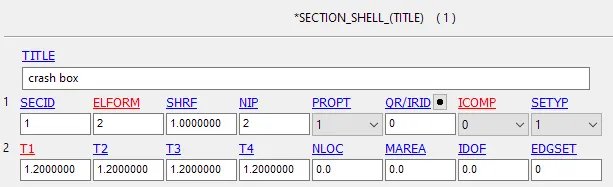
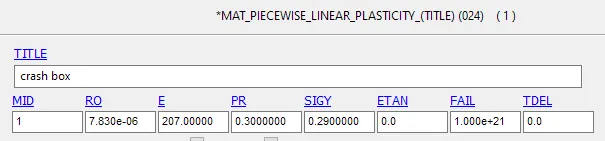
then set up material, remind unit system is gm-mm-ms. Use number 24 picecwise linear plasticity with SIGY as 0.29.
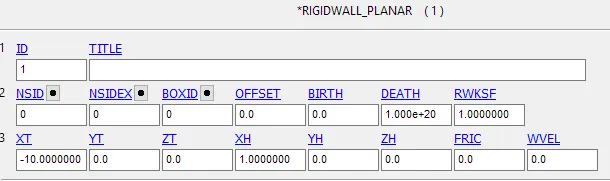
Next, we create the ridig wall. Open rigid wall planar, since rigid wall is normal to x axis. So normal vector is (0,0,0) to (1,0,0). However, we need to have a distance between crash box and rigid wall, then we set vector cordinate as follow:
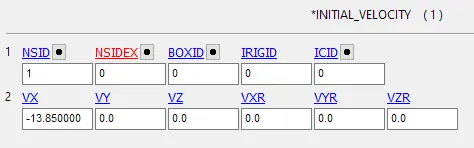
Create initial spped for crash box to nagetive x axis,
Create a self contact of crash box
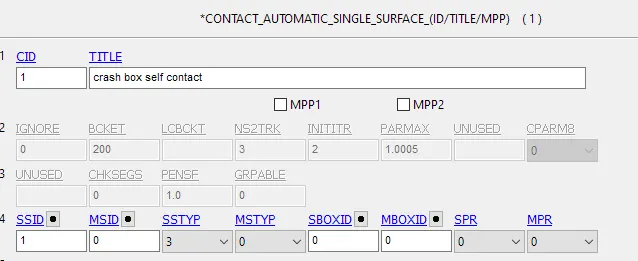
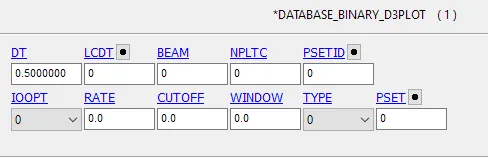
Finally, we set up control keyword and database keyword. Termination time is 5

Binary d3plot time is 0.5
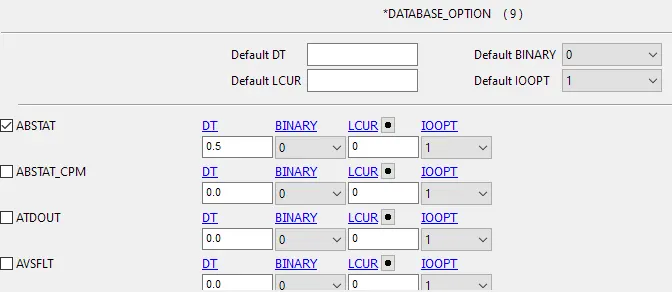
In ASCII option, we set up ABSTAT, ELOUT, GLSTAT, MATSUM, NODOUT, RCFORC, RWFORC, SECFORC, SLEOUT and DT=0.5
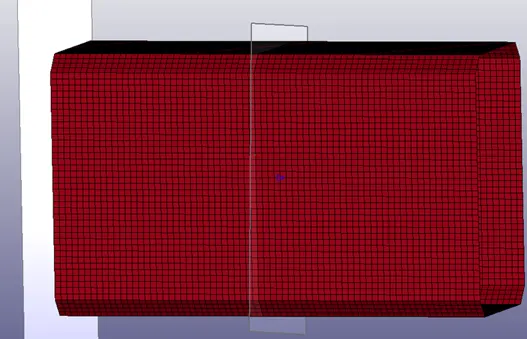
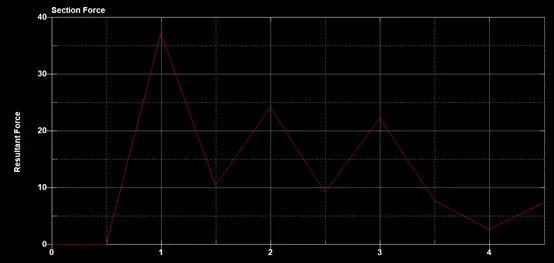
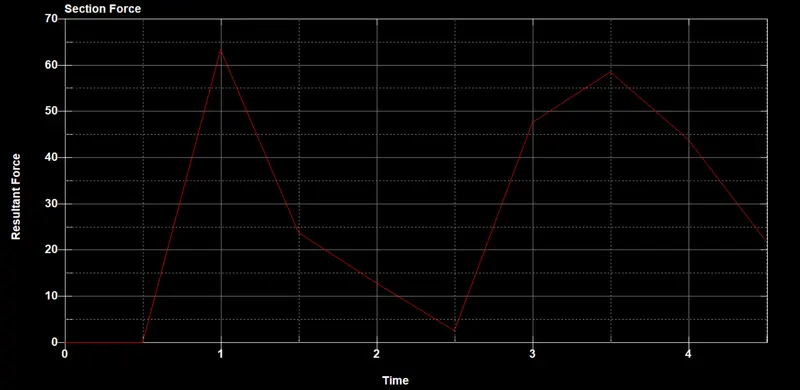
As in this assignment, we need to review cross sectional force, so we create a section. Go to create entity - database - cross section, click a point in the middle of crash bar
To review accelaration of node, go to create entity - database - History - type node, click a point in the middle of crash bar
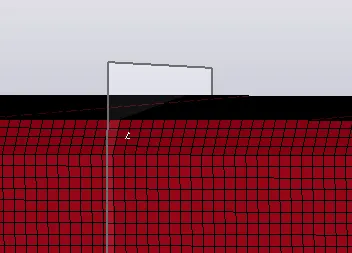
Now we can run the simulation. After that, change thickness from 1.2mm to 1.5mm, run the simulation.
Result:
After simulation, we get output files (d3plot, glstat, sleout, rcforc) and animation of the final simulation. We can see crash box hit wall and bounce back.
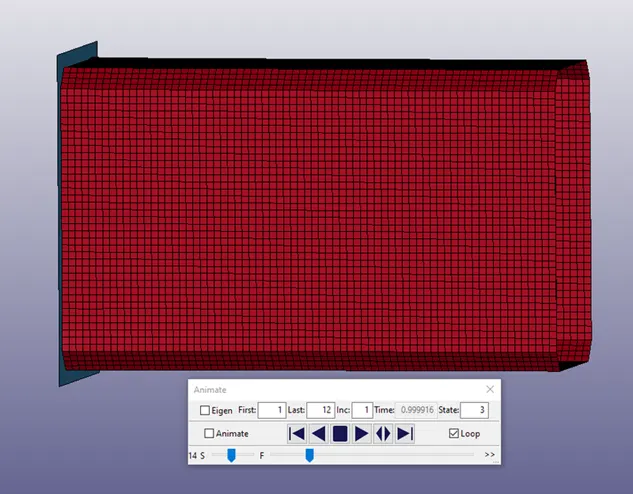
Cross-sectional force generated in the middle of the crashbox
1.2mm
1.5mm
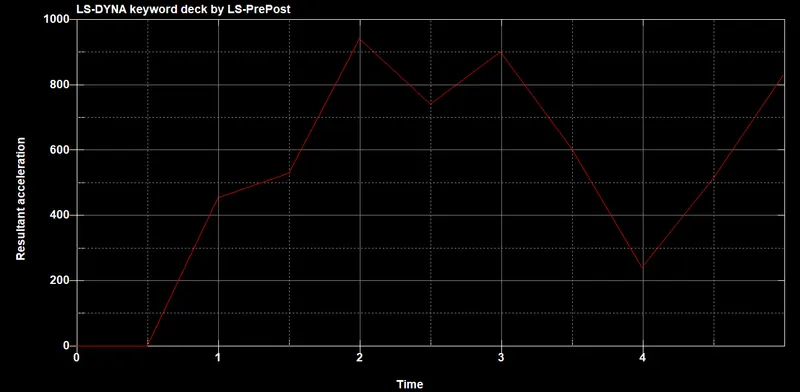
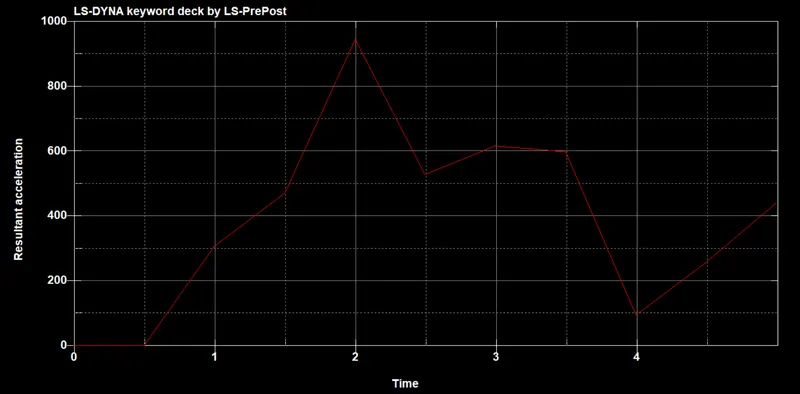
Acceleration plot of a node in the middle of the crashbox
1.2mm
1.5mm
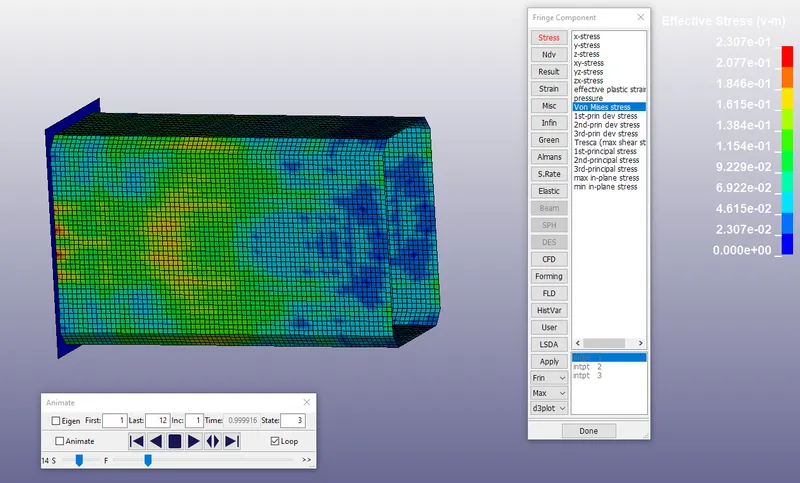
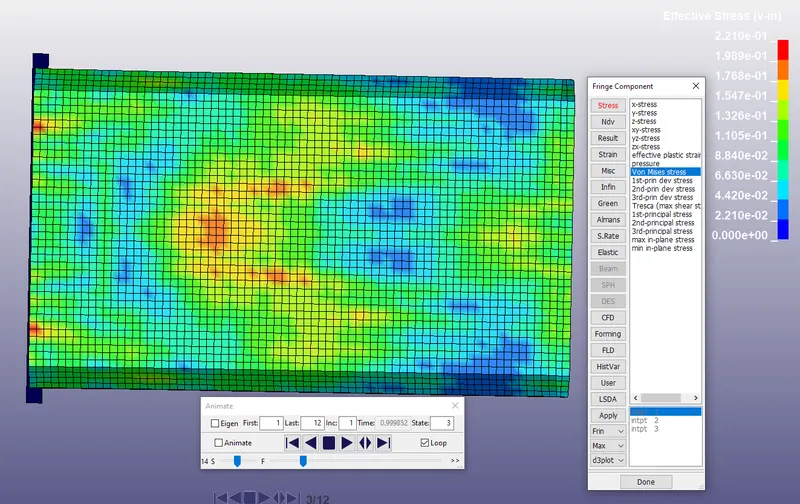
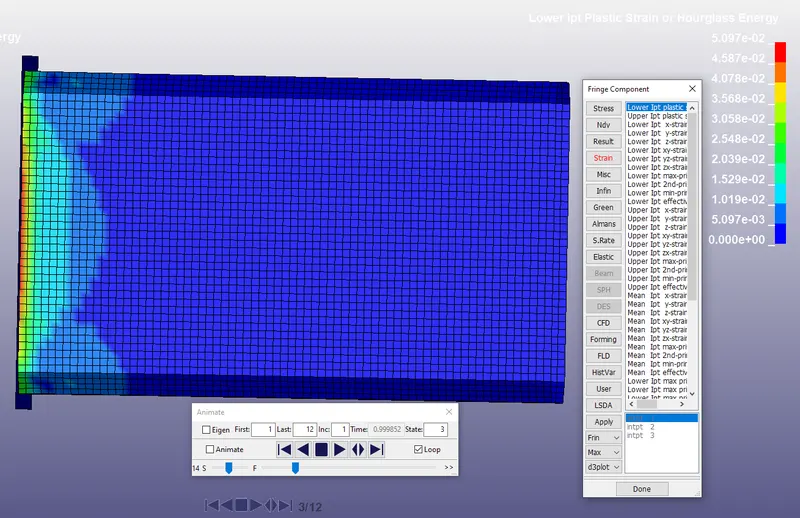
Maximum directional stress and strain along the length of the crashbox
1.2mm Von Mise Stress
Lower Ipt plastic strain
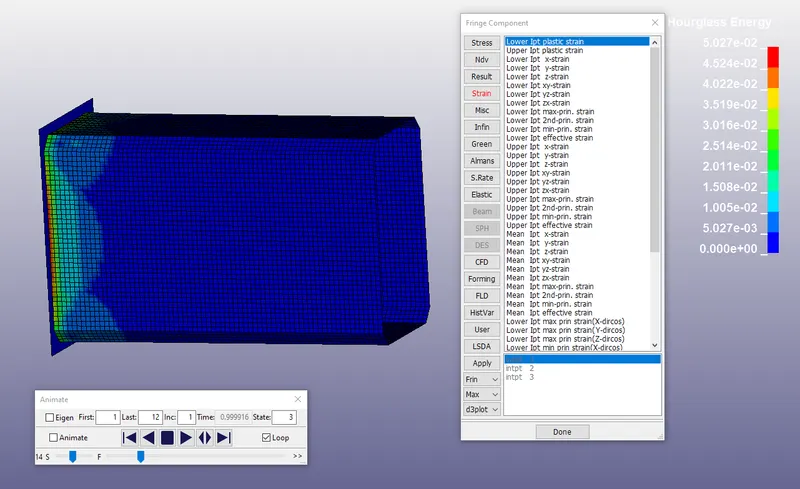
1.5mm Von Mise Stress
Lower Ipt plastic strain
Plot of total, internal, kinetic energy
1.2mm
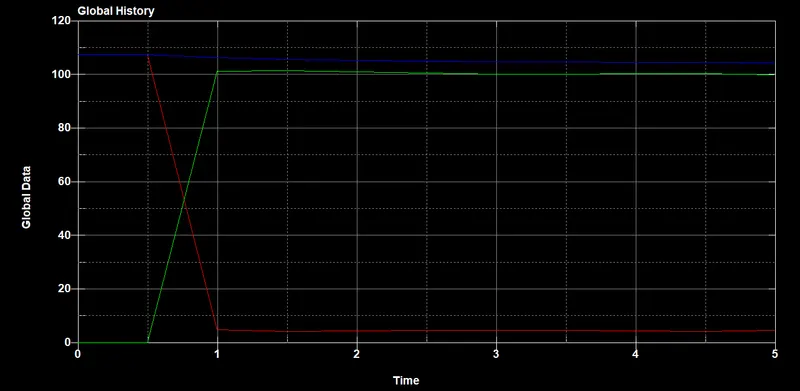
sliding energy is zero, hourglass energy is zero
1.5mm
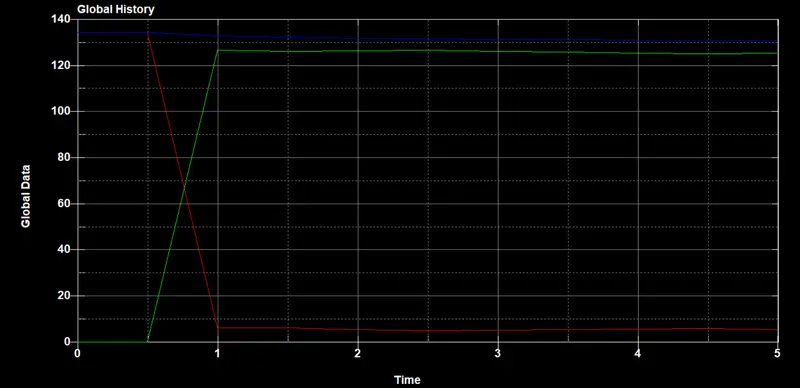
sliding energy is zero, hourglass energy is zero
Conclusion:
Compare the accelerations and stress/strain plots of 1.2/1.5mm crashboxes.
1.1.2mm has lower cross sectional force.
2.1.2mm has lower x stress.
3.1.2 has more accelaration.
These mean as thickness increase, the stiffness increase and stress increase.
As we know the function of crash box is to absorb the crash energy and reduce impact on other components nearby. From our result we can see the 1.2mm has the better energy absorb effect than 1.5mm.