Week 4 - CHT Analysis on Exhaust port
Aim: To Determine A CHT Analysis on Exhaust Port Using Ansys Fluent.
Objective:
- A description of Conjugate Heat Transfer (CHT).
- To maintain the `y+` value according to the turbulence model.
- To calculate the wall/surface heat transfer coefficient on the internal solid surface & show the velocity & temperature contours in appropriate areas.
- To verify if the HTC predictions from the simulations are right?
- On what factors does the accuracy of the prediction depend on?
Theory:
- Introduction: Conjugate Heat Transfer (CHT): The Conjugate Heat Transfer (CHT) analysis type allows for the simulation of heat transfer between solid and fluid domains by exchanging thermal energy at the interfaces between them.
- CHT analysis can be used to generate increased resolution thermal inputs on the stage wetted surfaces. Whereas the standard approach uses constant heat transfer coefficients, CHT analysis will export individual nodal Heat Transfer Coefficients and Wall Adjacent Temperatures as .
- The type of physical change being studied determines the choice of analysis technique, one of which is computational fluid dynamics (CFD) thermal analysis. CFD thermal analysis couples the effects of heat transfer—i.e., conduction, convection, and radiation—with fluid physics to provide realistic solutions.
Simulation setup:
- Geometry
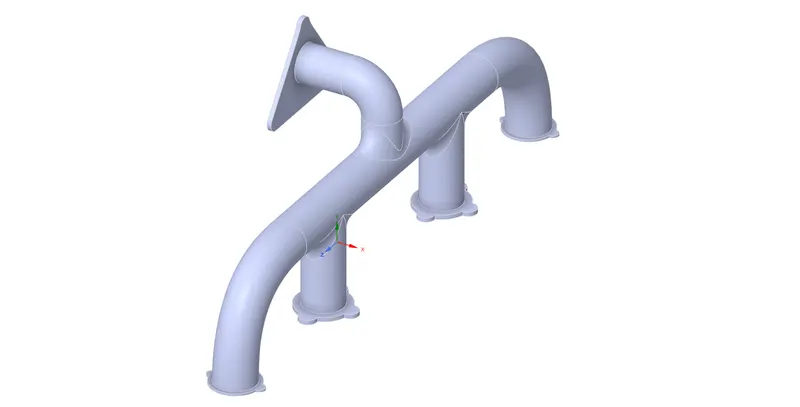
- Fluid Volume
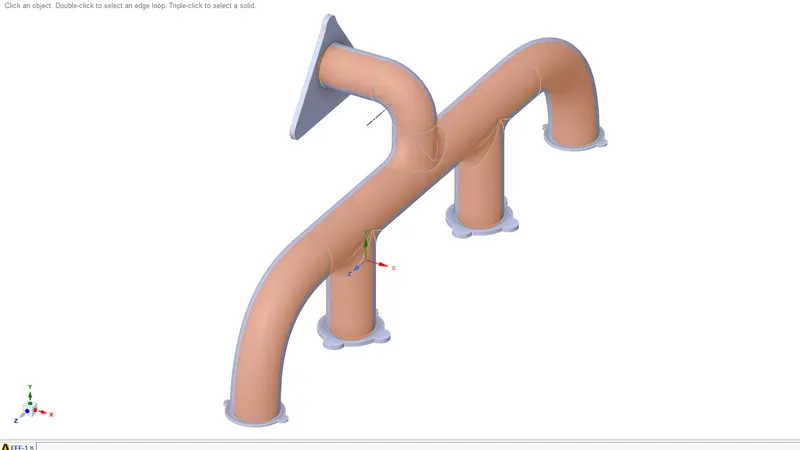
- Solid Volume
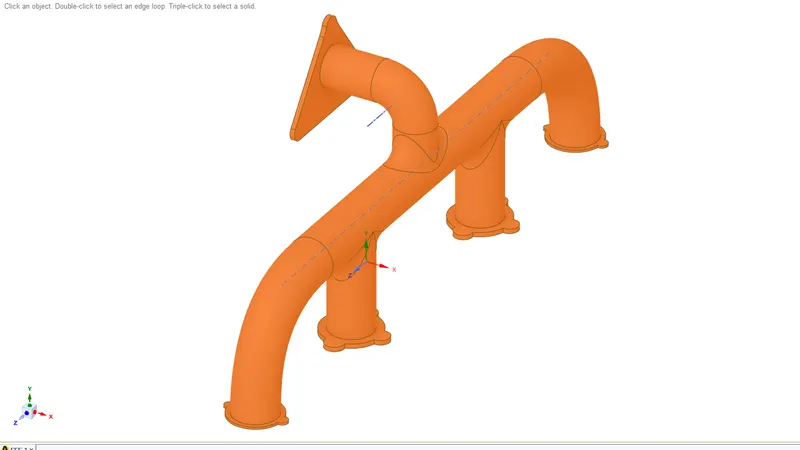
- Share Topology
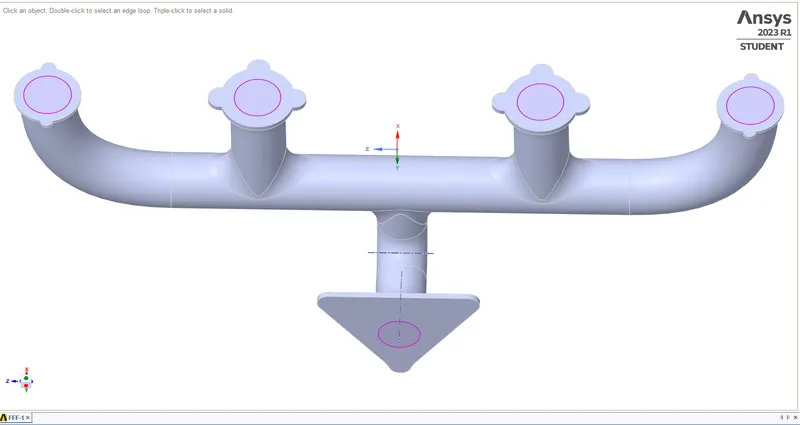
- Fluid Volume
- Meshing
- Surface Naming

- Meshed
- Element size is 150mm.
- The Number of inflation layers is 5.
- Maximum thickness is 5mm, And growth rate of 1.2.
- Total elements is 364345.
- The Total number of nodes is 110857.
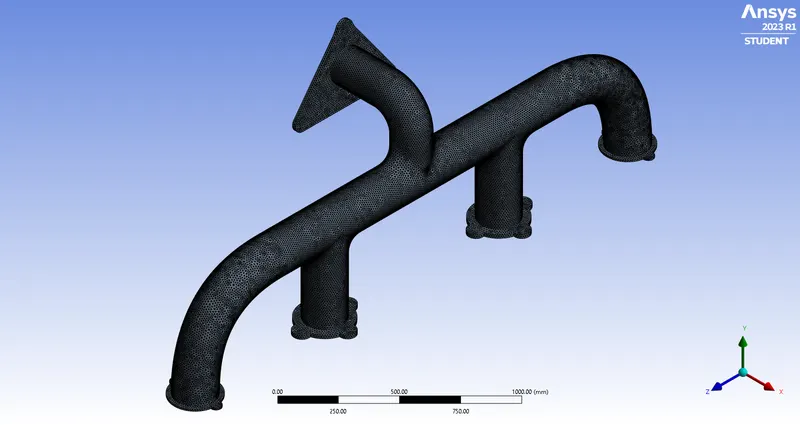
- Inflation Layer
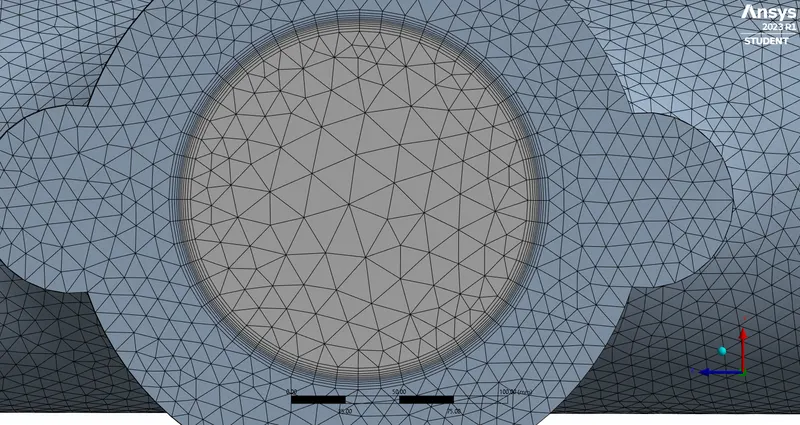
- Surface Naming
- Solution Setup
- General solving setup
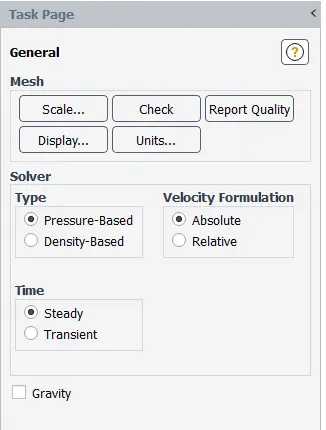
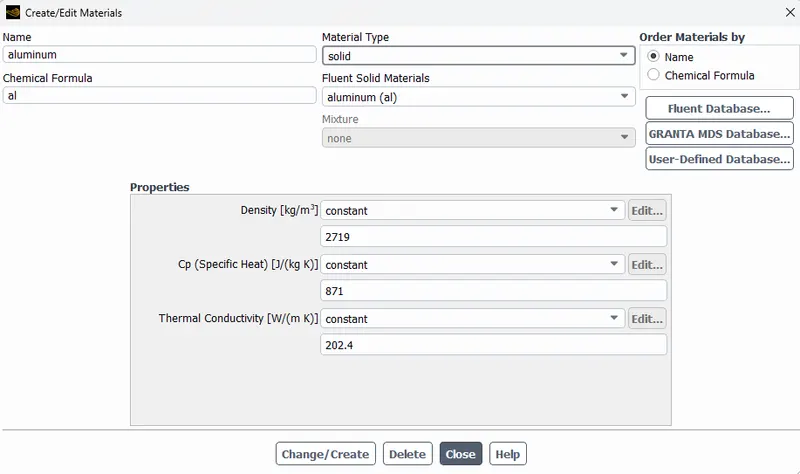
- Material
- Viscous model is the k-epsilon standard wall function.
- Solver Model
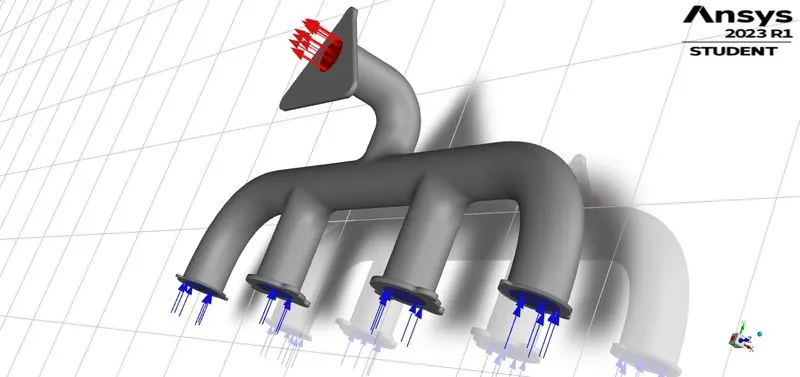
- Boundry Condistion
- Inlet
- Velocity magnitude is 5m/s.
- The Temperature is 700K.
- Outlet wall convection
- Heat transfer coefficient is 20[W/(`m^3`k)].
- Free stream temperature is 300K.
- Inlet
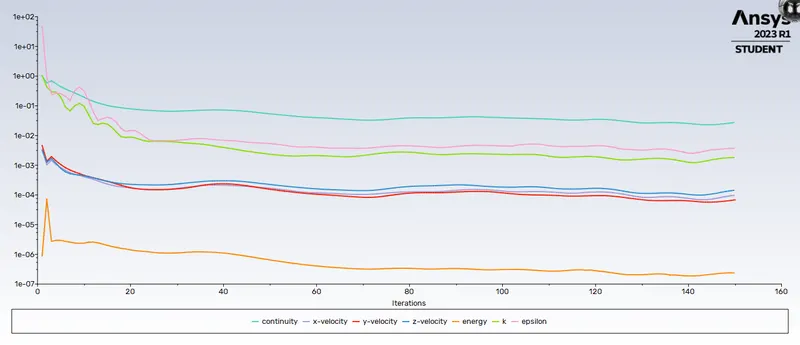
- Scale Residuals
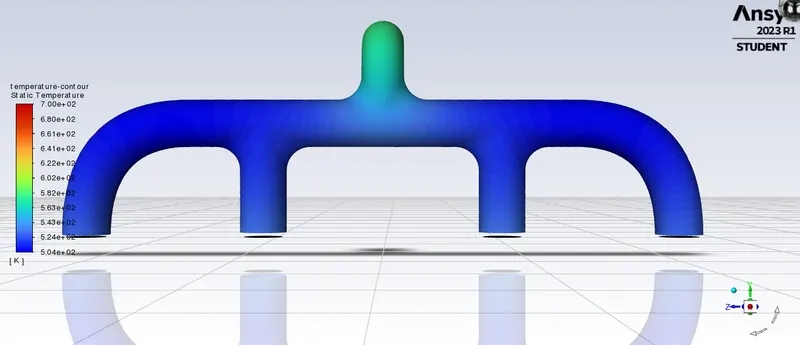
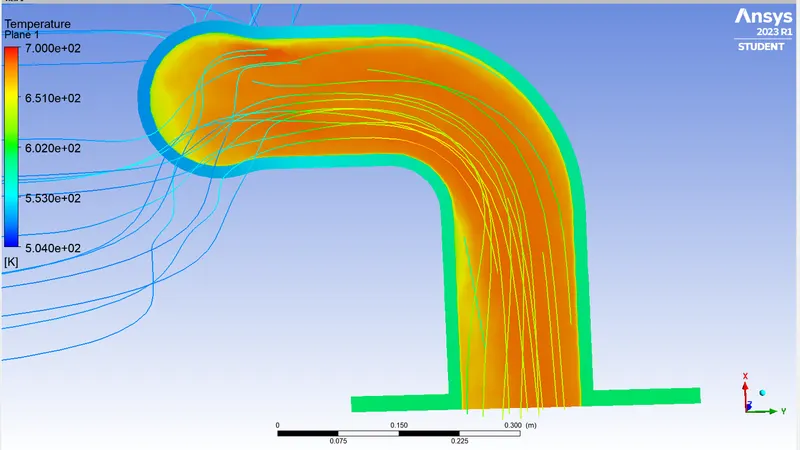
- Temperature Contours
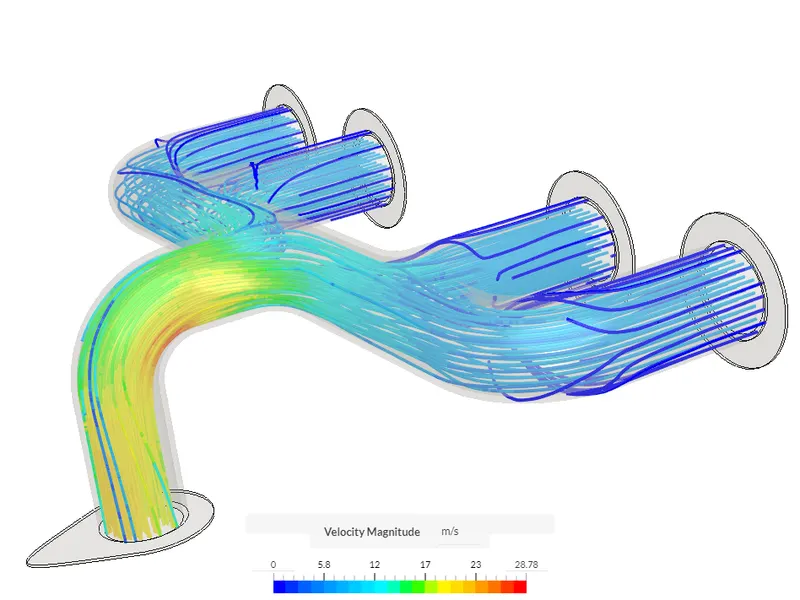
- Velocity Steamline
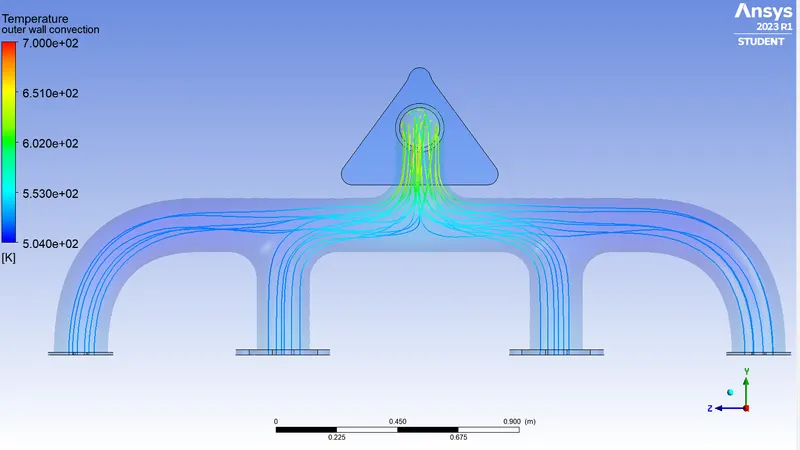
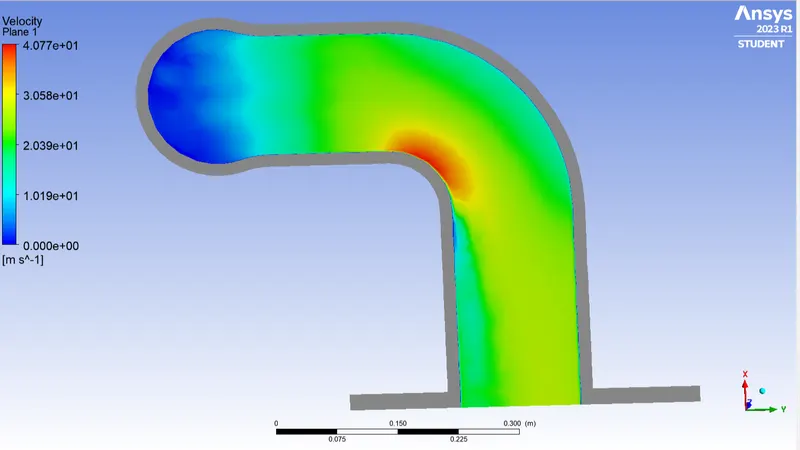
- Velocity
- Steam Flow
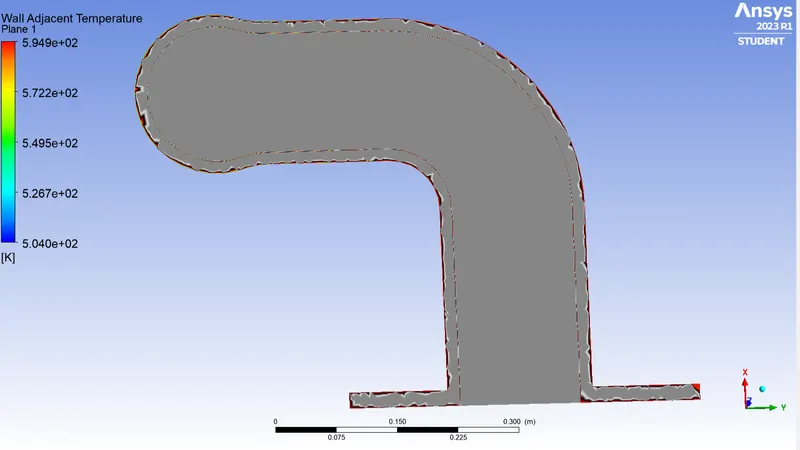
- Wall Heat Transfer Coefficient
- General solving setup
- How would you verify if the HTC predictions from the simulations are right? On what factors does the accuracy of the prediction depend on?
So if you observe, the heat transfer coefficient is directly proportional to the Reynolds number (also to the velocity). So if you increase the velocity then there will be an increase in the convective heat transfer coefficient.
The typical flow conditions in automotive exhaust systems are in the range of 10^3 to 5*10^4. The exhaust flow often enters the region re<2300, especially in exhaust manifold runners. In spite of that, the flow remains actually turbulent since it has flowed through a substantial restriction. The exhaust valves and the persisting unsteady flow pulsation effects don’t favor the transition to the laminar region.
According to the sieder tate relation which correlates the Nu number with Re and Pr
Nu = 0.027Re^0.8Pr^1/3,
It means Nusselt no. is the function of Reynolds no and Prandtl number.As the turbulent boundary layer in the bend of the outlet port is the thin maximum velocity of flow is observed at bend and hence higher Reynolds number.
As Length of pipe and thermal conductivity are constant, value of h will increase as Nu increases and Nu increases as Re increases.
As per our results, the heat transfer coefficient is high for higher value of velocity and hence from above discussion we think that our results are correct.
Conclusion
- Velocity tends to increase from inlet to outlet due to mass conservation and mixing of air.
- Transfer of heat from fluid to solid is high and leads to formation of high velocity at the junction resulting in HTC capturing.
- More refined mesh leads to better results.
- Use inflation layers and apply proper Boundary conditions.
- Proper selection of turbulence model according to y+ values.
- Most accurate method to predict results is to do a comparative study of experimental and analytical results on Nusselt’s Number.
- Otherwise, another method to verify is to validate simulation data with published experimental data.