Week 4 - CHT Analysis on Exhaust port
AIM-
- Give a brief description of why and where a CHT analysis is used.
- Maintain the y+ value according to the turbulence model and justify the results.
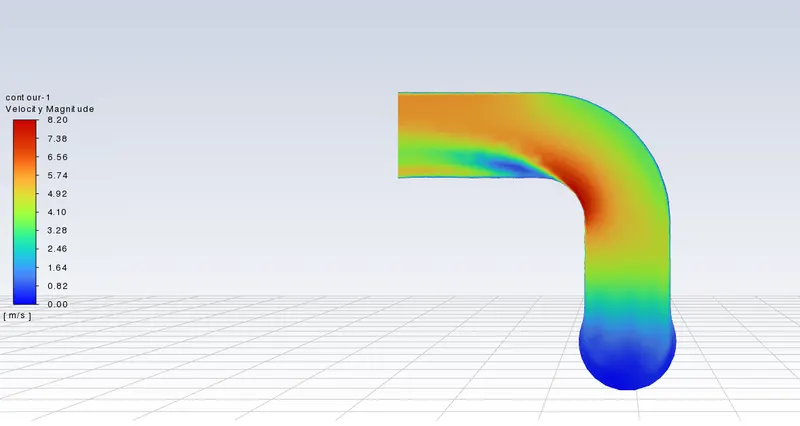
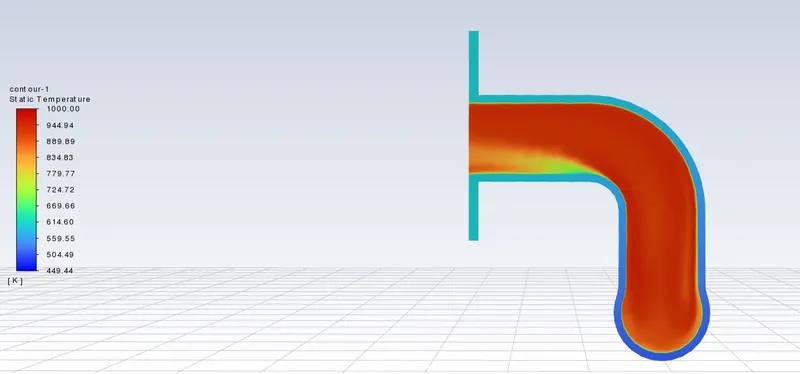
- Calculate the wall/surface heat transfer coefficient on the internal solid surface & show the velocity & temperature contours in appropriate areas.
- How would you verify if the HTC predictions from the simulations are right? On what factors does the accuracy of the prediction depend on?
Theory-
The Conjugate Heat Transfer (CHT) analysis type allows for the simulation of heat transfer between solid and fluid domains by exchanging thermal energy at the interfaces between them. Typical applications of this analysis type exist as, but are not limited to, the simulation of heat exchangers, cooling of electronic equipment, and general-purpose cooling and heating systems.
Procedure-
1)Geometry-
- import the geometry to space claim
- using volume extracty we can extract volume of fluid
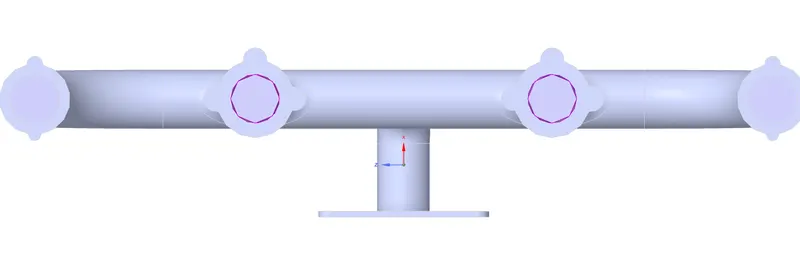
3) as we can see in above image the volume dosent exactly conform to the pipe we cann fix this by using the share topolgy option in workbench
4) name the inlet outlet and solid boundary
5) Meshing after fixing the mesh we can start meshing process with below setting-
y+ = 5 (as we need to observe heat transfer at boundary it is imp to take low y+ value )
v= 1m/s
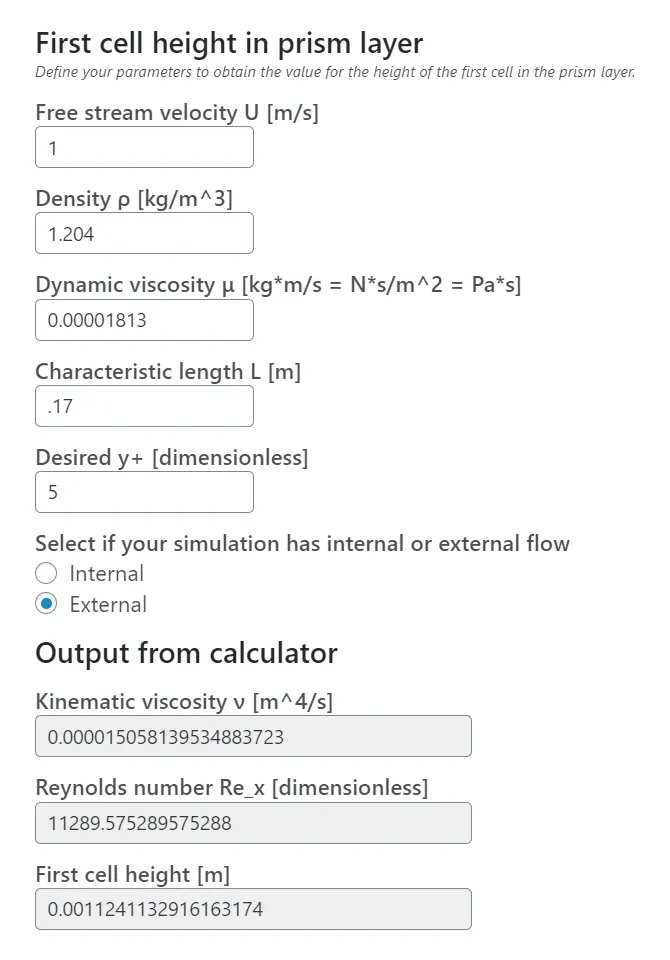
no. of elements =230656
after meshing we can move to setup deck
3) Setup
1) we will select pressure based k omega modelas we have taken y+ =5 steady state
physics setup-
INLET CONDITIONS
- Initial air velocity at inlet be 1 m/s
- Temperature be 1000k
heat flux for solid =20 w/m^2 k
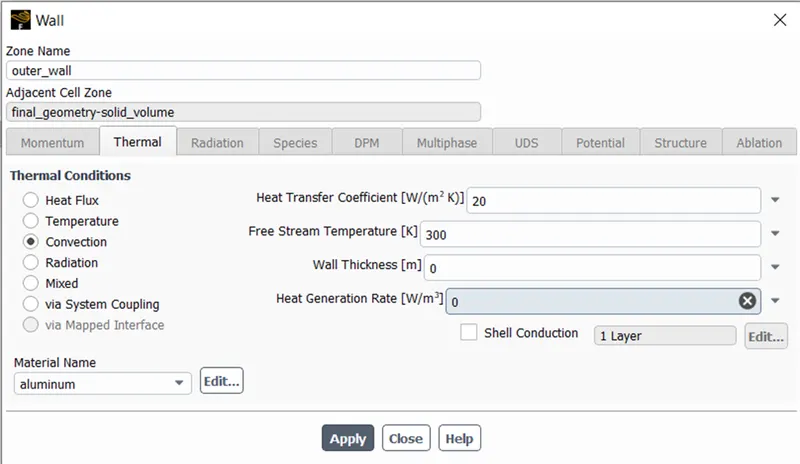
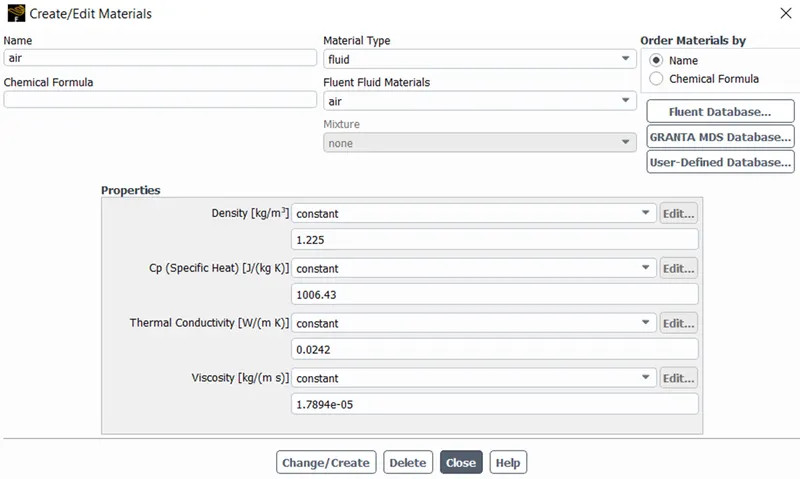
setup up material from fluent data base -
set up fluid as air and solid as aluminium
initialize
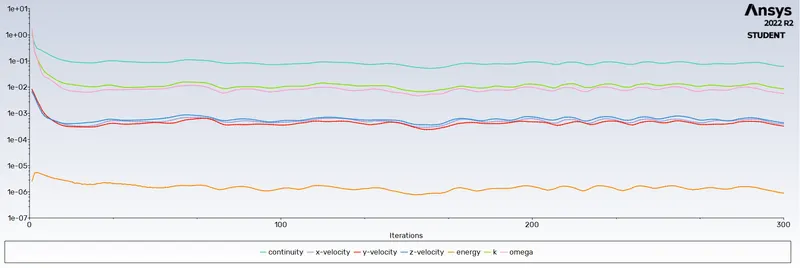
and run for 300 iterations
residual plot-
velocity contour-
temp plot-
Calculations-
Pr = mu* cp/k
here mu = 1.789*10^-5 cp = 1006.43 J/kg-k and k = thermal conductivity = 0.0242 w/mk
Pr = 0.00001789*(1006.43/0.0242)
Pr = .895
Re= 11529 (rho*v*D/nu)
Nu=0.664⋅Re0.5⋅Pr0.33
nu= 151
nu=hd/k
we get h= 21.6
which is very close to the value assumed