Week 4 - CHT Analysis on Exhaust port
Aim: To carry out a Conjugate heat transfer analysis on an exhaust manifold.
CHT Analysis:
CHT or Conjugate heat transfer analysis type allows for simulation of heat transfer between solid and fluid domains by analyzing the energy transfer at their interference surface. This is mainly carried out at those surfaces where a solid gets heated due to flow of heat through or vice-versa. CHT can predict heat transfer by simultaneous solving all the relevant solid and flow field heat transfer process. Thus can predict the heat transfer by conduction and convection. The real-world situation contains many applications involving heating or cooling of components by flow of fluid above it. So, in order to analyze these heat transfer due to flow of fluid CHT plays an important role.
These interaction of fluid and solid involve formation of hotspots in order to analyze these hotspots and to provide the best cooling methods in order to prevent the failure of these components. Mainly these are used in adopting best cooling methods for automobiles, Electronic components etc.
Pre-processing:
- Geometry part file was imported to spaceclaim
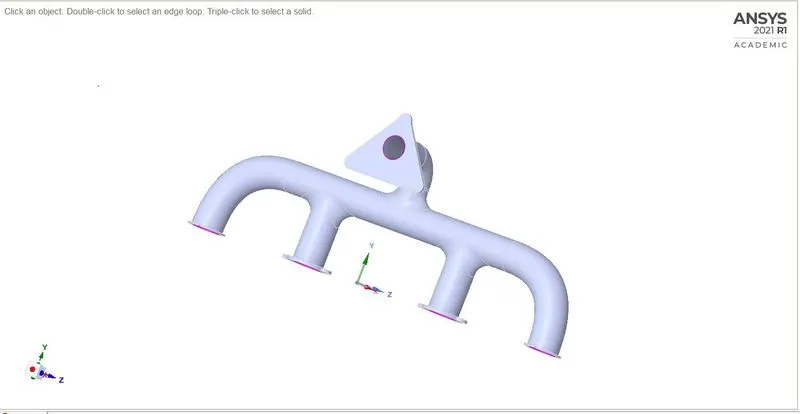
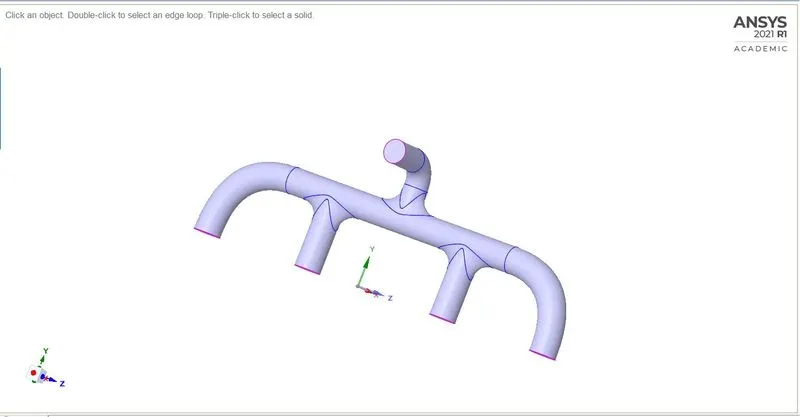
- The volume of flow was extracted from the Geometry by using the volume extract tool.
Computation method:
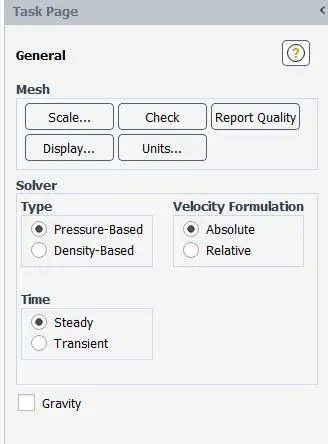
Solver type:
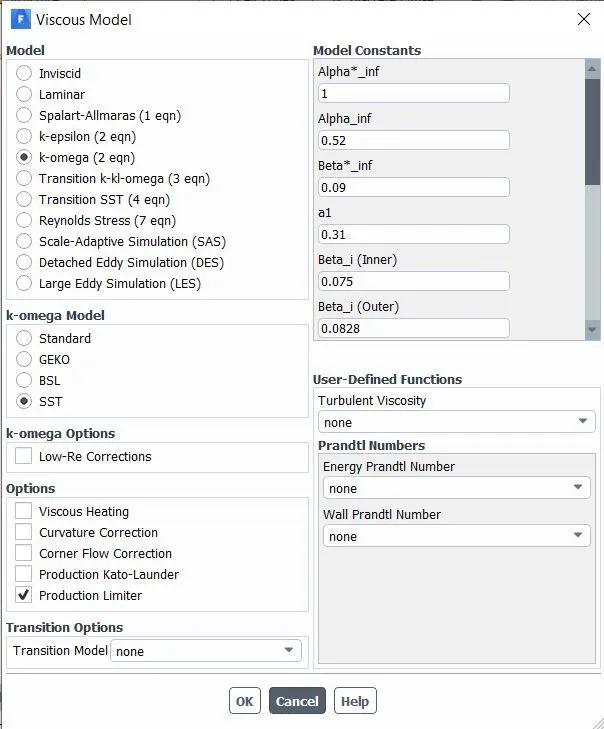
Viscous model:
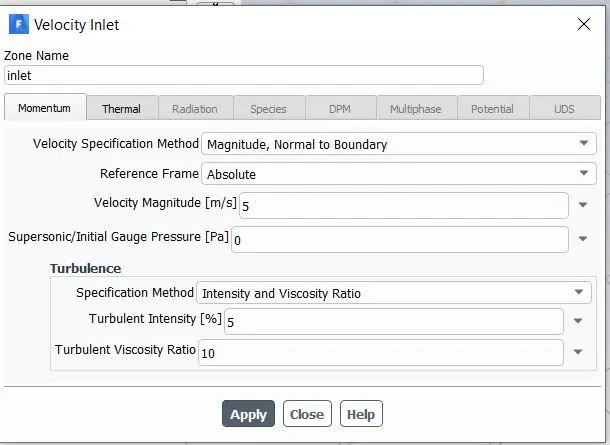
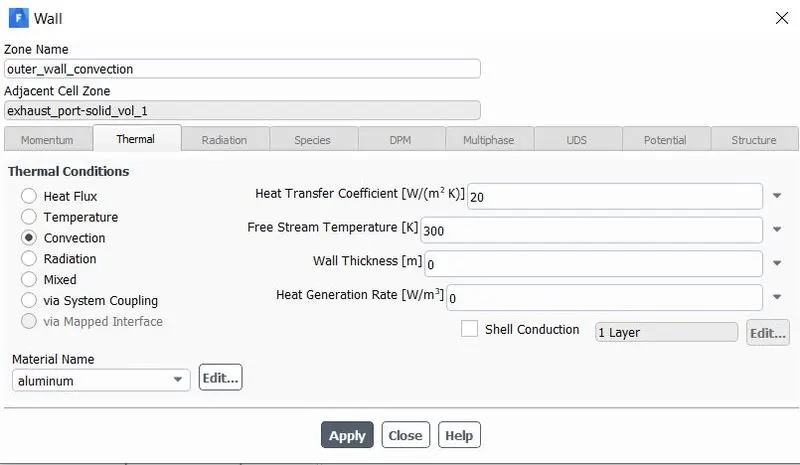
Inlet parameters:
Meshing:
Baseline Meshing:
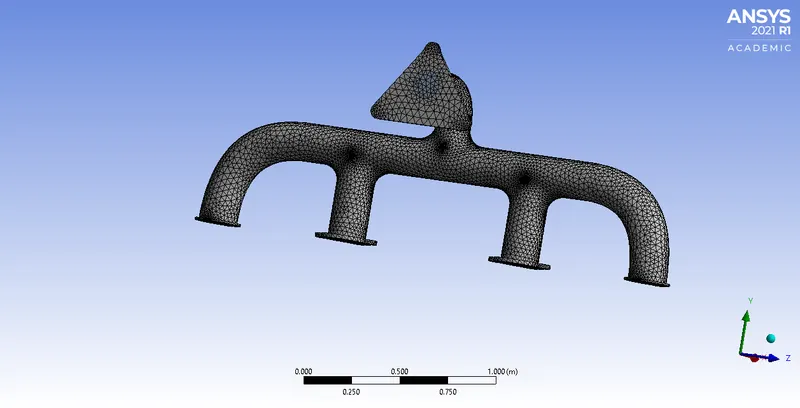
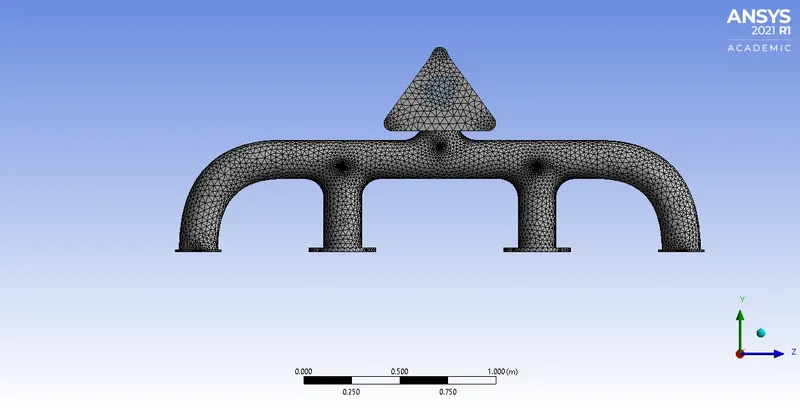
No of elements: 137627
Result (base line):
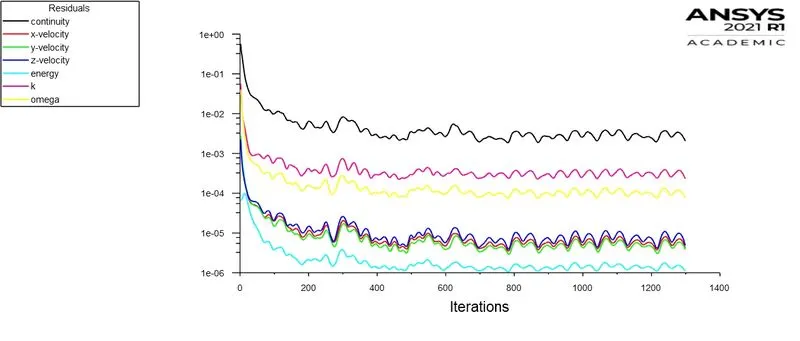
Residuals:
Temperature contour:
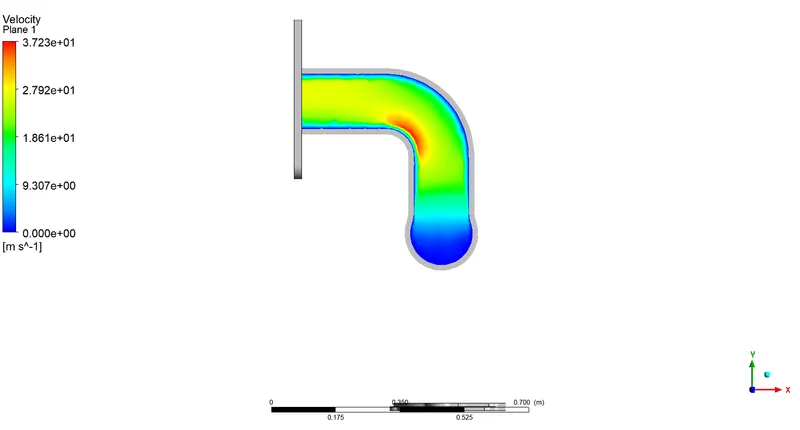
Velocity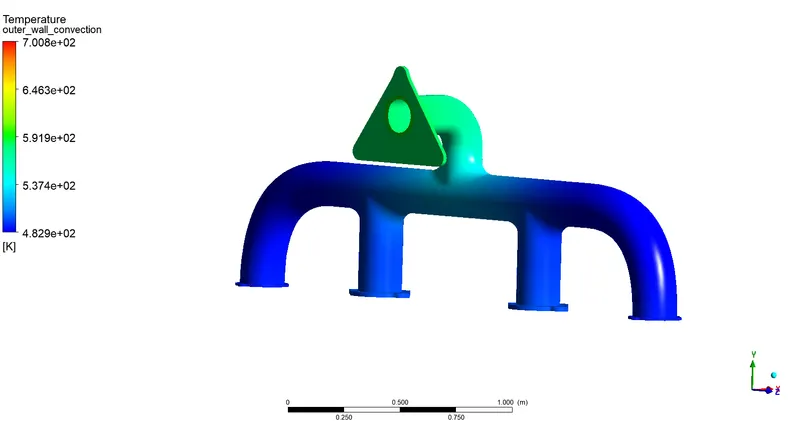 Contour (cut-plane):
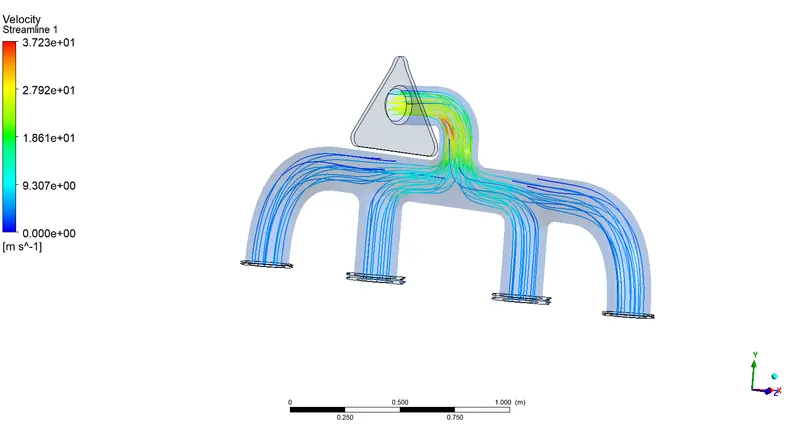
Velocity streamlines:
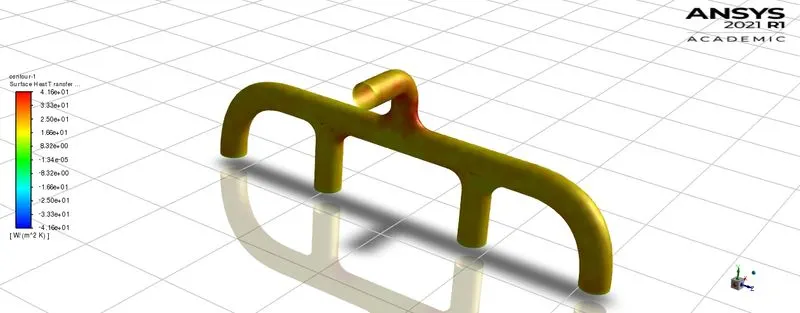
Surface heat transfer coefficient inner walls:
Results(Refined Case)
Refined Mesh:
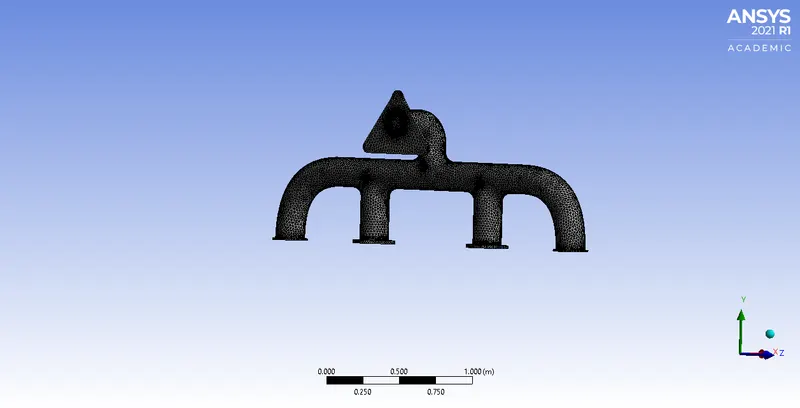
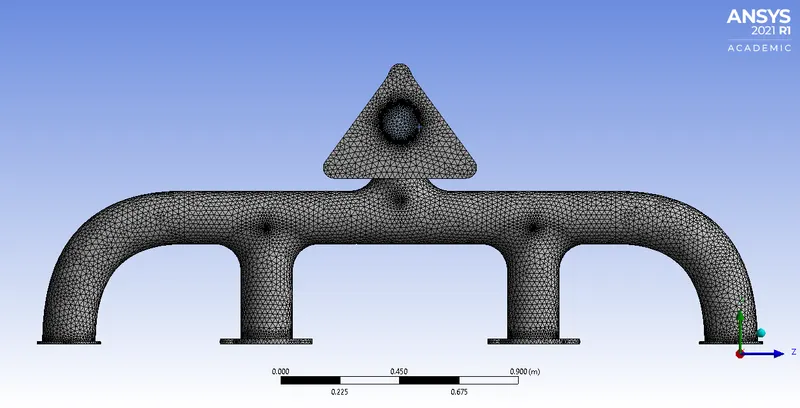
No. of elements:396460
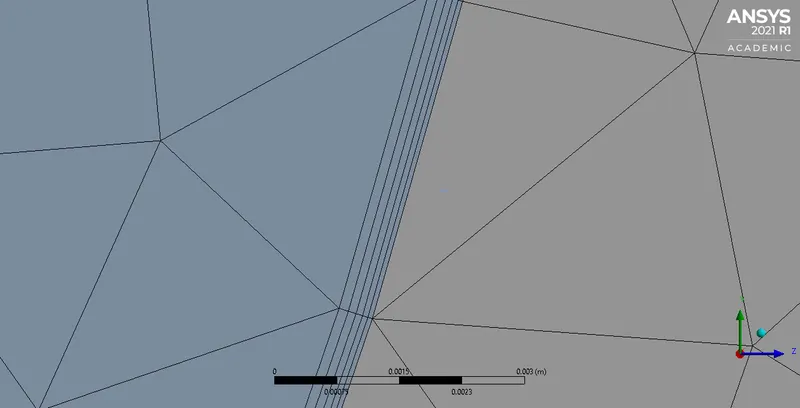
Inflation layer:
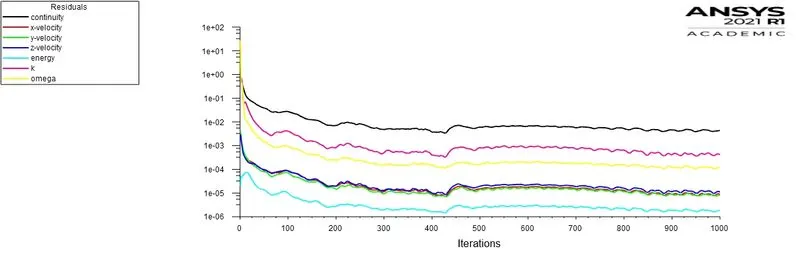
Residuals:
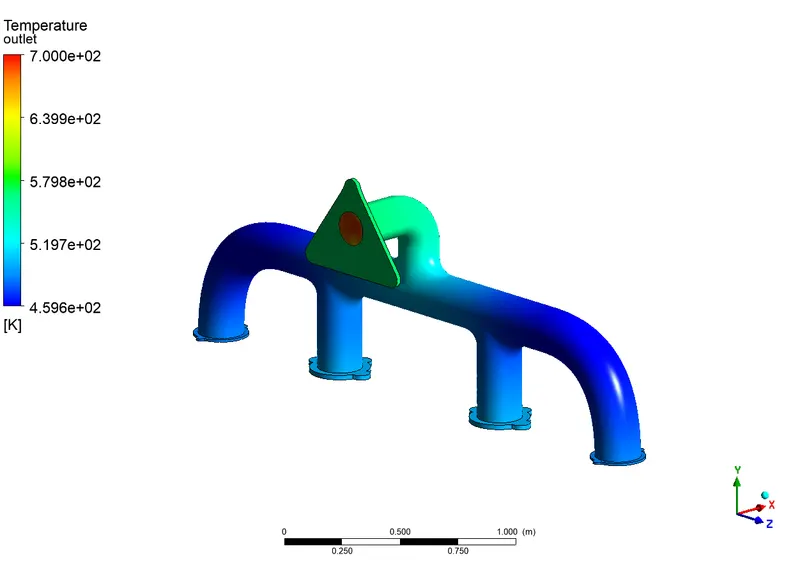
Temperature contour:
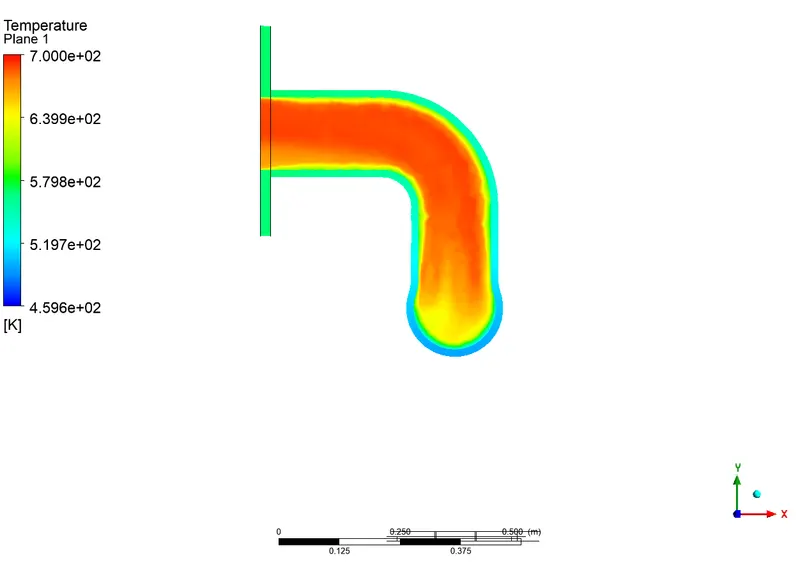
Temperature contour (Cut plane):
Velocity Contour (cut-plane):
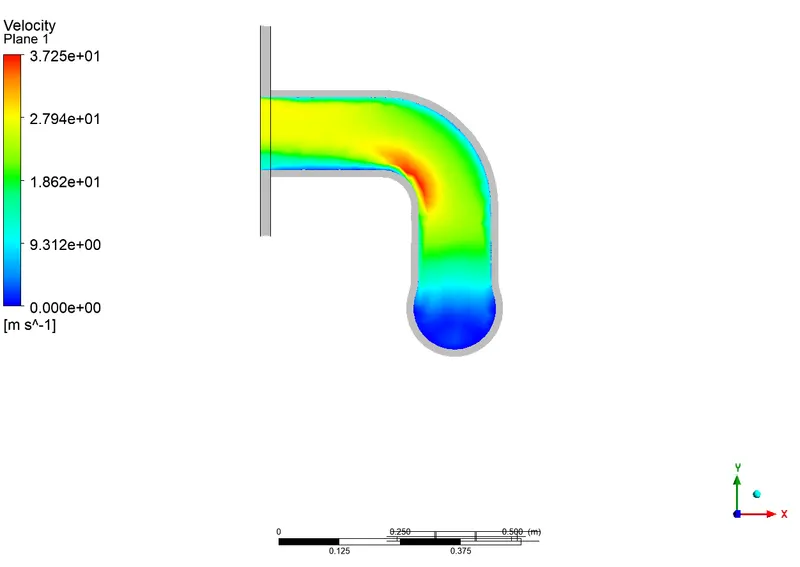
Here the region of high velocity is clearly shown at the bend.
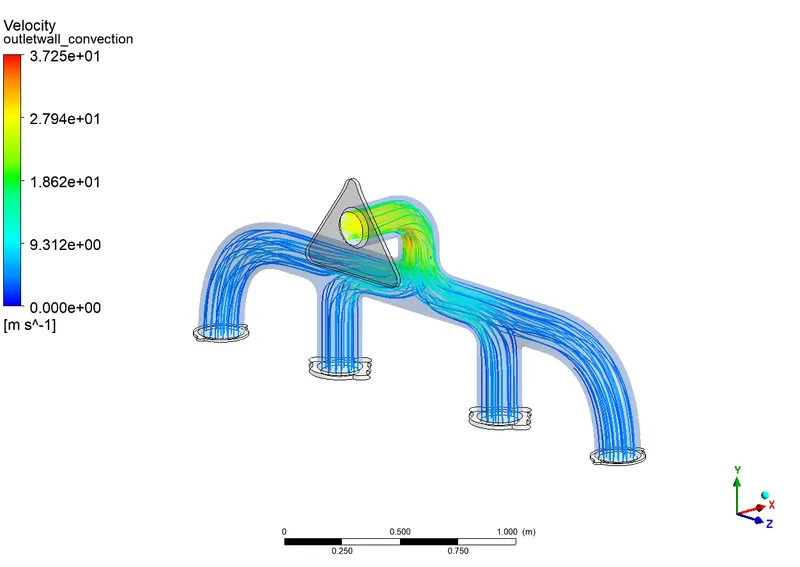
Velocity streamlines:
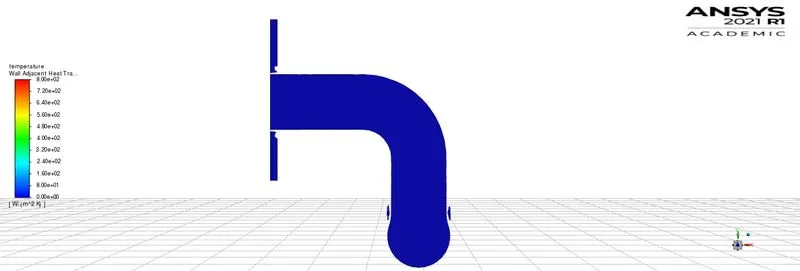
Wall adjacent HTC:
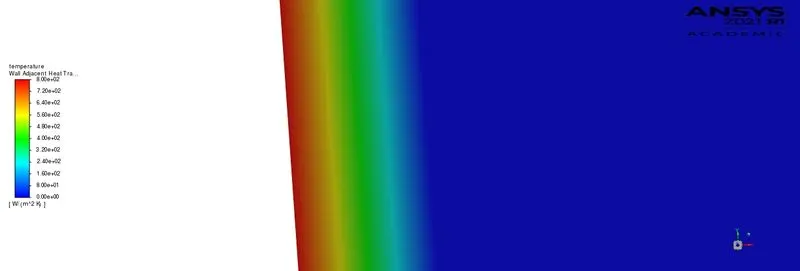
Wall adjacent HTC (zoomed):
Conclusions:
- With baseline meshing the wall adjacent HTC could not be computed. Thus inflation layer computes the wall adjacent HTC perfectly.
- The velocity at outlet is high due to the law of conservation of momentum
- Thus the velocity increases to a higher extent at outlet leading to high turbulence at the bends of the pipe.
- As we refine the mesh it take more time for computing.
- Since our area of intrestt is to calculate the wall heat transfer coefficient we chose k-`omega`model as it is best for computing flow near the wall.
- thus y+ assumed to be 1 and hence we calculate the first layer thickness of the inflation.
Analytical method for calculating HTC:
`Nu = 0.023*(Re^0.8)*Pr^n`
`Pr =`Prandtl Number
`Re =`Reynold's number = `(rhoUL)/mu`
`Pr = v/alpha = (mu/rho)/(k/c_p) = (c_p*mu)/k`