Week 4 - CHT Analysis on Exhaust port
Aim:-To simulate a conjugate heat transfer analysis on an inline 4 cylinder manifold.
Introduction
The conjugate heat transfer (cht) analysis,type allows for the simulation of heat transfer between solid and fluid domains by exchanging thermal energy at the interfaces between them.Typical application of the analysis type exit as, but are not limited to, the simulation of heat exchanger ,cooling of electronic equipmdent and generalpurpose cooling and heating system
computatinal fluid dynamics(cfd) are more specifially conjugate heat transfer (cht) analysis can accurately predict heat transfer by simultaneously solving all the relevant solid and flow field heat transfer process .
for example :- conduction through solids, free and forced convection in the gases fluid and thermal rediation.
Application of conjugate heat analysis
1.Effective heat transfer
Effiently combining heat transfer in fluids and solids is the key to designing effective coolars,heaters or heat exchangers. The fluid usually playsthe rolls of endergy carriers on larger distances. Forced convection is the most common way to achieve a high heat transfer rate. In some application , the performance are furthered improved by combining convection with phase charge ( for example liquid water tovapour phase change)
Even so , solids are also needed,in partion to separate fluid in a heat exchanger so that fluid exchange energy without being mixed.
2.Energy conservation
Heat transfer in fluid and solids car also be combined to minimize heat looses in vapour devices. because most gases (especially at low pressure) have small thermal conductivities ,they can be used as thermal insulator provided they are not in motion .
in many situation gas is prefereed to other material due toits low weight.In any case ,it is import to limit the heat transfer by convection,in particular by reducing the natural convection effects judicious positioning of walls and use of small cavities helps to control the natural convection.Applied at the micro-scale the principle leads to the insulation foam concept where any cavities of air(bubbles) are trapped in the form material (e.g polyurtethane) which combine high insulation performancewith lightweight.
PROCEDURE
geometry set up
⦁ Load the model into the space claim and the change the unit to meter.
⦁ Remove the duplicate edges in the model
⦁ Then extract the volume in the model and name the inner volume as fluid and outer volume as solid volume and remove the empty components.
⦁ Enable share topology of main components so that the mesh and physics information can be shared and conformal mesh can be achieved.
⦁ Lastly to achieve conjugate heat transfer between the fluid and wall we have to choose prep under the workbench tool so that the heat transfer is captured throughout the wall from inlet to outlet.
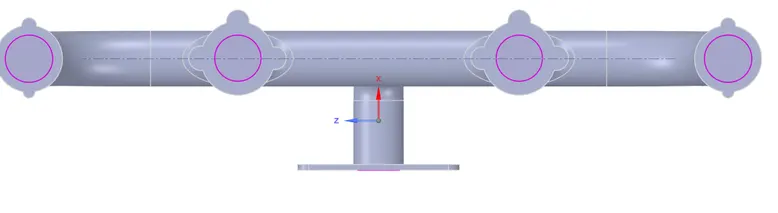
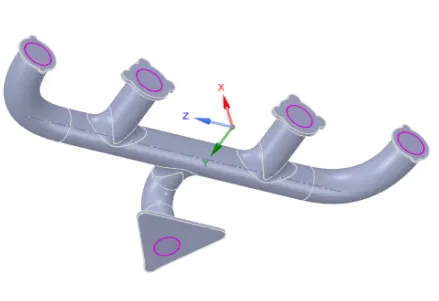
The exhaust manifold STEP file is imported into spaceclaim and using the volume extract tool the volume of the exhaust manifold is extracted.
mesh
⦁ After the geometry set up is done in spaceclsaim open the mesh.
⦁ select the faces and name them accordingly.
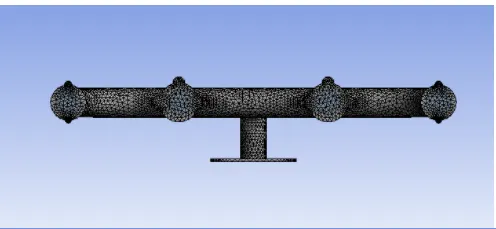
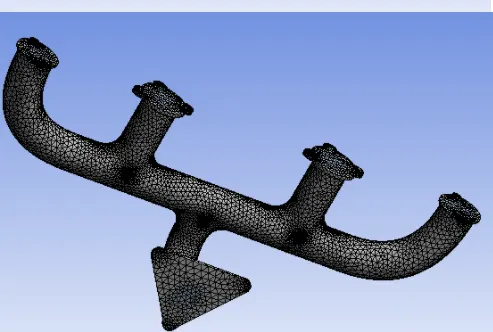
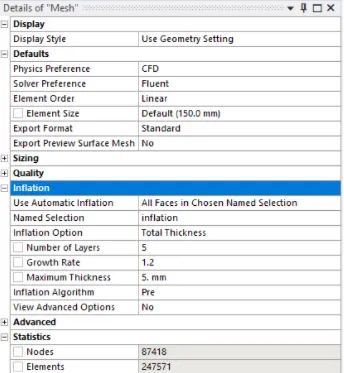
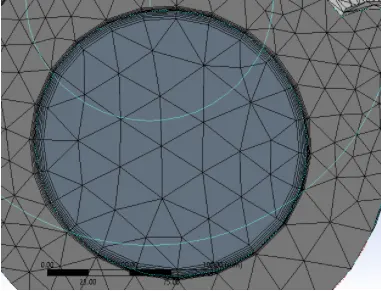
⦁ Create a name selection for fluid volume so that the inflation layer can be achieved on that day body since the conjugate heat transfer is between the fluid volume to the solid wall.
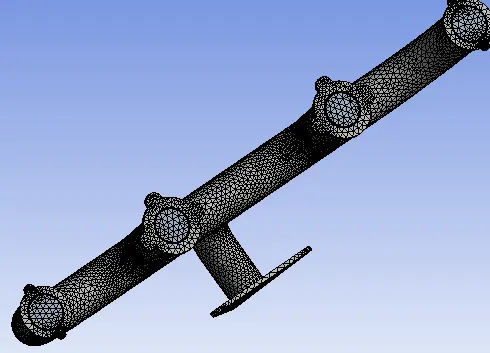
⦁ Create a body sizing on the outer wall convection region to the achieve mesh refinement and accurate result can be captured at such regions
Fluent set up and simulation
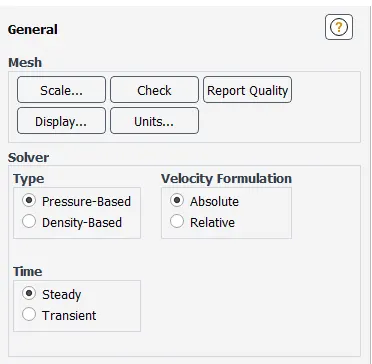
⦁ After updating the mesh upon fluent set up. select a pressure-based solver using the
the Steady-state time simulation and absolute velocity formulation under the general setting.
⦁ under the physics choose the energy option since we are dealing with temperature properties.
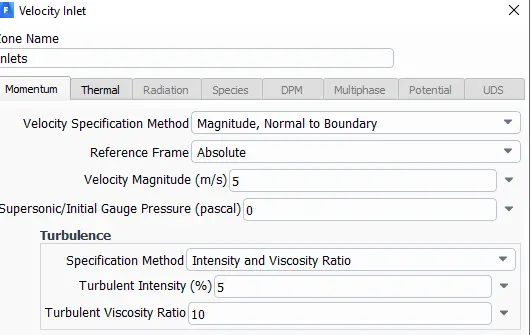
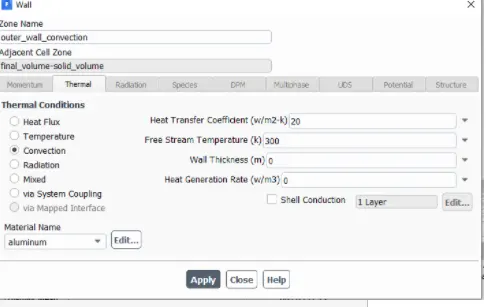
⦁ Input the boundary valuesat the inlet 5m/s as initial velocity at 700k temperature.Set the outer wall convection boundary to convection type and input a constant value for heat transfer coefficient as 20.
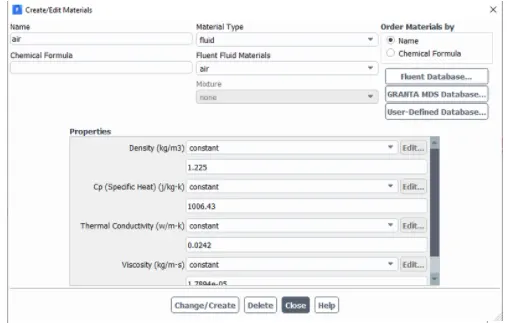
⦁ Under material, properties choose air as the fluid material and aluminium as the solid material.
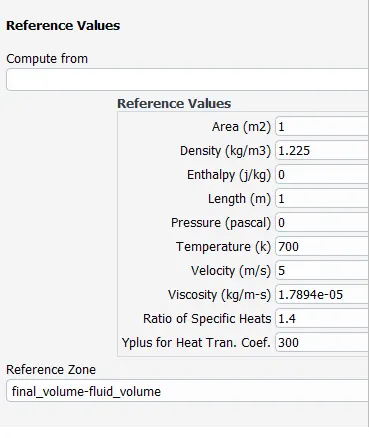
⦁ Enter the reference values as per the geometry and inlet boundary conditions accordingly.
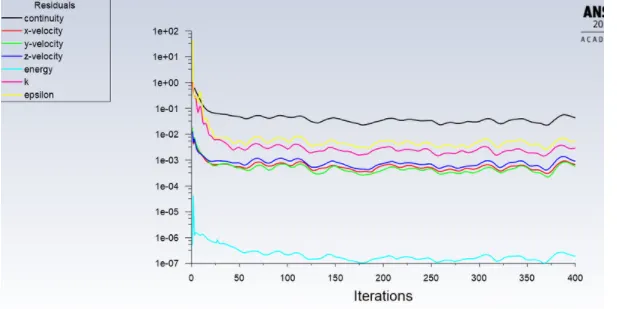
⦁ Initialiaze by using hybrid initializing and the simulation for 400 iteration as it is optimum to achieved a converged solution.
CFD POST
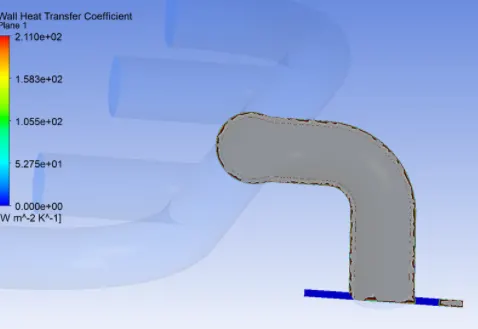
⦁ we can calculate the wall heat transfer coefficient by inserting a plane along xy plane
⦁ similarly,vector and streamline contours can be createsd by using the insert vector or sreamline option.
element size = 150mm
sizing of element size = 50mm
no of elements = 247571
viscous model -k -epsilon
inlet velocity = 5m/s
inlet temperature = 700k
ht co-efficient = 20 co/m^2-k
mesh detail
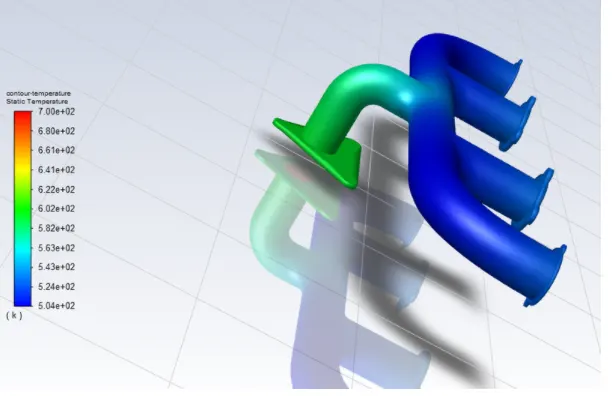
Temperature distribution
Residual plot
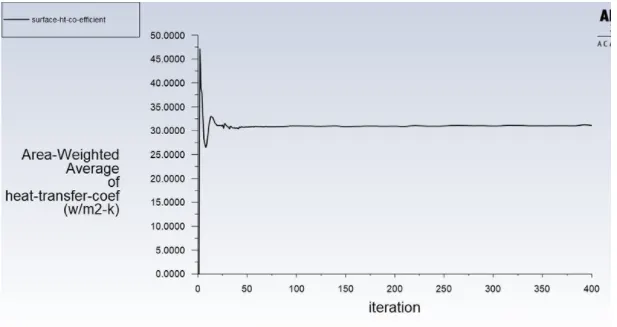
surface and heat transfer co-efficient
wall heat transfer coefficient
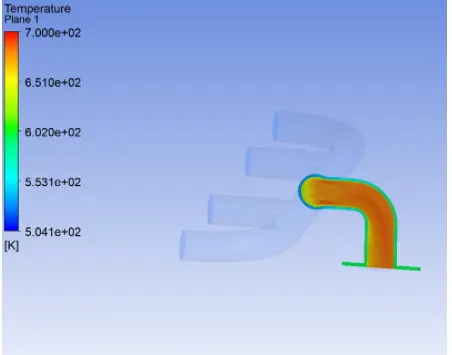
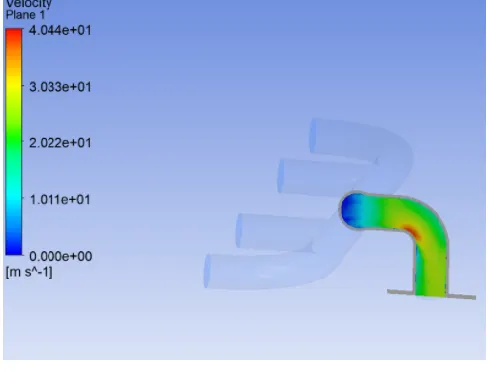
Temprature and velocity contour
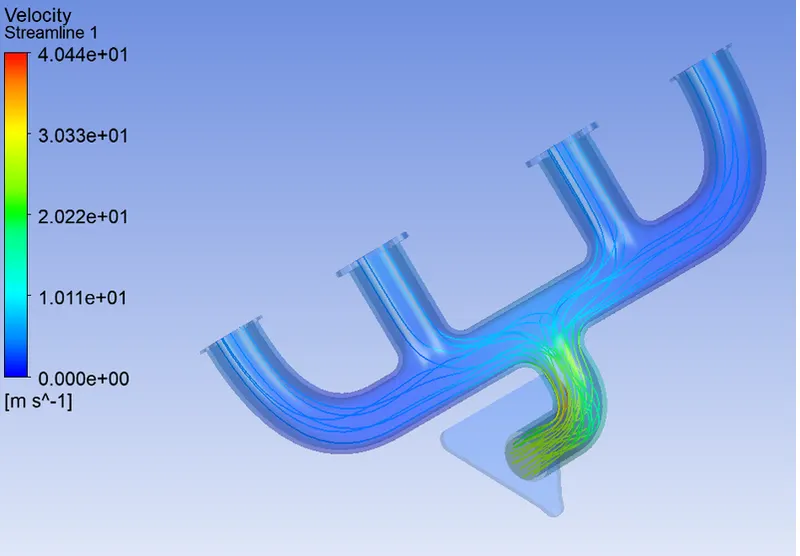
velocity and streamline plot
Conclusion
. since the velocity at the 4 inlet is low the velocity at the outlet will be higher due to conservation of mass. Therefore the velocity increases to a higher extent at the outlet leading to high temperature at the bends of the pipe.
.Because of high velocity, reynolds number will be higher.Higher reynolds number implies higher heat transfer coefficient and higher heat transfer coefficient means more heat transfer is taking place from the fluid to the solid.
High velocity- high reynolds number -high heat transfer coefficient - more heat transfer from the fluid to the solid
.heat transfer coefficient is quantity measure only at the wall. It is observed that heat transfer coefficient is higher at the bend of the outlet.therefore at this point maximum heat transfer takes place from the fluid to the solid . This result in higher temperature of the solid at this point.