Week-4 Challenge WOT Condition Part-2
- What is the difference between mapped and dynamic model of engine, motor and generator? How can you change model type :-
Mapped & Dynamic model of motor generator ,
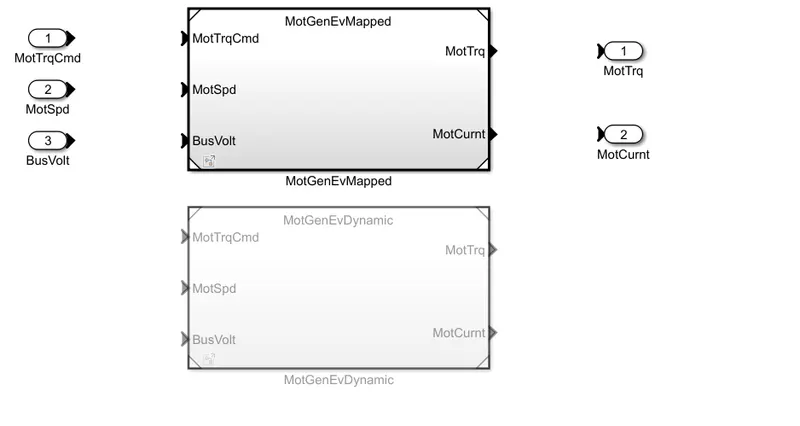
Mapped Model :-
- In mapped model data points are pre-assigned in lookup table which would be configured with the operational parts and the analysis would
- be formed.
- Model uses a set of steady-state lookup tables to characterize engine performance.
- Output values are stored for the given corresponding input values of the motor, generator and engine
- The accuracy is low for this system.
- Run time simulation takes less time, because it dose not run with real time simulation.
Dynamic Model :-
- Dynamic model runs by real time simulator.
- Dynamic model uses the combination of output from various subsystems to generate output.
- The accuracy of dynamic model is very high.
- Run time simulation takes more time.
Steps To change the model :-
- Select vehicle type in powertrain blockset model.
- Go to the passenger block in the simulink model of Electrical Vehicle motor/Generator.
- Right click on block and go to variance label mode active choice MotorGenEV Mapped or Dynamic.
2. How does the model calculate miles per gallon? Which factors are considered to model fuel flow :-
MPG, or miles per gallon, is the distance, measured in miles, that a car can travel per gallon of fuel. MPG is also the primary measurement ofa car's fuel efficiency: The higher a car's MPG, the more fuel-efficient it is.
The U.S. Environmental Protection Agency, or the EPA, is the government agency responsible for certifying a vehicle's MPG figures, notes.
A car's MPG can be inconsistent because it is affected by a number of different factors, so it is difficult to get an accurate measurement.
For example, factors like traffic and road conditions can affect MPG in any given context. That's why the EPA runs tests over a standard set of courses, then averages the results to calculate a vehicle's official MPG.
* Initially Battery power in Wh which is converted into Kwh by dividing 1000. Then the battery power in Kwh is divided by a constant 33.7 which is obtained by 1GGE(Gasoline gallon equivalent)=33.7Kwh.
* Now Kwh/gallon is divided by 3600 (1hr =3600s) which is again multiplied by a factor 0.00378541(1US Gallon=0.00378541m3).
* Now the m3 per gallon is multiplied by 264.172 to get Milespergallon(MPG).
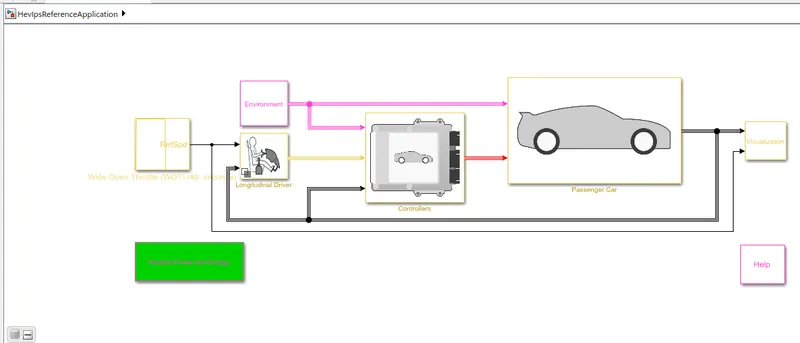
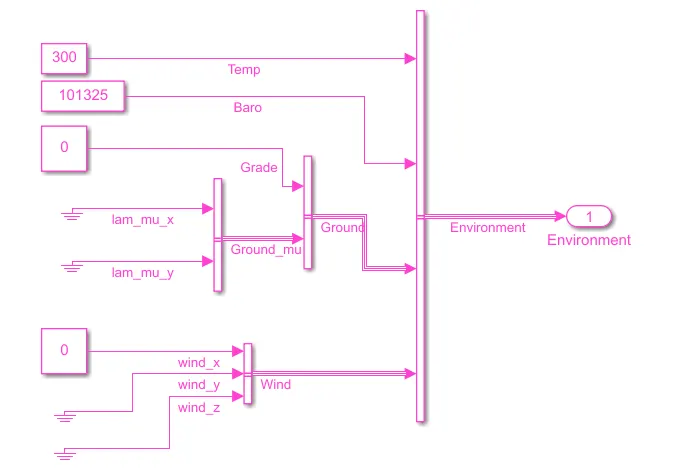
3. Run the HEV ReferenceApplication with WOT drive cycle. Change the grade and wind velocity in the environment block. Comment on the results :-
Block Diagram of HEV ,
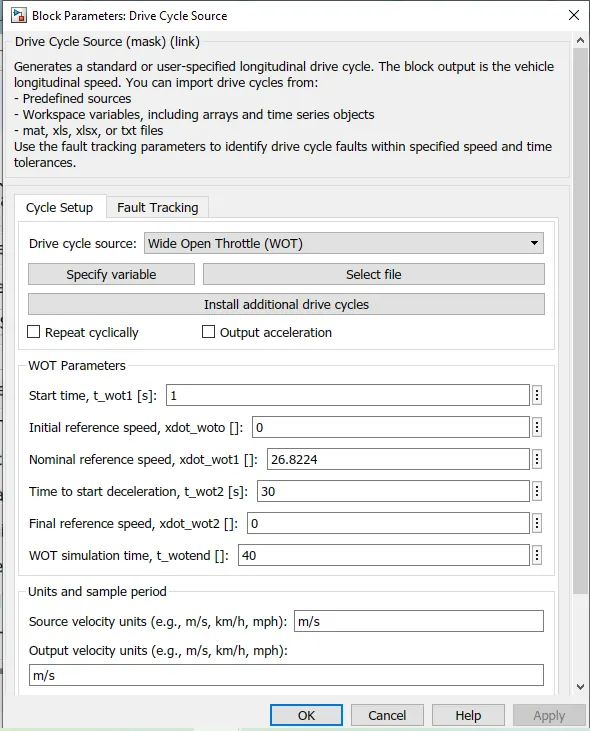
Output Waveforms Results ,
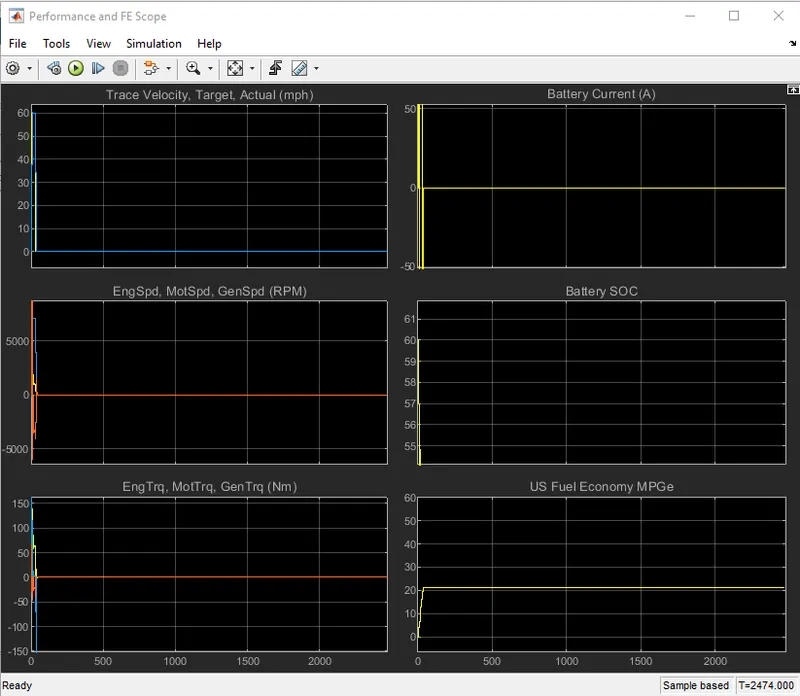
Zoomed In output waveforms ,
Plot :1
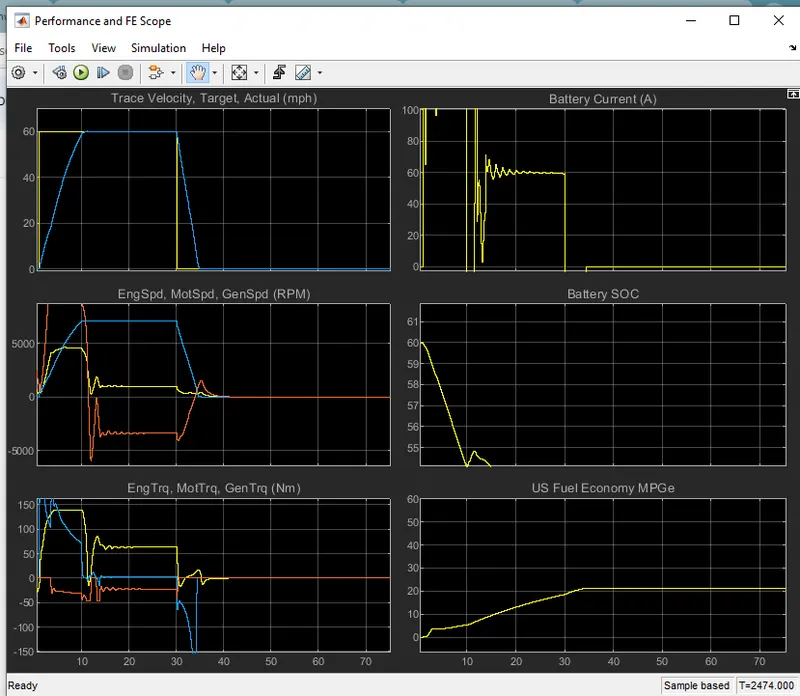
Around 10.2 seconds of time will take to reach maximum speed (60 mph)
Nearly 6.1 seconds of time will take to reach maximum speed (60 mph) to 0 mph.
Plot :2
Plot 2 shows the speed
maximum speed of motor = 5100 rpm
Plot :3
Maximum motor torque = 186 Nm.
Plot :4
Current values of battery from 200 to 0 amps in normal mode & varies from 0 to 100 amps in regenerative braking mode.
Plot :5
It shows the battery SOC which is decrease from 60% to 55% increased during normal condition of 55% to 56% during regenerative braking mode.
Plot :6
It shows Fuel Economy
Maximum Fuel Economy = 18.5 MPG
Minimum Fuel Economy = 2.5 MPG
Zommed in output graph of scope ,
4.Keeping all other parameters same, compare the simulated results of hybrid and pure electric powertrains:-
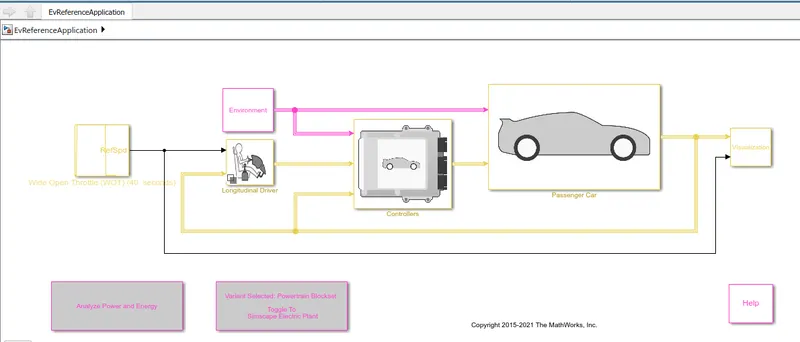
Block Diagram of Pure EV ,
Output Waveform of Scope ,
Zommed in Output waveforms ,
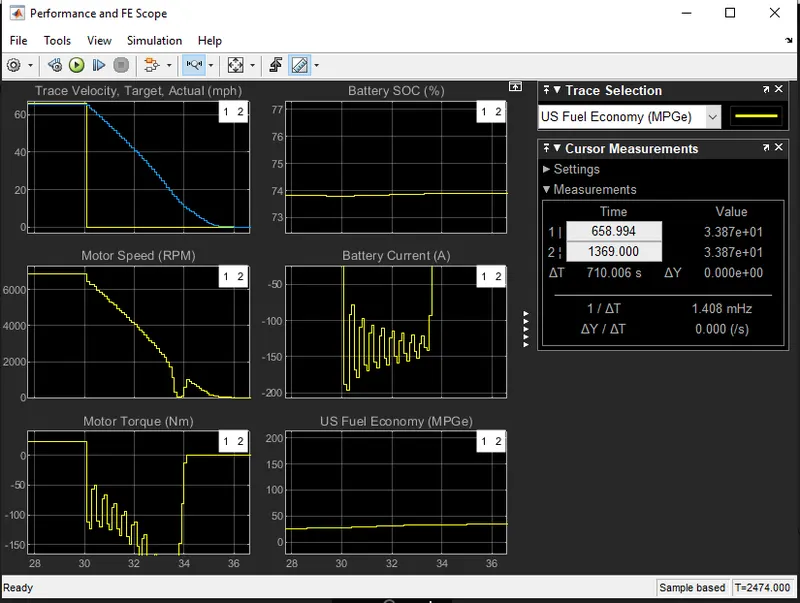
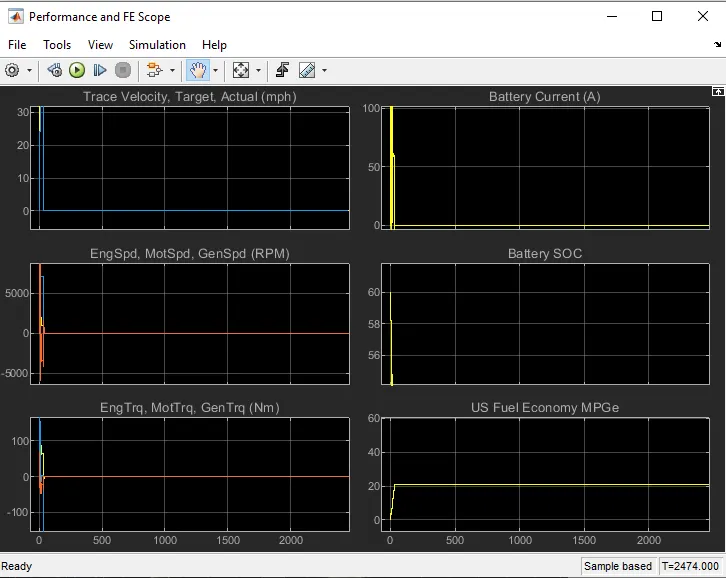
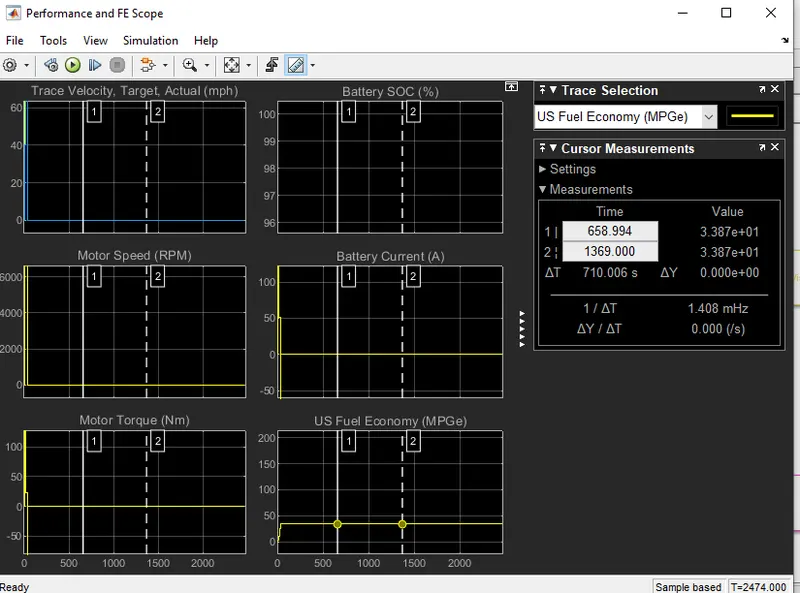
* Pure EV's can achieve less velocity than that of HEV's.HEV can achieve velocity upto 60kmph but in pure EV it is less than 60 mph.
* Motor speed in rpm is less than that of HEV, but the path tracing is the same.
* Motor torque is almost the same as HEV.
* Battery current uses is half in EV to produce power as that of HEV.
* Also, battery use is less, battery draining is low and it can be seen in the graph of soc that keeping all the parameters the same the battery uses is 5 times more in case of HEV than that of pure EV's.battery drains quickly in case of HEV.
* Fuel economy is almost double in the case of pure EVs than that of HEV's.