Week-4 Challenge WOT Condition Part-2
Q1). What is the difference between mapped and dynamic model of engine, motor and generator?
Powertrain blockset is used to simulation to entire vehicle. The powertrain Blockset provides two model types, Mapped Model type and Dynamic model type. This is help you to understand the System level and at individual component level as well as entire vehicle. Either we can run Dynamic model or Mapped model.
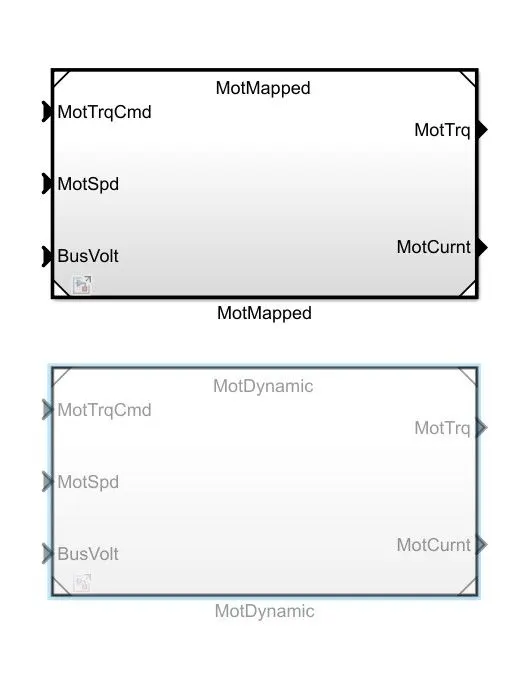
Mapped Model:
If you want to run the simulation with the System model which is a Mapped model. This mapped EV motor generator mapped block diagram. So this is a map condition or it is a map motor block. If you have your own Motor Data. You can map the data to this particular file and you can run your simulation with the available data. This also called static model is going to work faster and it runs based on the data given in the Lookup table which extracts data from workspace and run the Model. it is similar in case ( Mapped Engine and Generator also).
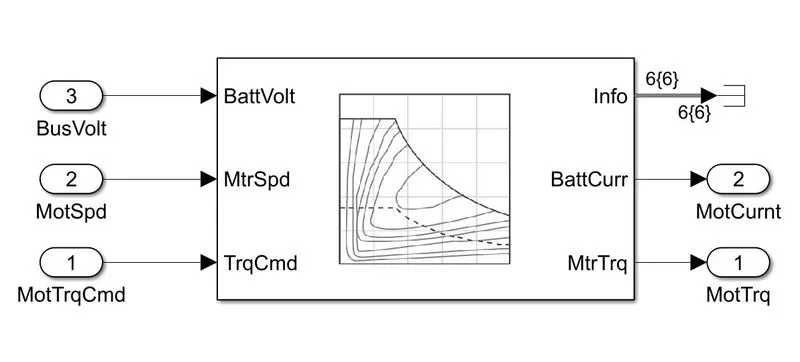
Dynamic Model:
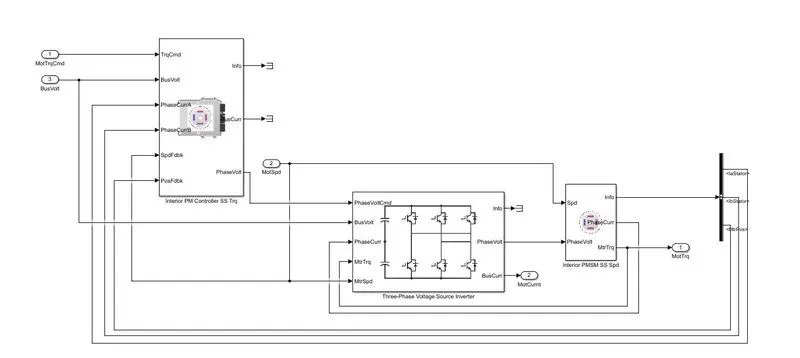
If you want to run the simulation with the actual model or Component level which is a Dynamic model. A Dynamic model is representing the actual Components. In the Dynamic model we can see actual motor, motor controller (interior permanent magnet controller and the particular controller will be working the bus voltage the currents and torque command, Position feedback and three phase voltage source inverters). The three-phase voltage source inverter model in order to work with the powertrain blockset, so interior permanent magnet synchronous motor model and here you can change the required parameters in the Dynamic motor model. it is similar in case ( Dynamic Engine and Generator also).
Figure shown below actual component inside the Model.
How can you change model type?
Either we can use Dynamic model or Mapped model, this switch will be done the following steps:
- Open the EV model in Simulink
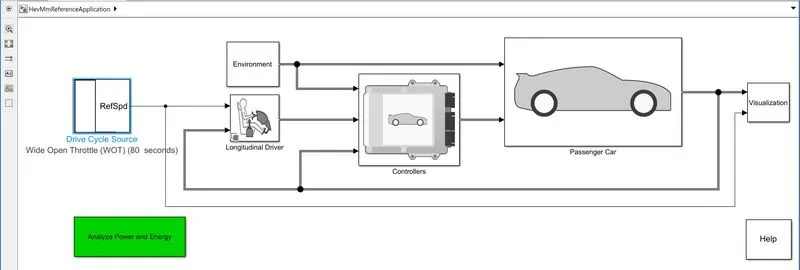
- Double click on the Passenger car Block
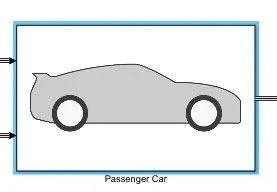
- Then double click on the Electric plant
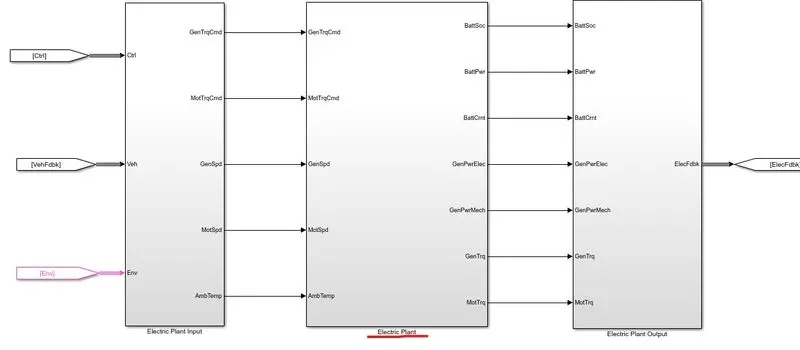
- Now enter inside the Electric Plant, click on the block which you have to change into Dynamic or Mapped. Variant subsystem is located on top of the menu bar, click on the Variant Manager. The model Hierarchy consist of various Subsystem which all are Mapped as well as Dynamics. Either we can run simulation any one of these.
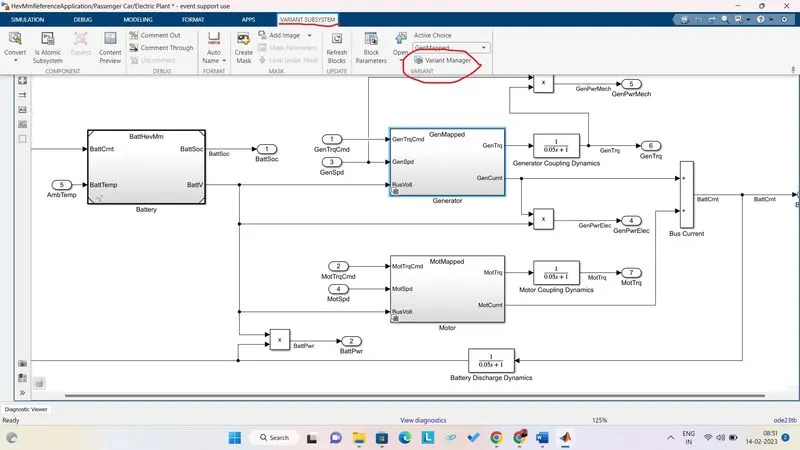
or we can change.
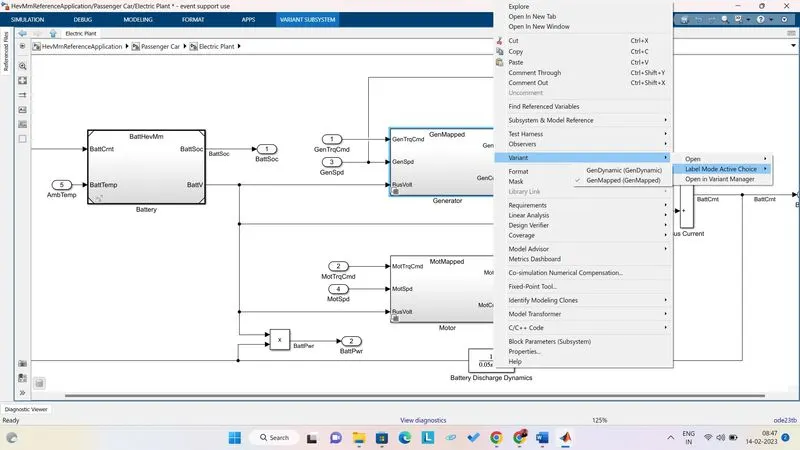
Inside the Electric Plant their subsystem Generator and Motor block is there. Right click any one of this block choose variant, select the label mode active choice and click on which mode we want to run Mapped or Dynamic.
Q2). How does the model calculate miles per gallon? Which factors are considered to model fuel flow?
What is MPGe ?
MPGe is the abbreviation for “miles per gallon of gasoline-equivalent.”
It’s an energy efficiency metric that was introduced by the Environmental Protection Agency (EPA) in 2010 to compare the amount of energy consumed by alternative fuel vehicles to that of traditional gas-powered cars. If a vehicle uses non-liquid fuels that aren’t burned and gets its power from electricity or compressed natural gas, it’s rated in MPGe.
According to the EPA, burning one gallon of gasoline produces 115,000 BTUs (British thermal units). It takes 33.7 kilowatt-hours of electricity to generate the same amount of heat. Kilowatt-hours (kWh) is the standard energy unit for electricity.
In the simplest terms, if an electric car can travel 100 miles on 33.7 kWh of electricity, it returns 100 MPGe. A vehicle that gets 100 MPGe would be very efficient since a gas car would have to travel 100 miles per gallon of gas to be equivalent.
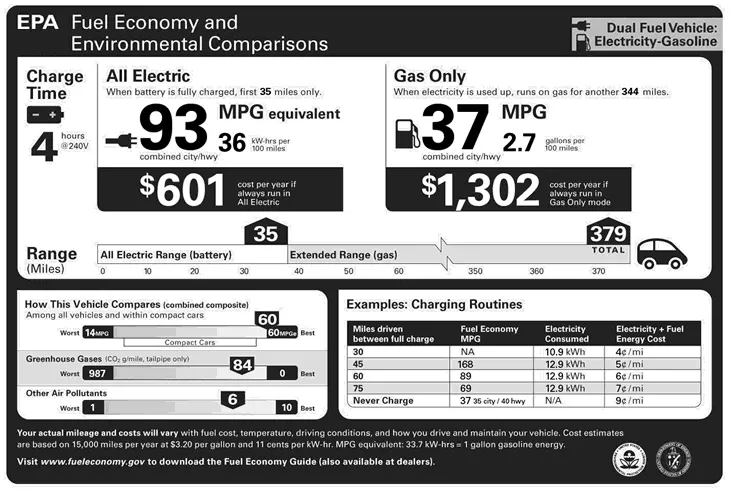
Monroney label showing the EPA's fuel economy equivalent ratings for the 2011 Chevrolet Volt. The rating for all-electric mode (left) is expressed in miles per gallon gasoline equivalent (mpg).
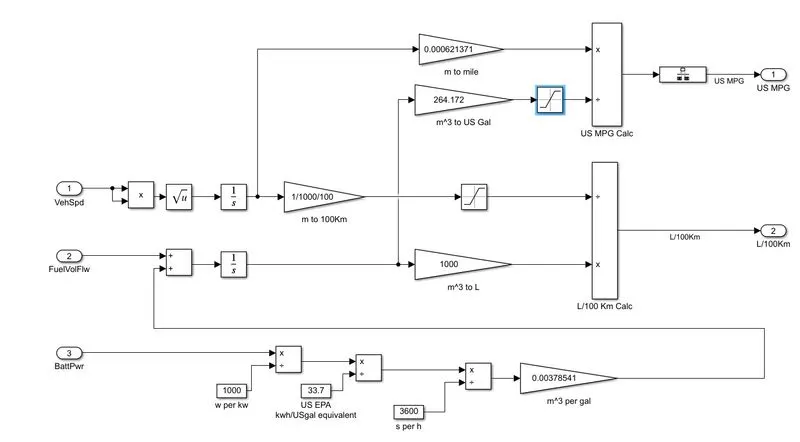
The above figure use two fuels Electricity (Battery) and fuel (gas).
The Battery Power in (W) is first converted into KW (W/1000) by divide block then the values its divides by 33.7 Kwh which is given by US EPA,it is equivalent to US one gallon of Gas, and it Divides block by 3600 which converted into Seconds per Hour (s / h) and then multiply which gives value 0.00378541 in (m^3 per gal).
The Equivalent Battery fuel then added with fuel flow input and it integrates that value after integrate then multiply converted into m^3 to US gal and the volume of fuel is m^3 to litre (1000) then it gives the fuel consume Litre per 100 kilometres.
Now, the fuel flow volume converted into m^3 to US gal and multiply with the Saturation block produces an output signal that is the value of the input signal bounded to the upper and lower saturation value.
Vehsped is the Vehicle speed input which give the distance travel by car in metre and then converted into miles (m^3 to mile) give to divede block it performs calculation give valies in a US MPG.
Q3). Run the HEV ReferenceApplication with WOT drive cycle. Change the grade and wind velocity in the environment block. Comment on the results.
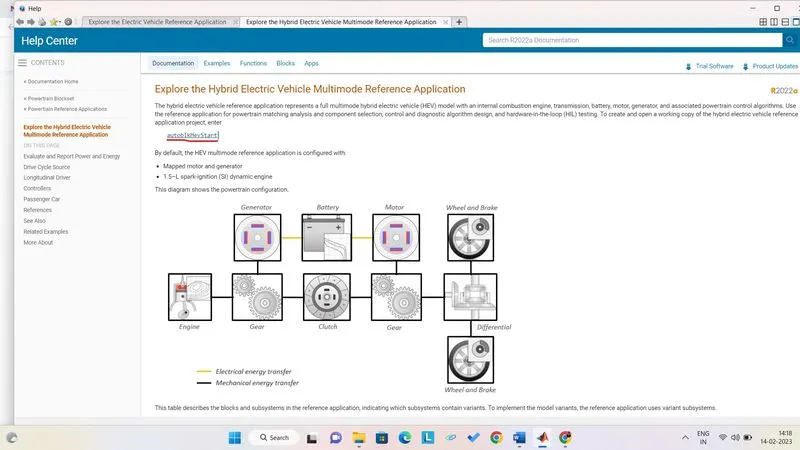
Open Matlab type 'autoblkHevStart' in the command window, it is load and project will open
The wide-open throttle is nothing but whenever you start the vehicle you are driver is pressing the throttle to the full speed in the same position so that is called the wide open throttle mode.
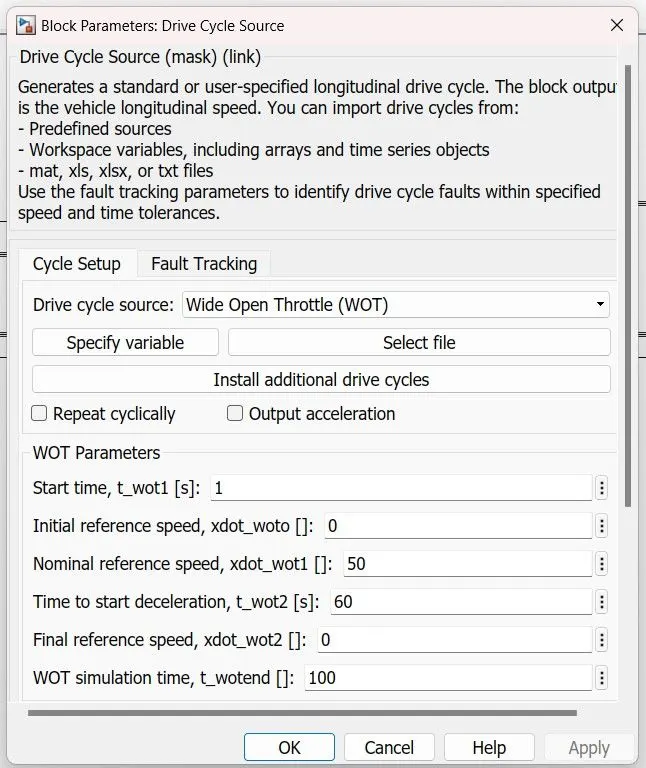
Wide open throttle can be changed or configured from here where nominal reference speed= 50, vehicle start from zero, the Deceleration at time will be= 60, total simulation time= 100. It starts from 0 and then goes to the reference speed level and decelerate start from 60second and the simulation will stop after 100 seconds.
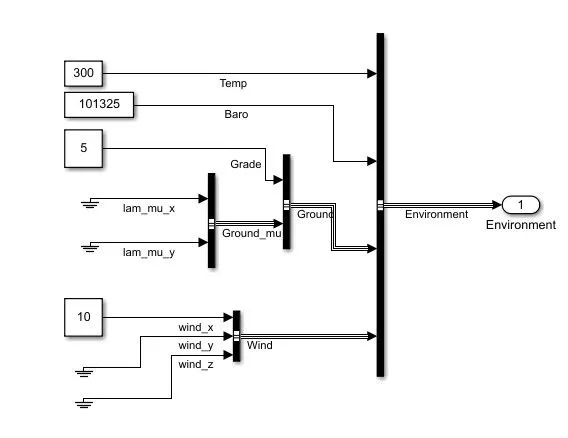
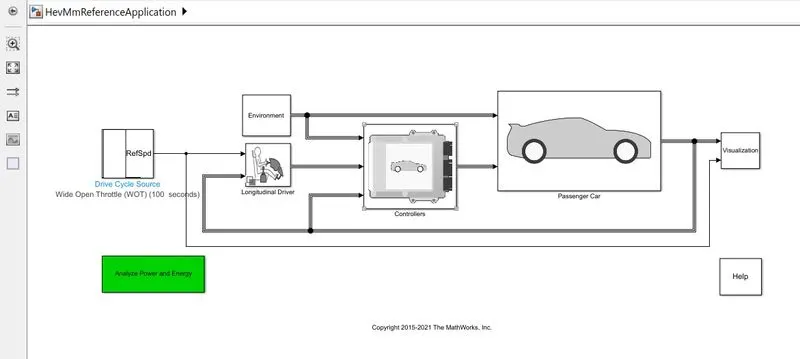
Let’s run this simulation and check how fast this particular vehicle model follows the maximum speed or acceleration time.
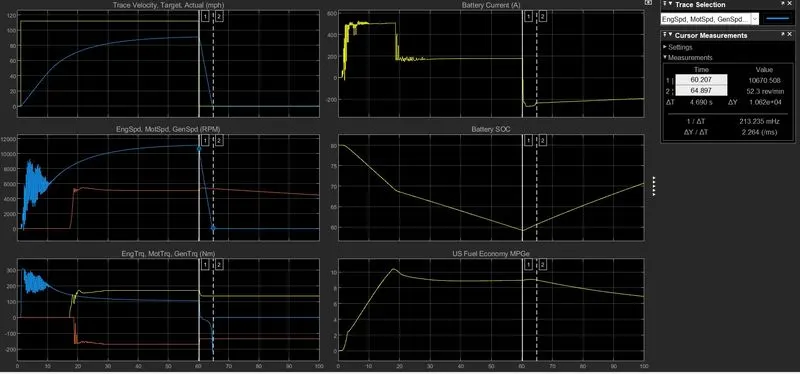
Let’s keeping all other parameters same wide-open throttle for 100 seconds. We applied a step command of the full velocity within no time, we caught wide open throttle condition and it is approximately 110 miles per hour followed by the deceleration time or stop time. It depends upon on the actual kinetic energy of the vehicle has acquired.
This particular graph is not following quickly, why don’t have less acceleration time. The reason behind behind this is the maximum motor power are limited by certain values. If you see limiting factor here is current. The battery current is kept to 500 maximum value
If we increase the battery pack high discharge capacity definitely acceleration time would been better The current going negative, the reason behind this the vehicle now decelerating.
The brakes are applied and vehicle is operating in regenerative breaking mode. It is generating the torque which is negative in nature. The speed being positive. The torque being negative the power which is multiplication of RPM and Torque is negative or we can say that battery is charging so the motor is acting as generator.
The battery getting charging with particular value of around 560 Ampere. If you whish to apply a very short break which is equally require short acceleration time to get short deceleration time, then you have to also increase the limit at which the battery can be changed maximum charger current is higher than maximum charge current is around 600 Ampere.
Q4). Keeping all other parameters same, compare the simulated results of hybrid and pure electric powertrains.
Wide open throttle can be changed or configured from here where nominal reference speed= 50, vehicle start from zero, the Deceleration at time will be= 60, total simulation time= 100. It starts from 0 and then goes to the reference speed level and decelerate start from 60 second and the simulation will stop after 100 seconds.
Same driving cycle input to both the Hybrid electric and Pure electric Powertrains:
Pure electric powertrain response is shown in below:
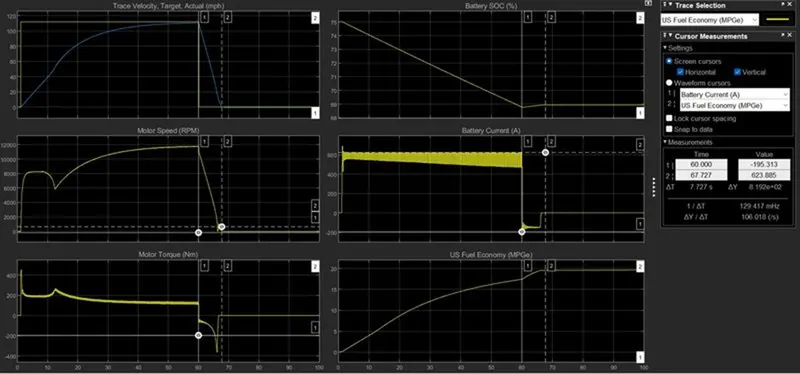
We applied a step command of the full velocity with at 1sec it raise to 110 step input, we caught wide open throttle condition and it is approximately 110 miles per hour followed by the deceleration time or stop time. It depends upon on the actual kinetic energy of the vehicle has acquired from (60 sec to 67 sec) and vehicle run constantly upto 100 then stop.
The Battery State of Charge it is observe that it is continuously fall down where it discharge the battery due to throttle is applied to vehicle is running (1sec upto 60sec).
The battery current is kept to 700 maximum value and constant 468.A upto 60sec.
In the window of Motor speed its units in RPM the speed is suddenly rise upto 8000rpm at 12sec and decrease to 6000rpm after 12sec it is gradually increase upto 11800rpm, this is due to motor strating torque is very high about 450 Nm and decrease to 175Nm constant from 3sec to 9sec again it increase from (9sec to 12.75 sec) but at 12.75 sec 270rpm and after from (12.75sec to 17.45sec) constantly decrease 109 Nm upto 60sec. After 60sec it goes to negative region gradually upto -357Nm.
The brakes are applied and vehicle is operating in regenerative breaking mode. Torque is negative or we can say that battery is charging so the motor is acting as generator from (60sec to 66sec), at the instant of (68.73sec to 68.93sec) the Battery gets charge for 7sec.
In the fuel economy window, the fuel is consuming by the vehicle 0 to 60 sec(17.5 US gal), the fuel is getting by vehicle continously upto 100sec (20US gal.) until the vehicle has to stop.
Hybrid electric powertrain response is shown below:
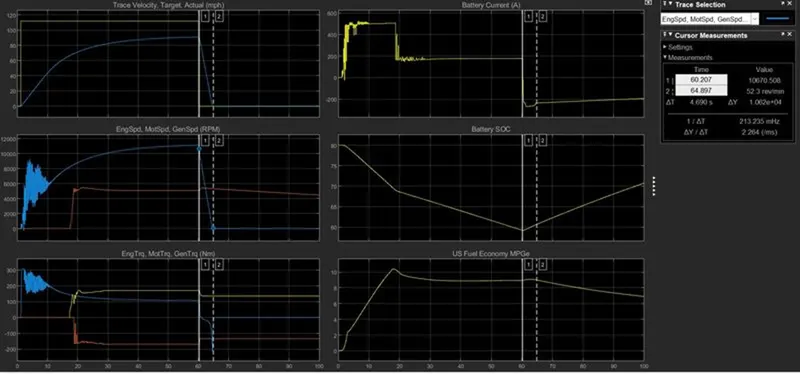
1) The amount of simulation time taken hybrid vehicle model will take more simulation time than electric vehicle model . the time taking much compared to the EV simulation because pure electric vehicle was comparatively simple and less mathematical calculation. Both engine and battery related motor and generator related models.
2) The reason behind the parameter here you have the drive cycle input and the actual vehicle speed.
3) Because now you are running the engine and obviously the engine efficiency is lower compared to the motor and the generator it get fall in miles per gallon.
We applied a step command of the full velocity within at 1sec at rise to 110 step time, we caught wide open throttle condition and it is approximately 90 miles per hour followed by the deceleration time or stop time. It depends upon on the actual kinetic energy of the vehicle has acquired, from 60 sec to 64 sec and vehicle run constantly upto 100 then stop.
The battery current is kept to 700 maximum value and constant 468.A upto 60sec.
In the window of Motor speed its units in RPM the speed is suddenly rise above 8000rpm at 5sec and decrease to 6000rpm after 10sec it is gradually increase upto 11800rpm, this is due to motor strating torque is very high about 300 Nm and decrease to 200Nm constant from 3sec to 10sec again it increase from (10sec to 60 sec) but at 60 sec to 64se,. speed is Positive and after from (60sec to 100sec) stable at zero. constantly decrease 190 Nm upto 60sec. After 60sec it goes to negative region gradually upto -300Nm.
The brakes are applied and vehicle is operating in regenerative breaking mode. Torque is negative or we can say that battery is charging so the motor is acting as generator from (60sec to 64sec), at the instant of the Battery gets charge for 4sec.
The Battery State of Charge it is observe that it is continuously fall down where it discharge the battery due to throttle is applied to vehicle is running (1sec upto 60sec). but (60sec to 100sec) SOC of Battery linearly increase battery gets charge due mmotor is acts as generator.
In the fuel economy window, the fuel is consuming by the vehicle 0 to 60 sec( the average value is 9 US gal), the fuel is getting by vehicle continously decrease upto 100sec (upto 7.US gal.) until the vehicle could not to stop.