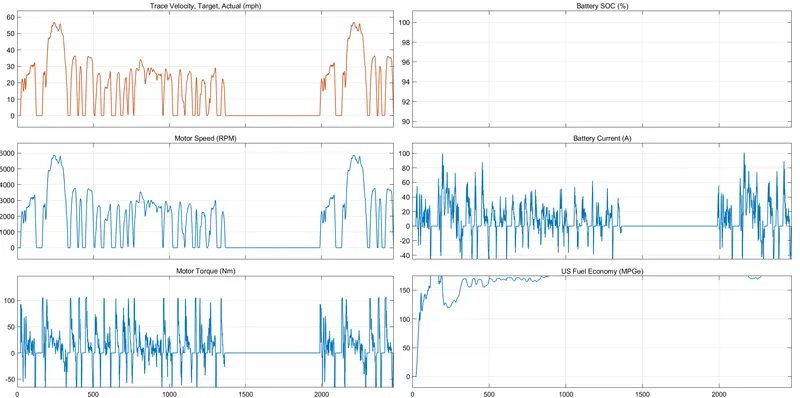
Week-4 Challenge WOT Condition Part-2
1.What is the difference between mapped and dynamic model of engine, motor and generator? How can you change model type?
Mapped and dynamic model of engine: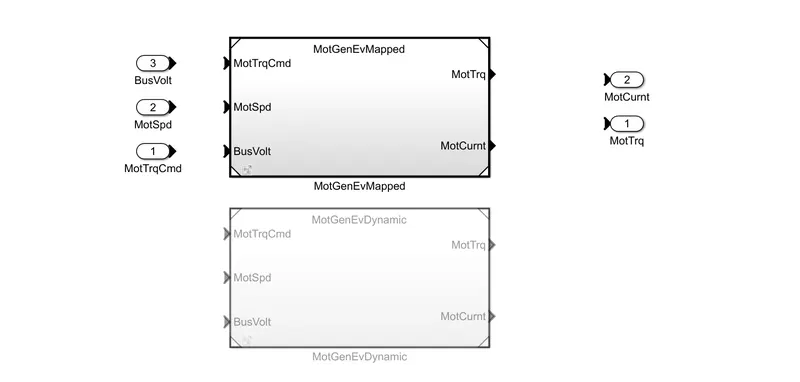
Mapped model:
- In mapped model the data points are pre-assigned in lookup tables.
- The engine or motor torque required is sensed and the motor or engine block generates the requiered torque output just as required simply without considering the real timem systems, parameters
- The output values are stored for the corrresponding given input values of the engine motor and generator.
- The accuracy of this type is not that high but the simulation will be done in much less time.
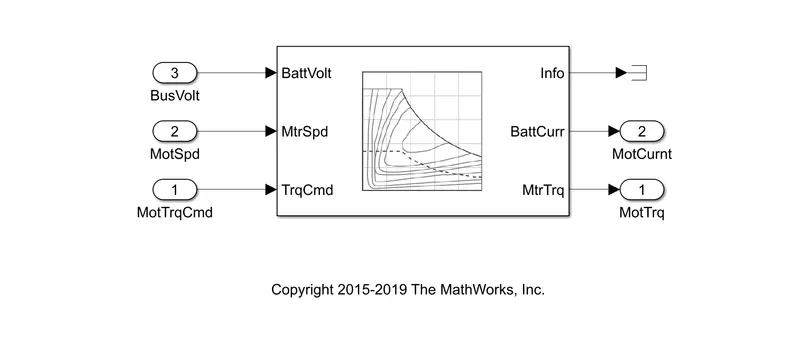
Dynamic model:
- The dyanamic model in other hand uses the combination of the outputs from various subsystems to generate the output.
- It runs by real time simulation where the required input from the drive cycle is taken and for that individiual real time simulation gets performed and summing all the results of the subsystem gives the output for the simulation.
- The simulation will take very long time to complete as it has so many individual simulations running by all the subsystem of the engine , motor/generator.
- Three major bloks are used inside the subsystem of dynamic model.
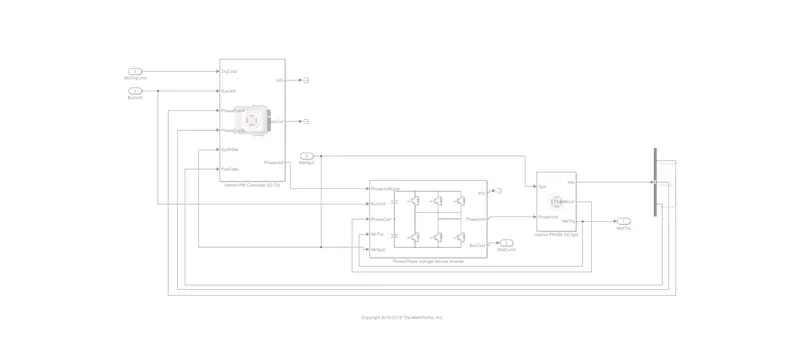
To change the model Type:
- In the powertrain blockset module we first need to select the vehicle type first whether it is full electric , full engine or the type of hybrid vehicle.
- After that the Simulink model appears by the selected vehicle model.
- In that we need to go to Passenger Block>Electric plant>EV Motor/Generator block.
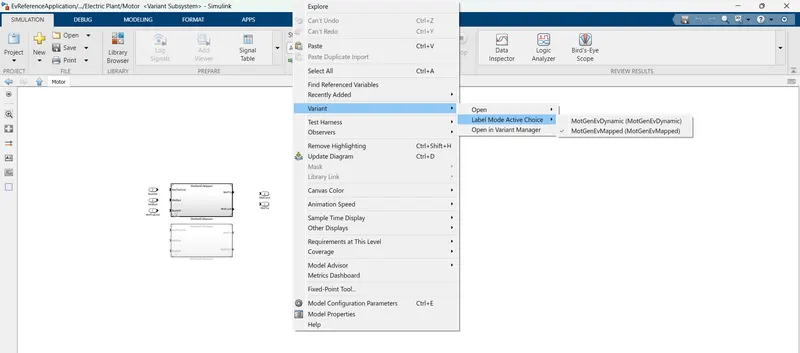
- After this just right click and go to Variant>Label mode Active choice> MotorGenEV Mapped or Dyanamic.
2.How does the model calculate miles per gallon? Which factors are considered to model fuel flow?
Miles per gallon
- Miles per Gallon is a fuel economy rating determined by how far a car can travel on a gallon of petrol or Diesel for a Engine powered car.
- In case of an electric vehicle it tells us the energy which is equivalent that of a engine powered car to propel the car through a distance.
- The amount of Fuel Energy required to move a engine powered car through a distance is determined and then it is compared to the eqivalent amount of electric energy required to move the car throgh the same distance and is expressed as the miles per gallon.
- The powertrain blockset has a model that calculates the miles per gallon for all kinds of vehicle.
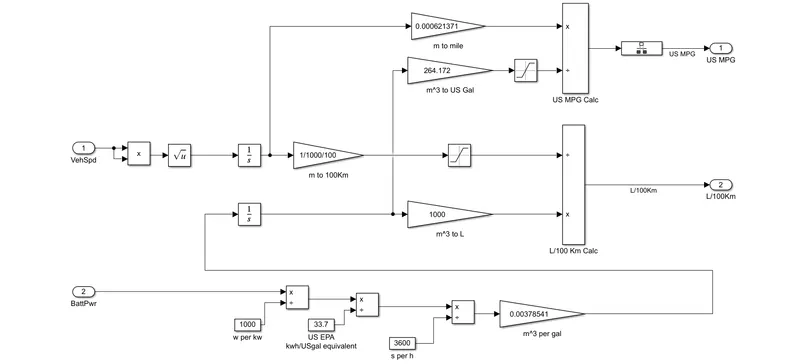
- The vehicle speed is integrated to get the value of distance covered in meters. This value is then converted to mile and kilometre.
- The battery power in watt is converted into m^3 per gal, which is then integrated and converted into US Gallon and Litre.
- The US Gal value is used to divide the distance covered in mile to get the US MPG (miles per gallon) value of the vehicle.
- The Litre value is used to divide the distance covered in km to get the L/100 km value of the vehicle
- Factors considered to model fuel flow are Vehicle speed and Battery power.
3.Run the HEV ReferenceApplication with WOT drive cycle. Change the grade and wind velocity in the environment block. Comment on the results.
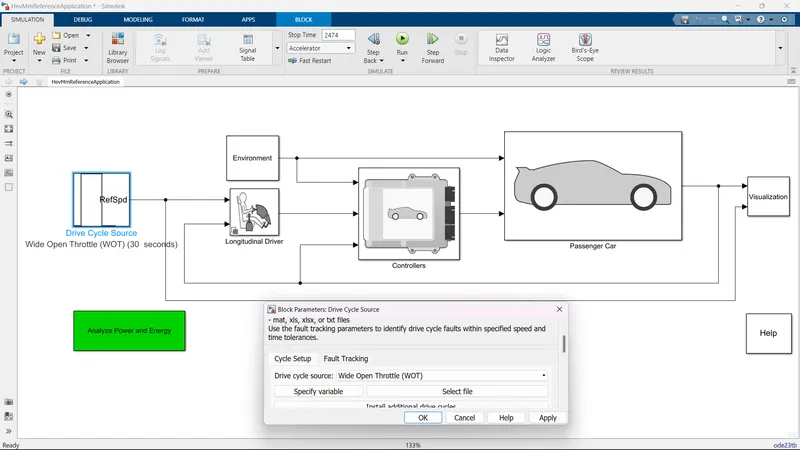
The Grade angle - 8 Degrees
The wind velocity - 10 m/s.
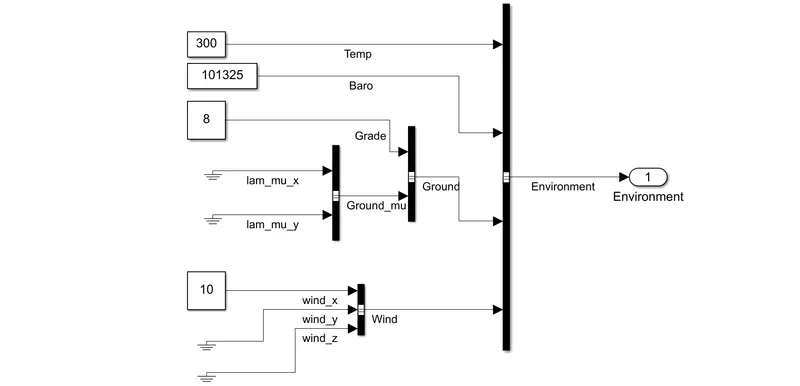
Result for changing the velocity and grade:
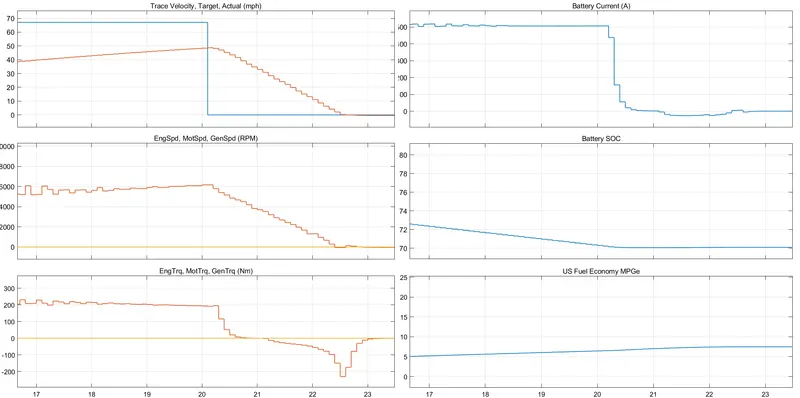
- Though the vehicle parameters and the drive cycle are the same ,here we have considered some changes in the environment blocks by adding some hill climb angles and wind velocity.
- The changes in the results are given below.
plot 1:Shows the velocity of the vehicle with respect to the Drive cycle data with the Time scale on the x axis.
plot 2:Shows the changes in speed of the Engine,motor and Generator in Rpm throughout the drive cycle.
plot 3:Shows the Torque characteristics and its changes of engine,motor and generator in (Nm) throughout the drive cycle.
plot 4:Shows the Battery Current values (A) and its changes for various acceleration inputs as per the Drive cycle.
Plot 5:Shows the Battery state of charge SOC (%) and its changes corresponding to the driving inputs.
Plot 6:Shows the Fuel Economy as Mile per Gallons for the corresponding input driving conditions.
The maximum miles that the car can run per gallon of fuel equivalent = 22.49 Miles,for the given vehicle at the specified driving conditions.
The vehicle was not able to achieve the required top speed though using the highest possible current discharge of that same battery used before.
4.Keeping all other parameters same, compare the simulated results of hybrid and pure electric powertrains.
Hybrid electric vehicle(HEV):
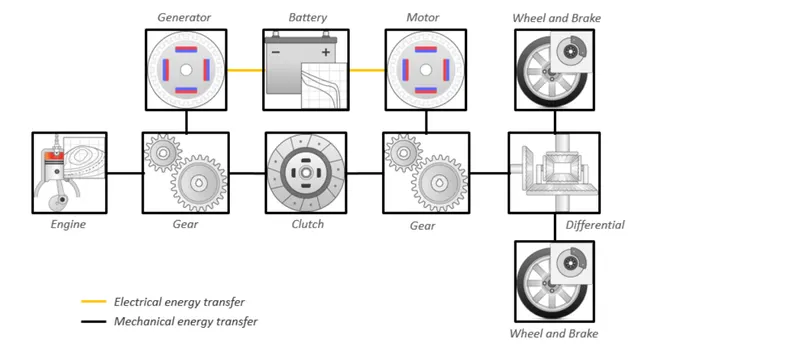
The Hybrid Electric vehicle the initial torque is obtained from the battery for the certain speed limit and it will interchange into IC engine after attains the limited speed.In hybrid vehicle velocity reaches the maximum level in short duration of time. By increasing the torque using the battery, the recharging process of battery is done during de-accleration.
This model shows that parallel conditions is applied in hybrid vehicle and the transformation of power is acted by battery. During the IC engine power generation process to vehicle the motor acts as a generator for battery.
Output:
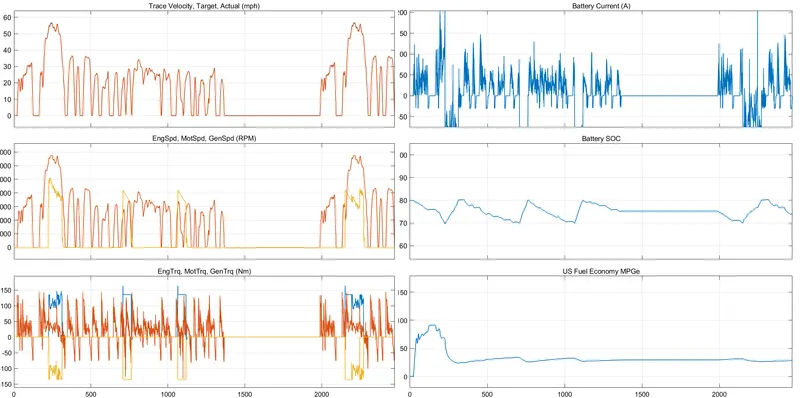
Pure Electric vehicle:
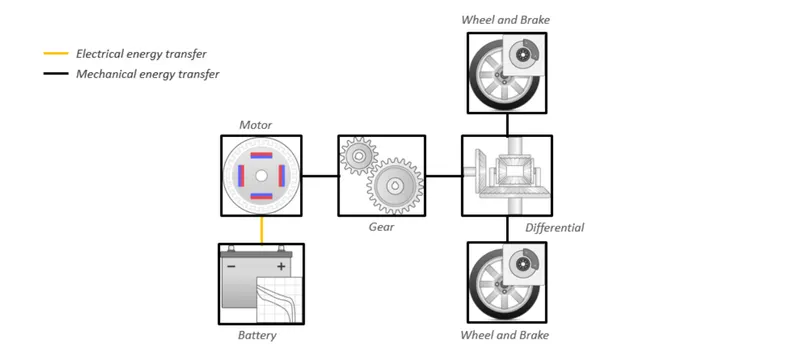
The electric vehicle reference application represents a full electric vehicle model with a motor-generator, battery, direct-drive transmission, and associated powertrain control algorithms. Use the electric vehicle reference application for powertrain matching analysis and component selection, control and diagnostic algorithm design, and hardware-in-the-loop (HIL) testing.
Output: