Week-4 Challenge WOT Condition Part-2
What is the difference between mapped and dynamic model of engine, motor and generator? How can you change model type?
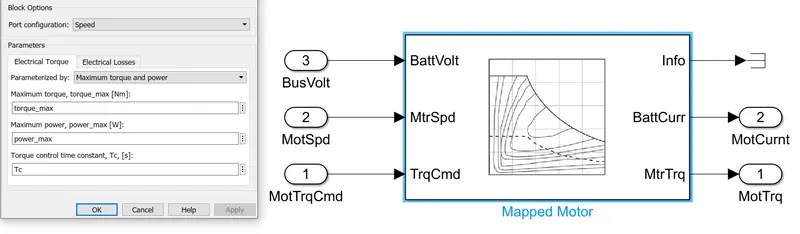
Mapped model:
Mapped model is predefined model we can just changing the parameters we can get results .This mapped model parameters are given by OEM in theier data sheet. Main draw backs of the mapped model is we cannot analysis the each component performance used in the mapped model
eg: mapped motor:
in the below model values are taken from experiments or old data
DYNAMIC model:
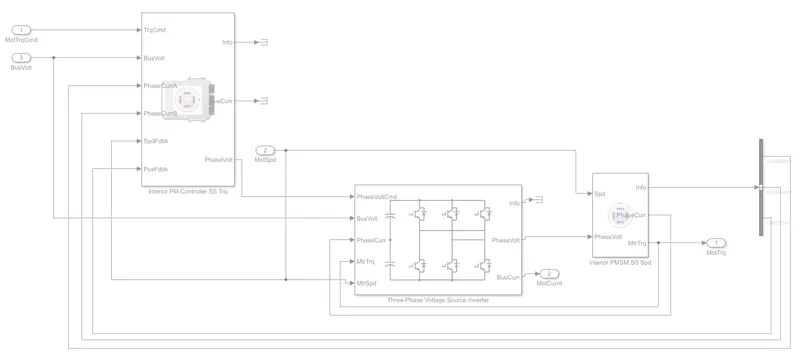
Dynamic model is create by using every individual component.Here we can analyse the each component performance. so we can design our product and anlayse the result
eg. motor model:
in the below model, motor components such as inverter, phase controller, feedback circuits are also modeled.
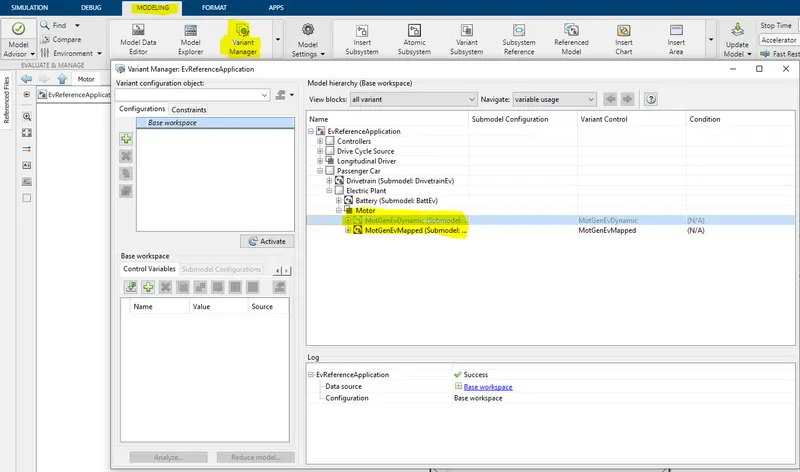
CHANGING the model type in EV powertrain blocks:
we can use the variant manager in the modeling tab to find the variant systems we have.
right-click on the model you want and use set as Label mode active choice.
How does the model calculate miles per gallon? Which factors are considered to model fuel flow?
2.How does the model calculate miles per gallon? Which factors are considered to model fuel flow?
Simulink block to calculate miles per gallon.
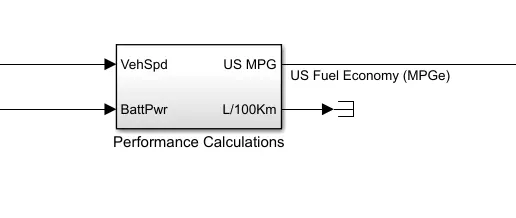
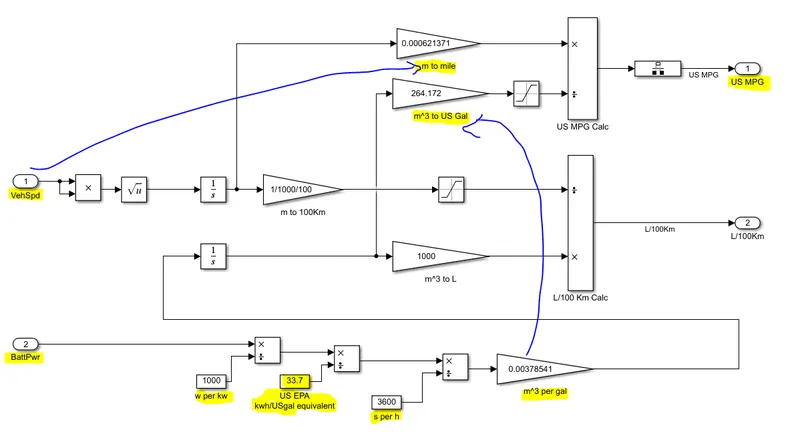
- vehicle speed data is used to calculate the distance traveled in meters which is then converted to miles
- Battery power data is used to find power used in kWh which is then converted to gasoline-equivalent using US EPA value by dividing with 33.7
- note: As per the US environmental protection agency(EPA) 1 gallon of gasoline is equal to 33.7 kWh
- Dividing distance traveled in miles by the number of gallons, we can get miles per gallon.
- For HEV this gallon(gasoline-equivalent of battery power) is added with gallon used by IC engine then miles per gallon is calculated.
Run the HEV ReferenceApplication with WOT drive cycle. Change the grade and wind velocity in the environment block. Comment on the results.
In the drive cycle block change the drive cycle into wot and enter the required WOT condition
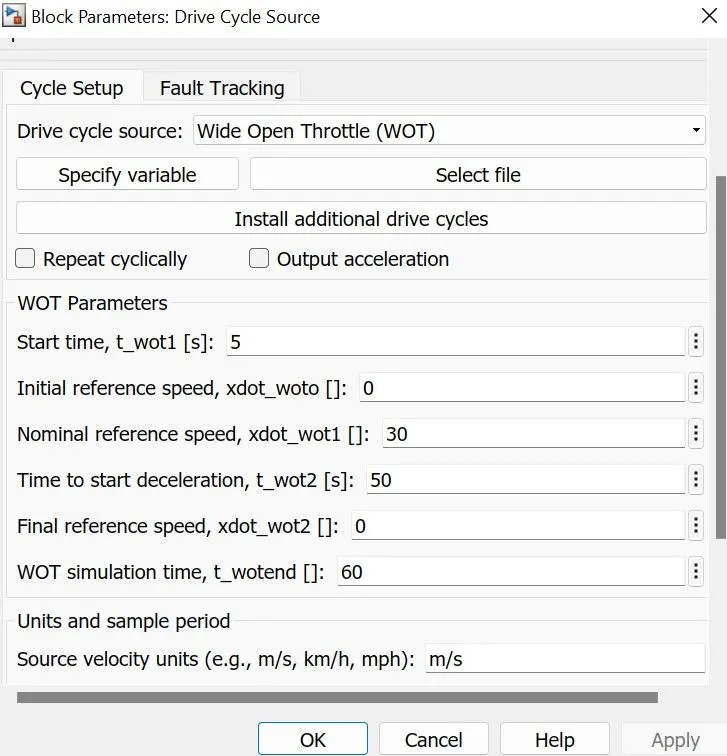
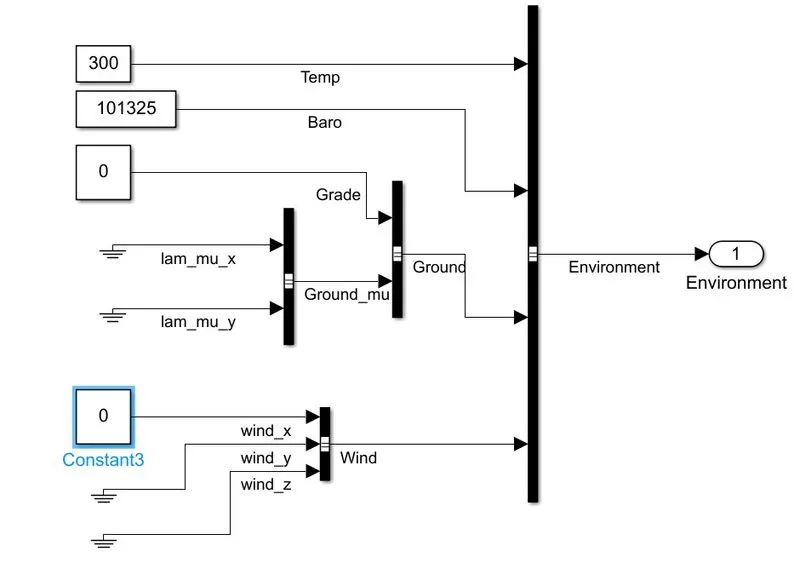
Intially there is no change in wind velocity and gradeability both are zero and run the simulation
Without changing wind velocity and gradeability
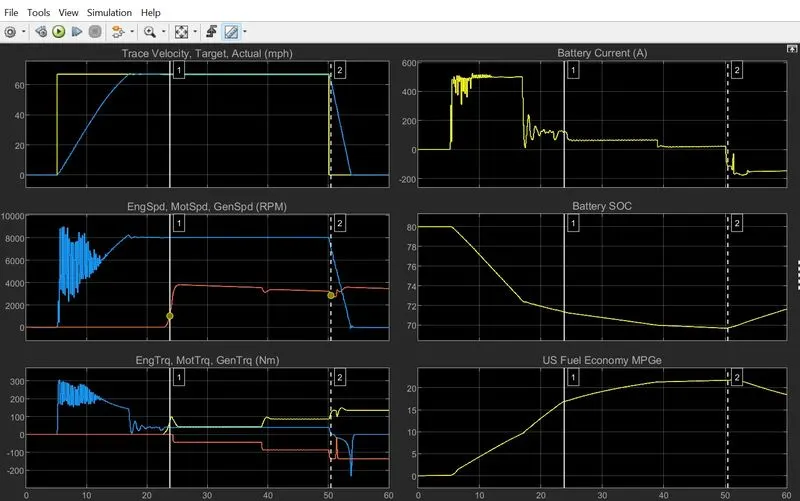
Above are the simulation results of HEV
- VEHICLE SPEED : The given input is 60 mph which is achieved at the 20s.so the accleration of the vehicle 0-60mph @20 sec. After that vehicle moves in constant velocity of 60 mph . At 50sec vehicle starts decceleration
- when the vehicle settles at constant velocity the engine coupled with generator starts rorating at 3500rpm thus motor is powered by generator output so the depletion of charge from battery gets reduced.It is clearly evident from the batttery cuurent consumption is drasticallu reduced and soc of the battery also drops smaller compared to previous
- When vehicle starts decceleration at 50 sec motor speeed reduced upto 0. motor torque becomes negative and the battery current also negative.The soc of the battery increase
- us fuel economy MPG is equivalent amount of gasoline consumption when compared to battery in kwh
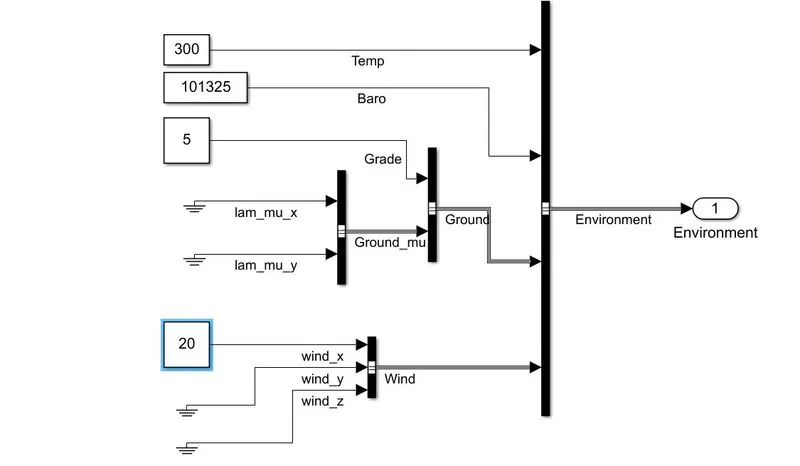
Wind velocity at 20m/s and gradeability 5%
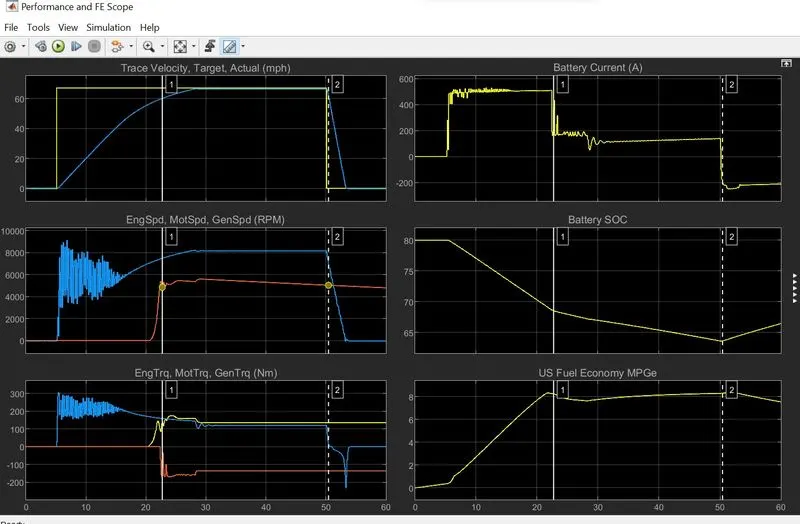
- With the change in wind and graddeability the acceleration time gets increased from 20sec tgo 30 sec for same 0-60mph
- This is because the motor torque is constant and the depletion of the battery cuurent is designed for rated amps thus we cannot increase the acceleration beyond tht level
- The engine torue is supported to motor torque to achieve the rated wot condotion
- In the previous condition battery soc not reduced to below 70 but in this condition comes below 70 due to motor require higher torque
Keeping all other parameters same, compare the simulated results of hybrid and pure electric powertrains.
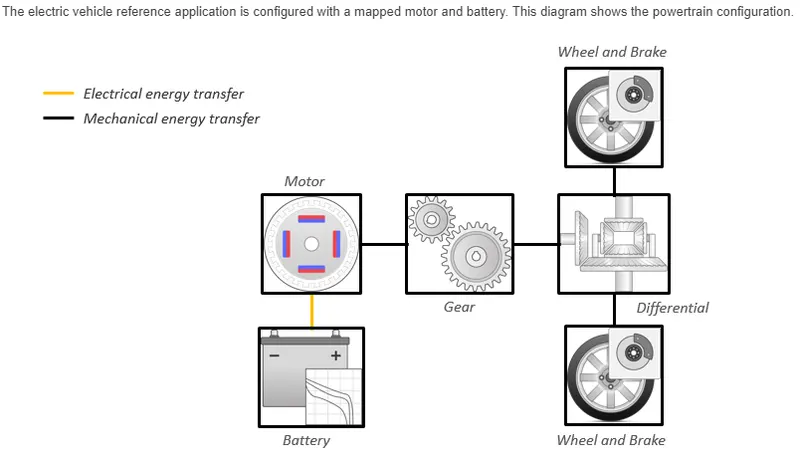
EV model powertrain configuration:
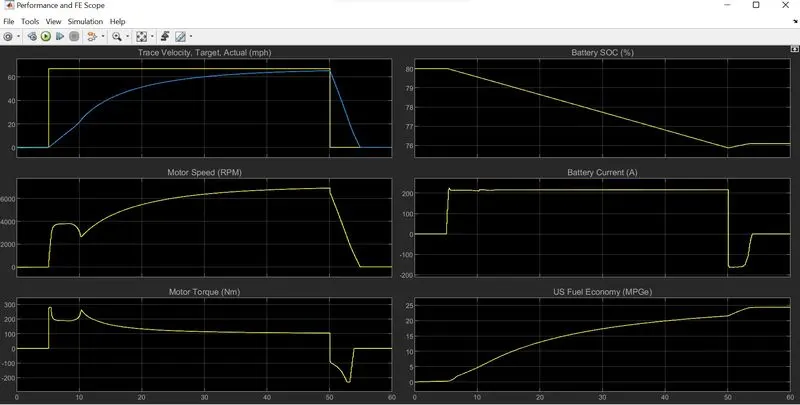
HYBRID ELECTRIC VEHICLE:
SUMMARY:
- Time taken to achieve the required peak velocity is less for HEV as compared to EV
- Deceleration time is also low for HEV as it has many moving frictional parts
- fuel economy is more for an EV compared to HEV due to less no of moving parts and thus low frictional losses