Week-4 Challenge WOT Condition Part-2
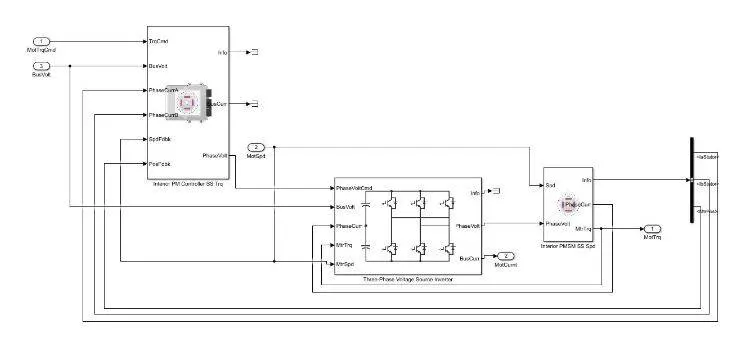
- What is the difference between mapped and dynamic model of engine, motor and generator? How can you change model type?
- Mapped module:- Model uses a set of steady-state lookup tables to characterize engine performance. Most of components are modelled by staedy state maps and charts in backward facing modelling approach, therefore energy consumption and performance of different components during transient periods of drive are not calculated correctly. It is also known as backward facing approach.It is suitable for analysis & design activities that do not require engine subsystem dynamic characteristics. For e.g; engine and powertrain transmission analysis for fuel economy, emissions & performance tradeoffs.
- Dynamic module :- Dynamic module is used when the physical data or actual data is put up in that module. This Model decomposes the engine behavior into engine characteristics that are separated into lower-level components. By combining components in this way, the models capture the dynamic effectsThis model are suitable for designing control,estimator & diagnostic alogorithms that depend on dynamic subsystem. For e.g; in closed loop AFR alogorithm development. It is also known as forward facing approach.It demands for torque, current & voltage which has been compared with actual variables of the system & with the help of controllers error may occured due to minimization of desirable performance.
By following steps we can change the module type.
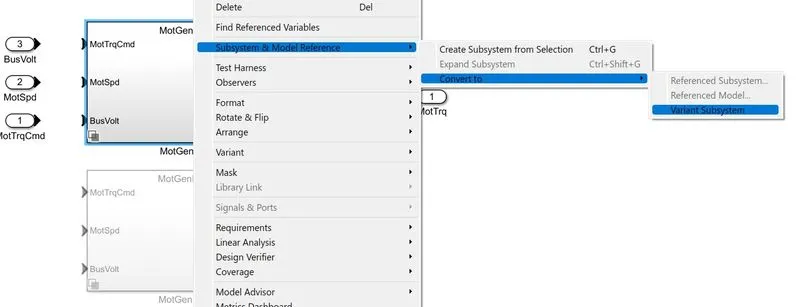
1. right click and got the subsystem and module referance then convert into the varient modeule
2. After that open in varient manager, then
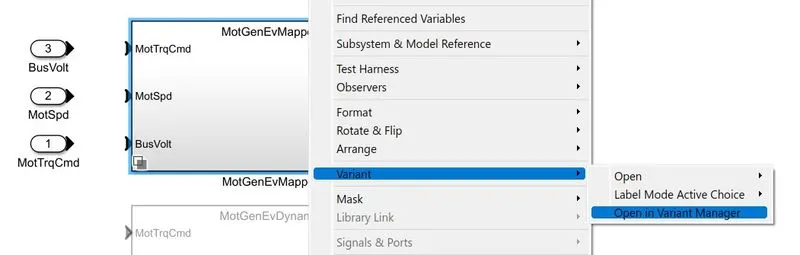
3. Select the module whichever module you want to convert into them.
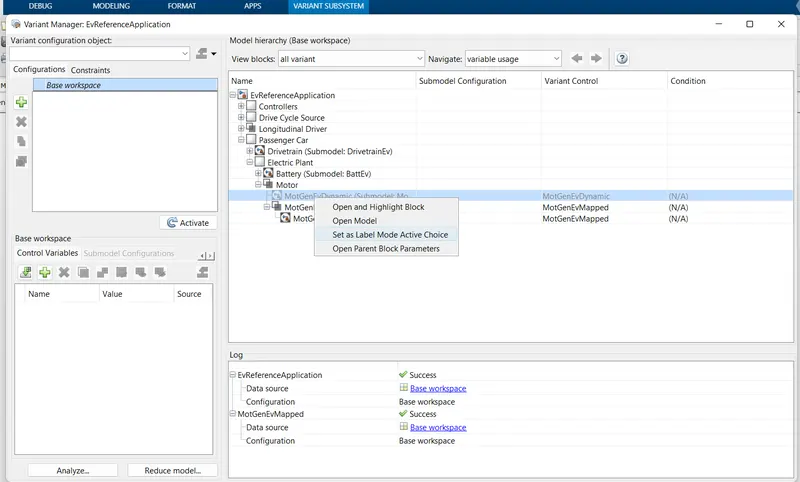
Block Diagram of the Mapped module
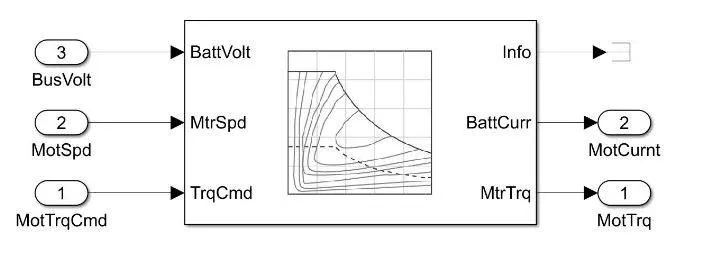
Block Diagram of the Dynamic module
2.How does the model calculate miles per gallon? Which factors are considered to model fuel flow?
Miles per gallon gasoline equivalent (MPGe) is a measure of the average distance traveled per unit of energy consumed. MPGe is used by the United States Environment Protection Agency (EPA) to compare energy consumption of alternative fuel vehicles, plug in electric vehicles and other advanced technology vehicles with the energy consumption of conventional internal combustion vehicles rated in miles per US gallon.
CALCULATION OF MPGe:
MPGe is determined by converting the vehicle consumption per unit distance, as determined through computer modeling or completion of an actual driving cycle, from its native units into a gasoline energy equivalent.

For EV factors are : -
- Vehicle speed
- battery power.
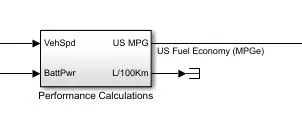
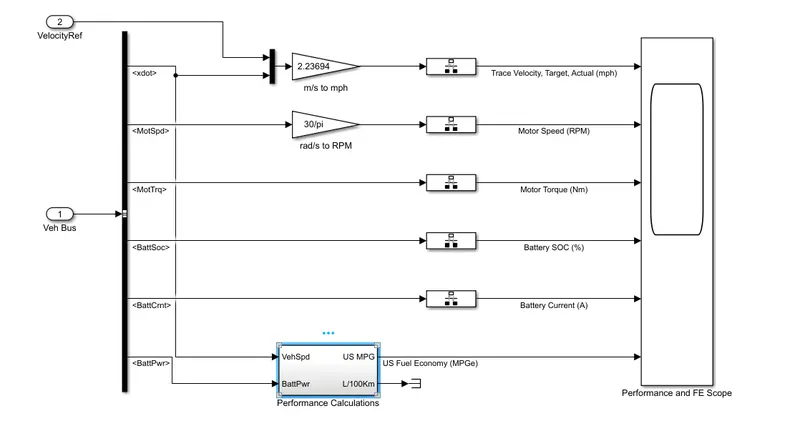
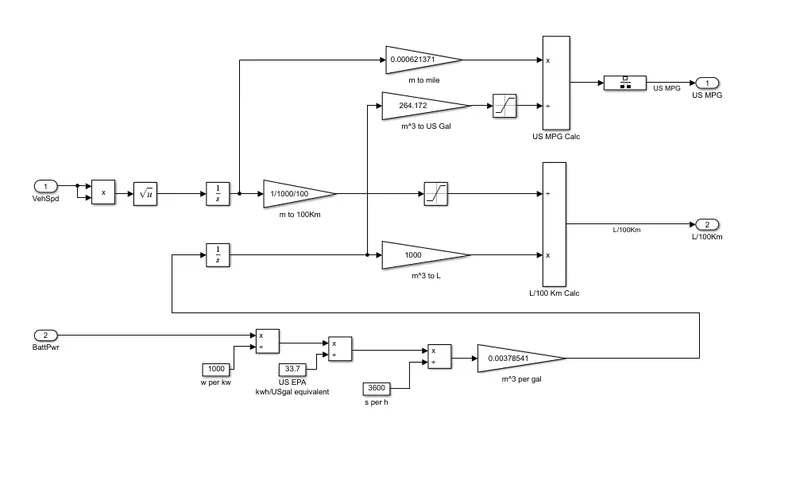
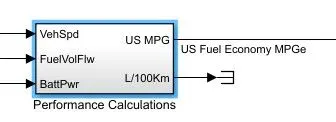
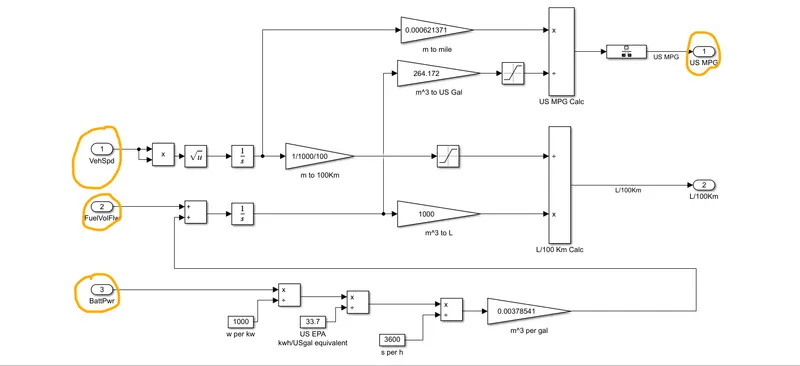
- The above block diagram represents the powertrain blockset of the EV vehicle to calculate the miles per gallon.
- Given input parameters are fuel flow, vehicle speed & battery power to find the fuel efficiency of the vehicle.
- Distance is calculated by integrating the vehicle speed with respect to time and converted into miles.
- Battery power is consumed by which the total distance is covered & converting from watt into kw.
- The volume flow rate of the fuel is expressed & converted into gallons & integrated with respect to time for calculating the volume of fuel.
Thus Miles per Gallon is calculated for the performance of the fuel economy of the car or commercial vehicle. In simple terms, if your car performs at 40mpg it means that, on average, you will be able to drive 40 miles on every gallon of petrol that you put in the tank.
For HEV factors are : -
- Vehicle speed
- Fuel volumetric flow
- Battery power
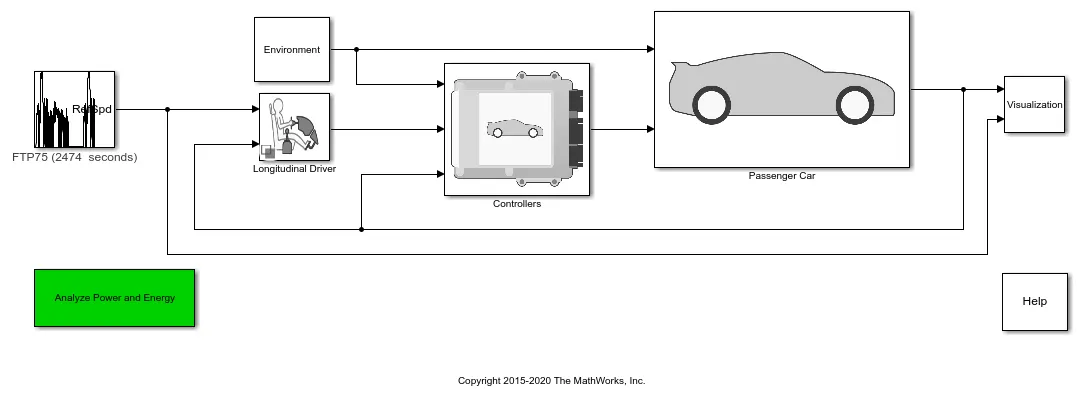
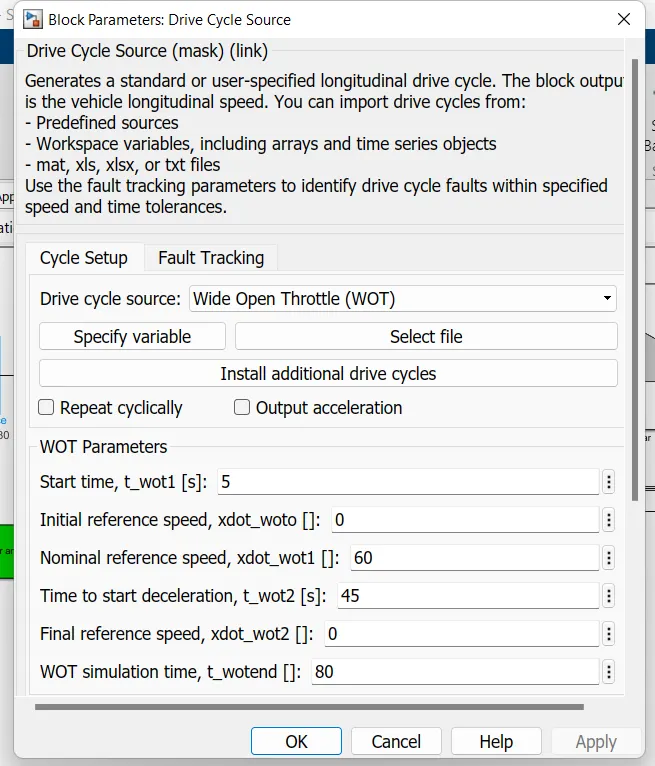
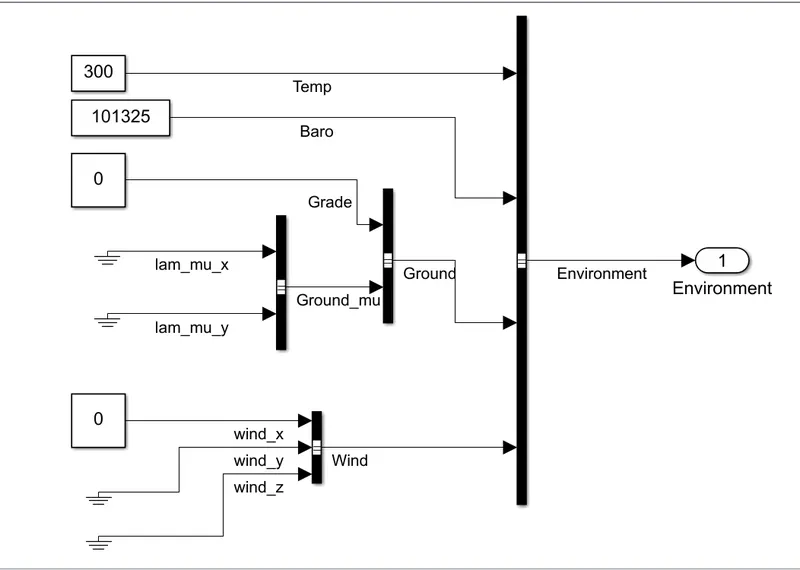
3. Run the HEV ReferenceApplication with WOT drive cycle. Change the grade and wind velocity in the environment block. Comment on the results.
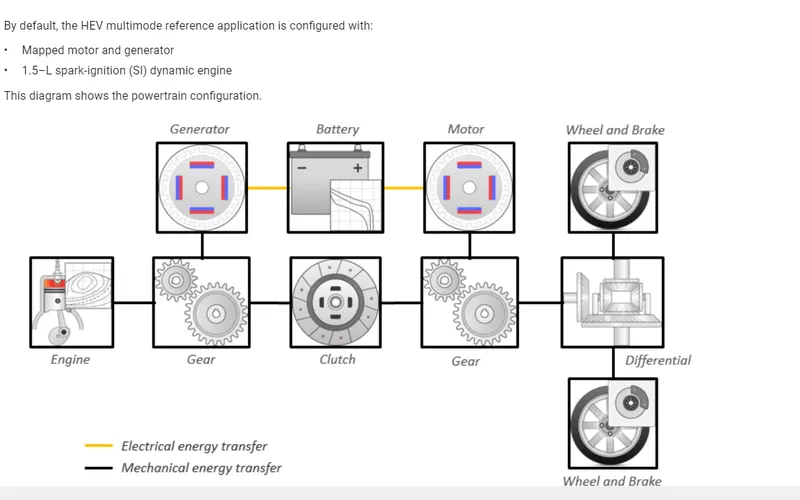
Simscape model of HEV.
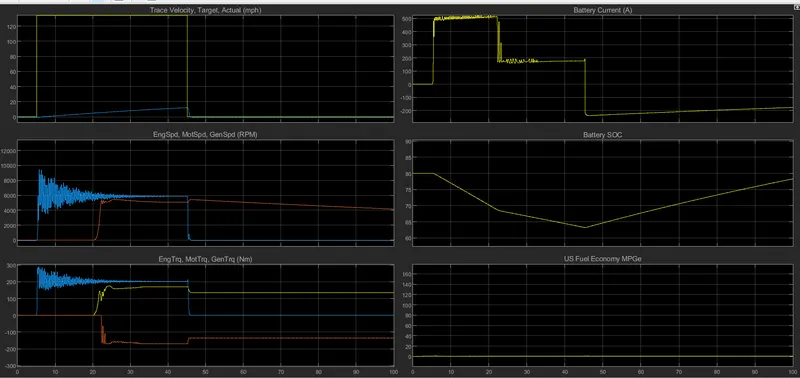
CASE 1:- For the wot cycle garde and wind velocity is zero.
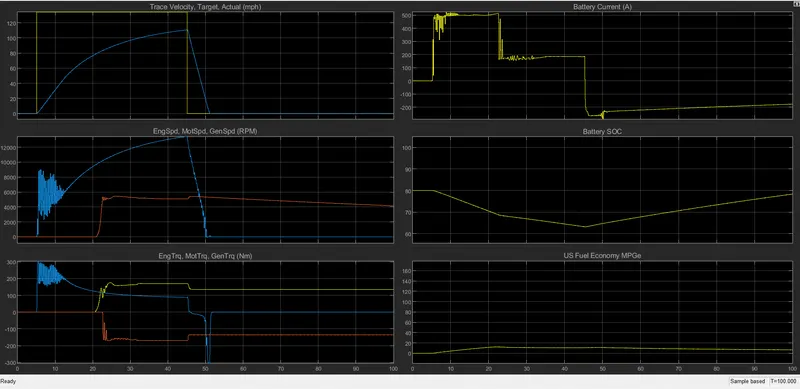
Result :-
- Time required to achive the actual velocity is 20.5 seconds.
- Graph of target velocity and actual velocity is not same because of battery limitation or capacity of battery, If we increases the discharge capacity of the battery than time required to achive the target velocity is less.
- When we applied the brake on the motor its stop the motor and speed of the motor will decreases to zero. After some time the batttery goes to the negative side current and start the changing. like regenerative braking .
- during regenrative braking battery SOC start incresing.
CASE 2:- For the wot cycle garde and wind velocity is change.
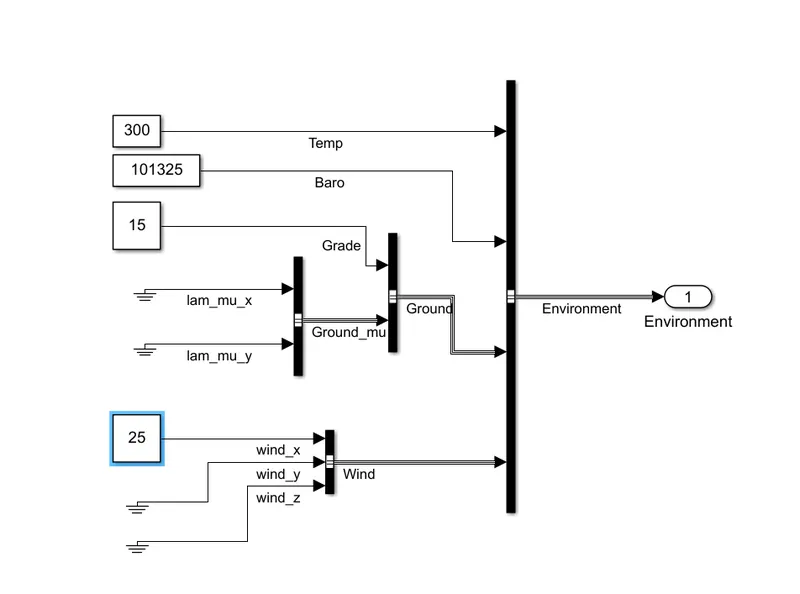
Result :-
As the wind velocity value incereses it required the higher amount of power to achieve the target value.
4.Keeping all other parameters same, compare the simulated results of hybrid and pure electric powertrains.
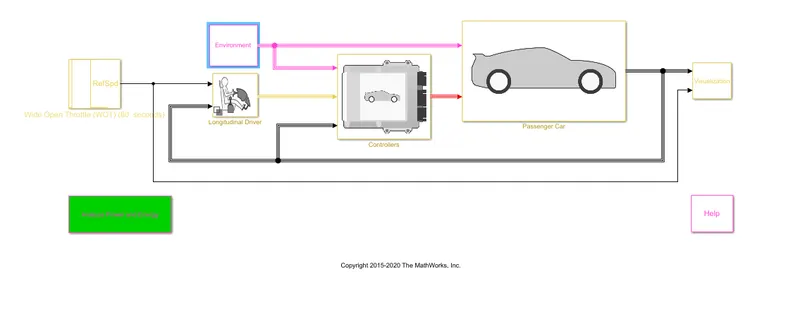
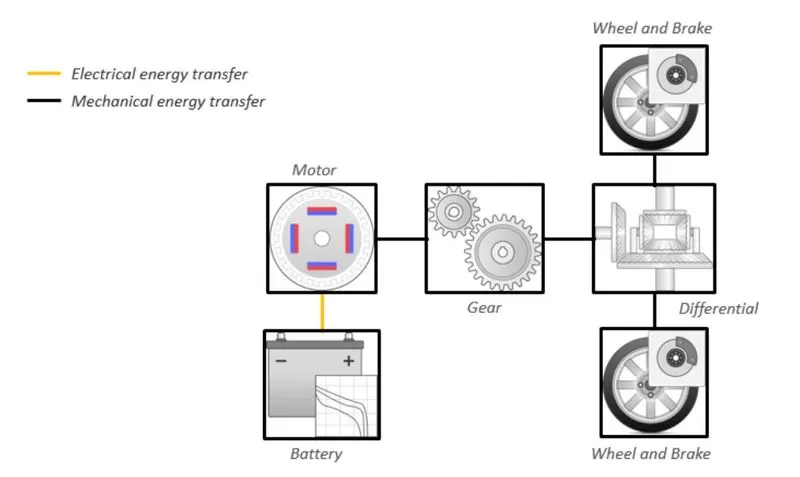
Simscape model of EV.
Simscape model of HEV.
Here i taken the same parameter of duty cycle for both the module.
Grade and wind velocity value are taken as below.
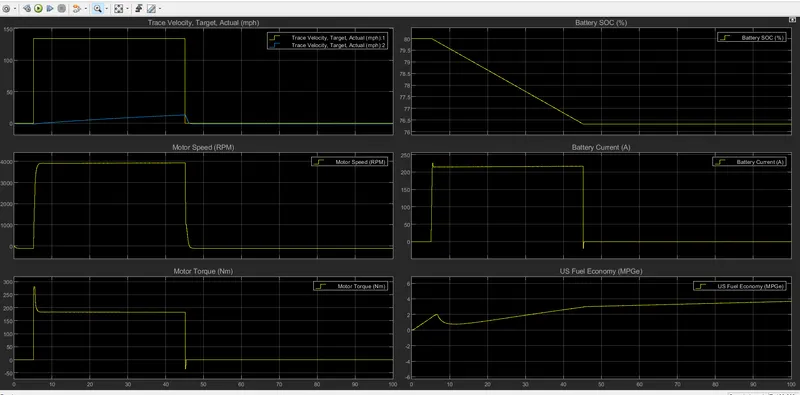
This result for the EV module:-
This result for the HEV module.
Comparision for the EV and HEV module:-
1.Time required to achive the actual velocity is 20.5 seconds.
2.No any generator is connected to engine shaft in EV whether in HEV it is connected.
3.Battery SOC drop during acceleration period in EV is 3.5 unit(80 to 76.5), where in HEV it is 17 units(80 to 63).
4.Battery SOC increrases during regenrative period in HEV is 2 unit (63 to 65) but in EV it is constant from the 76.5 no increasing movement found in that case.
5.As generator is connected in HEV model Battery get fully charge with SOC of it initial value but in EV model their is no any generator therfore its SOC not fully achived as its inital value.