Week-4 Challenge WOT Condition Part-2
SOLUTION 1)
Mapped and Dynamic subsystem of Electric Motor/Generator
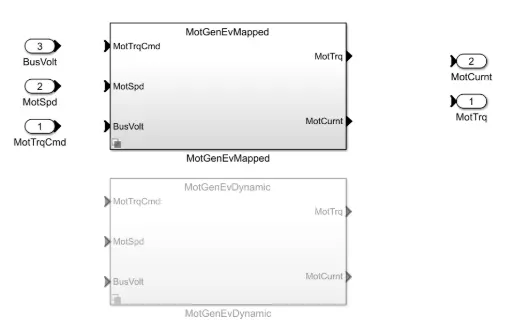
Mapped Model:
- The mapped model is one type where the data points are pre_assigned in lookup tables.
- The engine or motor torque required is sensed and the motor or engine block generates the requiered torque output just as required simply without considering the real time motor or engine, parameters
- The output values are stored for the corrresponding given input values of the engine motor and generator.
- The accuracy of this type is not that high but the simulation will be done in much less time as it does not run by real time parameters.
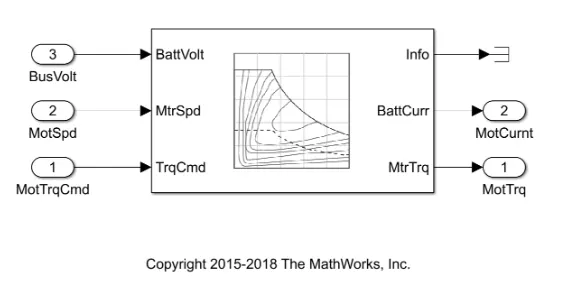
Dyanamic Model:
* The dyanamic model in other hand uses the combination of the outputs from various subsystems to generate the output.
* It runs by real time simulation where the required input from the drive cycle is taken and for that individiual real time simulation gets performed and summing all the results of the subsystem gives the output for the simulation.
* As per the drive cycle requirements the initial Bus voltage ,current is given along with the vehicle feedback so that it runs the actual simulation at that particuclar moment throught the drive cycle.
* The accuracy of this model is very high as it considers the real outputs from all the subsystem to generate the output.
* The simulation will take very long time to complete as it has so many individual simulations running by all the subsystem of the engine , motor/generator.
Steps to select the Model Type:
i. In the powertrain blockset module we first need to select the vehicle type first wheather it is full electric , full engine or the type of hybrid vehicle.
ii. After that the Simulink model appears by showing the work flow blocks of the model.
iii. In that we need to go to Passenger Block Electric plant* EV Motor/Generator block.
iv. After this just right click and go to Variance Label mode Active choice MotorGenEV Mapped or Dyanamic.
SOLUTION 3). Hybrid Electric Vehicle:
- A hybrid electric vehicle (HEV) is a type of hybrid type that combines a conventional Internal combustion engine (ICE) system with an electric propulsion system
- The presence of the electric powertrain is intended to achieve either better fuel economy than a conventional vehicle or better performance.
- Example of HEV is Toyota Prius.
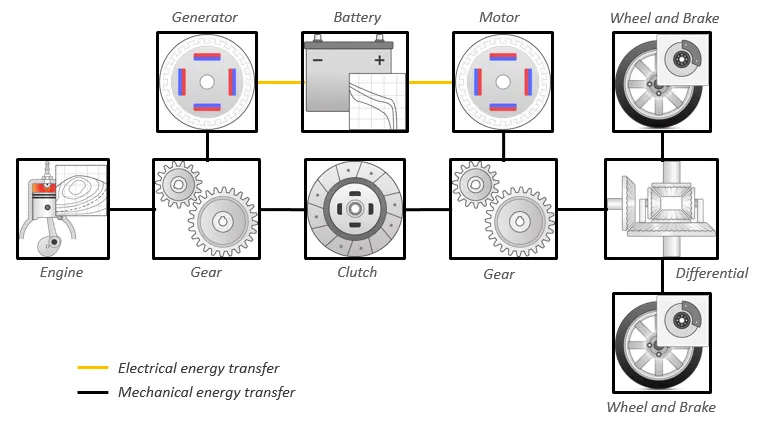
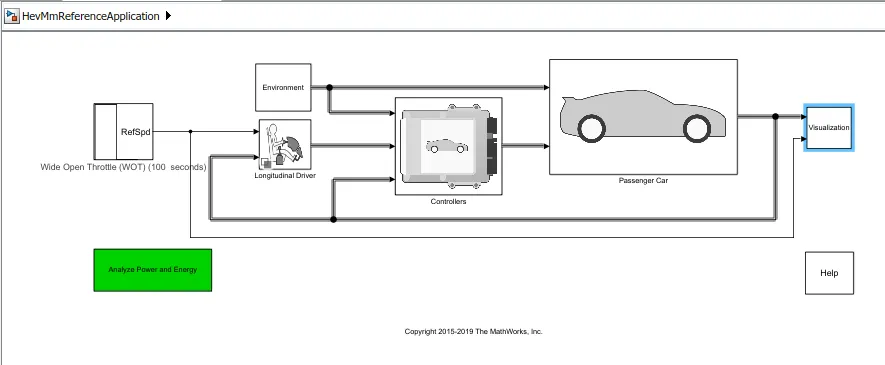
- In the powertrain blockset we have selected the hybrid electric vehicle and this is the simulink model .
- Here we can select the input parameters as we wish and we can Run the simulation to check the results.
Case1
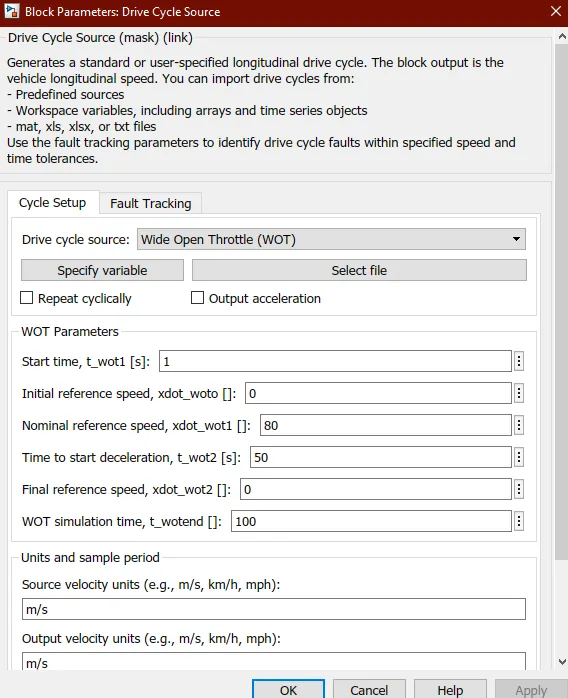
Simulation condition:
The simulation is done for Hybrid electric vehicle with Wide open Throttle Drive cycle.The Total cycle time = 100 seconds
The Top speed of this cycle = 80 mph
Time to start deceleration = 50seconds
The Grade angle = 0 degrees
The wind velocity = 0 m/s
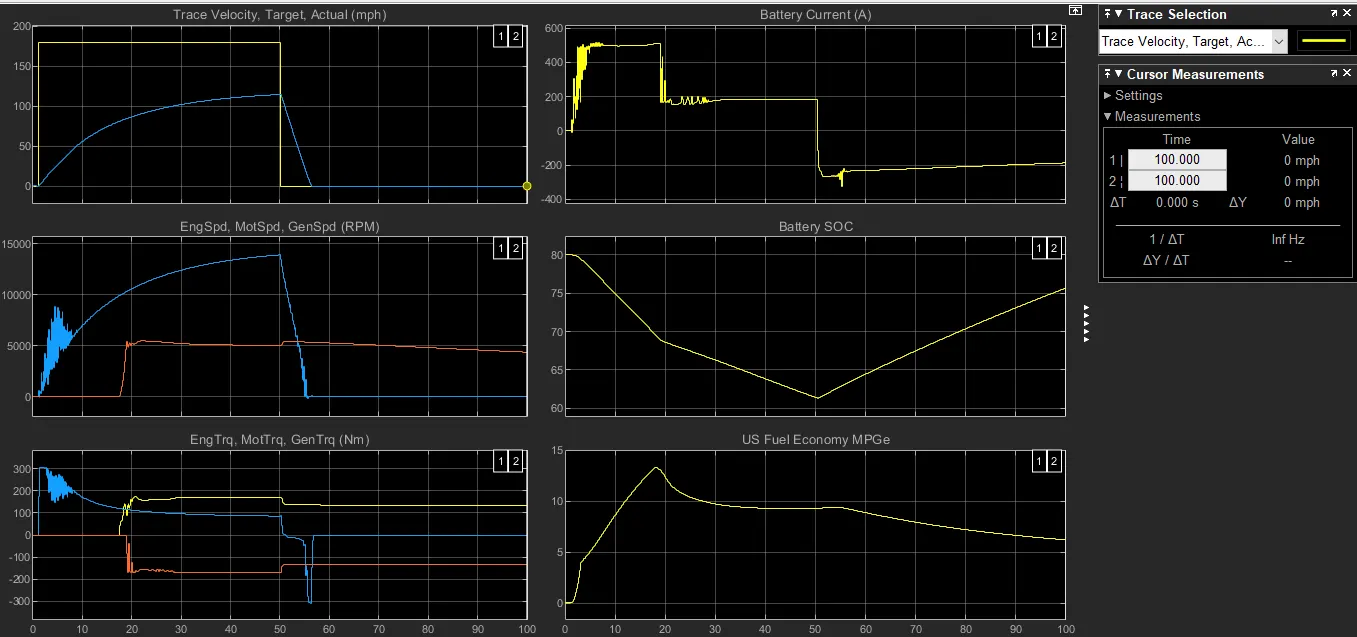
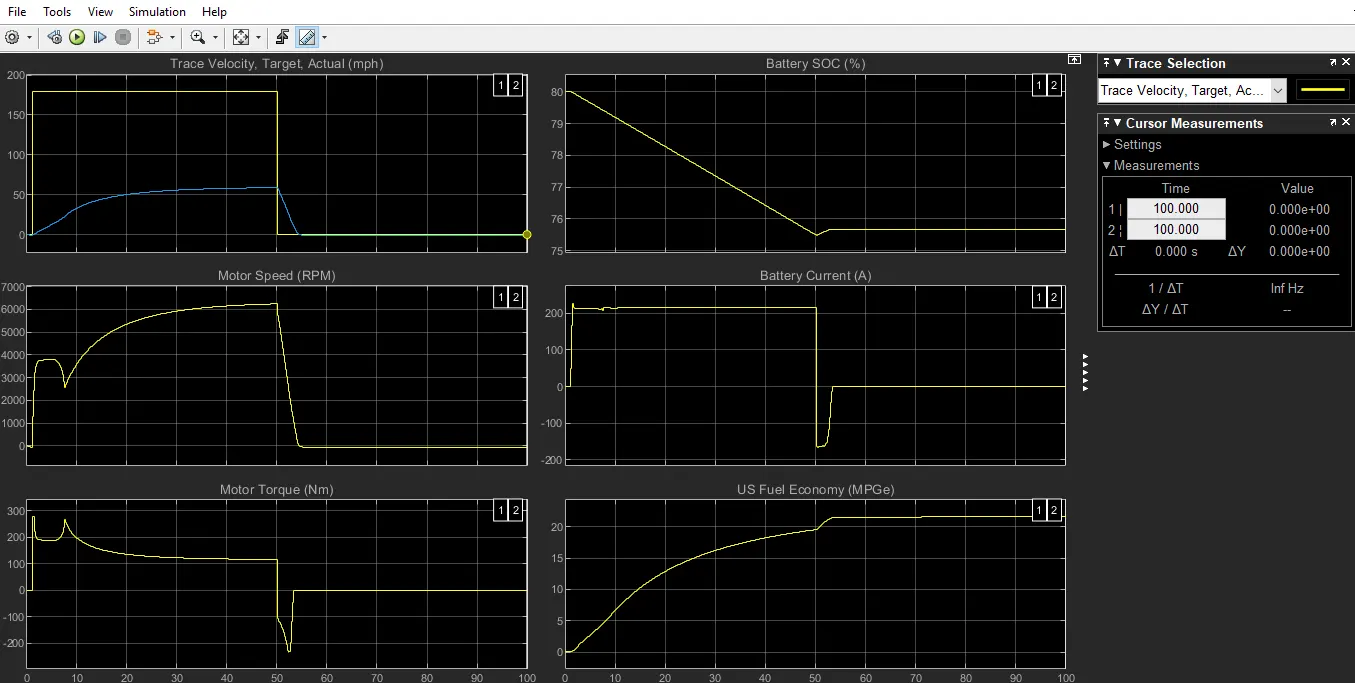
- The above figure shows the results for the simulation and there are totally six plots in them.
- Each plot shows a particular result and the plots are made in such a way that ,there is a cursor measurement and if we change the cursor on one plot the cursor moves on the otherplots too which paves way to study the result in a better way.
- The cursor enables us to study the behaviour of other result parameters corresponding to the acceleration of the vehicle.
Case2
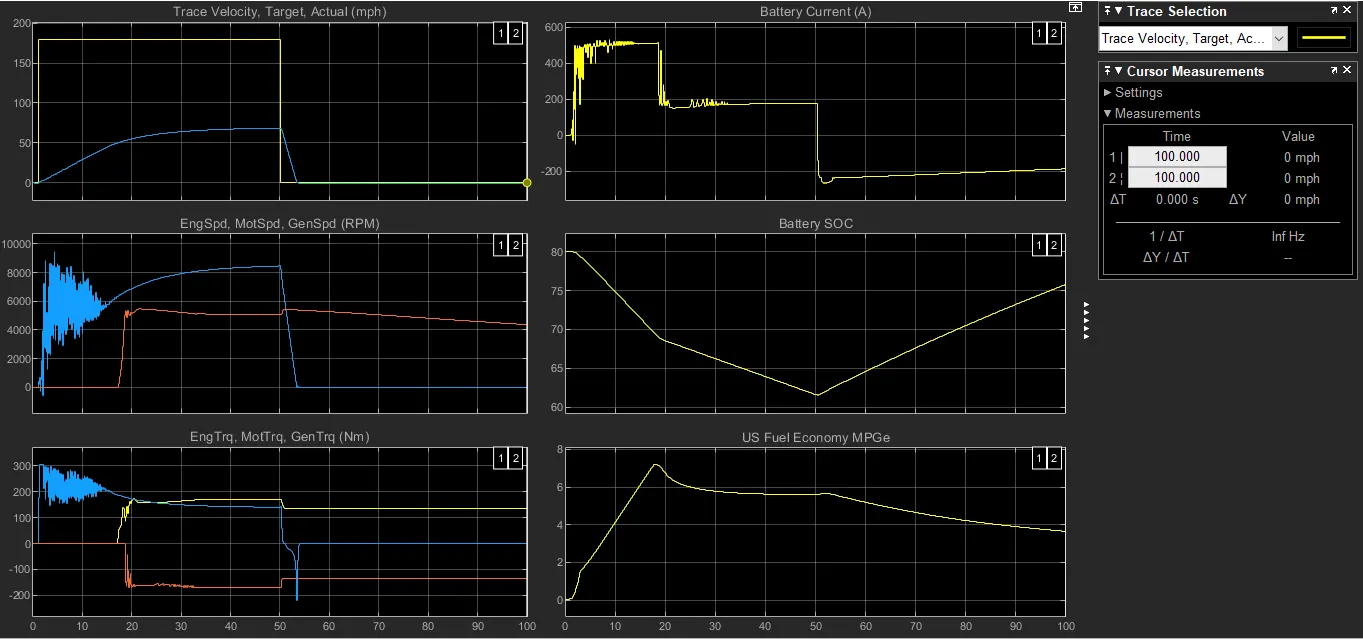
Simulation Condition:
The simulation is done for Hybrid electric vehicle with Wide open Throttle Drive cycle.
The Total cycle time = 100 seconds
The Top speed of this cycle = 80 mph
Time to start deceleration = 50seconds
The Grade angle - 8 Degrees
The wind velocity = 10 m/s.
SOLUTION 4)
Pure Electric Vehicle:
- A battery electric vehicle or pure Electric vehicle is a EV that exclusively uses chemical energy stored in rechargable battery packs with no secondary source of propulsion (e.g. hydrogen fuel cell, internal combustion engine, etc.) of energy.
- BEVs use electric motors and motor controllers instead of an conventional Internal combustion engines for propulsion. They derive all power from battery packs.
- So they don't produce any emission of waste gas and they are eco friendly.
- They also have their own limitations such as range etc.
- Example of Pure EV is Nissan Leaf.
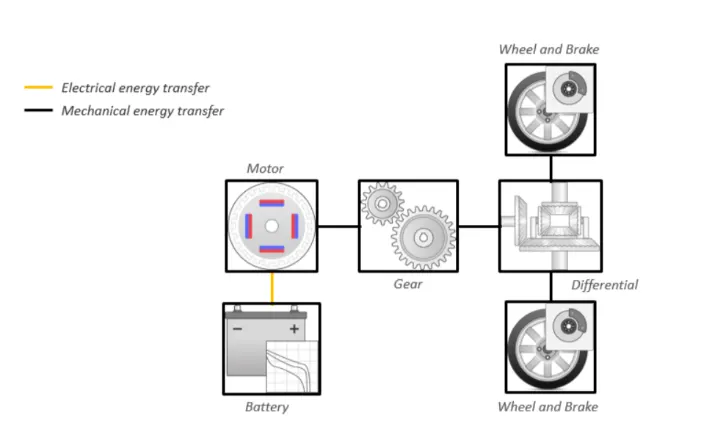
- Now comparing both the Pure electric and Hybrid electric vehicle with the given conditions in a simulation to observe the behaviour of both the type.
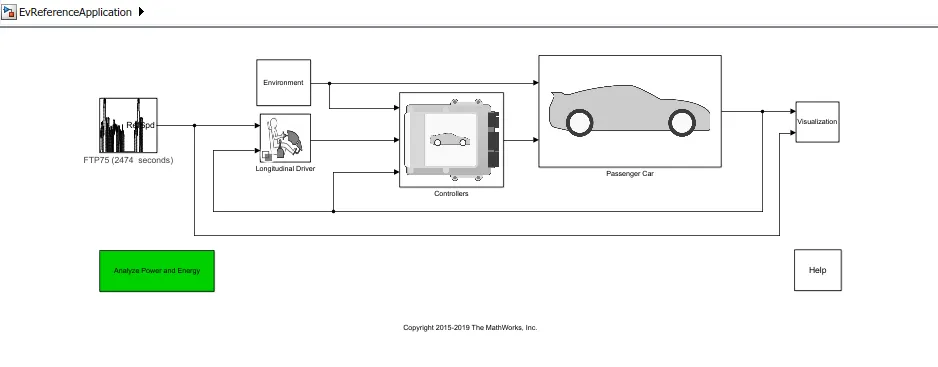
Case1
Simulation Condition:
The simulation is done for pure electric & Hybrid electric vehicle with Wide open Throttle (WOT) Drive cycle.
The Total cycle time = 100 seconds
The Top speed of this cycle = 80 mph
Time to start deceleration = 50 seconds
The Grade angle = 0 Degrees
The wind velocity = 0 m/s.
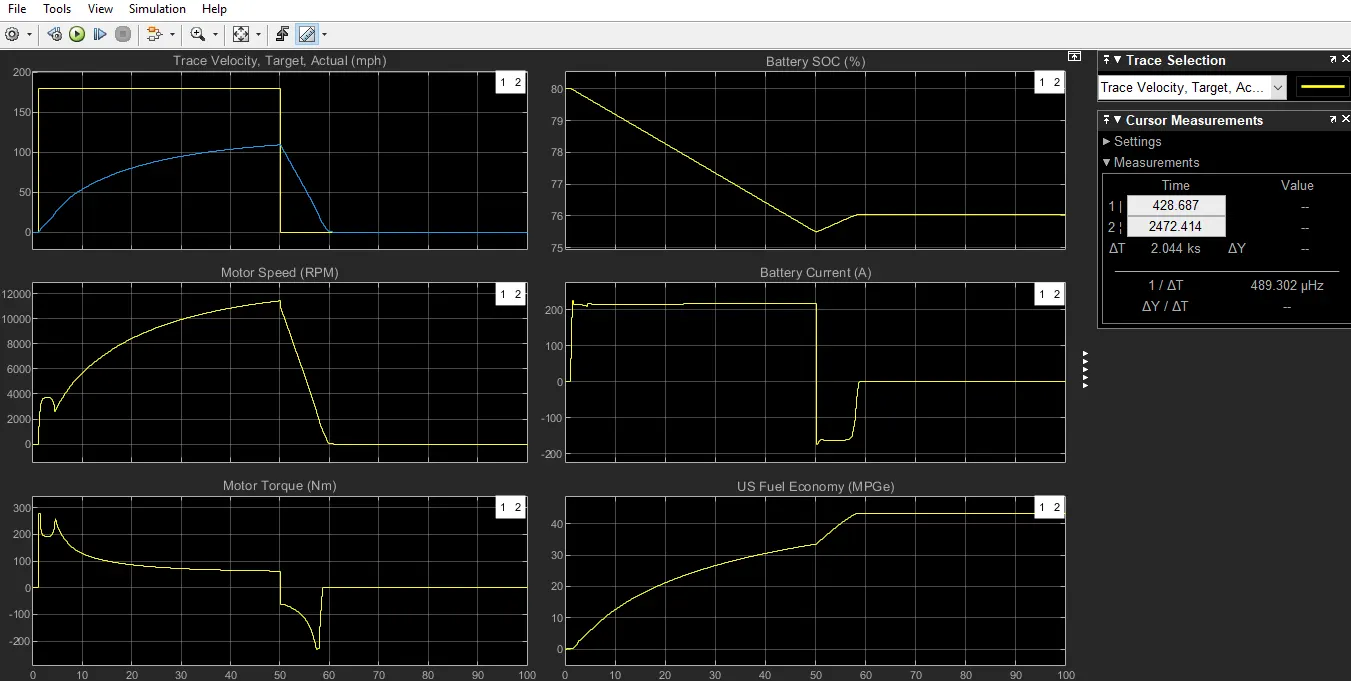
Case2
Simulation Condition:
The simulation is done for pure electric & Hybrid electric vehicle with Wide open Throttle (WOT) Drive cycle.
The Total cycle time = 100 seconds
The Top speed of this cycle = 80 mph
Time to start deceleration = 50 seconds
The Grade angle = 8 Degrees
The wind velocity = 10 m/s.