Week-4 Challenge WOT Condition Part-2
Aim:
To study wide open throttle condition for HEV'S and EV's
Objective:
- What is the difference between mapped and dynamic model of engine, motor and generator? How can you change model type?
- How does the model calculate miles per gallon? Which factors are considered to model fuel flow?
- Run the HEV ReferenceApplication with WOT drive cycle. Change the grade and wind velocity in the environment block. Comment on the results.
- Keeping all other parameters same, compare the simulated results of hybrid and pure electric powertrains.
Introduction:
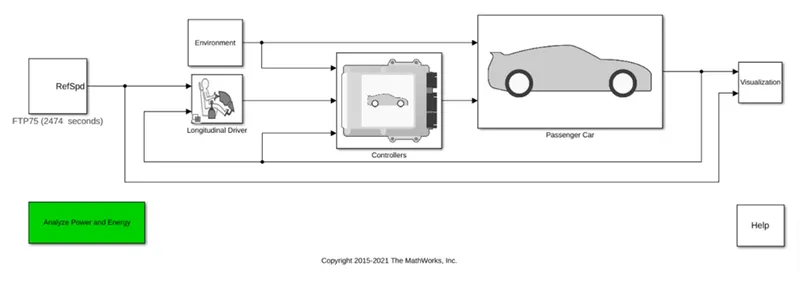
This is how a EVReferenceApplication looks in the MATLAB window
Objective 1:
What is the difference between mapped and dynamic model of engine, motor and generator?
Theory:
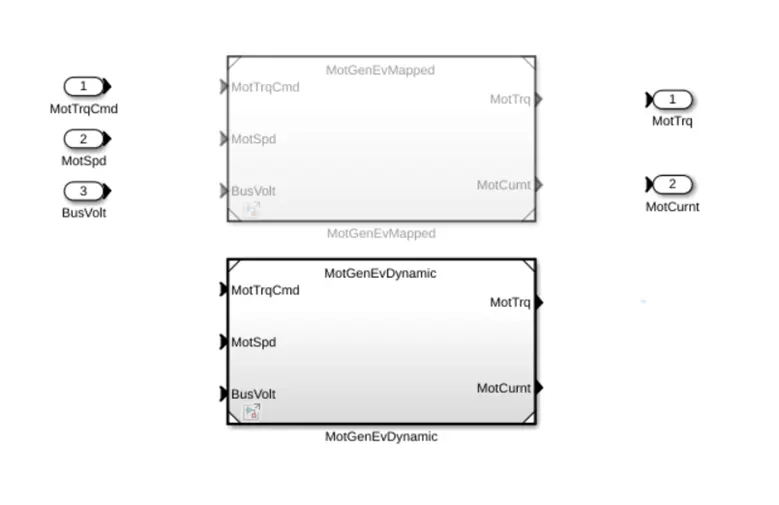
This is the pathway for mapped and dynamic model of motor generator
As only the one model can run at a time that is (mapped/dynamic) then for that time the other model is kept off.
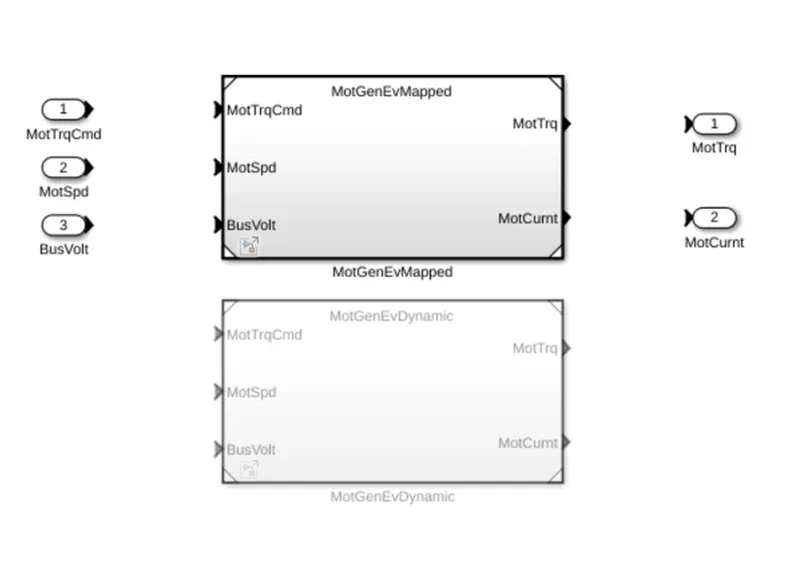
When you customize a SI or CI reference application, you can use either a dynamic or mapped engine model. The table provides considerations for using either implementation.
|
Type |
Implementation |
When to Use |
|
|
Mapped |
CiMappedEngine SiMappedEngine |
Model uses a set of steady-state lookup tables to characterize engine performance. The tables provide overall engine characteristics, including actual torque, fuel flow rate, BSFC, and engine-out exhaust emissions. |
If you have engine data from a dynamometer or a design tool like GT-POWER. For quasi steady-state engine simulations. |
|
Dynamic |
CiEngine SiEngine |
Model decomposes the engine behavior into engine characteristics that are separated into lower-level components. By combining components in this way, the models capture the dynamic effects. |
If you need a more detailed dynamic model and have component-level data. To analyze the impact of individual engine components on the overall performance. |
Mapped model: Represent the actual component
Dynamic model: Run based on data even in the lookup table (Run faster)
How can you change model type?
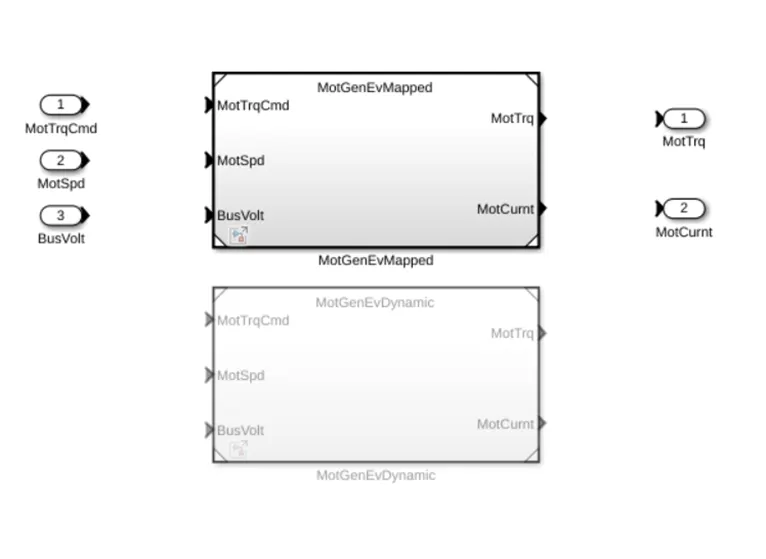
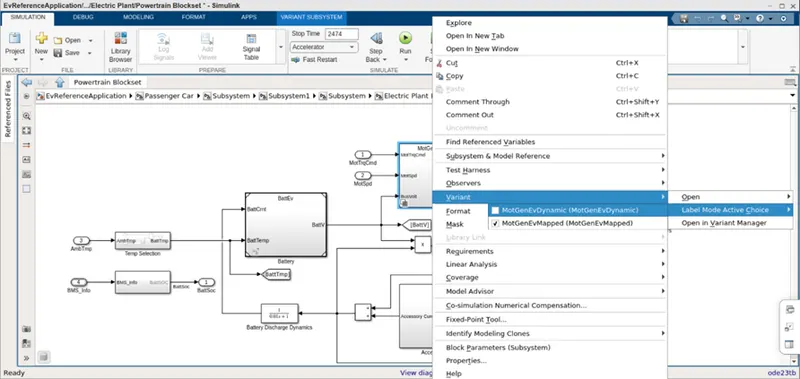
- First select the type that you want to change
- Right click on then sub-block of the model
- Select the Variant
- The Label mode activate
- Then change the model type
1.
2.
3.
Objective 2:
How does the model calculate miles per gallon?
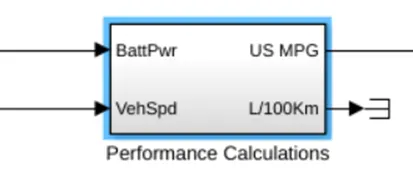
This is the block for fuel consumption located in the Visualization
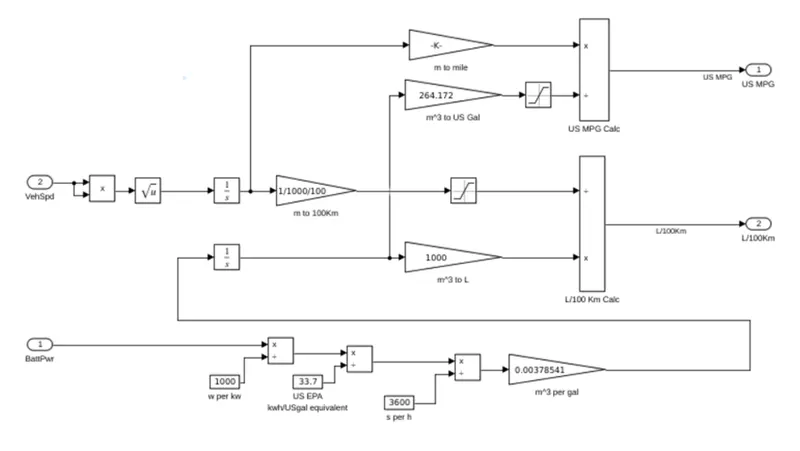
Steps:
- Vehicle speed data is used to calculate the distance travelled in meters which is then converted to miles
- Battery power data is used to find power used in kWh which is then converted to gasoline-equivalent using US EPA value by dividing with 33.7
- Note: As per the US environmental protection agency (EPA) 1 gallon of gasoline is equal to 33.7 kWh
- Dividing distance travelled in miles by the number of gallons, we can get miles per gallon.
- For HEV this gallon (gasoline-equivalent of battery power) is added with gallon used by IC engine then miles per gallon is calculated.
Which factors are considered to model fuel flow?
- Battery Power
- Vehicle Speed
- Fuel Flow
Objective 3:
Run the HEV ReferenceApplication with WOT drive cycle. Change the grade and wind velocity in the environment block. Comment on the results.
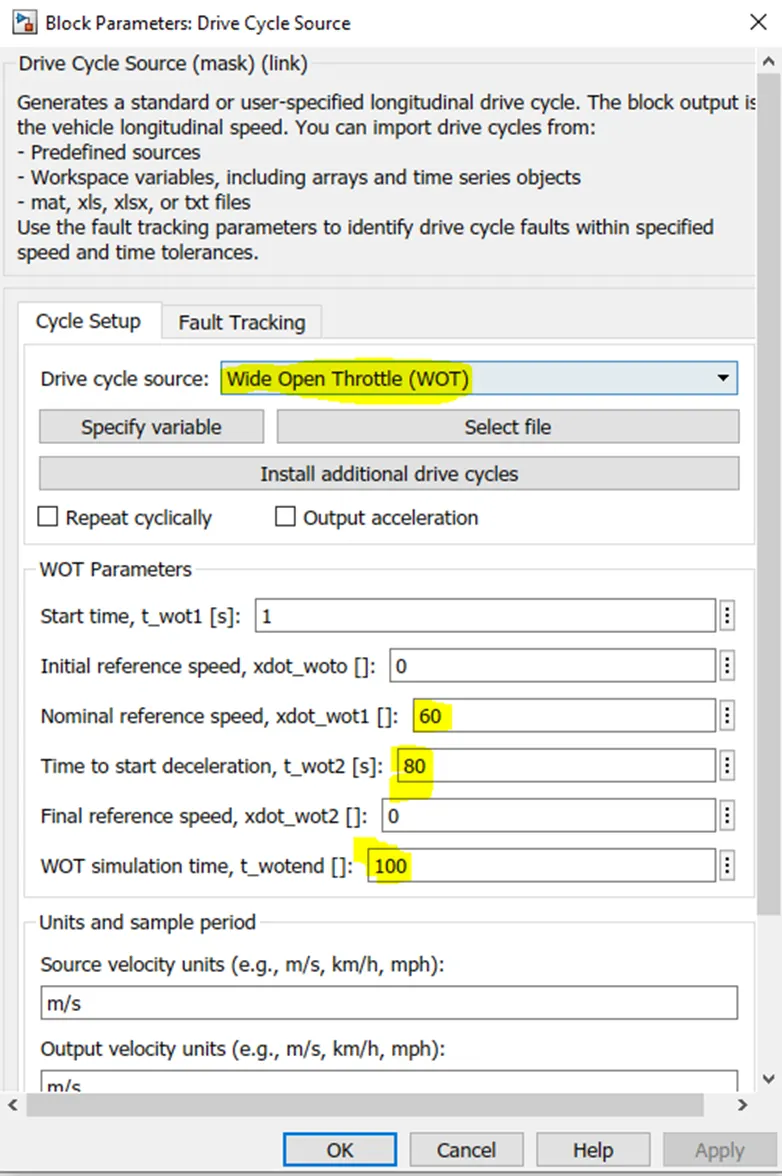
Step 1:
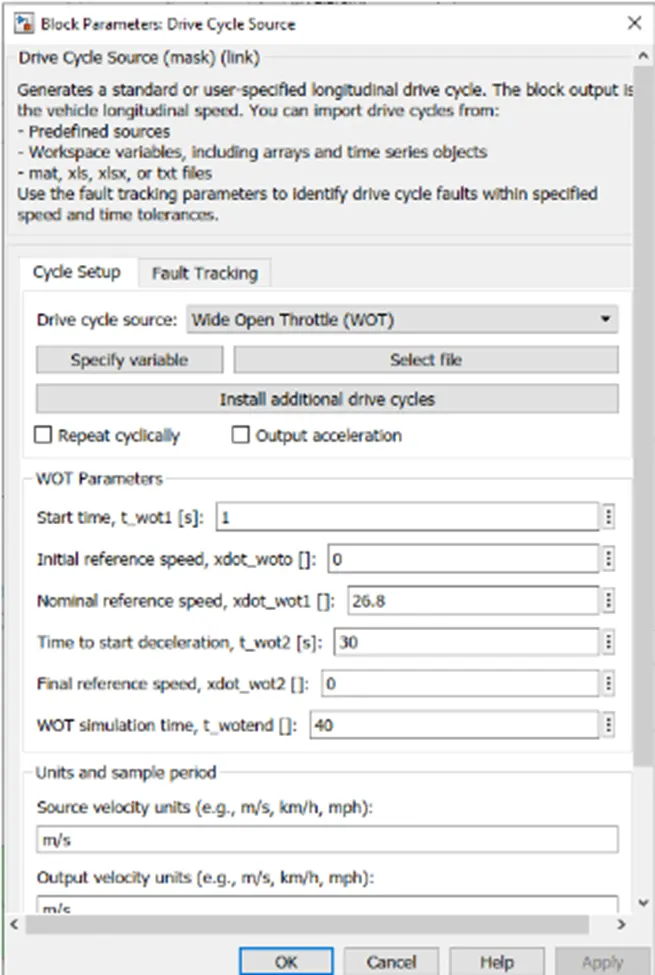
Changes the drive cycle to Wide Open Throttle (WOT) & check other parameters
Step 2:
Change the Grade & wind velocity
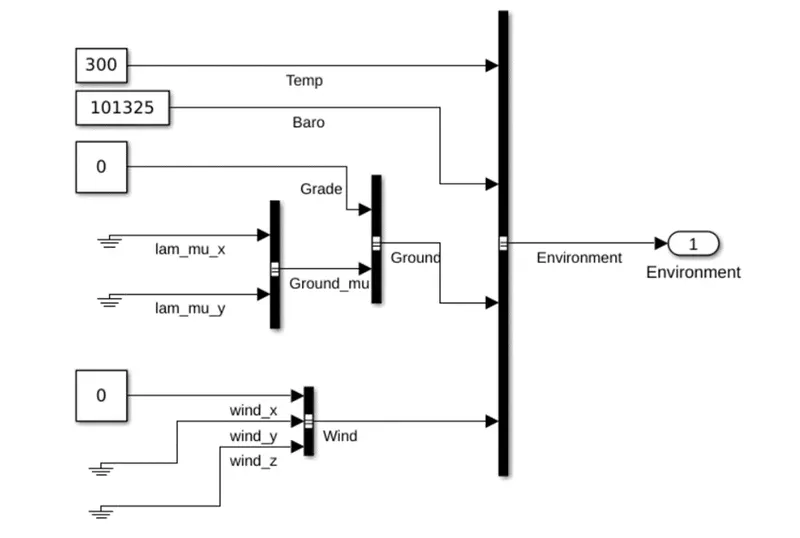
Without changes in grade & wind velocity
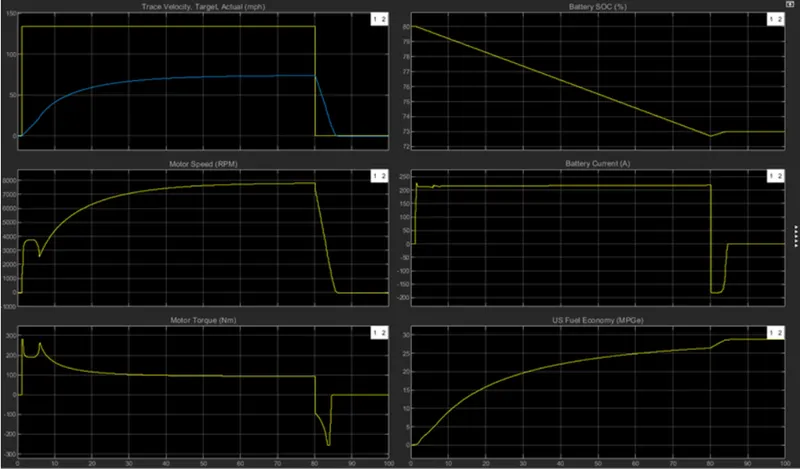
With changes in grade & wind velocity
RESULTS:
With the increase in grade and wind velocity,
- Peak velocity achieved is reduced as gradient force and aerodynamic force becomes dominant.
- Fuel economy is reduced because the distance travelled is reduced due to external forces.
- Deceleration time is reduced so batter recharging capacity is also reduced.
- Battery SOC at the end of wot acceleration is similar but during deceleration battery is charged more is the grade and wind velocity is less.
Objective 4:
Keeping all other parameters same, compare the simulated results of hybrid and pure electric powertrains.
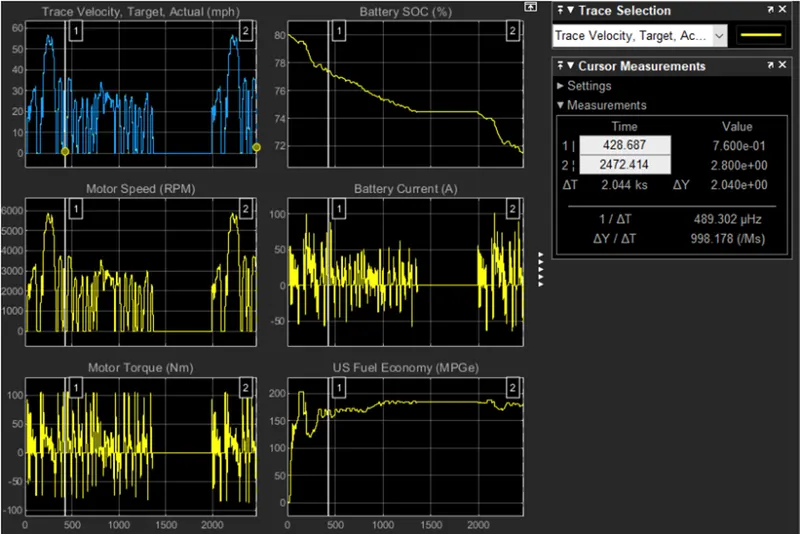
Simulation is done for 50 seconds and the 40 seconds WOT drive cycle is used with wot acceleration for 0-30 seconds achieving a max speed of 26.8m/s and decelerates for 10 seconds (30-40).
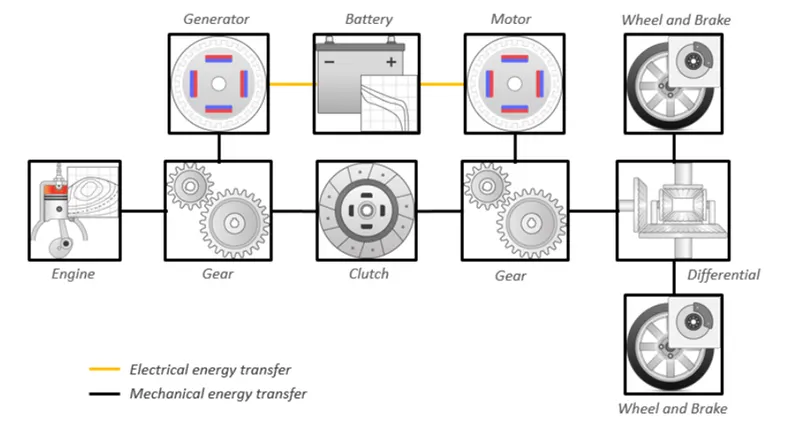
EV Reference block-set
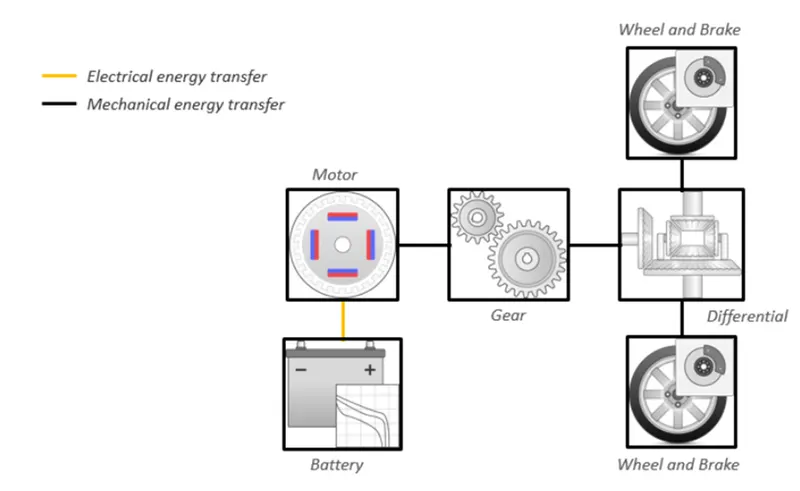
HEV Reference block-set
EV output
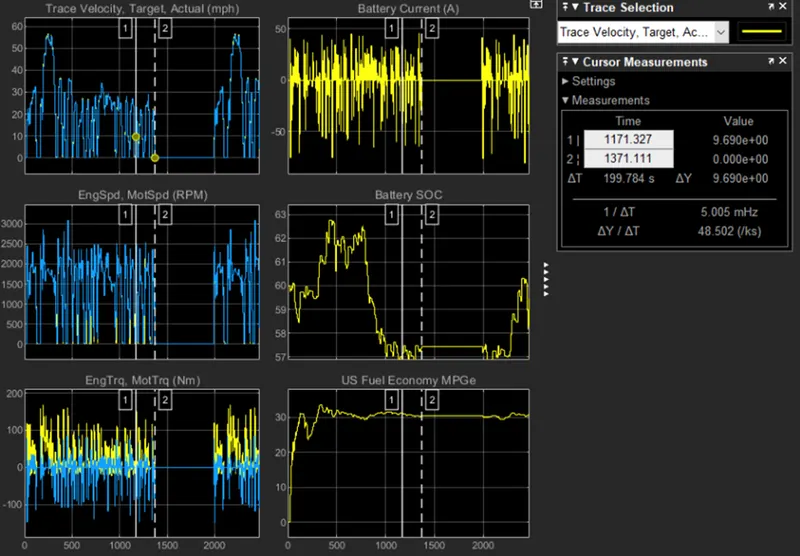
HEV output:
COMPARISON OF HYBRID WITH PURE ELECTRIC POWERTRAIN:
- The drivetrain loss for EV vehicle is more than the HEV vehicle. Whereas the power loss in EV vehicle is less than that of HEV vehicle.
- Therefore, the EV vehicle is more efficient than the HEV vehicle because a battery used for Electric vehicle is Lithium-ion which has low discharge rate than the battery used for HEV Nickel metal hybrid battery
- In hybrid vehicle the emission is obtained and the fuel consumption rate is high. whereas the Electric Vehicle release the 0% of emission this will grade as suitable for environmental condition.