Week-3 Challenge: ADVISOR Tool
Aim:
ADVISOR tool functions
Objective:
- For EV defaults in file, if cargo mass is 500 kg with all other default conditions, can the vehicle travel for 45 km with FTP drive cycle? Conclude your observations.
- In the above case, try changing the battery capacity and repeat the simulation.
- Perform gradeability test with PRIUS_Jpn_defaults_in file. Compare your results in table and conclude.
Introduction:
Advanced Vehicle Simulator (ADVISOR) was first developed in November 1994 at the National Renewable Energy Laboratory. It was designed as an analysis tool to assist the US Department of Energy (DOE) in developing technologies for hybrid electric vehicles (HEV) through the Hybrid Electric Vehicle Propulsion System contracts with Ford, General Motors, and DaimlerChrysler. Its primary role is to highlight the system-level interactions of hybrid and electric vehicle components and their impacts on the vehicle performance and fuel economy.
ADVISOR was first released publicly via the Internet) in September 1998 (www.nrel.gov/transportation/analysis). The number of public users of the software tool has grown steadily from a small group of about 30 initial partners to a group of over 4500 individuals that have downloaded the software. The majority (68%) of ADVISOR users are members of industry while 29% are members of academia with the remaining 3% representing government entities. This large user community provides feedback necessary to improve the models and component data to be used within the models. Since first introduced, several updated versions of the software have been periodically distributed via the Internet. ADVISOR Version 3.2 is the latest version of the software.
Using ADVISOR:
- Download the ADVISOR tool
- Unzip the file & select the downloaded folder
- Select the file mentioned below
- Open the advisor file
- Run the advisor file
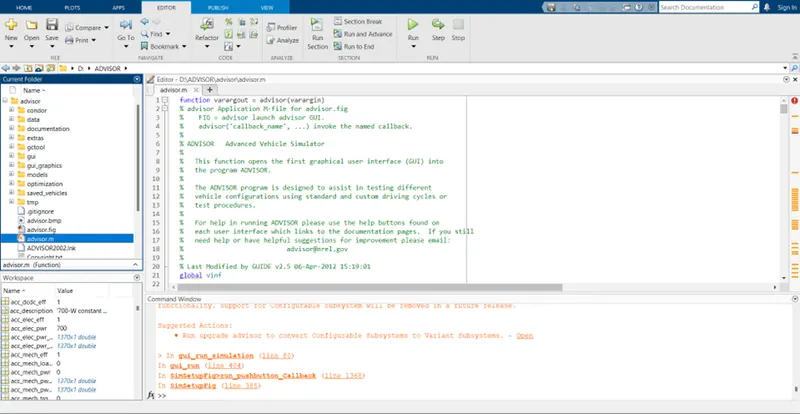
- This will open a GUI window
- Make sure to click metric & click start
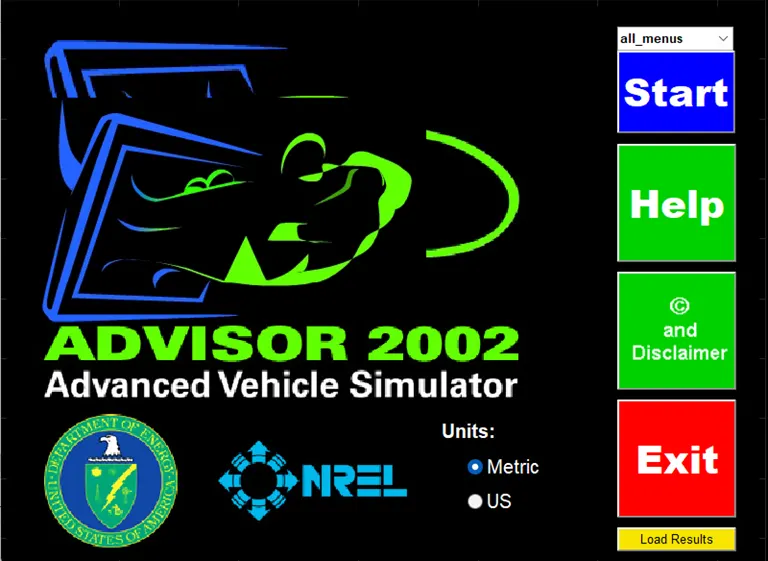
The ADSVISOR tool window looks like this
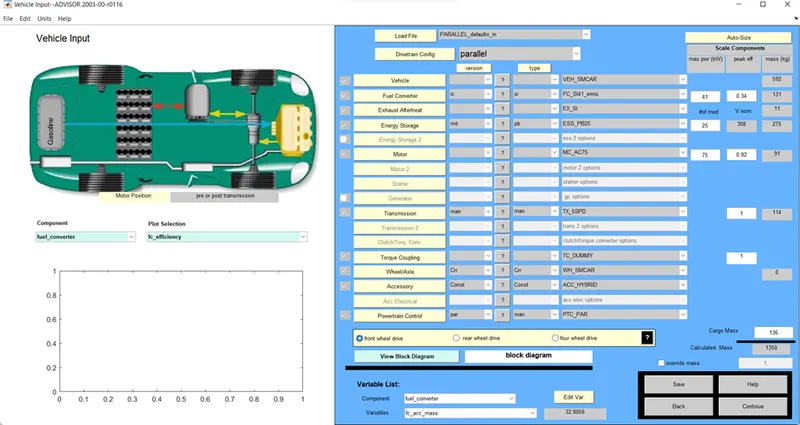
Objective 1:
Open EV drivetrain configuration defaults in file.
Select cargo mass is 500 kg
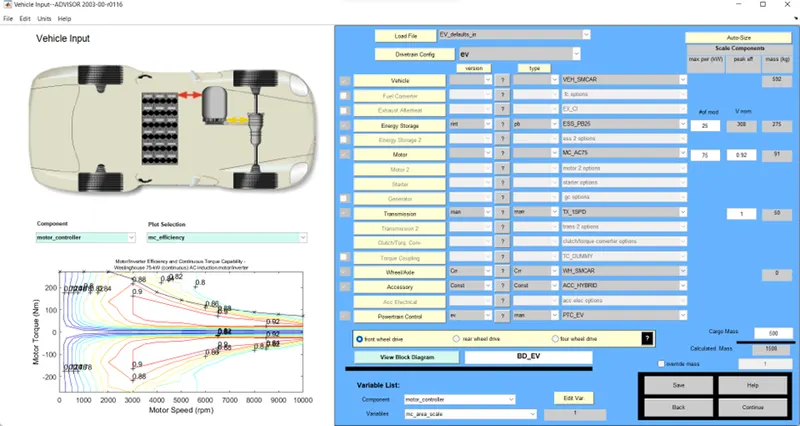
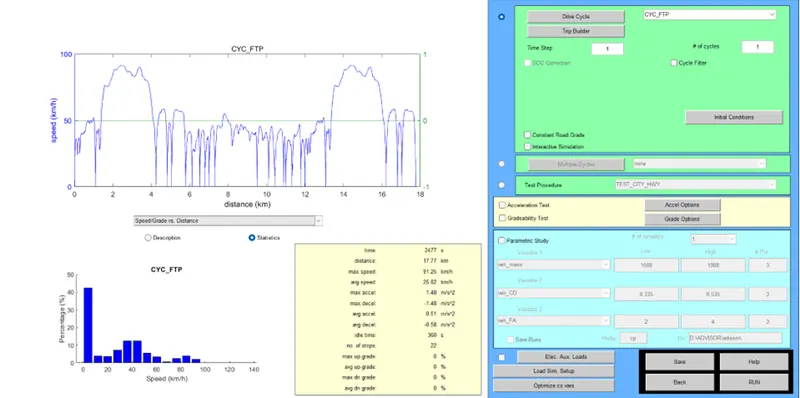
The vehicle distance travelled with FTP drive cycle
With FTP drive cycle 1 the distance travelled is 17.77 km
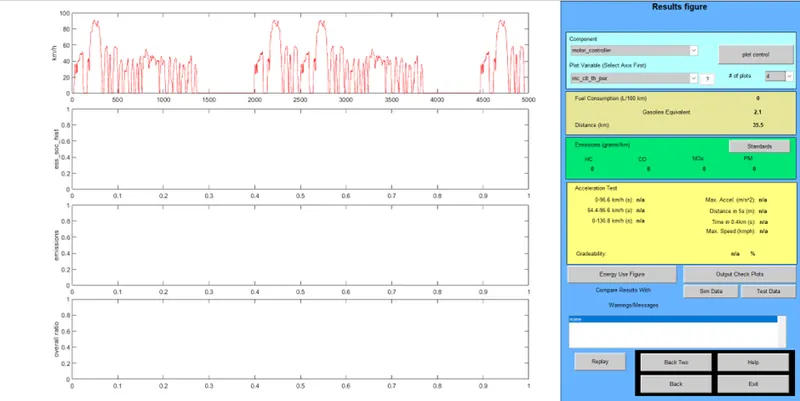
With FTP drive cycle 2 the distance travelled is 35.50 km
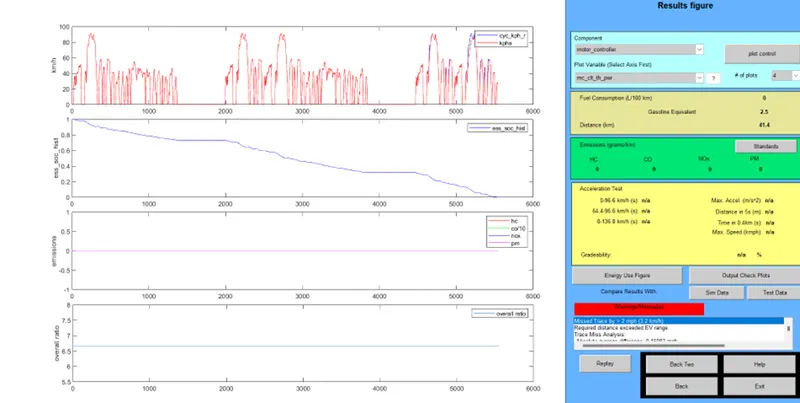
With FTP drive cycle 3 the distance travelled is 41.40 km
Observation Table:
|
Drive Cycle (FTP) |
Distance (km) |
|
1 |
17.77 |
|
2 |
35.50 |
|
3 |
41.40 |
Result:
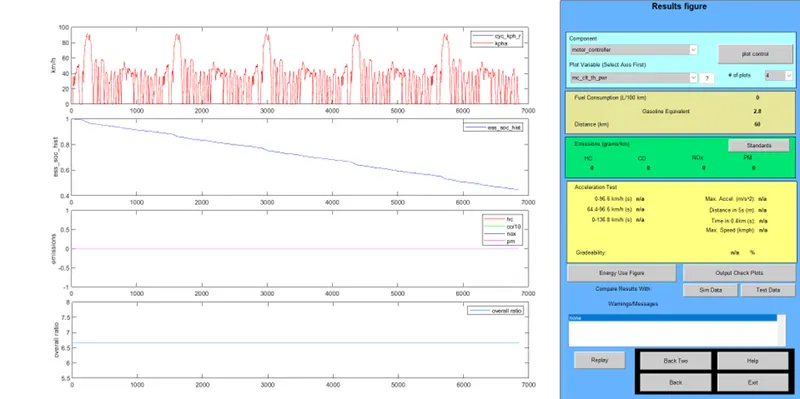
In the above results we can see that, Distance (km) is 17.8 km. So, the vehicle can't travel a distance of 45 km in a single recharge. Also, in SOC (second plot) has fallen to zero after nearly 2500 seconds.
Objective 2:
In the above case, try changing the battery capacity and repeat the simulation
Previously example, we have used a battery capacity of 25 kWh & ESS_PB25 type
The vehicle distance travelled with FTP drive cycle
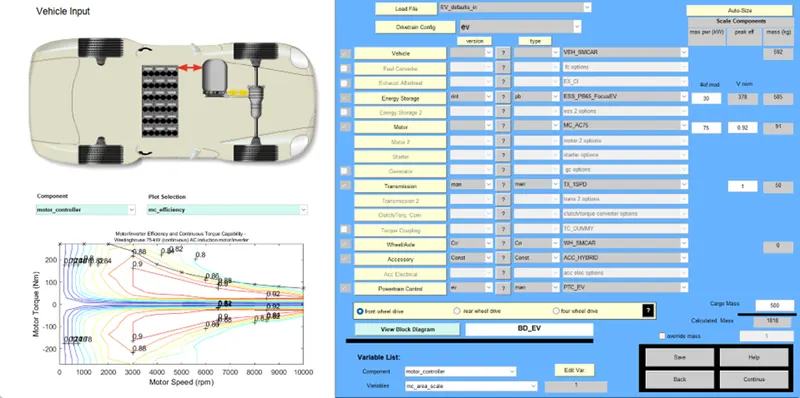
Following the same procedure that we followed in the objective above
From the same FTP drive cycles
With FTP drive cycle 1 the distance travelled is 11.99 km
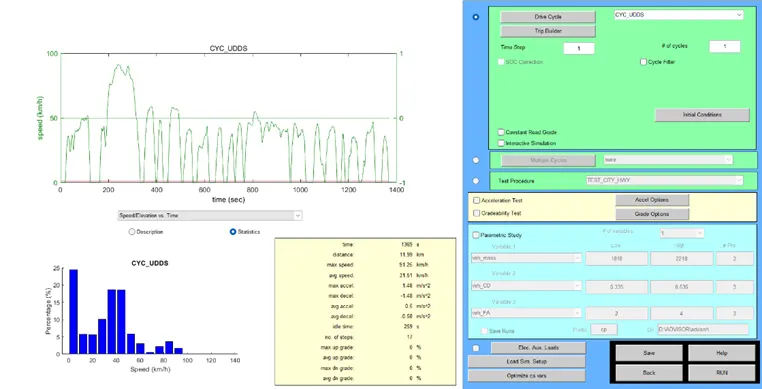
The maximum distance travelled by vehicle with FTP drive cycle (5) the distance travelled is 60.00 km\
Objective 3:
Perform gradeability test with PRIUS_Jpn_defaults_in file
Compare your results in table and conclude.
Open PRIUS_Jpn_defaults_ on ADVISOR tooP
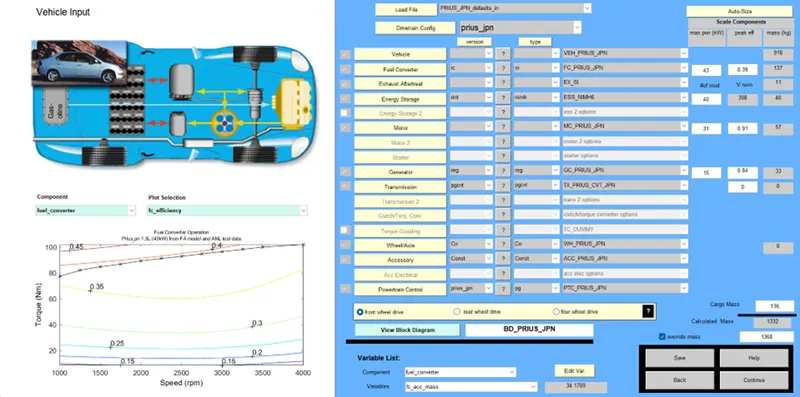
Press the continue button and select the select the Gradeability
For the tests in Gradeability
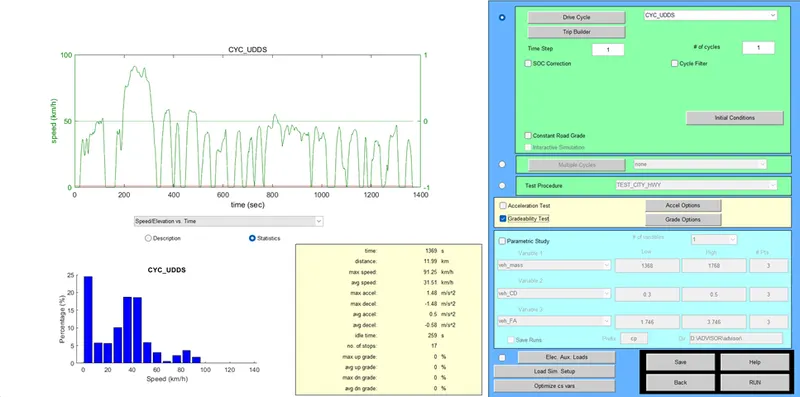
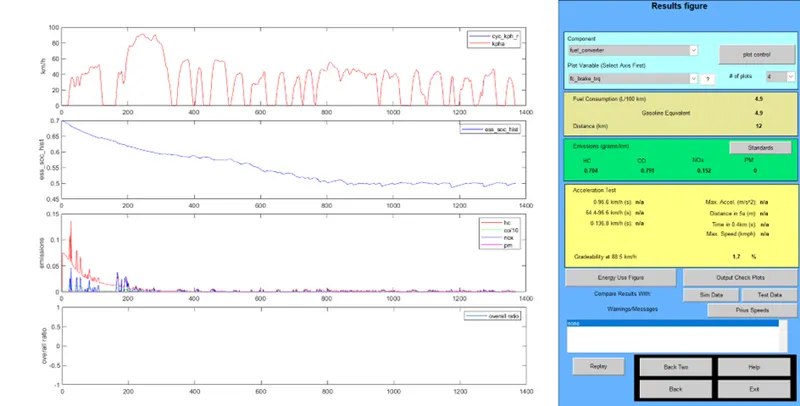
The gradeability is 1.7 at 55 kmph
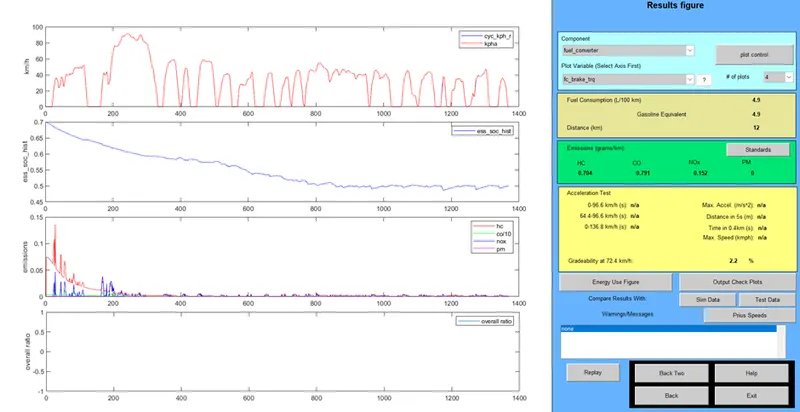
The gradeability is 2.2 at 45 kmph
The gradeability is 2.4 at 35 kmph
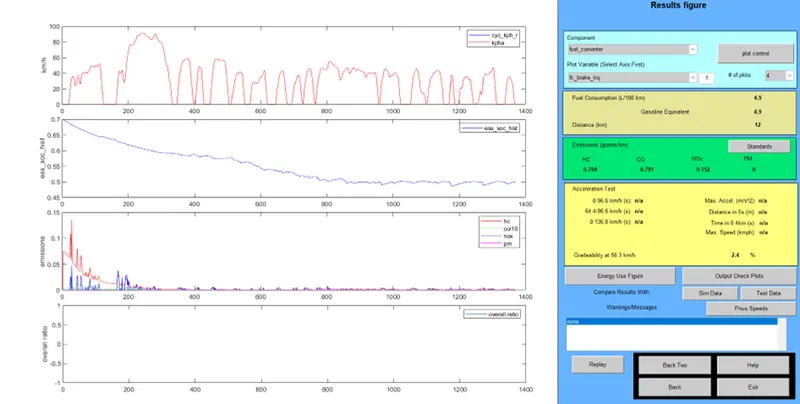
Observation Table:
|
Speed (kmph) |
Gradeability (%) |
|
55 |
1.4 |
|
45 |
2.2 |
|
35 |
2.4 |
Form the above table we can conclude that as speed decreases the gradeability of the vehicle increases & vice versa.
For reference check the file attached below