Week-4 Challenge WOT Condition Part-2
- What is the difference between mapped and dynamic model of engine, motor and generator? How can you change model type?
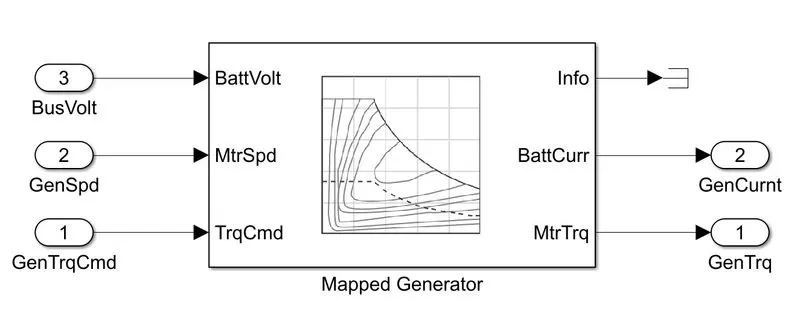
Mapped model:- Model uses a set of steady-state lookup tables to characterize performance.
Dynamic model:- Work on actual data or real time data.
|
Mapped |
Ci Mapped Engine Si Mapped Engine |
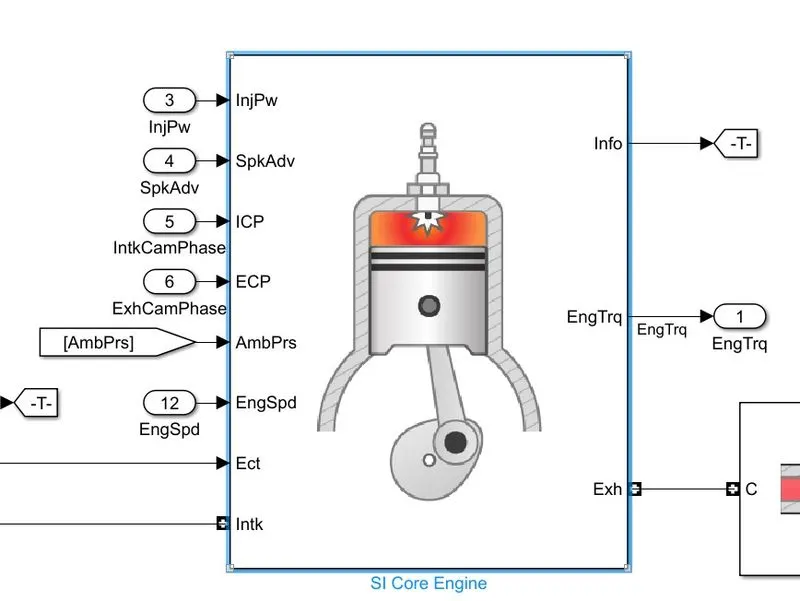
Model uses a set of steady-state lookup tables to characterize engine performance. The tables provide overall engine characteristics, including actual torque, fuel flow rate, BSFC, and engine-out exhaust emissions. |
· If you have engine data from a dynamometer or a design tool like GT-POWER. · For quasi steady-state engine simulations. |
|
Dynamic |
Ci Engine Si Engine |
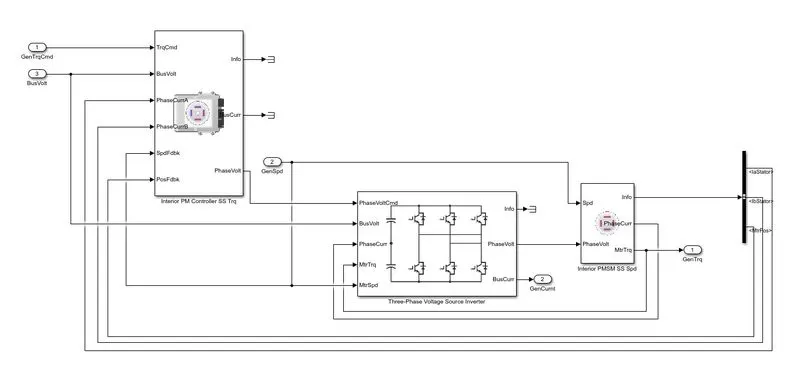
Model decomposes the engine behaviour into engine characteristics that are separated into lower-level components. By combining components in this way, the models capture the dynamic effects. |
· If you need a more detailed dynamic model and have component-level data. · To analyze the impact of individual engine components on the overall performance. |
- link for reference HEV model: - cd(setupExample('autoblks/HEVMultimodeReferenceApplicationExample'));helpersetuphevmm
- Link for reference EV model: - cd(setupExample('autoblks/EVReferenceApplicationExample'));helpersetupev
- In refrence application of HEV both type(dynamic as well as mapped) of engine, motor, and generator are used.
- we can change dynamic to mapped and vice versa.
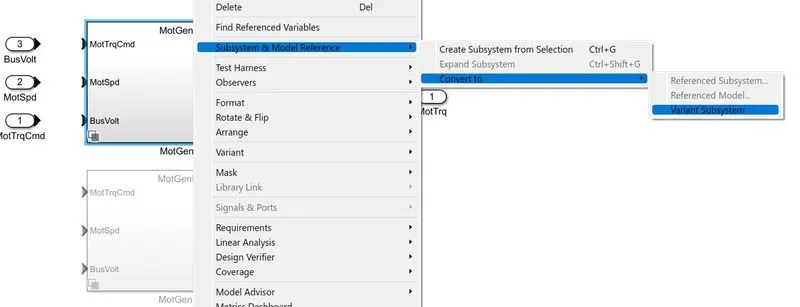
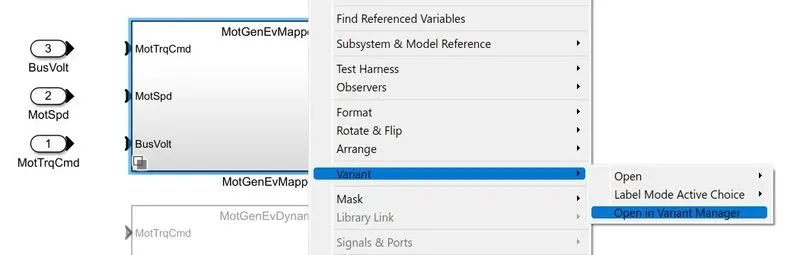
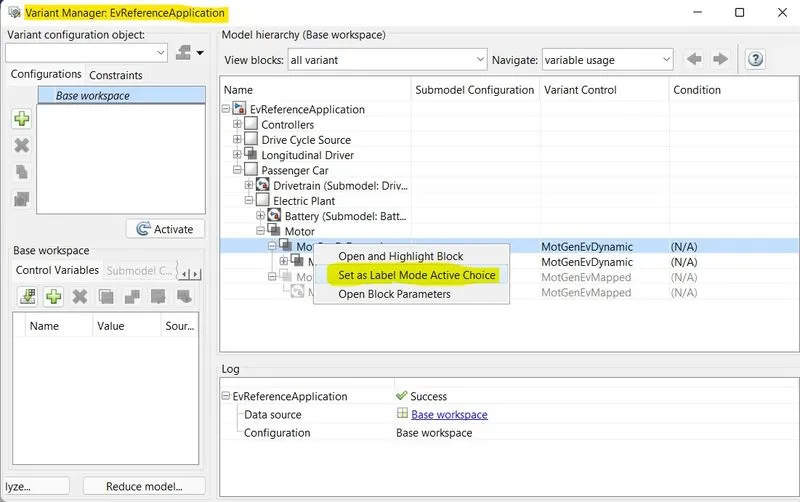
- following images shows how we can change the type of model.
STEP 1: - Convert model to varient subsystem.
STEP 2: - Open in varient manager.
STEP 3 : -Select model which you want to active and select set as label model active choice.
The above steps are same for ENGINE MOTOR AND GENERATOR.
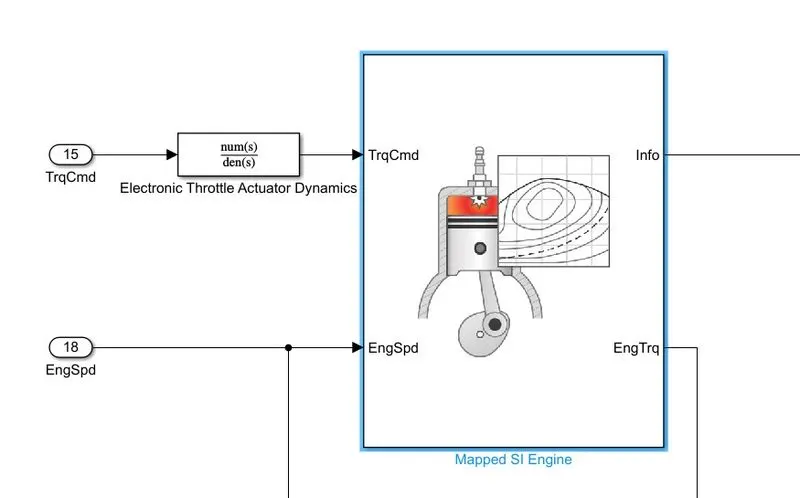
Some images are given below where we can easily understand diffrence in dynamic and mapped model.
1. MAPPED SI ENGINE.
2.DYNAMIC SI ENGINE
3.MAPPED GENERATOR
4. DYANIC GENERAOR
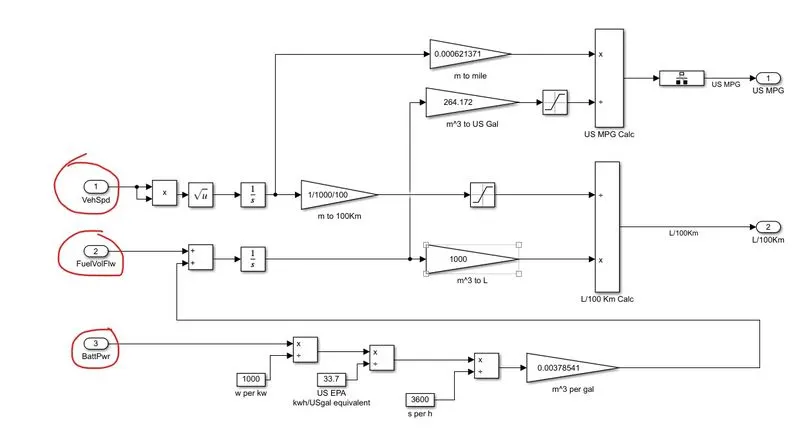
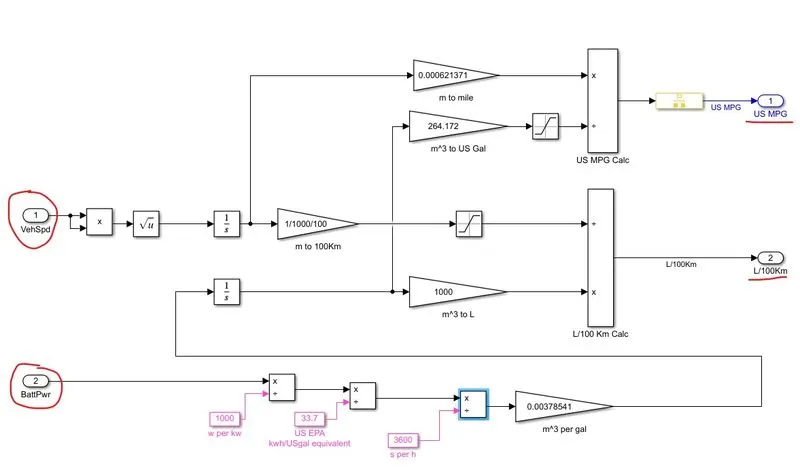
Q2.How does the model calculate miles per gallon? Which factors are considered to model fuel flow?
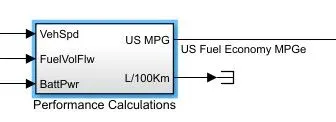
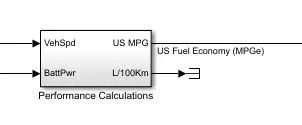
Factors and calculation of fuel can be found in Visualization block of model.
For HEV factors are : -
- Vehicle speed
- Fuel volumetric flow
- Battery power
For EV factors are : -
- Vehicle speed
- battery power.
Q 3: -Run the HEV ReferenceApplication with WOT drive cycle. Change the grade and wind velocity in the environment block. Comment on the results.
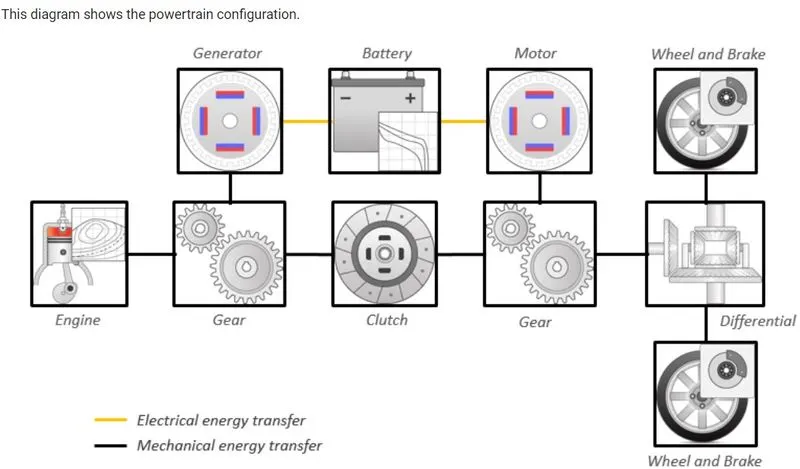
Simscape model of HEV.
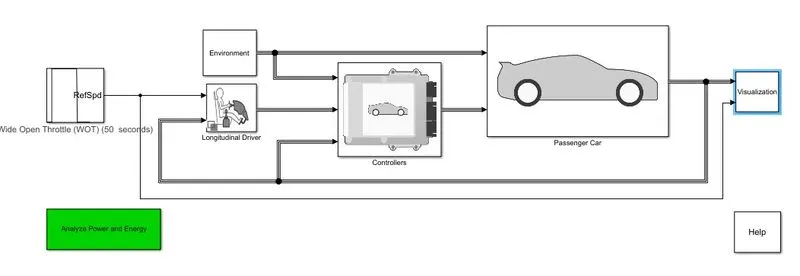
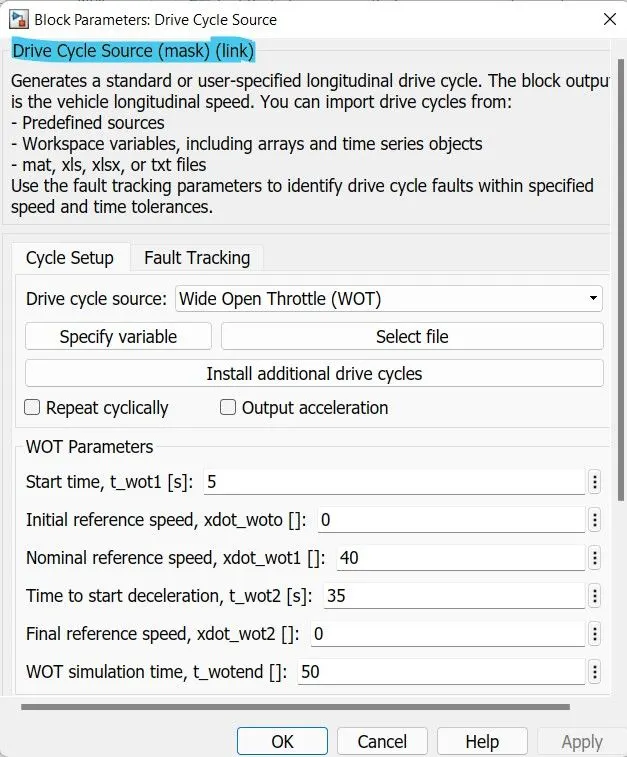
CASE I: - WOT drive cycle selected with zero grade and wind velocity.
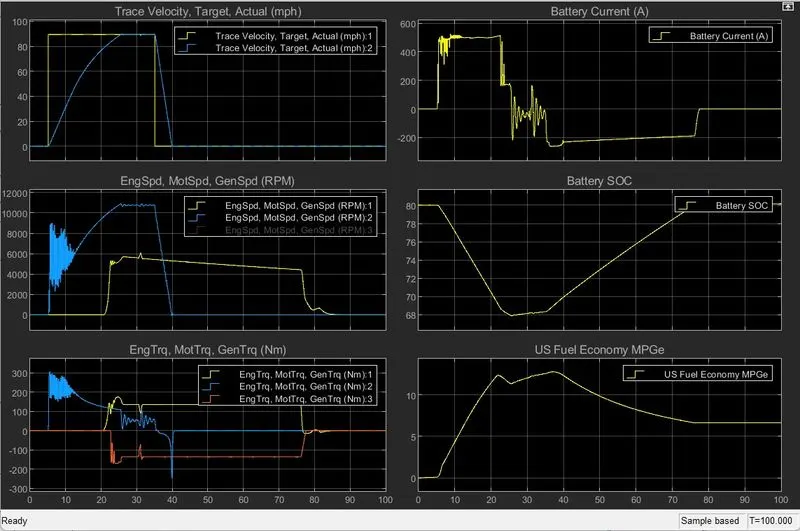
Results of case I
- Time required to achive the actual velocity is 21 seconds.
- Graph of target velocity and actual velocity is not same because of battery limitation or capacity of battery, If we increases the discharge capacity of the battery than time required to achive the target velocity is less.
- As the brake applied motor speed start decreasing and after some time it became zero, during that battery current become neagtive as battery start charging from generator and engine set.(regenrative braking)
- during regenrative braking battery SOC start incresing.
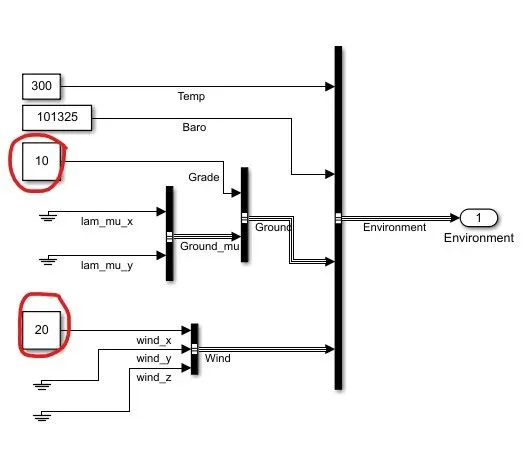
CASE II:- Effect of grade and wind velocity.
Below image show the values of grade =10 and wind velocity = 20
RESULTS
- Actual velocity is not able to achive the same value as target velocity due to increase in grade and wind velocity.
- As grade and wind velocity increases more amount of power required to achive the target value and as we take same battery as before it is not possible to achive target value of velocity.
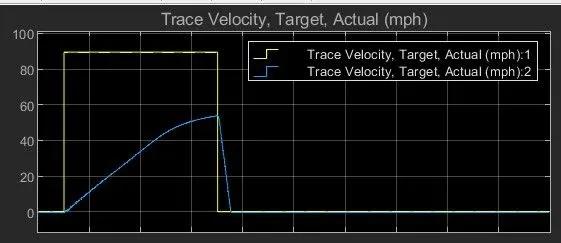
- Now if we put Grade =0 and Wind velocity =20 results are follows.
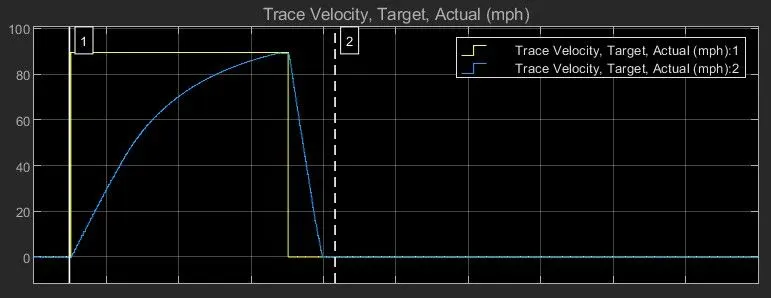
- Now if we put Grade 10 = & Wind velocity =0 results are follows.
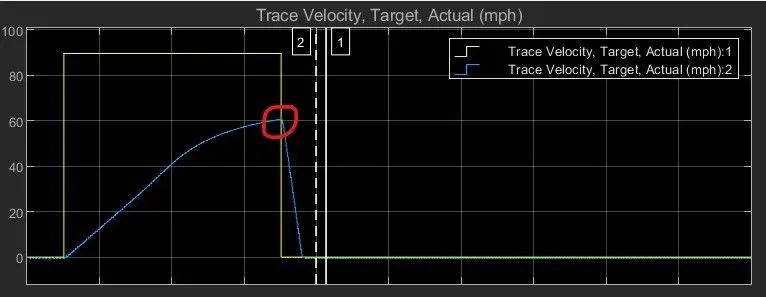
Conclusion: -
- Effect of wind velocity is less than the grade.
- As grade value increases higher amount of power required by the vehicle to achive the target value.
Q.4 Keeping all other parameters same, compare the simulated results of hybrid and pure electric powertrains.
Observation of EV: -
The block model of EV powertrain.
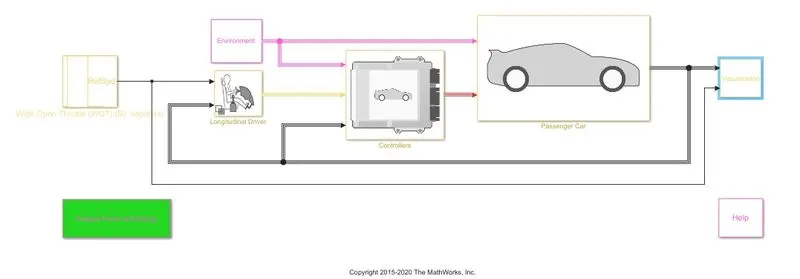
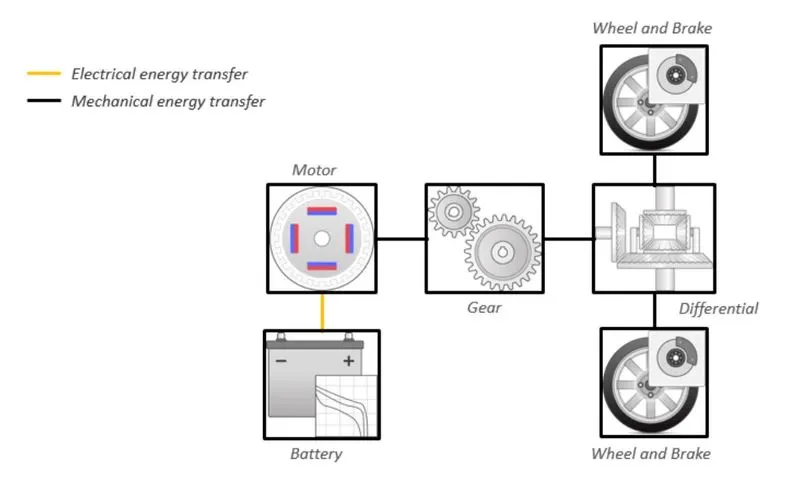
- Above model shows EV structure,where motor and battery ride the vehicle through gear.
- As brake applied motor act as generator and power generated which charge the battery bank untill motor running.
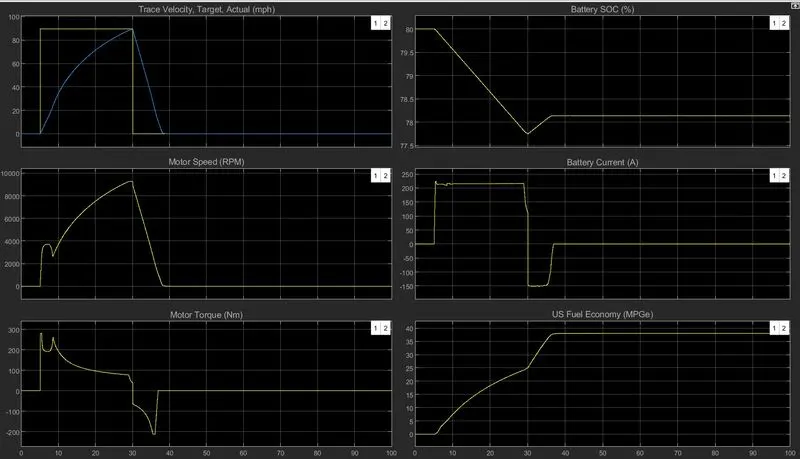
Result of EV when it operate in WOT conditon same as previous question.
Observation to HEV model.
- Below model shows the simscape model of HEV.
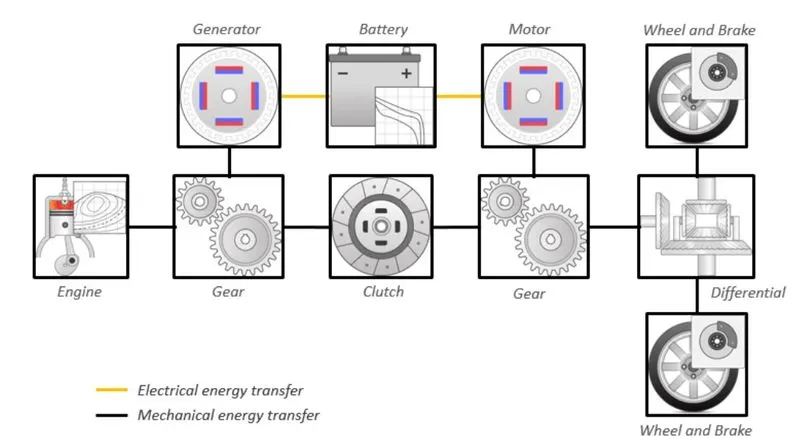
- In HEV model engine run through motor as well as engine as per requirenment.
- In HEV also regenrative braking happend where power generated and used to charge the battery.
- Actual generator also conncred to engine shaft,whichhelp to charge the battery.
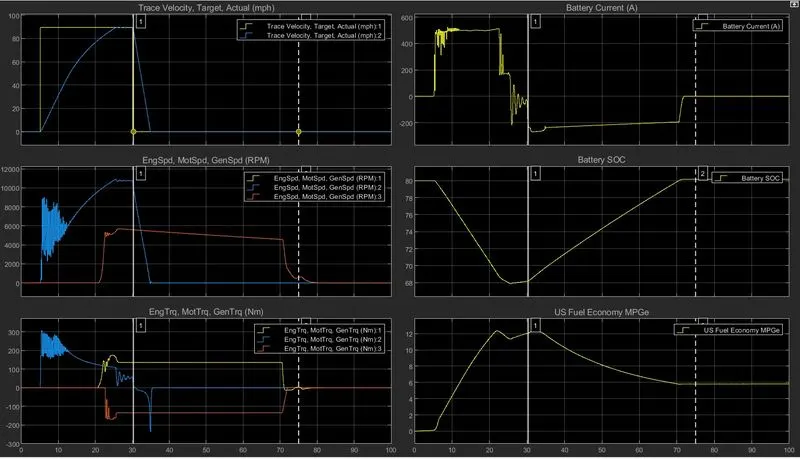
Result of HEV when it operate in WOT conditon same as previous question.
Comparision between EV and HEV.
- Time required to achieve target velocity in EV and HEV is 24 sec and 50 sec.
- No any generator is connected to engine shaft in EV whether in HEV it is connected.
- Battery SOC drop during acceleration period in EV is 3 unit(80 to 77), where in HEV it is 12 units(80 to 68).
- Battery SOC increrases during regenrative period in EV is 1 unit (77 to 78) & in HEV it is 2 unit (68 to 70).
- As generator is connected in HEV model Battery get fully charge with SOC of it initial value but in EV model their is no any generator therfore its SOC not fully achived as its inital value.
Learning
- Conversion of mapped and dynamic model.
- Exploring powertrain blockset in mathwork.
- Fuel calculation.
- Graphicle analysis of EV and HEV model.
- Understanding and effect of terms like SOC,battery current, motor torque,generator torque.