Week-3 Challenge: ADVISOR Tool
1.For EV_defaults_in file, if cargo mass is 500 kg with all other default conditions, can the vehicle travel for 45 km with FTP drive cycle? Conclude your observations.
Ans: -
Initial cargo mass is 136 kg and therefore total weight of vehicle is 1144 Kg
Now as cargo mass incresed tp 500Kg from 136 Kg than total weight become 1508 Kg and the results with these mass is below with one drive cycle.
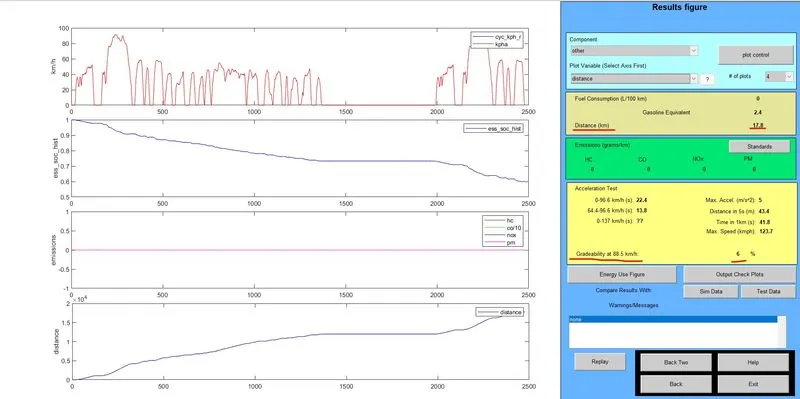
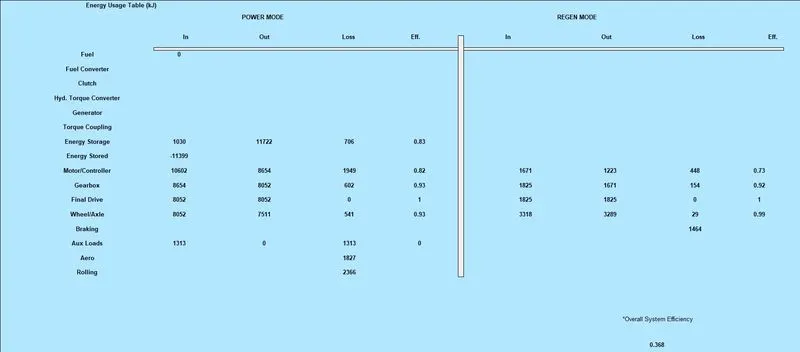
With one drive cycle vehicle travel upto 17.8 Km with SOC 0.6(60%)Left.
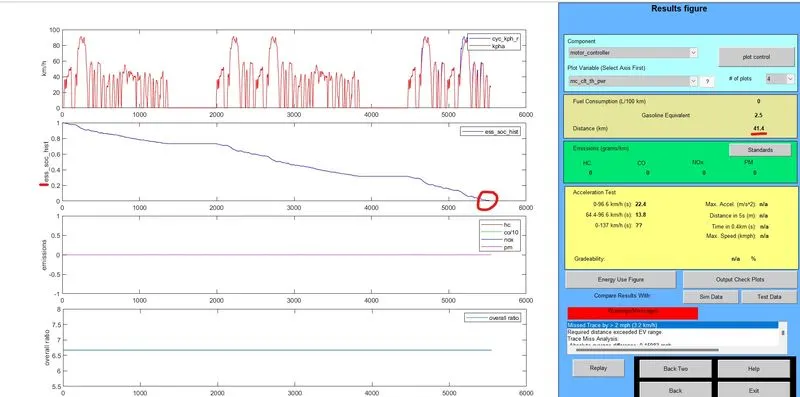
now by using 3 drive cycle SOC become left is zero.
Hence total charge is consumed by vehicle, and the distance covered by the vehicle is 41.4km.
Observation/Comparision table distance covered (km)
| Factor | With 1 drive cycle | With 3 drive cycle |
| with 500kg cargo | 17.8 | 41.4 |
| with 136 kg cargo(initial state) | 17.8 | 48.2 |
- Distance coveres by vehicle in one drive cycle is 17.8 with 60% SOC remaining and 41.4 km with 0 % SOC remaining with three drive cycle.
- Time required for heavier vehicle to travel 1 km is more than lighter vehicle.
- Maximum speed of heavier vehicle is lower than lighter vehicle.
Conclusion: -
- For EV_defaults_in file, if cargo mass is 500 kg with all other default conditions, vehicle can not travel for 45 km with single drive cycle.
- Overall system efficiency reduces from 0.368 to 0.357 whne drive cycle added.
- Losses in heavier vehicle is more than lighter vehicle
- Energy usage in Motor controller,gearbox,final drive is more in heavier vehicle as compare to lighter vehicle.
2. By changing battery capacity.
Ans: -
As we change no of battery module the total voltage is change as well as total weight of vehicle also change.
Here I change battery module no. from 25 to 30 nos. hence as per that results are below.
1. model with one drive cycle and battery module 30.
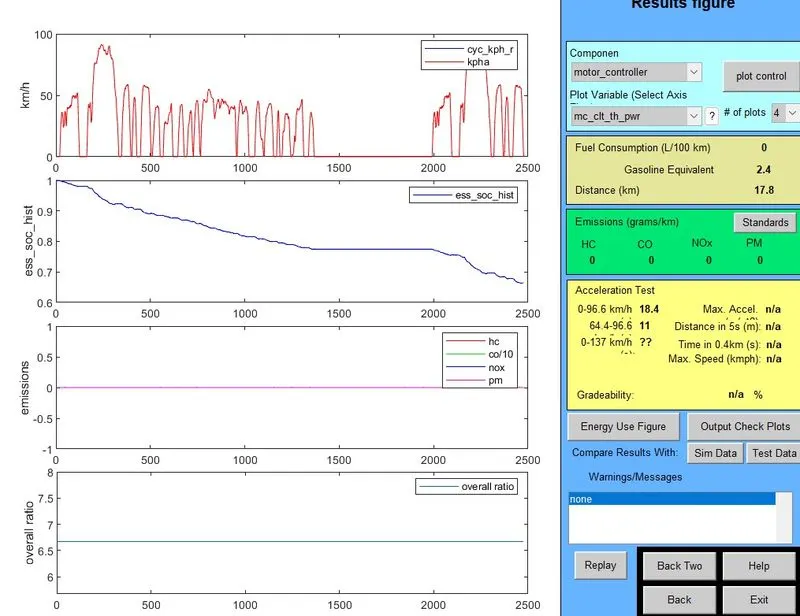
Using 30 module of battery and three drive cycle total distance traved by the vehicle is 49.1 Km with 100% SOC utilized.
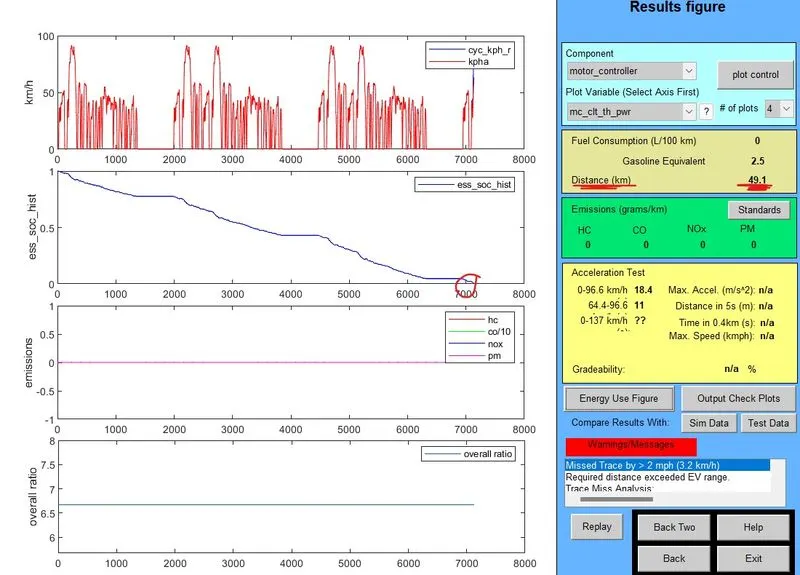
Observation :-
| Factors | 25 module | 30 module(with single drive cycle) | 30 module(with three drive cycle) |
| Voltage(V) | 308 | 370 | 370 |
|
weight(kg) |
275 | 330 | 330 |
|
SOC remaining |
0.60 | 0.6645 | 0 |
|
Energy storage(KJ) |
1030 | 1086 | 2988 |
|
System efficiency |
0.368 | 0.372 | 0.348 |
Conclusion: -
as the no of battery module increase
- Voltage level increase.
- Weight of vehicle also increases due to battery modules.
- Time required to travel 1 Km is reduces.
- Energy storage also increases.
3. Perform gradeability test with PRIUS_Jpn_defaults_in file
Compare your results in table and conclude
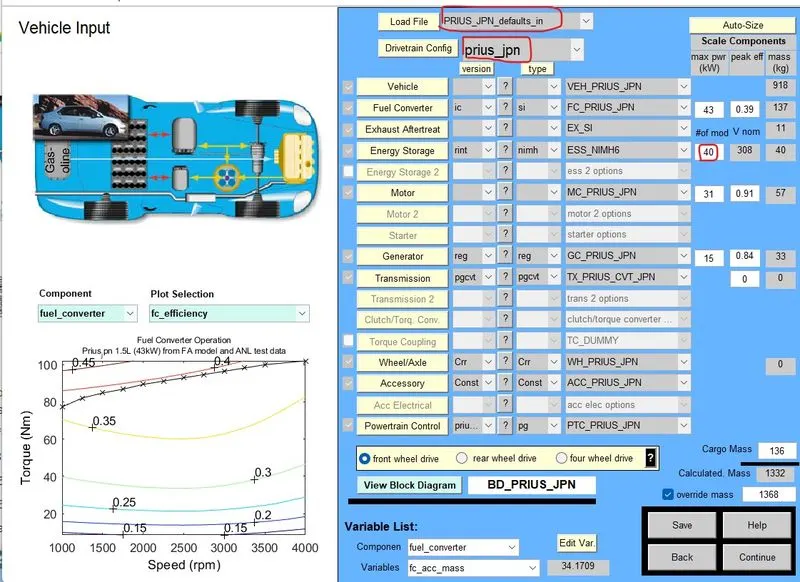
Gradeability:- Ability of vehicle to climb hill at given speed.
speed of the vehicle change and duration remain same with their gradeability is shown in below table.
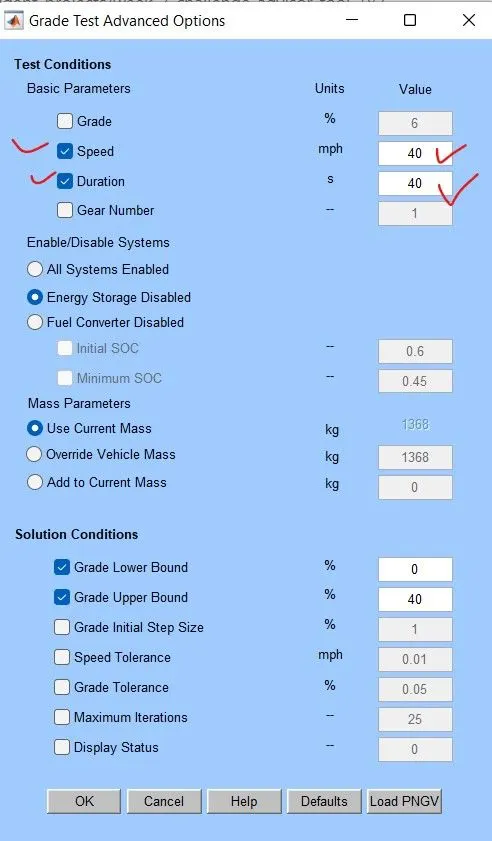
| Factors | 40 mph for 40sec | 60 mph for 30 sec | 80 mph for 30 sec |
| Gradeability | 10% | 7.8% | 4% |
CASE#1
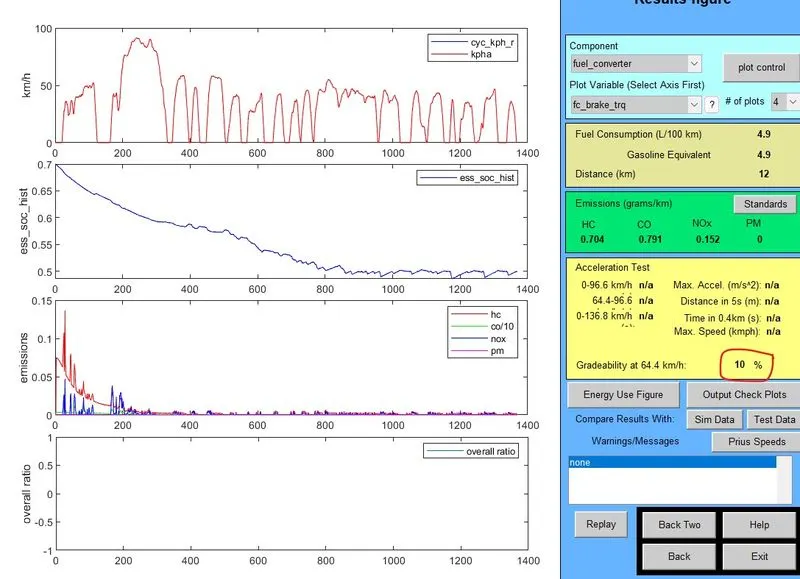
Conculsion: -
- As the speed of vehicle increases with same time duration gradeability of vehicle reduces.