Week-4 Challenge WOT Condition Part-2
QUE 1 ANS - Fig shows the mapped and dynamic model of motor and generator.
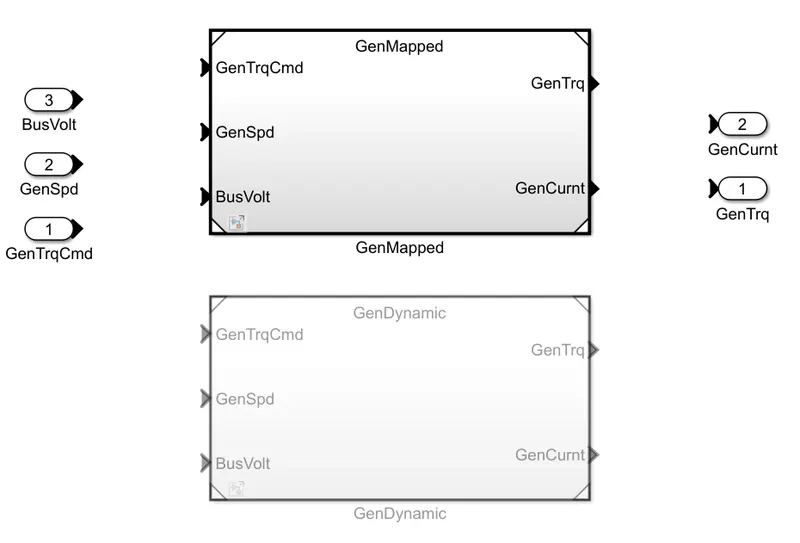
Mapped Model
1) In mapped model data points are pre assigned in lookup table which would be configured with the operational parts and the analysis would be formed.
2) Model uses a set of steady state lookup table to characterize engine performance.
3) The accuracy is low for this system.
4) Run time simulation takes less time, because it does not run with real time simulation.
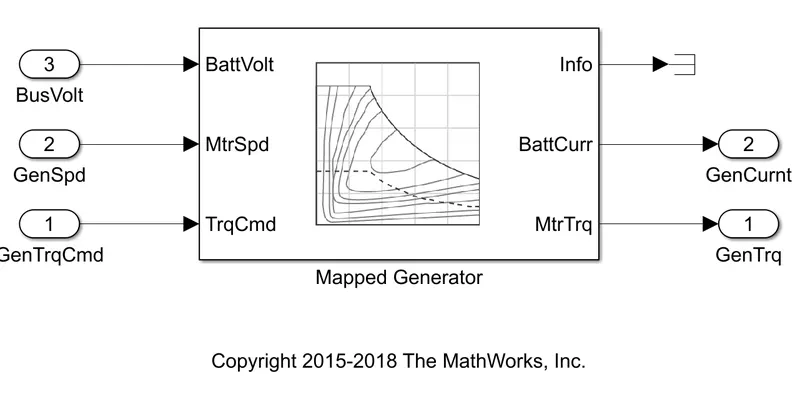
Dynamic Model
1) Dynamic model runs by real time simulator.
2) Dynamic model uses the combinnation of output from various subsystem to generate output.
3) The accuracy of dynamic model is very high.
4) Run time simulation takes more time.
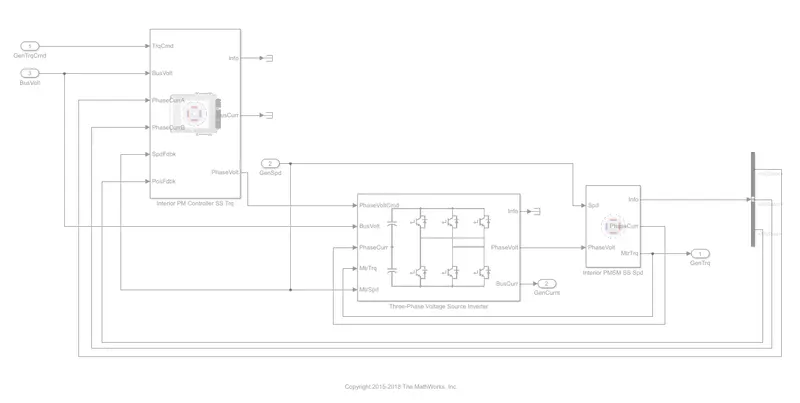
Steps to change model
1) Select vehicle type in powertrain blockset model.
2) Go to the passenger block in the simulink model of electrical vehicle motor/generator.
3) Right click on block and go to variance label mode active choice MotoGenEv Mapped or Dynamic.
QUE 2 ANS - 1. In electrical vehicle miles per gallon tells thatenergy which is equivalent that of a engine powered carto propel the car through a distance.
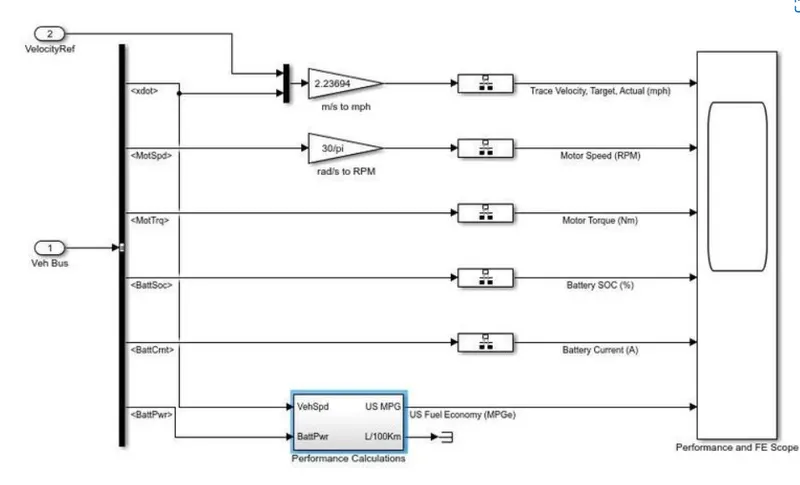
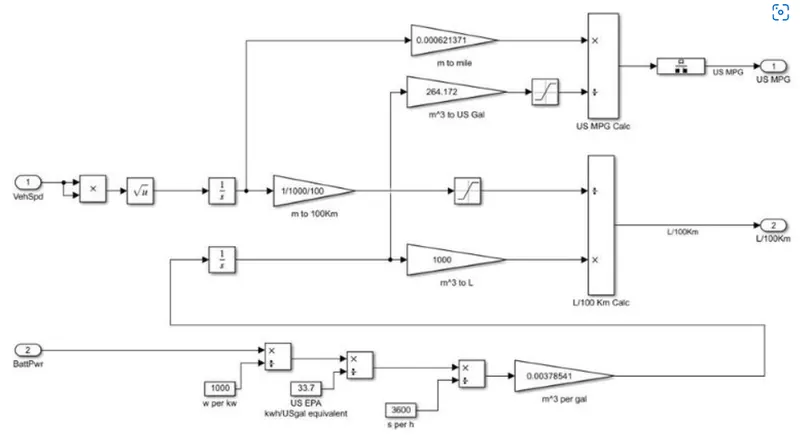
Calculation EVreference application model in MATLAB and inside the visualisation block we can see the blocks which are used for calculation of MPG.
Now open the performance calculation block as shown above figure.
Here vehicle speed (x) is multiplied itself and then squre rooted. The value is then inegrated (1/s) and converted into meters(m). Then the meter (m) is converted into miles in the block (m to mile) then it is divided by US gal to get us MPG.
For us gallan we need to divide battery power divided by 1000 and then divided by 33.7. Now it is converted from sec to hours by dividing with 3600 then it is converted to m^3 per gal.
The value is finally converted into gallon and used as MPG after dividing miles with gallon.
Factors considered in model flue flow -
Battery power capacity should be high and vehicle power consumption should be low for higher MPG .
Vehicle speed.
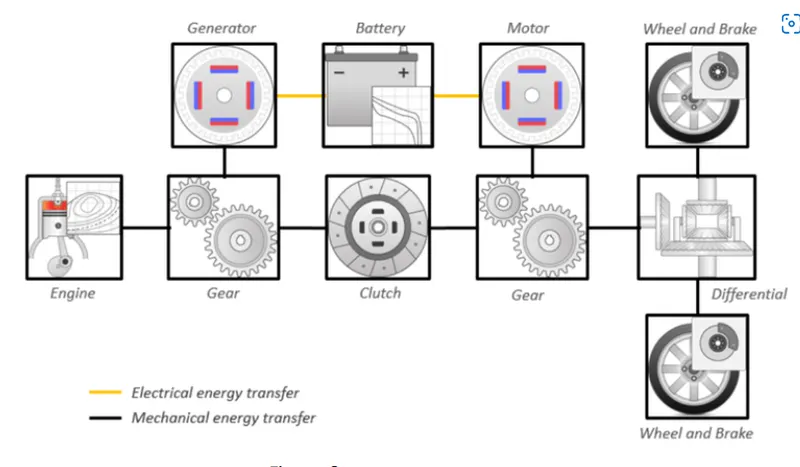
QUE 3 ANS - 1. HEV is the vehicle which runs with the combination of engine and battery.
Case 1
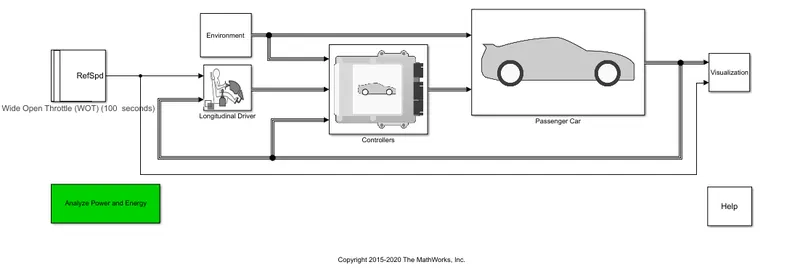
below are the input parameters of drive cycle source
100 second of total cycle time
speed = 70 mph
gread angle 0
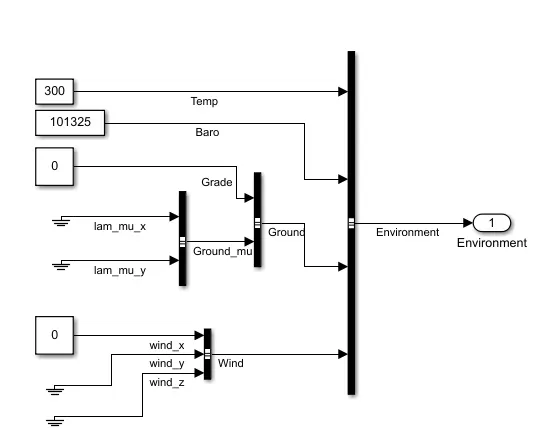
wind velocity 0 m/s
Observation -
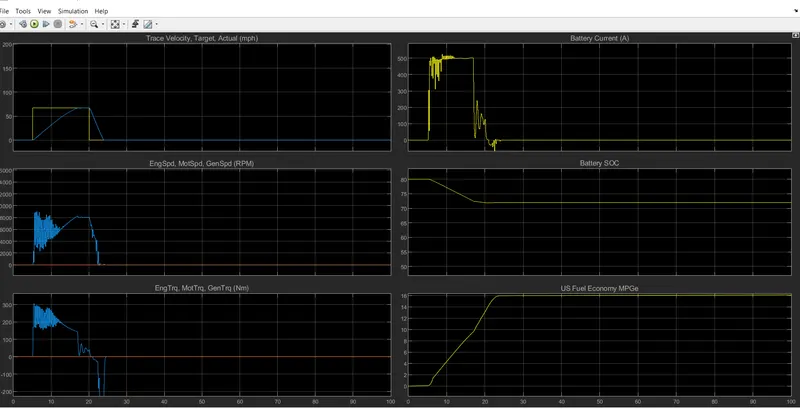
1. Plot 1 - Around 16.5 sec will take to reach 70 mph.
2. Plot 2 - Maximum motor speed is 9000 RPM
3. Plot 3 - Maximum motor torque is 300 NM
4. Plot 4 - Battery SOC for 80 to 73% in 17 Sec
5. Plot 5 - Current constant for 500 amp for 17 sec and then goes down.
6. Plot 6 - Maximum fuel economy is 16 MPG.
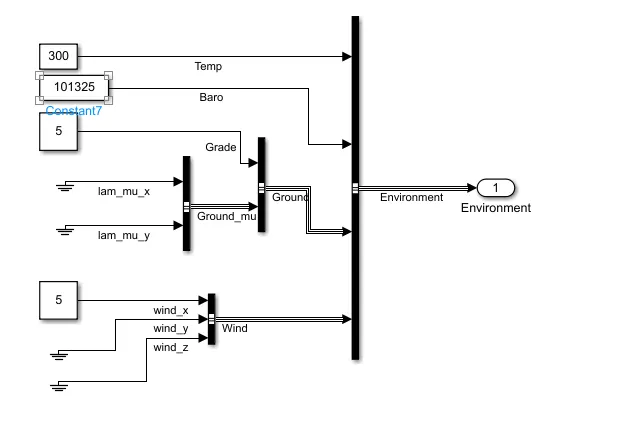
Observation
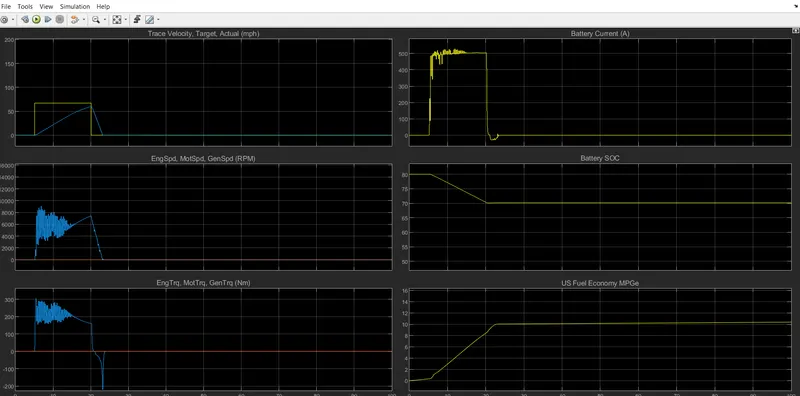
Plot 1 - Maximum 59 MPH reached in 20 sec.
Plot 2 - Maximum motor speed is 9200 RPM.
Plot 3 - Motor torque 300 Nm.
Plot 4 - Battery current is 510 Amp.
Plot 5 - Battery SOC is 80 to 70% in 20 sec.
Plot 6 - Maximum Fuel economy 10 MPG.
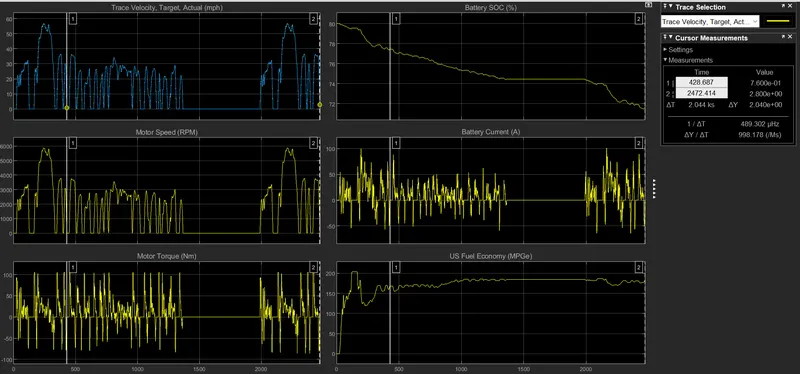
QUE 4 ANS - Pure electric Powertrain
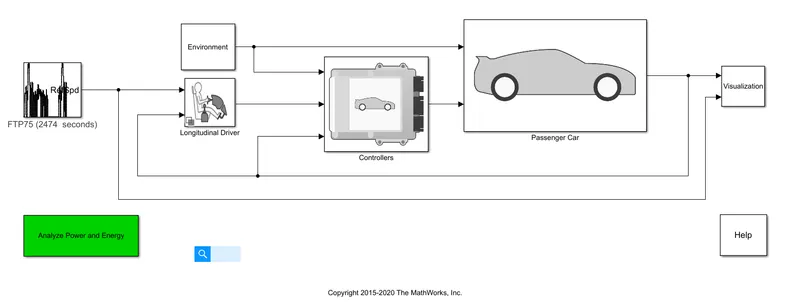
Output of pure electric powertrain -
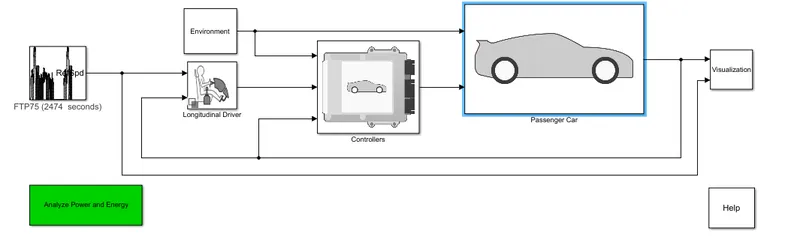
HEV Powertrain
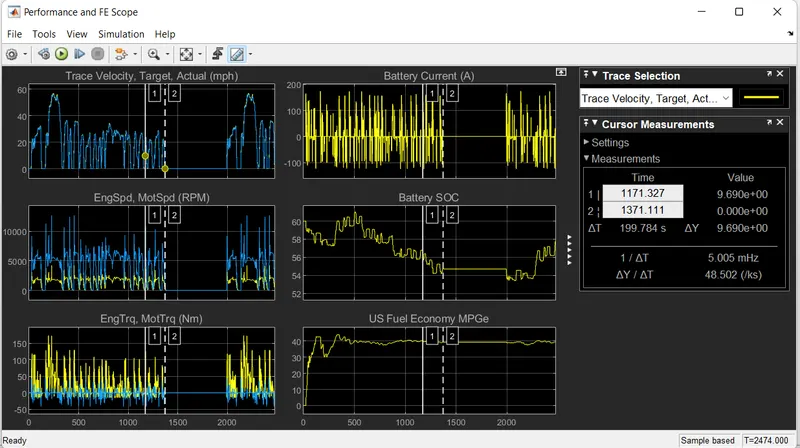
Output of HEV powertrain -
The difference between EV and HEV is for the source is only one i.e. Electric source.
Where as for the HEV two source one is fuel and another one is electrical.
Difference between this two is showing in scope result.