Week-3 Challenge: ADVISOR Tool
QUE 1 ANS - 1. Considering the case typical EV, lets simulate the EV default in an electric vehicle with following specification.
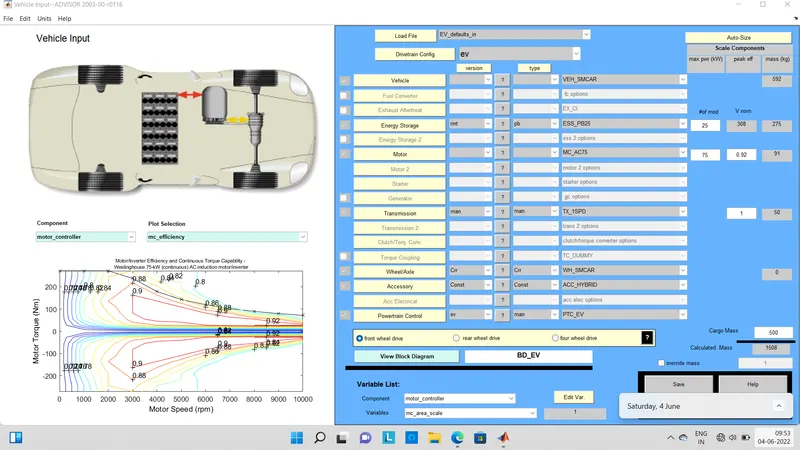
In the above example, a battery electric vehicle is modelled with following specification.
Energy storage : Lead acid battery with 25 modules having 308 v as nominal voltage with 0.92 motor efficiency
Motor : AC induction motor with 75 kw
Drive : Front wheel drive
Cargo Mass : 500kg
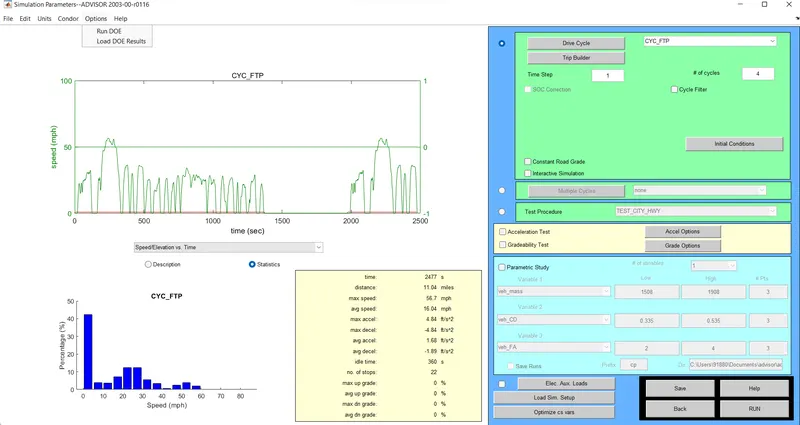
Next, we input the drive cycle called CYC_FTP which is 17.7 km long in distance, Hence inorder to drain the battery completely to SOC = 0% for calculating the range of vehicle, 4 drive cycles are repeated, so that vehicle will travel 70.8 km in total and we can find out at what distance the soc is 0.
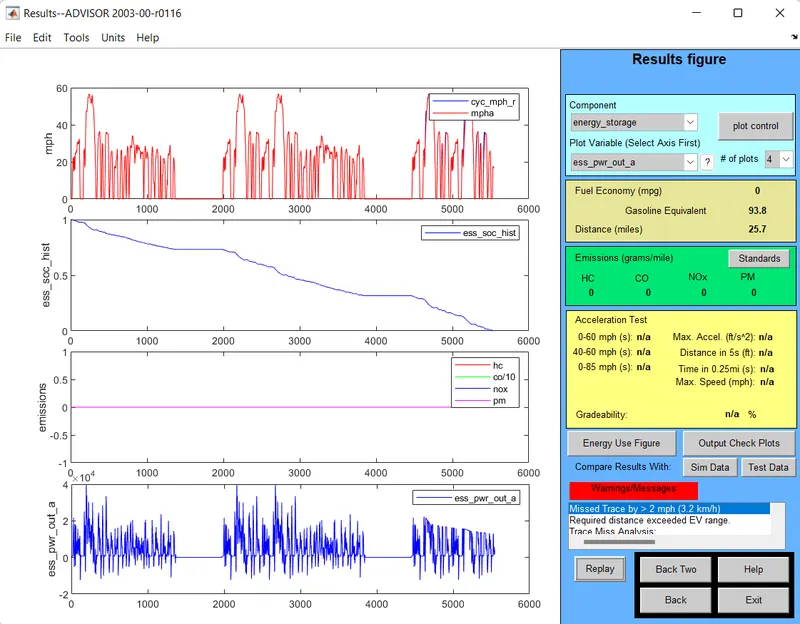
In the above figure, First plot shows the drive cycle for which vehicle has travelled, the second plot shows the soc fall with time, the third and the fourth graph show the power output according to the throttle condition.
Hence, after running the simulation, we can see that, the soc becomes zero after aproximately 2.5 drive cycles. As shown at the right hand side, the distance travelled by vehicle is 41.4 km. Hence the vehicle cannot travel 45km in a single charge.
QUE 2 ANS - 1. In this case the same default condition are taken that are initiate in question 1 and battery capacity will changed for accelerating the vehicle that will increase the vehicle distance travel km.
Increased the battery capacity of vehicle.
So, inorder to achive a range of 45 km, 3 more modules of batteries have been added making the total modules to 28 and nominal voltage to 345 v.
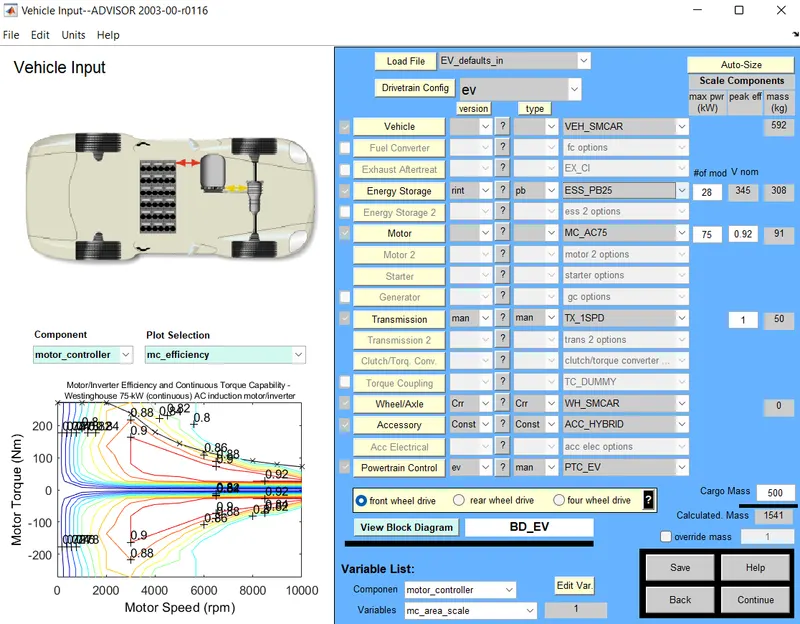
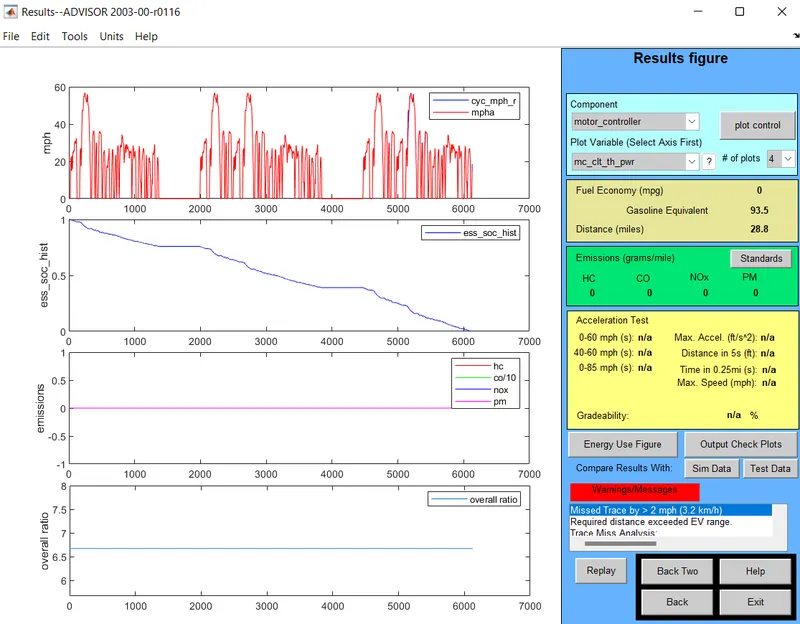
In the above image, the vehicle travels a distance of 46.5 km, hence 28 number of battery modules are sufficient to satisfy a range of 45km according the problem description.
QUE 3 ANS - 1. Following is the model of toyoto prius parallel hybrid vehicle. It uses battery and IC engine to power the wheels.
vehicle specification :
Power produced by IC engine : 43kw with fuel convertor efficiency of 0.39
Battery capacity : NMH batteries have been used with 40 modules producing a nominal voltage of 308 V
Generator : 15kW
Motor : Induction motor producing of 15kW with 0.84 efficiency
Transmission : CVT
Drive : Front wheel drive
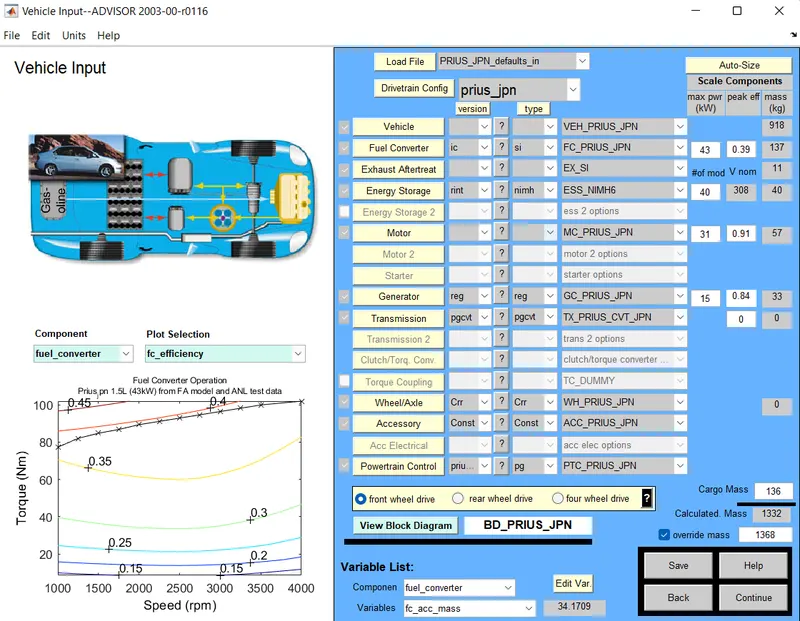
Inorder to perform the gradeability test. We keep the grade value constant and change the speed values to find out the maximum gradeability at an optimum speed simulating for 10s.
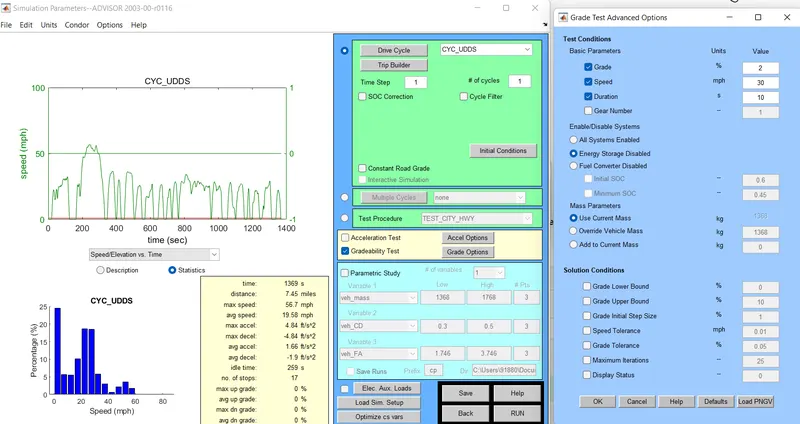
Hence the simulation run with for gradeability test.
Following are the output results :
Case 1: Speed = 5mph
Gradeability = 18.1%
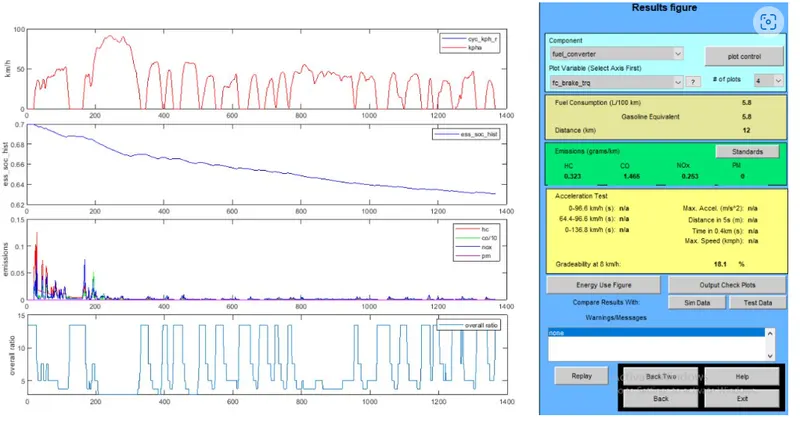
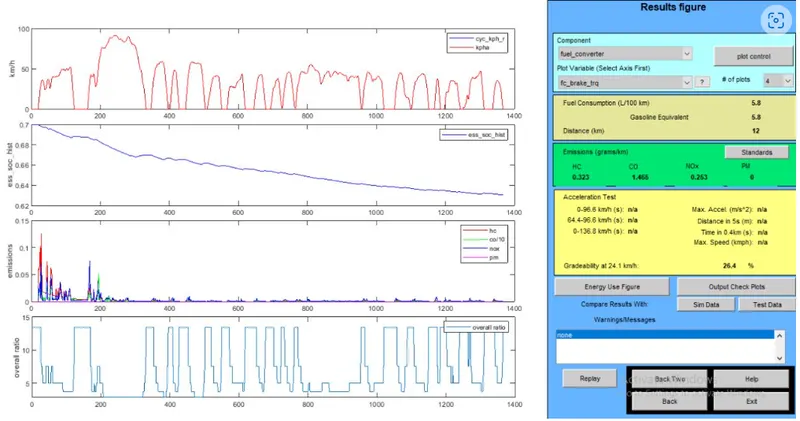
Case 2 : Speed = 15 mph
Gradeability = 26.4 %
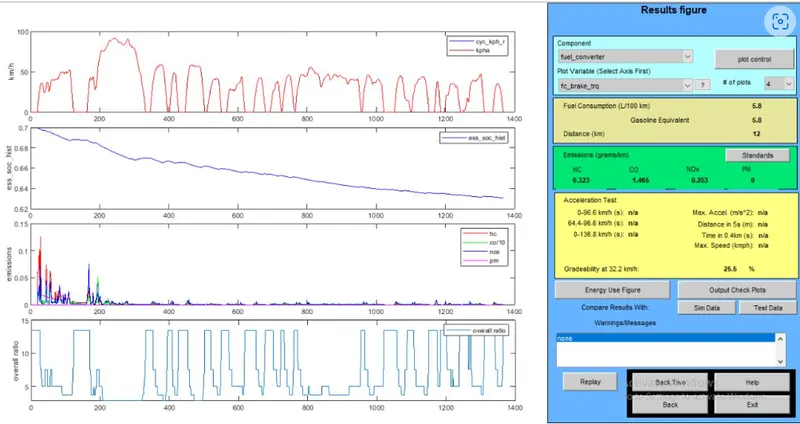
Case 3 : Speed = 20 mph
Gradeability = 25.5 %
Case 3 : Speed = 40 mph
Gradeabillity = 12.6 %
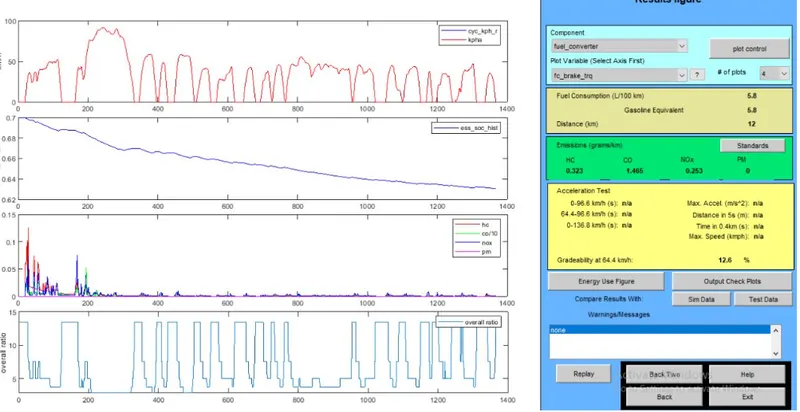
Hence, speed of 15 mph to 25 mph gives value of highest gradeability.