Week-4 Challenge WOT Condition Part-2
1 ) Mapped and Dynamic Combustion Engine Models
Powertrain Blockset provides two types of combustion engine models: mapped and dynamic. Mapped engines represent macro engine behavior as a set of lookup tables (brake torque, fuel flow, air mass flow, exhaust temperature, efficiency, and emissions) as functions of commanded load and measured engine speed. Dynamic engines decompose engine behavior into individual component models that account for engine dynamics, most notably intake airflow and turbocharger dynamics.
You can switch between engine model types based on your application. Dynamic engine models are suitable for designing control, estimator, and diagnostic algorithms that depend on dynamic subsystem states, for example, in closed-loop AFR control algorithm development. Mapped engine models are suitable for analysis and design activities that do not require engine subsystem dynamic characteristics, for example, in engine and transmission powertrain matching analysis for fuel economy, emissions, and performance tradeoffs.
Both the SI and CI engine models run in real time for Hardware in the loop (HIL) testing.
How can we change the Mapped and dynamic model?
1)First of all start the system by installing a powertrain blockset through Matlab applications.
2) Later type cd(setupExample('autoblks/EVReferenceApplicationExample'));helpersetupev in the command window for the model to open in simulink.
3) This simulation block diagram looks as follows
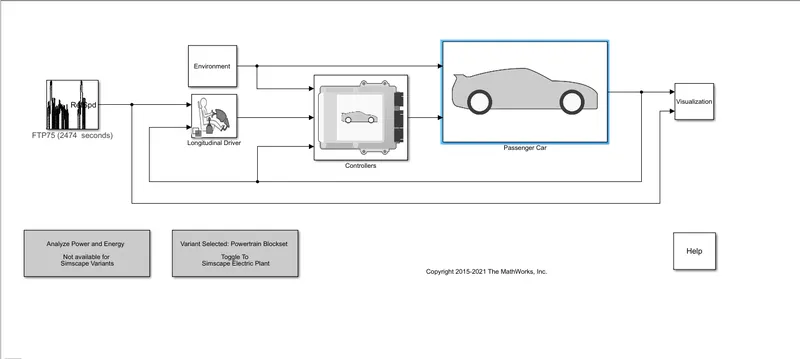
4) Select the passanger car and select it's powertrain block
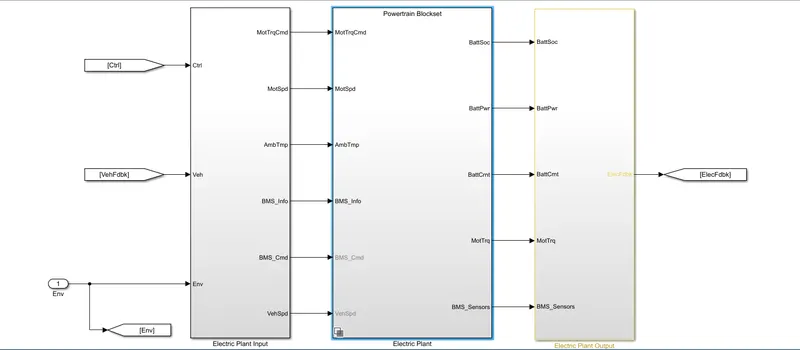
5) Click on the electric plant and select electric motor/gen
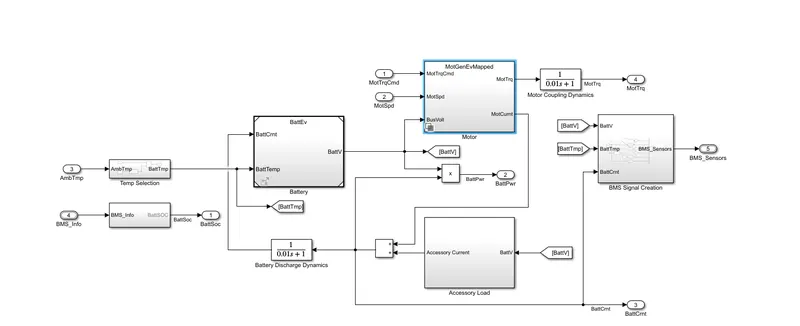
6) when you unmask the Motor , something as follows is seen
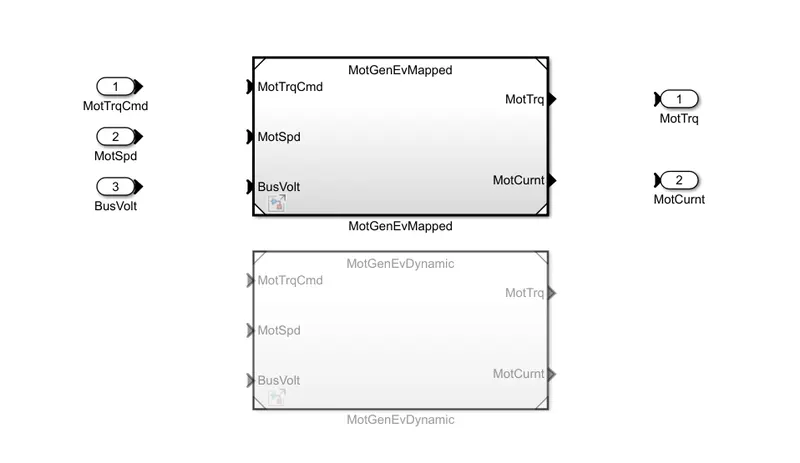
7)Now, click on the desired type of Motor/Gen of EV vehicle you desire to work on by righ clickin the default block and then select the varient manager. Now override the varient and work on the desired block.
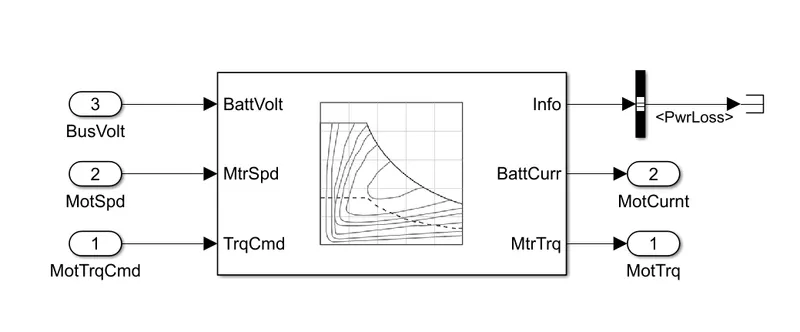
Mapped motor/genin EV:
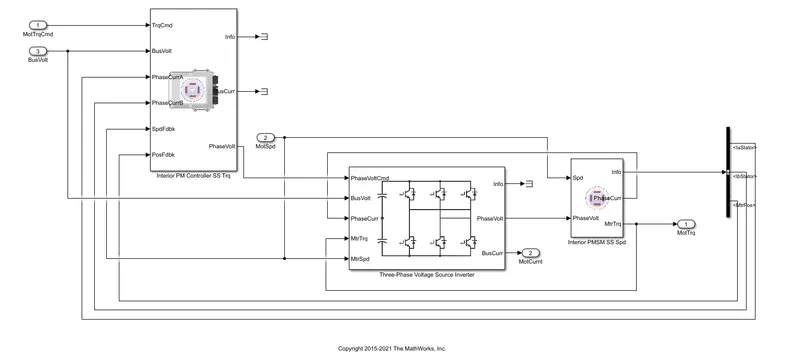
Dynamic motor/gen in EV
--------------------------------------------------------------------------------------------------------------------------
2) Model calculation miles per gallon:
The fuel economy of an automobile relates distance traveled by a vehicle and the amount of fuel consumed. Consumption can be expressed in terms of volume of fuel to travel a distance, or the distance traveled per unit volume of fuel consumed. Since fuel consumption of vehicles is a significant factor in air pollution, and since importation of motor fuel can be a large part of a nation's foreign trade, many countries impose requirements for fuel economy.
Electric cars do not directly burn fuel, and so do not have fuel economy per se, but equivalence measures, such as miles per gallon gasoline equivalent have been created to attempt to compare them.
In this model, the performance analysis can be seen through visualisation
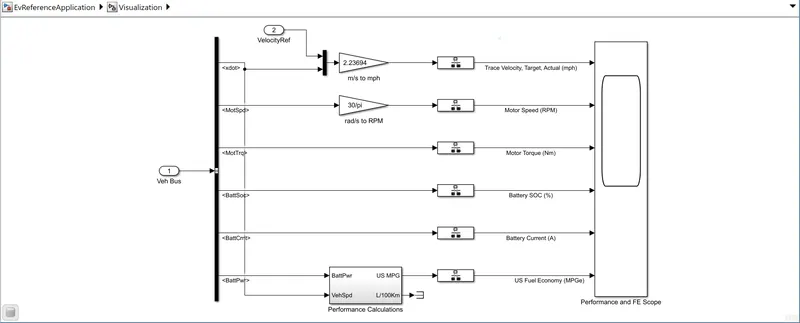
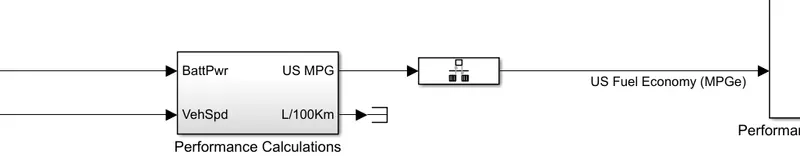
Open the performance calculations
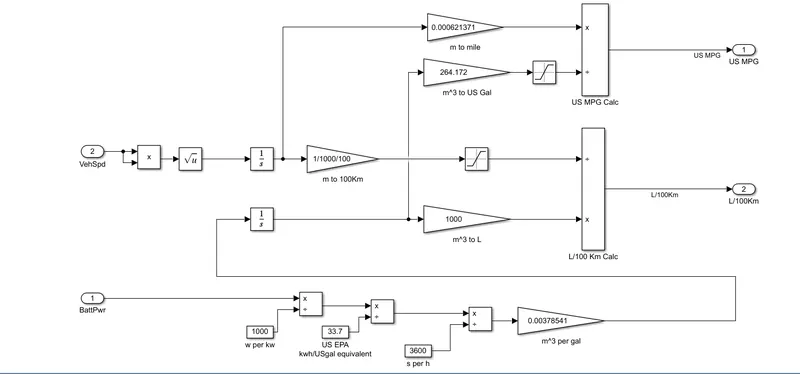
since the model that I have choosen is Electrical vehicle. It needs
1)Vehicle speed
2) Battery power
Vehicle speed is important for calculating the fuel flow. It is integrated wrt time to get distance travelled and later convereted into Kilometers and miles (as per US MPG).
The battery power is converted to "KW" and later converted to "KWH". Using different coefficients it is brought to m^3 per gal.
this m^3 per gal is integarted and multipled with 1000 for convertin it into liters (L/100km). The same m^3 per gallon is multipled with some gain value to get US gal.
--------------------------------------------------------------------------------------------------------------------------
3) Run the HEV ReferenceApplication with WOT drive cycle.
1) First of all, to open the HEV model type cd(setupExample('autoblks/HEVP0ReferenceApplicationExample'));helpersetuphevp0 in the command window. Then open the simulink model
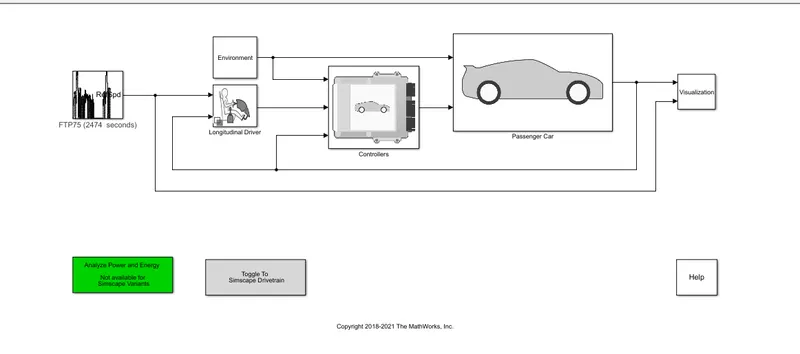
2) Now, unmask the Environment block.
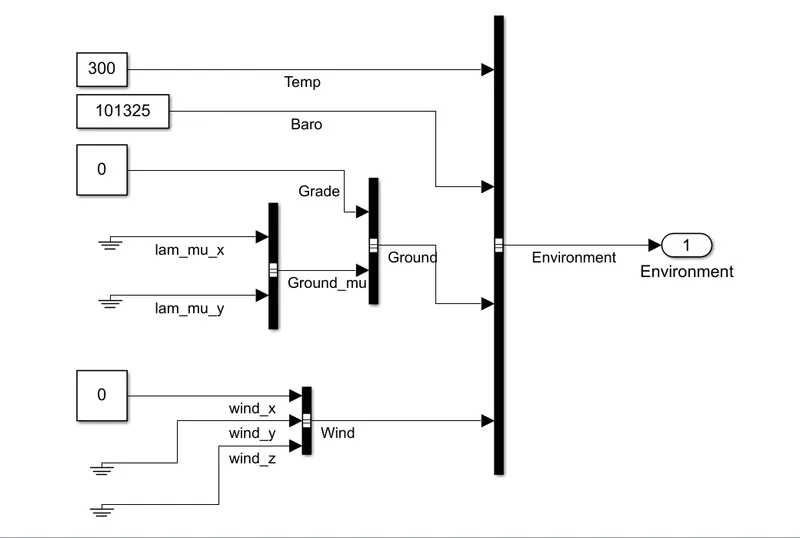
change the drive cycle to WOT.( WOT 1)
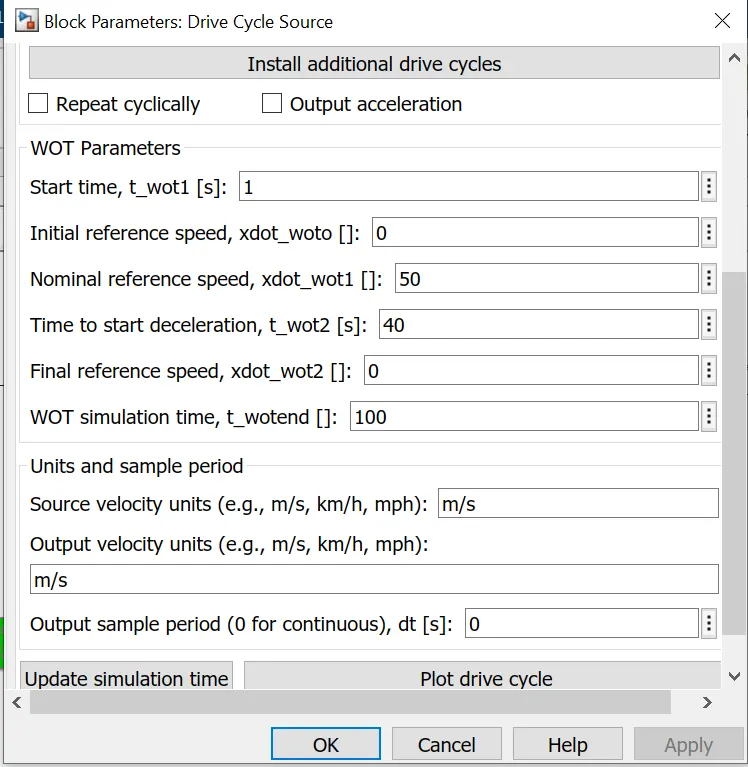
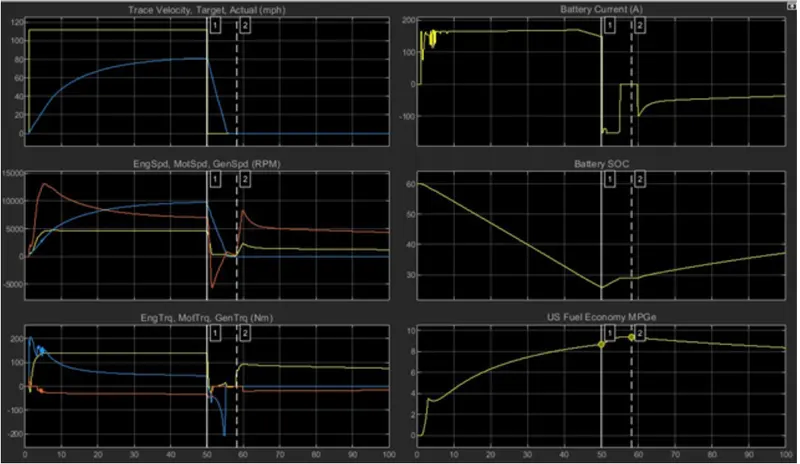
now, Run the simulation as it is and check the visualisation block. It looks as follows
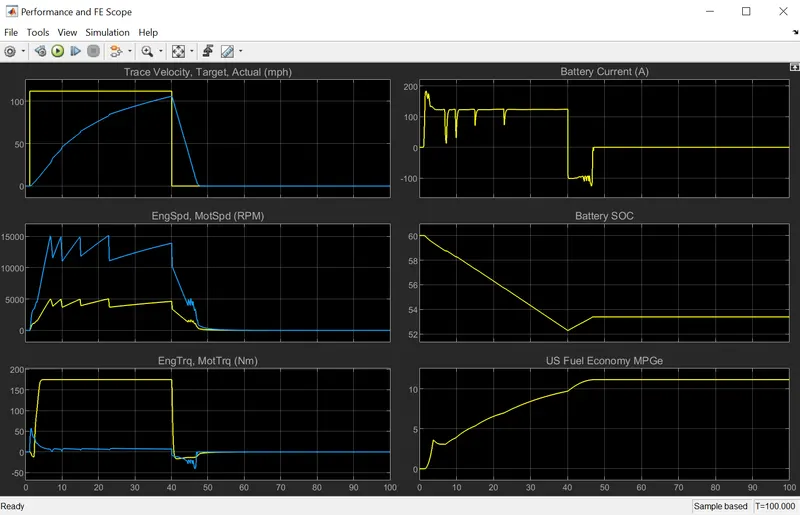
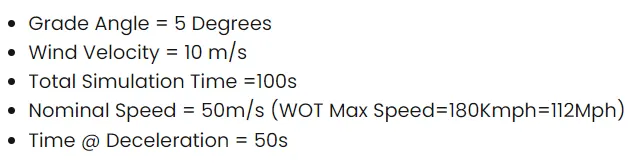
Change the grade and wind velocity in the environment block.
The values are:
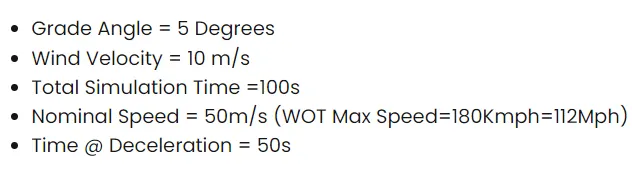
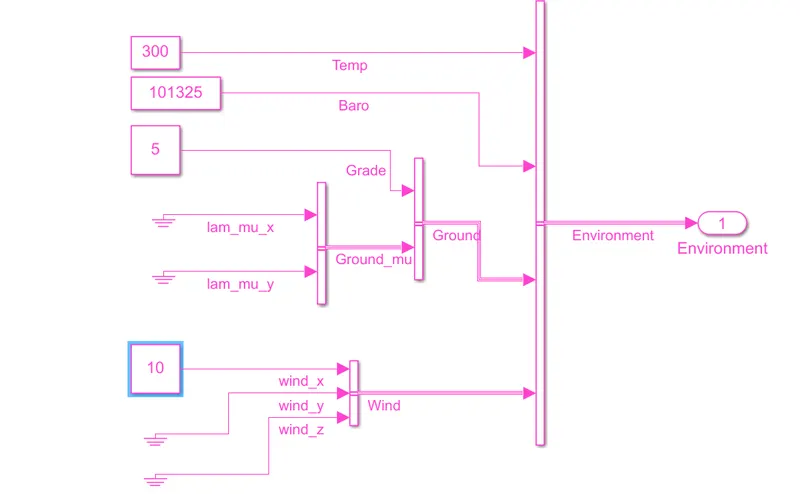
Now, run the simulation
--------------------------------------------------------------------------------------------------------------------------
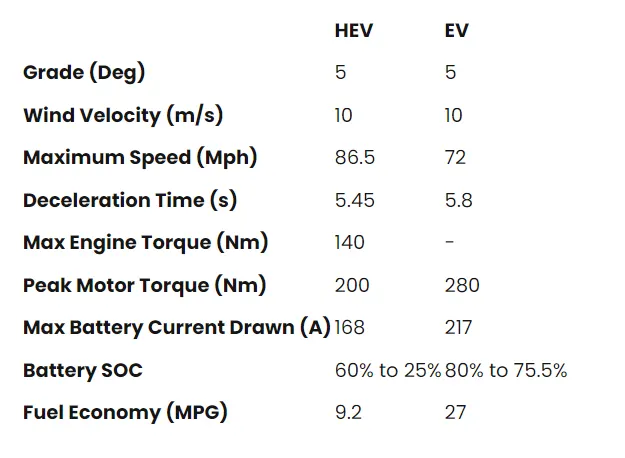
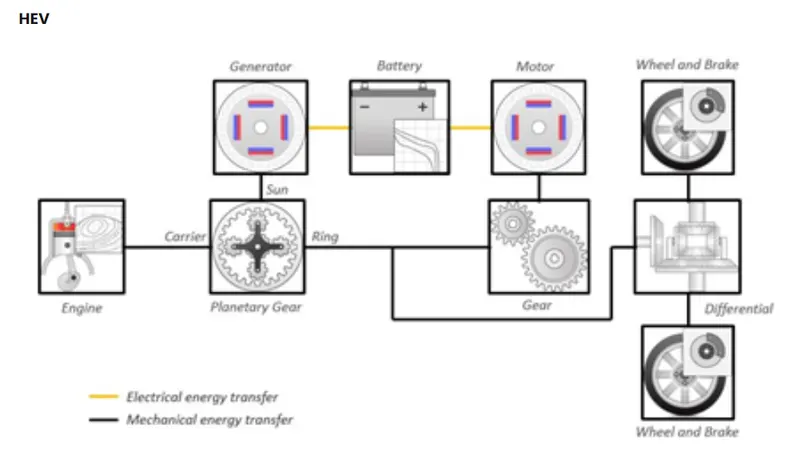
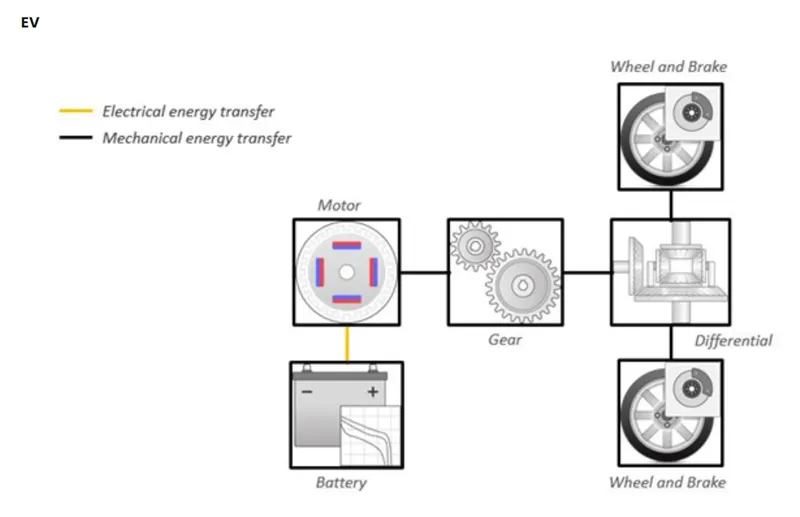
4) Keeping all other parameters same, compare the simulated results of hybrid and pure electric powertrains.
WOT PARAMETERS
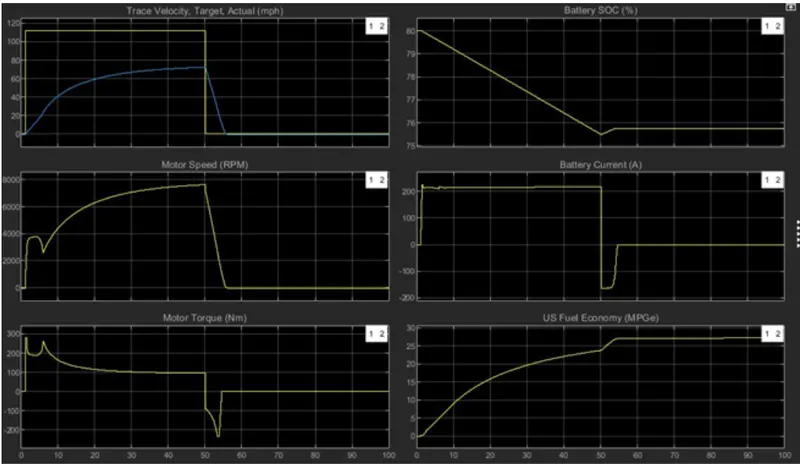
The results are as follow: