Week-4 Challenge WOT Condition Part-2
Q1.What is the difference between mapped and dynamic model of engine, motor and generator? How can you change model type?
Ans:-To understand the all vehical components and compare an the mapped and dynamic modelling types
Diffrence between mapped and dynamic model
| Mapped(Static) | Dynamic | |
| Main diffrence |
these are the static model as there is no any memory storage for it it takes an the data as input not store and no any past data eg 1. if we built an bridge in that case he only consider an the vehical weight not an the wind,earthquakes,traffic etcb as not consider effects on it as it doesnt vary with time. |
these are the dynamic models as vary with an the time with having storage of an the past data it is actually data or actual behaviour of an system eg. 1. we are consider as the motor so in static there is fixed data but in the dynamic while motor is running conditions so at that time it not only consider the motor rpm,vtg input , current but also an the wind effect,atmospheric temp,I^2R loss etc as an the actual behavior of an the machine. |
| Feature | mapped data it is nothing but its fixed or we have to only change an the parameters. it is gives by an the look up table as the table provides an the overall data as the motor speed,torque,fuelflow rate,engine out ,exhaust ,emmision |
Dynamic it is opposite to mapped as the system implemented when the understanding an the behavior of parts of system as actually eg if we consider an the engine so there are the som e parts which are combining components in this wayto capture the dynamic effects. |
| Advantages | less time required as compare dynamic result are depends on the data that we given | results are the real time depend on how does the system behaves |
| motor + generator | in these block we fed an the lookup table like as an the current,rpmetc | in dynaic system we operates an the real time behavior and depends on the mathmatical equation like power ,current equations etc. |
| Engine | In engine block we fed an the look up table as the torque ,peddle,angle rpm in 2d look up table | in dynamic some are the system operates on the inputs as the real time behavior depends on mathmatical equations as thermal,fluid etc. |
How can you change model type?
- so as per the discussion above we have an the 2Types of an the models as the dynamic and the static so during an te simulation we have consider an the only one model at an time.
steps to envolve changing model from static to dynamic:-
1.open an the powertain model of ev - go to the passanger car block - Electric plant - open an the motor block
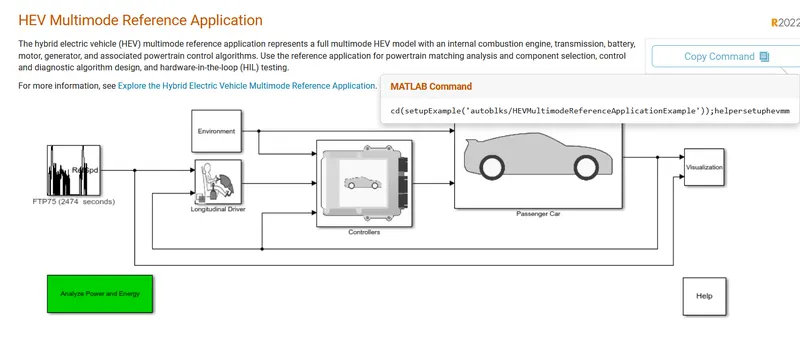
2. motor and gen there, right click on the motor block click on the varient got to the label model activist choice
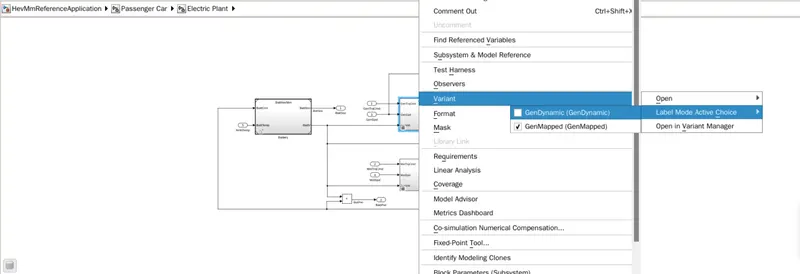
3.you will get an the options for an the mapped and dynamic models to select which one that you want
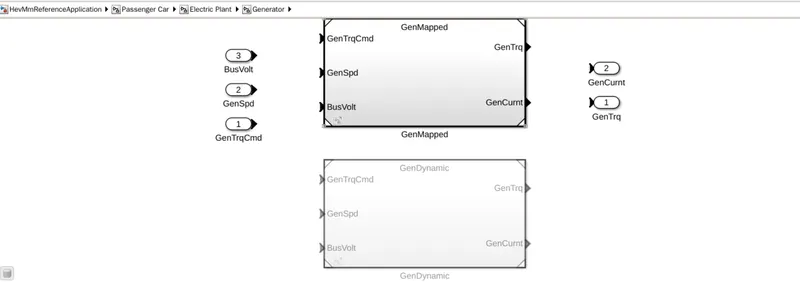
4.model is change as the motor block, check an the model is changed or not in this command.
Q2.How does the model calculate miles per gallon? Which factors are considered to model fuel flow?
- so the factors affecting to the miles per gallonasre belows:-
1.vehical speed
2.Battary Power
3.Fuel Flow
the model calculations are the shown belows as shown belows
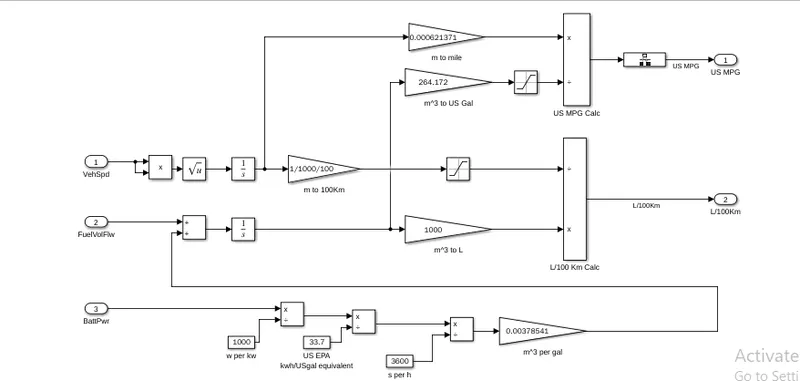
so it is an the performance parameter
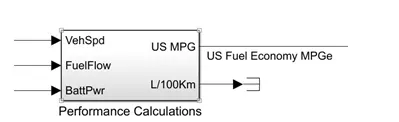
1]battarty pack:-so from an the battary pack we converts as an the watt into m^3 per gallon and then it add with an
2]fuel flow and takes an the integratoin of it and with an the gain block converts to us gallon
3]with vehicle speed converts to distance finally conversion of the conversion of cubic meter to the gallon
Q3.Run the HEV ReferenceApplication with WOT drive cycle. Change the grade and wind velocity in the environment block. Comment on the results
AIM:-
To study the forces acting on vehicle as an theaerodynamic drag force and the and hill climbing force
STEPS:-
- open model of hv - open an the environment block -change the parameters of an the vehical as the grade for hill climbing and the velocity in opposite direction as an the vehicle to oppose it .
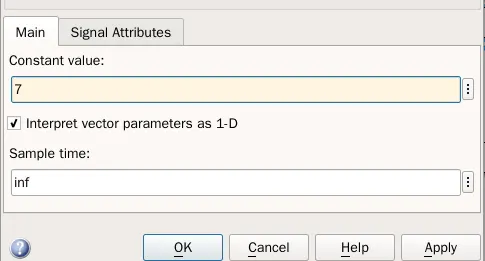
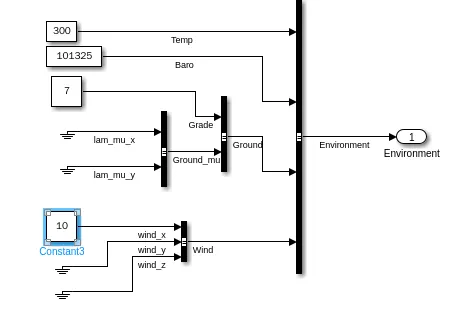
- so making an some changes in the gradeability and the wind velocity as an the aerodynamic drag.so we gets an the output as belows
Case1:-wind velocity=0 , grade=0%
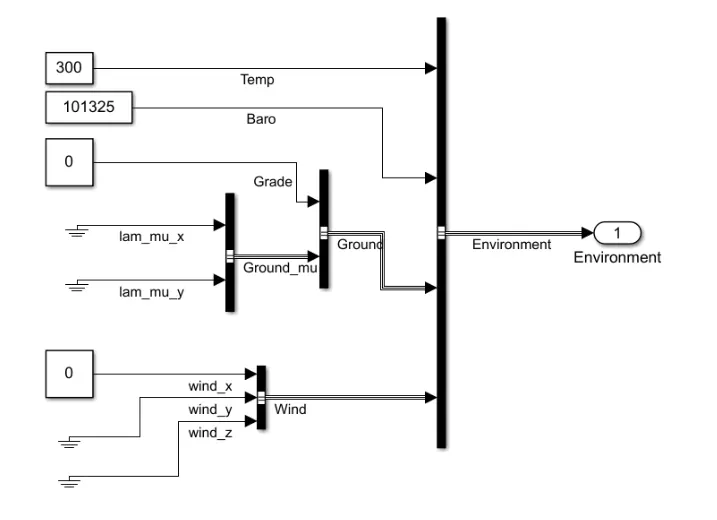
outputs:-
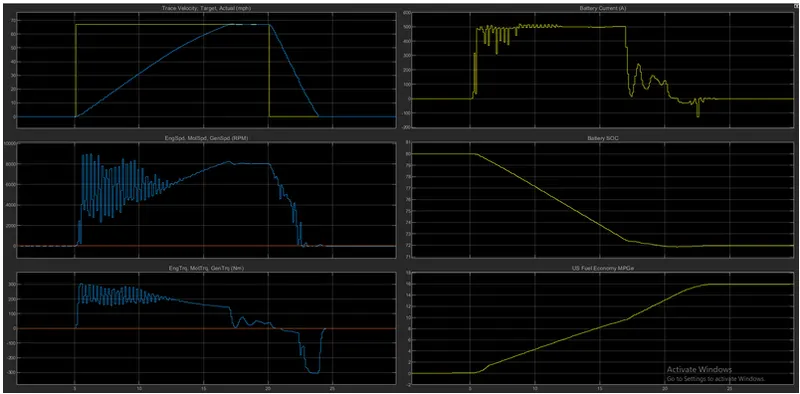 1]so as from an the above its just initial drive cycle of the vehicle withe an the zero wind and grade effect consider as an the Hybrid vehicle.
2]as the motor is enough to drive an the load so theris is no any need of an the engine.
3] as the motor speed and torque same during an the acceleration but at an the costing motor torque will be nagetive and it increses an the soc of an the battery as it covers an the miles per gallons
case 2:- grade:-11 , wind velocity :-22.22
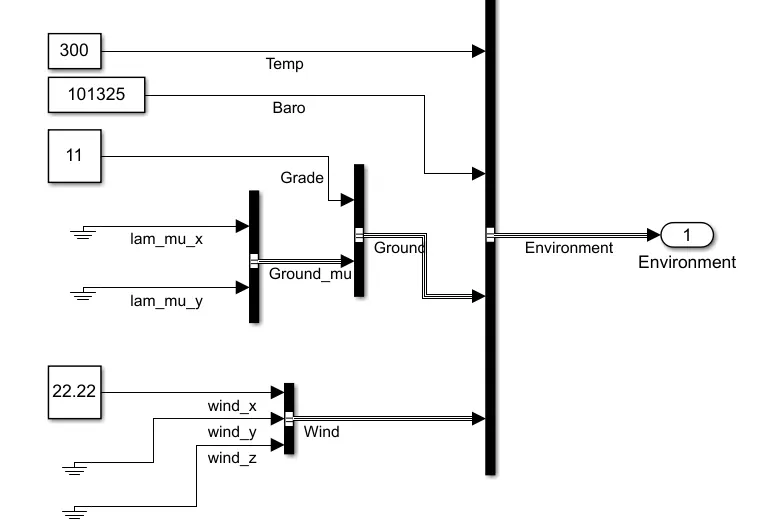
output:-
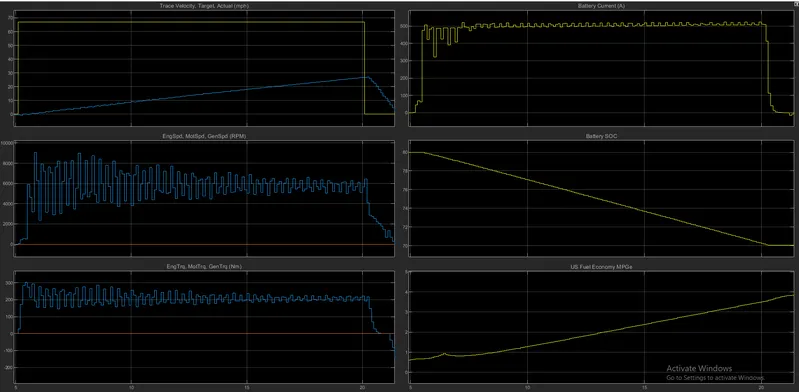
so as from the above results we get an the effect of an the grade and thw wind as we increases the grade angle, and the wind effect so at an that case we cant get the maximum speed as the motor or engine unable to the devloped maximum torque as well as an the costing period we cant charge the battary as much as possible so the greadability and wind affects the battery soc(state of charge).
Q4.Keeping all other parameters same, compare the simulated results of hybrid and pure electric powertrains.
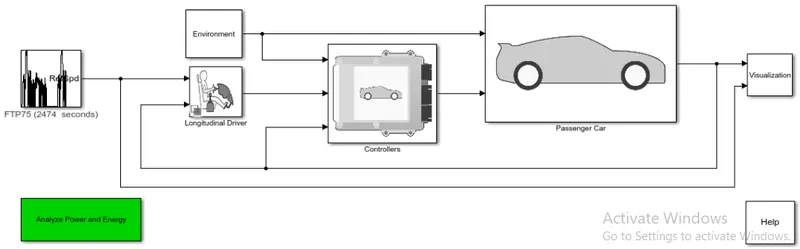
it is an the model of hybrid elec trical vehicle kepping all the parameters same as the drive cycle and the ,environmental block etc
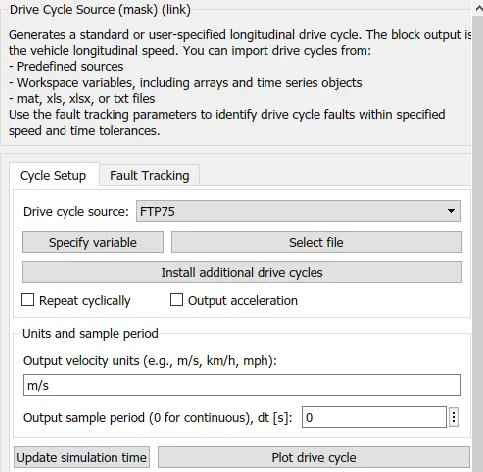
so we consider the drive cycle as an the Federal test procedure 75 is the cycle.
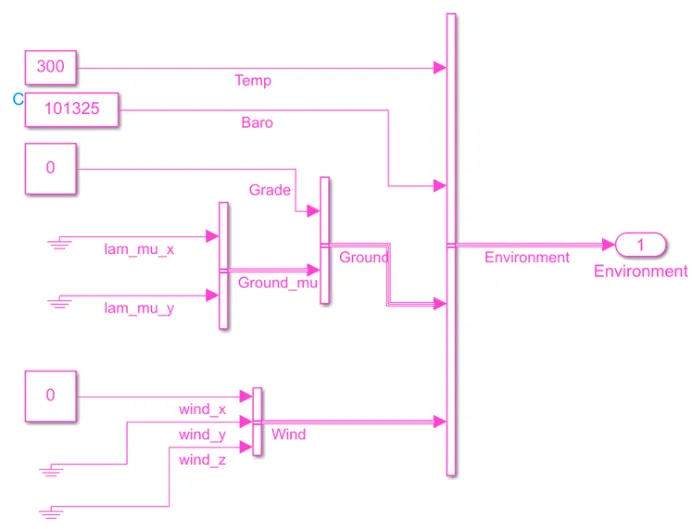
as from the above we consider as an the grade and wind doesnt affects the vehicle as it consider as an the zero
output plot
a]Hybrid vehicle:-combination of an the engine and motor is the hybrid
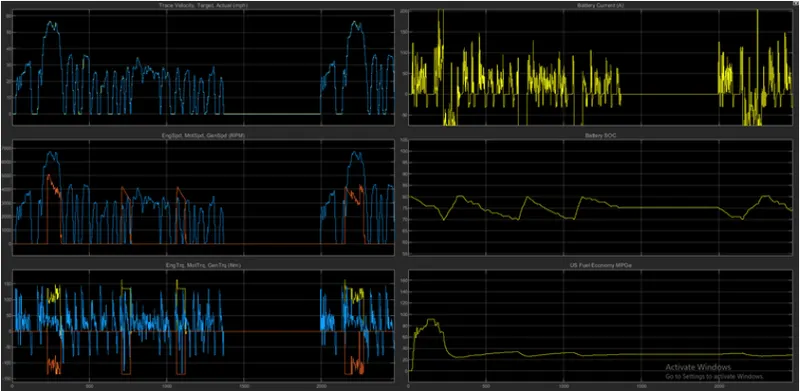 so from an the output of an the model we annalyse that the
1st graph: an the FTP75 drive cycle the motor and engine work or run together motor has an the first priority and if motor unable to produces an the torque at that condition engine will provide an the tremendous ammount of power
2.during an the excessive speed of an vehicle engine work in reverse mode and generates an the power through an the dynamo and it gives back an the to the motor to charge it. as well as due to the combine operation motor current varies very rapidly
3.due to duel input mode the battary cant discharges to 0 it contineously work as an the charge-discharge -charge
4. as the engine is on when the soc of battery is goes beyond an the 70% of soc and engine starts to charge an the battery.
Pure electric powertrain:-
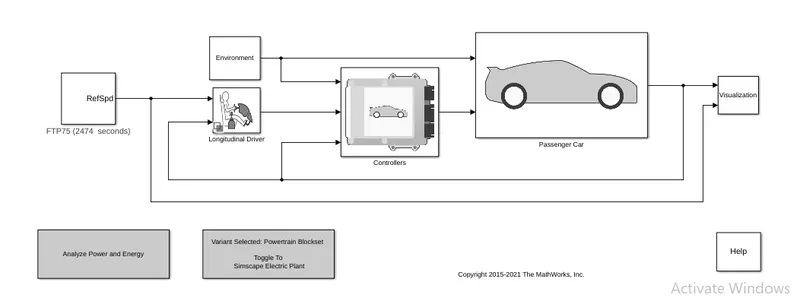 sso kepping all the parameters will be same and annalyse an the output of the vehicle as belows:-
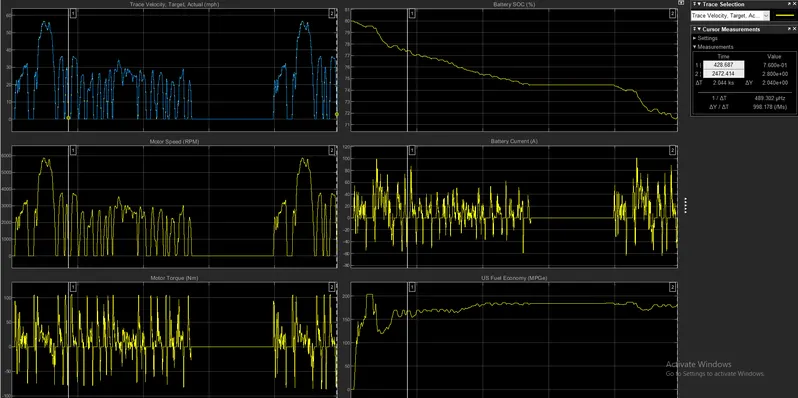
1st:-it shows an the typical drive cycle ftp75
2nd:-it shows the motor speed in rpm it shuld be run as an the same as the drive cycle
3rd:it is an the motor torque as the acceleration and the braking as the motor should be positive as well as an the nagetive torque also
4th :its state of charge as an the due to single source vehical battery is discharge as we used these type of an the vehicle
5battery current : as we are using an the motor conts up and down so battery current is also an the vary
6th us fuel economy it is ust above an the 160gpm
comparison between the HEV and EV and results:
1.As the electrical vehicle runs only on the motor so during an the retardation the battery can be charge as well as their is no any other source to charge an the battery
2.as compare to the EV the hybrid vehicle have an the motor and the engine so the motor runs contineously aptu when the soc of charge of is above 70% but if the battery soc is reduces the lower limit as 70% of charge engine will starts an the automatically and the battery charging also starts automatically