Week-4 Challenge WOT Condition Part-2
1. the difference between mapped and dynamic model of engine can be expressed from the chart below:-

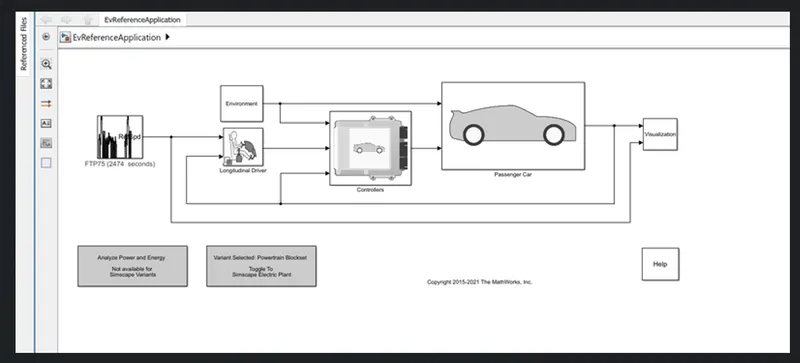
2. EV reference model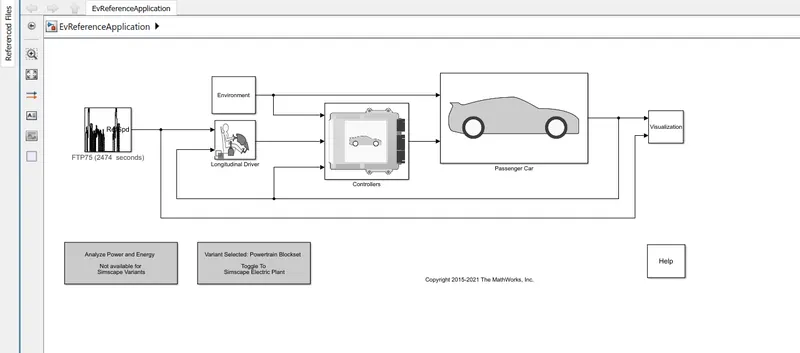
2.
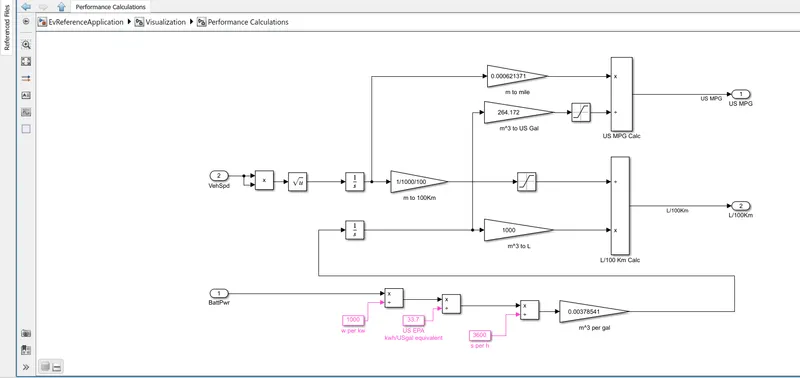
Mode calculate miles per gallon by taking vehicle speed parameter as input and multiplying and taking root value so we get the positive values further integrating it and sending the collected info to product block for converting units followed by saturation to determine upper limit as infinity and lower limit as 0.00 .
Factors affecting fuel flow:
Vehicle speed- we need to convert it from m to miles, m^3 to US gallon and integrating it to get US MPG (miles per gallon)
Battery power is in watt so we convert it to kW then we further convert US EPA kwh to US gallon and iin the end by connecting and integrating all value we get efficiency in L/100km.
3. HEV ReferenceApplication with WOT drive cycle.
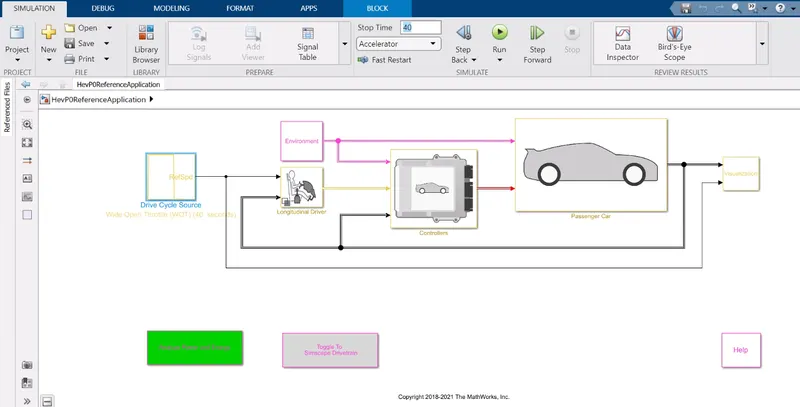
Scope view of WOT drive cycle
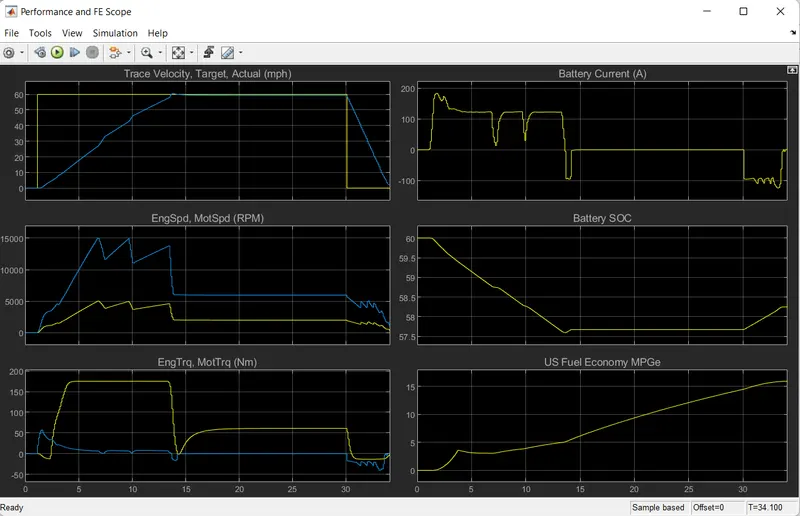
We can observe from the trace velocity graph that this is not the ideal case as the WOT drive cycle shows sudden spike while the actual throttle take some time to increase in velocity.
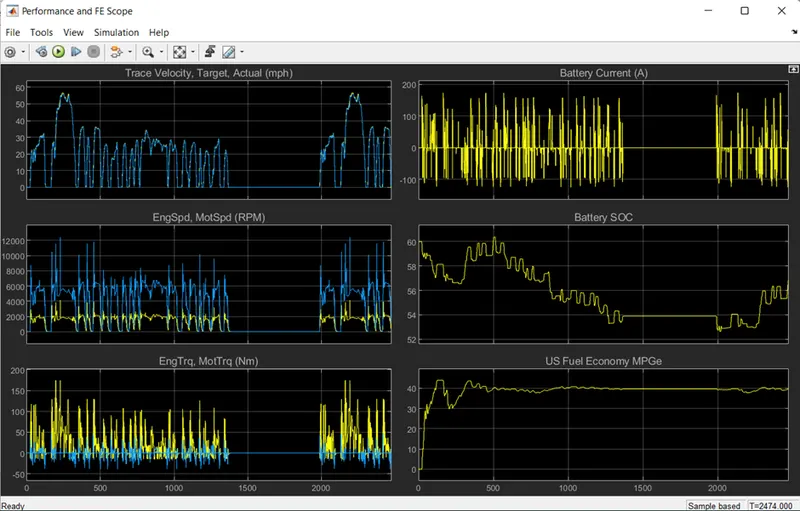
Battery SOC is decreasing continiously with some variation as when brakes is applied battery stops draining showing a straight line followed by regenerative property helping in gaining some battery power.
Fuel economy is at 0 when the vehicle is at stop. It increases gradually till it reaches "Wc" the critical value after which we get max efficiency at constant speed.
Engine torque and motor torque graph shows the max torque until it reaches Wc (critical point).when the vehicle is at constatnt velocity the graph is constant after which we observe drop in torque .
Battery current reches the max value when throttle is applied and decreases drastically when deacceleration is undegoing.
HEV reference model with FTP75 drive cycle.
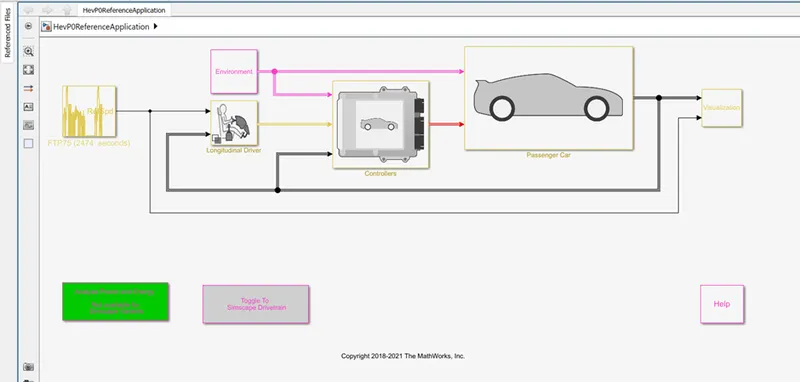
output of FTP75 drive cycle
EV reference model
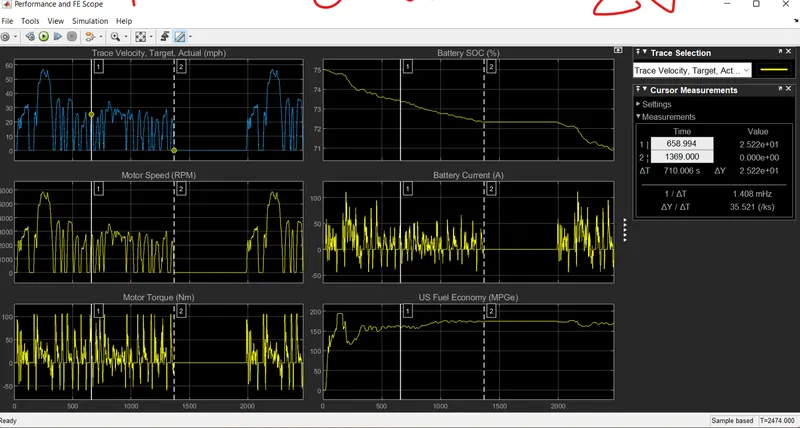
Output Graph
- EV ref model works on only two parameters ie; vehicle speed and battery power.
- HEV ref model works on three parapeters vehicle speed and battery power and fuel volume flow.
- In HEV we get more power and top speed as we have two powertrain is used to meet power requirement with ease.
- Higher fuel economy in EV model.
- HEV ref model is more efficient as compared HEV WOT model where regenration of energy is considerably low resulting in decreased efficiency.
- Battery current capacity is much highet in EV compared to HEV since EV is the only driving unit.