Week-4 Challenge WOT Condition Part-2
1)What is the difference between mapped and dynamic model of engine, motor and generator? How can you change model type?
ans)
here powertrain blockset provides two types of combustion engine models.
* Mapped engine
* Dynamic engine
Mapped engine:
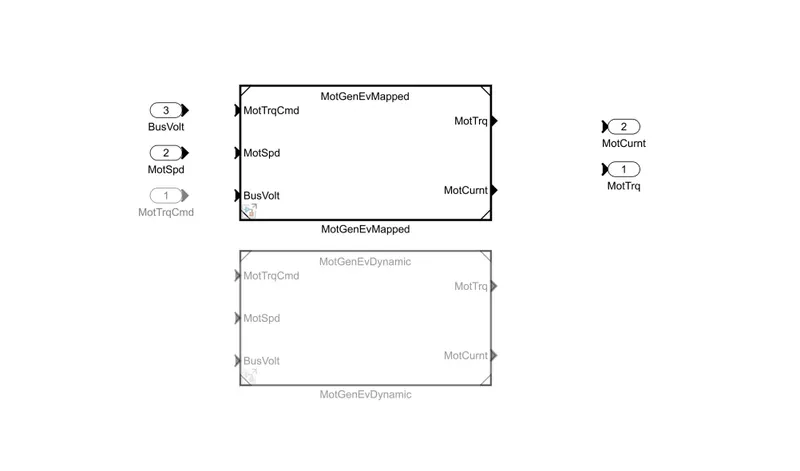
in this image, the upper one is mapped engine block.
Mapped engines represent macro engine behaviour as a set of lookup tables as functions of commanded load and measured engine speed.
The Mapped Motor or engine block implements a mapped motor and drive electronics operating in torque-control mode. The output torque tracks the torque reference demand and includes a motor-response and drive-response time constant. Use the block for fast system-level simulations when you do not know detailed motor parameters, for example, for motor power and torque tradeoff studies. The block assumes that the speed fluctuations due to mechanical load do not affect the motor torque tracking.
Dynamic engine:
in the upper image, the lower one is the dynamic engine block which is commented out.
That block includes Interior PM Controller SS Trq, Three-Phase Voltage Source Inverter, Interior PMSM SS Spd.
Dynamic engine models are suitable for designing control, estimator, and diagnostic, algorithms that depend on dynamic subsystem states.
here, we can switch between mapped and dynamic engines by this steps shown below:
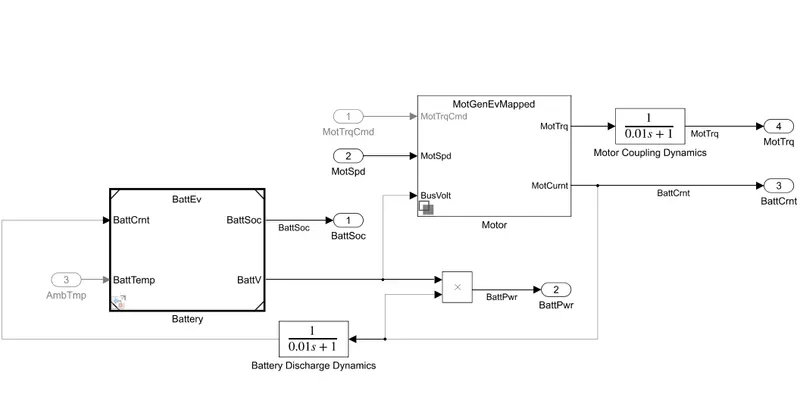
open simulink model for ev model--->go to passenger car block----> go to electric plant block--->right click on motor block--->click on variant option--->click on lable mode active choice.
then choose mapped or dynamic option.
2)How does the model calculate miles per gallon? Which factors are considered to model fuel flow?
ans)
mpg means miles per gallon is calculated for conventional gasoline vehicle which has fuel efficiency is calculated via mpg.
for mpg calculation, we have to go inside EV reference model--->Visualization--->Performance Calculations.
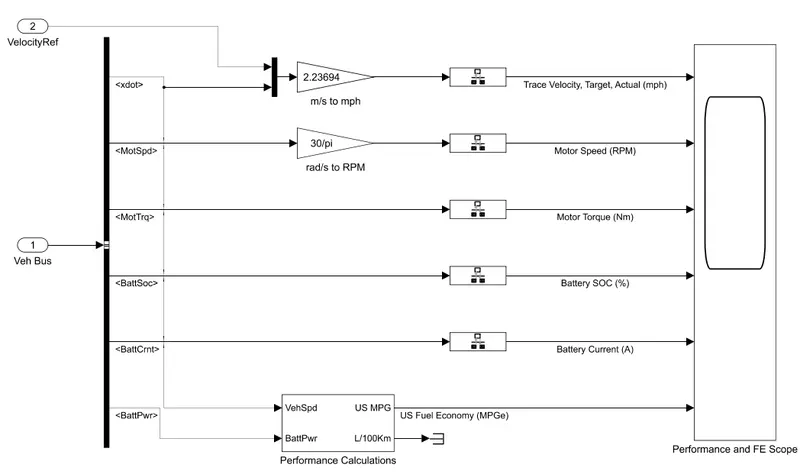
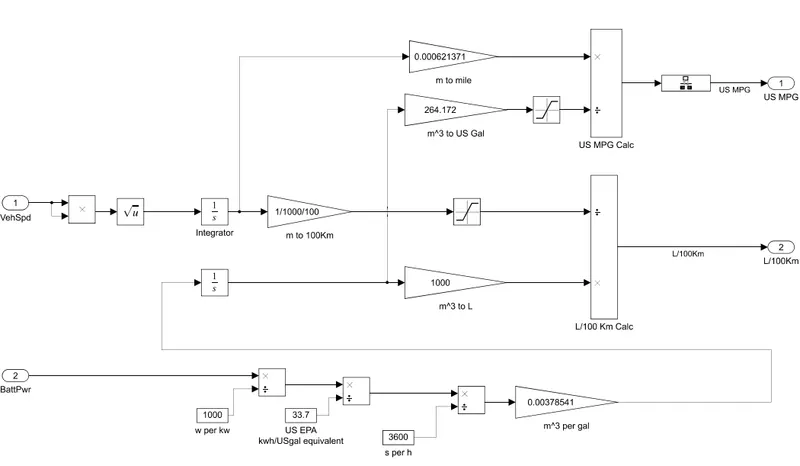
here different inputs are taken.
The vehicle speed input is in m/s which is converted into miles by multiplying with 0.000621371.then we use an integrator block to get the distance.
The battery power is converted into watts to kilowatts b dividing 1000 then it is converted to gallons by dividing 33.7 because of 33.7kwh=1 gallons then divide this value by 3600 to get per seconds and multiplying with 0.00378541 to get the value in cubic meter per gallons.
3)Run the HEV ReferenceApplication with WOT drive cycle. Change the grade and wind velocity in the environment block. Comment on the results.
ans)
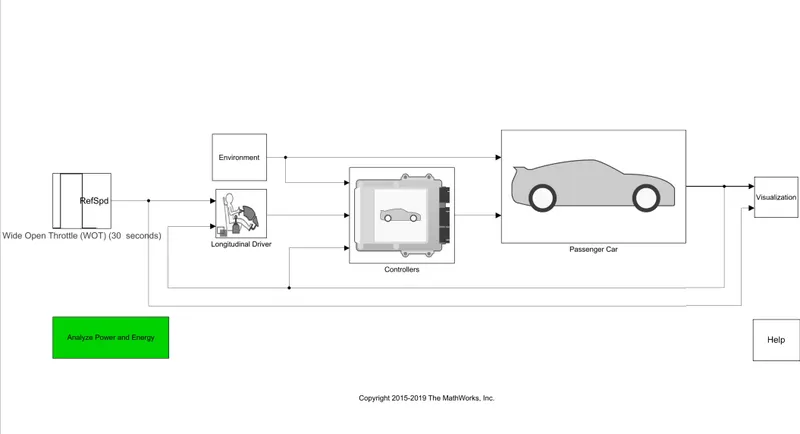
now we changed drive cycle to wot with sample time 30sec.
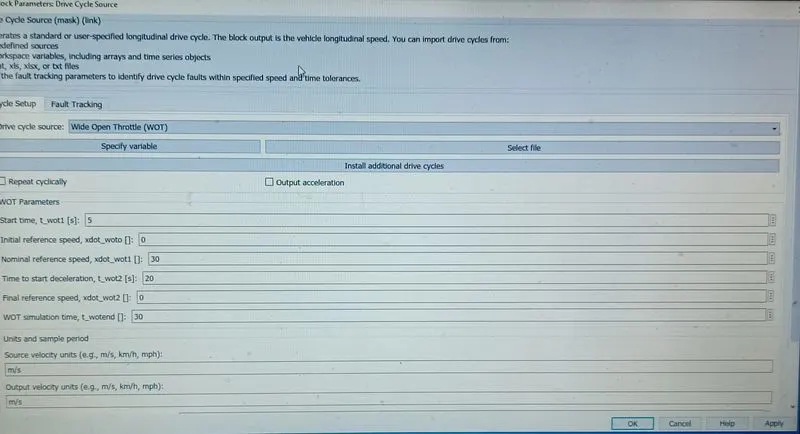
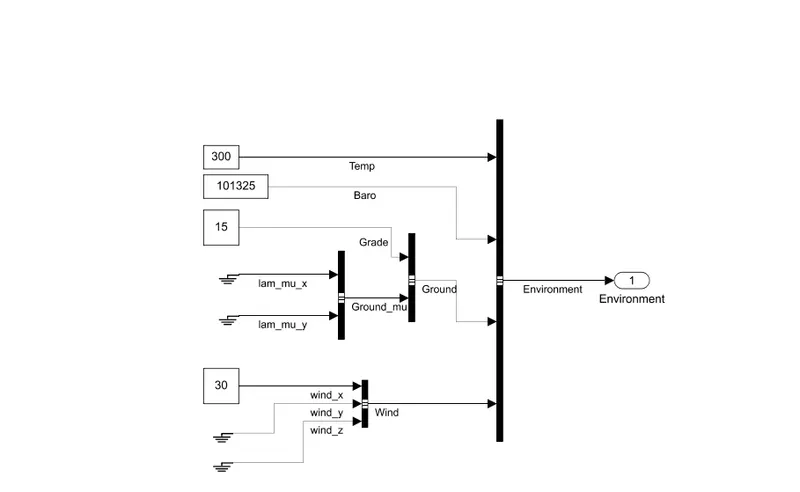
Then also in environment lock we changed wind speed to 30m/s and grade 15.
result:
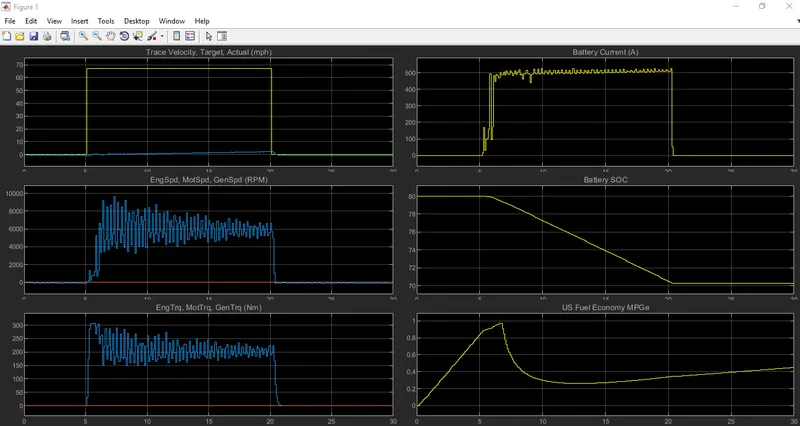
Plot 1:Trace velocity,target ,actual
top velocity achieved=2.39mph.
time taken to accelerate=20.11sec.
Plot 2:motor&engine rpm
top motor rpm=9671.741rpm.
top engine rpm=9.968e-16 rpm.
Plot 3:motor&engine torque
maximum motor torque=3.07e+02 Nm
maximum engine torque=9.067e-47 Nm
Plot 4:battery current
maximum value =5.256e+02
Plot 5:battery SOC
battery soc will fall from 80% to 70% during acceleration of vehicle.
Plot 6:fuel economy
maximum fuel economy achieved=9.710e-01.
4)Keeping all other parameters same, compare the simulated results of hybrid and pure electric powertrains.
ans)
simulated result for hev:
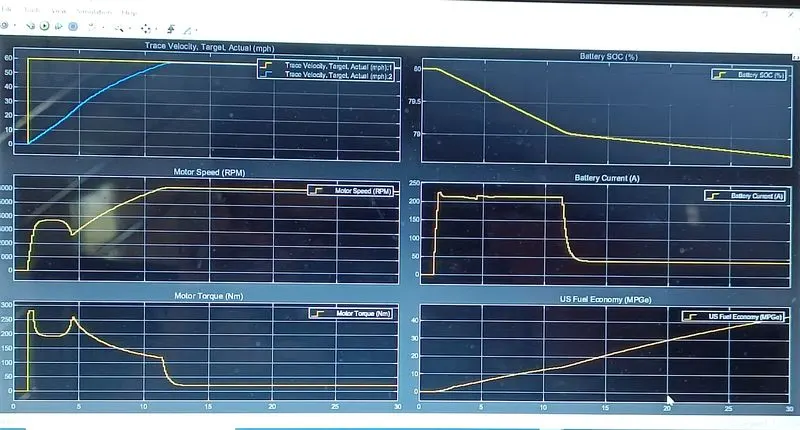
simulated result for ev: