Week-4 Challenge WOT Condition Part-2
Aim: What is the difference between mapped and dynamic model of engine, motor and generator? How can you change model type?
Theory:
Powertrain Blockset: Powertrain Blockset provides fully assembled reference application models of automotive powertrains, including gasoline, diesel, hybrid, and electric systems. It includes a component library for simulating engine subsystems, transmission assemblies, traction motors, battery packs, and controller models. Powertrain Blockset also includes a dynamometer model for virtual testing. MDF file support provides a standards-based interface to calibration tools for data import.
Powertrain Blockset provides a standard model architecture that can be reused throughout the development process. You can use it for design tradeoff analysis and component sizing, control parameter optimization, and hardware-in-the-loop testing. You can customize models by parameterizing components in a reference application with your own data or by replacing a subsystem with your own model.
The difference between mapped and dynamic model of engine are as follows:
- In mapped model the parameters are given through look-up table. This data comes from experiment which can be used only to verify the conditions given and not use full for real time conditions.
- In the dynamic model we have to give each parameters of each blocks or parameters individually and we can change any parameter according to our need and condition.
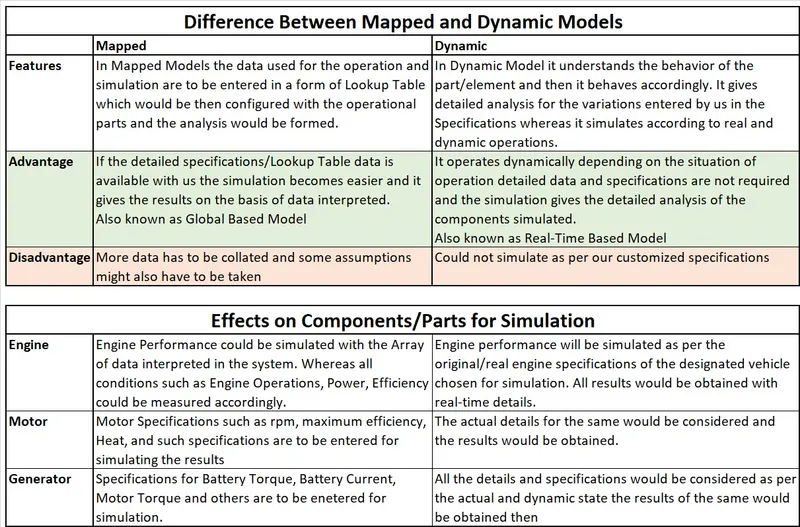
Steps to be followed to change model.
1.For Engine: Open the top level model and in that we need to open 'Passenger car' there we will see Engine block select the block and on right click and we get a list from those click on 'Variant' you will get one more list click on 'Label mode active choice' then u will see one more list in which 'Si mapped engine' is already selected.To change it From mapped to Dynamic click on 'SiEngine'. Check the screenshots below.
Top Model:
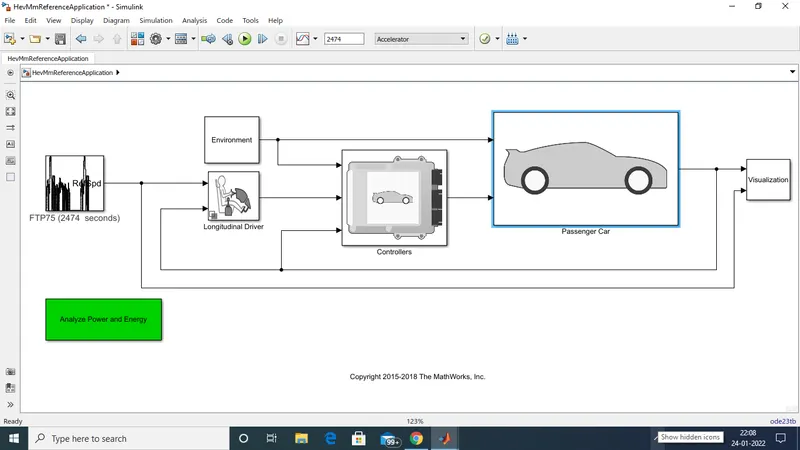
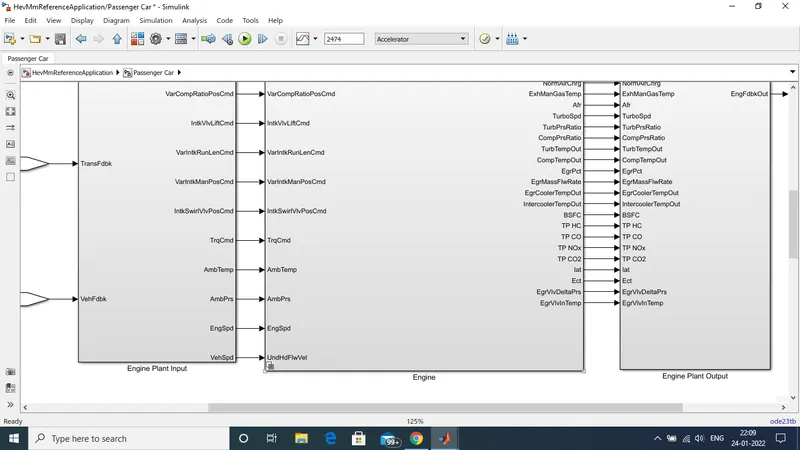
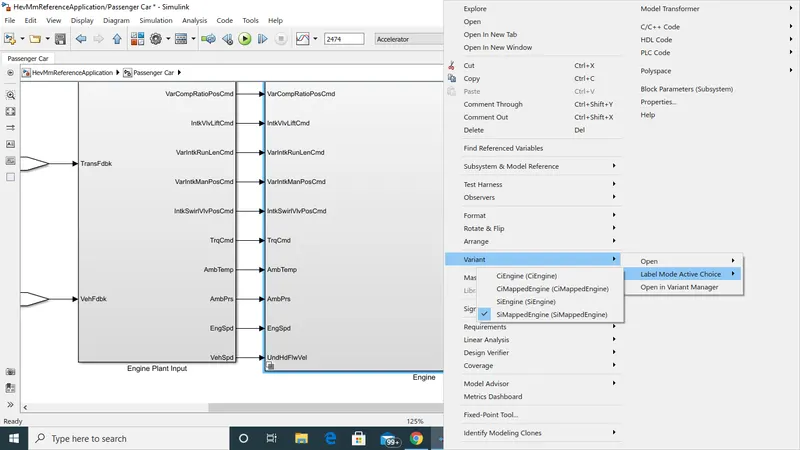
2.For Motor: Open the top level model and in that we need to open 'Passenger car' there we will see 'Electric plant' move inside this block with double clicking on the block you will see motor block select the block and on right click and we get a list from those click on 'Variant' you will get one more list click on 'Label mode active choice' then select according to your need i.e mapped motor or dynamic motor. Check the screenshots below.
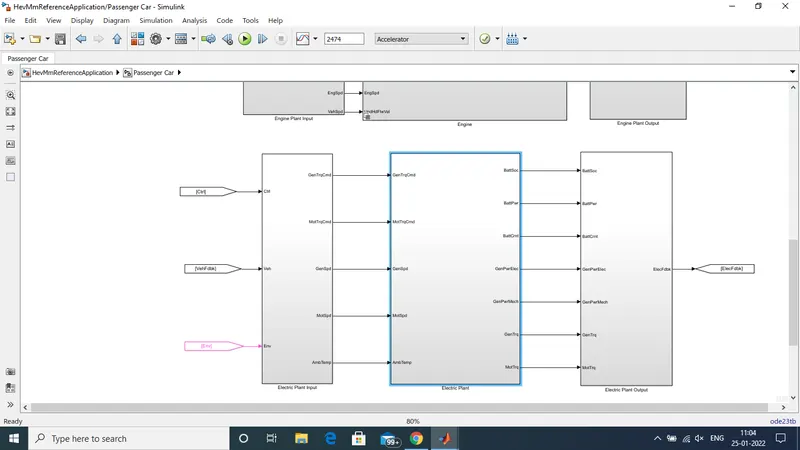
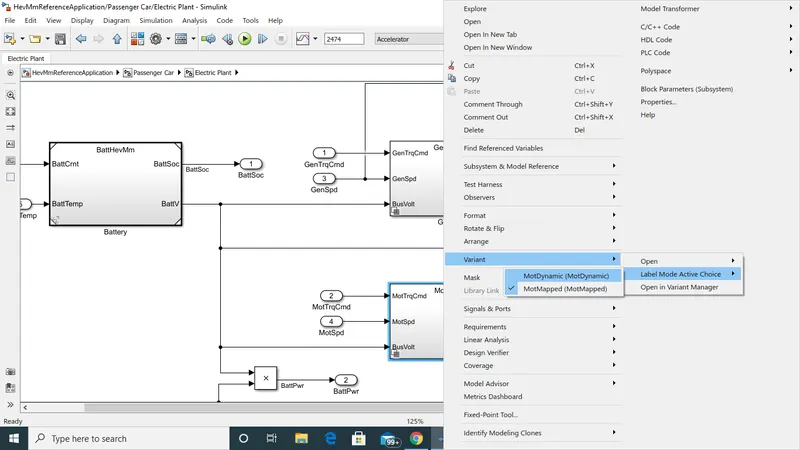
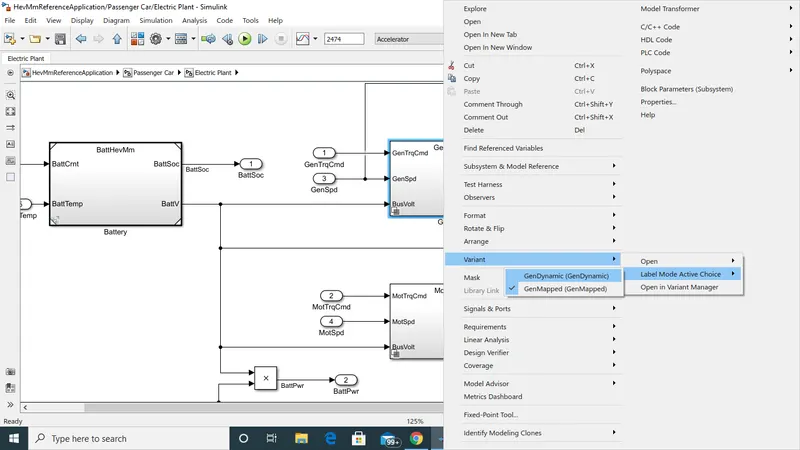
3. For Generator: Open the top level model and in that we need to open 'Passenger car' there we will see 'Electric plant' move inside this block with double clicking on the block you will see generator block select the block and on right click and we get a list from those click on 'Variant' you will get one more list click on 'Label mode active choice' then select according to your need i.e mapped motor or dynamic motor. Check the screenshots below.
Aim: How does the model calculate miles per gallon? Which factors are considered to model fuel flow?
Theory:
MPG, or miles per gallon, is the distance, measured in miles, that a car can travel per gallon of fuel. MPG is also the primary measurement of a car's fuel efficiency: The higher a car's MPG, the more fuel efficient it is. In case of electric vehicle, it is measured that how much electrical energy is consumed by the battery pack to travel a fixed distance.
The powertrain blockset has a builtin model which can be found inside visualization block.
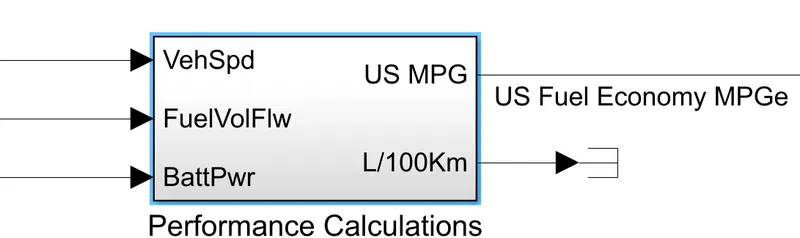
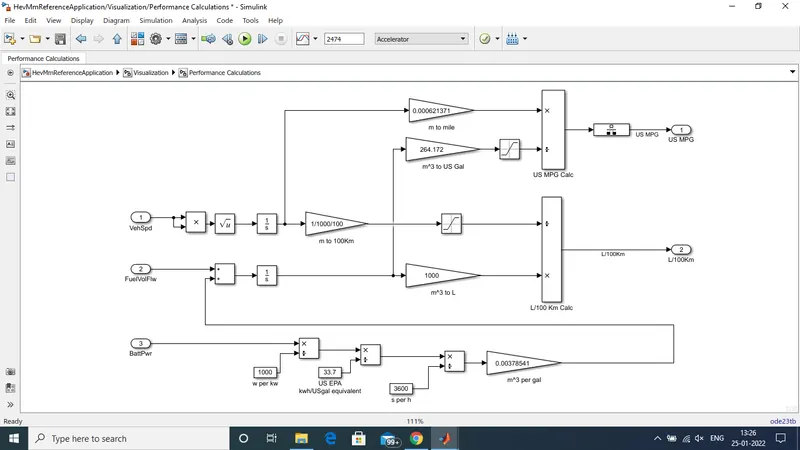
Here the fuel flow is calculated using two input signal which are Vehicle speed and Battery power.
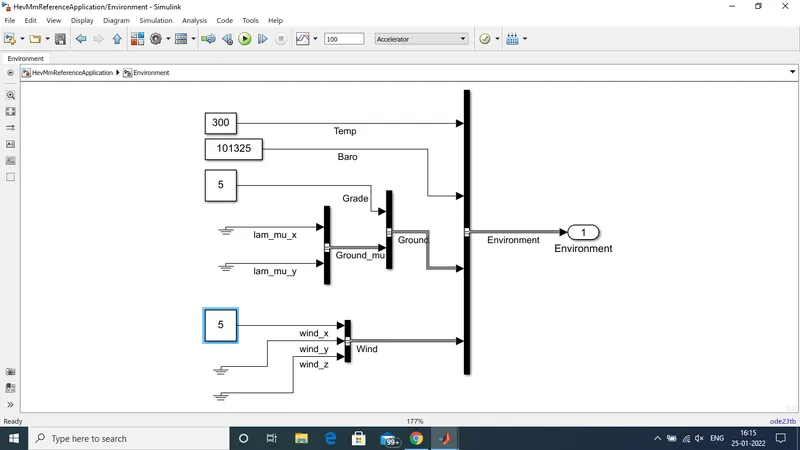
Aim: Run the HEV ReferenceApplication with WOT drive cycle. Change the grade and wind velocity in the environment block. Comment on the results.
Steps: Go to the top mode and select WOT in the drive cycle also select nominal speed, acceleration and deacceleration time and save it.
Case 1 . Here in this situation we have not changed the grade and the wind velocity. lets check the output in this case first.
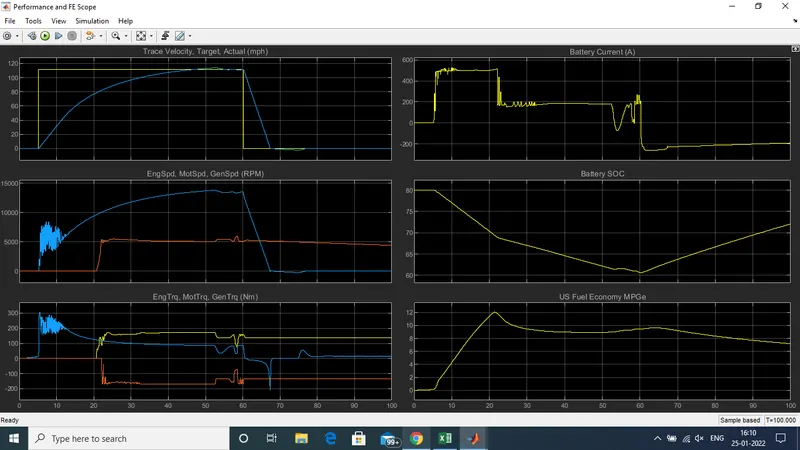
Case 2. Here in this situation we have changed the grade and wind velocity from 0 to 5 and the outputs are as follows.
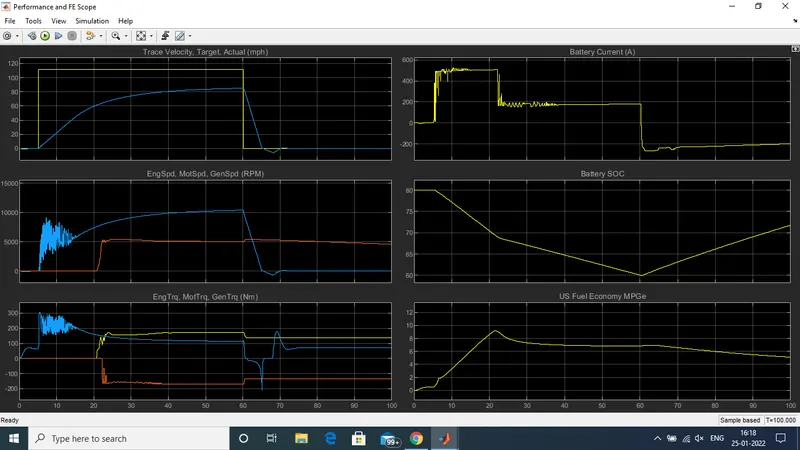
Conclusion: From the above graph it is seen that the battery power is not sufficient to overcome wind velocity and grade value.
The battery SOC goes on decreasing because of contineous current supply for 60 sec and the SOC start increasing once regenerative braking is started.
Aim: Keeping all other parameters same, compare the simulated results of hybrid and pure electric powertrains.
Here we will take two casesin first hybrid and second pure electric powertrain.
Case 1(hybrid electric vehicle): The output graph is as shown below.
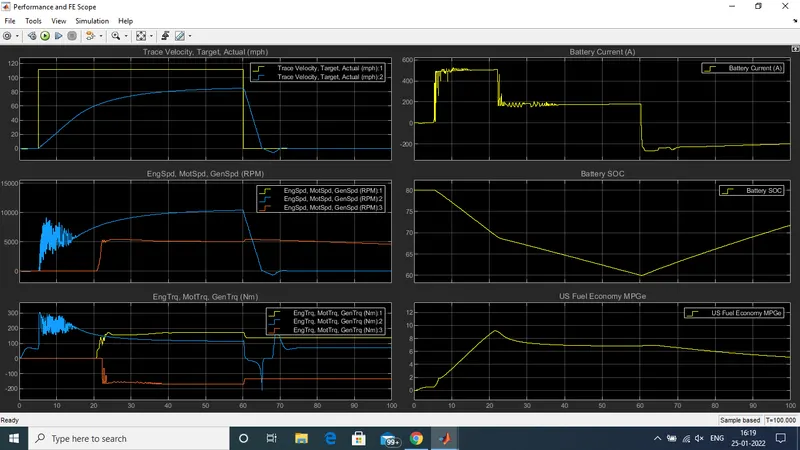
Case 2(Pure electric vehicle): The output graph is as shown below.
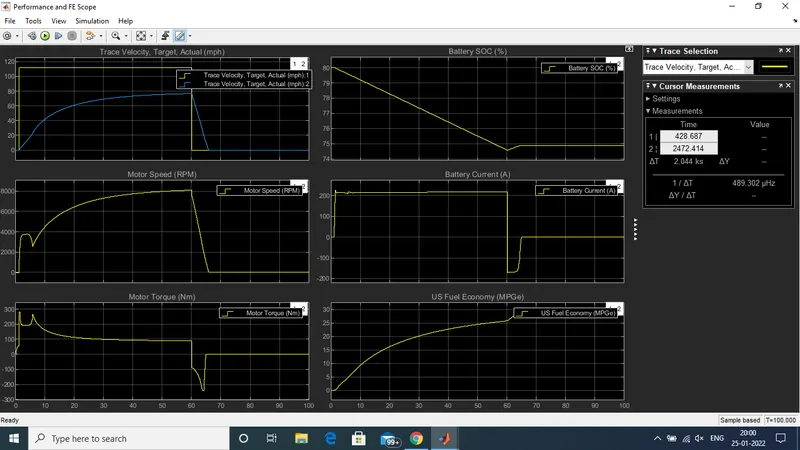
Conclusion:
- The first graph is almost same for both the cases because only motor is working in this case.
- The current consumption in the first case of HEV is maximum for earlier few cycle because only battery is working then the current consumption reduces because motor starts taking load and battery current consumption decreases. in next case of EV the current consumption is constant due to motor alone.
- Fuel economy of EV is much higher than HEV. This is because electric motor is more efficient than engine.