Week-4 Challenge WOT Condition Part-2
1.ans
mappeed and dynamic sub system of electric motor/generator:
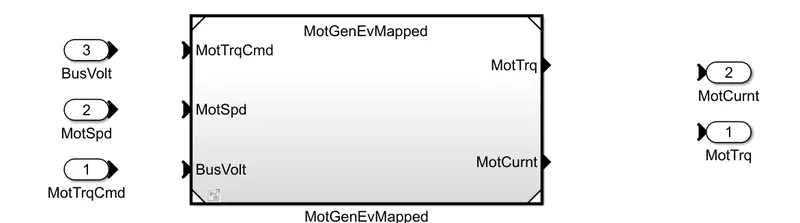
1.first we open EV Rreference Apllication in matlab with the help of help in matlab and then open passenger car model and then open the eletric plant and then motor block we find motgenevmapped
2. where data points assigned in lookup tables
3.the output values are stored for the corresponding given input values of motor
4.simulation time less bcz of all are pre install values
5.not run by real time parameters
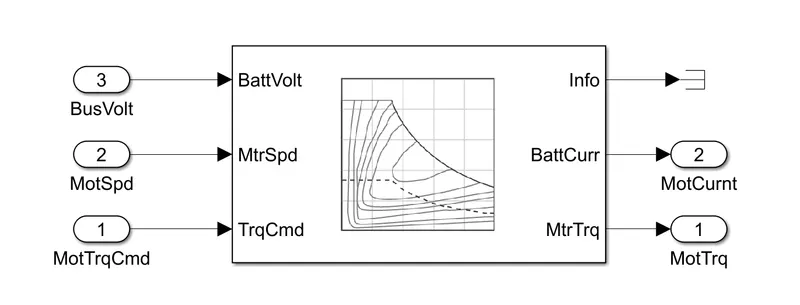
dynamic model:

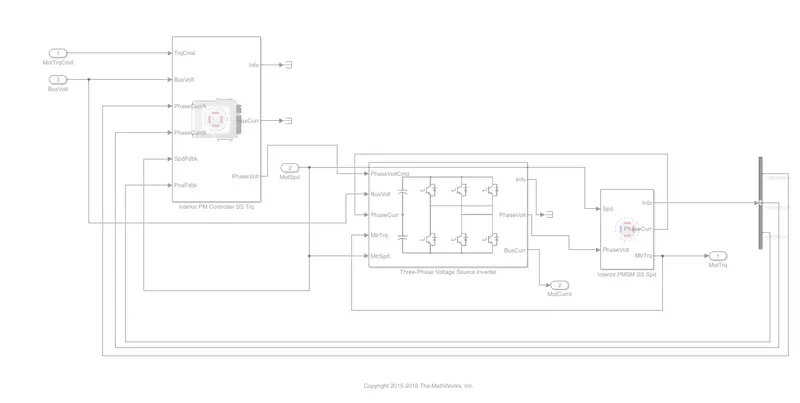
1.first we open EV Rreference Apllication in matlab with the help of help in matlab and then open passenger car model and then open the eletric plant and then motor block we find motgenevdynamic.
2.it is combination of outputs from the various subsystems to generate o/p
3.it can run by real time applications like using input as drive cycle.
4.the accuracy of the system is very high .simulation take time
5.the above fig shows example of dynamic

1.in that we need to go passenger block eletricplant and then go to ev motor/generator block.
2.after this just click and go to varient configuration mode we just right click on the motorgenev
mapped or dynamic
2.ans:
miles per gallon is a fuel economyrating by how far car can travell on a gallon of diesel/petrol
the power tarain blockset has a model that calculate the milles per gallon for all kides of vehicle
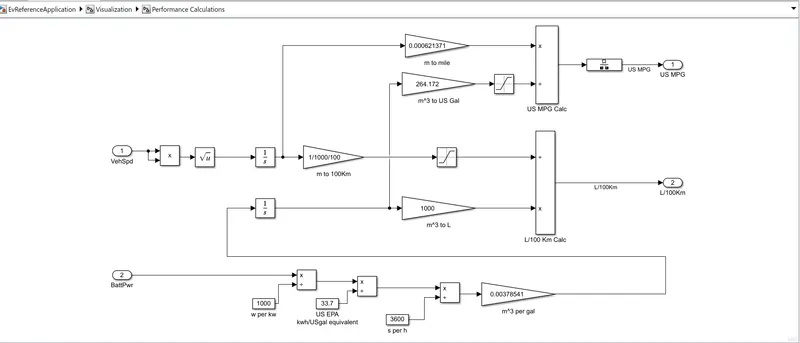
1.vehicle speed is important factor while considering the fuel consumption
2.to convert speed into distance we can integrate with time and we are doing the same of converting the velocity to get distance covered by integrating
3.the amount of fuel at each moment in kg/sec .now integrating this will result in the mass of the fuel and by using this 1 we convert it to the volume and by multiply by 1000 to get in liters
4.by compare the results we get amount of liter consumed to run for 100km
5.battery charge is uesd to propel the vehicle .the battery power given watts and converted into kw we have to divide by 1000. then multiply with time we the energy.
6.then we convert the energy from kwh to equ energy in us gallons by dividing 33.7.we get energy in us gallons equal in kwh we are trying to get the energy of equivalent lis gallons per second.for getting hour to sec we divided with 36000
7.mul with 0.000378451 convert us gallons per sec to the volume of the fuel flow in mA^3/s.and then mul with 739 which gives the result as mass flow ratein kgs
8.then finally battery cahrge in kg/s by using this find the equ us gallons enegry and estimate the miles per gal;lons
9.the inputs from the vehicle speed (i.e) the distance we found is taken into the calculation and it is converted to themiles by mul with 0.000621371
10.the inputs from fuel flow(battery and fuel energy) taken in mA3 and is converted into equ us gallons by multiplyingwith 264.1472.
then the two inputs miles coverd and equivalent us gallons is furthur divided and result is got in miles/gallons.0
3.ans:
thr hybrid eletric vehicle (hev) is a type of hybrid type that combines a conventional internal combustion system with an electric propulsion system
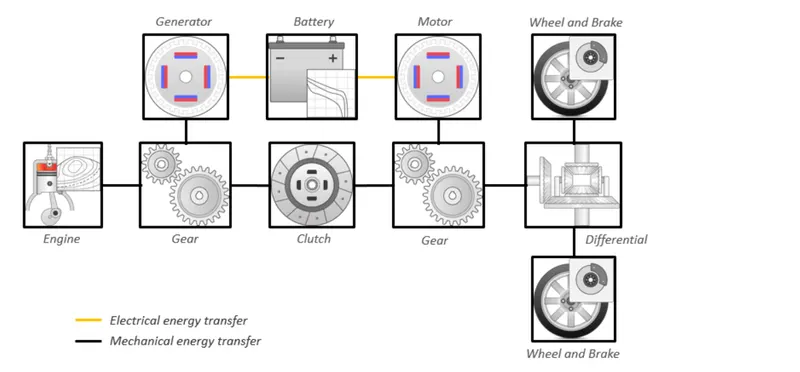
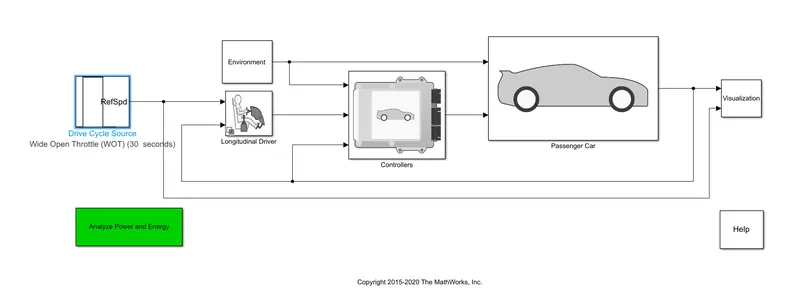
1.the simulation is done for the hybrid electric vehicle and this is the simulink model
2.here we can select the inputs parameters we wish and we can run the simulation to check the results
simulation conditions:
1.total cycle time=80
2.top speed of the cycle =80mph
3.starting decelation=50sec
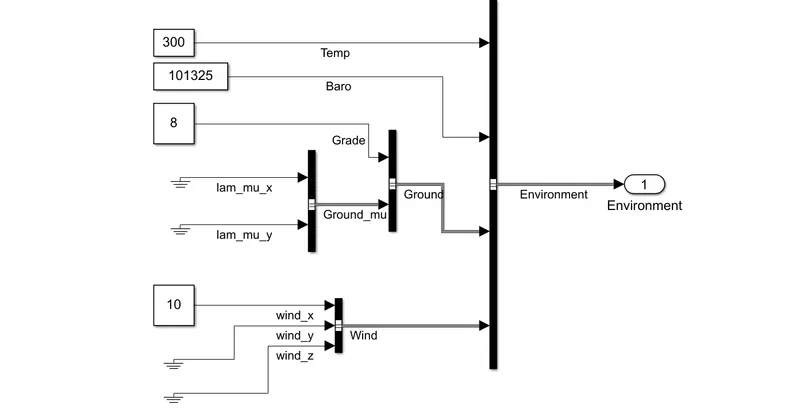
grade =8 deg
wind velocity=10m/s
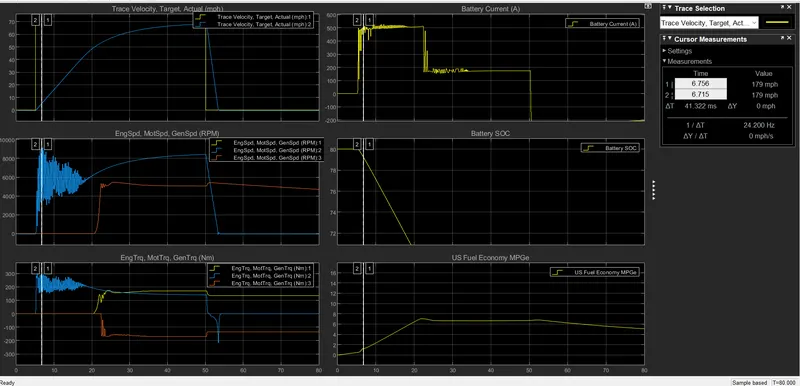
the above fig shows the results for the simulation and there are six plots in them
the cursor enables us to find thebehaviour of the other results parameters
plot 1:
shows the velocity of the vehicle with respect to the drive cycle data with time scale on x axis
acceleration time to reach 30mph =16.7sec
the deceleration time for 30 to minimum= 6.2sec
plot 2:
shows the changes in speed of the engine ,motor,and generation in rpm throught the cycle
peak engine speed=4780
peak motor spee=9497
peak generator speed=13690
plot 3:
peak engine torque=138.7Nm
peak motor torque=206.7Nm
peak generator torque=42.2Nm
plot 4:
the peak current discharge from the battery=163.5a
peak current charging to the battery=150.86A
plot 5:
the state of charge decerased from 60% to 39.8% of charge in atime period of 49.3sec
plot 6:
the max miles taht the car can run per gallon of fuel equivalen=46miles
4.ans: by all parameters same
in 3 rd que we plot hev model
for the comparing we can plot the ev model
pure ele vehicle:
a battery eletrical vehicle or pure ele vehicle is aev taht exclusively uses chemical energy stored in rechargable battery packs with no secnd source of propulsion
so they donot produce any emmision of wastage gas and they are ecofriendly
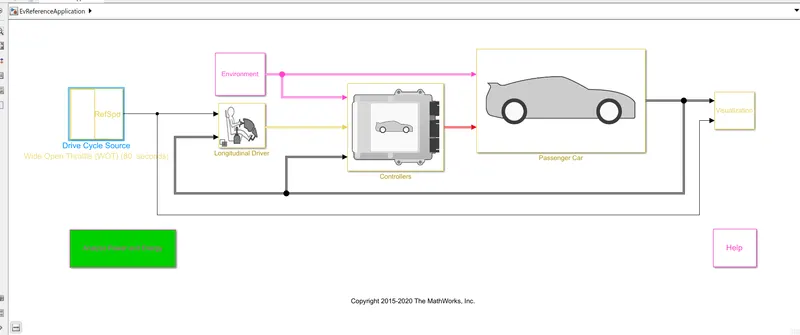
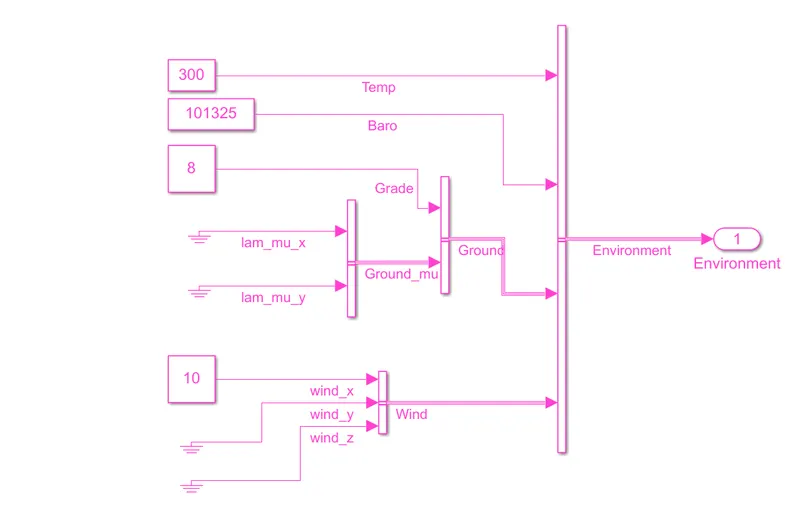
total cycle time=80sec
speed=80mph
deceleration=50
grade=8deg
wind velocity=10m/s
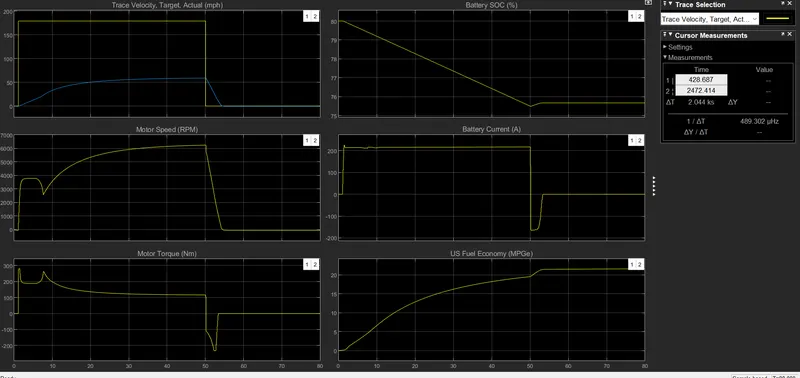
plot1:
80 mph can not be achieve as we have some additional forces acting so car can run upto 108.9 mph
the acc time to reach top speed of 108.9=50.2sec
dec time from 80 to min=9.8sec
plot2:
shows the changes in speed of the motor in rpm throught the drive cycle.
peak motor speed=1123rpm
plot 3:
peak motor torque=260Nm
plot 4:
peak current discharge from the battery=216.8a
peak current charging to battery=-173.7a
plot 5:
the state of charge decreased from 80% to 75.5% of charge in a time period of 50.3sec
ploat 6:
there is no fuel in pure eletric vehicle however this gives equ battery energy required taht of fuel energy and caluclate fuel eff.the max miles that the car can run per gallon of fuel equ=20.45 miles.
observations:
1.the efficiency of the eletrical vehicle is more compare to HEV
2.ele vehicle produces zero emmisions where as hybrid ones produce waste gas emission
3.both are comparing same environmetal amd drive cycle conditions results inev produce more values of motor speed and motor torque compared to hybrid vehicles