Week-4 Challenge WOT Condition Part-2
Aim :
Challenge WOT Condition Part-2
Objective :
- What is the difference between mapped and dynamic model of engine, motor and generator? How can you change model type?
- How does the model calculate miles per gallon? Which factors are considered to model fuel flow?
- Run the HEV ReferenceApplication with WOT drive cycle. Change the grade and wind velocity in the environment block. Comment on the results.
- Keeping all other parameters same, compare the simulated results of hybrid and pure electric powertrains.
# First Objective :
difference between mapped and dynamic model of engine,motor,generator
| Mapped | Dynamic |
| in mapped model the data used for the operation and simulation are to be entered in a form of lookup table which can be configured with the operational parts and the analysis would be formed. | In the dynamic model it understand the behaviour of the parts/elements and then it behave accordingly it gives the detail analysis for the variation entered by us in the specifications whereas it simulate according to real and dynamic operations. |
| If the detailed specifications/lookup table is available with us the simulation becomes easier and it gives the results on the basis of data interpreted also known as Global based model. |
it operation dynamically depending upon on the situation of the operation detail data and specification are not required and the analysis gives the detailed analysis of the components simulated. also known as Real - Time based model. |
| more data has to be collated and some assuptions might also have to be taken. | could not simulate as per our customized specifications |
| Mapped | Dynamic | |
| Engine | Engine performance could be simulated with the array of the data interpretated in the system.whereas all conditions such as engine operation,power,efficiency,could be measured accordingly | Engine performance will be simulated as per the original/real engine specifications of the designated vehicle choosen for the simulation.all the results would be obtained with real-time detail |
| Motor | motor specification such as rpm,maximum efficiency,heat,and such specifications are to be entered for simulating the results |
Actual detail for the same would be considered and the results would be obtained |
| Generator | specification for battery torque,battery,current,motor,torque,and other are to be entered for the simulation | all the detail and the specifications would be considered as per the actual and the dynamic state the results of same would be obtained then |
Change the model type :
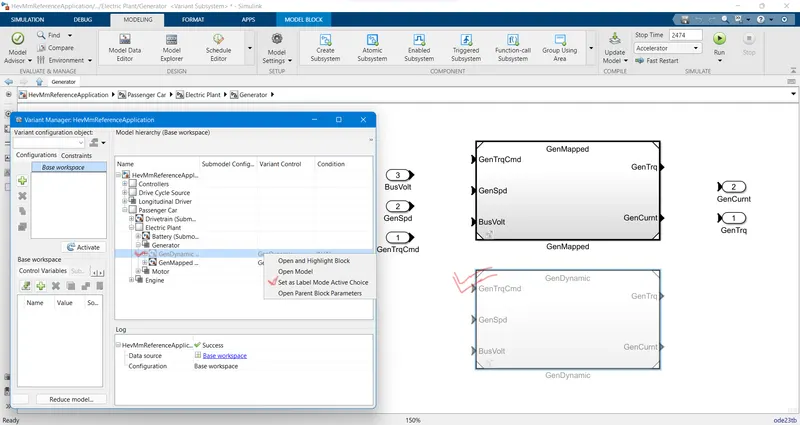
- select on the model which you wanted to change.
- like we want to activate the Gendynamic mode.
- click on the variant manager.
- right click on the model which you want to activate and. click on set the mode activate choice.
# Second objective :
How does the model calculate miles per gallon? Which factors are considered to model fuel flow?
Factors considering the for indicating the fuel efficiency are as mentioned below
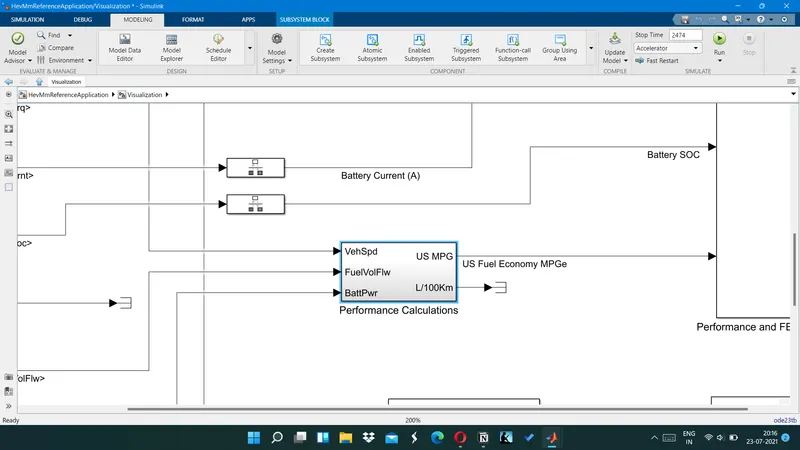
This results are From HEV therfore it contain battery and engine,considers the following factor :
- vehicle speed
- battery power
- fuel flow
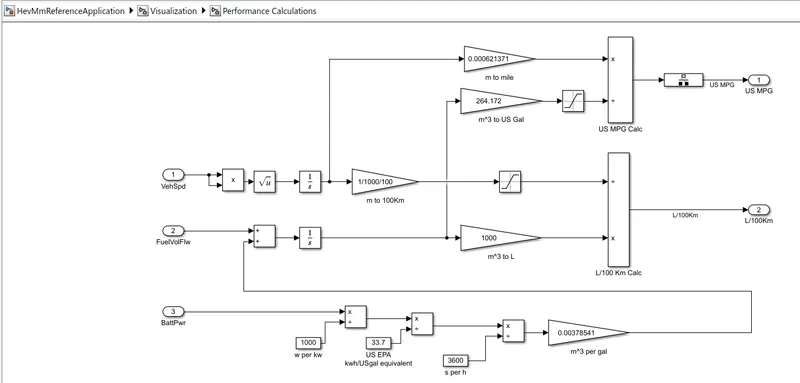
form the vehicle speed in converted into distance by integrating the velocity which is meter
the it converted to miles and passed toward the product side of substraction block
from the vehicle battery power is collected and first converted kw to watt then kwh which is eqivalent to USgal again converted s per h by 3600, finally by multiplied by 0.00378541 gives values in m^3 per gallon
which is adde dto the fuel flow value and integrated then multipying by 264.172 gives the values in m^3 to US Gal
that value get divide with m to miles value in substraction block
final we get US MPG value
# Third Objective :
Run the HEV ReferenceApplication with WOT drive cycle
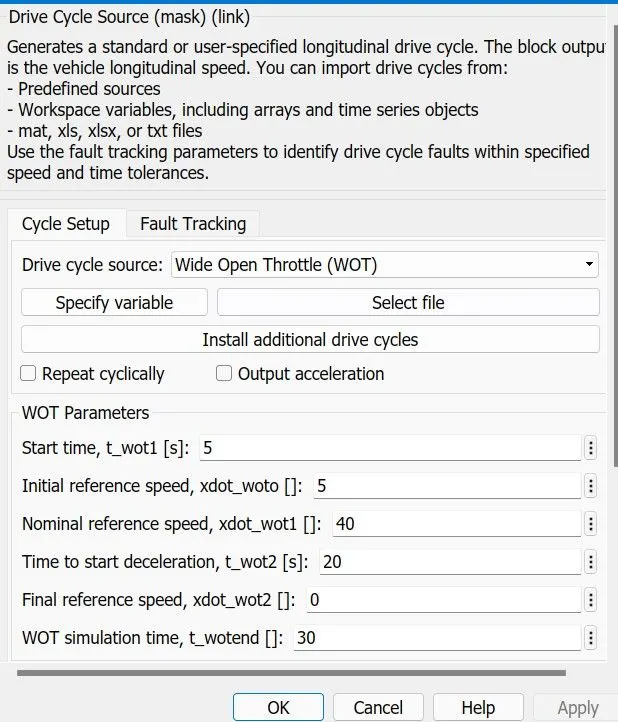
above values are substituted in such a way that wide throttle will above after 5 sec of vehicle start
where the initial speed of vehicle is 5,after open the wide throttle speed reaches to 40 and that values will remain for 30 second
after 30 sec vehicle decelrated to 0 speed
Results for HEV with change in wot condition :
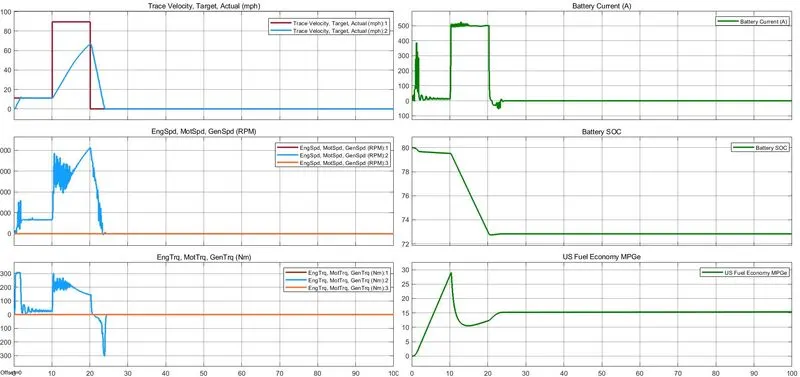
Due to wide open throttle condition vehicle goes to max speed around 80 mph
for that 30 sec just at starting we required max torque,motor goes to max rpm ,also we required more current
the battery SOC goes down gradually and fuel economy goes down at just starting of wot condition then gradually it increases.
Results for changing the both wot values and grade values :
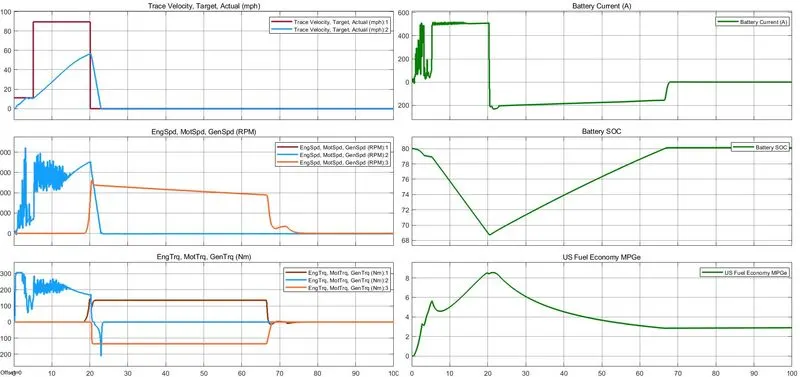
due to adding the grade value in environment vehicle will not go to that much speed as it goes to 0 grade with wot condition.
motor rpm also decreases,then it also required more torque for more time
at starting it rquired more current but while decelration it regenrate as current goes to minus
battery soc and fuel economy also decreases.
Results for change in wot,grade and wind values :
values added in environment block :
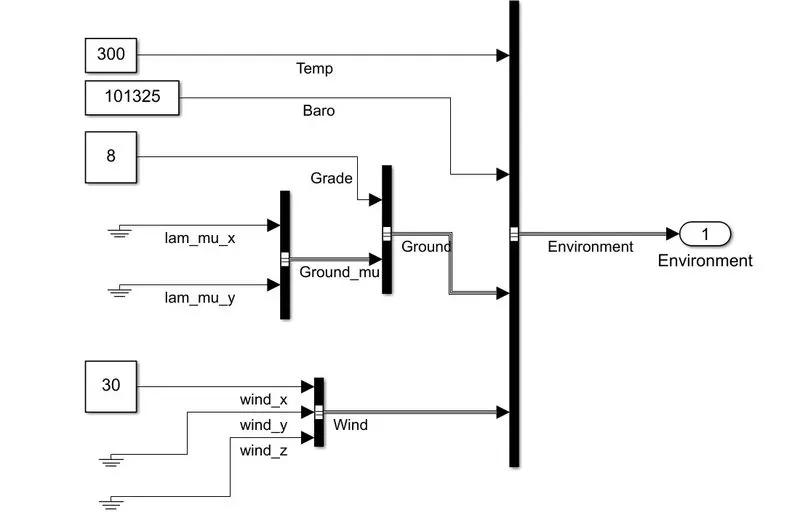
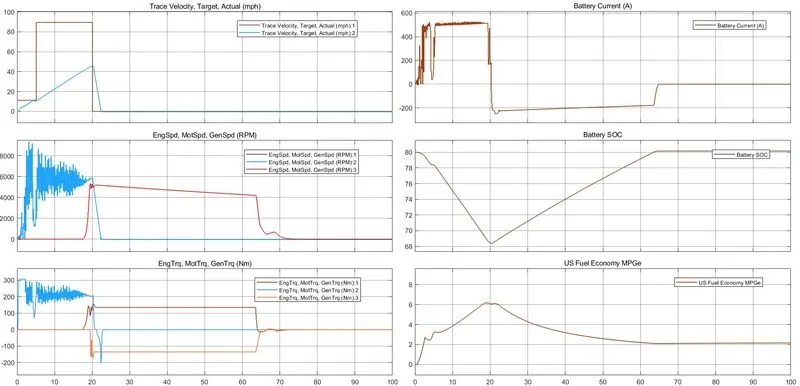
we changed the wind value with grade and wot conditions due to vehicle goes less speed than above required some what more torque,more current
while decelration regenrate the current as it goes to minus,also SOC decreses and fuel economy increases at decelration
# fourth Objective :
keeping the parameter same for HEV and pure EV ,compare the simulated results
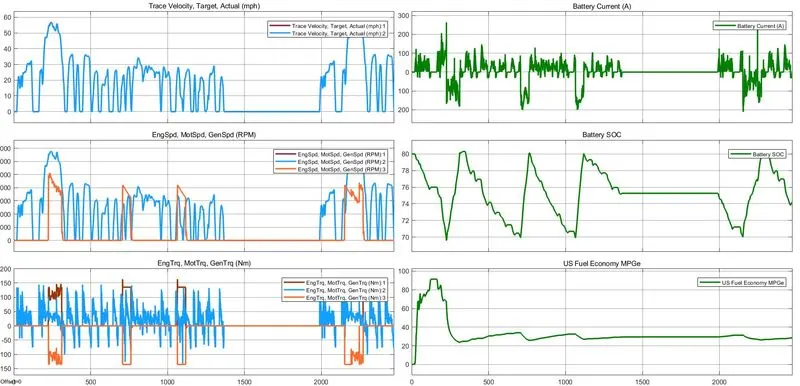
results of HEV:
Pure EV :
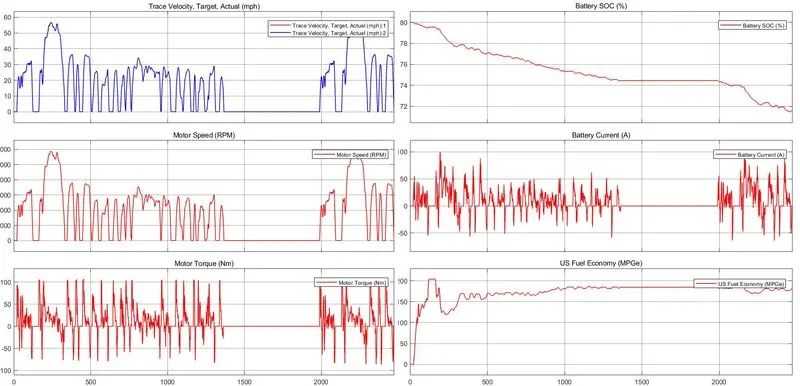
the one of the important or main diffrence in the EV and HEV is power source
HEV uses the battery and engine si/ci ,while EV uses only battery
while accelrating we rquired more torque which collected by using the motor so SOC decreses after some time the vehicle will run on the engine so fuel economy decreses and soc gradually increases.
Conclusion :
Here in above we simulate the HEV and Pure EV reference vehicle using simulink.
We collected different different results by changing the environment data.